

P0223 on 2007-2013 GMC Sierra: Throttle Position Sensor 'B' Circuit High Fixes
On a 2007-2013 GMC Sierra, code P0223 is almost always caused by a failing electronic throttle body assembly. The fix involves replacing the entire unit, which costs between $150 and $300 for the part. Cleaning the throttle body first is a worthwhile, low-cost diagnostic step. This code will trigger 'Reduced Engine Power' mode, making the truck unsafe to drive.
- P0223 on a 2007-2013 Sierra almost always points to a problem with the electronic throttle body.
- The vehicle will enter a 'Reduced Engine Power' mode, making it unsafe to drive.
- Before replacing the throttle body, perform a thorough cleaning as carbon buildup can sometimes cause the code.
- The throttle position sensors are built into the throttle body and cannot be replaced individually.
- After replacement or cleaning, a throttle idle relearn procedure is mandatory for proper operation.
What's Unique About the 2007-2013 GMC Sierra
The GMT900 platform, which includes the 2007-2013 Sierra, relies on a fully electronic throttle control system. Unlike older vehicles with a physical cable, this system is prone to electronic failures within the throttle body assembly itself. While wiring issues can occur, the most frequent point of failure for a P0223 code on this specific truck is the internal circuitry of the throttle body, making complete replacement the common and accepted repair. This failure is so common it often triggers other codes like P2135 and P1516 simultaneously, leading to the 'Reduced Engine Power' message on the dash.
Generation note: This guide covers the GMT900 generation of the GMC Sierra (2007-2013). Note that for the 2007 model year, GM also sold the previous 'Classic' GMT800 body style. The diagnosis and parts for the GMT900 are consistent across this year range.
Symptoms You May Notice
- "Reduced Engine Power" message on the dashboard
- Check Engine Light is on
- Vehicle has very little or no acceleration
- Unstable or rough idle
- Engine may stall, especially at idle
- Traction control or StabiliTrak warning light may also illuminate because the throttle control system is integral to traction and stability control calculations.
- Replacing the Accelerator Pedal Position (APP) Sensor. While the APP sensor is part of the throttle control system, P0223 specifically points to the sensor circuit 'B' on the throttle body itself, not the pedal. The associated code for an APP sensor issue is more commonly P2138.
Most Likely Causes
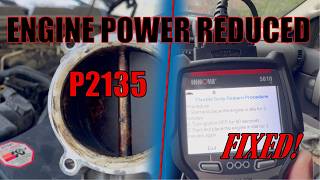
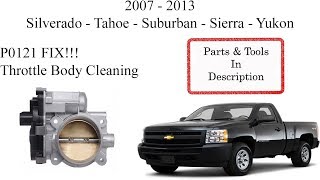
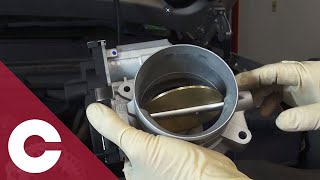
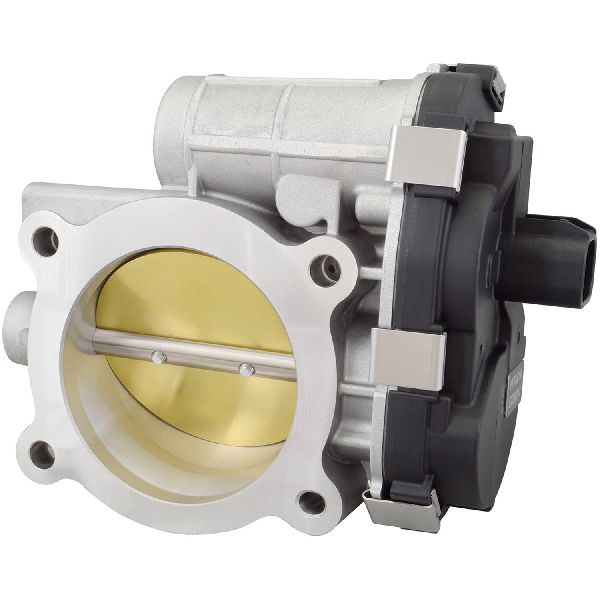
- Failed Electronic Throttle Body Assembly 🔴 High Probability → Shop Fuel Injection Throttle Body The internal electronic sensors and motor within the throttle body are a known failure point 🎬 See how to test and replace the electronic throttle body on this generation of GM trucks. Heat cycles and wear over many miles lead to sensor failure, causing incorrect voltage readings.
How to confirm: Using a scan tool, observe the live data for TPS Sensor 1 and TPS Sensor 2. With the key on and engine off, slowly press the accelerator pedal. The voltage for Sensor 1 should sweep smoothly up, while Sensor 2 sweeps smoothly down. A P0223 code will typically show Sensor 2 voltage stuck high (near 5V) regardless of throttle position.
Typical fix: Replace the entire throttle body assembly. After replacement, an idle relearn procedure is required.
Est. part cost: $150-$300 - Dirty or Carbon-Clogged Throttle Body 🟡 Medium Probability → Shop Fuel Injection Throttle Body The PCV (Positive Crankcase Ventilation) system can deposit oil and carbon buildup inside the throttle body over time. This buildup can restrict the movement of the throttle plate, causing it to stick or bind, which can lead the sensors to report conflicting information and trigger a fault code.
How to confirm: Remove the air intake tube and visually inspect the throttle body bore and plate for significant black carbon buildup. If the plate appears sticky or doesn't move smoothly by hand (with ignition off), cleaning is necessary.
Typical fix: Remove the throttle body and clean it thoroughly with a dedicated throttle body cleaner and a soft brush. Reinstall with a new gasket and perform an idle relearn procedure.
Est. part cost: $5-$15 - Wiring or Connector Issue at Throttle Body ⚪ Low Probability → Shop Fuel Injection Throttle Body The engine harness connector at the throttle body is exposed to heat and vibration, which can lead to chafed wires, terminal fretting (micro-corrosion), or poor pin contact over time.
How to confirm: Visually inspect the wiring harness and connector for any signs of damage, corrosion, or loose pins. With the scan tool displaying live TPS data, gently wiggle the connector and harness to see if the voltage reading for Sensor 2 changes erratically. This is known as a 'wiggle test'.
Typical fix: Repair the damaged section of wire or replace the connector pigtail. Applying a small amount of dielectric grease can help prevent future moisture intrusion.
Est. part cost: $15-$40
Rare But Worth Checking
- Faulty Powertrain Control Module (PCM): → Shop Engine Control Module (ECM) This is extremely rare and should only be considered after all other possibilities, including the throttle body and wiring, have been definitively ruled out. PCM failure is often misdiagnosed.
- Water Intrusion in IP-to-Body Harness Connector: GM issued TSB 07-06-04-019 regarding water leaking into the instrument panel-to-body harness connector, located in the driver's side kick panel. This can cause shorts in various circuits, including the Accelerator Pedal Position (APP) sensor circuits, leading to codes like P2138 but could potentially affect other throttle control signals.
Diagnosis Steps
- Verify the code with an OBD-II scanner. Check for any other related codes like P2135 or P0121.
- Using the scanner's live data function, monitor the voltage readings for 'TPS Sensor 1' and 'TPS Sensor 2'.
- With the key on and engine off, confirm that the TPS2 voltage is stuck high (typically >4.6V) and does not change when the accelerator pedal is pressed.
- Turn the ignition off. Disconnect the electrical connector at the throttle body. Inspect the connector terminals and wiring for any signs of corrosion, damage, or pushed-out pins. Perform a 'wiggle test' on the harness while monitoring live data if the issue is intermittent.
- If the wiring looks good, the next step is to clean the throttle body. Remove it from the intake manifold, clean it thoroughly with throttle body cleaner and a new gasket, reinstall it, and clear codes.
- If the code returns immediately after cleaning, the throttle body assembly has an internal electronic fault and must be replaced.
- After installing a new throttle body, clear all codes and perform the idle relearn procedure. This can often be done without a scan tool.
- Idle Relearn Procedure (No Scan Tool): Start the engine and let it idle in Park for 3 minutes. The idle may be high initially. Turn the engine off and wait for 60 seconds. Restart the engine and let it idle in Park for another 3 minutes. The idle should now be normal. If not, a short drive cycle with varied speeds above 44 mph may be required. 🎬 Watch: How to perform the electronic throttle body relearn
Parts You'll Likely Need
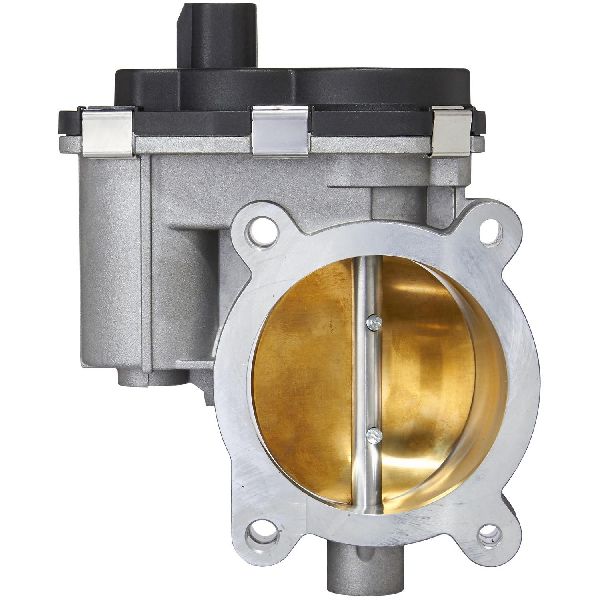
- Electronic Throttle Body Assembly
(OEM #12679525 (superseded by 19420713))— This is the most common failure for code P0223. The internal sensors are not serviceable separately, requiring the replacement of the entire unit.
Trusted brands: ACDelco (GM Genuine), Bosch, Hitachi, Standard Motor Products
OEM price range: $200-$350
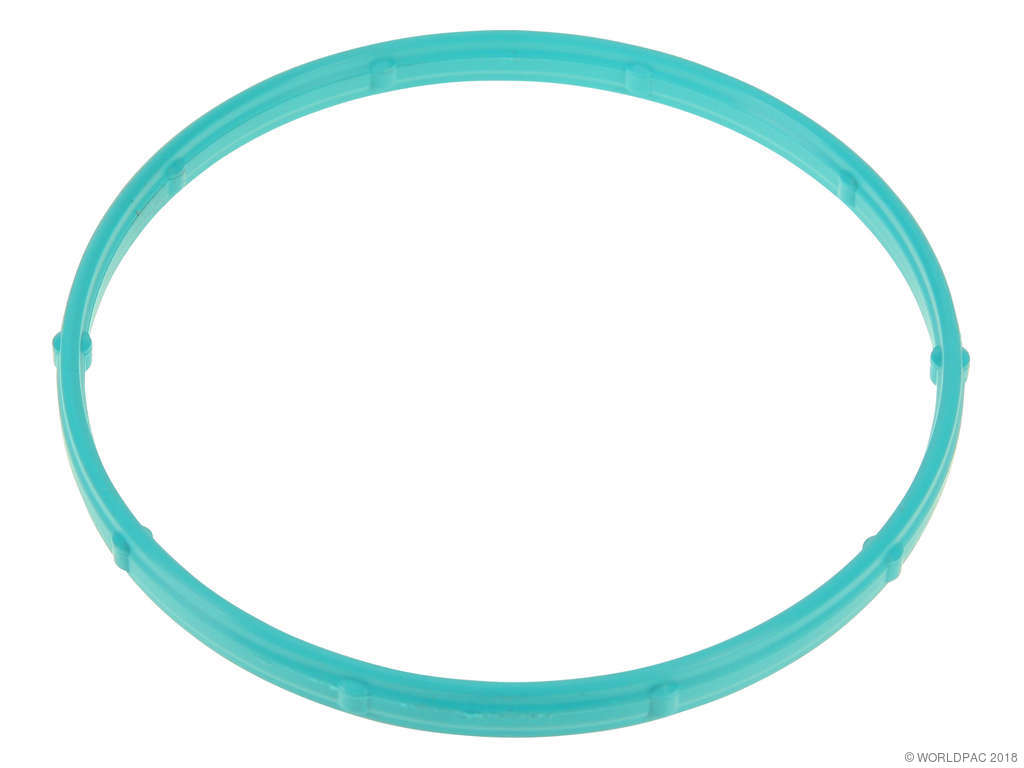
Aftermarket price range: $150-$250 - Throttle Body Gasket
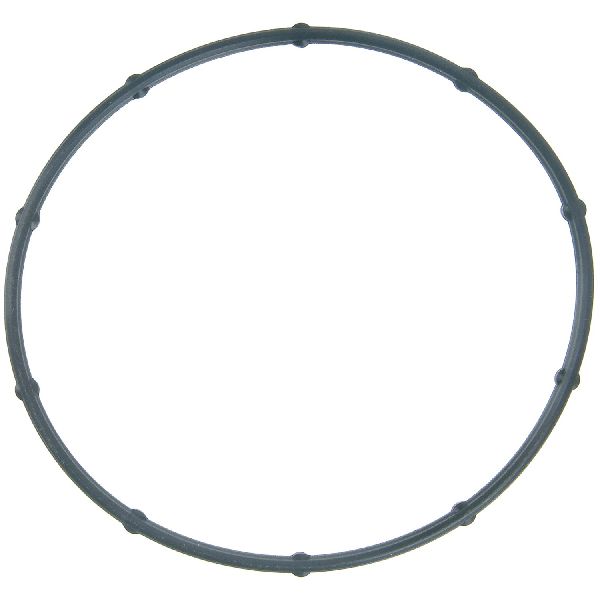
(OEM #12629992)— A new gasket is required anytime the throttle body is removed for cleaning or replacement to prevent vacuum leaks.
Trusted brands: ACDelco, Fel-Pro, Mahle
OEM price range: $10-$20
Aftermarket price range: $5-$15
Related Codes That Often Appear With This One
- P2135 — This code means 'Throttle/Pedal Position Sensor/Switch A/B Voltage Correlation'. It sets because the PCM sees a disagreement between the two throttle position sensors. A P0223 (Sensor 'B' high) will almost always cause a P2135 because the two sensor signals no longer match their expected opposing sweep.
- P0121 — This code indicates 'Throttle Position Sensor 1 Performance'. It can appear alongside P0223 if the PCM detects that the signal from Sensor 1 is also irrational, even if it hasn't failed in the same way as Sensor 2.
- P1516 — This is a GM-specific code that relates to the Throttle Actuator Control (TAC) module performance. It indicates the PCM has commanded a throttle position that the throttle body failed to achieve, often triggering the 'Reduced Engine Power' mode.
Technical Service Bulletins (TSBs) & Recalls
- TSB 07-06-04-019E: This bulletin addresses an intermittent 'Reduced Engine Power' message, specifically with DTC P2138 (related to the accelerator pedal), caused by water leaking into the IP-to-body harness connector in the driver's side kick panel. While not directly for P0223, it highlights a potential wiring vulnerability in the same system.
- Special Coverage Adjustment 11273 / TSB 11-06-04-007B: While primarily for DTC P2135, this TSB is highly relevant as P0223 is a companion code. It addresses the known throttle position sensor failure on 2008-2011 trucks, which was covered for 10 years or 120,000 miles. It confirms the sensor within the throttle body is a known weak point.
Platform-Specific Known Issues
- Owner Experience with Intermittent Failures: Some owners report that the 'Reduced Engine Power' mode and P0223 code appear intermittently, especially in cold weather. This can sometimes be linked to the grease inside the throttle body's gear housing becoming hard, preventing the motor from moving the throttle plate smoothly on a cold start. While not an official fix, some DIYers have successfully cleaned and re-greased these internal gears.
Mechanic-Grade Diagnostic Values
- TPS Sensor 1 (TPS1) Voltage — expected: Approx. 0.5V at closed throttle, sweeping smoothly to approx. 4.5V at wide-open throttle.. Failure: Voltage is stuck, erratic, has dropouts, or does not correspond to throttle plate angle.
- TPS Sensor 2 (TPS2) Voltage — expected: Approx. 4.5V at closed throttle, sweeping smoothly down to approx. 0.5V at wide-open throttle.. Failure: For code P0223, the voltage is stuck high, typically above 4.75V, regardless of throttle plate angle.
- Low Reference Circuit to Chassis Ground Resistance — expected: Less than 5 ohms.. Failure: A reading higher than 5 ohms indicates a poor ground connection, which can cause incorrect sensor readings.
Wiring & Ground Locations
- G103 — On the Left Rear of the Engine Block.. This is a primary engine harness ground. A poor connection here can introduce electrical noise or incorrect reference voltages for various sensors, including the throttle position sensors.
- G104 — On the Left Rear of the Engine Block (for 4.8L, 5.3L, 6.0L engines).. Similar to G103, this is another critical engine ground point. Ensuring it is clean and tight is a key diagnostic step when chasing intermittent electronic faults.
- Throttle Body Connector — Directly on the electronic throttle body, at the front of the intake manifold.. This is the primary connection point for the TPS sensors. It is a common location for fretting corrosion, pushed-out pins, or harness damage due to engine heat and vibration.
Real Owner Repair Stories
- GM Forum user 'phlint69' (2006 Chevrolet Trailblazer 4.2L (Similar GM electronic throttle system)) — Persistent P0223 code, Service 4WD and Stabilitrak messages. Scan tool showed TPS2 stuck at 99%.
❌ Tried (didn't work) Replaced accelerator pedal assembly, Replaced throttle body (twice, with old and new parts showing same readings), Replaced the ECM, Verified wiring for opens or grounds
✅ What actually fixed it The issue was a poor pin connection at the ECM connector (Connector 2, pins 7 and 36). The user slightly bent the male pins on the ECM to ensure a tighter fit with the female terminals in the harness connector, which resolved the fault.
OEM Part Supersession History
12679525→19420713— Standard part number update by the manufacturer, likely for minor revisions or supplier changes.
Model Year Variations Within This Range
- 2007: For the 2007 model year, GM produced both the new GMT900 body style and the previous generation 'Classic' GMT800. It is critical to verify which version the truck is, as the throttle bodies are different. The GMT900 has smooth door panels, while the GMT800 has a distinct crease.
Diagnostic Flowchart
Other Known Issues on This Vehicle
Issues unrelated to this code that are worth knowing about as an owner of this generation:
- Cracked Dashboard 🟠 Medium — Extremely common, especially on vehicles exposed to significant sun and heat cycles. Cracks typically form near the passenger airbag and on the driver's side corner.
- Oil Pressure Sensor/Filter Screen Failure 🟠 Medium — Common at higher mileage. The sensor, located in a difficult-to-reach spot behind the intake manifold, can fail. More often, the small filter screen below it gets clogged with sludge, causing erratic or zero oil pressure readings on the gauge.
- Service StabiliTrak / Traction Control Warnings 🟠 Medium — Frequently caused by a failing steering wheel position sensor located at the base of the steering column. Can also be triggered by issues with wheel speed sensors.
- Rust on Rear Wheel Arches and Cab Corners 🔴 High — Very common, particularly in regions that use road salt. The design of the rear wheel wells can trap moisture and debris, leading to significant rust-through over time.
- Exhaust Manifold Bolt Breakage 🟠 Medium — The rearmost bolts on the exhaust manifolds are prone to breaking due to heat cycles, causing an exhaust leak that presents as a ticking noise, especially when the engine is cold.
Used vs. New Parts: Buying Guide for This Vehicle
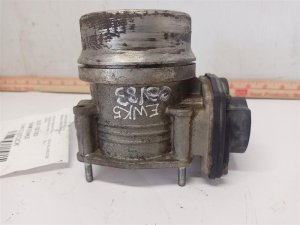
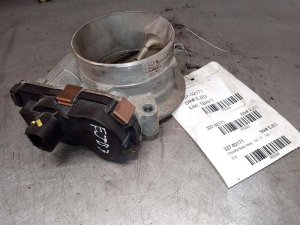
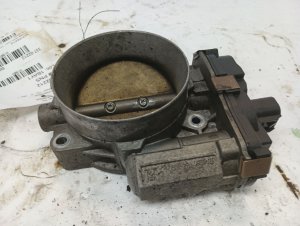
When a used part is the smart pick: A used OEM throttle body from a low-mileage donor vehicle can be a cost-effective alternative to a new aftermarket part. Given that the failure is electronic, the primary risk is the remaining lifespan of the used part's sensors.
Donor-vehicle mileage cap: roughly under 80000 miles for the part to have meaningful remaining life.
What to inspect on the donor part:
- Verify the part number matches your original or its supersession.
- Inspect the electrical connector pins for any signs of corrosion, damage, or green oxidation.
- Check the throttle plate for excessive carbon buildup, which might indicate a high-mileage or poorly maintained donor engine.
- Ensure the throttle plate moves smoothly by hand (with the unit off the vehicle) and doesn't bind or stick.
Aftermarket brands forum-validated for this vehicle:
- ACDelco (Original Equipment)
- Bosch
- Hitachi
Brands owners have reported issues with on this vehicle:
- Unbranded, no-name parts from online marketplaces can have a higher failure rate. While brands like Dorman are common, some professional sources note their quality can be inconsistent compared to OE.
Real Owner Stories
Aggregated from forums and TSBs cited above. Mileages and costs reflect what owners reported in those sources.
2007-2013 GMC Sierra 4.8L V8
Symptoms: The 'Reduced Engine Power' mode and P0223 code appear intermittently, especially during cold weather starts.
What fixed it: Cleaning and re-greasing the internal gears inside the throttle body's gear housing, as the original grease had become hard and prevented smooth movement.
Source hint: vehicle_specific_issues - Owner Experience with Intermittent Failures
2007-2013 GMC Sierra 4.8L V8
Symptoms: The owner needed to perform a throttle relearn after a repair and confirmed the manual timing method worked.
What fixed it: Followed the '3 minutes on, 1 minute off, 3 minutes on' manual idle relearn procedure.
Source hint: GM-Trucks.com - 'THrottle Re-learn Proceedure'
Related OBD-II Codes
Frequently Asked Questions
Is there a TSB for the 'Reduced Engine Power' message on my 2008-2011 GMC Sierra?
Can I fix the P0223 code on my Sierra 4.8L by just cleaning the throttle body?
Why did my StabiliTrak light come on at the same time as the P0223 code?
Do I need a professional scan tool to perform the idle relearn after replacing the throttle body?
Could a leak in my driver's side kick panel cause throttle-related codes?
What is the 'wiggle test' mentioned for diagnosing my Sierra's wiring?
Helpful Videos

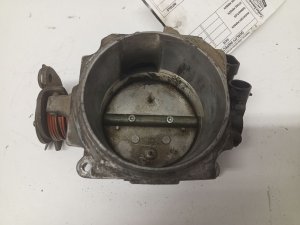
Used OEM Parts in Stock
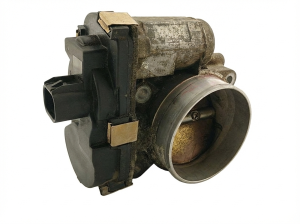
New Aftermarket Parts Available


The information in this article is provided for general reference and educational purposes only. Vehicle specifications, procedures, and part compatibility can vary by production date, trim level, and region. Always consult your vehicle's factory service manual and verify part numbers before purchasing or performing repairs. Safety-critical components such as airbags, seat belts, and braking systems should be installed by a qualified professional.
- GMC Sierra:
- 🧭 Diagnostic Flowchart
- 🎬 Helpful Videos
- 🛍️ Shop This Part
- What's Unique About the 2007-2013 GMC Sierra
- Symptoms You May Notice
- Most Likely Causes
- Rare But Worth Checking
- Diagnosis Steps
- Parts You'll Likely Need
- Related Codes That Often Appear With This One
- Technical Service Bulletins (TSBs) & Recalls
- Platform-Specific Known Issues
- Mechanic-Grade Diagnostic Values
- Wiring & Ground Locations
- Real Owner Repair Stories
- OEM Part Supersession History
- Model Year Variations Within This Range
- Other Known Issues on This Vehicle
- Used vs. New Parts: Buying Guide for This Vehicle
- Real Owner Stories
- 2007-2013 GMC Sierra 4.8L V8
- 2007-2013 GMC Sierra 4.8L V8
- Related OBD-II Codes
- Frequently Asked Questions
- 🎟️ Get 5% Off