

P0223 on 2008-2012 Honda Accord: Throttle Position Sensor 'B' Circuit High Voltage Causes and Fixes
P0223 on a 2008-2012 Honda Accord almost always indicates a fault within the throttle body, as the Throttle Position Sensor (TPS) is integrated. The most common fix is replacing the entire throttle body assembly, which costs between $200-$400 for an aftermarket part. An idle relearn procedure is mandatory after replacement.
- P0223 on a 2008-2012 Accord points to a problem with the secondary throttle position sensor, which is part of the throttle body.
- The most common cause is a failed sensor, which requires replacing the entire throttle body assembly. Part numbers differ for 4-cylinder and V6 engines.
- Before buying parts, always inspect the wiring and the 6-pin connector at the throttle body for damage, as this can be a cheaper fix.
- After replacing the throttle body, a specific 'idle relearn' procedure is mandatory to ensure the car idles and drives correctly.
- Symptoms like poor acceleration and limp mode are serious and warrant prompt attention to avoid being stranded.
What's Unique About the 2008-2012 Honda Accord
On the 8th generation Honda Accord (2008-2012), the dual throttle position sensors are integrated directly into the electronic throttle body assembly and are not sold as separate, replaceable parts by Honda. Unlike older vehicles where the TPS could be unbolted and replaced separately, a P0223 code caused by an internal sensor failure on this Accord necessitates the replacement of the entire throttle body unit. This design simplifies redundancy but makes the most common repair more involved and costly than just swapping a small sensor.
Symptoms You May Notice
- Check Engine Light is on
- Poor or hesitant acceleration
- Reduced engine power (Limp Mode)
- Unstable or rough idle
- Vehicle may stall or jerk
- In rare cases, a crank-but-no-start condition
- Harsh or delayed automatic transmission shifts
- Replacing the Accelerator Pedal Position (APP) sensor. The APP sensor is on the gas pedal assembly and would trigger different codes (e.g., P2138). P0223 specifically relates to the sensor on the throttle body.
Most Likely Causes
- Faulty Throttle Body Assembly 🔴 High Probability → Shop Fuel Injection Throttle Body The Throttle Position Sensor (TPS) is not sold separately and is integrated into the throttle body. Internal failure of the sensor's electronics, such as a short in the potentiometer, is the most common reason for this code.
How to confirm: Using a scan tool, monitor the live data for 'TPS B' voltage with the key on, engine off. The voltage should be fixed at a high value (e.g., >4.8V) and not change as you press the accelerator. This confirms the sensor is shorted internally and is not responding to throttle plate movement. 🎬 Watch: Diagnostic steps to confirm a shorted TPS sensor.
Typical fix: Replace the entire throttle body assembly. A throttle body relearn procedure is required after installation.
Est. part cost: $200-$400 - Wiring Harness or Connector Issue 🟡 Medium Probability The wiring harness near the engine is exposed to heat and vibration, which can lead to chafed wires, a short to power, or corrosion in the connector pins over time.
How to confirm: Visually inspect the wiring harness going to the throttle body for any signs of damage, melting, or chafing. Unplug the 6-pin connector and check for corrosion, moisture, or bent pins. Use a multimeter to check for a short to power on the signal wire (Terminal C21 on the ECM/PCM connector according to some service manuals).
Typical fix: Repair the damaged section of wiring or clean/replace the connector pigtail.
Est. part cost: $10-$50 - Dirty or Sticking Throttle Body ⚪ Low Probability → Shop Fuel Injection Throttle Body Carbon can build up in the throttle bore over time, but it's less likely to cause a specific 'circuit high' code compared to an electrical failure. A sticking plate is more likely to cause performance issues or other codes.
How to confirm: Remove the air intake tube and visually inspect the throttle plate and bore for significant carbon buildup that could restrict movement. However, this is unlikely to be the root cause of a high voltage code.
Typical fix: Clean the throttle body thoroughly with a dedicated throttle body cleaner and a soft brush, being careful not to spray cleaner directly into the electronic components. A relearn procedure may be needed afterward.
Est. part cost: $5-$15
Rare But Worth Checking
- Faulty Powertrain Control Module (PCM): → Shop Engine Control Module (ECM) This is extremely rare. The PCM should only be considered after all other possibilities, including the throttle body and wiring, have been definitively ruled out.
Diagnosis Steps
- Connect an OBD-II scanner and confirm P0223 is the active code. Note any other codes present, especially P0123.
- Access the live data stream on the scanner. Monitor the voltage for 'TPS Sensor B'.
- With the key on and engine off (KOEO), the voltage should be low (around 0.5V) and sweep smoothly up to ~4.5V as the accelerator is pressed. If the voltage is stuck high (above 4.8V), it points to a sensor or wiring issue.
- Turn the ignition off and disconnect the throttle body electrical connector (a 6-pin connector).
- Inspect the connector pins and wiring harness for any visible damage, corrosion, or loose connections.
- If the wiring looks good, the fault is almost certainly internal to the throttle body assembly, as the sensor itself has failed.
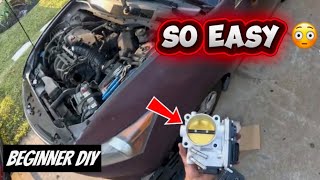
- Replace the throttle body assembly. This typically involves removing the air intake duct, disconnecting coolant lines to the throttle body, unplugging the electrical connector, and unbolting four 12mm bolts. 🎬 See this beginner-friendly throttle body replacement walkthrough.
- After installation, reconnect all lines and the battery. Perform the 'Throttle Body Relearn' or 'Idle Relearn' procedure.
- Idle Relearn Procedure: Ensure all electrical accessories are off. Start the engine and hold it at 3,000 RPM until the radiator fans cycle on. Then, let the engine idle for a full 5 minutes. 🎬 Watch: How to perform an idle relearn without a scan tool.
Parts You'll Likely Need
- Throttle Body Assembly
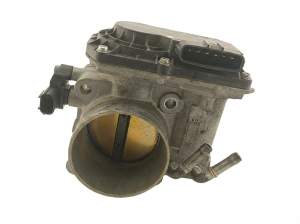
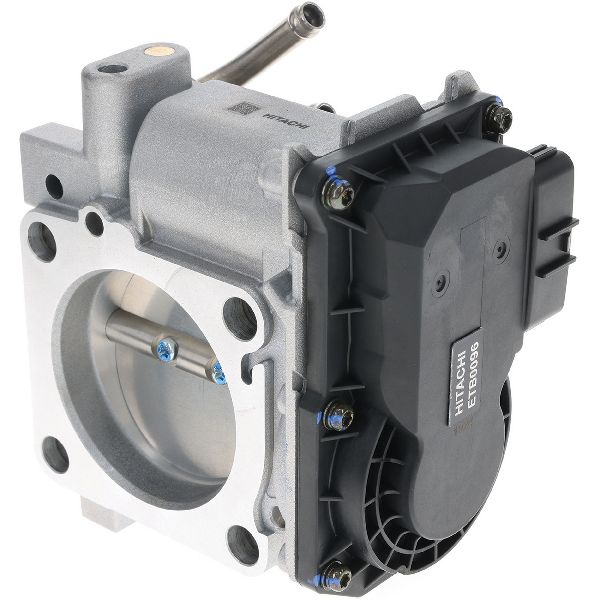
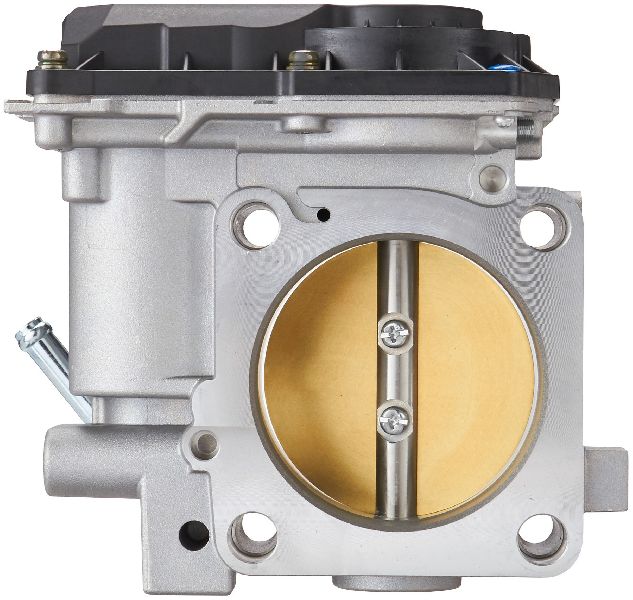
(OEM #16400-R44-A02 (for 2.4L L4, USA-built models), 16400-R40-A02 (for 2.4L L4, Japan-built models), 16400-R70-A03 (for 3.5L V6). Always verify with VIN.)— This is the primary fix because the faulty Throttle Position Sensor (TPS) is integrated into this assembly and is not available as a separate component for this vehicle generation.
Trusted brands: Honda (OEM), Hitachi (often the OEM supplier), Bosch, Standard Motor Products, Spectra Premium
OEM price range: $350-$550
Aftermarket price range: $150-$350 - Throttle Body Gasket
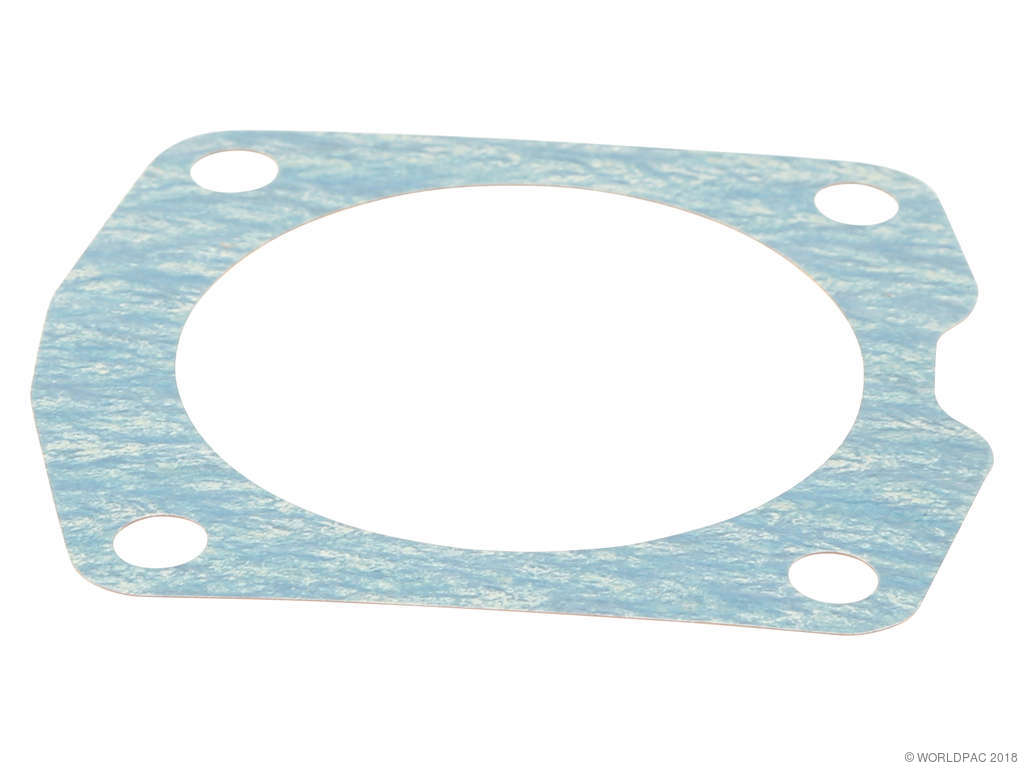
(OEM #16176-R40-A00 (for 2.4L L4))— The gasket should always be replaced when the throttle body is removed to prevent vacuum leaks. Some new throttle bodies may include one.
Trusted brands: Honda (OEM), Fel-Pro, Mahle
OEM price range: $5-$15
Aftermarket price range: $3-$10
Related Codes That Often Appear With This One
- P0123 — P0123 is 'Throttle Position Sensor A Circuit High'. Since sensors A and B are in the same throttle body housing, a failure that affects one can sometimes affect the other, leading to both codes appearing together. This is a common pairing for this fault.
Platform-Specific Known Issues
- Engine Differences (4-Cylinder vs. V6): The 2.4L 4-cylinder (K24Z engine) and 3.5L V6 (J35Z engine) use different throttle body part numbers. The replacement procedure is similar, but part numbers are not interchangeable. For the 2.4L, there are also different part numbers for USA-built vs. Japan-built models.
Mechanic-Grade Diagnostic Values
- TPS 'B' Voltage (Live Data) — expected: Should decrease from ~5.0V at closed throttle to ~0.5V at wide-open throttle. It should move smoothly and inversely to TPS 'A'.. Failure: A static voltage reading that is stuck high, typically above 4.75V or 4.8V, regardless of throttle pedal input.
- TPS 'A' Voltage (Live Data) — expected: Should increase from ~0.5V at closed throttle to ~4.5V at wide-open throttle. This is used for cross-checking against TPS 'B'.. Failure: While not the direct cause of P0223, if this signal is also erratic or fails to correlate with TPS 'B', it may trigger a P2135 code.
- TPS Reference Voltage at Connector — expected: Approximately 5.0V. This is the voltage supplied by the PCM to the sensor.. Failure: Significantly lower or no voltage indicates a wiring problem or an issue with the PCM, not the sensor itself.
Hidden / Shadow Codes Worth Checking
- P0123, P2135: While not hidden codes, their presence alongside P0223 is critical. P0123 (TPS A Circuit High) points to a more comprehensive failure within the throttle body. P2135 (TPS A/B Incorrect Voltage Correlation) indicates the two sensors disagree, which also points to an internal throttle body fault. The diagnostic approach may change if these codes are present. (see via Standard OBD-II scanner.)
Scan Tool Commands That Help
- Advanced OBD-II Scanner (e.g., Foxwell, Autel): Throttle Position (TP) Learning Value Reset — Use this function after replacing or cleaning the throttle body to clear old calibration data from the PCM before performing the idle relearn procedure.
- Bidirectional Scan Tool: Throttle Actuator Control (TAC) Test / Throttle Position Test — This command allows the technician to command the throttle plate to open and close electronically. While commanding movement, the technician can watch the live data for TPS A and TPS B voltages to see if they respond correctly. If the plate moves but the voltage for TPS B does not, it confirms a failed sensor.
Wiring & Ground Locations
- Throttle Body Connector — Directly on the electronic throttle body assembly, where the engine wiring harness connects.. This is a 6-pin connector and is the primary point of failure for wiring issues like corrosion, moisture intrusion, or loose pins that can cause a high voltage reading.
- ECM/PCM Connector C, Pin C21 — At the Powertrain Control Module (PCM), which is typically located behind the center console or in the passenger footwell area.. This is the specific terminal where the TPS 'B' signal wire terminates. A continuity test between this pin and the corresponding pin at the throttle body connector can definitively rule out a wiring break or short.
- G101 — On the driver's side of the engine bay, typically bolted to the intake manifold plenum or the thermostat housing.. This is a primary power and logic ground for the ECU/PCM. A loose or corroded G101 ground can cause a floating ground reference, leading to erratic and incorrect voltage readings from various sensors, including the TPS.
OEM Part Supersession History
16400-R40-A01→16400-R40-A02— Standard part revision by the manufacturer.
Heads up: The parts are interchangeable for 2008-2010 2.4L Japan-built models, with the A02 being the newer, preferred version.
Diagnostic Flowchart
Used vs. New Parts: Buying Guide for This Vehicle
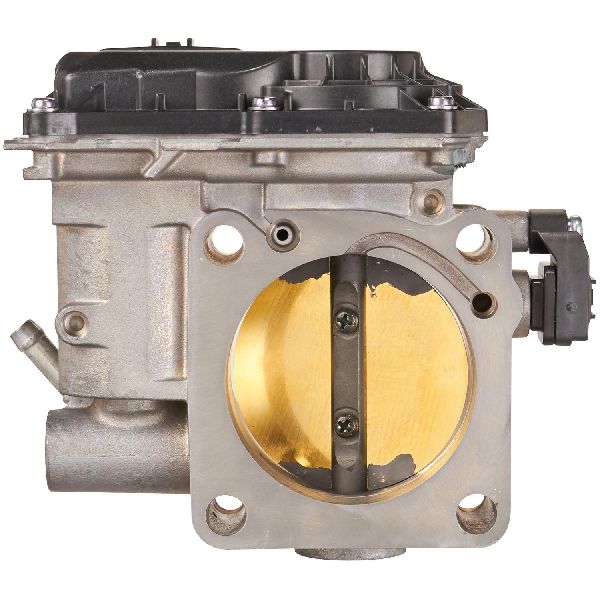
When a used part is the smart pick: A used OEM throttle body from a low-mileage, reputable salvage yard can be a smart choice. The electronics in genuine Honda/Hitachi parts are often more reliable and better calibrated than those in new, non-OEM aftermarket parts.
Donor-vehicle mileage cap: roughly under 80000 miles for the part to have meaningful remaining life.
What to inspect on the donor part:
- Verify the part is from a vehicle with a known, lower mileage.
- Inspect the connector pins for any signs of corrosion, moisture, or damage.
- Ensure the throttle plate moves freely by hand (if applicable) and is not caked with excessive carbon.
- Buy from a seller that offers a short warranty or return period in case the part is faulty.
OEM-only on this vehicle (don't cheap out):
- While not strictly 'OEM-only', the throttle body assembly is a sensitive electronic component. Cheap, unbranded aftermarket units are a significant gamble and often fail prematurely or cause persistent idle/drivability issues.
Aftermarket brands forum-validated for this vehicle:
- Hitachi (often the original OEM supplier)
- Bosch
- Standard Motor Products (SMP)
Brands owners have reported issues with on this vehicle:
- Unbranded, 'white-box' parts from online marketplaces with no warranty or brand reputation.
Real Owner Stories
Aggregated from forums and TSBs cited above. Mileages and costs reflect what owners reported in those sources.
2008 Honda Accord EX-L 4-cylinder
Symptoms: The car cranks but does not start. The check engine light was on, and a scan tool showed codes P0123 and P0223.
What fixed it: The owner did not report the final fix. A forum commenter suggested a diagnostic path: inspect the wiring to the throttle position sensor, and if the wiring is intact, replace the entire throttle body assembly.
Source hint: r/MechanicAdvice on Reddit - '2008 Honda Accord EX-L codes P0123 and P0223'
Related OBD-II Codes
Frequently Asked Questions
Can I just replace the Throttle Position Sensor (TPS) on my 2010 Honda Accord to fix code P0223?
Is a special procedure required after installing a new throttle body on my Accord?
My Accord has a P0223 code and is cranking but won't start. Is this a common symptom?
Is the throttle body for the 4-cylinder Accord the same as the one for the V6?
What should the 'TPS Sensor B' voltage look like on a scan tool if it's causing a P0223 code?
Is it a good idea to buy a used throttle body from a junkyard for my Accord?
Helpful Videos

Used OEM Parts in Stock
New Aftermarket Parts Available


The information in this article is provided for general reference and educational purposes only. Vehicle specifications, procedures, and part compatibility can vary by production date, trim level, and region. Always consult your vehicle's factory service manual and verify part numbers before purchasing or performing repairs. Safety-critical components such as airbags, seat belts, and braking systems should be installed by a qualified professional.
- Honda Accord:
- 🧭 Diagnostic Flowchart
- 🎬 Helpful Videos
- 🛍️ Shop This Part
- What's Unique About the 2008-2012 Honda Accord
- Symptoms You May Notice
- Most Likely Causes
- Rare But Worth Checking
- Diagnosis Steps
- Parts You'll Likely Need
- Related Codes That Often Appear With This One
- Platform-Specific Known Issues
- Mechanic-Grade Diagnostic Values
- Hidden / Shadow Codes Worth Checking
- Scan Tool Commands That Help
- Wiring & Ground Locations
- OEM Part Supersession History
- Used vs. New Parts: Buying Guide for This Vehicle
- Real Owner Stories
- 2008 Honda Accord EX-L 4-cylinder
- Related OBD-II Codes
- Frequently Asked Questions
- 🎟️ Get 5% Off