

P0223 on 2017-2022 Honda CR-V: Throttle Position Sensor 'B' Circuit High Fixes
This code indicates a high voltage reading from the Throttle Position Sensor (TPS) 'B'. On the 2017-2022 CR-V with the 1.5L Turbo engine, this almost always points to a faulty throttle body assembly, as the sensor is integrated. Expect to replace the entire throttle body, which costs between $250-$500 for the part. A 'relearn' procedure is required after replacement, which can be done without a special scan tool.
- P0223 on a 2017-2022 CR-V with the 1.5T engine means the 'B' throttle position sensor is sending a high voltage signal (over 4.8V).
- The most common cause is a failed throttle body assembly, as the sensor is built-in. This is a known issue on the 1.5T engine platform shared with the Civic and Accord.
- Symptoms include a check engine light, poor acceleration, and the vehicle entering a low-power 'limp mode'.
- Diagnosis involves checking the wiring first (especially if recently serviced), but the fix is usually replacing the entire throttle body.
- After replacement, a 'throttle relearn' procedure is required, which can be performed manually without a dealer scan tool.
What's Unique About the 2017-2022 Honda CR-V
On the 5th generation Honda CR-V (2017-2022) and its platform mates like the Civic and Accord with the 1.5L Turbo engine, the throttle position sensors (both 'A' and 'B') are integrated directly into the electronic throttle body assembly. Unlike older vehicles where the sensor could be replaced separately, Honda designed this component as a single, non-serviceable unit. This means a P0223 code almost always necessitates the replacement of the entire throttle body, not just the sensor itself. This design choice simplifies manufacturing but increases the cost of this specific repair for the owner.
Symptoms You May Notice
- Check Engine Light is on
- Vehicle enters 'limp mode' with drastically reduced engine power
- Poor, delayed, or no acceleration
- Hesitation or stumbling during acceleration
- Engine may be hard to start or fails to start
- Unstable, rough, or erratic idle
- Harsh or delayed shifting in automatic transmissions
- Replacing the Accelerator Pedal Position (APP) Sensor. While the APP sensor is part of the overall throttle control system, P0223 specifically points to the sensor at the throttle body, not the pedal.
Most Likely Causes
- Faulty Throttle Body Assembly 🔴 High Probability → Shop Fuel Injection Throttle Body The Throttle Position Sensor (TPS) is integrated into the throttle body and is not sold as a separate component for this vehicle generation. Failure of the internal sensor electronics requires replacement of the whole assembly. This is a known issue on the 1.5T engine platform.
How to confirm: After confirming wiring is intact, use a diagnostic scan tool to monitor the live data for TPS 'B' voltage. If the voltage is stuck high (e.g., near 5.0V) and does not change as the throttle plate is manually moved (with engine off), the sensor inside the throttle body has failed.
Typical fix: Replace the entire throttle body assembly. After replacement, a throttle body relearn procedure must be performed.
Est. part cost: $250 - $500 - Wiring or Connector Issue 🟡 Medium Probability The 6-pin connector at the throttle body can become corroded or have a pin lose tension. More commonly, users may inadvertently trigger this code after performing other maintenance. Forgetting to plug the connector back in securely after cleaning the throttle body will immediately set codes P0223 and P0123 upon starting the engine.
How to confirm: Visually inspect the wiring harness and the 6-pin connector at the throttle body for any signs of damage, corrosion, or loose pins. Use a multimeter to check for continuity and for a short to power on the signal wire (Pin 4, often called THL2) and the ground wire (often called SG3). Continuity should be less than 1 ohm.
Typical fix: Repair the damaged section of the wiring harness or clean/replace the connector. Ensure the connector is fully seated.
Est. part cost: $10 - $50
Rare But Worth Checking
- Faulty Powertrain Control Module (PCM): → Shop Engine Control Module (ECM) This is extremely rare. The PCM should only be considered after all other possibilities, including the throttle body and wiring, have been exhaustively tested and ruled out. PCM failure often presents with multiple, unrelated fault codes.
Diagnosis Steps
- Verify the code P0223 with an OBD-II scanner. Check for any other related codes, especially P0123.
- Visually inspect the throttle body area. If work was recently performed, double-check that the 6-pin electrical connector is fully seated and locked.
- Turn the ignition off and disconnect the 6-pin connector from the throttle body. Inspect the connector and harness for any damage, corrosion, or bent pins.
- Turn the ignition to the ON position (engine off).
- Using a multimeter, measure the voltage between the signal wire terminal (Pin 4, THL2) and a good body ground. A reading of approximately 5.0V at this stage points towards a faulty throttle body.
- If voltage is not correct, check for continuity on the signal wire (THL2) and ground wire (SG3) between the throttle body connector and the corresponding PCM connectors. Resistance should be less than 1.0 ohm.
- If all wiring checks out and the voltage was stuck high, the throttle body assembly is faulty and must be replaced.
- After replacing the throttle body, perform the throttle position relearn procedure. This can be done with a Honda HDS scan tool or manually.
- Manual Relearn Procedure:
- a. Ensure all electrical accessories (A/C, radio, lights) are turned OFF.
- b. Start the engine and let it warm up completely. The cooling fans should cycle at least once.
- c. Turn the engine off.
- d. Turn the ignition to ON (II) for 2 seconds, then start the engine.
- e. Hold the engine speed at 3,000 RPM (in Park or Neutral) with no load until the cooling fans turn on, or until the engine coolant temperature reaches 194°F (90°C).
- f. Let the engine idle for at least 5 minutes with no throttle input and all electrical accessories off. Note: If the cooling fans run during this period, you must wait until they stop and then continue timing for the 5 minutes.
- g. The relearn is complete. Turn the engine off and restart to verify normal idle.
Parts You'll Likely Need
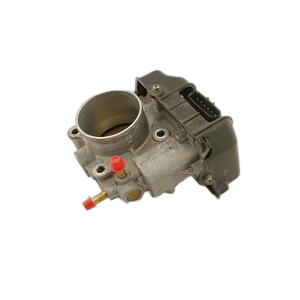
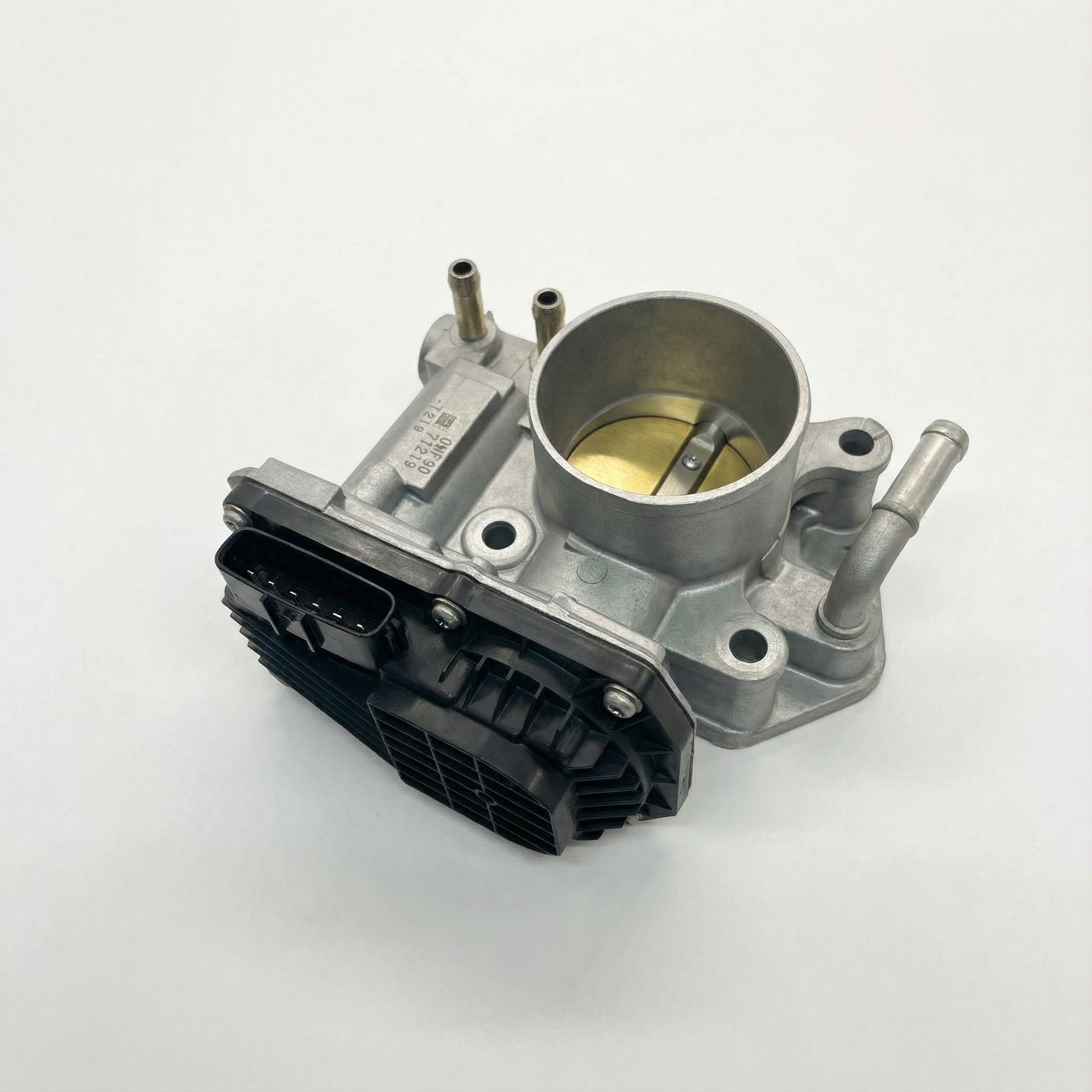
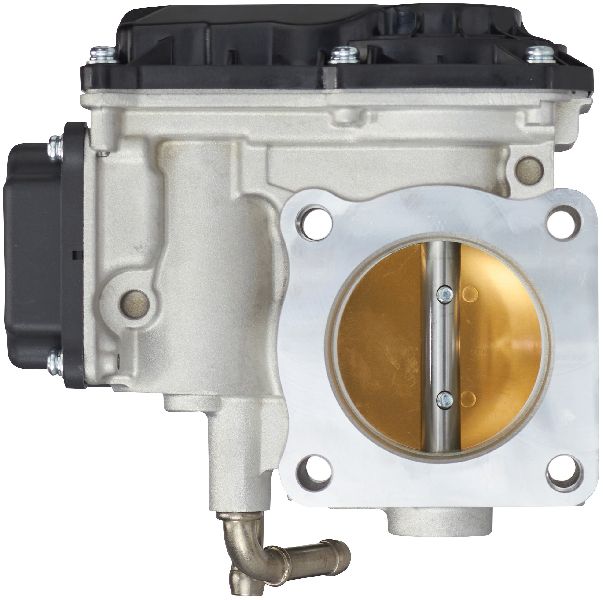
- Throttle Body Assembly
(OEM #16400-5LA-A01)— The Throttle Position Sensor (TPS) that causes code P0223 is integrated into the throttle body. It cannot be purchased or replaced separately on the 1.5L Turbo engine. NOTE: Verify the part number with your VIN. Other similar part numbers like 16400-5K1-A01 (2.0L Hybrid) or 16400-5BA-A01 (2.0L non-turbo) are for different engines and are not interchangeable.
Trusted brands: Honda (OEM), Hitachi (Often the OEM supplier)
OEM price range: $350-$500
Aftermarket price range: $250-$400
Related Codes That Often Appear With This One
- P0123 — P0123 is 'Throttle Position Sensor 'A' Circuit High'. Since sensors 'A' and 'B' are in the same throttle body assembly, an internal electronic failure or a disconnected main connector will cause both codes to appear simultaneously.
Technical Service Bulletins (TSBs) & Recalls
- As of early 2026, no specific Technical Service Bulletin (TSB) from Honda has been identified for trouble code P0223 on the 2017-2022 CR-V. Diagnosis should follow standard workshop manual procedures.
Platform-Specific Known Issues
- Shared Failure on 1.5T Engine Platform: This issue is not unique to the CR-V. The Honda Civic (2016-2021) and Accord (2018-2022) using the same 1.5L Turbo engine experience the same P0223/P0123 codes, also caused by a failure of the integrated throttle body assembly. This indicates a platform-wide component issue rather than a model-specific one.
Mechanic-Grade Diagnostic Values
- TPS 'B' (THL2) Signal Voltage with HDS Scan Tool — expected: Should fluctuate between ~0.5V (idle) and ~4.5V (wide open throttle).. Failure: A fixed reading at or above 4.8V, even with the throttle plate closed.
- Reference Voltage at Throttle Body Connector — expected: Approximately 5.0V between the power and ground pins with the key on, engine off.. Failure: Significantly lower or no voltage, indicating a wiring issue or PCM fault.
- Continuity on Signal (THL2) and Ground (SG3) Wires — expected: Less than 1.0 ohm of resistance between the throttle body connector and the corresponding PCM connector pins.. Failure: High resistance or an open circuit (OL) indicates a broken wire.
Scan Tool Commands That Help
- Honda HDS (or equivalent bidirectional scanner): Clear DTCs — Used as the first step in diagnosis to see if the code immediately returns, confirming a hard fault.
- Honda HDS (or equivalent bidirectional scanner): Throttle Position Sensor Reset / TPS Calibration — This function resets the learned values for the throttle position. It is sometimes required after cleaning or replacing the throttle body if the manual relearn procedure fails to resolve an erratic idle.
- Advanced Scan Tool (e.g., iCarsoft, Autel): Throttle Position Test (Bi-Directional Control) — Allows the technician to command the throttle plate to open and close while observing the TPS 'A' and 'B' voltage readings in live data. If the actuator moves but the TPS 'B' voltage doesn't change, it confirms a failed sensor within the throttle body.
Wiring & Ground Locations
- G101 — On the engine block, near the transmission housing, often under the air intake box assembly.. This is a primary ground point for the engine and PCM. A corroded or loose G101 ground can cause floating voltages and intermittent high circuit codes like P0223 for various sensors.
- Throttle Body 6-Pin Connector — Directly on the electronic throttle body, mounted to the intake manifold.. This is the single connection point for both TPS sensors and the throttle actuator motor. Pin 4 (THL2) is the signal wire for TPS 'B', and Pin 3 is often the corresponding 5V reference. A bad connection here is a common cause of the code.
- PCM Connector B (51-Pin) / C (44-Pin) — The Powertrain Control Module (PCM) is located in the engine bay. The specific connectors house the pins for the throttle body circuits.. Technicians test for continuity between these connectors and the throttle body connector to rule out a wiring harness break. For example, on some models, TPS 'B' signal (THL2) goes to Pin 47 of PCM connector B.
Real Owner Repair Stories
- CRV Owners Club Forum (2018 Honda CR-V 1.5T) — Check engine light, limp mode, car would not accelerate over 20 mph. Codes P0123 and P0223 were present.
❌ Tried (didn't work) Clearing codes (they returned immediately)., Checking the electrical connector (it was secure).
✅ What actually fixed it The owner replaced the entire throttle body assembly with a new OEM part. After replacement and performing the manual idle relearn procedure, the codes were cleared and did not return. The vehicle's performance returned to normal.
Diagnostic Flowchart
Used vs. New Parts: Buying Guide for This Vehicle
When a used part is the smart pick: A used OEM throttle body from a low-mileage, rear-ended donor vehicle can be a cost-effective option, especially for a DIY repair. Since the failure is electronic, a part from a vehicle that was running perfectly before an accident is likely to have significant life left.
Donor-vehicle mileage cap: roughly under 60000 miles for the part to have meaningful remaining life.
What to inspect on the donor part:
- Verify the part number on the used unit matches the original exactly.
- Inspect the 6-pin electrical connector for any corrosion, bent pins, or damage to the plastic housing.
- Ensure the throttle plate moves freely by hand (with the unit disconnected) and is not caked with excessive carbon.
- Ask the salvage yard for the VIN of the donor car to check its history and mileage if possible.
OEM-only on this vehicle (don't cheap out):
- Throttle Body Assembly
Aftermarket brands forum-validated for this vehicle:
- Hitachi (often the original equipment manufacturer for Honda)
Brands owners have reported issues with on this vehicle:
- Unbranded, no-name parts from online marketplaces. Forum discussions frequently mention that ultra-cheap electronic parts have a high failure rate, sometimes within months, forcing a repeat of the repair.
Real Owner Stories
Aggregated from forums and TSBs cited above. Mileages and costs reflect what owners reported in those sources.
2010 Honda CR-V
Symptoms: The P0123 and P0223 codes appeared immediately after the owner cleaned the throttle body.
What fixed it: The problem was caused by forgetting to reconnect the sensor. The fix was to ensure the electrical connector was properly plugged back in.
Source hint: r/MechanicAdvice - '2010 crv codes p0123 p0223'
2010 Honda CR-V
Symptoms: Owner triggered P0123 and P0223 codes after performing a throttle body cleaning.
What fixed it: Community advice pointed to checking the electrical connection first and then performing a throttle body relearn procedure to resolve the issue.
Source hint: r/crv - '2010 crv p0123 & p0223'
Related OBD-II Codes
Frequently Asked Questions
Can I just replace the Throttle Position Sensor (TPS) on my 2017-2022 CR-V, or do I need the whole throttle body?
I just cleaned the throttle body on my CR-V and now the Check Engine Light is on with code P0223. What happened?
After installing a new throttle body on my CR-V, is there a special procedure I need to do?
Is this P0223 throttle body issue unique to the Honda CR-V?
Are there any official Honda recalls or Technical Service Bulletins (TSBs) for P0223 on the 2017-2022 CR-V?
What are the main symptoms of a P0223 failure on my CR-V besides the engine light?
Is it safe to use a cheap, unbranded aftermarket throttle body for this repair?
Used OEM Parts in Stock
New Aftermarket Parts Available

The information in this article is provided for general reference and educational purposes only. Vehicle specifications, procedures, and part compatibility can vary by production date, trim level, and region. Always consult your vehicle's factory service manual and verify part numbers before purchasing or performing repairs. Safety-critical components such as airbags, seat belts, and braking systems should be installed by a qualified professional.
- Honda CR-V:
- 🧭 Diagnostic Flowchart
- 🛍️ Shop This Part
- What's Unique About the 2017-2022 Honda CR-V
- Symptoms You May Notice
- Most Likely Causes
- Rare But Worth Checking
- Diagnosis Steps
- Parts You'll Likely Need
- Related Codes That Often Appear With This One
- Technical Service Bulletins (TSBs) & Recalls
- Platform-Specific Known Issues
- Mechanic-Grade Diagnostic Values
- Scan Tool Commands That Help
- Wiring & Ground Locations
- Real Owner Repair Stories
- Used vs. New Parts: Buying Guide for This Vehicle
- Real Owner Stories
- 2010 Honda CR-V
- 2010 Honda CR-V
- Related OBD-II Codes
- Frequently Asked Questions
- 🎟️ Get 5% Off