

P0223 on 2008-2013 Hyundai Genesis: Throttle Position Sensor 'B' Circuit High
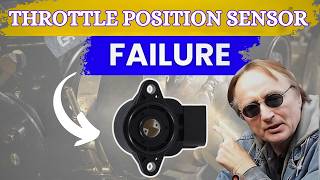
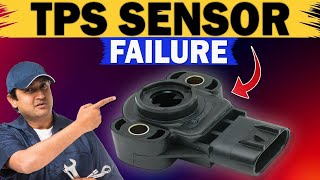
This code typically indicates a faulty throttle position sensor (TPS). On the Genesis, this often requires replacing the entire throttle body assembly. Expect to pay $250-$600 for the part and 1-2 hours of labor. Always check wiring first. For 3.8L V6 models also showing a P2135 code, a specific TSB may allow for replacing only the sensor and updating the software.
- P0223 means the secondary throttle position sensor is sending an abnormally high voltage signal to the computer.
- The most common symptom is the vehicle going into 'limp mode' with drastically reduced power.
- The most frequent fix is replacing the entire throttle body assembly, as the sensor is usually built-in.
- Before replacing parts, always inspect the wiring and connector at the throttle body for damage or corrosion.
- A related TSB for code P2135 on 3.8L V6 models confirms the TPS is a known failure point and may be replaceable separately, along with a required software update.
What's Unique About the 2008-2013 Hyundai Genesis
The first-generation Hyundai Genesis uses an electronic 'drive-by-wire' throttle system. While the P0223 code often leads to replacing the entire throttle body because the sensor is integrated, there is a known history of TPS issues on this platform. A Technical Service Bulletin (TSB 10-FL-010) for the related code P2135 on the 2009-2014 Genesis with the 3.8L V6 points to a replaceable sensor (Part No. 35107-3C100NFFF) and a mandatory software update. This is a critical distinction: if P2135 is also present on a V6, the sensor may be individually replaceable, which is a much cheaper repair than a full throttle body replacement. For the V8 models and instances of P0223 alone, replacing the entire assembly is the standard procedure.
Symptoms You May Notice
- Check Engine Light is on
- Vehicle enters 'Limp Mode' with severely reduced engine power and acceleration
- Hesitation, surging, or bucking during acceleration
- Poor or no throttle response
- Engine may stall unexpectedly, especially when returning to idle
- Rough or fluctuating idle
- Cruise control is disabled
- Replacing the accelerator pedal position sensor (APPS). The P0223 code specifically refers to the sensor at the throttle body, not the one connected to the gas pedal.
- Replacing the throttle body without checking for the applicability of TSB 10-FL-010 when code P2135 is also present on a 3.8L V6 model. This leads to unnecessary expense.
Most Likely Causes
- Faulty Throttle Body Assembly 🔴 High Probability → Shop Fuel Injection Throttle Body The Throttle Position Sensor (TPS) is integrated into the throttle body assembly and is a common failure point. Over time, the electronic components and resistive tracks within the sensor can wear out or fail, leading to incorrect voltage readings.
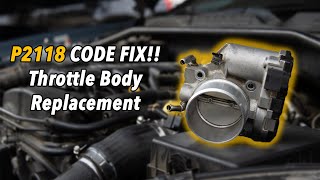
How to confirm: Using a scan tool, monitor the live data for TPS2 (Sensor 'B'). The voltage should be high at idle (around 4.0V) and decrease smoothly as the throttle is opened. If the voltage is stuck high (typically above 4.5V) and doesn't change, the sensor is bad. You can also back-probe the sensor connector with a multimeter to verify the signal wire voltage. 🎬 Watch: How to test and replace an electronic throttle body
Typical fix: Replace the entire throttle body assembly. After replacement, a throttle body relearn procedure is recommended, which often involves letting the vehicle idle for 10-15 minutes with the A/C on.
Est. part cost: $250 - $600 - Wiring or Connector Issue 🟡 Medium Probability Engine vibration and heat can cause wiring insulation to become brittle or connectors to loosen over time. The throttle body connector is located in an area susceptible to these conditions.
How to confirm: Visually inspect the wiring harness and connector going to the throttle body. Look for any frayed wires, corrosion, bent pins, or a short to power. Use a multimeter to check for the 5V reference signal, a good ground (<0.1V), and the signal wire's integrity back to the PCM.
Typical fix: Repair the damaged section of the wiring harness or clean/replace the connector.
Est. part cost: $10 - $100
Rare But Worth Checking
- Faulty Powertrain Control Module (PCM): → Shop Engine Control Module (ECM) This is very rare. All other possibilities, especially the throttle body and wiring, should be exhaustively ruled out before considering PCM replacement. A faulty PCM driver can fail to properly read the sensor's signal.
Diagnosis Steps
- Read the code and any other stored codes with an OBD-II scanner. Note if P2135 is also present.
- Using the scanner's live data function, observe the voltage readings for both TPS1 and TPS2. With the key on and engine off, slowly press the accelerator pedal. TPS1 voltage should rise smoothly from a low value, while TPS2 voltage should decrease smoothly from a high value.
- If the TPS2 voltage is stuck high (e.g., 4.75V or higher) and does not change, this confirms the 'Circuit High' condition.
- Turn the vehicle off and disconnect the throttle body electrical connector.
- Inspect the connector pins and wiring harness for any signs of damage, corrosion, or looseness.
- With the connector unplugged, use a multimeter to check for a 5V reference and a good ground at the appropriate pins on the harness side.
- If wiring is confirmed good and the fault persists, the issue is with the sensor. If P2135 is present on a 3.8L V6, consult TSB 10-FL-010 about replacing just the sensor and updating the ECM.
- For all other cases (V8 engines, or P0223 alone), the standard repair is to replace the entire throttle body assembly.
- After replacing the part, clear the codes and perform a throttle relearn procedure. This can often be done by letting the car idle for 10-15 minutes until it establishes a stable idle speed.
Parts You'll Likely Need
- Throttle Body Assembly
(OEM #35100-3C400 (for 3.8L V6, verify by VIN), 35100-3F010 (for 4.6L V8, verify by VIN))— The failing Throttle Position Sensor (TPS) that causes code P0223 is typically integrated into the throttle body and not sold separately for this vehicle, with the specific exception noted in TSB 10-FL-010 for code P2135.
Trusted brands: Hyundai (OEM), Bosch, Cardone (Remanufactured)
OEM price range: $400-$600
Aftermarket price range: $250-$450
Related Codes That Often Appear With This One
- P0123 — This code is for 'Throttle/Pedal Position Sensor/Switch A Circuit High'. If both sensors show a high voltage fault, it could point to a shared power or ground circuit issue, or a major internal failure of the throttle body.
- P2135 — This code indicates 'Throttle/Pedal Position Sensor/Switch A/B Voltage Correlation'. It means the signals from the two throttle position sensors don't agree with each other, which is a very common companion code when one sensor fails. On the Genesis 3.8L V6, this code is the primary subject of TSB 10-FL-010.
Technical Service Bulletins (TSBs) & Recalls
- TSB 10-FL-010 (related issue): Addresses TPS failure causing code P2135 on 3.8L V6 models, requiring sensor replacement and an ECM update.
- TSB 13-FL-002 (related principle): While for other models, this TSB recommends thoroughly cleaning the electronic throttle body before replacement for performance-related codes, which is a good first step if symptoms are minor. 🎬 See: How to clean and reset a Genesis 3.8 throttle body
Platform-Specific Known Issues
- A Technical Service Bulletin (TSB 10-FL-010) was issued for a related TPS code (P2135) on the 2009-2014 Genesis with the 3.8L V6 engine. It involved replacing a faulty TPS (Part No. 35107-3C100NFFF) and performing a mandatory ECM software update. This indicates a known weakness in the TPS for this platform and provides a specific, less expensive repair path if P2135 is the triggering code.
Mechanic-Grade Diagnostic Values
- P0223 DTC Trigger Condition — expected: TPS2 voltage should be below 4.75V. Failure: The ECM detects that the TPS2 output signal is above 4.75V for more than 0.1 seconds.
- TPS1 vs. TPS2 Voltage Correlation (Key On, Engine Off) — expected: TPS1 voltage starts low (~0.0V) and increases with throttle opening. TPS2 voltage starts high (~5.0V) and decreases. The sum of their voltages should remain relatively constant.. Failure: TPS2 voltage is stuck high (at or near 5.0V) and does not decrease as the throttle plate is opened.
- TPS Voltage vs. Throttle Angle — expected: TPS1 at 0°: ~0.0V, at 100°: ~4.5V. TPS2 at 0°: ~5.0V, at 100°: ~0.5V.. Failure: Readings deviate significantly from this expected inverse relationship, or TPS2 shows no change.
- Sensor Ground Circuit at Throttle Body Connector — expected: Less than 0.1V (or minimal resistance to a known good ground). Failure: High voltage or resistance reading, indicating an open or poor ground connection.
- Sensor 5V Reference at Throttle Body Connector — expected: Approximately 5.0V with key on, engine off.. Failure: Significantly lower or no voltage, indicating a wiring issue or a problem with the ECM's 5V reference circuit.
Scan Tool Commands That Help
- Manual Procedure (No Scan Tool Required): Throttle Body Relearn/Reset — Required after cleaning or replacing the throttle body to allow the ECM to learn the new closed and wide-open throttle positions. Failure to do so can result in an unstable or high idle.
Wiring & Ground Locations
- ECM (Engine Control Module) — For the 3.8L V6, it is located at the left rear of the engine compartment.. The TPS signals are sent directly to the ECM. A poor connection at the ECM connector could mimic a sensor fault.
- GE04 (Ground) — Located at the lower right rear of the engine compartment.. This is a primary engine compartment ground. A loose or corroded connection here could affect various sensors, including the shared ground for the TPS.
- GM01 (Ground) — Located at the left end of the dash.. This is a key interior/dash ground point. While less likely to be the primary cause, it's part of the overall vehicle grounding scheme that can affect module performance.
- Engine Block / Intake Manifold Grounds — Multiple ground straps and points exist, commonly on the intake manifold, engine block, and near the starter mounting bolts.. The throttle body relies on a clean engine ground. A missing or corroded ground strap between the engine and chassis can cause floating ground issues, leading to erratic sensor readings.
Model Year Variations Within This Range
- 2012-2013: Hyundai changed the throttle body design for the 3.8L engine midway through the 2012 model year on the related Genesis Coupe platform. This strongly suggests a similar change may have occurred on the sedan. It is critical to verify the correct part number by VIN for any Genesis within this range, as early 2012 and late 2012/2013 models may use different throttle bodies.
Diagnostic Flowchart
Other Known Issues on This Vehicle
Issues unrelated to this code that are worth knowing about as an owner of this generation:
- ZF 6-Speed Automatic Transmission Problems 🔴 High — Common on 2009-2011 models, especially at higher mileage (70k+ miles). Symptoms include harsh shifting, delayed engagement, and gear slipping. (Ref: TSB 15-AT-005 addresses general drivability problems.)
- Steering Rack Noise / Clunking 🟠 Medium — A clunking or rattling noise may develop in the steering rack when turning. This is a known issue across many Hyundai models of the era. (Ref: TSB 18-ST-003 (for other models but similar issue) describes replacing the steering rack support yoke to fix the noise.)
- No Sound from Speakers / Amplifier Failure 🟠 Medium — A very common complaint where the audio system suddenly produces no sound from any source. The issue is almost always a failure of the factory amplifier.
- Rough Idle or Hard Start When Cold 🟡 Low — Owners report difficulty starting or a very rough idle that smooths out after warming up. This can sometimes be related to carbon buildup on intake valves or the throttle body. (Ref: TSB 10-FL-002 (for other models) addresses similar issues with an ECM update for fuel compatibility.)
Used vs. New Parts: Buying Guide for This Vehicle
When a used part is the smart pick: A used OEM throttle body from a reputable salvage yard is often a reliable and significantly cheaper alternative to a new dealer part, especially if the vehicle is older and the budget is tight. Since this is a common failure, a part from a lower-mileage, accident-damaged vehicle can be a smart buy.
Donor-vehicle mileage cap: roughly under 80000 miles for the part to have meaningful remaining life.
What to inspect on the donor part:
- Verify the part number on the donor part matches your original exactly.
- Inspect the electrical connector pins for any signs of corrosion, bending, or damage.
- Look at the throttle plate; it should be relatively clean without excessive carbon buildup, which might indicate other engine issues.
- Ensure there are no cracks or damage to the plastic housing of the sensor/motor assembly.
OEM-only on this vehicle (don't cheap out):
- While aftermarket is available, many professional technicians recommend using a genuine OEM (Hyundai/Kia) or OEM-supplier (Bosch) part for electronic throttle bodies to ensure longevity and proper calibration.
Aftermarket brands forum-validated for this vehicle:
- Cardone (Remanufactured)
- Dorman
- Standard (SMP)
Brands owners have reported issues with on this vehicle:
- Unbranded, no-name parts from online marketplaces should be avoided, as their internal electronics may not meet OEM specifications for accuracy and durability.
Real Owner Stories
Aggregated from forums and TSBs cited above. Mileages and costs reflect what owners reported in those sources.
2012 Hyundai Genesis 3.8L V6
Symptoms: Vehicle experienced limp mode with code P2135.
What fixed it: TPS sensor replacement and ECU update as per the TSB.
Source hint: https://genesisowners.com/genesis-forum/threads/p2135-and-limp-mode.16881/
2009 Hyundai Genesis 4.6L V8
Symptoms: TPS-related codes and drivability issues.
What fixed it: Replacement of the entire throttle body unit.
Source hint: https://genesisowners.com/genesis-forum/threads/throttle-body-replacement-question.10098/
Documented NHTSA Reports
Cross-Manufacturer Reference: Hyundai Santa Fe
Symptoms: An owner reported active codes P0223, P0445, and P2106. A compression and leak down test revealed low compression in 3 out of 4 cylinders, with air blowing toward the valve cover, leading technicians to suspect faulty piston rings (NHTSA ODI #10845644).
Related OBD-II Codes
Frequently Asked Questions
Does TSB 10-FL-010 apply to my 2012 Hyundai Genesis 3.8L V6 with code P2135?
I have a Genesis 4.6L V8; can I just replace the sensor like the V6 models?
What is the recommended 'relearn' procedure after I replace the throttle body?
Could my Genesis's rough idle when cold be related to the P0223 code?
Is there a specific part number for the TPS sensor mentioned in the Hyundai technical bulletins?
Are there any other major issues I should look out for on my 2009-2011 Genesis while fixing this?
Helpful Videos


The information in this article is provided for general reference and educational purposes only. Vehicle specifications, procedures, and part compatibility can vary by production date, trim level, and region. Always consult your vehicle's factory service manual and verify part numbers before purchasing or performing repairs. Safety-critical components such as airbags, seat belts, and braking systems should be installed by a qualified professional.
- Hyundai Genesis:
- 🧭 Diagnostic Flowchart
- 🎬 Helpful Videos
- What's Unique About the 2008-2013 Hyundai Genesis
- Symptoms You May Notice
- Most Likely Causes
- Rare But Worth Checking
- Diagnosis Steps
- Parts You'll Likely Need
- Related Codes That Often Appear With This One
- Technical Service Bulletins (TSBs) & Recalls
- Platform-Specific Known Issues
- Mechanic-Grade Diagnostic Values
- Scan Tool Commands That Help
- Wiring & Ground Locations
- Model Year Variations Within This Range
- Other Known Issues on This Vehicle
- Used vs. New Parts: Buying Guide for This Vehicle
- Real Owner Stories
- 2012 Hyundai Genesis 3.8L V6
- 2009 Hyundai Genesis 4.6L V8
- Documented NHTSA Reports
- Cross-Manufacturer Reference: Hyundai Santa Fe
- Related OBD-II Codes
- Frequently Asked Questions
- 🎟️ Get 5% Off