

P0223 on 2013-2018 Hyundai Santa Fe 3.3L V6: Throttle Sensor 'B' Circuit High Causes and Fixes
On a 2013-2018 Santa Fe with the 3.3L V6, code P0223 is almost always caused by a failed electronic throttle body assembly. The internal sensor fails, forcing the vehicle into a low-power 'limp mode'. The fix is to replace the entire throttle body, which costs around $400-$600 for an OEM part and is a DIY-friendly repair. This issue is shared with platform mates like the Kia Sorento and Hyundai Azera using the same engine.
- P0223 on a 2013-2018 Santa Fe 3.3L almost certainly means the entire electronic throttle body assembly needs to be replaced due to an integrated, non-serviceable sensor failure.
- The vehicle will enter a dangerous 'limp mode' with severely restricted power; driving is not recommended.
- Before replacement, a quick inspection of the wiring connector and cleaning of the throttle body bore are worthwhile, though unlikely to be the final fix.
- Companion codes P2135 and P2106 are extremely common and confirm the diagnosis.
- After replacement, a simple, tool-free 'relearn' procedure is necessary to calibrate the new part.
What's Unique About the 2013-2018 Hyundai Santa Fe
On this specific Hyundai Santa Fe with the 3.3L V6 engine, the throttle position sensors (TPS) are integrated directly into the electronic throttle body assembly and are not sold as separate components. While some other Hyundai models or older generations allowed for individual sensor replacement, a P0223 code on this vehicle almost always points to an internal failure of the entire throttle body unit.
Symptoms You May Notice
- Check Engine Light is on
- Vehicle enters 'limp mode' (severely reduced engine power and acceleration)
- Engine speed limited (may not rev past 2000-2500 RPM)
- Poor or no acceleration
- Hesitation or stumbling on acceleration
- Rough or unstable idle
- Engine may stall unexpectedly
- Unresponsive accelerator pedal.
- Replacing the Accelerator Pedal Position (APP) sensor. Code P0223 specifically refers to the sensor circuit on the throttle body ('B' circuit), not the sensor connected to the gas pedal.
Most Likely Causes
- Failed Electronic Throttle Body Assembly 🔴 High Probability → Shop Fuel Injection Throttle Body The internal electronic components of the integrated Throttle Position Sensor (TPS) wear out over time, a common issue on this platform. The sensor is not available as a separate part, necessitating the replacement of the entire assembly.
How to confirm: Using a scan tool with live data, monitor the voltage for TPS Sensor 'B' (sometimes labeled TPS2). If the voltage is stuck high (typically over 4.7V) and does not change as the throttle is manually opened and closed (with engine off, key on), the sensor within the assembly has failed.
Typical fix: Replace the entire electronic throttle body assembly. After replacement, a throttle relearn procedure is required.
Est. part cost: $350-$600 - Dirty Throttle Body ⚪ Low Probability → Shop Fuel Injection Throttle Body Gasoline Direct Injection (GDI) engines, like the Lambda II, are prone to carbon buildup in the intake system. This can cause the throttle plate to stick or move improperly, which can sometimes confuse the sensors and trigger a fault code.
How to confirm: Remove the intake air duct from the throttle body and visually inspect the throttle plate and bore for significant black carbon deposits that may restrict movement.
Typical fix: Thoroughly clean the throttle plate and bore using a dedicated throttle body cleaner and a soft cloth or brush. A throttle relearn procedure should be performed after cleaning.
Est. part cost: $10-$20
Rare But Worth Checking
- Wiring Harness or Connector Issue: Although less common than outright throttle body failure, it's worth checking. Engine bay heat and vibration can damage the wiring or corrode the connector pins leading to the throttle body. Visually inspect the harness for any frayed wires and ensure the connector is clean, secure, and free of corrosion before replacing parts. Rodent damage to wiring has also been reported as a cause.
- Powertrain Control Module (PCM) Fault: → Shop Engine Control Module (ECM) This is extremely rare, but a malfunctioning PCM can incorrectly interpret sensor data or fail to send the correct reference voltage. This should only be considered after all other possibilities, including the throttle body and wiring, have been definitively ruled out by a professional.
Diagnosis Steps
- Connect an OBD-II scanner and confirm P0223 is present. Note any other throttle-related codes like P2135 or P2106, as they strongly support the diagnosis.
- Using the scanner's live data function, monitor the voltage readings for both TPS Sensor 'A' and TPS Sensor 'B'.
- With the key on and engine off, observe the TPS 'B' voltage. It will likely be stuck high (e.g., >4.7V) and will not respond to accelerator pedal input.
- Visually inspect the throttle body's electrical connector and wiring harness for any signs of damage, corrosion, loose connections, or rodent chew marks.
- Remove the intake boot and inspect the throttle body bore and plate for heavy carbon buildup. If significant buildup is present, clean it thoroughly with throttle body cleaner as per TSB 13-FL-002.
- After cleaning, clear the codes and perform a throttle relearn procedure. If the code returns immediately, the throttle body assembly has failed internally.
- If the code persists after cleaning and the wiring appears intact, replace the entire throttle body assembly.
- After replacement, perform the throttle relearn procedure to calibrate the new part.
Parts You'll Likely Need
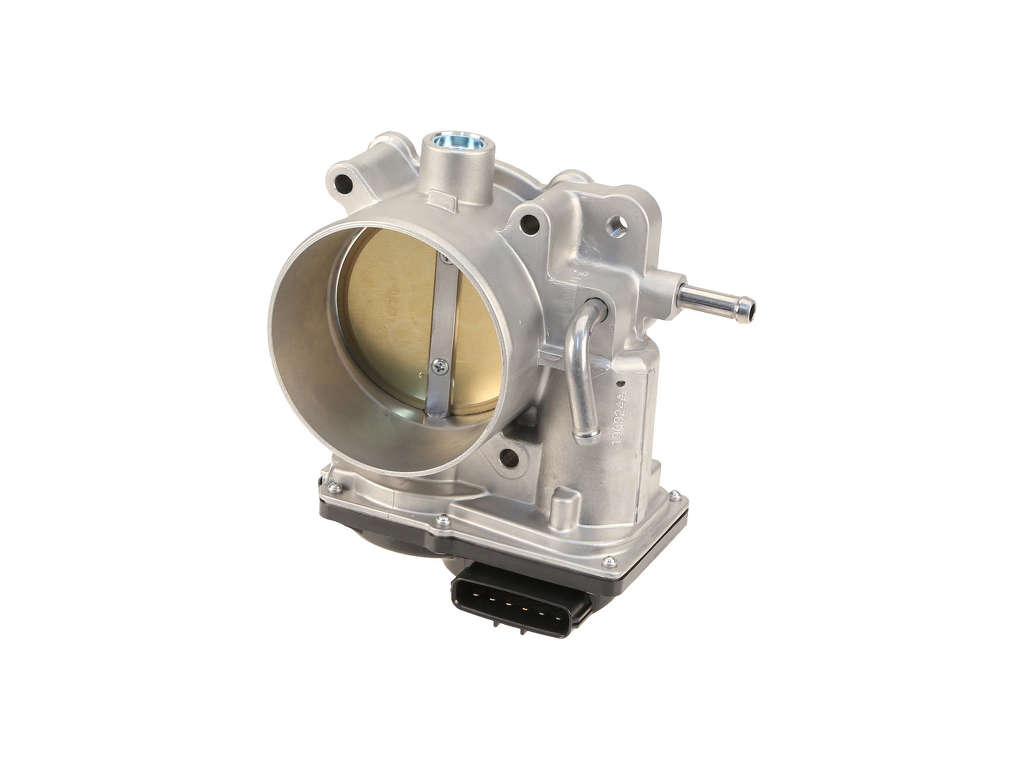
- Electronic Throttle Body Assembly
(OEM #35100-3CAA0)— This is the most common failure for code P0223 on this vehicle. The throttle position sensor (TPS) is integrated into this assembly and cannot be replaced separately.
Trusted brands: Hyundai (OEM), Bosch, Standard Motor Products (SMP), Cardone (Remanufactured)
OEM price range: $345-$600
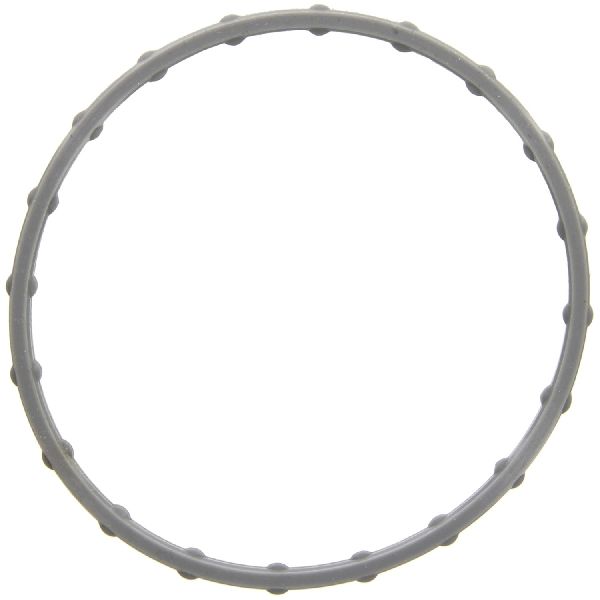
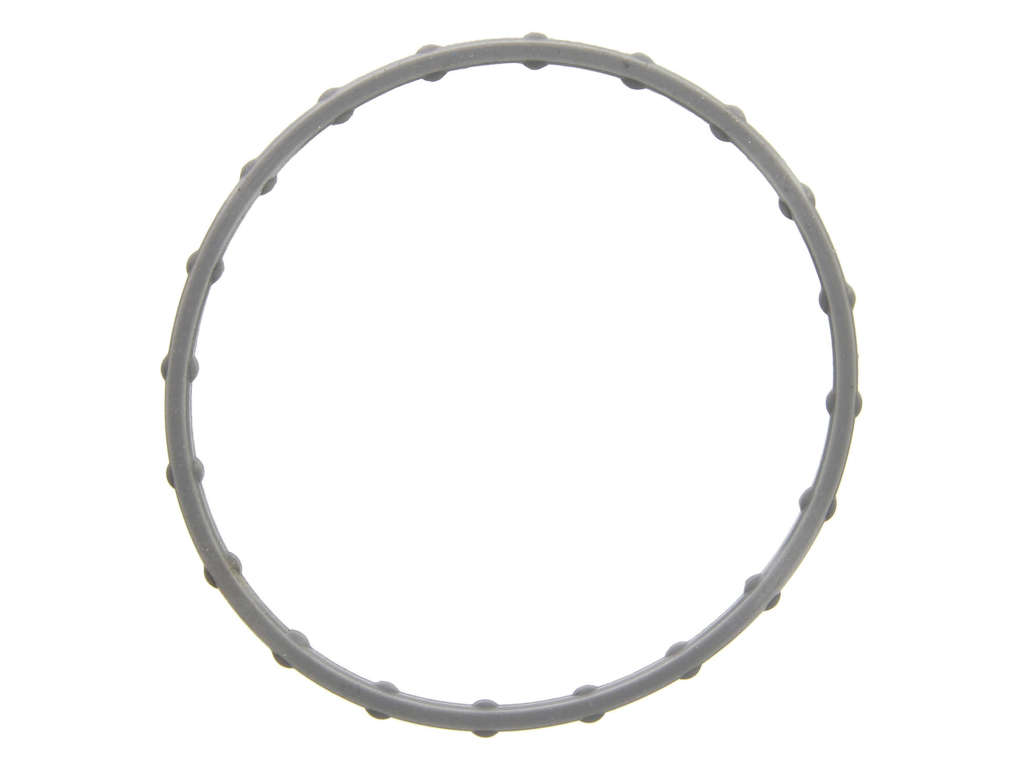
Aftermarket price range: $100-$370 - Throttle Body Gasket
(OEM #35150-3C200 (example, verify with VIN))— It is best practice to replace the gasket whenever the throttle body is removed to ensure there are no vacuum leaks after the repair.
Trusted brands: Fel-Pro, Mahle, Hyundai (OEM)
OEM price range: $5-$15
Aftermarket price range: $3-$10
Related Codes That Often Appear With This One
- P2135 — This code for 'Throttle/Pedal Position Sensor 'A'/'B' Voltage Correlation' is very common with P0223. It means the computer sees a disagreement between the two TPS signals, which is a direct result of the 'B' sensor failing high while the 'A' sensor reads normally.
- P2106 — This code, 'Throttle Actuator Control System - Forced Limited Power', is informational. It confirms the PCM has intentionally put the vehicle into 'limp mode' as a direct result of the critical fault reported by P0223.
- P0123 — This is the companion code for the primary sensor, 'Throttle/Pedal Position Sensor 'A' Circuit High'. Seeing both codes together points strongly to a complete internal failure of the throttle body or a shared wiring issue affecting both sensor circuits.
Technical Service Bulletins (TSBs) & Recalls
- TSB 13-FL-002: While not for P0223 specifically, this bulletin provides the official procedure for cleaning the Electronic Throttle Control (ETC) throttle body to resolve rough idle or other running issues caused by carbon deposits, which can be a contributing factor or a first diagnostic step.
Platform-Specific Known Issues
- A throttle body relearn procedure is required after cleaning or replacement. This can often be accomplished without a scan tool by warming up the engine, turning the ignition to the 'ON' position (engine off) for 15 seconds, then 'OFF' for 5 seconds, and repeating this cycle 5 times. You may hear the throttle plate moving during this process. Alternatively, disconnecting the battery for several minutes can also reset adaptations.
Mechanic-Grade Diagnostic Values
- TPS Sensor 'B' (TPS2) Voltage — expected: Decreases from ~5.0V (throttle closed) to ~0.5V (throttle wide open).. Failure: Voltage is stuck high, typically > 4.75V, regardless of throttle position. This triggers the P0223 code.
- TPS Sensor 'A' (TPS1) Voltage — expected: Increases from ~0.0V-0.5V (throttle closed) to ~4.5V (throttle wide open).. Failure: While not the cause of P0223, an erratic or non-responsive reading on this sensor would indicate a definite throttle body failure, often setting code P2135.
- Sensor Reference Voltage at Throttle Body Connector — expected: ~5.0V at the reference voltage pin (Pin 4 on the 6-pin connector).. Failure: Significantly lower or no voltage indicates a wiring or PCM issue, not a failed throttle body.
- Sensor Ground Circuit at Throttle Body Connector — expected: < 0.1V at the sensor ground pin (Pin 2 on the 6-pin connector).. Failure: A reading higher than 0.1V indicates a poor ground connection, which can cause falsely high sensor voltage readings.
Scan Tool Commands That Help
- Hyundai GDS (or equivalent professional scanner): Reset Functions -> Adaptive Values Reset — This is the dealer-level method to use after replacing the throttle body. It clears all old learned values from the PCM, forcing it to immediately calibrate to the new sensor's idle and range-of-motion parameters.
- Hyundai GDS (or equivalent professional scanner): Actuation Test -> Throttle Actuator — This bidirectional command allows the technician to command the throttle plate to open and close. It helps differentiate between a sensor failure (P0223) and a throttle motor or mechanical failure (which might set code P0638).
Wiring & Ground Locations
- Electronic Throttle Body Connector — The 6-pin electrical connector located directly on the electronic throttle body assembly in the engine bay.. This is the primary point for testing. A damaged connector or corroded pins can directly cause the P0223 code. The pinout for the 3.3L V6 is: Pin 1 (TPS2 Signal), Pin 2 (Sensor Ground), Pin 3 (TPS1 Signal), Pin 4 (5V Reference), Pin 5 (Motor +), Pin 6 (Motor -).
- Engine Control Ground — A key ground point for the engine control system is often located on the driver's side of the engine compartment, bolted to the chassis, inner fender, or firewall/cowl.. The TPS sensors rely on a stable ground provided by the PCM. If the PCM's main ground connection to the chassis is poor, it can create a 'floating ground,' causing incorrect and falsely high voltage readings from multiple sensors, including the TPS.
Real Owner Repair Stories
- Reddit r/AskMechanics user (2007 Hyundai Santa Fe 3.3L V6, 85,000 miles) — Car went into limp home mode, codes P161B, P2106, P1295 were present (throttle-related limp mode codes).
❌ Tried (didn't work) Purchasing an aftermarket Throttle Position Sensor to replace it separately.
✅ What actually fixed it The mechanic advised that for this issue on these vehicles, replacing the entire throttle body assembly is the correct repair, as aftermarket sensors often do not resolve the problem and the sensor is not meant to be serviced separately. The definitive fix is replacing the complete throttle body unit. - NHTSA ODI #10845644 — An owner reported active codes P0223, P0445, and P2106. Upon further inspection, a compression and leak down test revealed low compression in three out of four cylinders, with air blowing toward the valve cover, leading technicians to suspect piston ring issues.
Model Year Variations Within This Range
- 2013-2018: For the Santa Fe models equipped with the Lambda II 3.3L GDI V6, there are no significant variations in the throttle body assembly, its common failure mode, or the diagnostic procedure for code P0223 across this generation. The failure of the integrated TPS requiring full assembly replacement is consistent for all years in this range.
Diagnostic Flowchart
Other Known Issues on This Vehicle
Issues unrelated to this code that are worth knowing about as an owner of this generation:
- Premature Engine Rod Bearing Failure 🔴 High — Affects a significant number of 3.3L Lambda II GDI engines, often occurring under 100,000 miles. Can lead to catastrophic engine seizure with little to no warning. (Ref: NHTSA Campaign 17V577000 (for 2017 models, crankshaft pin issue). Hyundai also issued a warranty extension to 15 years/150,000 miles (TSB 24-EM-003H) for engine long block assembly due to connecting rod bearing wear.)
- Excessive Oil Consumption 🟠 Medium — Common complaint, with some owners reporting consumption of over 1 quart per 1,000 miles. Often a precursor to more serious engine bearing issues. (Ref: No specific recall, but related to the engine bearing wear issue. Hyundai considers 1 quart per 1,000 miles to be within 'normal' limits for GDI engines.)
- GDI Carbon Buildup 🟡 Low — Inherent to GDI engines as fuel does not wash over intake valves. Can cause rough idle, hesitation, and misfires over time, typically noticeable after 60,000+ miles. (Ref: TSB 23-EM-007H outlines a combustion chamber cleaning procedure.)
- Crankshaft Position Sensor Failure 🟠 Medium — Sensor can fail intermittently, especially when hot, causing the engine to stall while driving. The engine may restart after cooling down.
- Panoramic Sunroof Rattle or Malfunction 🟡 Low — Common issue where the sunroof mechanism can develop rattles or the shade motor can fail. Drains can also clog, leading to water leaks into the cabin.
Used vs. New Parts: Buying Guide for This Vehicle
When a used part is the smart pick: A used OEM throttle body from a reputable salvage yard is a reasonable cost-saving option for this repair, as the primary failure is the electronic sensor, not typically a mechanical wear item. This can cut the part cost by 50-75% compared to a new OEM unit.
Donor-vehicle mileage cap: roughly under 80000 miles for the part to have meaningful remaining life.
What to inspect on the donor part:
- Verify the donor vehicle's mileage is reasonably low.
- Inspect the electrical connector pins for any signs of green or white corrosion, or bent pins.
- Check the throttle bore for excessive, thick, sticky carbon buildup. A thin, dry layer is normal for a GDI engine, but heavy deposits suggest poor engine health.
- Ensure the part comes with a short warranty (e.g., 30-90 days) from the salvage yard.
Aftermarket brands forum-validated for this vehicle:
- Bosch (often the original equipment manufacturer)
- Standard Motor Products (SMP)
- Cardone (Remanufactured)
Brands owners have reported issues with on this vehicle:
- Unbranded, 'white-box' parts from online marketplaces. Owner and mechanic experiences suggest these have a higher rate of premature failure or can be dead-on-arrival, negating any initial cost savings.
Real Owner Stories
Aggregated from forums and TSBs cited above. Mileages and costs reflect what owners reported in those sources.
2014-2020 Kia Sorento 3.3L Lambda II V6
Symptoms: Intermittent limp mode accompanied by codes P0223 and P2135.
What fixed it: Replacing the entire throttle body assembly (part number 35100-3CAA0).
Source hint: Reddit r/MechanicAdvice & Hyundai-Forums
2013-2018 Hyundai Santa Fe 3.3L GDI V6
Symptoms: Limp mode and associated throttle codes.
What fixed it: Replacing the entire electronic throttle body assembly.
Source hint: Go-Parts Repair Database
2013-2018 Hyundai Santa Fe 3.3L GDI V6
Symptoms: Unresponsive accelerator pedal and engine speed limited to 2000-2500 RPM.
What fixed it: A specific sequence of key-on/key-off cycles to perform a throttle relearn after cleaning.
Source hint: Reddit r/Hyundai & r/Kia
Related OBD-II Codes
Frequently Asked Questions
Does TSB 13-FL-002 apply to my 2013-2018 Hyundai Santa Fe for code P0223?
Can I replace just the Throttle Position Sensor (TPS) on my 3.3L GDI V6?
Is there a specific part number I should look for when replacing the throttle body?
Do I need a professional scan tool to perform a throttle relearn after cleaning?
Is my P0223 code related to the engine rod bearing recall (NHTSA 17V577000)?
Could carbon buildup from the GDI system cause this code?
Helpful Videos
Used OEM Parts in Stock
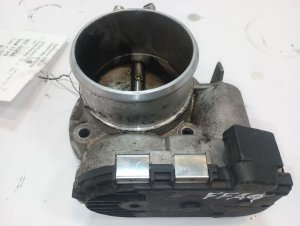
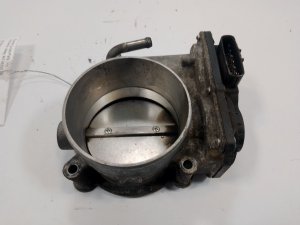
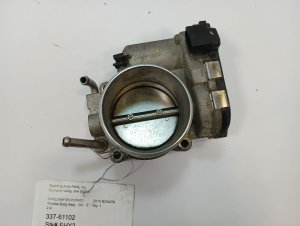
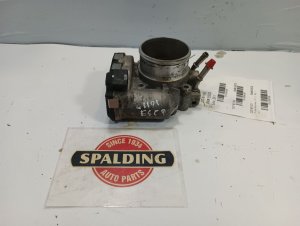
New Aftermarket Parts Available


The information in this article is provided for general reference and educational purposes only. Vehicle specifications, procedures, and part compatibility can vary by production date, trim level, and region. Always consult your vehicle's factory service manual and verify part numbers before purchasing or performing repairs. Safety-critical components such as airbags, seat belts, and braking systems should be installed by a qualified professional.
- Hyundai Santa Fe:
- 🧭 Diagnostic Flowchart
- 🎬 Helpful Videos
- 🛍️ Shop This Part
- What's Unique About the 2013-2018 Hyundai Santa Fe
- Symptoms You May Notice
- Most Likely Causes
- Rare But Worth Checking
- Diagnosis Steps
- Parts You'll Likely Need
- Related Codes That Often Appear With This One
- Technical Service Bulletins (TSBs) & Recalls
- Platform-Specific Known Issues
- Mechanic-Grade Diagnostic Values
- Scan Tool Commands That Help
- Wiring & Ground Locations
- Real Owner Repair Stories
- Model Year Variations Within This Range
- Other Known Issues on This Vehicle
- Used vs. New Parts: Buying Guide for This Vehicle
- Real Owner Stories
- 2014-2020 Kia Sorento 3.3L Lambda II V6
- 2013-2018 Hyundai Santa Fe 3.3L GDI V6
- 2013-2018 Hyundai Santa Fe 3.3L GDI V6
- Related OBD-II Codes
- Frequently Asked Questions
- 🎟️ Get 5% Off