

P0223 on 2014-2019 Nissan Versa Note: Throttle Position Sensor Causes and Fixes
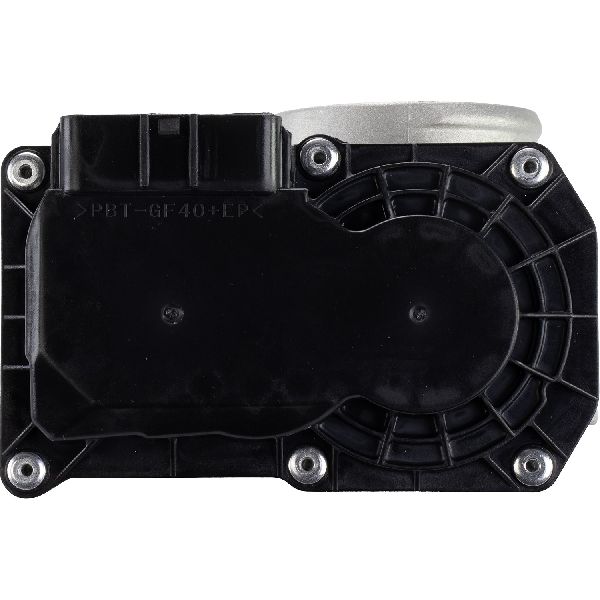
This code almost always points to a failing electronic throttle body assembly. The throttle position sensor is integrated and cannot be replaced separately. Expect to pay $350-$550 for an OEM throttle body and $100-$300 for a quality aftermarket replacement. A critical 'Idle Air Volume Learn' procedure is required after replacement, which can sometimes be done without a scan tool.
- P0223 on a Versa Note almost always means you need a new throttle body assembly.
- The throttle position sensor (TPS) is built into the throttle body; you cannot buy it separately.
- After replacing the part, a mandatory 'Idle Air Volume Learn' procedure is required to ensure the car idles correctly. This can sometimes be done without a scan tool.
- While checking wiring is a good idea, the throttle body itself is the most likely point of failure due to internal sensor wear.
- Driving with this code is not recommended due to the risk of stalling and severe lack of power.
What's Unique About the 2014-2019 Nissan Versa Note
For the 2014-2019 Versa Note, the dual throttle position sensors (TPS) are an integral part of the electronic throttle body assembly and are not sold as separate components. This means that a failure of one of the internal sensors, which is the most common cause for P0223, requires the replacement of the entire throttle body. After replacement, Nissan's 'Idle Air Volume Learn' procedure is mandatory to prevent high or erratic idling. While a professional scan tool is the most reliable method, some owners have success performing this with a specific sequence of key turns and pedal presses, 🎬 Watch: How to perform the Nissan idle air volume relearn. often called the "pedal dance".
Symptoms You May Notice
- Check Engine Light is on
- Vehicle enters 'limp mode' with significantly reduced engine power
- Poor or no acceleration
- Hesitation or unresponsiveness when pressing the gas pedal
- Engine may stall, especially when coming to a stop
- Rough or unstable idle
- Throttle surges or unexpected acceleration
- Hard starting
- Replacing the accelerator pedal position (APP) sensor. While the APP sensor is part of the throttle control system, P0223 specifically relates to the sensor at the throttle body, not the pedal.
- Replacing just the throttle position sensor. On this vehicle, the sensor is not available as a separate part and is integrated into the throttle body assembly.
- Neglecting the 'Idle Air Volume Learn' procedure after cleaning or replacement, leading to persistent high idle or stalling issues that are mistaken for a faulty new part.
Most Likely Causes
- Faulty Electronic Throttle Body Assembly 🔴 High Probability → Shop Fuel Injection Throttle Body The integrated throttle position sensors are a known high-failure item. The internal electronic components, specifically the potentiometer for sensor 'B', wear out or short, sending a constant high voltage signal. The plastic internal gears are also a common failure point that can lead to incorrect throttle plate position and sensor correlation errors.
How to confirm: Using a scan tool with live data, monitor the voltage of TPS1 and TPS2. If TPS2 shows an abnormally high and static voltage (e.g., stuck at 5V) that doesn't change as the throttle plate is manually moved (with engine off), the sensor inside the throttle body has failed. A good sensor should read under 1.0V at closed throttle and rise smoothly to ~4.5V at wide-open throttle.
Typical fix: Replace the entire throttle body assembly. 🎬 Watch: Step-by-step guide to replacing the Nissan Versa throttle body. After installation, an 'Idle Air Volume Learn' procedure must be performed using a compatible scan tool or the manual "pedal dance" method.
Est. part cost: $100-$550 - Wiring Harness or Connector Issue 🟡 Medium Probability Vibrations and heat in the engine bay can cause wires to chafe or the connector pins to corrode or loosen over time, leading to a short-to-voltage condition on the signal wire. In some cases, a blown fuse for the throttle control system can cause this code by interrupting the 5V reference signal.
How to confirm: Visually inspect the wiring harness going to the throttle body for any signs of damage, melting, or corrosion. Unplug the connector and check for bent or corroded pins. Use a multimeter to check for a short to power on the signal wire 🎬 See how to diagnose and fix TP sensor circuit issues. for TPS2. Check the fuse box for any blown fuses related to the Engine Control System.
Typical fix: Repair the damaged section of the wiring harness or clean/replace the connector. Replace any blown fuses.
Est. part cost: $5-$50 - Dirty or Sticking Throttle Body ⚪ Low Probability → Shop Fuel Injection Throttle Body Carbon can build up around the throttle plate, preventing it from closing properly. This can sometimes cause the sensor to report a position that is higher than actual, though it's less likely to cause a 'Circuit High' code than an internal electrical fault.
How to confirm: Remove the air intake hose and visually inspect the throttle bore and plate for heavy carbon deposits. The plate should move smoothly and return to its closed position without sticking.
Typical fix: Clean the throttle body thoroughly with a dedicated throttle body cleaner and a soft cloth. Be careful not to move the plate aggressively by hand. An 'Idle Air Volume Learn' procedure is almost always necessary after cleaning to correct the idle.
Est. part cost: $10-$20
Rare But Worth Checking
- Failed Powertrain Control Module (PCM): → Shop Engine Control Module (ECM) This is very uncommon and should be considered a last resort. The PCM should only be suspected after the throttle body, wiring, and all related circuits have been definitively ruled out by comprehensive testing.
Diagnosis Steps
- Read the codes with an OBD-II scanner and confirm P0223 is present. Note any other codes like P0123 or P2135.
- Use a scan tool to view live data for Throttle Position Sensor 1 (TPS1) and Throttle Position Sensor 2 (TPS2).
- With the key on and engine off, observe the voltage readings. They should be low and steady (typically under 1.0V).
- Slowly press the accelerator pedal (or have a helper do it) and watch the voltage readings. Both should rise smoothly and in correlation. If TPS2 is stuck at a high voltage (e.g., 4.5V-5V) and doesn't change, the throttle body is faulty.
- If the readings are erratic or nonsensical, turn the vehicle off. Inspect the wiring harness and the 6-pin connector at the throttle body for damage, corrosion, or loose connections.
- If wiring appears okay, disconnect the connector. Use a multimeter to check for the 5V reference signal and a good ground at the connector pins. A poor ground can cause erratic signals.
- If wiring, power, and ground are confirmed good, but the sensor signal from TPS2 is incorrect, the throttle body assembly is the confirmed cause of the fault.
- As a preliminary step, you can try cleaning the throttle body if it is visibly dirty, but a 'Circuit High' code is more often an electrical failure than a simple mechanical obstruction. Be prepared to perform the relearn procedure afterward.
Parts You'll Likely Need
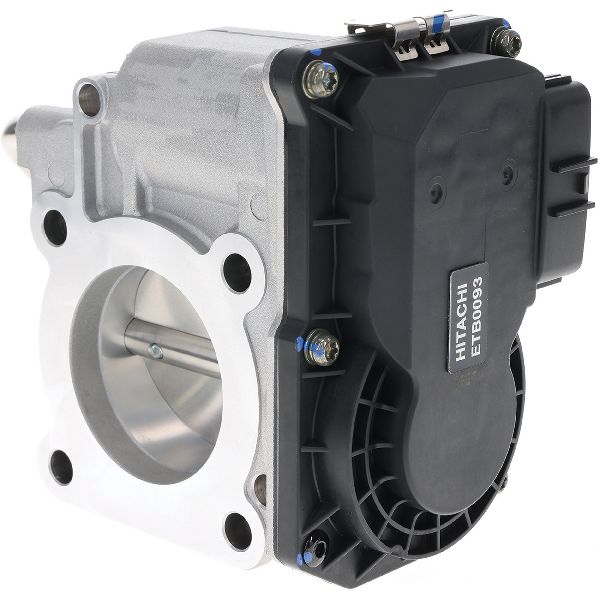
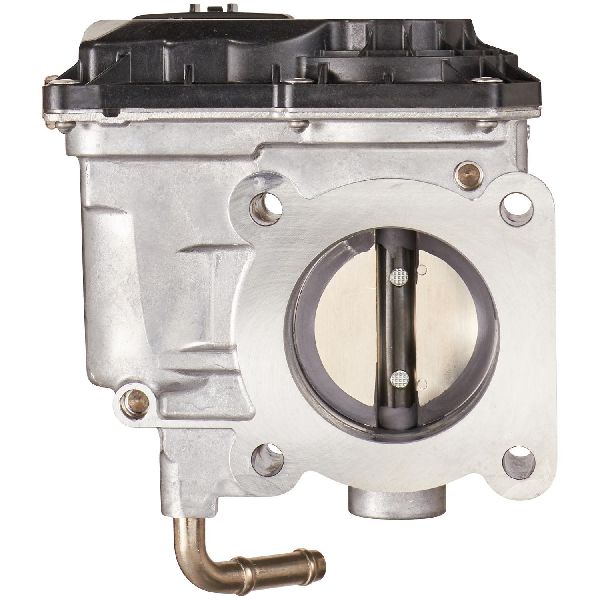
- Electronic Throttle Body Assembly
(OEM #16119-3AN1E)— This is the most common cause of code P0223, as the internal throttle position sensor fails and is not serviceable separately. The OEM part has been superseded multiple times (from 16119-3AN0A, -3AN0B, etc.), indicating revisions to the part over time.
Trusted brands: Nissan (OEM), Hitachi (OEM Supplier, Part ETB0019), Aisin, Spectra Premium
OEM price range: $355-$550
Aftermarket price range: $100-$300
Related Codes That Often Appear With This One
- P0123 — This code is for 'Throttle/Pedal Position Sensor/Switch 'A' Circuit High Input'. Seeing both codes together strongly suggests a problem with the throttle body assembly itself or its shared power/ground circuits, as both internal sensors are failing simultaneously.
- P2135 — This code indicates 'Throttle/Pedal Position Sensor/Switch A/B Voltage Correlation'. It means the ECM is seeing a disagreement between the signals from TPS1 and TPS2 that exceeds the expected tolerance. It frequently accompanies P0123 or P0223 and points directly to a failing throttle body.
Technical Service Bulletins (TSBs) & Recalls
- TSB Bulletin #NTB21-080 — While issued for other Nissan models like the Frontier, this bulletin confirms that the MIL being on with DTC P0223, P0507, and/or P2135 stored in the ECM is a documented manufacturer concern regarding the Throttle Position Sensor circuit.
Platform-Specific Known Issues
- The 'Idle Air Volume Learn' procedure can be finicky. Some sources suggest the manual 'pedal dance' only works if all preconditions (engine temp, battery voltage, loads off) are met exactly. Other technicians report that on some models, the procedure will only complete successfully when the transmission is in Drive (with brakes applied), contrary to official documentation.
Mechanic-Grade Diagnostic Values
- Throttle Position Sensor (TPS) 1 & 2 Voltage, Key On Engine Off (KOEO) — expected: Approximately 0.3V - 0.9V at closed throttle, rising smoothly to ~4.5V at wide-open throttle.. Failure: For P0223, TPS2 voltage will be stuck high, often at 4.65V or above, and will not change when the throttle plate is moved.
- Resistance across TPS2 signal and ground pins on the throttle body unit — expected: Should show a changing resistance value when the throttle plate is manually moved. A common test shows around 2 kilo-ohms.. Failure: Infinite resistance (open circuit) or zero resistance (short circuit), or no change in resistance when the plate is moved, indicates a failed internal sensor.
- Continuity check on wiring harness — expected: Resistance should be below 3.0 Ohms on the signal and ground return circuits between the throttle body connector and the PCM connector.. Failure: Resistance above 3.0 Ohms indicates high resistance in the wire. No continuity (OL) indicates an open circuit.
Scan Tool Commands That Help
- Nissan CONSULT or advanced bidirectional scanner (e.g., Autel, iCarsoft CR Ultra): Throttle Actuator Test / Throttle Position Test — This function allows the technician to command the throttle plate to open and close electronically. It is used to verify if the throttle motor is working and to observe if the TPS1 and TPS2 voltage signals respond correctly on the live data screen. If the actuator moves but the TPS2 voltage remains high and static, it confirms the sensor portion of the throttle body has failed.
- Nissan CONSULT or advanced bidirectional scanner: Idle Air Volume Learn — This is a mandatory service function that must be performed after replacing or cleaning the throttle body. It resets the base idle parameters in the ECM. Failure to perform this will result in a high or unstable idle, and the car may not run correctly.
Wiring & Ground Locations
- Throttle Body Connector (E15 on some diagrams) — 6-pin connector plugged directly into the electronic throttle body assembly, located on the intake manifold.. This is the primary point of failure for wiring issues. Pins can corrode, or wires can break/chafe right at the connector due to engine vibration and heat.
- Throttle Body Connector Pinout (HR16DE) — Based on wiring diagrams, the 6 pins are generally for: TPS1 Signal, TPS2 Signal, 5V Reference (shared), Sensor Ground (shared), Throttle Motor +, and Throttle Motor -.. Knowing the pinout is essential for testing. For P0223, you would back-probe the TPS2 signal wire and the sensor ground wire to check for the high voltage condition. A Spanish-language video identifies the pinout as: Pin 1 (TPS1 Signal), Pin 2 (5V), Pin 3 (TPS2 Signal - Black wire), Pin 4 (Ground), Pin 5 (Motor +), Pin 6 (Motor -).
- ECM Ground — Typically located on the cylinder head or engine block, often near the main engine harness connection. On some diagrams, it is shown as a black wire connected to the left side of the cylinder head.. A poor ECM ground can cause a floating ground reference, leading to incorrect voltage readings from various sensors, including the TPS. This can mimic a sensor failure and is a crucial, often overlooked, check.
Real Owner Repair Stories
- NHTSA ODI #10874118 — An owner reported experiencing a lack of acceleration from the vehicle. After taking it to a mechanic several times, the same codes appeared: P0223, P0123, and P2135, which were identified as an electronic throttle control actuator fault.
- YouTube channel 'car hospital auto electrician' (Nissan Sunny (similar platform, demonstrates a common electrical failure mode)) — Car starts but has no throttle response. Codes P0223 and P0123 are present.
❌ Tried (didn't work) Initial check of throttle body connector showed no 5V reference voltage on either of the two 5V supply wires.
✅ What actually fixed it The technician traced the loss of power to a blown fuse in the fuse box. After replacing the fuse, the 5V reference returned to the throttle body connector, and the car functioned normally. - Reddit user in r/240sx (discussing a similar Hitachi sensor) (Nissan with SR20DET engine, using a Hitachi TPS) — N/A - User was proactively installing a new sensor.
✅ What actually fixed it The user noted that the aftermarket Hitachi sensor had an extra plastic alignment ring that prevented it from sitting flush on the throttle body. They had to use flush cutters to remove the ring to get the sensor to mount correctly and achieve the proper closed-throttle voltage reading (0.45V). This is a critical physical compatibility check when using aftermarket parts.
OEM Part Supersession History
16119-3AN0A, 16119-3AN0B, 16119-3AN0C, 16119-3AN0D, 16119-3AN1D→16119-3AN1E— Likely revisions to improve the durability of the internal electronic sensors and/or the plastic gears in the actuator, which are known failure points.
Heads up: All listed part numbers are interchangeable and are replaced by the latest version, 16119-3AN1E. When ordering, you will typically receive the latest revision.
Diagnostic Flowchart
Other Known Issues on This Vehicle
Issues unrelated to this code that are worth knowing about as an owner of this generation:
- CVT Transmission Failure/Judder 🔴 High — Widespread issue, can occur as early as 60,000-80,000 miles. Failures are often characterized by shuddering, hesitation, or complete loss of power. (Ref: NTB20-036a addresses CVT judder and provides diagnostic/repair steps, but widespread owner dissatisfaction remains.)
- Starter Motor Failure 🟠 Medium — Common failure item, often presenting as a 'click, no-start' condition even with a good battery. Can occur intermittently before failing completely.
- Premature Wear of Front Suspension Components 🟡 Low — Sway bar end links and struts can wear out prematurely, causing clunking or rattling noises over bumps before 100,000 miles.
- Ignition Lock Cylinder Wear 🟡 Low — In some 2014-2016 models, the ignition lock cylinder can wear, making the key hard to turn or causing an intermittent no-crank condition.
Used vs. New Parts: Buying Guide for This Vehicle
When a used part is the smart pick: A used OEM throttle body from a low-mileage, late-model donor vehicle can be a cost-effective option, but it carries risk. Given that this is a high-failure part, you are buying a component with an unknown amount of remaining life. It only makes sense if the cost saving is significant (e.g., >70% cheaper than a new aftermarket part) and you are willing to accept the risk of premature failure.
Donor-vehicle mileage cap: roughly under 50000 miles for the part to have meaningful remaining life.
What to inspect on the donor part:
- Verify the part number on the used unit matches one of the compatible OEM numbers (e.g., 16119-3AN1x).
- Inspect the connector pins for any signs of corrosion, bending, or damage.
- Look at the throttle plate and bore. While some carbon is normal, excessive buildup might suggest the donor car had other engine issues.
- Ask the seller for the mileage and year of the donor vehicle. A newer, lower-mileage part is always preferable.
- Check the return policy of the seller (e.g., junkyard, eBay seller) in case the part is dead on arrival.
Aftermarket brands forum-validated for this vehicle:
- Hitachi (Part ETB0019): Hitachi is the original equipment manufacturer (OEM) for Nissan, so this part is identical in quality and performance to the genuine Nissan part, often at a lower price.
- Aisin (Part TBN-011): Aisin is another well-respected OEM supplier for many Japanese automakers and is known for high-quality parts.
Brands owners have reported issues with on this vehicle:
- Unbranded/"White Box" Parts: Extremely cheap, no-name parts found on sites like eBay and Amazon should be avoided. They often use lower-quality internal electronics and materials, leading to a high rate of failure shortly after installation, causing you to do the job twice.
Real Owner Stories
Aggregated from forums and TSBs cited above. Mileages and costs reflect what owners reported in those sources.
2016 Nissan Versa
Symptoms: After cleaning the throttle body, the idle went up to 2k rpm.
What fixed it: Let the car idle for about twenty minutes so the ECM could relearn the idle throttle position.
Source hint: reddit.com/r/MechanicAdvice - 2016 Nissan Versa with MAF sensor repair advice
2012 Nissan Versa
Symptoms: Vehicle presented with codes P0223, P1121, and P0123.
What fixed it: Replacing the throttle body.
Source hint: youtube: 2012 Nissan Versa with ECT issues. P0223, P1121 & P0123. What Is Wrong With This Car? PT2
Related OBD-II Codes
Frequently Asked Questions
After I replaced my throttle body on my Versa Note, the idle is stuck at 2000 RPM. Is this normal?
I'm trying the manual 'pedal dance' for the idle relearn, but it's not working. What's the trick?
Is P0223 on my 2016 Versa more likely a wiring problem or a bad throttle body?
How can I test the throttle body to confirm it's the problem before buying a new one?
Does this P0223 information also apply to my 2015 Nissan Versa sedan?
Can I just clean the throttle body to fix a P0223 code?
Helpful Videos
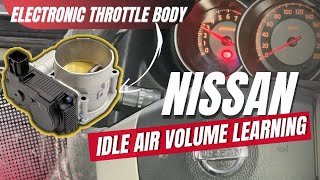
![NISSAN Electronic Throttle Body [ETB] | EASY RE-LEARN Procedure](https://img.youtube.com/vi/hUlGxqylpCs/mqdefault.jpg)
We Have This Part in Stock



The information in this article is provided for general reference and educational purposes only. Vehicle specifications, procedures, and part compatibility can vary by production date, trim level, and region. Always consult your vehicle's factory service manual and verify part numbers before purchasing or performing repairs. Safety-critical components such as airbags, seat belts, and braking systems should be installed by a qualified professional.
- Nissan Versa Note:
- 🧭 Diagnostic Flowchart
- 🎬 Helpful Videos
- 🛍️ Shop This Part
- What's Unique About the 2014-2019 Nissan Versa Note
- Symptoms You May Notice
- Most Likely Causes
- Rare But Worth Checking
- Diagnosis Steps
- Parts You'll Likely Need
- Related Codes That Often Appear With This One
- Technical Service Bulletins (TSBs) & Recalls
- Platform-Specific Known Issues
- Mechanic-Grade Diagnostic Values
- Scan Tool Commands That Help
- Wiring & Ground Locations
- Real Owner Repair Stories
- OEM Part Supersession History
- Other Known Issues on This Vehicle
- Used vs. New Parts: Buying Guide for This Vehicle
- Real Owner Stories
- 2016 Nissan Versa
- 2012 Nissan Versa
- Related OBD-II Codes
- Frequently Asked Questions
- 🎟️ Get 5% Off