

P0223 on 2015-2019 Subaru Outback 2.5L: Throttle Sensor 'B' Circuit High Fixes
This code almost always indicates a faulty electronic throttle body assembly. The throttle position sensor is integrated and not sold separately. Expect to replace the entire unit for $200-$450 (part only) and perform a throttle relearn procedure afterward.
- P0223 on a 2015-2019 Outback means the secondary throttle position sensor has a 'high voltage' fault.
- The most likely cause is a failed electronic throttle body assembly, which must be replaced as a complete unit.
- Do not drive the vehicle more than necessary, as it will enter a 'limp mode' with severely reduced power, which is a safety risk.
- After replacing the throttle body, you MUST perform a 'throttle relearn' procedure for the engine to idle and accelerate correctly.
- Before buying a new throttle body, it's worth taking a minute to inspect the wiring harness and connector for any obvious damage.
What's Unique About the 2015-2019 Subaru Outback
On the 2015-2019 Subaru Outback with the FB25 engine, the throttle position sensors (both 'A' and 'B' circuits) are integrated into the electronic throttle body assembly. This means you cannot replace just the faulty sensor; the entire throttle body must be replaced as a single unit. While some earlier Subaru models were known for chafed wiring causing this issue, a complete failure of the electronic throttle body is the most common cause for this generation.
Generation note: The 2015-2019 Subaru Outback models all belong to the fifth generation (BS). The causes and fixes for P0223 are consistent across this entire year range for vehicles equipped with the 2.5L FB25 engine.
Symptoms You May Notice
- Check Engine Light is on
- Flashing Cruise Control light (a common Subaru indicator for powertrain faults)
- Vehicle enters 'limp mode' (drastic reduction in engine power)
- Poor or non-existent acceleration
- Hesitation or stumbling when pressing the gas pedal
- Engine may stall, especially when coming to a stop
- Rough or erratic idle
- Engine may be hard to start
- Replacing only the accelerator pedal position sensor. While it is part of the same system, the P0223 code specifically points to the sensor at the throttle body, not the pedal.
Most Likely Causes
- Faulty Electronic Throttle Body Assembly 🔴 High Probability → Shop Fuel Injection Throttle Body The integrated electronic throttle position sensors are a common failure point within the assembly. Wear and tear on the internal electronic components and circuits leads to incorrect voltage readings, causing the sensor to fail and report a permanently high voltage.
How to confirm: Use a capable OBD-II scanner to monitor live data for the Throttle Position Sensor 'B' voltage. If the voltage is stuck high (typically above 4.5V) regardless of pedal position, the throttle body has failed. A visual inspection of the throttle plate for sticking or damage can also be performed.
Typical fix: Replace the entire electronic throttle body assembly. After replacement, a throttle relearn procedure is mandatory to calibrate the new sensor with the ECU.
Est. part cost: $200-$450 - Wiring Harness or Connector Issue ⚪ Low Probability While less common on this generation than older Subarus, engine vibration and heat can still cause wires to fray or insulation to break down over time. Corrosion at the connector pins is also a possibility that can distort voltage signals.
How to confirm: Visually inspect the wiring harness and connector going to the throttle body for any signs of damage, corrosion, or loose pins. Use a multimeter to check for a stable 5V reference signal and a good ground at the connector. Wiggle the harness while monitoring live data to see if the voltage reading changes.
Typical fix: Repair the damaged section of the wiring harness or replace the connector pigtail.
Est. part cost: $20-$100
Rare But Worth Checking
- Faulty Powertrain Control Module (PCM): → Shop Engine Control Module (ECM) This is extremely rare. Before condemning the PCM, all other possibilities, especially the throttle body and its wiring, must be exhaustively ruled out. This is typically a last-resort diagnosis.
- Obstructed or Jammed Floor Mats: An improperly placed or aftermarket floor mat can potentially interfere with the accelerator pedal's movement, although this is more likely to cause other codes. It's a simple but important check.
Diagnosis Steps
- Read the fault codes with an OBD-II scanner and confirm P0223 is present. Note any other codes, especially P0123 and P2135.
- Using the scanner's live data function, observe the voltage readings for Throttle Position Sensors 'A' and 'B'. With the key on and engine off, the 'B' sensor voltage will likely be stuck high (e.g., >4.5V).
- Perform a thorough visual inspection of the throttle body connector and its wiring harness for any obvious damage, corrosion, chafing, or loose connections.
- If the wiring looks okay, the next step is to test the circuit. Using a multimeter and a wiring diagram, check for the correct 5-volt reference and ground signals at the throttle body connector.
- If the wiring, reference voltage, and ground are all confirmed to be good, the electronic throttle body assembly is faulty and needs to be replaced.
- After replacing the throttle body, clear all fault codes.
- Perform the throttle relearn procedure. 🎬 Watch: Step-by-step Subaru idle relearn procedure This typically involves turning the ignition on (without starting the engine) for 10-15 seconds, turning it off, then starting the engine and letting it idle for 10-15 minutes to allow the ECM to calibrate the new part.
- Start the engine and test drive the vehicle, including city and highway driving, to confirm the repair and ensure no codes return.
Parts You'll Likely Need
- Electronic Throttle Body Assembly
(OEM #16112AA38A)— This is the most common cause of P0223, as the internal throttle position sensor fails. The sensor is not available separately for this vehicle.
Trusted brands: Subaru (Genuine OEM), Hitachi, Standard Motor Products, Dorman
OEM price range: $350-$450
Aftermarket price range: $200-$350
Related Codes That Often Appear With This One
- P0123 — This code is for 'Throttle/Pedal Position Sensor 'A' Circuit High'. Seeing both together strongly indicates a failure of the entire throttle body assembly or a shared wiring issue affecting both sensor circuits.
- P2135 — This code means 'Throttle/Pedal Position Sensor/Switch 'A'/'B' Voltage Correlation'. It sets when the ECM sees a disagreement between the two sensor signals. A P0223 fault will cause the 'B' signal to be stuck high, triggering this correlation error.
Platform-Specific Known Issues
- Sudden Failure Common: Owners on forums frequently report that the throttle body failure happens suddenly and without prior warning signs. The vehicle will be driving normally one moment, and the next, the check engine light will illuminate and the car will enter limp mode.
Mechanic-Grade Diagnostic Values
- Throttle Position Sensor 'B' (TPS2) Signal Voltage — expected: Decreases from ~5.0V at closed throttle to ~0.5V at wide-open throttle.. Failure: Voltage is stuck above 4.75V for more than 0.1 seconds.
- Throttle Position Sensor 'A' (TPS1) Signal Voltage — expected: Increases from ~0.5V at closed throttle to ~4.5V at wide-open throttle.. Failure: This value is used for correlation. A P0223 fault is on the 'B' circuit, but watching the 'A' circuit confirm the throttle is moving.
- 5V Reference Voltage at Throttle Body Connector — expected: 4.8V - 5.2V. Failure: Voltage significantly lower or higher than this range indicates a wiring or PCM issue, not a faulty throttle body.
- Ground Circuit Voltage at Throttle Body Connector — expected: < 0.1V (100mV). Failure: Voltage higher than 0.1V indicates a poor ground connection, which can cause incorrect sensor readings.
Scan Tool Commands That Help
- Advanced Aftermarket Scanners (e.g., LAUNCH): Throttle Body Reset / A/F Reset — After replacing the throttle body, this function can be used to command the ECU to perform the relearn procedure, which may be more reliable than the manual method.
Wiring & Ground Locations
- ECU Main Ground — On the top of the intake manifold.. The ECU gets its primary ground reference from the intake manifold. A poor connection here, due to corrosion, looseness, or modifications like TGV spacers, can cause a host of electrical issues, including erroneous sensor codes like P0223.
- E57 / B315 — The main 6-pin electrical connector on the electronic throttle body assembly.. This is the connector where all voltage and resistance checks for the throttle position sensors and throttle motor must be performed. Knowing the diagram ID helps locate the correct pinout in a factory service manual.
- Chassis Ground Strap — Typically a braided strap connecting the engine block or cylinder head to the chassis/frame rail.. While the ECU grounds to the manifold, the entire engine's ground path to the battery negative terminal relies on robust chassis grounds. These straps are known to corrode and break on Subarus, which can create electrical noise and unstable sensor readings.
Model Year Variations Within This Range
- 2015-2019: No significant variations have been identified for the electronic throttle body or its control system within this generation. The same OEM part number, 16112AA38A, is specified for all years.
Diagnostic Flowchart
Other Known Issues on This Vehicle
Issues unrelated to this code that are worth knowing about as an owner of this generation:
- Excessive Oil Consumption 🔴 High — Common in earlier FB25 engines (pre-2016). Caused by issues with piston ring design. Can manifest at any mileage but often noted between 30k-80k miles. (Ref: TSB 02-157-14R; Subaru also faced a class-action lawsuit and extended warranties for some vehicles.)
- Premature Battery Drain 🟠 Medium — Widespread issue across many 2015-2020 models. Often attributed to software or the Data Communication Module (DCM) drawing power when the car is off. (Ref: Multiple TSBs issued (e.g., 11-174-17R, 15-318-24R) and a class-action settlement provided extended warranties and reimbursements.)
- CVT Transmission Issues 🔴 High — Some owners experience shuddering, hesitation, or premature failure of the Continuously Variable Transmission (CVT). (Ref: Subaru extended the CVT warranty to 10 years/100,000 miles for many models, including the 2015-2018 Outback, due to these concerns (e.g., TSB 16-115-18).)
- Spontaneously Cracking Windshields 🟠 Medium — A significant number of owners report windshields cracking easily or without any apparent impact. (Ref: A class-action lawsuit was settled, providing extended warranties and reimbursement for replacements on certain model years.)
- Failing Wheel Bearings 🟠 Medium — A humming or grinding noise that increases with speed is often an indicator of a failing wheel bearing, which is a fairly common repair on this generation.
Used vs. New Parts: Buying Guide for This Vehicle
When a used part is the smart pick: A used OEM throttle body from a reputable auto recycler can be a cost-effective option if the budget is tight, but it carries a significant risk. This part fails due to internal electronics wearing out, so a used part has an unknown amount of life left. It makes the most sense on a higher-mileage vehicle where matching the remaining life of the car to a used part is a reasonable gamble.
Donor-vehicle mileage cap: roughly under 80000 miles for the part to have meaningful remaining life.
What to inspect on the donor part:
- Verify the part number (16112AA38A) matches exactly.
- Choose a part from the lowest-mileage donor vehicle possible.
- Ensure the seller offers at least a 90-day warranty.
- Inspect the connector pins for any signs of corrosion, damage, or moisture intrusion.
- Check that the throttle plate moves freely by hand (with the unit unplugged) and doesn't show signs of excessive carbon buildup or scoring.
OEM-only on this vehicle (don't cheap out):
- Electronic Throttle Body Assembly
Brands owners have reported issues with on this vehicle:
- General advice from technicians is to avoid non-OEM (aftermarket) electronic throttle bodies for this repair, as they have a higher reported rate of premature failure, potentially requiring you to do the job a second time.
Real Owner Stories
Aggregated from forums and TSBs cited above. Mileages and costs reflect what owners reported in those sources.
2015-2019 Subaru Outback 2.5L
Symptoms: The vehicle was driving normally one moment, and the next, the check engine light illuminated and the car entered limp mode without any prior warning signs.
What fixed it: Replacement of the electronic throttle body assembly.
Source hint: vehicle_specific_issues: Sudden Failure Common
2015-2019 Subaru Outback 2.5L
Symptoms: P0223, P0123, and P2135 codes appearing together; sudden limp mode.
What fixed it: Throttle body replacement.
Source hint: subaruoutback.org forum citation
2015-2019 Subaru Outback 2.5L
Symptoms: Check engine light and limp mode; integrated TPS failure pattern.
What fixed it: Full throttle body replacement.
Source hint: Reddit r/Subaru forum citation
Related OBD-II Codes
Frequently Asked Questions
My 2015 Outback is in 'limp mode' with a flashing cruise control light. Is this related to P0223?
Can I just replace the Throttle Position Sensor (TPS) on my FB25 engine?
Is there a specific procedure I need to follow after installing the new throttle body?
Should I buy an aftermarket throttle body to save money on my 2017 Outback?
Are there any TSBs for the FB25 engine that I should be aware of while fixing this?
What voltage should I see on my scanner if the sensor is failing?
Helpful Videos

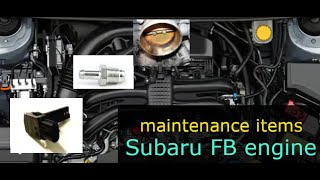
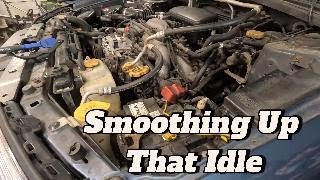

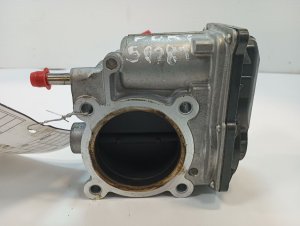
Used OEM Parts in Stock
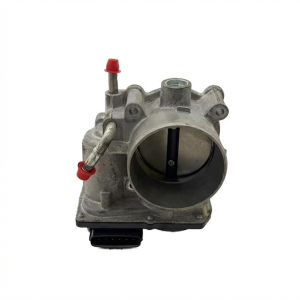
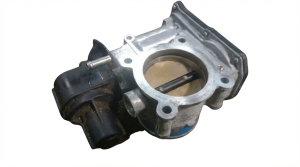
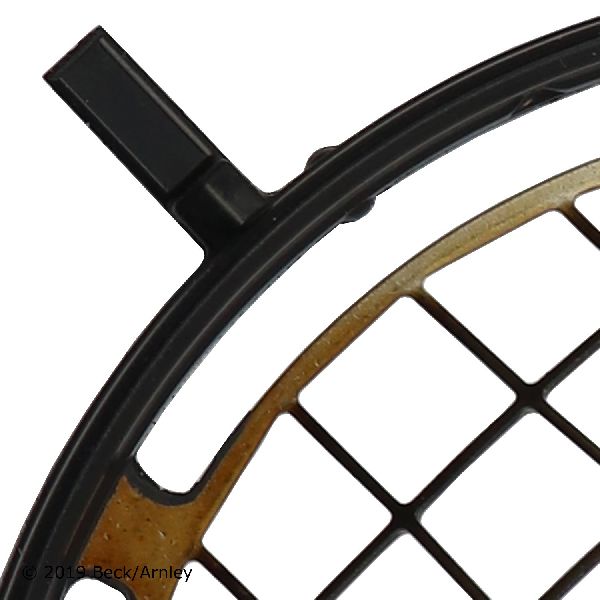
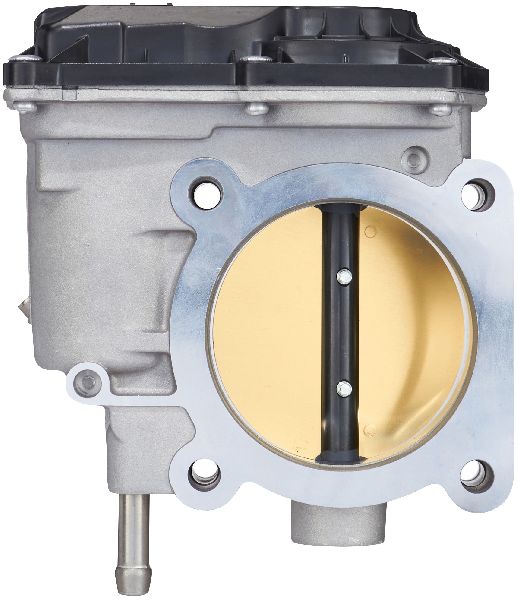
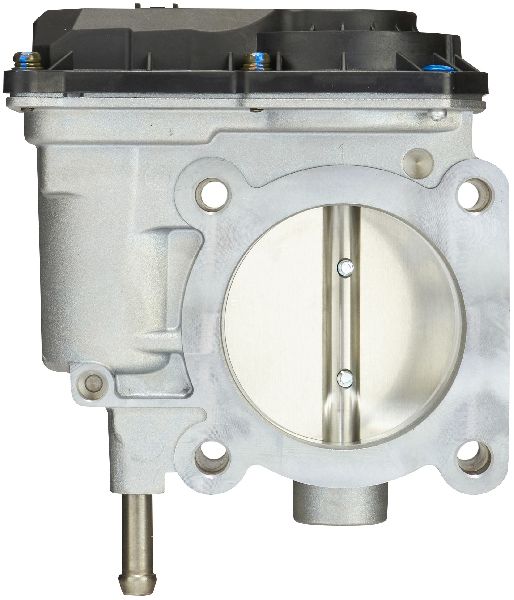
New Aftermarket Parts Available


The information in this article is provided for general reference and educational purposes only. Vehicle specifications, procedures, and part compatibility can vary by production date, trim level, and region. Always consult your vehicle's factory service manual and verify part numbers before purchasing or performing repairs. Safety-critical components such as airbags, seat belts, and braking systems should be installed by a qualified professional.
- Subaru Outback:
- 🧭 Diagnostic Flowchart
- 🎬 Helpful Videos
- 🛍️ Shop This Part
- What's Unique About the 2015-2019 Subaru Outback
- Symptoms You May Notice
- Most Likely Causes
- Rare But Worth Checking
- Diagnosis Steps
- Parts You'll Likely Need
- Related Codes That Often Appear With This One
- Platform-Specific Known Issues
- Mechanic-Grade Diagnostic Values
- Scan Tool Commands That Help
- Wiring & Ground Locations
- Model Year Variations Within This Range
- Other Known Issues on This Vehicle
- Used vs. New Parts: Buying Guide for This Vehicle
- Real Owner Stories
- 2015-2019 Subaru Outback 2.5L
- 2015-2019 Subaru Outback 2.5L
- 2015-2019 Subaru Outback 2.5L
- Related OBD-II Codes
- Frequently Asked Questions
- 🎟️ Get 5% Off