

P0223 on 2007-2011 Toyota Camry: Throttle Position Sensor Circuit High Guide
On a 2007-2011 Camry, P0223 almost always points to a failed throttle body assembly, as the sensor is integrated and not sold separately. Expect to pay $350-$600 for an OEM replacement part, with DIY replacement being moderately difficult. Before replacing, thoroughly check the wiring harness for shorts.
- P0223 on a 2007-2011 Camry means the computer sees an abnormally high voltage from the throttle position sensor.
- The most important fact: the sensor is part of the throttle body. If the sensor is bad, you must replace the entire throttle body assembly.
- Before buying an expensive throttle body, always inspect the wiring harness for damage and consider cleaning the throttle body first, as these are cheaper potential fixes.
- Driving with this code is unsafe due to the risk of sudden power loss or stalling.
- After replacing the throttle body, a 'relearn' procedure is required.
What's Unique About the 2007-2011 Toyota Camry
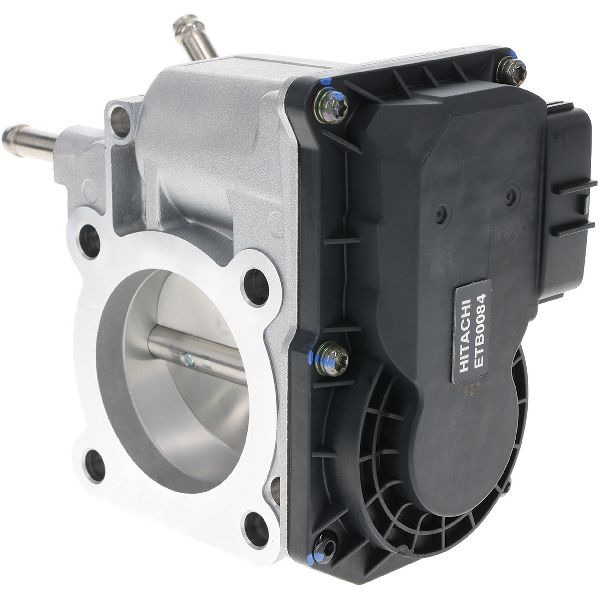
The most critical thing to know about the 2007-2011 Toyota Camry (XV40 generation) is that the throttle position sensor (TPS) is an integral part of the electronic throttle body assembly. Unlike on many older vehicles, you cannot purchase and replace just the sensor. Therefore, a confirmed internal sensor failure requires the replacement of the entire throttle body unit. This design choice simplifies the assembly but increases the cost of the primary replacement part. This applies to both the 2.4L 4-cylinder (2AZ-FE) and 3.5L V6 (2GR-FE) engines offered in this generation.
Symptoms You May Notice
- Check Engine Light is illuminated
- Severely reduced engine power ('limp mode')
- Little to no response from the accelerator pedal
- Engine stalling, especially when coming to a stop
- Hesitation or stumbling during acceleration
- Hard starting or failure to start
- Cruise control is inoperative
- Rough or unstable idle
- Harsh or delayed automatic transmission shifts
- Replacing only the accelerator pedal position (APP) sensor. While the APP sensor is part of the same system, P0223 specifically points to the sensor on the throttle body ('B' circuit), not the one on the pedal.
- Attempting to purchase a standalone throttle position sensor. For the 2007-2011 Camry, this part is not sold separately from the throttle body assembly.
Most Likely Causes
- Failed Throttle Body Assembly 🔴 High Probability → Shop Fuel Injection Throttle Body The throttle position sensor is integrated into the assembly and is a common failure point due to wear on the internal potentiometer or electronics. It cannot be replaced separately on this model.
How to confirm: After confirming wiring and grounds are good, testing the sensor's voltage output with a multimeter while manually (and carefully) moving the throttle plate will show erratic or out-of-spec voltage readings. Often, this is diagnosed by exclusion after checking wiring. A signal voltage that is stuck high (near 5V) even with the throttle plate closed points to an internal failure.
Typical fix: Replace the entire throttle body assembly. 🎬 Watch this guide on testing and replacing the throttle body. A relearn procedure is required after installation.
Est. part cost: $350-$600 for an OEM unit, $80-$200 for aftermarket. - Wiring Harness or Connector Issue 🟡 Medium Probability Wires near the engine can become brittle from heat cycles, and connectors can corrode or have pins back out. A short to power on the signal wire is a common cause for a 'Circuit High' code.
How to confirm: Visually inspect the wiring harness leading to the throttle body for any signs of damage, chafing, or melting. Unplug the connector and check for corrosion or bent/backed-out pins. Use a multimeter to check for a short to voltage on the signal wire. If the high voltage reading persists even when the sensor is disconnected, the fault is in the wiring.
Typical fix: Repair the damaged section of the wiring harness or replace the connector pigtail.
Est. part cost: $10-$50 - Dirty or Sticking Throttle Body ⚪ Low Probability → Shop Fuel Injection Throttle Body Carbon and oil vapor from the PCV system can build up inside the throttle body, causing the throttle plate to stick. While less likely to cause a 'Circuit High' code than a performance code, it can sometimes cause the sensor to report incorrect values if the plate cannot return to its proper resting position.
How to confirm: Remove the intake boot from the throttle body and visually inspect the throttle plate and bore for heavy carbon buildup. Check if the plate moves smoothly or sticks.
Typical fix: Clean the throttle body thoroughly with a dedicated throttle body cleaner and a soft brush or rag. This is a good first step before replacing parts, though it is less likely to resolve a specific 'Circuit High' fault.
Est. part cost: $5-$15 for cleaner.
Rare But Worth Checking
- Faulty Powertrain Control Module (PCM): → Shop Engine Control Module (ECM) This is extremely rare. The PCM should only be considered after all other possibilities, including the throttle body and all related wiring, have been exhaustively tested and ruled out.
Diagnosis Steps
- Scan for other codes. Check if any other throttle-related codes (like P0121, P0123, P2135, P2111) are present to get a fuller picture.
- Inspect the Wiring. Carefully examine the wiring harness and connector going to the throttle body. Look for any obvious signs of damage, chafing against other components, or corrosion in the connector. Pay close attention to the area where the harness may rub against the engine or other brackets.
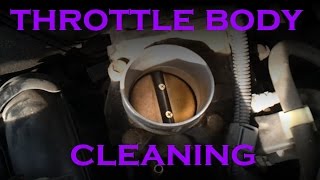
- Check for a Dirty Throttle Body. Remove the air intake hose and inspect the throttle plate and bore. If significant carbon buildup is present, clean it thoroughly with throttle body cleaner. This is a low-cost first step. 🎬 See how to properly clean your throttle body and bore.
- Test the Circuit. Using a multimeter and a wiring diagram for your specific engine, check for the correct 5-volt reference and a good ground at the throttle body connector. Then, probe the 'B' signal wire (VTA2). The voltage should be low when closed (around 0.5V-0.8V) and sweep smoothly upward (to ~4.5V) as the throttle is opened. A reading that is stuck high (near 5V) confirms the 'Circuit High' condition.
- Isolate the Fault. If the signal wire is stuck high even with the sensor unplugged, you likely have a short to power in the wiring harness that needs to be traced and repaired. If the reference voltage and ground are good, and the wiring shows no shorts, the fault is almost certainly internal to the throttle body assembly.
- Replace the Throttle Body Assembly. If the internal sensor has failed, the entire throttle body must be replaced.
- Perform Relearn Procedure. After replacement, a throttle body relearn procedure is necessary for the ECM to learn the new sensor's idle and full-range positions. A common method is to disconnect the negative battery terminal for at least 60 seconds, reconnect, turn the ignition ON (without starting), then start the engine and let it idle to operating temperature.
Parts You'll Likely Need
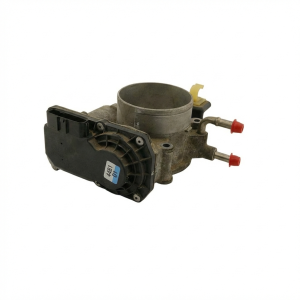
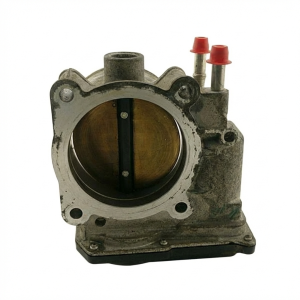
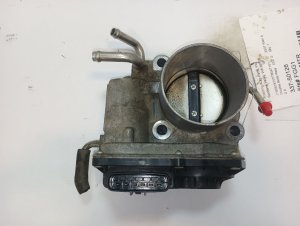
- Throttle Body Assembly
(OEM #22030-0H031 (supersedes 22030-28070, 22030-28071) for 2.4L 2AZ-FE engine. For V6, confirm by VIN.)— This is the most common fix because the throttle position sensor (TPS) that causes code P0223 is integrated into this assembly and cannot be replaced separately on this vehicle. Part number 22030-0H031 is the updated part for the 2.4L 4-cylinder engine, replacing older versions like 22030-28070.
Trusted brands: Toyota (Genuine OEM), Aisin, Standard Motor Products, Hitachi, Denso
OEM price range: $350-$600
Aftermarket price range: $80-$250
Related Codes That Often Appear With This One
- P0121 — This code relates to 'Throttle/Pedal Position Sensor/Switch 'A' Circuit Performance'. Since the 'A' and 'B' sensors are used to cross-check each other, a fault in one can sometimes trigger a performance code for the other.
- P2135 — Throttle/Pedal Position Sensor/Switch 'A'/'B' Voltage Correlation. This code is set when the ECM sees a disagreement between the voltage signals of the two sensors that is outside the expected range, a direct consequence of one sensor reporting an erroneously high value.
- P2111 — This code means 'Throttle Actuator Control System - Stuck Open'. A sticking throttle body or a faulty sensor giving incorrect data can lead the computer to detect that the throttle plate is not where it should be.
Technical Service Bulletins (TSBs) & Recalls
- T-SB-0012-16 (Related): Addresses engine stall and DTC P2111 on 2007-2011 Camry Hybrids, with diagnostics pointing to the throttle body.
Platform-Specific Known Issues
- While not for P0223 specifically, Toyota issued Technical Service Bulletin T-SB-0012-16 for the 2007-2011 Camry Hybrid for code P2111 (Throttle Stuck Open), which points to known issues with the throttle body on this platform and can present similar symptoms. The fix involves diagnosing the throttle body, indicating a recognized pattern of failure.
- source — A user on ToyoNation with a 2007 Camry 4-cyl reported experiencing P0223 along with limp mode. After cleaning the throttle body with no success, the issue was resolved by replacing the entire throttle body assembly with an aftermarket unit. This is a typical repair story for this code on this platform.
Mechanic-Grade Diagnostic Values
- Throttle Position Sensor 'B' (VTA2) Signal Voltage — expected: Approx. 0.5V - 1.0V with throttle closed, sweeping smoothly to approx. 3.2V - 4.8V at wide-open throttle (Key On, Engine Off).. Failure: Voltage is stuck high, at or near 5V, regardless of throttle plate position. This directly causes the P0223 code.
- Sensor Reference Voltage (VC) — expected: 4.5V - 5.5V at the throttle body connector with Key On, Engine Off.. Failure: Voltage is significantly lower than 4.5V or higher than 5.5V, indicating a problem with the ECM or wiring, not necessarily the sensor itself.
- Sensor Ground (E2) — expected: Near 0V, with less than 0.1 Ohms resistance to a known good chassis ground.. Failure: Voltage reading above 0.1V (voltage drop) or high resistance to ground, indicating a poor ground connection which can cause erratic sensor readings.
Hidden / Shadow Codes Worth Checking
- Freeze Frame Data: While not a 'hidden code', a professional scan tool like Toyota Techstream will capture a 'Freeze Frame' snapshot of all key sensor values at the exact moment the P0223 code was set. This data is invaluable for seeing what other parameters (like engine temp, RPM, vehicle speed, and TPS 'A' voltage) were at the time of the fault, helping to confirm the diagnosis. (see via Dealer-level scan tool such as Toyota Techstream.)
Scan Tool Commands That Help
- Toyota Techstream: Active Test for Throttle Actuator — This bidirectional command allows a technician to manually command the throttle plate to open and close from the scan tool. It is used to definitively test the sensor's functionality. While commanding the throttle open and closed, the technician can watch the live data for VTA1 and VTA2 voltages. If the voltage for VTA2 does not respond smoothly or is stuck high, it confirms a failure in the sensor circuit or the sensor itself.
Wiring & Ground Locations
- Throttle Body Connector (2AZ-FE & 2GR-FE) — The 6-pin electrical connector on the electronic throttle body assembly, located at the front of the intake manifold.. This is where all voltage and resistance tests are performed. The key pins are: VTA2 (TPS 'B' Signal), VC (5V Reference), and E2 (Sensor Ground). A fault in any of these three circuits can cause P0223.
- Engine Harness Ground (2AZ-FE) — A primary ground point for the engine control harness is located on the top rear of the engine, often designated as C4 or similar in wiring diagrams.. The sensor ground (E2) relies on a clean, secure connection at this main engine ground. A loose or corroded ground here can cause a floating voltage reference, leading to incorrect sensor readings and codes like P0223.
- Engine Harness Ground (2GR-FE) — The main engine harness for the V6 has a critical ground point on a boss on the side of the front cylinder head.. Similar to the 4-cylinder, a poor connection at this location can introduce voltage offsets and noise into sensor circuits, including the throttle position sensor, potentially triggering faults.
Real Owner Repair Stories
- ToyoNation Forum User (2007 Toyota Camry 4-cylinder) — Check Engine Light on with code P0223, vehicle entered 'limp mode' with severely reduced power.
❌ Tried (didn't work) Cleaning the throttle body
✅ What actually fixed it The problem was resolved by replacing the entire throttle body assembly with a new aftermarket unit.
OEM Part Supersession History
22030-28070, 22030-28071→22030-0H031— Part revision and update by Toyota for the 2.4L 2AZ-FE engine. Superseded parts are often updated to improve reliability or address known failure patterns.
Diagnostic Flowchart
Used vs. New Parts: Buying Guide for This Vehicle
When a used part is the smart pick: For this repair, a used OEM throttle body from a reputable salvage yard is a very sensible and cost-effective option. Since the failure is electronic, a functional used part will perform identically to a new one, often at a quarter of the price of a new OEM unit.
Donor-vehicle mileage cap: roughly under 120000 miles for the part to have meaningful remaining life.
What to inspect on the donor part:
- Source the part from a vehicle with the lowest possible mileage.
- Visually inspect the throttle body bore for excessive carbon buildup or scoring, which might indicate a hard life.
- Ensure the electrical connector pins are straight, clean, and free of corrosion.
- Confirm the throttle plate moves smoothly by hand (if possible) without sticking or binding.
- Ask for a short warranty (e.g., 30-90 days) to protect against receiving a part that is already faulty.
Aftermarket brands forum-validated for this vehicle:
- Aisin
- Denso
- Hitachi
Brands owners have reported issues with on this vehicle:
- Unnamed, 'white-box' brands from online marketplaces can have a high failure rate and may not perform the relearn procedure correctly. While some may work, the quality control is often inconsistent.
Real Owner Stories
Aggregated from forums and TSBs cited above. Mileages and costs reflect what owners reported in those sources.
2007 Camry 4-cyl
Symptoms: experiencing P0223 along with limp mode
What fixed it: After cleaning the throttle body with no success, the issue was resolved by replacing the entire throttle body assembly with an aftermarket unit.
Source hint: ToyoNation - 'P0223 and Limp Mode on 2007 Camry'
Related OBD-II Codes
Frequently Asked Questions
Can I just replace the throttle position sensor for code P0223 on my 2008 Camry, or do I need the whole assembly?
Is cleaning the throttle body likely to fix the P0223 code and limp mode on my Camry?
After I replace the throttle body on my 2010 Camry, is there a special procedure required?
My Camry Hybrid has code P2111, not P0223, but the symptoms are the same. Is this related?
Are other vehicles like the RAV4 or Scion tC affected by this same P0223 throttle body issue?
What's a more affordable way to fix P0223 on my Camry instead of a new $500 OEM part?
Helpful Videos

Used OEM Parts in Stock
New Aftermarket Parts Available


The information in this article is provided for general reference and educational purposes only. Vehicle specifications, procedures, and part compatibility can vary by production date, trim level, and region. Always consult your vehicle's factory service manual and verify part numbers before purchasing or performing repairs. Safety-critical components such as airbags, seat belts, and braking systems should be installed by a qualified professional.
- Toyota Camry:
- 🧭 Diagnostic Flowchart
- 🎬 Helpful Videos
- 🛍️ Shop This Part
- What's Unique About the 2007-2011 Toyota Camry
- Symptoms You May Notice
- Most Likely Causes
- Rare But Worth Checking
- Diagnosis Steps
- Parts You'll Likely Need
- Related Codes That Often Appear With This One
- Technical Service Bulletins (TSBs) & Recalls
- Platform-Specific Known Issues
- Mechanic-Grade Diagnostic Values
- Hidden / Shadow Codes Worth Checking
- Scan Tool Commands That Help
- Wiring & Ground Locations
- Real Owner Repair Stories
- OEM Part Supersession History
- Used vs. New Parts: Buying Guide for This Vehicle
- Real Owner Stories
- 2007 Camry 4-cyl
- Related OBD-II Codes
- Frequently Asked Questions
- 🎟️ Get 5% Off