

P0223 on 2009-2012 Toyota RAV4 2.5L: Throttle Position Sensor 'B' Circuit High Causes and Fixes
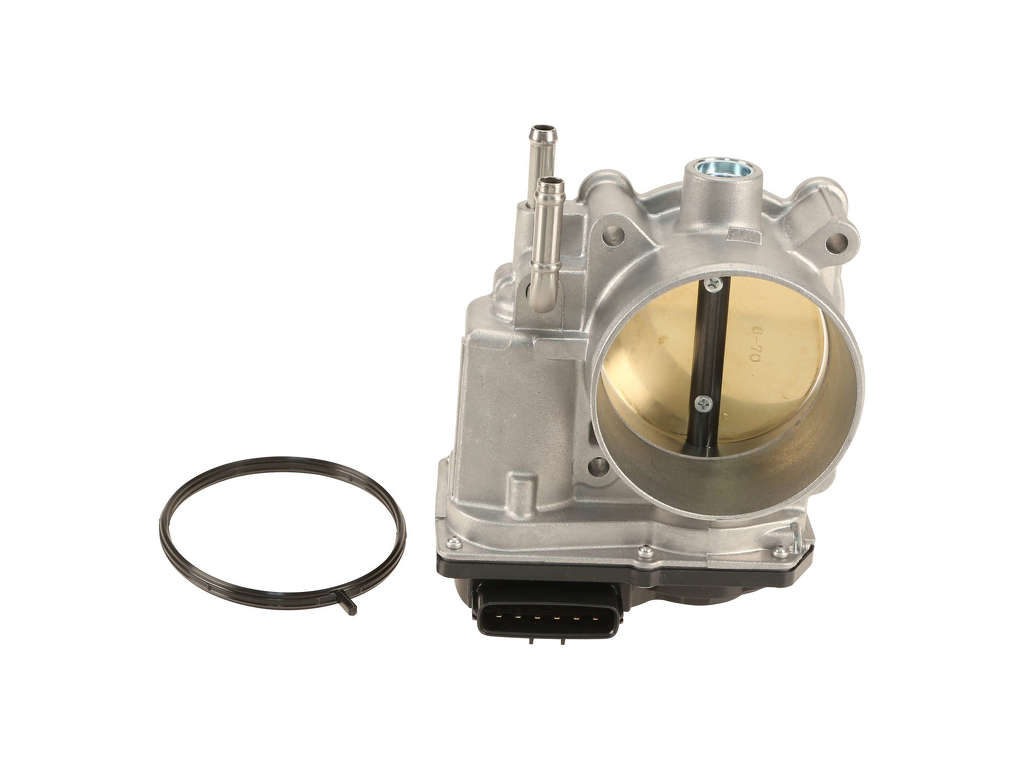
On a 2009-2012 RAV4 with the 2.5L engine, code P0223 almost always means the throttle position sensor has failed. Because the sensor is built into the throttle body, the entire throttle body assembly must be replaced. This issue is often paired with code P2135. The correct OEM part is 22030-0V010, which supersedes 22030-36010. Expect to pay $100-$250 for an aftermarket part or $350+ for OEM.
- P0223 on this RAV4 points specifically to a fault in the secondary throttle position sensor (VTA2).
- The sensor is integrated into the throttle body; the entire assembly must be replaced to fix the issue.
- This code is almost always accompanied by P2135, which confirms a disagreement between the two internal sensors.
- Diagnosis is best confirmed with a scan tool that can graph both sensor voltages live.
- The repair is straightforward for a DIYer with basic tools, but an idle relearn procedure is required afterward.
What's Unique About the 2006-2012 Toyota RAV4
The key issue for this RAV4 generation with the 2AR-FE engine is that the throttle position sensor (TPS) is not a separate, replaceable part. It is a non-contact, Hall-effect sensor integrated directly into the electronic throttle body assembly. This means that if the sensor itself is the cause of the P0223 code, you cannot simply swap out a small sensor; the entire throttle body unit must be replaced. This significantly impacts the cost and scope of the repair compared to older vehicles with serviceable sensors.
Generation note: The specified 2006-2012 range covers the third generation (XA30) RAV4. However, the 2AR-FE 2.5L engine was only available from the 2009 to 2012 model years. Earlier 2006-2008 models used the 2.4L 2AZ-FE engine, which may have different components or procedures. This guide is specific to the 2009-2012 models with the 2AR-FE engine.
Symptoms You May Notice
- Check Engine Light is on
- Vehicle enters 'limp mode' (fail-safe mode)
- Drastic reduction in engine power and acceleration
- Accelerator pedal feels unresponsive or delayed
- Engine may hesitate, stumble, or surge
- Cruise control will not work
- Engine RPMs may be higher than usual at idle
- Replacing the Accelerator Pedal Position (APP) Sensor. This code specifically points to the sensor on the throttle body (VTA2), not the sensor on the gas pedal assembly. A fault with the pedal sensor would typically set a different code, such as P2138. Replacing the APP sensor will not fix a P0223 code.
Most Likely Causes
- Failed Throttle Body Assembly (Internal Sensor Failure) 🔴 High Probability → Shop Fuel Injection Throttle Body The throttle position sensor is an electronic component integrated into the throttle body, and like any electronic part, it can fail with age and heat cycles. The failure of the internal VTA2 sensor circuit is the most direct cause of a P0223 code. This is the most common point of failure for this code on this platform.
How to confirm: Using a scan tool with live data graphing capabilities, monitor the voltage for 'Throttle Position Sensor 1' and 'Throttle Position Sensor 2'. As you slowly press the accelerator pedal, the two voltage lines should move smoothly in opposite directions (one rising, one falling, like an 'X'). For P0223, you will see the line for Sensor 2 (VTA2) stuck at a high voltage (~4.5V-5.0V) and not responding to pedal input.
Typical fix: Replace the entire throttle body assembly. 🎬 See this step-by-step walkthrough for replacing the throttle body. After replacement, an idle relearn procedure is mandatory.
Est. part cost: $100-$550 - Wiring Harness or Connector Damage 🟡 Medium Probability The wiring harness in the engine bay is exposed to heat, vibration, and potential rodent damage. A wire can rub through its insulation and short to a power source, or the connector pins can corrode, causing a high voltage reading.
How to confirm: Visually inspect the wiring harness leading to the throttle body for any signs of damage, melting, or chafing. Unplug the connector and check for corrosion or bent pins. A 'wiggle test' is effective: with a scan tool graphing the sensor voltages, wiggle the connector and harness. If the voltage spikes or drops erratically during the wiggle test, the wiring is the likely culprit.
Typical fix: Repair the damaged section of the wiring harness or clean/replace the connector pigtail.
Est. part cost: $10-$50 - Dirty or Sticking Throttle Body ⚪ Low Probability → Shop Fuel Injection Throttle Body Carbon buildup is common on all engines. While it more often causes idle or performance issues, severe buildup could theoretically prevent the throttle plate from fully closing, leading to a sensor reading that is slightly off. However, this is unlikely to cause a 'Circuit High' code, which usually indicates an electrical fault.
How to confirm: Remove the intake boot from the throttle body and visually inspect the throttle plate and bore for heavy black carbon deposits. Cleaning is good maintenance but is rarely the fix for P0223.
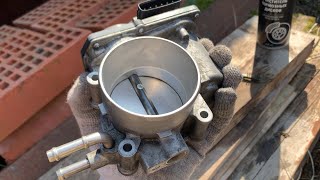
Typical fix: Clean the throttle body thoroughly with a dedicated throttle body cleaner and a soft brush or rag. 🎬 Watch this video to see how to clean the 2AR-FE throttle plate. Do not spray cleaner directly into the electronic components. This is unlikely to resolve a P0223 code but can fix other idling issues.
Est. part cost: $5-$15
Rare But Worth Checking
- Failed Engine Control Module (ECM): → Shop Engine Control Module (ECM) This is very rare. The ECM is the last thing to suspect. All other possibilities, including the throttle body and wiring, must be definitively ruled out before considering ECM replacement, which is expensive and requires programming.
Diagnosis Steps
- Connect an OBD-II scanner and confirm P0223 is active. Note if P2135 is also present, which is highly likely.
- View the freeze frame data to see the engine conditions when the code was set.
- Access live data on the scanner. Select and graph the voltages of 'Throttle Position Sensor 1' (VTA1) and 'Throttle Position Sensor 2' (VTA2).
- With the key on and engine off, slowly press the accelerator pedal from fully released to fully depressed and back. The two voltage graphs should form a clean 'X' pattern. For P0223, you will likely see the VTA2 graph as a flat line at a high voltage (near 5V) that does not change with pedal position.
- If the sensor data points to a fault, perform a 'wiggle test'. While watching the live data graph, wiggle the electrical connector and wiring harness at the throttle body. If the voltage readings jump erratically, you have a wiring issue.
- If the wiring appears stable and the live data consistently shows a stuck VTA2 sensor, the throttle body assembly is the faulty component and must be replaced.
- After replacing the throttle body, clear the codes. Perform an idle relearn procedure. This often involves disconnecting the negative battery terminal for 10-15 minutes before starting the car, then letting it idle in Park for 5-10 minutes to allow the ECM to adapt to the new throttle body. 🎬 Watch: How to perform the 2006-2012 Toyota idle relearn procedure.
- Test drive the vehicle to confirm the repair and ensure no codes return.
Parts You'll Likely Need
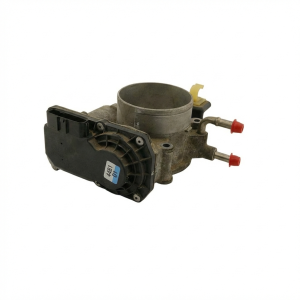
- Throttle Body Assembly
(OEM #22030-0V010 (supersedes 22030-36010))— This is the most common failure for code P0223, as the faulty throttle position sensor is integrated into this assembly and is not sold separately by Toyota for this application.
Trusted brands: Toyota (OEM), Aisan (Often the OEM supplier), Denso, Hitachi, Unique Bargains
OEM price range: $350-$550
Aftermarket price range: $100-$250
Related Codes That Often Appear With This One
- P2135 — P2135 indicates a 'Throttle/Pedal Position Sensor/Switch A/B Voltage Correlation' error. The ECM continuously compares the signals from VTA1 and VTA2. If P0223 is present because VTA2 is stuck high, its signal will not match VTA1's signal as the throttle moves. The ECM sees this disagreement and flags P2135. It is extremely common to see both codes together, and they almost always point to the same root cause: a failed throttle body assembly.
- P0123 — P0123 is 'Throttle/Pedal Position Sensor/Switch 'A' Circuit High'. If there is a widespread electrical issue like a reference voltage problem or major harness damage affecting the entire sensor circuit, it's possible for both sensor circuits to report high voltage simultaneously.
Technical Service Bulletins (TSBs) & Recalls
- T-SB-0318-08: Addresses the common steering intermediate shaft clunk, a separate known issue for this platform.
Platform-Specific Known Issues
- Real-World Repair Story: A 2011 RAV4 owner on Reddit with 155k miles experienced limp mode and codes P0223 and P2135. After confirming with a scan tool that the TPS voltage was not responding correctly, they replaced the entire throttle body assembly with an Aisin unit. The repair, which also involved removing the alternator for access, successfully cleared the codes and restored normal engine operation. This is a typical owner experience for this fault.
Mechanic-Grade Diagnostic Values
- Throttle Position Sensor Power Supply (VCTA) to Sensor Ground (ETA) — expected: 4.5 to 5.5 V (Key On, Engine Off). Failure: Voltage outside this range indicates a problem with the ECM or wiring, not necessarily the sensor itself.
- Throttle Position Sensor 'A' (VTA1) to Sensor Ground (ETA) — expected: 0.5 to 1.1 V at closed throttle; 3.2 to 4.8 V at wide-open throttle (Key On, Engine Off).. Failure: Voltage that is stuck, erratic, or does not sweep smoothly indicates a sensor or wiring fault.
- Throttle Position Sensor 'B' (VTA2) to Sensor Ground (ETA) — expected: 2.1 to 3.1 V at closed throttle; 4.6 to 4.98 V at wide-open throttle (Key On, Engine Off).. Failure: For P0223, the voltage will be stuck high, typically above 4.8V, regardless of throttle position.
- P0223 Fault Detection Threshold — expected: The ECM must see the VTA2 output voltage as 4.8 V or higher for 2 seconds or more to set the code.. Failure: This specific condition triggers the P0223 DTC.
Hidden / Shadow Codes Worth Checking
- Pending DTC: Toyota's system may store a fault as a 'Pending DTC' after a single drive cycle trip if a malfunction is detected but before it is confirmed on a second trip to illuminate the Check Engine Light. (see via Use a scan tool like Toyota Techstream and navigate to 'Powertrain / Engine and ECT / Trouble Code / Pending'.)
Scan Tool Commands That Help
- Toyota Techstream: Data List for ETCS — This is the primary diagnostic screen to view and graph the live voltage of 'Throttle Position No. 1' (VTA1) and 'Throttle Position No. 2' (VTA2) to confirm the sensor failure.
- Toyota Techstream: Utility -> All Readiness — After a repair attempt (like cleaning the throttle body), this function can be used to run the internal monitor for the throttle system and check the DTC judgment result ('NORMAL' or 'ABNORMAL') without extensive driving, confirming if the fix was successful.
- Toyota Techstream: Clear DTCs — This must be performed after replacing the throttle body to erase the fault code from the ECM's memory.
Wiring & Ground Locations
- Throttle Body Connector (C6) — The 6-pin electrical connector on the electronic throttle body assembly, located between the air filter housing and the intake manifold.. This is the primary point for checking for corrosion, damage, or performing a 'wiggle test'. A poor connection here can directly cause the P0223 code.
- ECM Pin B30-114 (VTA2) — Pin 114 on connector B30 of the Engine Control Module (ECM). This pin receives the signal from the 'B' sensor.. This is the terminal to back-probe at the ECM to confirm if the high voltage signal is reaching the computer, which helps differentiate a wiring short from an internal ECM fault.
- ECM Pin B30-115 (VTA1) — Pin 115 on connector B30 of the Engine Control Module (ECM). This pin receives the signal from the 'A' sensor.. Used as a comparison signal to VTA2. A technician would test both pins at the ECM to verify the correlation error (P2135) seen by the computer.
- ECM Pin B30-67 (VCTA) — Pin 67 on connector B30 of the Engine Control Module (ECM).. This is the 5V power supply from the ECM to the throttle position sensor. Verifying 4.5-5.5V here is a critical first step in diagnosing the circuit.
- ECM Pin B30-91 (ETA) — Pin 91 on connector B30 of the Engine Control Module (ECM).. This is the dedicated sensor ground for the throttle position sensor. A bad ground here can cause floating or high voltage readings on the signal wires.
OEM Part Supersession History
22030-36010→22030-0V010— Standard part revision by the manufacturer for improvements or supplier changes.
Heads up: None. The new part number 22030-0V010 is a direct replacement for 22030-36010.
Diagnostic Flowchart
Other Known Issues on This Vehicle
Issues unrelated to this code that are worth knowing about as an owner of this generation:
- Steering Intermediate Shaft Clunk/Noise 🟠 Medium — Very common issue. A clunking or popping noise is heard and felt in the steering wheel when turning at low speeds. (Ref: T-SB-0318-08. Toyota acknowledged the defect and released a redesigned intermediate shaft to fix the problem.)
- Engine Water Pump Failure 🔴 High — Common failure point, often occurring after 80,000 miles. Symptoms include coolant leaks (pink residue) from the weep hole, whining noises, and potential for overheating. (Ref: No recall, but it is a widely documented failure. The job is significantly easier on the 4-cylinder (2AR-FE) than the V6.)
- Torque Converter Shudder (Next Gen Context) 🔴 High — Primarily documented for the 2013-2015 XA40 generation, but a major issue for the U760E/F transmission family. Causes a vibration or shudder under light load between 25-50 mph. (Ref: T-SB-0023-15 and Warranty Enhancement Program ZH1 were issued for 2013-2015 models, involving a new torque converter and ECM reprogram.)
- Excessive Oil Consumption (2006-2008 2AZ-FE Engine) 🔴 High — A notorious problem for the earlier 2.4L 2AZ-FE engine in the XA30 platform, not the 2.5L 2AR-FE. Caused by defective piston ring design. (Ref: Toyota initiated a Warranty Enhancement Program (ZE7) for this issue, but it has since expired.)
Used vs. New Parts: Buying Guide for This Vehicle
When a used part is the smart pick: A used OEM throttle body from a low-mileage donor vehicle can be a cost-effective option and may be more reliable than a new, non-branded aftermarket part. However, because this is an electronic failure, a used part carries a significant risk of having the same issue or a short remaining lifespan. A new part is the safer repair.
Donor-vehicle mileage cap: roughly under 75000 miles for the part to have meaningful remaining life.
What to inspect on the donor part:
- Check for zero corrosion on the electrical connector pins.
- Ensure the throttle plate is clean and moves freely without binding (if not electronically locked).
- Verify the part number on the donor part matches the required OEM number (22030-0V010 or 22030-36010).
- Ask for the donor vehicle's VIN to check its history if possible.
Aftermarket brands forum-validated for this vehicle:
- Aisin (widely reported to be the original OEM supplier for Toyota, making it the best non-dealer option)
- Denso (another high-quality Japanese OEM supplier)
Brands owners have reported issues with on this vehicle:
- Unbranded or 'white-box' parts from online marketplaces. While inexpensive, they have a higher reported failure rate and may not perform to OEM specifications, potentially causing you to do the job twice.
Real Owner Stories
Aggregated from forums and TSBs cited above. Mileages and costs reflect what owners reported in those sources.
2011 Toyota RAV4 2.5L — 155000 miles
Symptoms: Vehicle entered limp mode with codes P0223 and P2135. Scan tool confirmed the TPS voltage was not responding correctly.
What fixed it: Replaced the entire throttle body assembly with an Aisin unit. The repair required removing the alternator for access.
Source hint: Reddit r/AskAMechanic/comments/1d2j13s/2011_rav4_water_pump/ and vehicle_specific_issues
Related OBD-II Codes
Frequently Asked Questions
Does TSB-0318-08 regarding the steering clunk apply to my 2006-2012 RAV4?
Can I just clean the throttle body to fix P0223 on my 2.5L 2AR-FE engine?
Is the 2.5L 2AR-FE engine in my RAV4 affected by the excessive oil consumption issue?
What part number do I need to fix the P0223 code on my 2011 RAV4?
Do I need to do anything special after replacing the throttle body on my RAV4?
Is the water pump failure on the 2.5L RAV4 a known issue?
Helpful Videos



Used OEM Parts in Stock
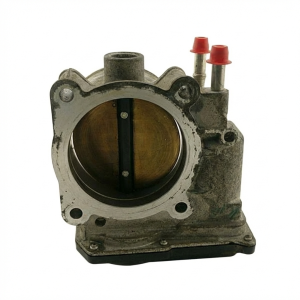
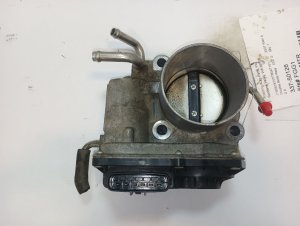
New Aftermarket Parts Available

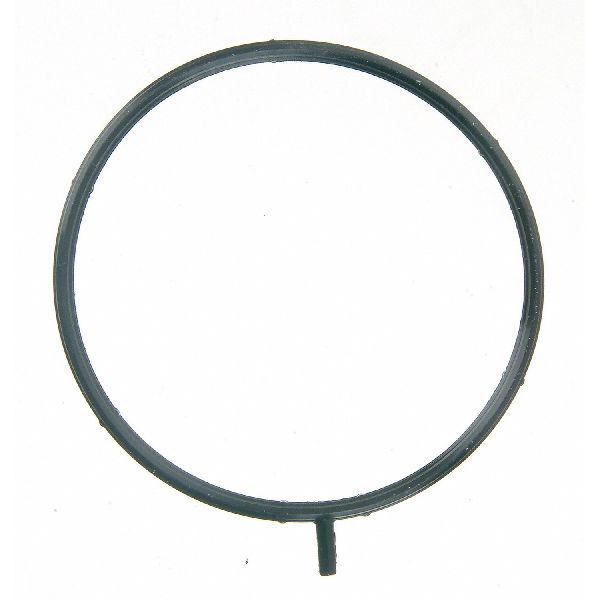

The information in this article is provided for general reference and educational purposes only. Vehicle specifications, procedures, and part compatibility can vary by production date, trim level, and region. Always consult your vehicle's factory service manual and verify part numbers before purchasing or performing repairs. Safety-critical components such as airbags, seat belts, and braking systems should be installed by a qualified professional.
- Toyota RAV4:
- 🧭 Diagnostic Flowchart
- 🎬 Helpful Videos
- 🛍️ Shop This Part
- What's Unique About the 2006-2012 Toyota RAV4
- Symptoms You May Notice
- Most Likely Causes
- Rare But Worth Checking
- Diagnosis Steps
- Parts You'll Likely Need
- Related Codes That Often Appear With This One
- Technical Service Bulletins (TSBs) & Recalls
- Platform-Specific Known Issues
- Mechanic-Grade Diagnostic Values
- Hidden / Shadow Codes Worth Checking
- Scan Tool Commands That Help
- Wiring & Ground Locations
- OEM Part Supersession History
- Other Known Issues on This Vehicle
- Used vs. New Parts: Buying Guide for This Vehicle
- Real Owner Stories
- 2011 Toyota RAV4 2.5L — 155000 miles
- Related OBD-II Codes
- Frequently Asked Questions
- 🎟️ Get 5% Off