

P0234 on 2003-2013 Audi A3 2.0 TDI (BKD): Turbo Overboost Causes and Fixes
On the Audi A3 2.0 TDI with the BKD engine, code P0234 is almost always caused by sticking variable vanes (VNT) inside the turbocharger due to carbon buildup. This leads to a sudden loss of power (limp mode), especially under hard acceleration above 3,000 RPM. The fix often requires removing the turbo for a professional cleaning, checking control components like the N75 valve and vacuum lines, or, in severe cases, a full replacement.
- P0234 on an A3 2.0 TDI BKD is a very common issue, usually pointing to a problem with the turbo's boost regulation, not necessarily a failed turbo.
- The most likely cause is carbon buildup causing the variable vanes (VNT) inside the turbo to stick.
- Before condemning the expensive turbocharger, always check the cheaper components first: the N75 boost control valve and all associated vacuum lines.
- A handheld vacuum pump is an essential tool for diagnosing this issue, as it can test the movement of the actuator and VNT mechanism directly.
- If the turbo needs to be replaced or cleaned, it is a labor-intensive job.
What's Unique About the 2003-2013 Audi A3

The 2.0 TDI BKD engine in the Audi A3 is well-known for this specific problem. The issue is rarely the turbocharger failing catastrophically, but rather the variable nozzle turbine (VNT) mechanism inside getting clogged with carbon soot. This is especially common on cars used for frequent short trips, where the engine and exhaust don't get hot enough to burn the deposits away. This leads to the vanes sticking in a position that generates maximum boost, causing the overboost condition when the driver demands power.
Generation note: The 2003-2013 year range covers the entire second generation (Typ 8P) of the Audi A3, which ran from 2003 to 2012. This includes the initial release (2003-2005) and two facelifts (2005-2008 and 2008-2013). The 2.0 TDI BKD engine was a primary diesel option throughout this period. The causes and fixes for P0234 on the BKD engine are consistent across these versions and also apply to numerous platform mates like the VW Golf Mk5.
Symptoms You May Notice

- Sudden and significant loss of engine power (entering 'limp mode'), often during hard acceleration or climbing hills.
- Check Engine Light or flashing Glow Plug Light is illuminated.
- Reduced power output, car feels 'flat' or sluggish as if it has no turbo.
- Black smoke from the exhaust under acceleration.
- Audible whistling, 'siren', or whining noise from the turbo area, especially when lifting off the throttle.
- Immediately replacing the entire turbocharger without first thoroughly checking the N75 valve, all vacuum lines for leaks, and testing the actuator with a vacuum pump. These control components are much cheaper and easier to replace.
- Replacing the Boost Pressure (MAP) sensor first. While it can be a cause, it's far less likely than the mechanical VNT mechanism or vacuum control system issues.
- Ignoring a recent turbo replacement. A user on Audi-Sport.net reported P0234 even after a new turbo, highlighting the importance of checking the control system and actuator adjustment post-replacement.
Most Likely Causes

- Sticking/Clogged Turbocharger Vanes (VNT) 🔴 High Probability → Shop Turbocharger The 2.0 TDI BKD engine is prone to carbon buildup, especially with city driving patterns. This soot clogs the delicate variable vane mechanism, causing it to stick in a position that generates maximum boost. This is the most cited cause in owner forums for P0234 on this engine.
How to confirm: Check the turbo actuator rod for movement while the engine is started. Use a handheld vacuum pump (like a Mityvac) to apply vacuum to the actuator; the arm should move smoothly through its full range of motion (approx. 10-15mm). If the arm is stuck, jerky, or doesn't move, the VNT mechanism is almost certainly clogged.
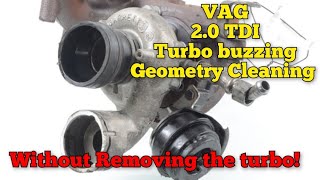
Typical fix: The turbocharger must be removed for professional cleaning and calibration. 🎬 Watch: How to remove and clean the turbo geometry Some owners attempt in-situ cleaning with products like 'Mr. Muscle' oven cleaner sprayed into the exhaust housing, with mixed results. If cleaning fails or damage is found, a replacement turbo is necessary.
Est. part cost: $400-$1200 - Faulty N75 Valve (Boost Pressure Control Solenoid) 🟡 Medium Probability The N75 valve is an electromechanical part that operates in a hot engine bay and can fail over time, either electrically or by getting stuck internally. It's a common failure point in the VAG boost control system.
How to confirm: The N75 valve can be tested using a multimeter or by performing an output test with a compatible diagnostic tool (like VCDS). Swapping it with a known good valve is a quick diagnostic step. Listen for a clicking sound when activated.
Typical fix: Replace the N75 valve. It is a relatively accessible and inexpensive part, often mounted on the firewall. OEM part number is 1K0906627A, with Pierburg being a common OEM supplier.
Est. part cost: $40-$100 - Leaking or Blocked Vacuum Hoses 🟡 Medium Probability → Shop Vacuum Hose The original cloth-braided rubber hoses become brittle and crack over time due to heat and age in the engine bay, causing vacuum leaks that prevent the N75 from controlling the turbo actuator.
How to confirm: Visually inspect all vacuum lines (typically 3.5mm inner diameter) running from the vacuum pump to the N75 valve and to the turbocharger actuator for cracks, splits, or loose connections. A smoke test or spraying starter fluid can help find hard-to-see leaks.
Typical fix: Replace the damaged section of vacuum hose. It's often recommended to replace all vacuum lines at once as a preventative measure.
Est. part cost: $10-$30 - Faulty Turbocharger Actuator ⚪ Low Probability → Shop Turbocharger
How to confirm: The diaphragm in the vacuum actuator can rupture. Apply vacuum directly to the actuator's port with a hand pump; if it doesn't hold vacuum (the gauge drops) or fails to move the actuator rod, the actuator is faulty. A healthy actuator should hold vacuum.
Typical fix: Replace the turbocharger actuator. On some turbos this is a separate, bolt-on part, but on others it may require replacing the entire turbocharger. The replacement actuator rod must be adjusted to the same length as the original.
Est. part cost: $100-$300
Rare But Worth Checking
- Faulty Boost Pressure Sensor (G31/MAP Sensor): While less common, a faulty sensor can send incorrect high-pressure readings to the ECU, causing it to mistakenly trigger P0234. Check its live data readings with a scan tool (like VCDS Measuring Block 011) to ensure requested vs. actual boost are plausible.
- Incorrectly Adjusted Actuator Rod: If the turbocharger or actuator has been replaced recently, an incorrectly adjusted actuator rod can cause the VNT vanes to be in the wrong default position, leading to overboost. The rod length is critical and must be set correctly.
Technical Service Bulletins (TSBs) & Recalls
Manufacturer documentation confirms that this code is often isolated from other faults. For example, TSB Bulletin #01133020270825 notes that DTC P0234 (Turbo/Super Charger Overboost Condition) may be stored in the engine control module (J623) with no other DTCs present.
Diagnosis Steps

- Connect a VAG-specific scanner (like VCDS) to confirm P0234 is present and check for other codes. Note the freeze frame data to see the conditions (RPM, load) when the fault occurred.
- With the engine off, visually inspect all cloth-braided vacuum hoses connected to the N75 valve and the turbocharger actuator for obvious cracks, splits, or disconnections.
- Start the engine and observe the turbo actuator rod at the back of the engine. It should move decisively to its stop as vacuum builds. If it doesn't move, or moves slowly, suspect a vacuum supply issue or stuck mechanism.
- Use a handheld vacuum pump to apply vacuum directly to the turbo actuator. The rod should move smoothly through its full range of travel and hold the vacuum. If it's jerky, stuck, or won't hold vacuum, the actuator is bad or the VNT mechanism is clogged.
- If the actuator moves freely with the hand pump but not when the engine is running, suspect the N75 valve or the vacuum lines supplying it. Check the vacuum supply from the tandem pump.
- Perform an output test on the N75 valve using VCDS to check its function. You should hear it clicking and see the actuator rod move.
- Log VCDS Measuring Blocks for Group 011 while driving. Compare 'specified' vs 'actual' MAP (Manifold Absolute Pressure). If actual consistently and significantly exceeds specified under load, it confirms an overboost condition.
- If all control components and vacuum lines are confirmed to be working, the cause is almost certainly a carbon-clogged VNT mechanism inside the turbocharger itself, requiring removal for cleaning or replacement.
Parts You'll Likely Need

- Turbocharger (New or Remanufactured)
(OEM #03G253019A, 03G253010J, 03G253014H)— This is the ultimate fix if the variable vanes (VNT) are seized due to carbon and cannot be cleaned effectively, or if the turbo has other internal damage.
Trusted brands: Garrett (GT1749V), BorgWarner
OEM price range: $1200-$1800
Aftermarket price range: $500-$900 - Boost Pressure Control Valve (N75)
(OEM #1K0906627A)— This solenoid is a common failure point in the boost control system and can cause an overboost condition if it gets stuck or fails electronically. It's a critical diagnostic step before condemning the turbo.
Trusted brands: Pierburg (OEM Supplier), Bosch, Vaico
OEM price range: $70-$120
Aftermarket price range: $30-$60 - Vacuum Hose
(OEM #N02035327 (example for bulk hose))— Cracked or leaking vacuum hoses prevent the N75 valve from properly controlling the turbo actuator, leading to incorrect boost levels. They are cheap and a common point of failure due to engine bay heat.
Trusted brands: Genuine VW/Audi, Cohline
OEM price range: $10-$30
Aftermarket price range: $5-$15
Platform-Specific Known Issues
- Extreme Carbon Buildup on VNT Mechanism: The 2.0 TDI BKD engine is widely documented in owner forums as being highly susceptible to carbon buildup on the turbocharger's variable vanes, making P0234 a very common code. This is exacerbated by short-trip driving cycles where the exhaust doesn't get hot enough to perform self-cleaning.
- Limp Mode Triggered by Sustained High RPM: Many owners report that the P0234 code and subsequent limp mode only occur under specific conditions, such as sustained acceleration in a high gear (5th or 6th) when climbing a hill or joining a motorway, typically above 3,000 RPM.
Mechanic-Grade Diagnostic Values
- VCDS Measuring Block 011 - Boost Pressure — expected: During a full-throttle pull in 3rd or 4th gear from 2000-3500 RPM, the 'Actual MAP' should closely follow the 'Specified MAP'. A brief, small overshoot is normal, but it should regulate quickly.. Failure: If 'Actual MAP' consistently and significantly exceeds 'Specified MAP' by more than ~200-250 mbar for several seconds, it confirms an overboost condition triggering P0234.
- VCDS Measuring Block 011 - N75 Duty Cycle — expected: The duty cycle percentage will vary rapidly based on engine load and RPM, typically between 20% and 80%.. Failure: If the duty cycle goes to 95%+ while actual boost is still far exceeding specified boost, it indicates the ECU is trying its hardest to lower boost but a mechanical issue (like stuck vanes) is preventing it.
- N75 Valve Solenoid Resistance — expected: Approximately 14-20 Ohms.. Failure: A reading far outside this range (open circuit or short) indicates a failed solenoid coil.
Scan Tool Commands That Help
- VCDS (VAG-COM): Engine (01) -> Measuring Blocks (08) -> Group 011 — This is the primary tool for diagnosing P0234. It allows you to log and graph Specified vs. Actual boost pressure and the N75 valve duty cycle while driving to confirm the overboost condition in real-time.
- VCDS (VAG-COM): Engine (01) -> Output Tests (03) -> N75 Boost Pressure Valve — This command will cycle the N75 valve on and off, allowing you to listen for an audible click from the valve and watch for corresponding movement of the turbo actuator rod. This tests the electrical integrity of the valve and its control circuit.
- VCDS (VAG-COM): Engine (01) -> Basic Settings (04) -> Group 011 (Turbocharger) — After replacing a turbocharger or actuator, this function can be used to cycle the VNT mechanism through its full range of motion to ensure it's not binding and to help the ECU learn the actuator's end points. Note: This is more critical on newer common-rail engines but can still be a useful verification step.
Wiring & Ground Locations
- N75 Valve Connector — The N75 valve is typically mounted on the firewall, near the center of the engine bay. The 2-pin electrical connector is on the top of the valve.. Corrosion or damage to this connector or its wiring can cause a loss of control over the N75 valve, leading to it failing in a position that causes overboost.
- Engine Block Ground — There are several main ground points. A key one is located on the left side of the engine compartment, near the battery tray and on the longitudinal member.. A poor engine ground can cause erratic behavior from sensors and solenoids, including the N75 valve and MAP sensor, potentially leading to incorrect readings or operation.
- ECU Main Harness Connector (T94) — The Engine Control Unit (J623) is located in the plenum chamber, under the plastic scuttle panel at the base of the windshield. The N75 valve wiring runs to this large multi-pin connector.. Water ingress into the plenum chamber is a known issue that can corrode ECU connector pins. A fault in the N75 control circuit could originate here, though it is less common than a component or wiring failure in the engine bay.
Real Owner Repair Stories
- Audi-Sport.net user (Audi A3 2.0 TDI BKD) — Car goes into limp mode when accelerating hard, especially around 3,000 RPM. Fault code P0234 (Overboost) logged in VCDS.
❌ Tried (didn't work) Garage checked over the vehicle but could find no obvious cause.
✅ What actually fixed it The user acknowledged that this is a very common issue and that the likely fix is either cleaning the carbon from the turbo's VNT mechanism or replacing the turbocharger entirely. Another user mentioned the 'Mr. Muscle oven cleaner' trick as a temporary fix. - Audi-Sport.net user (2003 Audi A3 2.0 TDI BKD) — Limp mode above 3000 RPM in 5th or 6th gear with code P0234, even after a new turbo was installed.
❌ Tried (didn't work) Replacing the turbocharger.
✅ What actually fixed it The final fix was not explicitly stated in the thread, but the discussion pointed heavily towards a problem in the control system rather than the turbo itself. Suggestions included checking for free movement of the actuator rod, testing for vacuum leaks in the hoses to the actuator, and considering the 'Mr. Muscle' cleaning method on the (new) turbo in case of early-onset sticking. This story highlights that replacing the turbo is not a guaranteed fix if the control system is at fault. - YouTube video by Gerard Burke (VAG 2.0 TDI (similar to BKD)) — P0234 overboost fault, car enters limp mode with no power, limited to 3,000 RPM.
❌ Tried (didn't work) Checking boost pressure sensor and N75 valve, which were found to be okay.
✅ What actually fixed it The root cause was severe carbon buildup on the variable vanes inside the turbocharger's exhaust housing. The video shows a complete disassembly of the turbo, scraping the carbon off the VNT mechanism until all vanes moved freely, and then reassembling. This restored proper function and resolved the overboost code.
When the Usual Fixes Don't Work
- A common counter-narrative found in forums involves users who immediately replace the turbocharger only to find the P0234 code returns. This almost always points to a failure to diagnose the entire control loop. The actual fix in these cases is often a cheap, overlooked component like a cracked vacuum line hidden under the battery tray, a faulty N75 valve, or an incorrectly adjusted actuator rod on the new turbo. This reinforces the diagnostic principle of starting with the cheapest and easiest components (vacuum lines, N75 valve) before condemning the expensive and labor-intensive turbocharger.
OEM Part Supersession History
1K0906627A (N75 Valve)→This part number has remained quite stable, but different revisions may exist. The key is the OEM supplier, which is typically Pierburg.— Minor internal updates for reliability.
Heads up: Be cautious of cheap, unbranded aftermarket N75 valves. While they may work initially, forum users report higher failure rates. Sticking with the Pierburg OEM part is highly recommended for longevity.03G253019A (Garrett Turbocharger)→03G253010J, 03G253014H, and others.— Revisions and consolidation of part numbers across the VAG platform.
Heads up: While many turbos for the 2.0 TDI engine look similar, there can be slight differences in the orientation of the compressor housing or actuator bracket. Always verify the exact part number for the BKD engine before ordering. Some replacements may require slight rotation of the compressor housing to align with pipework.
Diagnostic Flowchart
Used vs. New Parts: Buying Guide for This Vehicle
When a used part is the smart pick: A used N75 valve or MAP sensor from a known-good, low-mileage donor car can be a cost-effective diagnostic step (i.e., to swap and test). A complete used turbocharger assembly is generally not recommended due to the high risk of inheriting the same carbon buildup problem.
Donor-vehicle mileage cap: roughly under 70000 miles for the part to have meaningful remaining life.
What to inspect on the donor part:
- For a turbo: Manually check the actuator arm for smooth, non-binding movement. Check for excessive shaft play (in/out and side-to-side). Any grittiness or sticking during movement is a red flag.
- For electronics (N75, MAP): Look for clean connectors with no signs of corrosion or water damage.
OEM-only on this vehicle (don't cheap out):
- N75 Valve: While aftermarket options exist, the OEM Pierburg unit is widely considered the most reliable and is worth the small price premium to avoid repeat failures.
Aftermarket brands forum-validated for this vehicle:
- Remanufactured Turbochargers: Reputable turbo specialists that provide a warranty and a balancing report are a viable alternative to a new OEM unit.
- Upgraded/Hybrid Turbos: Brands like Darkside Developments offer direct-fit performance upgrades for the BKD engine if more power is desired.
Brands owners have reported issues with on this vehicle:
- Unbranded 'eBay' turbochargers: These are often poorly manufactured with inferior materials, leading to premature failure. The risk of catastrophic engine damage from a failed turbo is too high to justify the low cost.
Real Owner Stories
Aggregated from forums and TSBs cited above. Mileages and costs reflect what owners reported in those sources.
2003 Audi A3 2.0TDI BKD
Symptoms: The car entered limp mode in 5th or 6th gear when accelerating above 3000 RPM.
What fixed it: The owner had replaced the turbo but the fault persisted, indicating the problem was with the control systems. The discussion pointed towards diagnosing the VNT control system and considering VNT cleaning.
Source hint: Audi-Sport.net: Overboost P0234 A3 2.0TDI BKD 2003
Audi A3 BKD
Symptoms: The vehicle had a P0234 overboost condition.
What fixed it: After initially suspecting the turbo, the problem was ultimately solved by replacing a faulty 'vacuum box' (vacuum reservoir/solenoid block).
Source hint: Ross-Tech Forums: Overboost condition A3 bkd
2004 Audi A3 TDI — ~165000 miles
Symptoms: A new owner of a high-mileage A3 immediately experienced the P0234 code.
What fixed it: The owner was quoted for a full turbo replacement but was also discussing the possibility of a DIY fix using the 'Mr. Muscle' cleaning method for the VNT mechanism.
Source hint: Audi Owners Club (UK): Turbo Overboost Problem P0234
VW Golf with BKD engine
Symptoms: The car registered a P0234 overboost code.
What fixed it: The owner was in the middle of a diagnostic dilemma, trying to determine if the cause was a faulty N75 valve, a bad MAF sensor, or sticking turbo vanes.
Source hint: MK5 Golf GTI Forum: p0234 overboost help
Related OBD-II Codes
Frequently Asked Questions
My A3 only goes into limp mode when I'm accelerating hard on the motorway. Is this a typical symptom for P0234?
What is the most likely cause of a P0234 overboost code on my 2.0 TDI BKD engine?
How can I test if my turbo actuator or VNT mechanism is stuck without removing the turbo?
I've heard about cleaning the turbo with oven cleaner. Is this a recommended fix?
Could a bad N75 valve cause the P0234 code, and how would I check it?
My mechanic replaced the turbo, but the P0234 code came back. What else could be wrong?
Helpful Videos
We Have This Part in Stock

The information in this article is provided for general reference and educational purposes only. Vehicle specifications, procedures, and part compatibility can vary by production date, trim level, and region. Always consult your vehicle's factory service manual and verify part numbers before purchasing or performing repairs. Safety-critical components such as airbags, seat belts, and braking systems should be installed by a qualified professional.
- Audi A3:
- 🧭 Diagnostic Flowchart
- 🎬 Helpful Videos
- 🛍️ Shop This Part
- What's Unique About the 2003-2013 Audi A3
- Symptoms You May Notice
- Most Likely Causes
- Rare But Worth Checking
- Technical Service Bulletins (TSBs) & Recalls
- Diagnosis Steps
- Parts You'll Likely Need
- Platform-Specific Known Issues
- Mechanic-Grade Diagnostic Values
- Scan Tool Commands That Help
- Wiring & Ground Locations
- Real Owner Repair Stories
- When the Usual Fixes Don't Work
- OEM Part Supersession History
- Used vs. New Parts: Buying Guide for This Vehicle
- Real Owner Stories
- 2003 Audi A3 2.0TDI BKD
- Audi A3 BKD
- 2004 Audi A3 TDI — ~165000 miles
- VW Golf with BKD engine
- Related OBD-II Codes
- Frequently Asked Questions
- 🎟️ Get 5% Off