

P0234 on 2021-2022 Buick Encore: Turbo Overboost Causes and Fixes
On a 2021-2022 Buick Encore, code P0234 is most often caused by the Turbocharger Wastegate Regulator Solenoid Valve freezing or sticking, especially in cold weather. This is a known issue documented in a GM Technical Service Bulletin (TSB PIP5812C). Replacing or cleaning the solenoid is the most common fix. This issue is also common in platform-mates like the Chevrolet Trax and Sonic.
- P0234 on a 2021-2022 Encore is a serious code indicating the turbo is creating too much pressure.
- The most likely cause, especially in cold climates, is a frozen Turbocharger Wastegate Regulator Solenoid, as per GM TSB #PIP5812C.
- Do not immediately assume the entire turbocharger has failed; the fix is often the replacement of an inexpensive solenoid.
- Driving with this code is not recommended as it can lead to severe and costly engine damage.
What's Unique About the 2021-2022 Buick ENCORE
For the 2021-2022 Buick Encore with the 1.4L engine, this code has a very specific and documented cause. General Motors issued a Technical Service Bulletin (TSB #PIP5812C) acknowledging that oil and moisture condensate can build up in the Turbocharger Wastegate Regulator Solenoid Valve. In cold weather (typically below 0°F / -18°C), this mixture can freeze, causing the valve to stick and not regulate boost pressure correctly. This leads directly to a P0234 overboost or P0299 underboost condition. Other related bulletins suggest an updated ECM calibration may also be part of the fix, which alters transmission shift patterns in cold weather to keep engine RPMs higher and reduce ice buildup potential.
Diagnostic Flowchart
Tap your situation to follow the diagnostic path that matches what you're seeing on this vehicle.
Symptoms You May Notice
- Check Engine Light illuminated
- Reduced engine power or vehicle entering 'limp mode'
- Audible whooshing, whistling, or other loud noises from the engine bay
- Engine hesitation or misfiring under acceleration
- Black or white smoke from the exhaust
- Burning oil odor due to increased crankcase pressure forcing leaks
- Replacing the turbocharger when only the inexpensive wastegate control solenoid is at fault. This is a common theme in GM service bulletins, which advise thorough diagnosis of the control system before condemning the turbo.
- Replacing the MAP sensor without first checking for the more common solenoid or mechanical wastegate issues.
- Assuming a new wastegate solenoid is good out of the box. A forum user reported receiving multiple new solenoids that failed the TSB air test, highlighting potential quality control issues.
Most Likely Causes
- Frozen or Sticking Turbocharger Wastegate Regulator Solenoid Valve 🔴 High Probability → Shop Turbocharger A specific GM Technical Service Bulletin (#PIP5812C) identifies this as a common problem due to oil/moisture condensate freezing inside the valve during cold weather. This affects the 1.4L LE2 engine in the Encore and its platform mates.
How to confirm: The issue is most likely to occur during or after cold weather driving. TSB PIP5812C provides a diagnostic procedure: remove the valve, turn it upside down to drain any liquid, and use low-pressure shop air (15-20 PSI) to blow through the ports. If air does not pass through port #2 correctly, or if hardened deposits are preventing plunger movement, the valve is faulty and must be replaced.
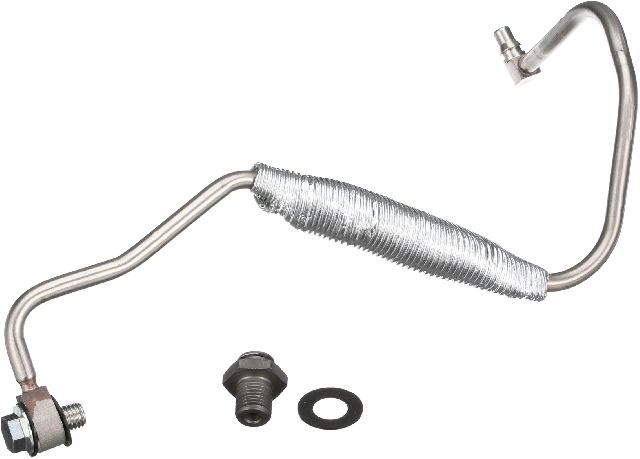
Typical fix: In some cases, the TSB procedure of draining and blowing out the valve with compressed air can resolve the issue temporarily. However, if deposits are hardened or the valve fails the air test, replacement is necessary. GM also released a thermal wrap for the solenoid in later service bulletins to help prevent freezing.
Est. part cost: $65-$100 - Sticking or Binding Turbocharger Wastegate 🟡 Medium Probability → Shop Turbocharger The wastegate is a mechanical moving part exposed to extreme heat and exhaust gases, making it susceptible to carbon buildup and binding over time. The actuator rod can also become bent or corroded.
How to confirm: With the engine off and cool, manually move the wastegate actuator rod to ensure it moves freely without binding. A vacuum pump can also be used to test the actuator's movement through its full range.
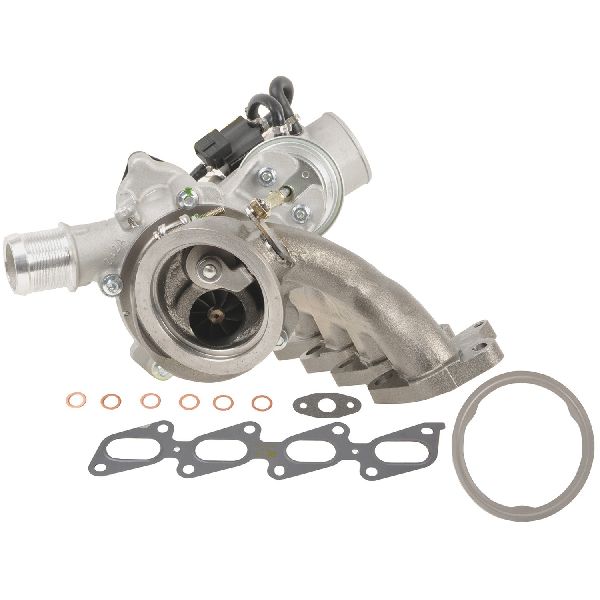
Typical fix: In some cases, the wastegate can be cleaned and lubricated. Often, the actuator needs replacement. If the wastegate itself (internal to the turbo) is seized, the entire turbocharger may need to be replaced.
Est. part cost: $100-$450 for an actuator, $800+ for a turbocharger - Damaged or Disconnected Wastegate Control Hoses ⚪ Low Probability The rubber and plastic hoses in the engine bay are exposed to heat and can become brittle, cracked, or disconnected over time.
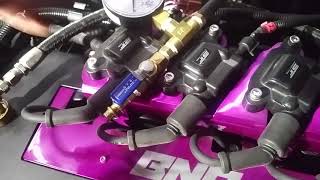
How to confirm: Visually inspect all vacuum and pressure hoses running to and from the wastegate solenoid and actuator for cracks, brittleness, loose connections, or blockages. 🎬 See how to perform a professional turbo boost leak test
Typical fix: Replace the damaged vacuum/pressure lines.
Est. part cost: $10-$30 - Faulty Boost Pressure Sensor (MAP Sensor) ⚪ Low Probability
How to confirm: Use a scan tool to monitor the boost pressure reading in real-time. If the reading is erratic, does not change with engine RPM, or reports a lower pressure than what actually exists, the sensor may be faulty. Compare its reading to a known good sensor or a manual pressure gauge.
Typical fix: Replace the Manifold Absolute Pressure (MAP) sensor.
Est. part cost: $50-$120
Rare But Worth Checking
- Internal Turbocharger Failure: → Shop Turbocharger While not common, a mechanical failure within the turbocharger itself can cause boost control problems. This is usually accompanied by other symptoms like smoking or loud whining/grinding noises.
- Restricted Exhaust: A clogged catalytic converter or crushed exhaust pipe can increase backpressure, affecting the turbocharger's ability to regulate boost correctly.
Diagnosis Steps
- Scan for Codes: Use an OBD-II scanner to confirm P0234 is present and check 🎬 Watch: A guide to common overboost causes and fixes for any other related codes, especially P0299.
- Consider Weather Conditions: Note if the problem started during cold weather (below 0°F / -18°C), which strongly points to the frozen solenoid issue described in TSB PIP5812C.
- Inspect Hoses: Perform a thorough visual inspection of all vacuum and pressure hoses connected to the turbocharger, wastegate actuator, and control solenoid. Ensure they are secure and free of cracks or leaks.
- Test Wastegate Actuator Movement: With the engine off and cool, locate the wastegate actuator arm on the turbocharger. Attempt to move it by hand; it should move smoothly over a short distance and return to its position. If it is seized, the wastegate is stuck.
- Test the Wastegate Solenoid (Most Likely Culprit): Follow the procedure in TSB PIP5812C. Remove the valve, drain it, and use low-pressure air to test the ports. If it fails, replacement is needed. A bi-directional scan tool can also command the solenoid on and off to check for an audible click, but the air test is more definitive for a sticking issue.
- Check Boost Pressure Sensor Data: Using a scan tool, monitor the live data from the MAP/Boost Pressure sensor to see if the readings are logical and change with engine load. An illogical or static reading could indicate a bad sensor.
- Check for Related Bulletins: Ask a dealer if any ECM reprogramming updates related to TSBs for cold weather performance are available for your VIN.
Parts You'll Likely Need
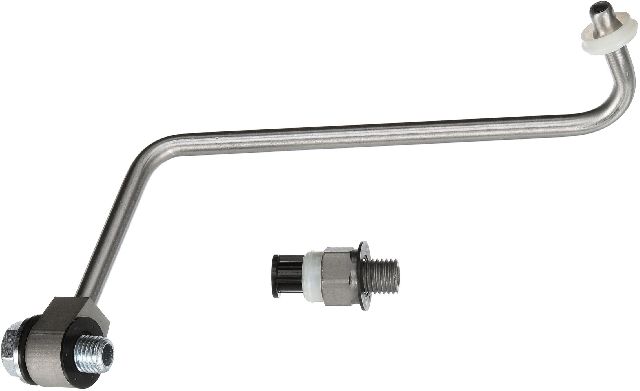
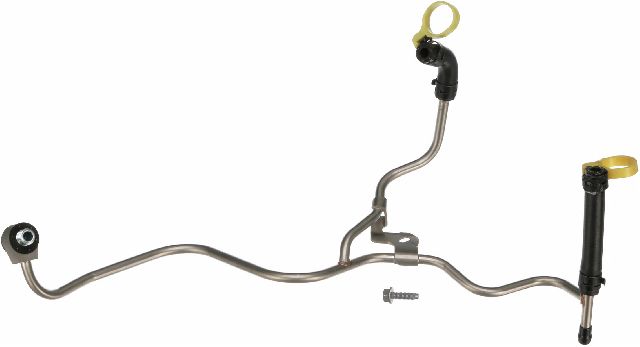
- Turbocharger Wastegate Regulator Solenoid Valve
(OEM #55574902)— This is the most common failure point for code P0234 on this vehicle, as documented by a manufacturer TSB for freezing in cold weather. It is also called a Turbocharger Bypass Valve or Charge Air Bypass Regulator Solenoid.
Trusted brands: ACDelco, GM Genuine Parts, Dorman
OEM price range: $70-$100
Aftermarket price range: $50-$80
Related Codes That Often Appear With This One
- P0299 — P0299 is 'Turbocharger Underboost'. The same TSB (#PIP5812C) mentions that a faulty wastegate solenoid can get stuck in either the open or closed position, causing either an overboost (P0234) or underboost (P0299) condition depending on how it fails.
- P2227 — 'Barometric Pressure Sensor Range/Performance'. This can be set concurrently with P0234 in cold weather due to icing in the charge air cooler system, as noted in related GM bulletins.
Technical Service Bulletins (TSBs) & Recalls
- PIP5812C: Addresses the potential for DTC P0299 or P0234 to set due to oil/moisture condensate freezing in the Turbocharger Wastegate Regulator Solenoid Valve (TCV) during cold weather. Provides a procedure for cleaning/testing and criteria for replacement.
- 22-NA-067: Discusses poor engine performance in cold weather for the 1.4L LUV engine (found in earlier Encores and platform mates) due to icing in the PCV system and Charge Air Cooler, which can also set P0234.
- PIP5495N: A bulletin for dealers to reduce 'No Trouble Found' turbocharger replacements, urging them to first check for common external issues like a faulty wastegate solenoid, clogged hoses, or leaks before replacing the entire turbo for P0
Platform-Specific Known Issues
- A known issue documented in TSB #PIP5812C describes how oil and moisture can accumulate in the Turbocharger Wastegate Regulator Solenoid Valve. In cold temperatures, this mixture can freeze, causing the valve to stick and fail to regulate boost pressure, triggering code P0234.
- A related issue involves ice accumulation inside the Charge Air Cooler (CAC) itself, which can also trigger P0234 and other codes. The fix can involve updated ECM calibrations that change transmission shift behavior in the cold to keep engine temps and airflow higher.
Mechanic-Grade Diagnostic Values
- MAP Sensor Reference Voltage — expected: ~5.0V. Failure: No voltage or significantly lower voltage indicates a wiring or ECM issue.
- MAP Sensor Signal Voltage (Key On, Engine Off) — expected: ~4.5V (at sea level, reflects atmospheric pressure). Failure: Voltage significantly different from expected atmospheric pressure reading.
- MAP Sensor Signal Voltage (Engine Idling) — expected: 1.0V - 1.8V. Failure: Voltage outside this range at idle can indicate a sensor fault, vacuum leak, or mechanical engine problem.
- Wastegate Actuator Pressure Test — expected: Actuator rod should begin to move at ~9 PSI and be fully extended by 12-14 PSI.. Failure: No movement, leaking diaphragm, or movement outside the specified pressure range indicates a faulty actuator.
Scan Tool Commands That Help
- GDS2 (GM Diagnostic Software): Turbocharger Boost Control Test — This function, referenced in GM service information, allows a technician to command the wastegate and compare desired boost pressure to actual boost pressure in a controlled WOT test. A deviation of more than 14 kPa (2.0 PSI) between desired and actual boost can condemn the turbocharger itself.
- GDS2 (GM Diagnostic Software): Induction Data List — To monitor live data parameters like 'Desired Boost Pressure' and 'Boost Pressure Sensor' readings simultaneously during a test drive to see if the actual pressure is exceeding the commanded pressure, which points to a mechanical or control issue.
Wiring & Ground Locations
- G101 / G106 — G101 is located at the lower front of the engine block. It jumpers to G106 on the front center of the frame cross rail.. This ground point serves the Engine Control Module (ECM) and the Mass Air Flow Sensor. A poor ground here could cause erratic sensor readings and incorrect calculations by the ECM, potentially leading to improper boost control.
- G105 — Located at the left front of the engine compartment, behind the cooling fan relays.. While primarily for lighting and fans, poor grounds in the engine bay can introduce electrical noise that may affect sensitive sensor circuits. It's a key ground to check for corrosion or looseness during diagnosis.
- Wastegate Solenoid Connector — On the Turbocharger Wastegate Regulator Solenoid Valve (Part No. 55574902) itself.. A common failure point is low voltage at this connector. A diagnostic video for a related 1.4L engine showed multiple control circuit low voltage codes (including for the wastegate and bypass solenoids) were caused by a single blown fuse in the underhood fuse block that supplied power to these components.
Real Owner Repair Stories
- Reddit user in r/fordescape (2015 Ford Escape 1.6L (similar turbo setup and failure mode)) — Intermittent Check Engine Light with code P0234, occurring only during acceleration around 3000 RPM in cold weather. No noticeable lack of power otherwise.
❌ Tried (didn't work) Initial online research pointed to the solenoid, but the intermittent nature made diagnosis difficult.
✅ What actually fixed it The problem was confirmed to be the wastegate solenoid. Replacing the solenoid resolved the P0234 code.
OEM Part Supersession History
Unknown→55574902— This is the current GM Genuine Part number for the Turbocharger Wastegate Regulator Solenoid Valve, also called a Charge Air Bypass Regulator Solenoid.
Heads up: This part may have previously been sold under an ACDelco GM Original Equipment (OE) number, but 55574902 is the current validated part.
Model Year Variations Within This Range
- 2022: For the 2022 model year, the 1.4L turbo engine's output was increased to 155 horsepower and 177 lb-ft of torque, up from 138 hp in 2021. While the core components are the same, the engine's calibration and expected performance characteristics are different, which could be a factor in diagnostics.
Helpful Videos

Used OEM Parts in Stock
New Aftermarket Parts Available

The information in this article is provided for general reference and educational purposes only. Vehicle specifications, procedures, and part compatibility can vary by production date, trim level, and region. Always consult your vehicle's factory service manual and verify part numbers before purchasing or performing repairs. Safety-critical components such as airbags, seat belts, and braking systems should be installed by a qualified professional.
- Buick ENCORE:
- 🧭 Diagnostic Flowchart
- 🎬 Helpful Videos
- 🛍️ Shop This Part
- What's Unique About the 2021-2022 Buick ENCORE
- Symptoms You May Notice
- Most Likely Causes
- Rare But Worth Checking
- Diagnosis Steps
- Parts You'll Likely Need
- Related Codes That Often Appear With This One
- Technical Service Bulletins (TSBs) & Recalls
- Platform-Specific Known Issues
- Mechanic-Grade Diagnostic Values
- Scan Tool Commands That Help
- Wiring & Ground Locations
- Real Owner Repair Stories
- OEM Part Supersession History
- Model Year Variations Within This Range
- 🎟️ Get 5% Off