

P0234 on 2012-2019 Chevrolet Sonic: Turbo Overboost Causes and Fixes
On a 2012-2019 Chevy Sonic with the 1.4L turbo engine, code P0234 is most often caused by a faulty turbocharger wastegate solenoid or a sticking wastegate actuator, not the turbo itself. Expect to pay $70-$110 for an OEM solenoid and around $120 for an OEM actuator. Always check vacuum hoses first, as a $15 hose is a very common fix.
- P0234 on a Chevy Sonic 1.4L means the turbo is creating too much boost.
- Do NOT immediately assume you need a new turbo. The problem is most likely a cheaper part like the wastegate control solenoid or actuator.
- Inspect all vacuum lines connected to the turbo system for cracks or blockages, as this is a simple and common fix.
- Driving with an active overboost condition is risky and can lead to severe engine damage; limit driving until the issue is repaired.
- If you see both P0234 and P0299 codes, it strongly suggests a problem with the boost *control* system, not the turbocharger itself.
What's Unique About the 2012-2019 Chevrolet SONIC

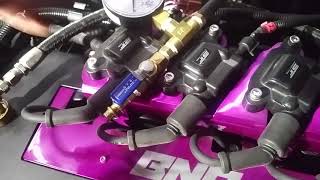
The 1.4L turbocharged engine (RPO codes LUV and LUJ) used in the Sonic, Cruze, Trax, and Encore is known for issues with its boost control components. General Motors issued Technical Service Bulletin #PIP5495 🎬 Watch: A mechanic's guide to diagnosing P0234 overboost codes. (now on revision N or later) specifically addressing codes P0234 (Overboost) and P0299 (Underboost). The bulletin highlights that many turbochargers are replaced unnecessarily when the actual fault lies with less expensive, external components like the wastegate solenoid, actuator, or related hoses. Owners often experience both overboost and underboost codes intermittently, pointing to a control system problem rather than a complete turbo failure.
Diagnostic Flowchart

Tap your situation to follow the diagnostic path that matches what you're seeing on this vehicle.
Symptoms You May Notice
- Check Engine Light is on, often with a 'Reduced Engine Power' message
- Reduced engine power or acceleration, commonly described as "limp mode".
- Engine hesitates or struggles to accelerate, with RPMs climbing high before shifting.
- Audible whooshing, whining, or siren-like sounds from the engine bay during acceleration.
- Noticeable decrease in fuel economy (MPG).
- A rhythmic clicking sound from the wastegate solenoid near the turbo at idle or after shutdown.
- Replacing the entire turbocharger assembly. As noted in GM's TSB #PIP5495N, the root cause is often a much cheaper, external component like a solenoid, actuator, or vacuum hose. Always diagnose the control system components first before condemning a turbo that costs over $1,200 to replace.
Most Likely Causes

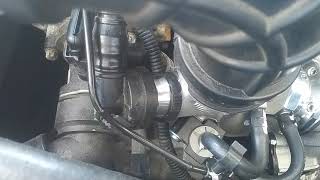
- Faulty Turbocharger Wastegate Solenoid 🔴 High Probability → Shop Turbocharger This solenoid, which controls vacuum to the wastegate actuator, is a top failure point. The plastic nipples for the vacuum lines are notoriously brittle and can break off, causing a vacuum leak. Internally, it can get clogged with oil or carbon, or simply fail electrically, causing it to stick.
How to confirm: Visually inspect the solenoid's ports for breakage or cracks. Test its operation with a 12V power source to see if it clicks, but be aware a click doesn't guarantee it's working correctly internally. A handheld vacuum pump can be used to verify it passes and holds vacuum when commanded. Check for oil contamination in the lines connected to it.
Typical fix: Replace the wastegate solenoid valve. It is a quick repair, typically taking less than 30 minutes.
Est. part cost: $65-$110 - Sticking or Damaged Wastegate Actuator 🟡 Medium Probability → Shop Turbocharger The actuator rod can bind from corrosion or heat, or the internal diaphragm can rupture, preventing it from opening the wastegate to relieve excess boost. The linkage arm can also get bent, disconnected, or be improperly adjusted.
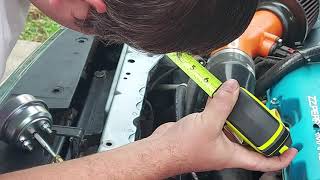
How to confirm: With the engine off, use a hand-held vacuum pump on the actuator's port. It should begin to move the rod at around 4-5 inHg and be fully extended by 15-20 inHg, holding vacuum without leaking down. Manually attempt to move the actuator rod; it should move smoothly without binding. TSB PIP5495 also advises checking the rod's length.
Typical fix: Replace the wastegate actuator. In some cases, cleaning and lubricating the linkage may provide a temporary fix.
Est. part cost: $55-$120 - Leaking, Blocked, or Disconnected Wastegate Control Hoses 🟡 Medium Probability The rubber and plastic vacuum lines that control the wastegate system are exposed to extreme engine bay heat. They become brittle, crack, or collapse internally, causing boost control to become erratic. A small, hard-to-see crack is a very common cause of P0234.
How to confirm: Visually inspect all vacuum lines connected to the turbo, wastegate solenoid, and actuator for cracks, loose fittings, or signs of collapse. Pay close attention to the elbows and connectors. A smoke test is the most effective way to find small leaks.
Typical fix: Replace the damaged vacuum hose sections. Many owners proactively replace all of them with higher-quality silicone hoses.
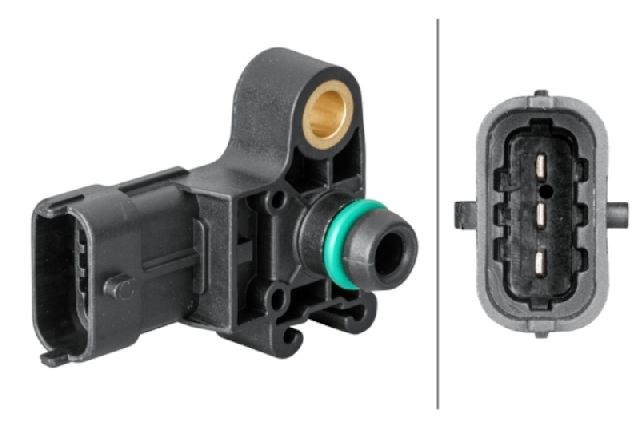
Est. part cost: $10-$30 - Faulty Manifold Absolute Pressure (MAP) Sensor ⚪ Low Probability → Shop Manifold Absolute Pressure Sensor The MAP sensor can become contaminated with oil or fail electronically, providing inaccurate readings to the ECM. This can trick the ECM into thinking pressure is lower than it is, causing the system to overcompensate and create an overboost condition.
How to confirm: Use an OBD-II scanner to monitor live MAP sensor data. With the key on and engine off, the MAP reading should be nearly identical to the Barometric Pressure (BARO) reading, with a voltage of around 4.5V. The voltage should drop to 1-2V at idle. The readings should climb smoothly and plausibly with engine RPM and load.
Typical fix: Replace the MAP sensor.
Est. part cost: $120-$200
Rare But Worth Checking
- Stuck-Closed Turbocharger Wastegate: → Shop Turbocharger This is an internal turbocharger fault. If the wastegate valve itself is seized shut due to carbon buildup or mechanical failure, it cannot bypass exhaust gases, leading to uncontrolled boost. This is less common than control component failure but requires turbocharger replacement.
- Restricted Exhaust System: A clogged catalytic converter or crushed exhaust pipe can increase backpressure, preventing the wastegate from effectively regulating turbo speed, which can lead to an overboost condition. This will usually be accompanied by other symptoms like a severe loss of power and potentially a P0420 code.
- Failed PCV System Check Valve: The 1.4L engine has a known issue with a check valve inside the intake manifold failing. When it fails, positive boost pressure enters the crankcase, overwhelming the PCV system and potentially damaging turbo seals. While this more commonly causes underboost (P0299) or lean codes (P0171), it can disrupt the entire boost management system and contribute to overboost conditions.
Diagnosis Steps
- Scan for any other DTCs. Address codes for MAP sensors, MAF sensors, or PCV system (P0171) first, as they can cause P0234.
- Perform a thorough visual inspection of the turbocharger area. Look for disconnected or cracked vacuum lines, especially the small rubber elbows. Check for broken plastic nipples on the wastegate solenoid.
- With the engine off and cool, manually check the wastegate actuator arm for free movement. It should not be stuck or binding. Ensure the retaining clip is in place.
- Test the wastegate actuator with a hand vacuum pump. It should hold vacuum and move the arm smoothly.
- Test the wastegate control solenoid. Check for blockages in the ports and test its electrical function. Confirm it passes vacuum when energized (or de-energized, depending on its default state).
- Using a scan tool, monitor live data for Commanded Boost Pressure vs. Actual Boost Pressure (MAP reading) while carefully test driving. A spike in actual boost far above the commanded value confirms the overboost condition.
- If all external components and sensors test correctly, the issue may be internal to the turbocharger (sticking wastegate valve), which may require replacement.
Parts You'll Likely Need
- Turbocharger Wastegate Solenoid Valve
(OEM #55587751)— This is the most common failure point for boost control issues on the 1.4L engine, as identified by TSBs and countless owner forums. The plastic nipples are a known weak point.
Trusted brands: ACDelco, GM Genuine, Dorman
OEM price range: $70-$110
Aftermarket price range: $40-$85 - Turbocharger Wastegate Actuator
(OEM #55589100)— The actuator can fail mechanically (sticking rod) or its internal diaphragm can rupture, preventing it from opening the wastegate.
Trusted brands: ACDelco, GM Genuine, DriveBolt
OEM price range: $115-$190
Aftermarket price range: $55-$100 - Turbocharger Assembly
(OEM #25201066)— Only needed if the internal wastegate is seized or the turbo has failed mechanically. Often misdiagnosed. Aftermarket options like Dorman 667-203 are common.
Trusted brands: GM Genuine, Dorman
OEM price range: $1200-$1500
Aftermarket price range: $500-$900
Related Codes That Often Appear With This One
- P0299 — Turbocharger Underboost. Seeing both P0234 and P0299 often points to an intermittent problem with the boost control system (like a sticking solenoid or actuator) rather than a hard failure.
- P1101 — MAF Sensor Out of Self-Test Range. This code often appears with boost issues because a significant vacuum leak or incorrect boost level causes airflow readings that the ECM deems implausible.
- P0171 — System Too Lean. A vacuum leak in the boost control hoses can introduce unmetered air, causing a lean condition. This is also a common symptom of a failed PCV system check valve.
Technical Service Bulletins (TSBs) & Recalls

- PIP5495N/L/P: Check Engine Light On With P0299 Or P0234 - Warns against misdiagnosis and unnecessary turbocharger replacement, pointing to common failures in the boost control system components like the solenoid, actuator, and hoses.
Platform-Specific Known Issues
- GM Technical Service Bulletin #PIP5495 (in its various revisions like L, N, P) explicitly warns technicians against the misdiagnosis of P0234 and P0299. It states that returned turbochargers often have 'no trouble found' (NTF). It directs them to first inspect the wastegate solenoid (for broken ports), actuator (for bent ports or binding rods), and associated hoses for issues before replacing the turbo.
Mechanic-Grade Diagnostic Values
- MAP Sensor Voltage (Key On, Engine Off) — expected: ~4.5 Volts. Failure: Voltage significantly different from Barometric Pressure sensor reading or outside 4.0-4.9V range.
- MAP Sensor Voltage (Engine at Idle) — expected: 1.0 - 2.0 Volts. Failure: Voltage is significantly higher, indicating low engine vacuum or a faulty sensor.
- Boost Leak Down Test — expected: Pressure drop from 20 PSI to 10 PSI should take 20 seconds or longer.. Failure: Pressure drops faster than 20 seconds, indicating a significant leak in the charge air system.
Scan Tool Commands That Help
- Professional Scan Tool (e.g., GDS2): Boost Solenoid Test / Wastegate Actuator Test — Use this function to command the wastegate solenoid and actuator to cycle, verifying their mechanical and electrical operation without having to manually apply voltage or vacuum. This helps confirm if the component is capable of functioning and if the ECM can control it.
Wiring & Ground Locations
- G105 — Located on the frame rail, under the battery tray, to the left of the underhood fuse block (UBEC).. This is a critical ground point. A GM service bulletin (PIC5574A) specifically instructs technicians to inspect this ground for poor connection due to paint or weld slag, which can cause multiple intermittent electrical and communication issues.
- G104 — Located at the rear of the cylinder bank.. A poor ground here can affect sensor readings and component function related to the engine control system.
- G106 / G107 — G106 is at the left rear of the engine block; G107 is at the lower left rear of the engine block.. These are primary engine block grounds. A poor connection can cause a host of issues, including incorrect sensor readings that could lead the ECM to miscalculate boost.
- Turbocharger Bypass Solenoid Valve Connector — The solenoid is located on the right side of the intake manifold.. This is the electrical connector for the most common point of failure. Checking for corrosion, damage, and proper voltage at this connector is a key diagnostic step.
Real Owner Repair Stories
- Reddit user comment in r/dodgedart (2013 Dodge Dart 1.4L Turbo (same engine family)) — P0234 overboost code, car went into limp mode.
❌ Tried (didn't work) The user was considering checking the wastegate, actuator, and sensor.
✅ What actually fixed it The user remembered they had also checked vacuum lines and found a torn hose, which they replaced, fixing the issue.
"I Checked Everything" — The Actual Cause
- A common scenario for P0234 on the 1.4L engine is having a smoke test of the charge pipes come back clean, yet the problem persists. The root cause is often the internal check valve in the intake manifold failing. This allows boost pressure to enter the crankcase, which a smoke test of the intake tract will not reveal. A key symptom of this failure is pressurizing the crankcase during a boost leak test.
OEM Part Supersession History
ACDelco OE→GM Genuine Parts— Branding Change
Heads up: Some GM Genuine Parts may have formerly appeared as ACDelco GM Original Equipment (OE). The parts are functionally identical.
Model Year Variations Within This Range
- 2012-2020: The 1.4L turbo engine in the Sonic is designated as either LUJ or LUV. These engines are mechanically identical for service purposes. The name change was reportedly for a planned E85-compatibility for the LUV that did not materialize. The newer LE2 engine found in the 2017+ Cruze is a different design (aluminum block, integrated head/manifold) and its parts are not interchangeable with the Sonic's LUV/LUJ engine.
Helpful Videos


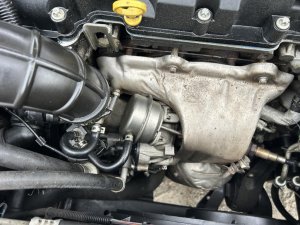
Used OEM Parts in Stock
New Aftermarket Parts Available


The information in this article is provided for general reference and educational purposes only. Vehicle specifications, procedures, and part compatibility can vary by production date, trim level, and region. Always consult your vehicle's factory service manual and verify part numbers before purchasing or performing repairs. Safety-critical components such as airbags, seat belts, and braking systems should be installed by a qualified professional.
- Chevrolet SONIC:
- 🧭 Diagnostic Flowchart
- 🎬 Helpful Videos
- 🛍️ Shop This Part
- What's Unique About the 2012-2019 Chevrolet SONIC
- Symptoms You May Notice
- Most Likely Causes
- Rare But Worth Checking
- Diagnosis Steps
- Parts You'll Likely Need
- Related Codes That Often Appear With This One
- Technical Service Bulletins (TSBs) & Recalls
- Platform-Specific Known Issues
- Mechanic-Grade Diagnostic Values
- Scan Tool Commands That Help
- Wiring & Ground Locations
- Real Owner Repair Stories
- "I Checked Everything" — The Actual Cause
- OEM Part Supersession History
- Model Year Variations Within This Range
- 🎟️ Get 5% Off