

P0234 on 2015-2019 Ford F-150: Turbo Overboost Causes and Fixes
On 3.0L Power Stroke diesels, this is likely a software issue fixed by a dealer PCM update per TSB 19-2018. On EcoBoost engines, the most common cause is a faulty wastegate control solenoid, costing around $50-$100 for the part. Always check the solenoid's fuse first. For 2017-2019 3.5L EcoBoost engines with electronic wastegates, the cause is different and may involve the electronic actuator or turbo itself.
- The first step is to identify your engine. The fix for a diesel is very different from the fix for a gas EcoBoost.
- If you have a 2018-2019 3.0L Power Stroke diesel, your first call should be to a Ford dealer to check if TSB 19-2018 (a software update) applies to your truck.
- For 2.7L or 3.5L EcoBoost engines, the most likely culprit is the wastegate control solenoid, which is a very affordable and accessible DIY replacement.
- Do not immediately assume the turbocharger needs replacement. Thoroughly diagnose the control solenoid, vacuum lines, and wastegate actuator movement first.
What's Unique About the 2015-2019 Ford F-150

For the 2015-2019 F-150, the cause of P0234 is highly dependent on the engine. On the 3.0L Power Stroke diesel (2018-2019), Ford issued a Technical Service Bulletin (TSB 19-2018) identifying a PCM software calibration issue as the root cause, meaning a mechanical part may not be at fault. In contrast, on the EcoBoost gas engines, the cause differs by generation. On the 2.7L and the first-generation 3.5L (2015-2016), the code almost always points to a failure in the vacuum-operated boost control system, such as the wastegate control solenoid. For the second-generation 3.5L EcoBoost (2017-2019), Ford switched to electronic wastegates, eliminating the vacuum system and shifting the focus to the electronic actuators or the turbocharger assembly itself.
Diagnostic Flowchart

Tap your situation to follow the diagnostic path that matches what you're seeing on this vehicle.
Symptoms You May Notice

- Check Engine Light illuminated
- Vehicle enters 'limp mode' with significantly reduced engine power
- Hesitation or stumbling during acceleration
- Engine surging when under load or trying to build boost
- Audible whooshing or hissing sounds from the engine bay
- In some cases, the engine may run normally until heavy load is applied
- Replacing the turbocharger on an EcoBoost engine when only the wastegate control solenoid was faulty.
- Replacing mechanical parts on a 3.0L diesel before checking for the required PCM update per TSB 19-2018.
- Misdiagnosing vacuum system components on a 2017-2019 3.5L EcoBoost, which uses an electronic wastegate system.
Most Likely Causes

- PCM Software Calibration Issue (3.0L Diesel Only) 🔴 High Probability A specific TSB (19-2018) was issued by Ford for 2018-2019 F-150s with the 3.0L diesel engine, indicating a known software logic flaw.
How to confirm: Check the vehicle's build date. If it was built on or before January 25, 2019, and has P0234 (especially with P208E or P2201), the TSB applies.
Typical fix: A Ford dealer must reprogram the Powertrain Control Module (PCM) to the latest calibration under labor operation 192018A. This is a software-only fix. If code P208E persists after the reflash, the dealer may need to perform additional diagnostics per Ford's Special Service Message (SSM 48539).
Est. part cost: $0 - Faulty Wastegate Control Solenoid (2.7L & 2015-2016 3.5L EcoBoost) 🔴 High Probability This solenoid controls the vacuum sent to the wastegate actuators. It is a common failure point and Ford has superseded the part number multiple times, suggesting revisions to improve reliability. Forum users report the original supplier was Pierburg and newer versions are from Padmini.
How to confirm: First, check the 10-amp fuse for the wastegate solenoid circuit in the under-hood fuse box. If the fuse is good, use a vacuum gauge to test the lines to and from the solenoid. Use a scan tool to command the solenoid on and off and check for a corresponding change in vacuum. A common failure is the solenoid sticking internally.
Typical fix: Replace the wastegate control solenoid. It is typically mounted on the engine and is relatively accessible. Ford's parts catalog may list it as a 'Control assembly EGR solenoid valve'.
Est. part cost: $50-$100 - Sticking or Binding Wastegate Actuator (All EcoBoost Engines) 🟡 Medium Probability → Shop Turbocharger The wastegate actuator arm or the internal valve can seize or bind due to carbon buildup and heat, preventing it from opening to release excess boost.
How to confirm: On vacuum-actuated systems (2.7L, 2015-16 3.5L), with the engine off and cool, attempt to move the wastegate actuator rod by hand or with a vacuum pump; it should move freely. On electronic systems (2017+ 3.5L), a scan tool bidirectional command is needed to test actuator movement.
Typical fix: Sometimes the linkage can be freed with penetrating oil and manipulation by working it back and forth. However, if the wastegate is seized internally or the actuator itself is faulty (especially on electronic versions), the entire turbocharger assembly often needs to be replaced.
Est. part cost: $0 (if freed) or $800-$2000+ (for turbo replacement) - Faulty Boost Pressure (MAP) Sensor ⚪ Low Probability The sensor can fail and send incorrect pressure readings to the PCM, causing the PCM to misinterpret the boost level and fail to command the wastegate open.
How to confirm: With the Key On, Engine Off (KOEO), the boost pressure reading on a scan tool should be close to atmospheric pressure (approx. 14.7 PSI at sea level). The sensor signal wire voltage should be around 1.0-1.5V KOEO and increase with pressure. Monitor live data while driving to check for erratic or illogical readings.
Typical fix: Replace the MAP sensor.
Est. part cost: $40-$80
Rare But Worth Checking
- Cracked or Disconnected Vacuum Lines: The plastic vacuum lines and rubber connectors that control the wastegate can become brittle and crack, causing a vacuum leak that prevents the wastegate from opening properly. Always perform a thorough visual inspection.
- Blown Fuse for Wastegate Control Circuit: On EcoBoost models with vacuum wastegates, a dedicated fuse in the under-hood fuse box powers the wastegate control solenoid. A blown fuse will prevent the solenoid from operating, leading to an overboost condition. This is a simple and crucial check before replacing parts.
Diagnosis Steps
- Identify the engine in the vehicle (2.7L EcoBoost, 3.5L Gen1 [2015-16], 3.5L Gen2 [2017-19], or 3.0L Power Stroke Diesel). This is the most critical first step.
- If 3.0L Diesel: Check the vehicle build date. If built on or before Jan 25, 2019, consult a Ford dealer about TSB 19-2018 for a PCM reflash before attempting any mechanical repairs.
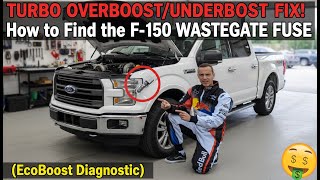
- If 2.7L or 2015-2016 3.5L EcoBoost (Vacuum Wastegate): Check the 10-amp fuse for the 'wastegate control solenoid' in the under-hood fuse box. A video guide suggests it is often the third 10-amp fuse from the bottom in the right-most row.
- If 2017-2019 3.5L EcoBoost (Electronic Wastegate): Diagnosis shifts to the electronic actuator, its wiring, and the turbo itself. Bidirectional scan tool control is necessary to command the wastegate and check for response.
- Scan for any other codes. Clear the codes and attempt to replicate the overboost condition to confirm it is a hard fault.
- (Vacuum Systems Only) Visually inspect all vacuum lines running to and from the turbochargers and the wastegate control solenoid for cracks, kinks, or loose connections.
- With the engine cool, manually check that the wastegate actuator rods on the turbochargers move freely without binding (vacuum systems only).
- Use a scan tool to monitor Manifold Absolute Pressure (MAP) readings. Check for logical values at KOEO (approx. 1.0-1.5V) and under load.
- Use the scan tool's bidirectional controls to command the wastegate control solenoid on and off (vacuum systems) or the electronic actuator (electronic systems). Visually inspect the wastegate actuator rod for movement and listen for the solenoid clicking.
- If the solenoid/actuator is commanded but the wastegates do not open, the actuators or turbos are at fault. If the solenoid does not switch vacuum, the solenoid itself is the likely culprit.
Parts You'll Likely Need
- Turbocharger Wastegate Control Solenoid
(OEM #BL3Z-9K378-A (Note: This part has been superseded multiple times, verify with VIN))— This is the most frequent point of failure on EcoBoost engines with vacuum-operated wastegates (2.7L, 2015-16 3.5L) for code P0234. It controls the wastegates and is a known issue. It may be listed as 'Control assembly EGR solenoid valve' in some parts catalogs.
Trusted brands: Motorcraft, Pierburg (Original Supplier), Padmini (Newer Supplier)
OEM price range: $70-$120
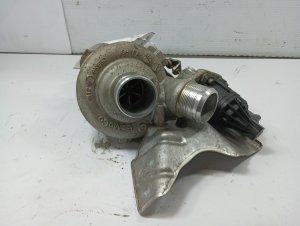
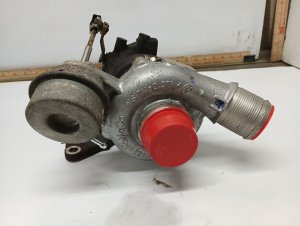
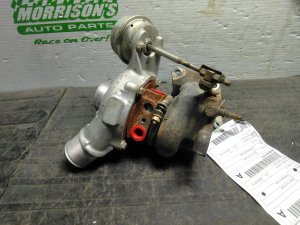
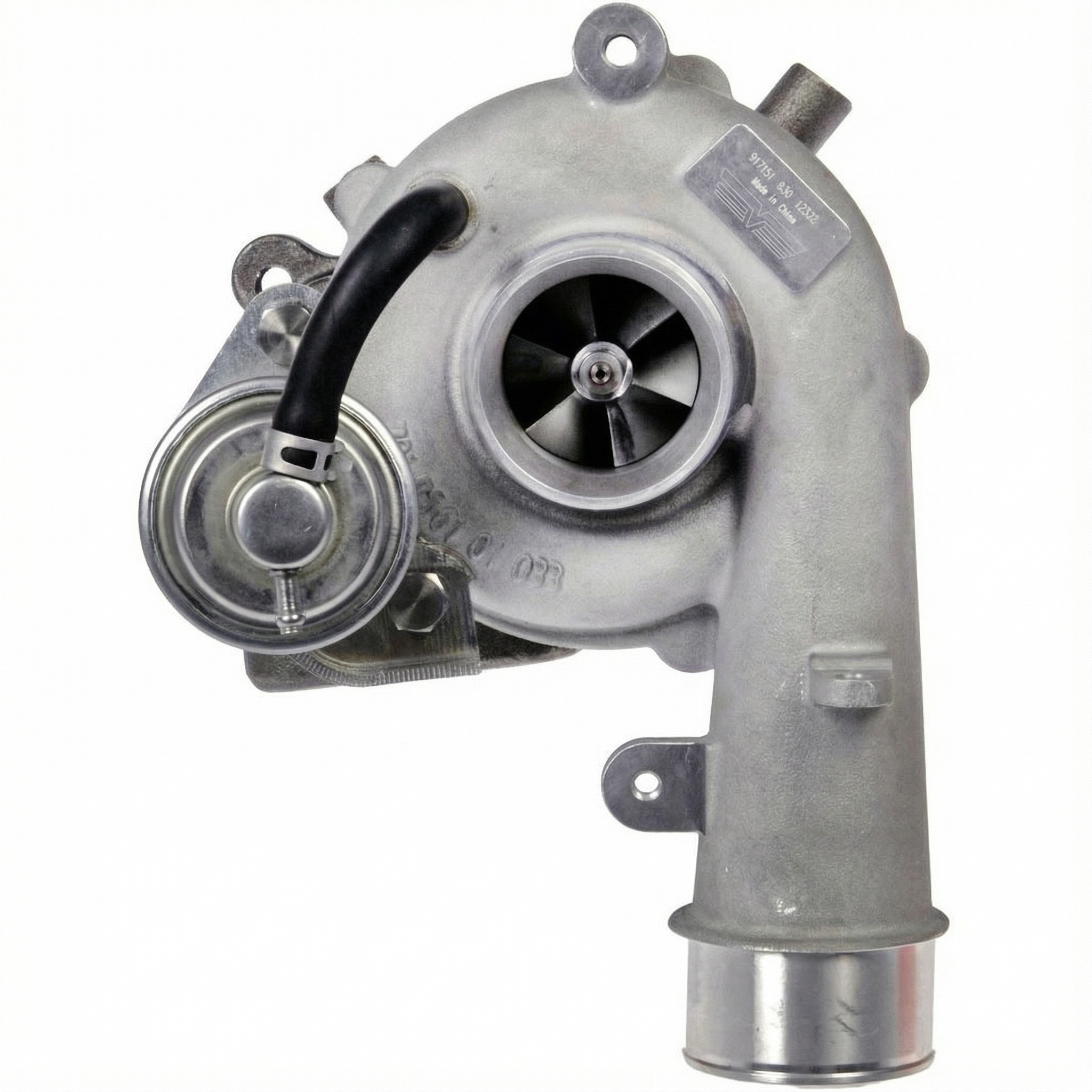
Aftermarket price range: $40-$80 - Turbocharger Assembly — Required on EcoBoost engines if the wastegate actuator is seized and cannot be freed, as the actuator is often integral to the turbocharger. This is the primary fix for failed electronic actuators on 2017+ 3.5L models.
Trusted brands: Motorcraft, Garrett
OEM price range: $1000-$2000
Aftermarket price range: $600-$1200 - Manifold Absolute Pressure (MAP) Sensor
(OEM #AA5Z-9F479-C (or -D, verify with VIN))— A less common but possible cause if the sensor is providing incorrect data to the PCM, leading to an overboost command.
Trusted brands: Motorcraft, Bosch
OEM price range: $60-$100
Aftermarket price range: $30-$60
Related Codes That Often Appear With This One
- P208E — On 3.0L Power Stroke diesel engines, this code (Reductant Injector Stuck Closed) is specifically mentioned in TSB 19-2018 as occurring with P0234 due to a PCM software issue.
- P2201 — On 3.0L Power Stroke diesel engines, this code (NOx Sensor Circuit Range/Performance) is also listed in TSB 19-2018 as a companion code to P0234 caused by the same software glitch.
- P0299 — This code for 'Turbo Underboost' can sometimes appear with P0234, especially if the wastegate or its control system is behaving erratically, getting stuck in both open and closed positions at different times.
- P0243 — This code for 'Turbocharger Wastegate Solenoid 'A' Malfunction' directly points to an electrical fault in the control solenoid circuit and is a strong indicator that the solenoid itself is the root cause of the P0234 overboost.
Technical Service Bulletins (TSBs) & Recalls
- TSB 19-2018: Malfunction Indicator Lamp (MIL) Illuminated With DTCs P0234, P208E And/Or P2201 - 3.0L Diesel
- TSB 16-0013: 3.5L GTDI With DTCS P0234 And/Or P0299 - Drivability Symptoms
Platform-Specific Known Issues
- TSB 19-2018: Affects 2018-2019 F-150s with the 3.0L diesel engine built on or before 25-Jan-2019. An illuminated MIL with DTCs P0234, P208E, and/or P2201 may be stored. The fix is a PCM software update.
- TSB 16-0013: Affects some 2011-2015 F-150s with the 3.5L GTDI engine built on or before 2/28/2015. May exhibit P0234 and/or P0299 with drivability symptoms. The fix involves testing the wastegate actuator and replacing the turbo if it fails the test.
Mechanic-Grade Diagnostic Values
- MAP Sensor Signal Voltage (KOEO) — expected: ~1.0V - 1.5V at sea level. Failure: Voltage significantly outside this range, or does not change with pressure/vacuum applied.
- MAP Sensor Supply Voltage — expected: ~5.0V. Failure: Significantly lower or no voltage indicates a wiring or PCM issue.
Scan Tool Commands That Help
- FORScan / Ford IDS: Wastegate Control Solenoid (WCS) Duty Cycle — For vacuum-actuated systems (2.7L, 2015-16 3.5L), commanding the duty cycle from 0% to 100% while monitoring vacuum at the wastegate actuators confirms if the solenoid is responding to PCM commands.
- FORScan / Ford IDS: Turbocharger Wastegate Actuator Position Command — For electronically-actuated systems (2017+ 3.5L), this bidirectional control tests the function of the electronic actuator. The scan tool can command the wastegate open or closed, and the tech can verify physical movement or watch PID data for the reported position to see if it matches the command.
Wiring & Ground Locations
- G108 — Typically located on the left side of the engine compartment.. This is a primary engine ground point. A poor connection here can cause erratic sensor readings and unpredictable behavior from various engine controls, potentially interfering with the boost control system.
- C175B — One of the main connectors for the Powertrain Control Module (PCM), located on the passenger side firewall.. Signals from the MAP sensor and control signals to the wastegate solenoid/actuator pass through this connector. Checking for corrosion or pin damage here is a valid step in advanced electrical diagnosis for P0234.
Real Owner Repair Stories
- Ford F150 Forum user 'EcoBoostJake' (2011 F-150 EcoBoost (Gen 1 3.5L, similar vacuum system to 2015-16)) — Check Engine Light with code P0234, audible rattle from engine area.
❌ Tried (didn't work) Initial diagnosis was uncertain.
✅ What actually fixed it A professional technician diagnosed and replaced a bad vacuum solenoid (wastegate control solenoid), which was causing incorrect pressure. The total repair cost was under $150. - Ford F150 Forum user 'RaptorYFM' (2015 F-150 XLT 4x4 2.7L EcoBoost) — P0234 (overboost) code appeared intermittently.
❌ Tried (didn't work) Clearing the code, visual inspection of lines and wiring. Confirmed wastegates were not stuck and held vacuum.
✅ What actually fixed it The user replaced the wastegate control solenoid ('Control assembly EGR solenoid valve') with the latest superseded part number. After replacement, full-throttle tests no longer triggered the code or the wrench light.
OEM Part Supersession History
BL3E-9K378-BA→BL3Z-9K378-A, which may have further supersessions. Always verify with VIN.— The wastegate control solenoid is a known high-failure item. Ford has updated the part multiple times, with newer versions supplied by Padmini instead of the original Pierburg.
Heads up: Some online parts catalogs may incorrectly state that the newest superseded part number is incompatible with a 2015 2.7L F-150, but forum users have confirmed it is the correct replacement part.
Model Year Variations Within This Range
- 2015-2016 (3.5L) & 2015-2019 (2.7L): These engines use a vacuum-actuated wastegate system. Diagnosis for P0234 focuses on the vacuum pump, vacuum lines, and the wastegate control solenoid.
- 2017-2019 (3.5L EcoBoost): These engines feature the Gen 2 3.5L EcoBoost with electronically-actuated wastegates. This design eliminates the entire vacuum control system (pump, lines, solenoid) as a potential cause. Diagnosis shifts to the electronic actuator itself, its wiring, or a mechanical turbo issue. The actuator is often integral to the turbo, making replacement more expensive.
- 2018-2019 (3.0L Power Stroke): This diesel engine has a unique cause for P0234 related to PCM software, addressed by TSB 19-2018.
Helpful Videos

Used OEM Parts in Stock
New Aftermarket Parts Available


The information in this article is provided for general reference and educational purposes only. Vehicle specifications, procedures, and part compatibility can vary by production date, trim level, and region. Always consult your vehicle's factory service manual and verify part numbers before purchasing or performing repairs. Safety-critical components such as airbags, seat belts, and braking systems should be installed by a qualified professional.
- Ford F-150:
- 🧭 Diagnostic Flowchart
- 🎬 Helpful Videos
- 🛍️ Shop This Part
- What's Unique About the 2015-2019 Ford F-150
- Symptoms You May Notice
- Most Likely Causes
- Rare But Worth Checking
- Diagnosis Steps
- Parts You'll Likely Need
- Related Codes That Often Appear With This One
- Technical Service Bulletins (TSBs) & Recalls
- Platform-Specific Known Issues
- Mechanic-Grade Diagnostic Values
- Scan Tool Commands That Help
- Wiring & Ground Locations
- Real Owner Repair Stories
- OEM Part Supersession History
- Model Year Variations Within This Range
- 🎟️ Get 5% Off