

P0234 on 2014-2016 Ford Fiesta ST: Turbo Overboost Causes & Fixes
On a 2014-2016 Fiesta ST, code P0234 is most often caused by a faulty turbocharger wastegate regulating solenoid, a problem identified by Ford in a Technical Service Bulletin. Replacing this solenoid is the most common fix and is a relatively low-cost repair. The OEM part number is CJ5Z-9K378-B, which supersedes CJ5Z-9K378-A.
- For a 2014-2016 Fiesta ST, P0234 almost always points to a bad turbo wastegate regulating solenoid.
- Check for Ford TSB 15-0162, as it provides a direct and reliable diagnostic path.
- Do not continue to drive with an overboost code, as it can cause severe engine damage.
- Before considering an expensive turbo replacement, thoroughly test or replace the inexpensive solenoid and check all related vacuum lines.
What's Unique About the 2014-2016 Ford FIESTA

The 1.6L GTDI EcoBoost engine used in the Fiesta ST and other Ford models of this era is known for this specific issue. Ford released Technical Service Bulletin (TSB) 15-0162 that directly addresses code P0234, along with other related codes (P0245, P0246, P0299), on these vehicles. The bulletin points to a faulty turbocharger wastegate regulating valve solenoid as the primary culprit, making diagnosis much more direct than on other vehicles where the cause might be more ambiguous.
Diagnostic Flowchart

Tap your situation to follow the diagnostic path that matches what you're seeing on this vehicle.
Symptoms You May Notice
- Check Engine Light is on
- Sudden loss of engine power or acceleration
- Vehicle enters 'limp mode'
- Audible 'whoosh' or whistling sounds from the engine bay during acceleration or deceleration
- Engine knocking or pinging sounds under load
- Erratic acceleration or surging
- Turbo flutter sounds
- Replacing the entire turbocharger when only the inexpensive wastegate solenoid was faulty.
- Replacing MAP sensors before verifying the function of the wastegate control system.
Most Likely Causes

- Faulty Turbocharger Wastegate Regulating Valve Solenoid 🔴 High Probability → Shop Turbocharger This is a known issue documented by Ford in TSB 15-0162 for the 1.6L GTDI engine. The solenoid, often made by Pierburg for Ford, can fail electrically or become sticky, preventing it from properly controlling the vacuum sent to the wastegate actuator.
How to confirm: Follow the diagnostic steps in TSB 15-0162, which prioritizes replacing this part after checking vacuum lines. A mechanic can test the solenoid's function by checking its resistance with a multimeter and by applying 12V to see if it actuates. Many owners on forums for the Fiesta ST, Focus ST, and Escape report that replacing this part resolved the code.
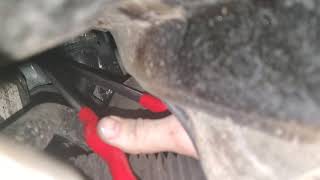
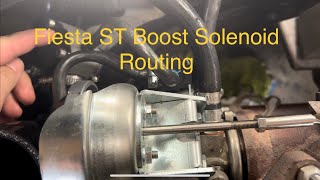
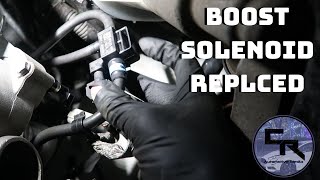
Typical fix: Replace the wastegate regulating valve solenoid. The part is mounted on the side of the engine block, accessible from the passenger side wheel well 🎬 Watch: How to access and replace the boost solenoid. after removing the splash shield. It is held by a single tab and has three vacuum hose connections 🎬 See this video for the correct vacuum line routing. and one electrical connector. The OEM part is Ford CJ5Z-9K378-B.
Est. part cost: $40-$90 - Stuck or Binding Wastegate Actuator or Valve 🟡 Medium Probability → Shop Turbocharger The wastegate valve is part of the turbocharger's exhaust housing and is exposed to extreme heat, which can cause carbon buildup or mechanical binding over time. The actuator arm can also seize.
How to confirm: With the engine off and cool, use a hand vacuum pump on the actuator's vacuum port to see if the actuator arm moves smoothly through its full range of motion and holds vacuum. If it is seized, sticky, or does not hold vacuum, it is faulty. Visually inspect the linkage to ensure it's not bent or obstructed.
Typical fix: In some cases, the wastegate can be freed, but this is often temporary. Because the wastegate is an integral part of the turbocharger on this engine, a stuck wastegate often requires a complete turbocharger replacement.
Est. part cost: $700-$1200 for a new turbocharger assembly - Damaged, Disconnected, or Leaking Vacuum Lines 🟡 Medium Probability The rubber vacuum lines that control the wastegate solenoid and actuator are exposed to high engine bay temperatures, causing them to become brittle and crack over time. Hose clamps can also become loose.
How to confirm: Visually inspect all vacuum hoses connected to the wastegate solenoid and the turbo actuator for cracks, loose fittings, or blockages. TSB 15-0162 lists this as the first inspection step. A smoke test can also be performed to find small, hard-to-see leaks.
Typical fix: Replace the damaged section of vacuum hose or secure loose clamps. This is an inexpensive and simple fix.
Est. part cost: $5-$25 - Faulty Manifold Absolute Pressure (MAP) Sensor ⚪ Low Probability → Shop Manifold Absolute Pressure Sensor
How to confirm: Use a scan tool (like FORScan) to compare the MAP sensor reading to the Barometric Pressure (BARO) sensor reading with the key on, engine off. The readings should be very close. If the sensor reads inaccurately, it can trick the PCM into thinking there is an overboost condition when there isn't one.
Typical fix: Replace the MAP sensor. There are typically two on this engine, one on the charge pipe and one on the intake manifold.
Est. part cost: $50-$100
Rare But Worth Checking
- Aftermarket engine tuning (remap) requesting too much boost.
- Restricted exhaust system, such as a clogged catalytic converter, causing a backup of pressure.
Diagnosis Steps
- Scan for Codes: Confirm P0234 is present. Check for other related codes like P0299, P0245, or P0246, as they strongly point towards the issue described in TSB 15-0162.
- Inspect Vacuum Lines: Per TSB 15-0162, visually inspect the vacuum hoses running to and from the turbocharger wastegate regulating solenoid for any cracks, disconnections, or blockages. Ensure clamps are secure.
- Test the Wastegate Solenoid: This is the most likely failure point. Test the solenoid's coil resistance using a multimeter; it should be between 3.42 and 4.18 Ω. Given the low cost of the part and the high probability of failure per the TSB, many owners and shops choose to replace it as a primary diagnostic step.
- Check Wastegate Actuator Arm: With the engine cool, apply vacuum to the wastegate actuator with a hand pump. The arm should move smoothly and hold vacuum. If it's stuck or leaks, the turbocharger assembly is likely faulty.
- Monitor Live Data: Use a scan tool to monitor Manifold Absolute Pressure (MAP) and desired boost pressure while driving. If the actual MAP spikes uncontrollably past the desired value under acceleration, it confirms a real-time overboost condition.
- Inspect MAP Sensors: If the boost control system seems to be working mechanically, check the MAP sensor data with the key on, engine off. The sensor's frequency should be near 159 Hz at atmospheric pressure. Voltage should be between 2.0 and 3.0 volts.
Parts You'll Likely Need
- Turbocharger Wastegate Regulating Valve Solenoid
(OEM #CJ5Z-9K378-B (supersedes CJ5Z-9K378-A))— This is the most common failure for code P0234 on this engine, as documented in Ford's TSB 15-0162.
Trusted brands: Motorcraft (Ford OEM), Dorman (667-111), Pierburg
OEM price range: $60-$90
Aftermarket price range: $30-$70 - Turbocharger Assembly
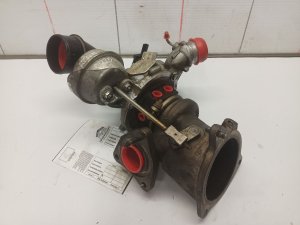
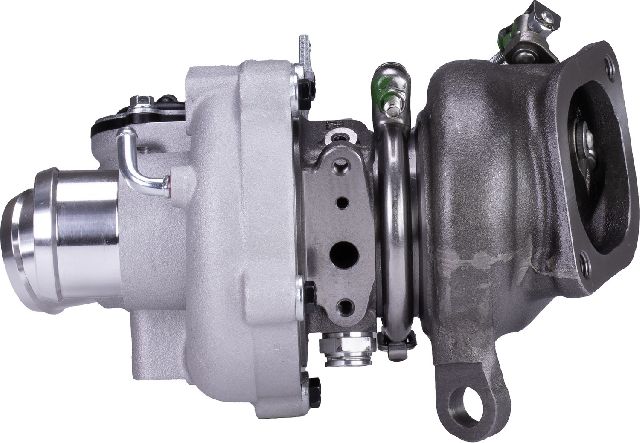
(OEM #CJ5Z-6K682-D (this part number may be superseded, verify with VIN))— Required if the internal wastegate valve is seized or if the turbo has failed internally, causing the overboost condition.
Trusted brands: Garrett (OEM supplier), Motorcraft, Replacement
OEM price range: $885-$1200
Aftermarket price range: $600-$900
Related Codes That Often Appear With This One
- P0299 — This is an underboost code. It can appear with P0234 if the wastegate or solenoid is acting erratically, sometimes sticking open (underboost) and sometimes sticking closed (overboost). Both codes are mentioned in TSB 15-0162.
- P0245 — This code specifically points to 'Turbocharger Wastegate Solenoid 'A' Low'. It often accompanies P0234 as it indicates an electrical fault in the very solenoid that causes the overboost condition. It is also cited in TSB 15-0162.
- P0246 — This code means 'Turbocharger Wastegate Solenoid 'A' High'. Like P0245, it points to an electrical problem with the control solenoid and is mentioned in TSB 15-0162.
Technical Service Bulletins (TSBs) & Recalls

- TSB 15-0162: '1.6L GTDI - Lack of power with MIL Illuminated - DTCS P0234, P0245, P0246 And/Or P0299.' Published October 2015. Affects 2013-2016 Escape, 2014-2016 Fiesta ST, and 2013-2014 Fusion. The primary action is to inspect vacuum lines and, if they are okay, replace the turbocharger wastegate regulating valve solenoid.
Platform-Specific Known Issues
- Ford Technical Service Bulletin TSB 15-0162 was issued for 2014-2016 Fiesta ST models (among others with the 1.6L GTDI engine) specifically for code P0234 and related faults, identifying the wastegate regulating solenoid as the primary fix.
- The solenoid is located on the side of the engine and is accessed through the front passenger wheel well, which can make it slightly difficult to reach without long pliers.
- Owners of modified vehicles with aftermarket tunes are more susceptible to this code if the tune is too aggressive or if supporting hardware (like an upgraded wastegate actuator) is not functioning correctly.
Mechanic-Grade Diagnostic Values
- Turbocharger Wastegate Solenoid Coil Resistance — expected: 3.42 - 4.18 Ω (at 73°F / 23°C). Failure: A reading outside this range, or a dead short (near 0 Ω), indicates a faulty solenoid.
- MAP Sensor Frequency (Key On, Engine Off) — expected: Approximately 159 Hz at sea level (atmospheric pressure). Failure: A frequency significantly different from 159 Hz at atmospheric pressure indicates a faulty sensor.
- MAP Sensor Voltage (Key On, Engine Off) — expected: 2.0 to 3.0 Volts. Failure: Voltage outside this range suggests a sensor or wiring issue.
Hidden / Shadow Codes Worth Checking
- Pinpoint Test HN: This is not a trouble code, but a specific, dealer-level diagnostic flowchart provided by Ford for turbocharger-related faults. It contains detailed, step-by-step procedures that go beyond generic OBD-II diagnostics. (see via Accessed via official Ford service information or some advanced diagnostic databases.)
Scan Tool Commands That Help
- Ford Integrated Diagnostic System (IDS): Powertrain > Air Management > Turbocharger Test (or Turbo Boost Test) — This is a key bidirectional test that allows a technician to command the wastegate solenoid to cycle. It helps verify if the solenoid is responding to PCM commands and if the wastegate actuator arm is moving freely, isolating the problem between the electrical control and mechanical parts.
Wiring & Ground Locations
- G100, G101, G102, G105 — Various locations in the engine compartment, providing primary grounds for engine and chassis components.. A poor engine or PCM ground can cause incorrect readings from critical sensors like the MAP sensor or improper voltage supply to actuators like the wastegate solenoid, potentially leading to an erroneous P0234 code.
- Transmission Bell Housing Ground — A threaded stud on the transmission bell housing where a primary ground strap connects.. This is a critical ground point for the engine and transmission assembly. A loose or corroded connection here can cause a wide range of electrical issues, including sensor and actuator faults related to the engine management system.
Real Owner Repair Stories
- Reddit user in r/FocusST (Ford Focus ST (similar 2.0L EcoBoost platform)) — Intermittent P0234 code, car would sometimes go into limp mode on Wide Open Throttle (WOT).
❌ Tried (didn't work) Chasing the fault for several months.
✅ What actually fixed it Replacing the wastegate solenoid control valve. The user noted that Ford did not sell the solenoid separately from the turbo for the Focus ST, so they sourced a used one from a junked Ford Escape with a compatible engine. - Reddit user in r/FocusST (Ford Focus ST) — P0234 Overboost code after installing a symposer delete and changing vacuum line routing.
❌ Tried (didn't work) Replacing both the boost solenoid and the wastegate solenoid, changing vacuum line configurations.
✅ What actually fixed it A commenter reported their own P0234 was resolved with a new base map from a reputable tuner, indicating the fault was in the software tune, not a mechanical part. This is a common resolution for modified vehicles.
"I Checked Everything" — The Actual Cause
- The official Ford diagnostic procedure outlined in TSB 15-0162 follows this pattern. It instructs technicians to first inspect for vacuum and charge pipe leaks. If no leaks are found, the next step is to replace the turbocharger wastegate regulating solenoid. This implies that the solenoid is the presumed cause even when there are no visible leaks, as the failure is often internal and electrical rather than causing a vacuum leak.
OEM Part Supersession History
CJ5Z-9K378-A→CJ5Z-9K378-B— Standard part revision by the manufacturer to improve reliability or address a known failure mode.
Heads up: The new part (B) is a direct replacement for the old part (A). Other interchange part numbers include CJ5G-9K378-BA, 31370533, and 1810809.
Model Year Variations Within This Range
- 2014-2016: While there were minor changes to the Fiesta ST between 2014 and 2016, such as infotainment system updates (Sync 3) and suspension tuning, there are no documented changes to the 1.6L GTDI engine, turbocharger, or boost control system that would alter the diagnosis or common causes of code P0234 for this vehicle range.
Helpful Videos
Used OEM Parts in Stock
New Aftermarket Parts Available


The information in this article is provided for general reference and educational purposes only. Vehicle specifications, procedures, and part compatibility can vary by production date, trim level, and region. Always consult your vehicle's factory service manual and verify part numbers before purchasing or performing repairs. Safety-critical components such as airbags, seat belts, and braking systems should be installed by a qualified professional.
- Ford FIESTA:
- 🧭 Diagnostic Flowchart
- 🎬 Helpful Videos
- 🛍️ Shop This Part
- What's Unique About the 2014-2016 Ford FIESTA
- Symptoms You May Notice
- Most Likely Causes
- Rare But Worth Checking
- Diagnosis Steps
- Parts You'll Likely Need
- Related Codes That Often Appear With This One
- Technical Service Bulletins (TSBs) & Recalls
- Platform-Specific Known Issues
- Mechanic-Grade Diagnostic Values
- Hidden / Shadow Codes Worth Checking
- Scan Tool Commands That Help
- Wiring & Ground Locations
- Real Owner Repair Stories
- "I Checked Everything" — The Actual Cause
- OEM Part Supersession History
- Model Year Variations Within This Range
- 🎟️ Get 5% Off