

P0234 on 2013-2017 Ford Fusion: Turbo Overboost Causes and Fixes
For a 2013-2017 Ford Fusion with an EcoBoost engine, code P0234 usually means the turbocharger wastegate regulating solenoid is faulty. This is a common issue, especially on the 1.6L engine, and is often addressed by Ford TSB 15-0162. Replacing the solenoid (Part #CJ5Z-9K378-B for 1.6L) is a cost-effective first step, with the part costing around $40-$90. Always check the relevant fuse first.
- P0234 on a 2013-2017 Fusion means the turbo is creating too much pressure.
- The most likely cause, especially on the 1.6L engine, is a failed turbocharger wastegate regulating solenoid, a fix supported by a Ford TSB.
- Before replacing expensive parts like the turbo, always inspect vacuum lines and consider replacing the inexpensive solenoid first.
- Driving with an active P0234 code can cause the vehicle to enter a low-power limp mode and may lead to more severe engine damage over time.
What's Unique About the 2013-2017 Ford FUSION
The second-generation Fusion relied heavily on Ford's EcoBoost (turbocharged) engines. The P0234 code is particularly well-documented for the 1.6L GTDI engine, with Ford issuing a Technical Service Bulletin (TSB 15-0162) that points directly to a faulty turbocharger wastegate regulating valve solenoid as the likely culprit. This makes diagnosis more straightforward than on many other vehicles. The 2.0L engine is also affected, though a separate TSB (16-0119) suggests a PCM software update may be the fix for some 2017 models.
Diagnostic Flowchart
Tap your situation to follow the diagnostic path that matches what you're seeing on this vehicle.
Symptoms You May Notice
- Check Engine Light is on
- Drastic loss of engine power or sluggish acceleration
- Vehicle enters "limp mode"
- "See Manual" light may appear on the dash
- Engine may make unusual knocking or pinging sounds under load
- Harsh or erratic shifting
- Surging or hesitant acceleration as the wastegate sticks and releases
- Replacing the turbocharger assembly when only the inexpensive wastegate solenoid was faulty.
- Replacing the MAP sensor when the issue is a simple vacuum leak or a blown fuse.
- Overlooking a simple blown fuse for the wastegate solenoid circuit.
Most Likely Causes
- Faulty Turbocharger Wastegate Regulating Valve Solenoid 🔴 High Probability → Shop Turbocharger This is a known, widespread issue, especially on the 1.6L engine, and is the primary subject of Ford TSB 15-0162. The solenoid, often made by Pierburg, fails internally, preventing it from properly controlling the vacuum sent to the wastegate actuator. Many owners on forums for the Fusion and its platform-mate, the Escape, confirm this is the most common fix.
How to confirm: After checking for vacuum leaks and testing the associated fuse, this is the next logical part to replace. The TSB directs technicians to replace this part if no vacuum line issues are found. On the 1.6L engine, the solenoid is best accessed through the front passenger wheel well.
Typical fix: Replace the wastegate regulating valve solenoid. The existing vacuum lines are typically reused.
Est. part cost: $40-$90 - Sticking or Binding Turbocharger Wastegate 🟡 Medium Probability → Shop Turbocharger The wastegate arm, which is an integral part of the turbocharger assembly, can seize due to carbon buildup or corrosion, causing it to stick in the closed position.
How to confirm: With the engine off and cool, apply vacuum to the wastegate actuator with a handheld pump. Observe the actuator rod; it should move smoothly and hold vacuum. If it is stuck, sluggish, or does not hold vacuum, the wastegate or actuator is faulty.
Typical fix: The wastegate is integral to the turbocharger, requiring the replacement of the entire turbocharger assembly. In some cases, owners have had success freeing a stuck arm, but this is not a guaranteed fix.
Est. part cost: $500-$1500+ - Leaking, Cracked, or Disconnected Vacuum Hoses 🟡 Medium Probability → Shop Vacuum Hose The vacuum lines that control the wastegate system are made of rubber and plastic that can become brittle from engine heat and crack over time. Rodents have also been known to chew on these lines. A user on Reddit reported a cracked plastic piece in the vacuum system caused their P0234 code.
How to confirm: Visually inspect all vacuum lines connected to the wastegate solenoid and the turbo wastegate actuator for cracks, loose fittings, or breaks. A smoke test is a more definitive way to find small, hard-to-see leaks.
Typical fix: Replace the damaged section of vacuum hose or the entire vacuum harness assembly.
Est. part cost: $10-$50 - Faulty Manifold Absolute Pressure (MAP) Sensor ⚪ Low Probability → Shop Manifold Absolute Pressure Sensor The MAP sensor can fail and send incorrect pressure readings to the PCM. If it incorrectly reports lower-than-actual boost, the PCM won't command the wastegate to open, causing an overboost.
How to confirm: Use a scan tool to monitor the MAP sensor reading with the key on, engine off; it should be close to the barometric pressure reading (approx. 100 kPa at sea level). Compare its live data readings under boost to a mechanical gauge. One owner on Reddit reported that after replacing the solenoid didn't work, replacing the MAP sensor resolved their P0234 issue.
Typical fix: Replace the MAP sensor.
Est. part cost: $50-$120
Rare But Worth Checking
- Outdated Powertrain Control Module (PCM) Software: TSB 16-0119 specifically addresses P0234 on some 2017 Fusions with the 2.0L GTDI engine. The prescribed fix is to reprogram the PCM to the latest calibration, a task that requires a Ford dealership or a properly equipped independent shop.
- Blown Fuse: A Reddit user reported that their wastegate solenoid error was caused by a blown fuse. Specifically, they mentioned a 15A double fuse that feeds fuses 11 and 12 in the fuse box. This should be checked before replacing parts.
- Low or Faulty Battery: On modern Ford vehicles, a weak or failing battery can cause a host of erroneous sensor readings and fault codes. One owner noted that many electrical gremlins can be traced back to a battery that is not in top condition.
- Restricted Exhaust: A clogged catalytic converter can increase backpressure, affecting turbocharger operation and potentially leading to an overboost condition. This will usually be accompanied by other codes and more severe performance loss.
Diagnosis Steps
- Scan for all DTCs and review freeze frame data to understand the conditions when the code was set.
- Check for a blown fuse related to the wastegate solenoid circuit. On some models, this may be a 15A fuse (like fuse 11 or 12).
- Check for relevant Technical Service Bulletins (TSBs). For 1.6L engines, review TSB 15-0162. For 2017 2.0L engines, review TSB 16-0119.
- Visually inspect all vacuum lines running to and from the turbocharger wastegate solenoid and the wastegate actuator. Look for cracks, breaks, rodent damage, or loose connections.
- If vacuum lines appear intact and the fuse is good, the most probable cause is the wastegate regulating valve solenoid. Following TSB 15-0162, replace the solenoid. On the 1.6L, this is often done by removing the passenger front wheel for better access.
- If the code returns, test the mechanical function of the wastegate. Use a handheld vacuum pump on the actuator to see if the arm moves freely and holds vacuum. If it is stuck, sluggish, or leaks, the turbocharger assembly likely needs replacement.
- If the wastegate moves freely, test the MAP sensor. Use a scan tool to compare its readings to a known good source (like barometric pressure when the engine is off). If readings are suspect, replace the MAP sensor.
- If all components test good, check for restrictions in the exhaust system, such as a clogged catalytic converter.
- As a final step, especially for 2017 2.0L models, ensure the PCM software is up to date by consulting a Ford dealership, as per TSB 16-0119.
Parts You'll Likely Need
- Turbocharger Wastegate Regulating Valve Solenoid
(OEM #CJ5Z-9K378-B (for 1.6L), BL3Z-9K378-A (for 2.0L))— This is the most common failure part for P0234 on this vehicle, as identified in Ford's own service bulletin TSB 15-0162 and confirmed by numerous owner experiences.
Trusted brands: Motorcraft (Ford OEM), Dorman, Pierburg
OEM price range: $60-$90
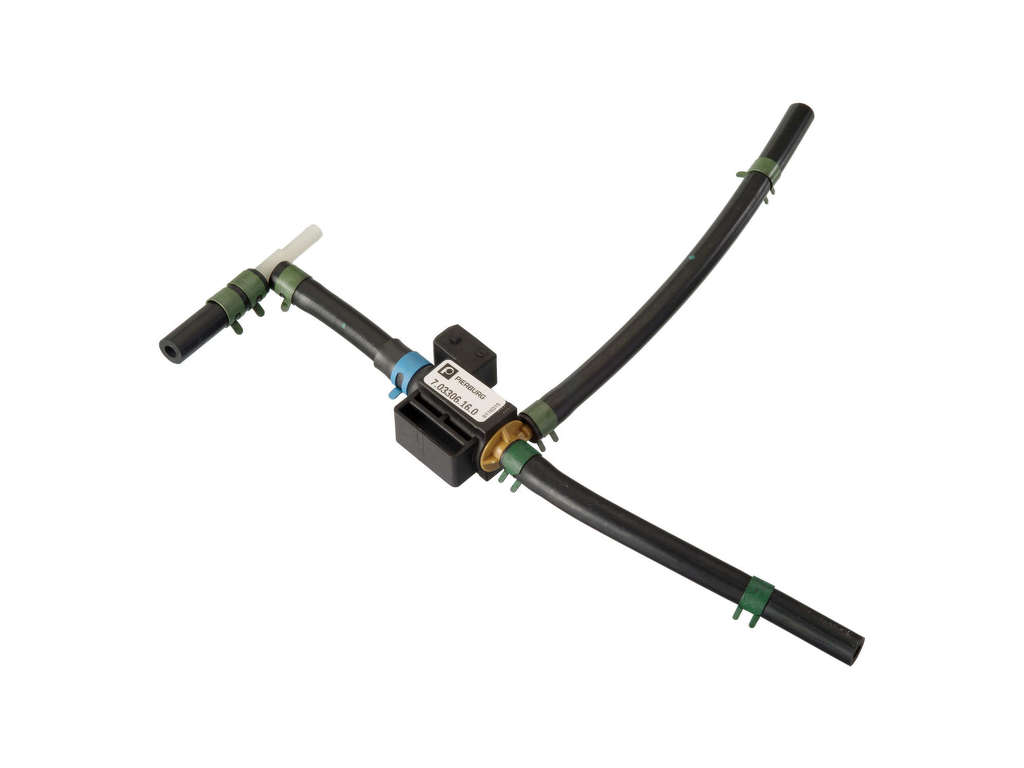
Aftermarket price range: $30-$70 - Vacuum Hose/Harness — The plastic and rubber lines can become brittle and crack, causing vacuum leaks that prevent proper wastegate control.
Trusted brands: Motorcraft, Dorman
OEM price range: $30-$60
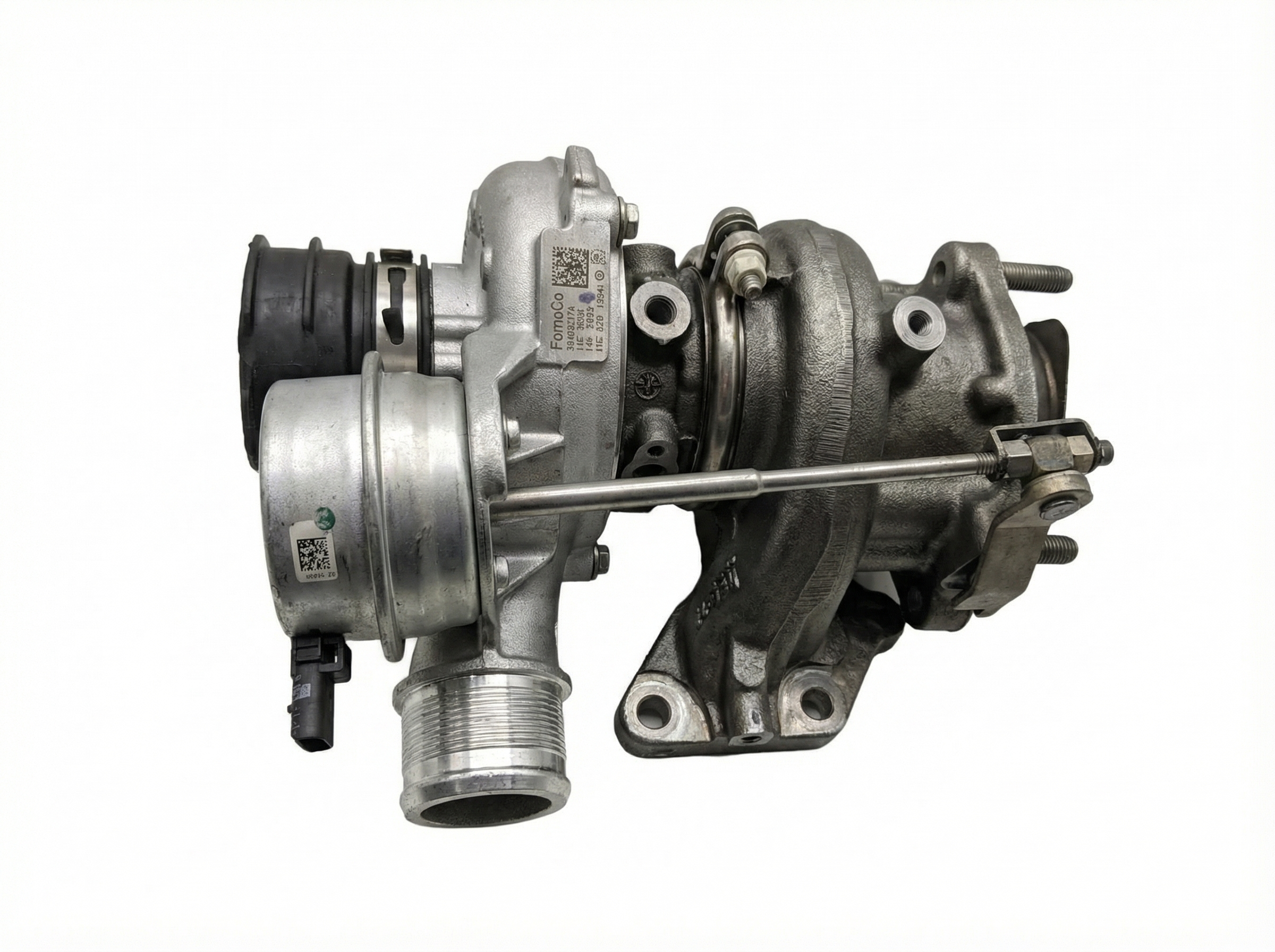
Aftermarket price range: $15-$40 - Turbocharger Assembly — Required if the internal wastegate is seized or the actuator fails. On these vehicles, the wastegate is typically not serviced separately from the turbo.
Trusted brands: Motorcraft, Garrett
OEM price range: $1000-$1500+
Aftermarket price range: $500-$900
Related Codes That Often Appear With This One
- P0299 — Turbocharger/Supercharger Underboost Condition. This can appear with P0234 if the wastegate or its control system is behaving erratically, sometimes sticking open (underboost) and sometimes sticking closed (overboost). TSB 15-0162 lists this code alongside P0234.
- P0245 — Turbocharger/Supercharger Wastegate Solenoid 'A' Low. This code points directly to an electrical fault in the solenoid's circuit and is often seen alongside P0234 per TSB 15-0162.
- P0246 — Turbocharger/Supercharger Wastegate Solenoid 'A' High. Similar to P0245, this indicates an electrical fault in the solenoid circuit and is mentioned in TSB 15-0162.
Technical Service Bulletins (TSBs) & Recalls
- TSB 15-0162: 1.6L GTDI - Lack of power with MIL Illuminated - DTCS P0234, P0245, P0246 And/Or P0299. Affects 2013-2014 Fusion, 2013-2016 Escape, and 2014-2016 Fiesta ST. Directs technicians to inspect vacuum lines and, if they are intact, replace the turbocharger wastegate regulating valve solenoid.
- TSB 16-0119: Lack of power and DTC P0234 on 2017 Fusion/MKZ with 2.0L GTDI engines built on or before 31-Aug-2016. The official action is to reprogram the PCM to the latest calibration.
Platform-Specific Known Issues
- A real-world owner of a 2017 Fusion reported code P0234, and the dealership initially just reset the car's computer without performing a repair. This highlights that simply clearing the code is not a fix.
Mechanic-Grade Diagnostic Values
- Turbocharger Wastegate Regulating Valve Solenoid Resistance (1.6L Engine) — expected: 12.4 Ω ± 0.5 Ω at 25°C (77°F). Failure: A reading significantly outside this range, or an open/short circuit (OL/0 ohms), indicates a faulty solenoid.
- Manifold Absolute Pressure (MAP) Sensor Voltage (Key On, Engine Off) — expected: Approx. 1.5V, corresponding to barometric pressure (approx. 100 kPa at sea level).. Failure: Voltage significantly different from expected barometric pressure reading suggests a faulty sensor or wiring issue.
- Wastegate Actuator Vacuum Test — expected: The actuator rod should begin to move smoothly when vacuum is applied and hold the vacuum without leaking.. Failure: The rod does not move, moves erratically, or the actuator fails to hold vacuum, indicating a mechanical fault or torn diaphragm.
Scan Tool Commands That Help
- Ford IDS, Forscan, or equivalent advanced scanner: Graph Desired vs. Actual Boost Pressure PIDs — This is a primary diagnostic step to confirm the overboost condition. Graphing the PIDs (Parameter IDs) during a test drive shows exactly when the actual boost deviates from what the PCM is commanding, confirming the fault is real.
- Ford IDS, Forscan, or equivalent advanced scanner: Wastegate Solenoid Bidirectional Control — Use this command with the engine running at idle to manually cycle the wastegate solenoid. Visually inspect the wastegate actuator arm for movement to confirm the solenoid, vacuum lines, and actuator are mechanically functional.
Wiring & Ground Locations
- G101 — Left rear of the engine (1.6L) or left front of the engine compartment.. This ground serves the Powertrain Control Module (PCM). A poor ground here can cause erratic PCM behavior and incorrect sensor readings or actuator control.
- G105 — Right side of the engine compartment.. This is a major engine compartment ground point. While not directly tied to the PCM in all diagrams, ensuring it is clean and tight is crucial for overall sensor and actuator stability.
Real Owner Repair Stories
- Reddit user in r/FocusST (Ford Focus ST (shares EcoBoost architecture)) — P0234 code, whistling during idle, audible venting of pressure during acceleration before the turbo was fully spooled.
❌ Tried (didn't work) Initial diagnosis was confusing as the boost gauge showed somewhat normal levels.
✅ What actually fixed it The aftermarket Blow-Off Valve (BOV) had been installed in the wrong orientation. Additionally, the vacuum line for the wastegate had been mistakenly connected to the BOV, and the actual BOV vacuum line was left disconnected, creating a leak. Correcting the line routing and BOV orientation resolved the code. - Reddit user in r/fordfusion (Ford Fusion 2.0T) — Intermittent P0234 code that would appear and disappear.
❌ Tried (didn't work) Replacing the wastegate solenoid with an OEM part did not resolve the intermittent code.
✅ What actually fixed it The issue was traced back to a weak battery. A different user advised that on these cars, low system voltage can cause incorrect readings from PWM sensors, leading to a variety of 'gremlin' fault codes. Replacing the battery for a fully functional one is a recommended diagnostic step for intermittent electrical faults. - J Tay187 on YouTube (2014 Ford Escape 1.6L EcoBoost) — P0234 code, loss of power (felt like no turbo).
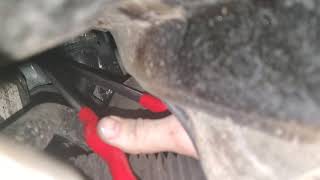
✅ What actually fixed it Replaced the turbocharger wastegate regulating valve solenoid (Part #CJ5Z-9K378-B). The video confirms this was the fix and shows the process of accessing it through the passenger side wheel well.
"I Checked Everything" — The Actual Cause
- In a documented case on a similar EcoBoost platform, a P0234 code was present but a standard smoke test for vacuum leaks would likely have passed. The root cause was not a leak to atmosphere, but rather vacuum lines being swapped between the wastegate solenoid and an aftermarket blow-off valve. The system was sealed, but functionally incorrect, causing the overboost.
When the Usual Fixes Don't Work
- While the most common fix for P0234 is replacing the wastegate solenoid, there are multiple owner-confirmed cases where this did not solve the problem. In one instance, an intermittent P0234 on a 2.0L Fusion persisted after a solenoid replacement and was ultimately attributed to a weak battery causing erroneous sensor readings. In another case involving a modified vehicle, the code was caused by the incorrect installation of an aftermarket blow-off valve and improperly routed vacuum lines, a problem that would not be fixed by replacing OEM parts.
Model Year Variations Within This Range
- 2013-2016: These models primarily used the 1.6L EcoBoost engine, which is the main subject of TSB 15-0162 regarding the faulty wastegate solenoid.
- 2014-2017: The 1.5L EcoBoost was introduced in 2014 and phased out the 1.6L. The 1.5L has design changes including an integrated exhaust manifold and a computer-controlled water pump clutch. While it can still suffer from P0234, it is also known for a separate, more severe issue of coolant intrusion into the cylinders.
- 2017: The 2017 model year marked a facelift for the Fusion. TSB 16-0119 applies specifically to some 2017 2.0L EcoBoost engines, indicating that a PCM software update may be the required fix for P0234, a different solution than for earlier model years.
Helpful Videos


Used OEM Parts in Stock
New Aftermarket Parts Available


The information in this article is provided for general reference and educational purposes only. Vehicle specifications, procedures, and part compatibility can vary by production date, trim level, and region. Always consult your vehicle's factory service manual and verify part numbers before purchasing or performing repairs. Safety-critical components such as airbags, seat belts, and braking systems should be installed by a qualified professional.
- Ford FUSION:
- 🧭 Diagnostic Flowchart
- 🎬 Helpful Videos
- 🛍️ Shop This Part
- What's Unique About the 2013-2017 Ford FUSION
- Symptoms You May Notice
- Most Likely Causes
- Rare But Worth Checking
- Diagnosis Steps
- Parts You'll Likely Need
- Related Codes That Often Appear With This One
- Technical Service Bulletins (TSBs) & Recalls
- Platform-Specific Known Issues
- Mechanic-Grade Diagnostic Values
- Scan Tool Commands That Help
- Wiring & Ground Locations
- Real Owner Repair Stories
- "I Checked Everything" — The Actual Cause
- When the Usual Fixes Don't Work
- Model Year Variations Within This Range
- 🎟️ Get 5% Off