

P0236 on 2020-2023 Buick Encore GX: Turbo Boost Sensor Causes and Fixes
P0236 on an Encore GX indicates a problem with the turbocharger boost sensor's signal. The most common causes are a faulty boost pressure sensor or, in cold climates, charge air cooler icing as documented in a GM Technical Service Bulletin. A sensor replacement is a common DIY fix, but a wiring issue identified in another TSB is also a strong possibility.
- P0236 on a 2020-2023 Encore GX means the turbo boost sensor signal is out of the expected range.
- The most common fix is replacing the turbo boost pressure sensor.
- If the problem occurs in very cold weather, suspect charge air cooler icing as described in TSB 21-NA-293.
- Before replacing parts, always check the sensor's wiring and connector for damage.
- Driving with this code can lead to poor performance and reduced fuel economy, so it's best to diagnose it promptly.
What's Unique About the 2020-2023 Buick ENCORE GX
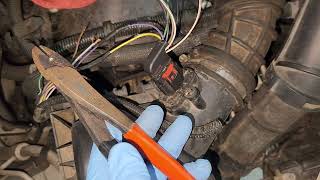
For the 2020-2023 Encore GX and its platform-mate, the Chevy Trailblazer, this code is specifically called out in multiple manufacturer TSBs. The most prominent is TSB #21-NA-293, which relates to performance in extremely cold weather (0°F / –18°C or less). The issue involves the charge air cooler (CAC) icing up, causing erratic pressure and triggering P0236. 🎬 Watch: Understanding P0236 circuit causes and common fixes. Additionally, TSB #21-NA-016 identifies a potential poor wiring crimp in the engine harness that can skew the boost sensor data, making this a known wiring failure point beyond simple sensor failure.
Diagnostic Flowchart
Tap your situation to follow the diagnostic path that matches what you're seeing on this vehicle.
Symptoms You May Notice
- Check Engine Light is on
- Reduced engine power and sluggish acceleration, often described as 'limp mode'
- Noticeable turbo lag or hesitation, especially when trying to accelerate onto a highway
- Poor fuel efficiency
- Unusual whining or hissing noises from the engine bay
- A message on the driver information center indicating reduced engine power
- Replacing the turbocharger itself. While a faulty turbo can cause performance issues, it's less likely to be the root cause of a P0236 circuit code compared to the sensor, wiring, or CAC icing.
Most Likely Causes
- Faulty Turbocharger Boost Pressure Sensor 🔴 High Probability → Shop Turbocharger Sensors are a common failure item due to constant heat cycles and exposure to oil vapor in the intake system. It is the primary component responsible for the signal the ECM is flagging as faulty.
How to confirm: Using a scan tool, monitor the live data for the boost pressure sensor. Compare its pressure reading to the MAP and BARO sensor readings with the key on and engine off; they should be nearly identical. If the readings are stuck, do not change with engine RPM, or are significantly different from the other sensors at rest, the sensor is likely bad. A user on Reddit confirmed a new sensor was much more responsive to revving.
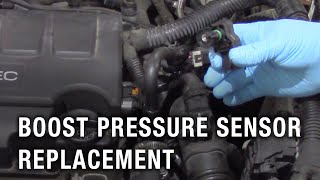
Typical fix: Replace the turbocharger boost pressure sensor. It is typically located on the charge air cooler outlet pipe or the intake manifold.
Est. part cost: $40-$90 - Poor Crimp at Splice J113 in Engine Harness 🟡 Medium Probability GM issued Technical Service Bulletin #21-NA-016 specifically for this issue on the Encore GX. A poor crimp at a specific splice (J113) in the engine harness can cause the boost sensor's low reference circuit to have high resistance, skewing the sensor data and triggering P0236, P00C7, and/or P1101.
How to confirm: Follow the diagnostic procedure in TSB #21-NA-016. With a scan tool, monitor the Boost Pressure Sensor, BARO, and MAP sensor data. Manipulate the engine wiring harness while watching the values. If the boost sensor reading changes or deviates by more than 1 kPa from the others while wiggling the harness, the splice is likely the issue.
Typical fix: Repair the J113 splice in the engine harness according to the procedure outlined in the TSB, which involves removing the old splice, re-crimping, and soldering the connection.
Est. part cost: $5-$20 - Charge Air Cooler (CAC) Icing 🟡 Medium Probability → Shop Intercooler GM issued TSB #21-NA-293 for this issue on Encore GX and Trailblazer models in extremely cold weather (0°F / –18°C or less). Moisture from the PCV system and the ambient air can freeze inside the charge air cooler, creating a blockage or restriction that leads to erratic pressure readings and can set P0236, P0299, or P0234.
How to confirm: This issue primarily occurs in freezing temperatures. Check freeze frame data with a scan tool to see the ambient temperature when the code was set. A visual inspection after removing charge pipes may reveal ice or a significant amount of oily water inside the intercooler.
Typical fix: The official fix per the TSB involves an ECM reprogramming with a new calibration that alters transmission shift patterns in cold weather to keep engine RPMs higher, reducing the chance of ice buildup. The system must also be thawed and drained of any accumulated moisture. Some dealers may also install a grille winter cover per TSB #20-NA-028.
Est. part cost: $0-$200 (dealer reprogramming cost) - Damaged Wiring or Loose Connectors 🟡 Medium Probability Engine vibration and heat can cause wires to fray or connectors to become loose or corroded over time, disrupting the signal to the ECM. This is separate from the specific splice issue in TSB 21-NA-016 but is still a common electrical fault.
How to confirm: Visually inspect the wiring harness and connector for the boost pressure sensor. Look for any signs of damage, corrosion, or loose pins. Use a multimeter to check for continuity and proper voltage at the connector.
Typical fix: Repair the damaged section of the wiring harness or clean/replace the connector.
Est. part cost: $5-$50 - Vacuum or Boost Leak ⚪ Low Probability Cracked hoses or loose clamps in the intake and turbocharger system can let unmetered air in or pressurized air out, causing the sensor readings to be implausible relative to engine load and throttle position.
How to confirm: Perform a smoke test on the intake and charge air system to reveal any leaks from hoses, clamps, or the intercooler itself. Listen for audible hissing sounds during engine operation.
Typical fix: Tighten loose clamps or replace the cracked hose or leaking component.
Est. part cost: $10-$150
Rare But Worth Checking
- Faulty Powertrain Control Module (PCM): This is extremely rare. The PCM should only be considered after all other possibilities, including sensors, wiring (especially splice J113), and mechanical issues, have been exhaustively ruled out.
Diagnosis Steps
- Connect an OBD-II scanner and confirm P0236 is present. Check for any other related codes, especially P00C7, P0299, or P0234.
- Review the freeze frame data to understand the conditions when the code was set. If the ambient temperature was at or below 0°F / –18°C, suspect CAC icing per TSB #21-NA-293.
- With the key on and engine off, use the scanner's live data function to compare the boost pressure sensor reading with the barometric pressure (BARO) and MAP sensor readings. They should be very close.
- While monitoring live data, wiggle and manipulate the engine wiring harness, particularly the sections near the top of the engine. If the boost pressure reading fluctuates wildly, the issue is likely the J113 splice described in TSB #21-NA-016.
- Visually inspect the boost pressure sensor's wiring harness and connector for obvious damage, corrosion, or loose connections.
- Start the engine and monitor the boost pressure sensor's readings as you lightly press the accelerator. The pressure/voltage should increase smoothly.
- If the sensor readings are stuck, erratic, or do not match the BARO reading at rest (and the wiring harness test passes), the sensor is the most likely culprit.
- If sensor and wiring seem okay, inspect the turbocharger's charge pipes and intercooler for leaks. A smoke test is the most effective method.
Parts You'll Likely Need
- Turbocharger Boost Pressure Sensor
(OEM #ACDelco 25206917 / GM 55514236)— This sensor is a frequent failure point for a P0236 code, as it is directly responsible for the signal the ECM is flagging as out of range. It is also sometimes referred to as a MAP sensor, as it measures manifold absolute pressure.
Trusted brands: ACDelco, Bosch, Standard Motor Products
OEM price range: $70-$120
Aftermarket price range: $40-$90
Related Codes That Often Appear With This One
- P0299 — Turbocharger Underboost. This can occur alongside P0236 if charge air cooler icing causes both pressure drops and erratic sensor readings, as noted in TSB 21-NA-293.
- P0234 — Turbocharger Overboost. This can also be triggered by CAC icing, where a blockage might cause a sudden pressure spike.
- P00C7 — Intake Air Pressure Measurement System Not Plausible. This code is mentioned in both TSB 21-NA-293 (CAC icing) and TSB 21-NA-016 (wiring splice), making it a strong indicator that one of these two specific issues is the cause.
Technical Service Bulletins (TSBs) & Recalls
- 21-NA-293: Malfunction Indicator Lamp (MIL) Illuminated, DTC P0299, P0234, P0236, P00C7 Set due
Platform-Specific Known Issues
- TSB #21-NA-293: General Motors issued this bulletin for the Encore GX and Chevy Trailblazer, which may experience a Check Engine Light and codes P0299, P0234, P0236, or P00C7 in extremely cold weather (0°F / –18°C or less) due to ice building up in the charge air cooler system. The fix is an ECM re-calibration.
- TSB #21-NA-016: This bulletin addresses an illuminated MIL with DTCs P00C7, P0236, and/or P1101. The cause is identified as a poor crimp at splice J113 in the engine harness, which skews the boost sensor data. The fix is a splice repair.
Mechanic-Grade Diagnostic Values
- Turbocharger Boost Pressure Sensor Signal Voltage — expected: 0.5V to 4.5V. Failure: Voltage is stuck, unresponsive, or outside the expected range during operation.
- GDS2 Commanded vs. Actual Boost Pressure Differential — expected: Less than 14 kPa (2.0 PSI) difference. Failure: A difference greater than 14 kPa (2.0 PSI) during a GDS2 Turbocharger Boost Control Test suggests a mechanical or control issue.
- Boost Pressure vs. BARO/MAP at KOEO — expected: Readings should be nearly identical.. Failure: A deviation of more than 1 kPa, especially when wiggling the engine harness, points to the J113 splice issue per TSB 21-NA-016.
Scan Tool Commands That Help
- GDS2 (GM Dealer Tool): Turbocharger Boost Control Test — This function allows a technician to command the turbocharger system and compare the desired boost pressure with the actual boost pressure reported by the sensor. A significant deviation helps differentiate between a sensor/wiring fault and a mechanical turbocharger issue.
- GDS2 (GM Dealer Tool): Intake System Learned Values Reset — While not for direct diagnosis of P0236, this reset is noted as mandatory after replacing a major component like the turbocharger assembly to prevent the ECM from using old, incorrect parameters.
Wiring & Ground Locations
- Splice J113 — Located in the engine wiring harness. TSB #21-NA-016 details how to locate and repair it, though it does not provide a visual locator map. The splice affects the low reference circuit (Circuit 548) for the turbocharger boost sensor.. A poor crimp at this specific splice causes high resistance in the sensor's ground reference, skewing its data and directly causing P0236, P00C7, and/or P1101 on 2020 Encore GX models.
- Boost Pressure Sensor Connector — On the 1.3L L3T engine, the boost pressure sensor (also called a T-MAP) is typically located on the charge air cooler outlet pipe, before the throttle body.. This is the primary connection point for the sensor. Damage to the connector pins, wiring pigtail, or locking tab can cause an intermittent or total loss of signal, triggering a P0236 code.
- G103 / G104 (Engine Grounds) — General Motors typically uses ground designators like G103 and G104 for engine grounds located on the cylinder heads or engine block. For example, on similar GM trucks, G103 is on the front of the passenger side cylinder head and G104 is on the rear of the driver's side cylinder head. The exact location on the Encore GX would require a factory service manual, but checking grounds on the engine block and cylinder heads is critical.. The ECM relies on a solid engine ground reference. While the J113 splice is a known issue with the sensor's specific reference circuit, a poor main engine ground can cause a variety of sensor data plausibility codes, including P0236.
Real Owner Repair Stories
- Reddit user in r/MechanicAdvice (Opel Signum 2.8T V6 (similar turbo system principles)) — Poor acceleration, like the turbo was not turning on. P0236 code present.
❌ Tried (didn't work) Checked for vacuum leaks but could not find any without a smoke machine.
✅ What actually fixed it Replaced the MAP (boost) sensor. The user noted the new sensor was '10 times more responsive to revving' when viewing live data, and the code was resolved.
Model Year Variations Within This Range
- 2020 only: TSB #21-NA-016, which identifies a poor crimp at splice J113 in the engine harness, is specifically listed for the 2020 Buick Encore GX with the 1.3L L3T engine.
Helpful Videos

We Have This Part in Stock

The information in this article is provided for general reference and educational purposes only. Vehicle specifications, procedures, and part compatibility can vary by production date, trim level, and region. Always consult your vehicle's factory service manual and verify part numbers before purchasing or performing repairs. Safety-critical components such as airbags, seat belts, and braking systems should be installed by a qualified professional.
- Buick ENCORE GX:
- 🧭 Diagnostic Flowchart
- 🎬 Helpful Videos
- 🛍️ Shop This Part
- What's Unique About the 2020-2023 Buick ENCORE GX
- Symptoms You May Notice
- Most Likely Causes
- Rare But Worth Checking
- Diagnosis Steps
- Parts You'll Likely Need
- Related Codes That Often Appear With This One
- Technical Service Bulletins (TSBs) & Recalls
- Platform-Specific Known Issues
- Mechanic-Grade Diagnostic Values
- Scan Tool Commands That Help
- Wiring & Ground Locations
- Real Owner Repair Stories
- Model Year Variations Within This Range
- 🎟️ Get 5% Off