

P0236 on 2016-2019 Chevrolet Cruze: Turbo Boost Sensor 'A' Circuit Causes and Fixes
On a 2016-2019 Cruze with the 1.4L Turbo, code P0236 is most often caused by a faulty turbocharger boost pressure sensor located on the charge air cooler (intercooler). In very cold climates (below 0°F / -18°C), it can also be triggered by ice buildup in the charge air cooler, a known issue addressed by GM Technical Service Bulletin #22-NA-007. Accessing the sensor requires removing the front bumper. Expect to pay $40-$70 for a new OEM sensor.
- P0236 on a 2016-2019 Cruze almost always points to the turbocharger boost pressure sensor or its circuit.
- The correct sensor to replace is on the intercooler outlet pipe (driver's side), not the one on the intake manifold. Access is difficult and requires removing the front bumper.
- If you live in a cold climate and the problem only happens in winter, the cause is likely ice in your charge air cooler, as described in a GM service bulletin.
- Before replacing parts, always inspect the sensor's wiring and connector for damage, as it's located in a vulnerable area.
- Use a scan tool to compare boost sensor and MAP sensor readings before starting repairs; they should match when the engine is off.
What's Unique About the 2016-2019 Chevrolet CRUZE

The 1.4L LE2 turbo engine in the second-generation Cruze and its platform mates (Buick Encore, Chevy Trax) is known to be susceptible to a specific cold-weather issue. Ice can accumulate inside the charge air cooler (intercooler) during short drives in freezing temperatures, restricting airflow and causing the boost sensor to send erratic signals. General Motors issued Technical Service Bulletin #22-NA-007 to address this exact problem, which can trigger P0236 along with underboost (P0299) and overboost (P0234) codes. The fix involves an ECM re-calibration to change transmission shift patterns in cold weather to keep engine RPMs higher, reducing the chance of ice buildup.
Diagnostic Flowchart

Tap your situation to follow the diagnostic path that matches what you're seeing on this vehicle.
Generation note: The 2016 model year was a transition. This guide specifically covers the second-generation Cruze, which was introduced in 2016 and ran through 2019 with the 1.4L LE2 engine. The first-generation model, sold as the "Cruze Limited" in 2016, uses a different engine (LUV) and has different part locations and potential causes, such as PCV system failures that are more common on that engine.
Symptoms You May Notice

- Check Engine Light is on
- Reduced engine power (limp mode)
- "Engine Power is Reduced" message on the driver information center.
- Poor or hesitant acceleration
- Noticeable lack of turbo boost
- Increased fuel consumption
- In cold weather, symptoms may appear within the first 10-15 minutes of driving and then improve as the engine bay thaws.
- Replacing the Manifold Absolute Pressure (MAP) sensor on the intake manifold instead of the Turbocharger Boost Pressure sensor (also a T-MAP sensor) on the charge air cooler outlet.
- Replacing the entire turbocharger assembly when the fault is only a sensor, a leak, or a wiring issue.
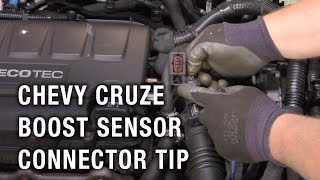
- On first-generation (Cruze Limited) models, swapping the similar-looking connectors 🎬 Watch: A helpful tip for identifying the correct sensor connector. for the boost pressure sensor and the upstream O2 sensor after a repair, which can cause a host of codes.
Most Likely Causes

- Faulty Turbocharger Boost Pressure Sensor 🔴 High Probability → Shop Turbocharger The sensor is exposed to constant pressure, temperature, and oil vapor fluctuations, which can cause it to fail electronically or become contaminated over time. It is the most frequently reported failure point for this code on the Cruze, with many owner accounts of replacement solving the issue.
How to confirm: Using a scan tool, monitor the boost pressure sensor reading with the key on, engine off (KOEO). It should read close to the barometric pressure (BARO) and MAP sensor readings. If it's stuck on a specific value, reads erratically, or is significantly different from the other sensors at KOEO, the sensor is likely bad. A Reddit user noted their bad sensor was physically broken upon removal.
Typical fix: Replace the turbocharger boost pressure sensor. This requires removing the front bumper cover for access, as the sensor is located on the driver's side outlet of the charge air cooler. The retaining screw is often a T20 Torx and can be prone to rust, complicating removal.
Est. part cost: $40-$70 - Charge Air Cooler (CAC) Icing 🟡 Medium Probability → Shop Intercooler This is a documented issue for this platform in extremely cold climates (-18°C / 0°F or below), especially on short trips. Moisture from the PCV system and ambient air condenses and freezes inside the intercooler, blocking airflow and causing erratic pressure readings.
How to confirm: This issue is diagnosed by its symptoms occurring only in very cold weather and often improving after the engine warms up fully or the vehicle is thawed in a warm garage. The TSB notes that simply seeing moisture in the CAC is not a reliable indicator, as some moisture is always present. The condition must be directly correlated with extreme cold.
Typical fix: The official GM procedure per TSB #22-NA-007 involves an ECM re-calibration to enable a revised transmission shift pattern that reduces overdrive use in cold weather. In some cases, the procedure also calls for removing the CAC to drain water and cleaning the boost sensor. Thawing the vehicle will temporarily resolve the symptom.
Est. part cost: $0 for ECM flash if under warranty, otherwise $140-$250 for a new CAC if required. - Damaged Wiring or Connector ⚪ Low Probability The sensor wiring is located in the lower front of the vehicle, making it susceptible to damage from road debris, bottoming out, or improper service. The harness runs near the ambient air temp sensor, and damage can affect both circuits simultaneously.
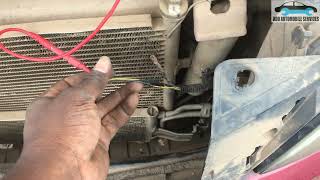
How to confirm: Visually inspect the wiring harness and connector for the boost pressure sensor. Check for breaks, corrosion, or loose pins. A YouTube video documented a case where wiring for the boost sensor and ambient air temp sensor was damaged together, causing codes P0073, P0236, and P0238. 🎬 See this walkthrough for diagnosing boost sensor circuit high codes. Test for 5V reference, ground, and a signal wire at the connector.
Typical fix: Repair the damaged section of the wiring harness or replace the connector pigtail.
Est. part cost: $15-$30 for a connector pigtail - Intake Air Leak ⚪ Low Probability Plastic and rubber components in the charge air system can crack or become loose over time, especially the connections at the intercooler and throttle body.
How to confirm: Perform a smoke test on the intake system. Visually inspect all hoses and clamps between the turbocharger outlet and the throttle body for cracks, loose connections, or damage. A forum user on CruzeTalk found a loose intercooler pipe connection at the bottom of the engine was the cause of their P0236 and P2227 codes.
Typical fix: Tighten loose clamps or replace the cracked hose or damaged seal.
Est. part cost: $50-$150 depending on the hose
Rare But Worth Checking
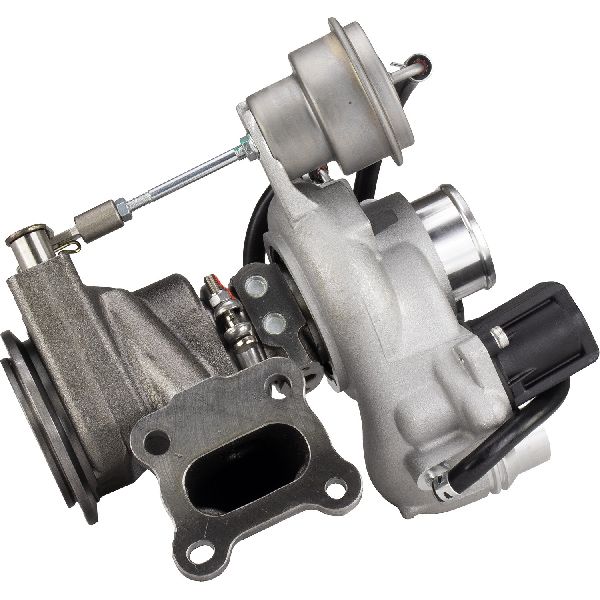
- Faulty Turbocharger Wastegate or Actuator: → Shop Turbocharger While less common for this specific code, a wastegate that is stuck or slow to respond can cause boost pressure to be out of the expected range, potentially triggering a P0236. This would usually be accompanied by an underboost (P0299) or overboost (P0234) code, which are also mentioned in the CAC icing TSB.
- Faulty Engine Control Module (ECM): This is extremely rare. The ECM should only be considered after all other possibilities, including sensors, wiring, and mechanical faults, have been exhaustively ruled out. A user on a Reddit forum considered this but found the actual issue was the sensor itself.
Diagnosis Steps
- Read all fault codes with an OBD-II scanner. Note any other codes that are present, especially P0299, P0234, P2227, or P0238.
- Using the scanner's live data, observe the 'Boost Pressure Sensor' and 'Manifold Absolute Pressure (MAP)' readings with the Key On, Engine Off (KOEO). They should be nearly identical and match the local atmospheric pressure (BARO).
- Start the engine. Monitor the boost pressure reading at idle and while carefully revving the engine (in Park/Neutral). The reading should change smoothly and logically.
- If the problem only occurs in extreme cold (below 0°F / -18°C), suspect Charge Air Cooler icing per TSB #22-NA-007. Allow the vehicle to thaw in a warm garage and see if the problem disappears.
- If the sensor reading is stuck, erratic, or doesn't match the MAP sensor at KOEO, proceed to inspect the sensor and wiring.
- Locate the boost pressure sensor. On the 2nd Gen Cruze, this requires removing the front bumper cover to access the charge air cooler. The sensor is on the driver's side outlet pipe.
- Inspect the sensor's connector and wiring harness for any visible damage, corrosion, or loose connections. Pay close attention to the area where the harness runs low and is exposed to road debris.
- If wiring looks good, test the circuit with a multimeter. You should find a 5-volt reference wire, a good ground, and a signal wire. Refer to specific diagnostic values for expected readings.
Parts You'll Likely Need
- Turbocharger Boost Pressure Sensor
(OEM #55573249)— This is the 'Sensor A' referenced by the code and is the most common failure point for P0236 on this vehicle. It is sometimes referred to as a Manifold Absolute Pressure sensor in parts catalogs, but it is located on the intercooler, not the intake manifold.
Trusted brands: ACDelco (GM OE), Bosch, NTK, Duralast
OEM price range: $40-$60
Aftermarket price range: $25-$50
Related Codes That Often Appear With This One
- P0299 — Turbo Underboost. Often appears with P0236, especially in cases of CAC icing or major air leaks. It is a primary code listed in TSB #22-NA-007.
- P0234 — Turbo Overboost. Can appear if the sensor malfunction or a mechanical issue causes uncontrolled boost. Also cited in the CAC icing TSB.
- P2227 — Barometric Pressure Sensor Performance. The ECM compares the boost sensor to the BARO sensor (which is often integrated into the MAP sensor or ECM), so a fault in one can be related to the other. Also cited in the CAC icing TSB.
- P0238 — Turbocharger Boost Sensor 'A' Circuit High. This indicates a specific electrical fault (high voltage/short to power) in the same circuit, often pointing to a wiring problem or a failed sensor.
- P00C7 — Intake Air Pressure Measurement System - Multiple Sensor Correlation. This code is also explicitly mentioned in the CAC icing TSB #22-NA-007.
Technical Service Bulletins (TSBs) & Recalls
- TSB #22-NA-007: Poor Engine Performance in Extremely Cold Weather Conditions, Charge Air Cooler (CAC) Icing - Malfunction Indicator Lamp (MIL) Illuminated with DTCs P0299, P0234, P0236, P2227, P00C7 Set.
- TSB #17-NA-221: An earlier version of the CAC icing bulletin, also covering the LE2 engine and citing P0236.
- TSB #22-NA-067: A similar bulletin for the older LUV engine (Gen 1 Cruze) that also lists P0236 as a possible code from PCV and CAC icing issues.
Platform-Specific Known Issues
- A known issue, documented in GM TSB #22-NA-007, involves ice accumulating in the charge air cooler during short trips in temperatures at or below -18°C (0°F). This blockage causes erratic airflow and can trigger P0236, P0299, and other codes. The fix involves an ECM update to alter cold-weather shift patterns and potentially replacing the CAC.
- Access to the boost pressure sensor is difficult, requiring the removal of the front bumper cover. Some owners report needing to loosen the radiator to get enough clearance to pull the sensor out.
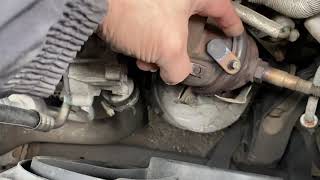
- The T20 Torx screw holding the sensor in place is prone to rusting, making removal difficult without stripping the head. One owner created a video showing they had to cut the old sensor off and use locking pliers on the screw shank to remove it.
Mechanic-Grade Diagnostic Values
- Boost Pressure Sensor Connector Pin Voltages (KOEO) — expected: Pin 1 (5V Reference): ~5.0V; Pin 2 (Ground): 0V; Pin 3 (Signal): ~4.8V to 5.0V.. Failure: Voltage missing on Pin 1, voltage present on Pin 2, or signal voltage on Pin 3 that is 0V or does not match reference voltage can indicate a wiring or sensor fault. A bad sensor may short the 5V reference circuit to ground, causing a 0V reading.
- Scan Tool Data Comparison (KOEO) — expected: Boost Pressure Sensor reading should be nearly identical to the Manifold Absolute Pressure (MAP) sensor and Barometric Pressure (BARO) sensor readings (e.g., all reading around 14.2 psi at sea level).. Failure: A significant deviation, such as the boost sensor reading 1.85 psi while the MAP reads 14.21 psi, points to a faulty boost sensor.
- Scan Tool Data Plausibility Check (KOEO) — expected: On a similar 1.5L Turbo GM engine, the ECM expects the boost pressure sensor to read between 6.0 and 16.7 PSI with the key on, engine off.. Failure: A reading outside this range, such as 18.4 PSI, indicates a sensor performance issue.
Wiring & Ground Locations
- B101 - Turbocharger Boost Pressure Sensor Connector — On the charge air cooler outlet pipe, driver's side, behind the front bumper cover.. This is the primary sensor for code P0236. Testing at this connector is the most direct way to diagnose the sensor and its circuit.
- B101 Connector Pinout — At the sensor connector.. Pin 1 is the 5V reference from the ECM. Pin 2 is the low reference (ground). Pin 3 is the signal wire back to the ECM. Knowing the pinout is essential for accurate electrical testing with a multimeter.
Real Owner Repair Stories
- Reddit user on r/cruze (2017 Chevrolet Cruze) — Check Engine Light with code P0236.
❌ Tried (didn't work) Initial diagnosis.
✅ What actually fixed it The user removed the front bumper to access the sensor and found it was physically broken. Replacing the sensor resolved the code. - Reddit user on r/cruze (2011 Chevrolet Cruze (Gen 1, but highly relevant diagnostic path)) — Check Engine Light with codes P0236, P1101, and P2227.
❌ Tried (didn't work) Tested the signal wire at the sensor and found 0V, leading to the incorrect suspicion that the ECU was bad.
✅ What actually fixed it Replaced the boost pressure sensor on a hunch. After replacement, the code was resolved and the signal wire showed a correct voltage reading (1.9V in this case). This confirmed the original sensor had failed internally and was not sending a signal.
"I Checked Everything" — The Actual Cause
- In a case involving boost loss at high RPM (a symptom related to P0236), an owner performed a smoke test at 1 bar which revealed no leaks in the charge air system. Despite the 'clean' test, the problem persisted even after replacing the MAF sensor, O2 sensor, wastegate solenoid, and bypass valve, indicating a more complex issue than a simple boost leak.
OEM Part Supersession History
12644228 (GM)→12711681 (GM)— Standard part lifecycle update by the manufacturer.
Heads up: The new part number 12711681 is the direct replacement for 12644228 and should be used. Be cautious of similarly named parts like ACDelco 213-4793, which is often misidentified but is actually an engine coolant temperature sensor.
Model Year Variations Within This Range
- 2016-2019: No significant variations in the cause or diagnosis of code P0236 have been documented within the second-generation (LE2 engine) model years. The primary causes (sensor, icing, wiring) apply across this range.
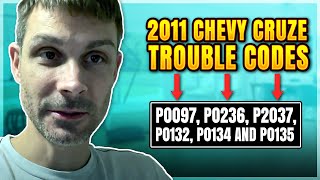
Helpful Videos
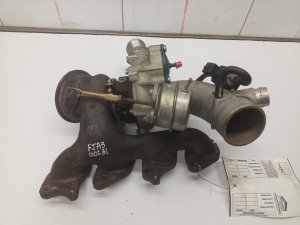
Used OEM Parts in Stock
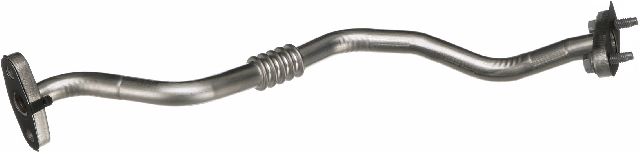
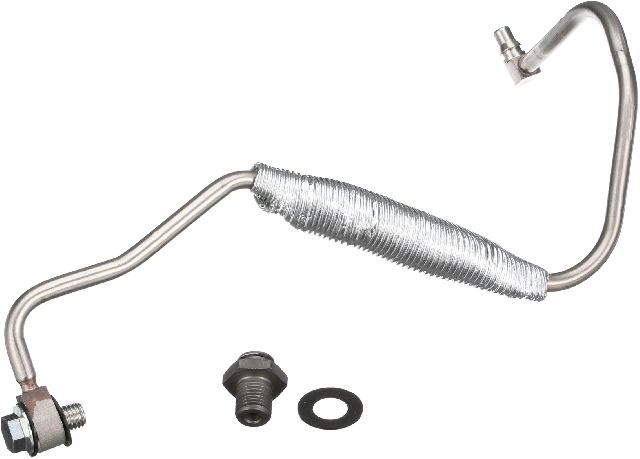
New Aftermarket Parts Available

The information in this article is provided for general reference and educational purposes only. Vehicle specifications, procedures, and part compatibility can vary by production date, trim level, and region. Always consult your vehicle's factory service manual and verify part numbers before purchasing or performing repairs. Safety-critical components such as airbags, seat belts, and braking systems should be installed by a qualified professional.
- Chevrolet CRUZE:
- 🧭 Diagnostic Flowchart
- 🎬 Helpful Videos
- 🛍️ Shop This Part
- What's Unique About the 2016-2019 Chevrolet CRUZE
- Symptoms You May Notice
- Most Likely Causes
- Rare But Worth Checking
- Diagnosis Steps
- Parts You'll Likely Need
- Related Codes That Often Appear With This One
- Technical Service Bulletins (TSBs) & Recalls
- Platform-Specific Known Issues
- Mechanic-Grade Diagnostic Values
- Wiring & Ground Locations
- Real Owner Repair Stories
- "I Checked Everything" — The Actual Cause
- OEM Part Supersession History
- Model Year Variations Within This Range
- 🎟️ Get 5% Off