

P0236 on 2015-2024 Ford Edge 2.0L EcoBoost: Boost Sensor Circuit Fixes
For a 2015-2024 Ford Edge with the 2.0L EcoBoost, code P0236 most often points to a faulty Turbocharger Boost Pressure Sensor or a wiring issue. A common culprit is a corroded wiring splice, as documented in Ford TSBs and a related safety recall (14S17). A new sensor costs around $40-$90, but a thorough wiring check is essential before replacing parts.
- P0236 on your Ford Edge means there's a problem with the boost pressure sensor circuit.
- The most likely causes are a faulty sensor or a wiring issue, which is a known problem for this engine.
- Always inspect the wiring harness and connector before replacing the sensor.
- The correct Motorcraft replacement sensor part number is likely CX-2391.
- This is a DIY-friendly repair for many, with the sensor being relatively accessible and inexpensive.
What's Unique About the 2015-2024 Ford Edge
On the 2.0L EcoBoost engine family, code P0236 is not always a simple case of a bad sensor. Ford has identified specific issues with the wiring harness that can cause this code. Technical Service Bulletin (TSB) 13-7-5 and the subsequent Safety Recall 14S17 point to corrosion in the signal return wire splices (specifically S108 and S182) as a known cause for P0236 on this powertrain. Splice S108 involves Yellow/Green wires, and S182 involves Gray/Brown wires. These splices are located in the engine wiring harness near the transmission and starter, and are susceptible to moisture intrusion, leading to faulty sensor signals. This makes a thorough inspection of the harness critical before replacing parts.
Symptoms You May Notice
- Check Engine Light is on
- "Engine Fault Service Now" message on the instrument cluster
- Noticeable loss of power and sluggish acceleration
- Engine may hesitate, surge, or buck under load
- Turbo boost may be disabled by the engine computer (limp mode)
- Increased fuel consumption
- Rough or jerky shifting
- Engine may stall when coming to a stop
- Replacing the turbocharger when the actual fault is a simple wiring issue or a much cheaper sensor.
- Replacing the boost pressure sensor without first checking the wiring harness for known TSB-related issues, leading to a repeat failure.
Most Likely Causes
- Wiring Harness or Connector Issue 🔴 High Probability Ford TSB 13-7-5 and Safety Recall 14S17 specifically identify corrosion in signal return splices (S108 and S182) as a primary cause for P0236 on the 2.0L GTDI engine. Additionally, manufacturer Bulletin #TSB 16-0161 notes that P0236 may be caused by a wiring concern in the reference voltage circuit (VREF) splices. The wiring near the turbo and transmission is subject to heat and moisture, which can degrade the factory crimped splices and cause corrosion.
How to confirm: Visually inspect the wiring harness and connector for the boost pressure sensor for any signs of damage, corrosion, or loose pins. Perform a 'wiggle test' on the harness near the identified splice locations while monitoring the sensor's live data (PID: TIP_PRS-BOOST); if the reading jumps around, a wiring fault is likely. Locate and inspect the S108 (Yellow/Green wires) and S182 (Gray/Brown wires) splices for corrosion.
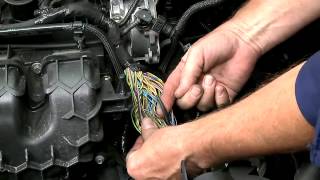
Typical fix: Repair the damaged section of the wiring harness by cutting out the old splice and installing a new, sealed solder splice per the TSB/recall procedure. 🎬 Watch: Official Ford wiring harness recall repair procedure Clean or replace the sensor pigtail connector if corroded.
Est. part cost: $10-$60 (for pigtail connector or wire repair kit) - Faulty Turbocharger Boost Pressure (TCBP) Sensor 🔴 High Probability → Shop Turbocharger The sensor is exposed to heat, pressure changes, and potential oil vapor contamination, which can cause it to fail or respond slowly over time. NHTSA ODI #11620504 describes a boost sensor range/performance fault occurring alongside other codes like P0238 and P007D. While a common failure point, it's often misdiagnosed when the root cause is the wiring.
How to confirm: Using a scan tool, monitor the live data for the boost pressure PID. With Key On, Engine Off (KOEO), the reading should be close to the Barometric Pressure (BARO) reading. A variance over 0.5 PSI can indicate a faulty sensor. The reading should change smoothly with engine RPM and load. If it's stuck, erratic, or doesn't change (and the wiring is confirmed good), the sensor is likely faulty.
Typical fix: Replace the Turbocharger Boost Pressure Sensor. This sensor is often referred to as a MAP sensor in parts catalogs.
Est. part cost: $40-$90 - Boost/Vacuum Leak 🟡 Medium Probability The charge air cooler pipes and hoses are made of plastic and rubber, which can crack, become brittle, or have clamps loosen over time, creating leaks that cause an irrational pressure reading.
How to confirm: Visually inspect all intake piping between the turbo, intercooler, and throttle body for cracks or loose connections. A smoke test is the most effective way to find small leaks. Listen for audible hissing sounds during acceleration.
Typical fix: Replace the cracked hose or tighten the loose clamp.
Est. part cost: $20-$150 - Sticking Turbocharger Wastegate ⚪ Low Probability → Shop Turbocharger Carbon buildup or mechanical failure can cause the wastegate (which controls boost levels) to not move freely, leading to pressure readings that don't match the PCM's command.
How to confirm: With the engine off, check if the wastegate actuator arm moves freely. You may need a vacuum pump to test the actuator's function. Listen for abnormal turbo noises during operation.
Typical fix: Clean or replace the turbocharger assembly or wastegate actuator.
Est. part cost: $200-$1500+
Rare But Worth Checking
- Clogged Catalytic Converter: A clogged catalytic converter can create excessive exhaust backpressure, affecting turbocharger operation and potentially skewing pressure readings, leading to underboost or overboost conditions.
- Faulty Powertrain Control Module (PCM): This is extremely rare. The PCM should only be considered after all other possibilities, including all sensors, wiring, and mechanical components, have been thoroughly tested and ruled out.
Diagnosis Steps
- Read all stored fault codes with an OBD-II scanner. Note if P0106 or P06A7 are also present, as NHTSA ODI #11181564 notes these codes can appear together as permanent faults.
- Check with a Ford dealer or online databases for the status of Safety Recall 14S17 on your vehicle's VIN. This recall directly addresses the most common cause.
- Visually inspect the Turbocharger Boost Pressure (TCBP) sensor connector and wiring harness for any obvious damage, melting, or corrosion.
- Using a scan tool, observe the live data for the boost pressure sensor (PID: 'TIP_PRS_BOOST'). Check the reading with the Key On, Engine Off (KOEO). It should be close to the Barometric Pressure (BARO) reading.
- Start the engine. The boost pressure reading should be stable at idle and increase smoothly as you rev the engine.
- Perform a 'wiggle test' on the sensor connector and the engine harness near the transmission while watching the live data. If the readings are erratic, you have a wiring problem, likely the known splice issue.
- If wiring seems okay, inspect the entire air intake path from the air filter to the throttle body for leaks, especially the flexible hoses and clamps around the charge air cooler.
- If no leaks or wiring issues are found, the boost pressure sensor itself is the most likely culprit.
- For advanced diagnosis, consult TSB 13-7-5 and Safety Recall 14S17 to locate the signal return splices (S108, S182) and check for corrosion or improper previous repair.
Parts You'll Likely Need
- Turbocharger Boost Pressure Sensor (MAP Sensor)
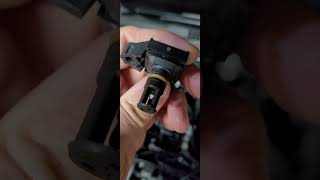
(OEM #BV6Z-9F479-A)— This sensor is the primary component responsible for measuring boost pressure and is a common part to fail or cause the P0236 code, though often the wiring is the true culprit. 🎬 Watch: Diagnosing a Ford boost pressure sensor fault
Trusted brands: Motorcraft, Bosch, NTK, Dorman
OEM price range: $60-$90
Aftermarket price range: $40-$70 - Wiring Harness Splice Repair Kit
(OEM #CU5Z-14A411-A)— Required to properly fix the corroded S108 and S182 splices as identified in Ford's TSB and recall. A simple crimp connector is not sufficient.
Trusted brands: Ford
OEM price range: $20-$40
Aftermarket price range: $10-$20 (generic solder seal kits)
Related Codes That Often Appear With This One
- P0299 — Turbo/Supercharger Underboost. This can occur if the P0236 fault causes the PCM to limit or disable the turbo.
- P0234 — Turbo/Supercharger Overboost. This can occur if the sensor provides an inaccurately low reading, causing the PCM to command too much boost.
- P0106 — Manifold Absolute Pressure/Barometric Pressure Circuit Range/Performance. This code is often linked with P0236 in TSB 13-7-5, indicating a shared signal return wiring or sensor issue.
- P06A7 — Sensor Reference Voltage 'B' Circuit Range/Performance. Also mentioned in TSB 13-7-5, pointing to a shared VREF circuit or sensor problem.
Technical Service Bulletins (TSBs) & Recalls
- TSB 13-7-5: Addresses drivability concerns with DTC P0236, P0106, and P06A7 on 1.6L and 2.0L GTDI engines, pointing to corroded sensor connector splices.
- Bulletin #TSB 16-0161: Notes that vehicles may exhibit rough running, lack of power, surging, bucking, or hesitation with DTC P0236 stored in the PCM memory.
Platform-Specific Known Issues
- Ford TSB 13-7-5 and Safety Recall 14S17 indicate that corrosion in the signal return splices (S108, S182) for the boost pressure sensor is a known cause of code P0236 on the 2.0L EcoBoost engine platform.
- NHTSA ODI #10787972 notes that due to DTCs P0106 and P0236, some vehicles experience hesitation, loss of idle RPM, difficulty starting, and running rough.
- A user on a Ford forum with an EcoBoost engine reported that having the boost sensor and wire harness plug replaced resolved long-term issues with noisy blow-off valves, poor fuel economy, and rough idle that accompanied the P0236 code.
Mechanic-Grade Diagnostic Values
- Turbocharger Boost Pressure (TCBP) Sensor Signal Voltage — expected: Typically 0.5V at low boost to 4.5V at full boost.. Failure: A reading consistently outside this window, or one that is stuck or responds slowly.
- TCBP, MAP, and BARO Sensor Correlation (KOEO) — expected: All three sensor readings should be very close to each other with the Key On, Engine Off.. Failure: If the TCBP (TIP_PRS_BOOST) PID does not correlate with the BARO and MAP PIDs, it indicates a sensor or circuit fault. A variance of more than 0.5 PSI is a strong indicator of a bad sensor.
- Sensor Endplay (Turbocharger Shaft) — expected: Less than 0.003 inches.. Failure: Readings that exceed 0.003 inches indicate excessive wear and a failing turbocharger, which can be a mechanical cause for boost codes.
Scan Tool Commands That Help
- Ford IDS (or equivalent high-level scanner): Live Data Monitoring of PIDs: TIP_PRS_BOOST, MAP, BARO — This is the primary diagnostic step. Use during KOEO to check for sensor correlation and during a 'wiggle test' of the harness to identify intermittent wiring faults.
Wiring & Ground Locations
- S108 & S182 — Located in the engine wiring harness, often near the transmission and starter motor. S108 involves Yellow/Green wires, and S182 involves Gray/Brown wires.. These are the specific signal return splices identified in Ford TSB 13-7-5 and Recall 14S17 as being prone to corrosion, causing the P0236 code.
- G104 — On the transmission assembly.. This is a key ground point for the engine control sensor wiring harness. A poor connection at G104 can cause erratic sensor readings, including for the boost pressure sensor.
- TCBP/CACT Sensor Connector — On the intake air tube between the charge air cooler (intercooler) and the throttle body. On some earlier models, this may be on the charge air cooler itself.. This is the direct connection point for the sensor. Checking for corrosion, damage, or loose pins here is a critical first step.
Real Owner Repair Stories
- Reddit user post in r/fordfusion (2014 Ford Fusion SE 2.0L (Same engine family)) — Car would completely shut off when coming to a stop, Check Engine Light and wrench symbol appeared, jerky running and shifting, and bouncing RPMs.
❌ Tried (didn't work) Clearing the code would make the car drive normally for a few days before the issue returned.
✅ What actually fixed it The user suspected a bad Turbo Boost Sensor was the ultimate cause, as the symptoms were directly tied to the code appearing and disappearing. - NHTSA ODI #11667579 — An owner reported that an "Engine Fault Service Now" message would not go away after turning off the car, and a code reader confirmed the error code was P0236.
OEM Part Supersession History
BB5Z-9F479-A→BB5Z-9F479-C, then BV6Z-9F479-A (Motorcraft CX-2391)— Standard part updates for improved reliability and performance.
Model Year Variations Within This Range
- 2019-2024: Starting in model year 2019, the 2.0L EcoBoost was updated with a twin-scroll turbocharger. While the P0236 code's primary causes (wiring, sensor) remain the same, diagnosis of mechanical turbo issues like a sticking wastegate may differ due to the different turbo design. The sensor location remains on the cold-side charge pipe.
- 2015-2018: These earlier models use a single-scroll turbocharger. The TCBP sensor is located on the charge air cooler outlet pipe.
Diagnostic Flowchart
Other Known Issues on This Vehicle
Issues unrelated to this code that are worth knowing about as an owner of this generation:
- Coolant Intrusion into Cylinders 🔴 High — Common on 2015-2019 models, can occur from 30,000 to over 100,000 miles. Caused by a block design flaw allowing coolant to compromise the head gasket. The engine block was reportedly redesigned for the 2019/2020 model year to fix this. (Ref: Ford has issued customer satisfaction programs and TSBs for related models, but no universal recall for the Edge. Diagnosis often involves a borescope inspection showing clean, steam-cleaned pistons.)
- Power Transfer Unit (PTU) Failure 🔴 High — Common across all model years with AWD. The unit is located near the hot exhaust with no drain plug, causing the 'lifetime' fluid to cook, thicken, and stop lubricating, leading to gear failure. Symptoms include a grinding/whining noise and a 'natural gas' or propane-like smell. (Ref: No recall, but it's a widely known failure. The fix is a costly PTU replacement (~$1600+). Proactive owners often change the fluid every 20,000-30,000 miles.)
- 6F35 Transmission Problems 🟠 Medium — Affects models equipped with the 6-speed 6F35 automatic transmission (common with the 2.0L EcoBoost before the 8-speed was introduced). Issues include harsh/delayed shifting, shuddering, and torque converter failure. Failures can occur under 100,000 miles even with regular fluid changes. (Ref: Multiple TSBs (e.g., SSM 46355 for solenoid binding) and Customer Satisfaction Programs (e.g., 20B27 for torque converter overheating) have been issued.)
- Intake Valve Carbon Buildup 🟡 Low — A common maintenance issue for all direct-injection engines, including the 2.0L EcoBoost. Becomes noticeable after 60,000 miles, causing rough idle, hesitation, and reduced fuel economy.
Used vs. New Parts: Buying Guide for This Vehicle
When a used part is the smart pick: For this repair, using used parts is generally not recommended. The primary failure points are a small electronic sensor and wiring corrosion, both of which are high-risk items to source from a junkyard.
Donor-vehicle mileage cap: roughly under 30000 miles for the part to have meaningful remaining life.
What to inspect on the donor part:
- For a sensor, only consider one from a very low-mileage, front-end collision vehicle where the engine bay was not impacted.
- Never use a used wiring pigtail or attempt to reuse a cut section of harness; the risk of introducing another fault is too high.
OEM-only on this vehicle (don't cheap out):
- Wiring Harness Splice Repair Kit: Use the OEM-specified solder and heat-shrink kit (CU5Z-14A411-A) to ensure a permanent, moisture-proof seal as intended by the TSB.
Aftermarket brands forum-validated for this vehicle:
- Bosch
- NTK
Brands owners have reported issues with on this vehicle:
- Avoid unbranded, 'white-box' sensors from online marketplaces, as their calibration and durability are often questionable and can cause the code to return.
Real Owner Stories
Aggregated from forums and TSBs cited above. Mileages and costs reflect what owners reported in those sources.
2014 Ford Fusion 2.0L EcoBoost
Symptoms: Stalling, jerky shifting, and bouncing RPMs; symptoms would temporarily resolve after clearing the code.
What fixed it: The owner associated these symptoms with code P0236, though the specific final repair was not detailed beyond the code's temporary clearance.
Source hint: fordfusionforum.com: A 2014 Fusion 2.0L owner described symptoms of stalling, jerky shifting, and bouncing RPMs associated with code P0236
2013 Ford Escape 2.0L EcoBoost
Symptoms: Engine fault message and very rough running.
What fixed it: The report highlights the intermittent but severe nature of the fault related to P0236.
Source hint: blueovalforums.com: A 2013 Escape 2.0L owner reported getting code P0236 along with an "engine fault" message and very rough running
2015-2024 Ford Edge 2.0L EcoBoost
Symptoms: Noisy blow-off valves, poor fuel economy, and rough idle.
What fixed it: Replacing the boost sensor and the wire harness plug.
Source hint: vehicle_specific_issues: A user on a Ford forum with an EcoBoost engine reported that having the boost sensor and wire harness plug replaced resolved long-term issues
Ford F-150 EcoBoost
Symptoms: P0236 code persisting after previous failed repair attempts.
What fixed it: Dealer repair of the harness for the boost control module.
Source hint: fordf150forum.com: An owner of an EcoBoost F-150 confirmed that a dealer repair of the harness for the boost control module solved the P0236 problem
Related OBD-II Codes
Frequently Asked Questions
Is there a recall for the P0236 code on my 2.0L EcoBoost Ford Edge?
Why is my Ford Edge showing an 'Engine Fault Service Now' message along with P0236?
Can a bad wiring harness cause my Edge to stall at stoplights?
The dealership says I need a new MAP sensor, but the code is for boost pressure. Are they the same?
How can I tell if my P0236 code is a wiring issue or a bad sensor?
What are the specific wire colors I should look for when checking for corrosion?
Helpful Videos
Used OEM Parts in Stock
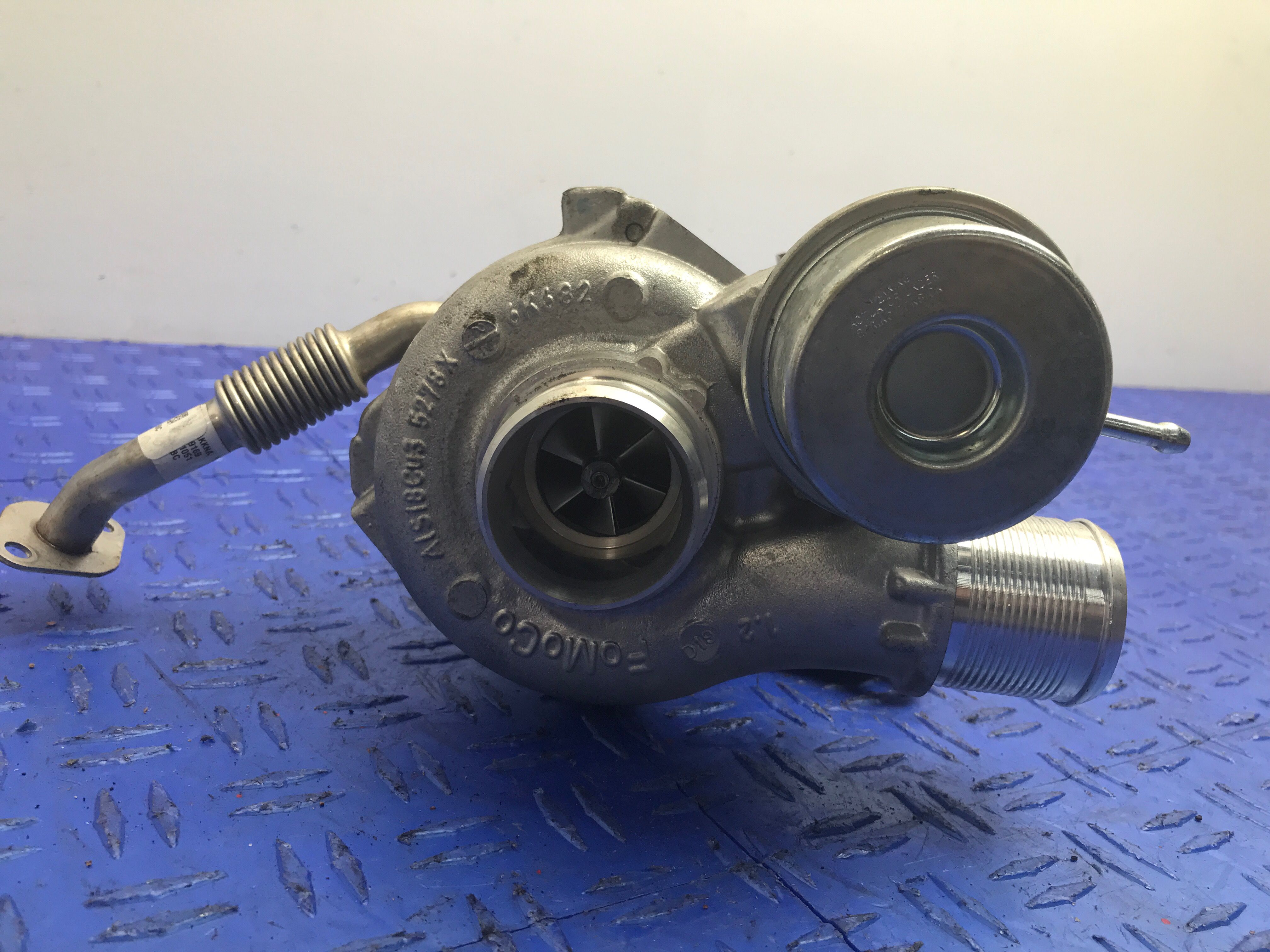
New Aftermarket Parts Available


The information in this article is provided for general reference and educational purposes only. Vehicle specifications, procedures, and part compatibility can vary by production date, trim level, and region. Always consult your vehicle's factory service manual and verify part numbers before purchasing or performing repairs. Safety-critical components such as airbags, seat belts, and braking systems should be installed by a qualified professional.
- Ford Edge:
- 🧭 Diagnostic Flowchart
- 🎬 Helpful Videos
- 🛍️ Shop This Part
- What's Unique About the 2015-2024 Ford Edge
- Symptoms You May Notice
- Most Likely Causes
- Rare But Worth Checking
- Diagnosis Steps
- Parts You'll Likely Need
- Related Codes That Often Appear With This One
- Technical Service Bulletins (TSBs) & Recalls
- Platform-Specific Known Issues
- Mechanic-Grade Diagnostic Values
- Scan Tool Commands That Help
- Wiring & Ground Locations
- Real Owner Repair Stories
- OEM Part Supersession History
- Model Year Variations Within This Range
- Other Known Issues on This Vehicle
- Used vs. New Parts: Buying Guide for This Vehicle
- Real Owner Stories
- 2014 Ford Fusion 2.0L EcoBoost
- 2013 Ford Escape 2.0L EcoBoost
- 2015-2024 Ford Edge 2.0L EcoBoost
- Ford F-150 EcoBoost
- Related OBD-II Codes
- Frequently Asked Questions
- 🎟️ Get 5% Off