

P0236 on 2010-2019 Ford Taurus 3.5L EcoBoost: Boost Sensor Causes and Fixes
P0236 on a 3.5L EcoBoost Taurus most often indicates a faulty Turbocharger Boost Pressure (TCBP) sensor located on the charge pipe before the throttle body. Oil contamination from the PCV system is a common cause of failure. Expect to pay $30-$70 for a new sensor for a straightforward DIY fix.
- P0236 on your Taurus SHO almost always points to the boost sensor on the charge pipe near the throttle body, NOT the one on top of the intake manifold.
- The most likely cause is a faulty sensor, often contaminated by engine oil vapors.
- Before buying parts, use a scan tool to check live data. With the engine off, the TCBP, MAP, and BARO pressures should all match.
- Replacing the TCBP sensor is a simple, 15-minute DIY job that can save you hundreds in diagnostic and labor fees.
- Always inspect the sensor's electrical connector for damage or corrosion, as a bad connection can mimic a failed sensor.
What's Unique About the 2010-2019 Ford Taurus
The 3.5L EcoBoost engine in the Taurus SHO uses a 'Speed Density' system that relies on multiple pressure sensors instead of a traditional Mass Airflow (MAF) sensor. P0236 specifically points to an issue with the Turbocharger Boost Pressure (TCBP) sensor on the charge pipe, not the more commonly discussed MAP sensor on the intake manifold. This TCBP sensor is highly prone to contamination from oil and fuel vapors from the PCV system, a well-documented characteristic of first-generation EcoBoost engines. This contamination degrades the sensor over time and is the most frequent cause of this code. Some owners report the issue appearing intermittently at first, sometimes for months, before becoming a persistent fault.
Symptoms You May Notice
- Check Engine Light or Wrench Light is on.
- Significant loss of engine power and acceleration. 🎬 Watch this video on diagnosing Taurus SHO power loss issues.
- Vehicle enters 'limp mode'.
- Hesitation when trying to accelerate.
- Reduced fuel economy.
- Unusual 'whoosh' or whine from the turbo/exhaust area.
- More frequent or louder operation of the blow-off valves.
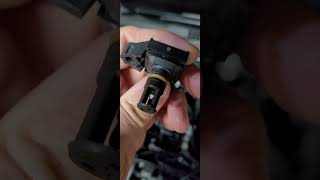
- Replacing the MAP sensor on the intake manifold. P0236 specifically refers to the TCBP sensor ('Sensor A') on the charge pipe, not the MAP sensor on the manifold. While the MAP sensor can also fail, it will typically set different codes (like P0107, or P0108). TSB 19-2212 addresses these codes for a faulty MAP sensor on this platform. 🎬 Watch this step-by-step guide to replacing the MAP sensor.
Most Likely Causes
- Faulty Turbocharger Boost Pressure (TCBP) Sensor 🔴 High Probability → Shop Turbocharger This sensor (designated as 'Sensor A') is located on the cold-side charge pipe and is highly susceptible to contamination from oil and fuel vapors from the PCV system, a known trait of EcoBoost engines. This contamination degrades the sensor's accuracy and response time, causing it to become slow or report illogical values.
How to confirm: With the Key On, Engine Off, use a scan tool to view live data for the TCBP, MAP, and BARO sensors. All three readings should be nearly identical (within 0.5 PSI). If the TCBP reading is the outlier, the sensor is faulty.
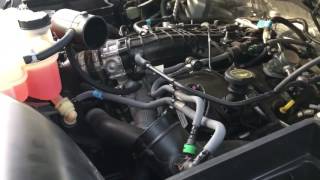
Typical fix: Replace the TCBP sensor. It is typically held in by one or two small bolts and is easily accessible on the charge air piping before the throttle body.
Est. part cost: $30-$120 - Damaged Wiring or Connector at TCBP Sensor 🟡 Medium Probability The wiring harness near the sensor can become brittle from heat cycles or chafe against other components. TSB 13-6-12 for the 2013 F-150 with the same engine specifically notes damaged wiring insulation at the connector as a cause for this code and related faults.
How to confirm: Visually inspect the wiring harness and connector for the TCBP sensor. Look for cracked insulation, corrosion on the pins, or loose connections. Wiggle the connector while monitoring live sensor data on a scan tool to see if the reading fluctuates.
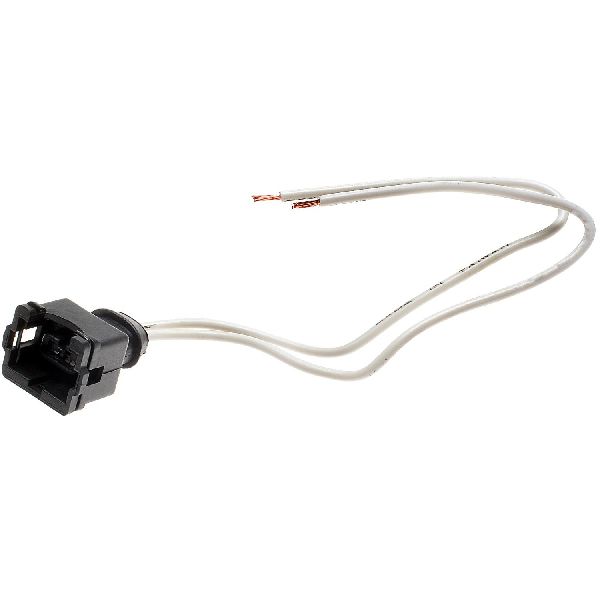
Typical fix: If the connector is damaged, replace it with a new pigtail connector (Motorcraft WPT-1055). Repair any damaged sections of the wiring harness and secure it to prevent future chafing.
Est. part cost: $20-$40 for a pigtail
Rare But Worth Checking
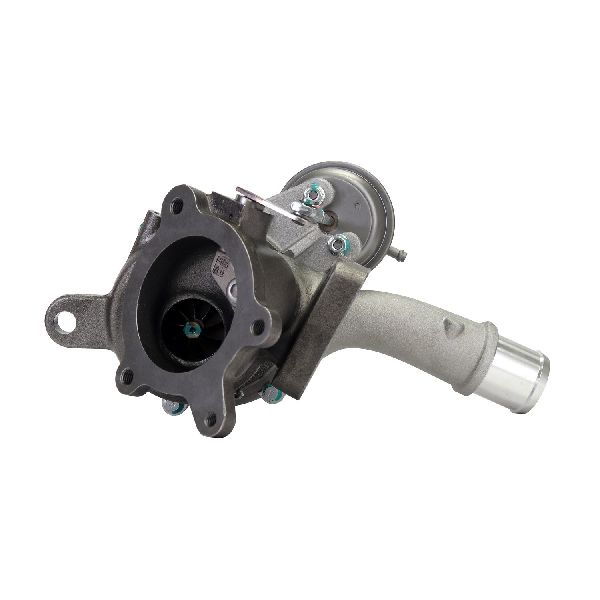
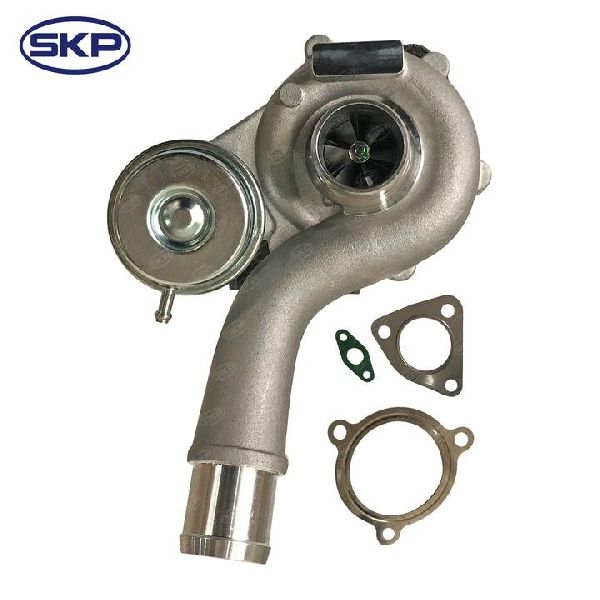
- Faulty Wastegate or Turbocharger: → Shop Turbocharger While less common than sensor issues, a mechanically stuck wastegate can cause boost levels to be incorrect, leading to a performance code. This is usually accompanied by other symptoms like noise or specific overboost/underboost codes.
- Faulty Powertrain Control Module (PCM): This is extremely rare. The PCM should only be considered after all other possibilities, including sensors, wiring, and boost leaks, have been thoroughly ruled out.
Diagnosis Steps
- Connect an OBD-II scanner and check for any other accompanying trouble codes. Note the freeze frame data for P0236 to see the conditions under which it was set.
- With the Key On, Engine Off (KOEO), access the live data stream on your scanner.
- Compare the PIDs for 'TCBP' (or TIP), 'MAP', and 'BARO'. All three pressure readings should be within about 0.5 PSI of each other. If the TCBP reading is the outlier, the sensor is the primary suspect.
- Visually inspect the TCBP sensor connector and nearby wiring for any signs of damage, corrosion, or oil saturation. Pay close attention to the insulation right at the connector, as noted in TSB 13-6-12.
- Inspect the entire intake tract from the turbos, through the intercooler, to the throttle body for any obvious cracks, loose clamps, or disconnected hoses.
- If no sensor or wiring faults are found, perform a smoke test on the intake system to check for hidden boost leaks.
- If no leaks are found, the issue may be mechanical with the turbocharger wastegates, which may require more advanced diagnostics.
Parts You'll Likely Need
- Turbocharger Boost Pressure (TCBP) Sensor
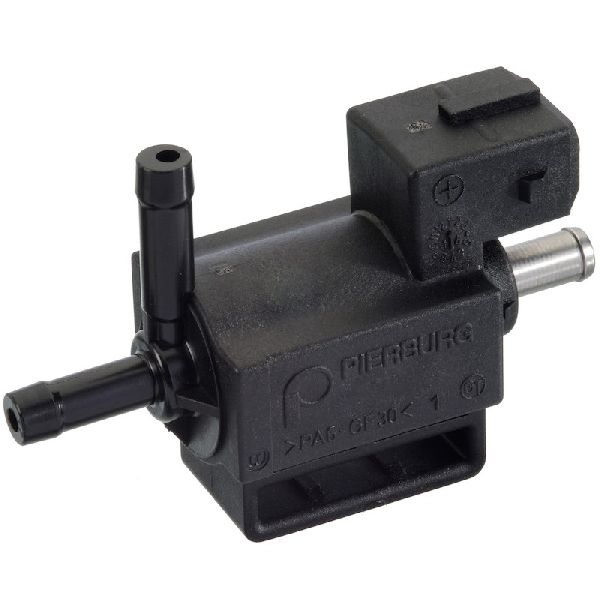
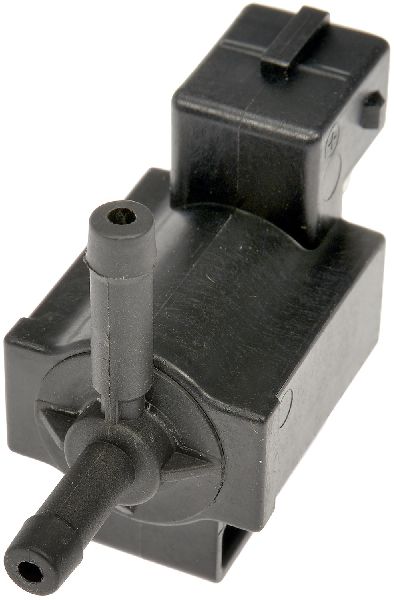
(OEM #BU5Z-9F479-A)— This is 'Sensor A' for code P0236. It is the most common failure point due to its location and susceptibility to oil contamination from the PCV system on EcoBoost engines.
Trusted brands: Motorcraft, Bosch, Dorman, NTK
OEM price range: $70-$120
Aftermarket price range: $30-$70 - TCBP Sensor Connector Pigtail
(OEM #WPT-1055)— If the locking tab is broken or the terminals are corroded, replacing the connector is necessary to ensure a solid electrical connection to the new sensor. TSB 13-6-12 specifically calls for this repair if wiring insulation is damaged.
Trusted brands: Motorcraft, Dorman
OEM price range: $30-$45
Aftermarket price range: $15-$30
Related Codes That Often Appear With This One
- P0106 — P0106 is a MAP/BARO correlation code. Since the PCM compares the TCBP and MAP sensors, a fault in one can sometimes trigger a correlation code for the other.
- P0299 — This code indicates a Turbocharger Underboost condition. A failing TCBP sensor that reads lower than actual boost, or a significant boost leak, can cause both P0236 and P0299.
- P0234 — This code indicates a Turbocharger Overboost condition. A failing TCBP sensor that reads higher than actual boost could potentially trigger this along with P0236.
- P0238, P025E, P007D — These codes are listed alongside P0236 in TSB 13-6-12 for the F-150, all pointing towards potential wiring insulation issues at the TCBP sensor connector.
Technical Service Bulletins (TSBs) & Recalls
- TSB 13-6-12 (F-150 3.5L): Addresses P0236 caused by damaged wiring insulation at the TCBP sensor connector, recommending inspection and pigtail replacement. Highly relevant due to shared engine design.
- TSB 19-2212 (2018-19 Taurus 3.5L): Pertains to related codes P0107/P0108 caused by a faulty MAP sensor, corroborating that pressure sensors are a known issue on this specific vehicle and engine.
Platform-Specific Known Issues
- Oil and fuel vapor contamination of pressure sensors from the PCV system is a systemic issue on the 3.5L EcoBoost platform, leading to premature sensor failure.
- Wiring harness insulation can become brittle and crack at the sensor connector due to engine heat, leading to intermittent electrical faults. This is noted in TSB 13-6-12 for the F-150, which shares the same engine.
Mechanic-Grade Diagnostic Values
- TCBP Sensor Signal Voltage — expected: Typically 0.5V at low or no boost, up to 4.5V at full boost.. Failure: Voltage that is stuck, does not change with engine load, or falls outside the 0.5-4.5V range.
- TCBP Sensor Circuit Resistance — expected: Infinite resistance (Open Line - OL) between the signal and ground pins when the sensor connector is disconnected.. Failure: Any resistance reading indicates a short in the wiring harness.
Wiring & Ground Locations
- TCBP Sensor Connector — On the charge air pipe leading to the throttle body.. This is the primary connector to inspect for damage, corrosion, or oil saturation. The pigtail replacement is Motorcraft part WPT-1055. Heat and vibration can cause the wiring insulation to fail right at the connector, a fault documented in Ford TSBs for this engine family.
Real Owner Repair Stories
- Ford F150 Forum (2011 Ford F-150 3.5L EcoBoost) — Wrench light on startup, intermittent power loss, noisy blow-off valves, and reduced MPG.
❌ Tried (didn't work) A dealer was initially unable to locate the problem on a previous visit when the code was 'soft' (not persistent).
✅ What actually fixed it Replacing both the turbo boost sensor and the wiring harness connector pigtail. The owner noted that after the repair, the engine idled smoother, ran stronger, and the turbos were quieter. - YouTube - GAPPerformance (2013 Ford Focus ST (Uses a similar sensor strategy)) — Check Engine Light with code P0236.
❌ Tried (didn't work) Replacing the faulty MAP/boost sensor with a new Bosch sensor purchased from a local auto parts store.
✅ What actually fixed it The code was only resolved after replacing the sensor with a genuine OEM part from a Ford dealer. This suggests potential issues with the calibration or compatibility of some aftermarket sensors.
When the Usual Fixes Don't Work
- While replacing the TCBP sensor is the most common fix, it is not a guarantee, especially if using aftermarket parts. In one documented case on a similar Ford EcoBoost platform, a new aftermarket Bosch sensor failed to resolve the P0236 code. The problem was only fixed when a genuine OEM Ford sensor was installed. This indicates that for this specific application, the PCM may be sensitive to the exact calibration and performance characteristics of the OEM sensor, and some aftermarket alternatives may not be suitable.
Diagnostic Flowchart
Other Known Issues on This Vehicle
Issues unrelated to this code that are worth knowing about as an owner of this generation:
- Internal Water Pump Failure 🔴 High — Common on engines over 80,000 miles. The pump is internal and driven by the timing chain. Failure can leak coolant directly into the engine oil, leading to catastrophic engine damage if not caught immediately.
- Power Transfer Unit (PTU) Overheating and Failure 🔴 High — Very common on all AWD models. Failures are reported from 40,000 to over 100,000 miles. The unit's fluid is considered 'lifetime' by Ford but gets cooked due to proximity to the exhaust, turning to sludge and causing failure.
- Timing Chain Stretch 🟠 Medium — Affects first-generation (pre-2017) 3.5L EcoBoost engines. Symptoms include a brief rattle on cold starts. Caused by wear in the long primary timing chain's pivot points. If ignored, can lead to jumped timing and engine damage.
- Cracked Rear Suspension Toe Links 🔴 High — Affects 2013-2018 models with the SHO Performance Pack. Subject to a recall. (Ref: NHTSA Recall 18V164000)
- Intake Valve Carbon Buildup 🟡 Low — An inherent issue with all early direct-injection engines. Over time, carbon deposits build on the back of intake valves, which can cause rough idle and misfires at high mileage. Not a catastrophic failure but requires periodic cleaning.
Used vs. New Parts: Buying Guide for This Vehicle
When a used part is the smart pick: For this specific repair, a used part is almost never a smart choice for the sensor itself. However, obtaining a used wiring harness connector with a length of wire from a junkyard vehicle can be a viable alternative to buying a new pigtail if one is in good condition.
Donor-vehicle mileage cap: roughly under 80000 miles for the part to have meaningful remaining life.
What to inspect on the donor part:
- For a connector: check that the locking tab is intact and clicks securely.
- Inspect connector pins for any green or white corrosion.
- Ensure the wiring insulation is not brittle, cracked, or oil-soaked.
OEM-only on this vehicle (don't cheap out):
- Turbocharger Boost Pressure (TCBP) Sensor - Due to the primary failure mode being internal degradation from oil contamination and at least one documented case of an aftermarket sensor not working, sticking with an OEM Motorcraft sensor (BU5Z-9F479-A) is strongly recommended to avoid a repeat repair.
Aftermarket brands forum-validated for this vehicle:
- Motorcraft (OEM)
- Bosch (Use with caution; see counter-evidence)
Brands owners have reported issues with on this vehicle:
- Unbranded, 'white-box' sensors should be avoided as their calibration and durability are unknown.
Real Owner Stories
Aggregated from forums and TSBs cited above. Mileages and costs reflect what owners reported in those sources.
2011-2014 Ford F-150 3.5L EcoBoost
Symptoms: Wrench light appeared and P0236 was triggered, but the issue was intermittent as the dealer initially found no stored codes.
What fixed it: The intermittent nature of the code pointed to a failing Turbocharger Boost Pressure sensor.
Source hint: https://www.f150forum.com/f38/what-code-p0236-ecoboost-278093/
2011-2014 Ford F-150 3.5L EcoBoost
Symptoms: Noisy turbos, frequent blow-off valve actuation, and poor fuel economy (MPG).
What fixed it: Replacing the boost sensor and the harness plug (connector).
Source hint: https://www.f150forum.com/f38/p0236-ford-turbo-boost-sensor-code-288929/
Related OBD-II Codes
Frequently Asked Questions
Does TSB 13-6-12 apply to my Ford Taurus even though it was written for the F-150?
I have a 2018 Taurus with pressure sensor codes; is there a specific TSB for newer models?
Why is my Taurus SHO making a loud 'whoosh' sound and losing power?
Can I just clean the TCBP sensor on my 3.5L EcoBoost to fix P0236?
Is the P0236 code related to the common PTU failures on the AWD Taurus?
What should the TCBP sensor read on my scan tool compared to other sensors?
Helpful Videos
We Have This Part in Stock


The information in this article is provided for general reference and educational purposes only. Vehicle specifications, procedures, and part compatibility can vary by production date, trim level, and region. Always consult your vehicle's factory service manual and verify part numbers before purchasing or performing repairs. Safety-critical components such as airbags, seat belts, and braking systems should be installed by a qualified professional.
- Ford Taurus:
- 🧭 Diagnostic Flowchart
- 🎬 Helpful Videos
- 🛍️ Shop This Part
- What's Unique About the 2010-2019 Ford Taurus
- Symptoms You May Notice
- Most Likely Causes
- Rare But Worth Checking
- Diagnosis Steps
- Parts You'll Likely Need
- Related Codes That Often Appear With This One
- Technical Service Bulletins (TSBs) & Recalls
- Platform-Specific Known Issues
- Mechanic-Grade Diagnostic Values
- Wiring & Ground Locations
- Real Owner Repair Stories
- When the Usual Fixes Don't Work
- Other Known Issues on This Vehicle
- Used vs. New Parts: Buying Guide for This Vehicle
- Real Owner Stories
- 2011-2014 Ford F-150 3.5L EcoBoost
- 2011-2014 Ford F-150 3.5L EcoBoost
- Related OBD-II Codes
- Frequently Asked Questions
- 🎟️ Get 5% Off