

OBD-II Code P0238: Turbocharger/Supercharger Boost Sensor 'A' Circuit High
What P0238 means, why it triggers, and how to fix it like a pro
- P0238 triggers when the ECU detects a boost sensor voltage exceeding 4.0 volts for more than 2 seconds, immediately forcing the engine into a low-power limp mode.
- Diagnose the electrical circuit before replacing parts by checking the Key On, Engine Off (KOEO) voltage; a reading stuck at 4.5V or higher confirms a hard electrical fault.
- Disconnect the boost sensor with the key on: if the live data voltage drops to 0V, the sensor is internally shorted, but if it stays at 5V, the wiring harness is shorted to power.
- Never drive more than 10-15 miles with an active P0238, as the resulting rich fuel mixture can destroy a $1,500 catalytic converter within a few weeks.
What Does P0238 Mean?

P0238 indicates the engine's computer (ECU) detects a voltage signal from the turbocharger or supercharger boost sensor 'A' that exceeds the normal operating range. The boost sensor measures the amount of pressurized air (boost) forced into the engine. When the signal voltage is too high, the ECU concludes the sensor has an electrical fault or the turbo is creating dangerously excessive pressure. To protect the engine, it triggers the Check Engine Light and cuts engine power.
Technical definition: The Powertrain Control Module (PCM) detects voltage from the 'A' boost pressure sensor exceeding the manufacturer's maximum threshold (typically 3.9 to 4.0 volts) for 2 to 5 seconds. This implausible high voltage points to a definitive electrical circuit fault rather than a mechanical performance issue.
🎬 Watch: A step-by-step guide to fixing the P0238 circuit high code.Can I Drive With P0238?
Yes, But With Caution. Do not drive for an extended period. The engine enters a reduced power "limp mode" to protect itself. Continuing to drive with a potential overboost or incorrect fuel mixture condition risks severe damage to the turbocharger, internal engine components, and the catalytic converter. Drive a maximum of 10-15 miles to a repair shop. Prolonged driving turns a $150 sensor issue into a $2,000 catalytic converter or turbocharger replacement.
Common Causes

- Faulty Boost Pressure Sensor (MAP/TMAP Sensor) (Very Common) — The sensor fails internally due to age, heat cycles, or contamination, causing an internal short that sends a constant high voltage signal (e.g., 5 volts) to the computer regardless of actual boost pressure.
- Wiring or Connector Issues (Common) — The wiring harness between the sensor and the ECU shorts to a power source due to chafing against engine components, melting from hot exhaust parts, or damage from previous repairs. Corrosion or bent pins in the connector also create high-resistance faults interpreted as high voltage.
- Contaminated or Clogged Sensor/Port (Less Common) — On diesel engines, the boost sensor port or tip clogs heavily with carbon, soot, or oil deposits from the crankcase ventilation system. This traps pressure or fouls the sensor's diaphragm, causing an inaccurate, high reading.
- Mechanical Turbocharger/Supercharger Fault (Less Common) — A stuck-closed wastegate, a seized variable geometry turbo (VGT) actuator, or a malfunctioning boost control solenoid causes the turbo to produce excessive boost pressure. This legitimate overboost condition forces the sensor to report a voltage at or above its maximum limit.
- Damaged/Leaking Vacuum Lines (Less Common) — If the small rubber vacuum lines leading to the wastegate actuator crack, split, or disconnect, the wastegate fails to open. This lack of boost regulation leads to an over-boost condition triggering the P0238 code.
- Aftermarket Tuning or Modifications (Less Common) — Aggressive engine tunes ('remaps') increasing turbo boost beyond the factory sensor's calibrated range force it to operate at its maximum voltage. The ECU interprets this as a circuit high fault.
- Faulty Powertrain Control Module (PCM) (Rare) — The engine computer develops a faulty internal circuit, specifically the analog-to-digital converter for the boost sensor input. Consider this only after exhaustively ruling out sensor, wiring, and mechanical faults.
- Clogged Catalytic Converter or Exhaust Restriction (Rare) — A severely clogged catalytic converter creates excessive backpressure between the turbo and the restriction. This impedes the turbo's ability to regulate itself, leading to overboost spikes reported as high-voltage events.
Symptoms

- Drastically Reduced Engine Power / Limp Mode — The vehicle feels extremely sluggish and refuses to accelerate properly as the ECU disables the turbocharger and limits fuel and timing to prevent engine damage.
- Check Engine Light On — The ECU immediately illuminates the Malfunction Indicator Lamp (MIL) on the dashboard upon detecting the fault.
- Poor or Jerky Acceleration — The vehicle hesitates, surges, or stumbles during acceleration as the ECU struggles with irrational sensor readings before defaulting to limp mode.
- Black Smoke from Exhaust — The ECU incorrectly believes the engine receives high boost and injects extra fuel. This rich air-fuel mixture fails to burn completely, resulting in black smoke under load.
- Increased Fuel Consumption — The engine runs inefficiently due to the incorrect air-fuel mixture and lack of boost, dropping fuel economy by 10-25%.
- Abnormal Turbocharger Noises — If caused by a mechanical overboost, the turbocharger emits unusual whistling or a 'dentist drill' sound as it spins beyond its designed speed.
Diagnostic Flowchart
Tap your situation to follow the diagnostic path that matches what you're seeing on this code.
Common Fixes & Costs
- Replace Boost Pressure Sensor (MAP/TMAP Sensor) — Parts: $50-$150, Labor: $80-$150, ~0.8 hr book time (DIY)
- Repair Wiring Harness or Connector — Parts: $10-$50, Labor: $150-$400, ~2.5 hr book time (Intermediate)
- Replace Wastegate Solenoid/Actuator — Parts: $100-$300, Labor: $100-$250, ~1.5 hr book time (Intermediate)
- Replace Turbocharger Assembly — Parts: $1,200-$2,500, Labor: $500-$1,000, ~6 hr book time (Professional)
- Diagnostic Service (if unable to find fault) — Parts: $0, Labor: $100-$250, ~1.5 hr book time (Professional)
DIY vs Professional
- Replace Boost Pressure Sensor 🟢 Beginner
Tools: Basic socket set, Torx bits (sometimes), flashlight. - Repair Wiring Harness 🟢 Beginner
Tools: Digital multimeter, wire strippers, soldering iron, quality solder, heat shrink tubing, automotive-grade wiring tape. - Replace Wastegate Solenoid/Actuator 🟢 Beginner
Tools: Socket set, wrenches, pliers, potentially a vacuum pump. - Replace Turbocharger Assembly 🟢 Beginner
Tools: Extensive professional toolset, specialized line wrenches, torque wrenches.
Used vs. New Parts: Buying Guide
When a used part is worth it: A used sensor makes sense only if it comes from a very low-mileage vehicle and the new OEM part is unusually expensive or on backorder. Given the high failure rate of this electronic component, new is strongly recommended.
Donor-vehicle mileage cap: roughly under 50000 miles for the part to have meaningful remaining life.
Donor quality checklist:
- Verify the part number matches exactly.
- Inspect the connector pins for any corrosion or damage.
- Avoid parts from vehicles in regions where corrosion is common (rust belt, coastal areas).
Decision logic:
- If The new OEM or high-quality aftermarket sensor costs under $150. → Always buy new. The reliability is worth the cost.
- If The vehicle is over 15 years old and the budget is extremely tight. → A used sensor is a gamble but acceptable. Prepare for it to fail sooner than a new part.
- If The part is electronic and critical to engine management. → Favor new to avoid repeat diagnostics and labor costs.
Warranty tradeoff: Used parts typically include a 30-90 day warranty covering the part only. New aftermarket parts offer a 1-year to limited lifetime warranty, providing significant peace of mind.
Worst-case if a used part fails: $150-300 if a used sensor fails after installation, requiring repeat labor and diagnostic charges.
What Happens If You Wait — Timeline
- 0-1 week: Check Engine Light on, P0238 code stored. Engine immediately enters 'limp mode' with severely reduced power and acceleration. Turbo boost is disabled by the ECU. (MPG impact: 10-25%% · Added cost: $20-50 in wasted fuel.)
- 1 week - 2 months: If the cause is a sensor fault creating a false high reading, the ECU commands a rich fuel mixture. This causes black smoke from the exhaust and begins to overheat the catalytic converter. (MPG impact: 15-30%% · Added cost: $200-500 (Risk of initial damage to catalytic converter substrate from overheating).)
- 2-6 months: Continued driving in a rich state permanently damages the catalytic converter, causing it to melt or clog. If the cause is a true mechanical overboost, this is the timeframe for potential head gasket failure or piston damage. (MPG impact: 20-40%% · Added cost: $1,500 - $3,000 (Catalytic converter replacement is now required. Initial engine damage risk is high).)
- 6+ months: Catastrophic failure is imminent. A clogged catalytic converter creates extreme exhaust backpressure that destroys the turbocharger. A persistent mechanical overboost leads to severe internal engine damage, such as cracked pistons. (MPG impact: N/A (Vehicle likely undrivable)% · Added cost: $3,000 - $7,000+ (Full turbocharger and catalytic converter replacement, or a complete engine overhaul becomes necessary).)
Cost of Not Fixing It
- Immediate to 1 month: Vehicle remains in limp mode with severely reduced power, making highway merging unsafe. Fuel economy drops by 10-25%. (Added cost: $20 - $50 in wasted fuel.)
- 1 to 6 months: Continued driving with a rich fuel condition overheats and destroys the catalytic converter. If caused by a true overboost, catastrophic turbocharger failure or internal engine damage (pistons, head gasket) occurs. (Added cost: $1,500 - $4,000+)
- 6+ months: Prolonged operation guarantees a completely clogged catalytic converter and extreme risk of major engine or turbocharger destruction. (Added cost: $3,000 - $7,000+)
Diagnosis Steps
- Scan for Codes and Review Freeze Frame Data
Use an OBD-II scanner to confirm P0238 is present. Note any other codes (e.g., P0236, P0106). Analyze the freeze frame data to see the exact engine RPM, speed, and temperature when the fault occurred.
Tools: OBD-II Scanner (Beginner) - Analyze Live Sensor Data (KOEO)
View live data for the boost pressure sensor (often listed as MAP). With the Key On, Engine Off (KOEO), the pressure reading must match Barometric Pressure (approx. 14.7 PSI at sea level). The voltage should be around 1.0-1.5V. If the voltage is stuck high (e.g., 4.5V or higher) with the engine off, the fault is definitively electrical.
Tools: OBD-II Scanner with Live Data (Intermediate) - PRO TIP: Isolate the Fault by Disconnecting the Sensor
If live data shows high voltage (e.g., 5V) with the key on, disconnect the boost sensor. If the live data voltage drops to 0V (or code changes to P0237), the wiring and ECU are fine, and the sensor is internally shorted. If the high voltage remains at 5V with the sensor unplugged, the wiring harness is shorted to power.
Tools: OBD-II Scanner, Hands (Advanced) - Test the Sensor's Electrical Circuit at the Connector
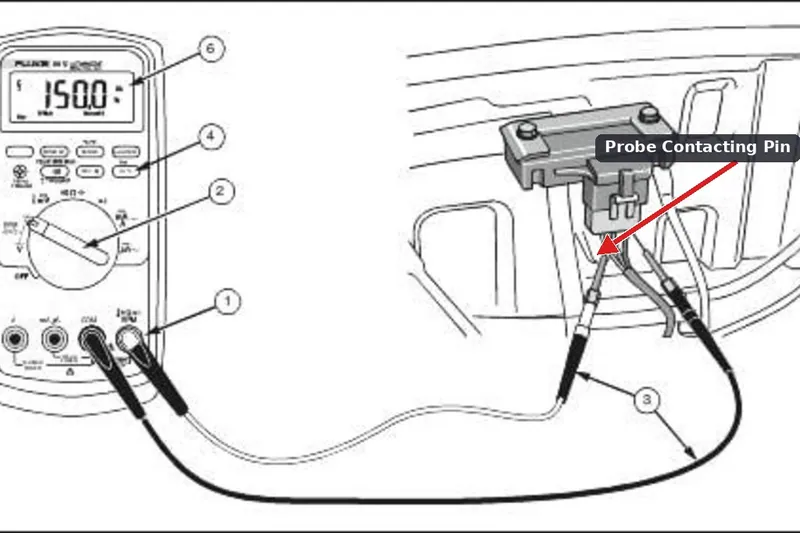
Disconnect the sensor. With the key on, use a multimeter to test the harness terminals. You must find: 1) A 5-volt reference signal from the ECU. 2) A good ground (close to 0 volts). 3) The signal wire, which must read 0 volts. If you read 5V or 12V on the signal wire, it is shorted to a power source in the harness.
Tools: Digital Multimeter (DMM) (Intermediate) - Comprehensive Visual Inspection
Inspect the boost pressure sensor, electrical connector, and wiring harness loom back to the ECU. Look for loose connections, corroded pins, and wires frayed or burnt from touching the exhaust manifold. Inspect all vacuum lines connected to the turbo wastegate for cracks or disconnections.
Tools: Flashlight, Inspection Mirror (Beginner) - PRO TIP: The Wiggle Test
With the engine running at idle, carefully wiggle the wiring harness at the sensor connector and along its path to the ECU. If the engine stumbles or the live data voltage fluctuates wildly, you have located an intermittent short or break in the wiring harness.
Tools: Hands (with protective gloves), OBD-II Scanner (Intermediate) - Advanced: Quantitative Voltage Testing
Back-probe the sensor's signal wire. KOER (Key On, Engine Running) at idle: Voltage should be low, typically 0.5V to 1.5V. A reading stuck at 4.5V or higher points to a shorted sensor or circuit. During a brief, gentle acceleration in neutral, voltage must rise smoothly. A sensor is failed if its output is fixed at its maximum (~4.8-5.0V).
Tools: Digital Multimeter (DMM) with back-probe pins (Advanced) - Advanced: Live Data Analysis Under Load
With a passenger monitoring the scan tool, perform a road test. Watch the Boost Pressure PID. During gradual acceleration, pressure and voltage must increase smoothly. Under full load, voltage climbs towards ~4.5V but must not get stuck there. Erratic readings or unexpected spikes confirm a sensor or circuit issue.
Tools: OBD-II Scanner with Live Data, a helper (Advanced) - Test Mechanical Turbo Components
If the sensor and wiring test perfectly, the problem is a true overboost condition. Use a handheld vacuum pump to test the wastegate actuator to ensure it moves freely and holds vacuum. Inspect the boost control solenoid and hoses for proper function.
Tools: Vacuum Pump, Hand Tools (Advanced) - Professional: Sensor Resistance and Scope Testing
Use a lab scope to view the sensor's signal pattern during acceleration; it must be a smooth, rising voltage without spikes or dropouts. A signal that is a flat line at ~5V confirms a circuit high fault.
Tools: Lab Scope, OEM Service Manual (Professional)
When This Code Triggers (Freeze-Frame Conditions)
- Engine Coolant Temp: 180-200°F (82-93°C) (Fully warmed up, operating in closed loop.)
- Engine RPM: 1500-3000 RPM (During steady cruise or light to moderate acceleration.)
- Engine Load: 30-60% (The engine is under a moderate load, demanding boost but not full throttle.)
- Vehicle Speed: 35-65 mph (56-105 kph) (Occurs during city or highway driving as the turbo spools up.)
Related Codes
- P0237 — This is the direct opposite of P0238, indicating 'Circuit Low' (a short to ground or open circuit). For P0237 you look for a broken wire or a short to ground, whereas for P0238 you look for a short to a power source.
- P0236 — Indicates a 'Range/Performance' issue. A P0238 points to a hard electrical fault (impossible voltage), while a P0236 means the voltage is electrically possible but illogical compared to what the ECU expects based on RPM and throttle position.
- P0106 — Manifold Absolute Pressure (MAP) Circuit Range/Performance. If the boost sensor and MAP sensor are a single unit, this code often appears with P0238. P0238 points to the electrical 'circuit' failure, while P0106 points to the resulting 'illogical performance' of that reading.
- P0299 — Turbo/Supercharger Underboost. A mechanical fault like a sticking wastegate actuator causes an overboost (P0238) one moment and then gets stuck open, causing an underboost (P0299) the next.
Climate & Environmental Factors
- Altitude: Altitude is a critical factor for accurate diagnosis. At sea level, barometric pressure is about 14.7 PSI (101 kPa), while at 5,000 feet it is closer to 12.2 PSI (84 kPa). A technician must compare the sensor's KOEO reading to the known local barometric pressure to verify accuracy.
- Cold Weather: Extreme cold makes aged plastic and rubber components brittle. This increases the likelihood of vacuum lines cracking or plastic wiring insulation breaking, leading to the shorts or leaks that trigger a P0238 code.
- High Humidity / Corrosive Environments: In areas with high humidity or heavy winter road salt usage, moisture penetrates wiring harness connectors. This corrosion creates high resistance or bridges circuits, causing a short to power that results in a P0238 fault.
How to Talk to a Mechanic About This Code
Say this: "I have a P0238 code, which I understand is a 'Circuit High' fault for the boost pressure sensor. I'd like a diagnostic to determine if the fault is the sensor itself, the wiring harness, or a mechanical issue. Please check the sensor's voltage with the key on/engine off and test the wiring before recommending a major repair like a new turbo."
This signals that you understand the diagnostic path for a circuit code. It directs the technician to perform the correct electrical tests first, preventing them from immediately quoting the most expensive possible repair (turbo replacement) without proper evidence.
Avoid saying:
- 'Just fix whatever's wrong'
- 'My check engine light is on and the car is slow' (too vague, invites upselling)
- 'I think I need a new turbo'
Questions to ask before authorizing the repair:
- What was the sensor's voltage reading with the key on, engine off? Was it stuck high?
- When you disconnected the sensor, did the high voltage on the signal wire go away? (This is key to telling a bad sensor from bad wiring).
- If you're recommending a wiring repair, can you show me where the harness is damaged?
- If you're recommending a turbocharger replacement, what specific tests ruled out the sensor and wiring first?
Where to Take It: Dealer vs Independent vs Chain
- Dealer:
Recommended if the vehicle is under warranty or has a known TSB. Otherwise, a qualified independent shop is more cost-effective.
Best for: Vehicles still under powertrain or emissions warranty., Known manufacturer-specific issues covered by a TSB or recall (e.g., Ford wiring splices)., Complex electrical issues on late-model European vehicles.
Downsides: Highest labor rates, often 1.5-2x an independent shop., Defaults to replacing a whole assembly when a smaller component or wiring repair suffices. (Typical cost: +50% vs. baseline) - Independent Shop:
Best overall fit. An independent shop with strong diagnostic skills is perfectly suited to trace this electrical fault without the high overhead of a dealership.
Best for: Out-of-warranty vehicles where cost is a factor., Diagnosing electrical faults, as experienced technicians excel at this., Getting a second opinion on a high-dollar quote from a dealer.
Downsides: Diagnostic capabilities vary widely; look for shops specializing in your vehicle's brand or in electrical diagnostics., Lacks access to the very latest manufacturer software updates. (Typical cost: +0% vs. baseline) - Chain Shop:
Use with caution. Acceptable for a simple sensor swap if you are certain that's the problem, but AVOID for initial diagnosis of a P0238 code.
Best for: Simple, pre-diagnosed part replacements (e.g., 'I have tested it and I need you to replace this specific sensor').
Downsides: Technician skill varies dramatically., Lacks the advanced diagnostic training needed for complex wiring faults., High pressure to sell parts leads to replacing the sensor without proper circuit testing. (Typical cost: -10% vs. baseline)
When to Walk Away From the Repair
If the estimated repair cost exceeds 40-50% of the car's private-party value (e.g., from Kelley Blue Book), seriously consider selling or trading in the vehicle instead of repairing it.
- Car worth $4000, fix is $2000: Borderline. The repair cost is 50% of the car's value. Get a second opinion before authorizing, as this is a major investment.
- Car worth $12000, fix is $1800: Fix it. The repair cost is only 15% of the vehicle's value, which is well below the threshold.
- Car worth $2500, fix is $1500: Walk away. The repair cost is 60% of the car's value. It is not economical to repair.
What Scan Tool You Need for This Code
Minimum: A scanner that reads and graphs Live Data for the boost pressure sensor (MAP/Boost PID).
A basic $20 code reader only tells you the P0238 code exists. It cannot show you the live sensor voltage, which is essential for diagnosis. Without live data, you are forced to guess whether the sensor or the wiring is the problem, leading to replacing good parts.
Budget: BlueDriver Bluetooth Pro (~$100) — Connects to your phone and provides live data graphing for the boost sensor voltage. This is enough to see if the voltage is stuck high, which is the key diagnostic indicator for P0238.
Mid-range: Innova 5610 or Foxwell NT510 Elite (~$350) — These handheld units offer robust live data, including OEM-specific data points. The Innova 5610 adds bi-directional controls, helping test related components like the wastegate solenoid.
Professional: Autel MaxiCOM MK808S or XTOOL D7 (~$500-700) — Provides full bi-directional control to actively test components, deep OEM-level diagnostics, and wiring diagrams. These tools allow a user to command actuators and see the system's response, offering the most definitive diagnostic capability short of a lab scope.
Rent vs buy: Many auto parts stores (like AutoZone) let you borrow a basic scanner for free with a deposit. However, these often lack live data capabilities. For P0238, buying a budget-tier scanner with live data is a worthwhile investment if you plan to diagnose the issue yourself.
How to Clear the Code After You Fix It
- Use an OBD-II scan tool to clear the P0238 trouble code.
- Reconnect the battery if disconnected for the repair.
- Perform a complete OBD-II drive cycle to allow readiness monitors to become 'Ready'.
Drive cycle (~20 minutes): A generic drive cycle includes a cold start (engine sitting overnight), 2-3 minutes of idling, followed by 10-15 minutes of mixed city and highway driving (including steady speeds between 45-65 mph), and coast-down periods without aggressive braking.
Readiness monitors affected: Comprehensive Component Monitor, Catalyst (CAT) Monitor, Evaporative (EVAP) System Monitor
Before emissions retest: drive at least 50 miles to fully set monitors.
Watch out for:
- Clearing the code resets all readiness monitors to 'Not Ready', guaranteeing an emissions test failure.
- The code returns immediately upon key-on if the underlying electrical short remains unfixed.
- Highway driving at a constant speed fails to complete all phases of the drive cycle.
Will This Fail Emissions / State Inspection?
Yes — this code typically fails an OBD-II emissions inspection.
- California: A P0238 code is an automatic smog check failure. After repair, a full drive cycle must be completed to set all readiness monitors to 'Ready' before a retest.
- New York: The NYS DMV inspection includes an OBD-II scan. An active P0238 code results in an immediate failure.
- Texas: In counties requiring emissions testing (like Harris, Dallas, Travis), an illuminated Check Engine Light from a P0238 code is an automatic failure.
Most Commonly Affected Vehicles
- Volkswagen/Audi Golf, Jetta, A3, A4, Passat, Tiguan (with 1.8T/2.0T engines) (2006-2018) — Often caused by a failed sensor located on the intercooler piping. On 2.0 TDI models from 2003-2008, tiny cracks in the vacuum hose leading to the MAP sensor are a very common cause.
- Ford Focus ST, Mondeo, Transit, Escape, Kuga (2010-2020) — A recall (14S17) was issued for 2013-2014 Focus ST and Escape 2.0L models for insufficiently compressed wiring harness splices (S132, S133) that cause this code. Damage to the harness near the sensor is a frequent issue.
- Chevrolet Cruze, Sonic (with 1.4L Turbo engine) (2011-2016) — Prone to issues with the wastegate actuator and boost sensor. A common mistake is swapping the nearly identical electrical connectors for the boost sensor and the upstream O2 sensor after a repair, immediately triggering P0238.
- BMW 320d, 520d, X3, X5 (Diesel Models) (2007-2017) — A primary cause is heavy carbon buildup in the intake manifold caking the MAP sensor, leading to false high readings.
- Mercedes-Benz Sprinter, C-Class, E-Class (Diesel Models) (2006-2019) — On 2nd generation Sprinters (2006-2010), a failing electronic turbo actuator is a well-documented failure leading to boost control issues and this code.
- Honda Civic, CR-V, Accord (with 1.5L Turbo engines) (2016-2023) — A faulty boost pressure sensor or poor electrical connections are common causes. The code is often P171-2 on Honda-specific scanners but corresponds to P0238.
- Hyundai / Kia Sportage, Genesis Coupe, Veloster Turbo (2012-2024) — Failures are often due to an internally shorted boost sensor. On the Genesis Coupe 2.0T, the ECU sets the code if the voltage is > 4.7V for more than 1 second.
- Toyota Avensis, RAV4 (2.0L/2.2L Diesel) (2015-2018) — Known to have issues with the boost sensor (MAP) getting heavily clogged with carbon deposits from the EGR system, causing it to get stuck on a high reading. Cleaning the sensor port in the manifold is required.
Manufacturer-Specific Notes
- Ford: On 2013-2014 Focus ST and 2013 Escape 2.0L models, check if recall 14S17 was performed. Insufficiently crimped splices (S132, S133) deep in the engine wiring harness cause high resistance and incorrect signals from the MAP sensor, triggering P0238.
- VW/Audi: On 2.0T engines, the boost sensor (G31) is located on the charge pipe near the throttle body. A very common cause for P0238 is a small, brittle vacuum hose connected to it that cracks from age and heat, rather than the sensor itself.
- GM (Chevrolet): On 1.4L turbo engines (Cruze/Sonic), the boost sensor and upstream O2 sensor connectors are identical and located near each other. Swapping them during reassembly immediately causes a P0238. Always double-check connector placement.
- Toyota (Diesel): On diesel engines like the 2.0L in the Avensis, P0238 is frequently caused by the MAP sensor port in the intake manifold becoming completely blocked with hard carbon deposits. Replacing the sensor without thoroughly cleaning the port fails to fix the issue.
Real Owner Stories
2013 VW Golf 1.4 TSI - The Misleading Sensor Replacement
Owner noticed an increasingly loud turbo whistle over 2000 RPM, followed by the Check Engine Light and P0238 code.
What they tried:
- Based on the code, the owner replaced the MAP sensor.
- The noise became less frequent, but the code and symptoms returned, indicating the sensor was not the root cause.
Outcome: The issue was traced to a damaged wire in the harness leading to the MAP sensor. After repairing the broken wire, the codes were cleared and did not return, restoring normal turbo operation.
Lesson: Don't assume the sensor is the problem just because the code names it. A 'Circuit High' code often points to a wiring issue. Inspect the harness for damage before replacing parts.
2014 Ford Focus ST - The Infamous Wiring Splice
Car sat for three weeks, then upon startup, immediately threw code P0238 and went into limp mode with violent bucking and fuel cut under any boost.
What they tried:
- Owner planned to check the boost control solenoid (EBCS), MAP sensor, and intake air sensors.
- Forum members pointed to the MAP sensor connector on the front-mounted intercooler (FMIC) and the notorious wiring harness splices covered under Ford's recall 14S17.
Outcome: The root cause was a corroded splice in the engine wiring harness, a well-documented issue for this model. Repairing the specific wire splice, not replacing the sensor, resolved the fault.
Lesson: Always check for Technical Service Bulletins (TSBs) and recalls related to your specific vehicle. For Ford EcoBoost models, P0238 is frequently caused by faulty wiring splices.
2013 Vauxhall (Opel) Combo 1.3L Diesel - Post-Repair Gremlins
Immediately after a complete engine swap due to overheating, the new engine threw a P0238 code and went into limp mode.
What they tried:
- The owner was concerned about driving the vehicle and asked if it was safe to continue until the weekend.
Outcome: The issue was a forgotten or damaged connector during the engine swap. The mechanic needed to re-inspect all connections to the boost sensor and its related wiring harness.
Lesson: If a 'Circuit High' code appears immediately after major engine work, the cause is almost certainly a disconnected plug, a damaged pin, or a pinched wire harness. Take the vehicle back to the shop immediately.
BMW 320d - The Clogged Diesel Intake
A high-mileage BMW diesel presented with P0238, loss of power, and intermittent limp mode. The owner had already replaced the boost sensor with no change.
What they tried:
- Replaced the boost pressure sensor.
- Checked wiring for obvious damage.
Outcome: A specialist diagnosed that the sensor was fine, but the port in the intake manifold was completely blocked with hard carbon deposits from the EGR system. The sensor was reading trapped pressure. Cleaning the manifold port solved the issue.
Lesson: On diesel engines, P0238 is often caused by carbon buildup physically blocking the sensor port. Before replacing the sensor, remove it and inspect the port in the intake manifold for heavy soot deposits.
How to Prevent This Code From Triggering
- Perform regular engine oil and filter changes with high-quality synthetic oil. (Per manufacturer's schedule, or more often for severe duty.) — Clean oil is critical for lubricating and cooling the turbocharger's bearings, which spin over 200,000 RPM. Oil starvation is a primary cause of mechanical turbo failure leading to overboost conditions.
- Periodically clean the MAP/Boost pressure sensor and intake manifold on diesel engines. (Every 30,000-40,000 miles.) — EGR systems on diesel engines deposit soot in the intake, clogging the sensor port and leading to inaccurate high readings and P0238. Using a dedicated MAP sensor cleaner prevents this buildup.
- Inspect and protect the wiring harness near hot or vibrating components. (During any under-hood maintenance.) — The most common electrical cause of P0238 is a wire shorting to power after its insulation melts from the exhaust manifold or chafes from engine vibration. Use high-temperature wire loom to protect vulnerable sections.
- Allow a brief warm-up and cool-down period for the engine. (Every drive.) — Avoid heavy acceleration immediately after a cold start to ensure proper oil flow to the turbo. After a hard drive, letting the engine idle for 30-60 seconds allows the turbo to cool off, preventing oil 'coking' in the bearings.
Frequently Asked Questions
Can I fix a P0238 code myself?
Yes, replacing an accessible, faulty boost pressure sensor is a straightforward DIY repair taking under an hour. However, you must first diagnose the circuit using a multimeter and an OBD-II scanner with live data to avoid replacing a good sensor. Stop DIY and go to a shop if the issue traces back to a wiring short or a mechanical turbo failure.
What is the difference between a boost sensor and a MAP sensor?
In many modern turbocharged cars, they are the same physical part, called a T-MAP sensor, which reads both temperature and pressure. Traditionally, a MAP sensor measures intake manifold pressure, while a dedicated boost sensor measures pressure in the charge piping post-turbo. P0238 specifically refers to the sensor circuit measuring boost pressure, regardless of its exact name.
Will clearing the code fix the problem?
No. Clearing the code only turns off the check engine light temporarily. Because P0238 indicates a hard electrical circuit fault, the ECU detects the problem again immediately upon the next key cycle.
My mechanic replaced the sensor but the code came back. What now?
If a new, quality sensor doesn't fix P0238, the problem is almost certainly a short-to-power in the wiring harness. The entire signal wire must be tested for voltage from the sensor connector back to the ECU. Perform a 'wiggle test' on the harness with the engine running to locate the short.
Can a dirty air filter cause a P0238 code?
No. While a severely clogged air filter causes the turbo to work harder and triggers underboost codes like P0299, it does not cause a P0238. This code points specifically to an electrical 'Circuit High' problem, not an airflow restriction.
What are common misdiagnosis mistakes with P0238?
The most expensive mistake is replacing the turbocharger without first testing the sensor and its electrical circuit. Another common error is replacing the sensor without checking for a short in the harness, causing the code to return immediately. Technicians must differentiate this hard electrical 'circuit' fault from a mechanical 'performance' fault like P0236.
How much does it cost to fix P0238?
A simple boost pressure sensor replacement costs $130 to $300 for parts and labor. Repairing a shorted wiring harness typically ranges from $160 to $450. If the turbocharger itself has failed mechanically and caused an overboost, replacement costs $1,700 to over $3,500.
Key Takeaways
- P0238 triggers when the ECU detects a boost sensor voltage exceeding 4.0 volts for more than 2 seconds, immediately forcing the engine into a low-power limp mode.
- Diagnose the electrical circuit before replacing parts by checking the Key On, Engine Off (KOEO) voltage; a reading stuck at 4.5V or higher confirms a hard electrical fault.
- Disconnect the boost sensor with the key on: if the live data voltage drops to 0V, the sensor is internally shorted, but if it stays at 5V, the wiring harness is shorted to power.
- Never drive more than 10-15 miles with an active P0238, as the resulting rich fuel mixture can destroy a $1,500 catalytic converter within a few weeks.
Helpful Videos
Shop the Parts Behind P0238
Below are the parts most often responsible for code P0238, ranked by how frequently each one is the actual culprit (per the diagnosis above). Tap any to see what we have for your vehicle.



The information in this article is provided for general reference and educational purposes only. Vehicle specifications, procedures, and part compatibility can vary by production date, trim level, and region. Always consult your vehicle's factory service manual and verify part numbers before purchasing or performing repairs. Safety-critical components such as airbags, seat belts, and braking systems should be installed by a qualified professional.
- 🧭 Diagnostic Flowchart
- 🎬 Helpful Videos
- 🛍️ Shop This Part
- What Does P0238 Mean?
- Can I Drive With P0238?
- Common Causes
- Symptoms
- Common Fixes & Costs
- DIY vs Professional
- Used vs. New Parts: Buying Guide
- What Happens If You Wait — Timeline
- Cost of Not Fixing It
- Diagnosis Steps
- When This Code Triggers (Freeze-Frame Conditions)
- Related Codes
- Climate & Environmental Factors
- How to Talk to a Mechanic About This Code
- Where to Take It: Dealer vs Independent vs Chain
- When to Walk Away From the Repair
- What Scan Tool You Need for This Code
- How to Clear the Code After You Fix It
- Will This Fail Emissions / State Inspection?
- Most Commonly Affected Vehicles
- Manufacturer-Specific Notes
- Real Owner Stories
- 2013 VW Golf 1.4 TSI - The Misleading Sensor Replacement
- 2014 Ford Focus ST - The Infamous Wiring Splice
- 2013 Vauxhall (Opel) Combo 1.3L Diesel - Post-Repair Gremlins
- BMW 320d - The Clogged Diesel Intake
- How to Prevent This Code From Triggering
- Frequently Asked Questions
- Can I fix a P0238 code myself?
- What is the difference between a boost sensor and a MAP sensor?
- Will clearing the code fix the problem?
- My mechanic replaced the sensor but the code came back. What now?
- Can a dirty air filter cause a P0238 code?
- What are common misdiagnosis mistakes with P0238?
- How much does it cost to fix P0238?
- Key Takeaways
- 🎟️ Get 5% Off