

P0243 on 2019-2021 Ford Ranger: Wastegate Solenoid Causes and Fixes
On a 2019-2021 Ford Ranger, P0243 is almost always caused by a faulty turbocharger wastegate actuator or a missing e-clip on its linkage rod. Ford has issued service bulletins for this exact problem. The fix involves replacing the actuator assembly, which is a moderately difficult DIY job.
- P0243 on a 2019-2021 Ranger is almost certainly a problem with the turbo wastegate actuator.
- Before buying any parts, visually inspect the actuator linkage. A missing e-clip is a common, easy-to-spot failure.
- Ford has issued TSBs (SSM 50171, SSM 49427) for this exact issue.
- The correct fix is to replace the actuator assembly using Ford's service kit (LB5Z-9G488-B), which is a feasible DIY job for many owners.
What's Unique About the 2019-2021 Ford RANGER
For the 2019-2021 Ford Ranger with the 2.3L EcoBoost engine, this code is very specific. Unlike older platforms where P0243 could point to vacuum lines or a separate solenoid, on this engine it almost exclusively points to the electronic wastegate actuator assembly itself. Ford has released multiple Technical Service Bulletins (TSBs) acknowledging a high failure rate for this component. The problem is so common that it's often not a complex electrical short, but rather a mechanical failure of the actuator or, most famously, a tiny e-clip on the actuator's linkage rod that simply falls off, disconnecting it from the turbo. This makes the diagnosis on a Ranger different from a generic P0243, as a visual inspection of the actuator linkage is the most critical first step.
Diagnostic Flowchart
Tap your situation to follow the diagnostic path that matches what you're seeing on this vehicle.
Symptoms You May Notice
- Illuminated Malfunction Indicator Lamp (Check Engine Light)
- Illuminated Wrench Light on the dashboard
- Significant lack of engine power
- Vehicle enters "limp mode" or reduced power mode
- Poor acceleration, described by one owner as feeling like a 'slow Tacoma'
- Unusual noises from the turbocharger area, sometimes a loud servo-like noise during engine startup and shutdown as the actuator performs its self-test
- Replacing the entire turbocharger. The TSBs from Ford explicitly state that turbocharger replacement is not necessary for this condition and that a service kit for the actuator is available.
Most Likely Causes
- Missing Wastegate Actuator E-Clip 🔴 High Probability → Shop Turbocharger This is a well-documented design flaw acknowledged by Ford in TSBs SSM 50171 and SSM 49427. Vibration and heat cycles cause the small retaining clip to fall off, disconnecting the actuator rod from the wastegate arm.
How to confirm: Visually inspect the turbocharger wastegate actuator rod where it connects to the wastegate arm on the turbo housing. If the rod is disconnected or dangling, the e-clip is missing. This can often be seen from the passenger side wheel well or from underneath.
Typical fix: Replace the e-clip. While a generic e-clip may work temporarily, Ford's official repair involves replacing the entire actuator, rod, and both e-clips using service kit LB5Z-9G488-B to ensure a lasting repair.
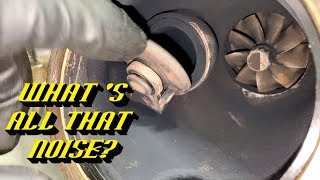
Est. part cost: $5 - $15 for a clip, $150 - $250 for the full actuator kit. - Inoperative/Faulty Wastegate Actuator 🔴 High Probability → Shop Turbocharger This is the second primary cause listed in Ford's TSBs. The electronic actuator can fail internally, either from a burnt-out motor, stripped internal gears, or an electrical fault in its position sensor. Owners have noted a loud servo noise at startup as a precursor to failure. 🎬 Listen: Hear the difference between a rattle and a failed actuator
How to confirm: If the e-clip is present and the linkage is connected, the actuator itself is the prime suspect. A loud grinding or servo noise at startup is a strong indicator. A bi-directional scan tool can command the actuator to move; if it doesn't respond or throws a position error code (like P2AB9), it has failed.
Typical fix: Replace the wastegate actuator assembly. Ford provides a service kit (Part No. LB5Z-9G488-B) that includes the actuator, rod, and clips.
Est. part cost: $150 - $250 - Damaged Wiring or Connector ⚪ Low Probability While less common than the actuator failure, the wiring harness to the electronic actuator is in a high-heat area near the turbo and exhaust, which can make it brittle or susceptible to damage over time.
How to confirm: Visually inspect the wiring harness and connector going to the wastegate actuator for any signs of melting, chafing, or corrosion on the pins. Use a multimeter to check for proper voltage (typically a 5V reference) and ground at the connector with the key on.
Typical fix: Repair the damaged section of wiring or replace the connector pigtail.
Est. part cost: $15 - $50
Rare But Worth Checking
- Faulty Powertrain Control Module (PCM): → Shop Engine Control Module (ECM) This is extremely rare. Before condemning the PCM, all other possibilities, including the actuator, linkage, and wiring, must be exhaustively ruled out. A PCM failure can sometimes cause out-of-range voltage to be sent to the actuator.
Diagnosis Steps
- Scan the PCM for trouble codes. Note if P0243 is present along with P0299, P2AB9, or other related codes mentioned in TSBs.
- Perform a thorough visual inspection of the turbocharger wastegate actuator, located on the passenger side of the turbo. This is the most critical step.
- Specifically, check if the actuator rod is securely connected to the wastegate arm on the turbo housing. Look for the small e-clip that holds it in place.
- If the clip is missing and the rod is disconnected, you have found the problem.
- Listen during engine startup and shutdown. A loud, grinding, or abnormal servo noise from the actuator area is a strong sign of internal failure.
- If the linkage is intact, inspect the electrical connector and wiring going to the actuator for any signs of damage, melting, or corrosion.
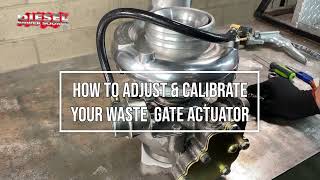
- If the wiring appears okay, the actuator itself is the most likely culprit. A definitive test involves using a high-end scan tool (like FORScan for Fords) to command the actuator to move while observing its linkage. 🎬 Watch: How to properly calibrate and adjust your new actuator No movement confirms a failed actuator.
- If the actuator tests good, check for power (reference voltage) and ground at the connector with a multimeter to rule out a wiring issue further up the harness.
Parts You'll Likely Need
- Turbocharger Wastegate Actuator Kit
(OEM #LB5Z-9G488-B)— This is the most common failure point for code P0243 on this vehicle, as documented in Ford TSBs. The kit includes the electronic actuator, linkage rod, and two new e-clips for a complete repair.
Trusted brands: Motorcraft (Genuine Ford)
OEM price range: $90 - $220
Aftermarket price range: $150-$200
Related Codes That Often Appear With This One
- P0299 — This code means 'Turbocharger Underboost'. It frequently appears with P0243 because if the wastegate actuator fails or is disconnected, the PCM cannot close the wastegate to build boost pressure, resulting in an underboost condition.
- P2AB9 — This Ford-specific code for 'Wastegate Position Circuit 'A' High' often appears with P0243. It directly points to an electrical fault within the actuator's position sensor, strongly suggesting the actuator assembly itself has failed.
- P02AB, P1464, P25B3, P25B4, P2AB7, P2AB8 — These are various other turbocharger control and position sensor codes. Ford groups all of these codes together with P0243 in its service bulletins, as they all point to the same root cause: a faulty wastegate actuator or missing e-clip.
Technical Service Bulletins (TSBs) & Recalls
- SSM 50171: Notes that DTCs including P0243 may be due to an inoperative wastegate actuator, missing e-clip, or non-visible rod damage. It provides the service kit part number LB5Z-9G488-B for the Ranger and Explorer.
- SSM 49427: An earlier version of the same bulletin, also pointing to the missing e-clip or faulty actuator as the cause for P0243 and other codes, and confirming a service kit is available to avoid turbo replacement.
Platform-Specific Known Issues
- Ford Technical Service Bulletin (TSB) SSM 50171 and SSM 49427 directly address P0243 on the 2019-2021 Ranger. They identify the cause as an inoperative wastegate actuator or a missing e-clip on the actuator rod, leading to a lack of power.
- This issue is systemic across the 2.0L and 2.3L EcoBoost engine families from approximately 2019-2022, affecting not just the Ranger but also the Explorer, Bronco, Edge, and others.
Mechanic-Grade Diagnostic Values
- Wastegate Actuator Solenoid Coil Resistance — expected: 20 Ω ± 5 Ω. Failure: A reading of infinite resistance (Open Loop) or near-zero resistance (short circuit).
- Power Supply Voltage at Actuator Connector — expected: 11-14 Volts (Battery Voltage) with Key On, Engine Off.. Failure: Significantly low or no voltage, indicating a wiring, fuse, or PCM circuit issue.
- Ground Pin Continuity at Actuator Connector — expected: Near 0 Ω resistance between the ground pin and a known-good chassis ground.. Failure: High resistance, indicating a poor or open ground connection.
- FORScan Live Data PID: Wgate_A/B_DC_mess — expected: Duty cycle percentage should change when the PCM commands the wastegate to move.. Failure: Value is static or does not correspond to commanded position changes.
Scan Tool Commands That Help
- FORScan or Ford IDS: Output State Control / Actuator Self-Test — This bidirectional command allows a technician to manually cycle the wastegate actuator with the engine off. It is the definitive test to confirm if the actuator is mechanically stuck, slow, noisy, or electrically non-responsive. Observing the actuator's linkage during this test will confirm its operational status.
- FORScan or Ford IDS: Wastegate Actuator Calibration — After replacing the wastegate actuator, a calibration routine may be required. This function electronically learns the new actuator's end stops (fully open and fully closed positions), ensuring the PCM's commands translate to accurate physical positions. Failure to calibrate may result in incorrect boost control even with a new part.
Wiring & Ground Locations
- Wastegate Actuator Connector — On the electronic wastegate actuator itself, which is mounted to the side of the turbocharger assembly on the passenger side of the engine.. This 5-pin connector is the single interface for all power, ground, and control signals to the actuator. Checking for voltage, ground, and signal integrity at this connector is a critical diagnostic step. The Motorcraft replacement pigtail is WPT-1504.
- Primary Engine Ground Stud — A large grounding point for the main battery cable is located on the chassis just behind the passenger-side (left-side when facing engine) headlight.. While not the only ground, this is a primary grounding point for the engine bay. A loose or corroded connection here can cause a variety of difficult-to-diagnose electrical issues, including intermittent faults in sensor and actuator circuits like the wastegate actuator.
Real Owner Repair Stories
- Bronco6G.com user 'Scott M.' (2023 Ford Bronco 2.3L EcoBoost (23,000 miles)) — Check Engine Light with codes P0243 and P2AB9. A very noticeable, loud servo-like noise from the actuator during engine startup and shutdown.
❌ Tried (didn't work) Clearing codes with FORScan (they returned on the next startup).
✅ What actually fixed it The owner performed a DIY replacement of the electronic wastegate actuator (Part No. LB5Z-9G488-B), which cost $90. This immediately fixed the codes. He noted the startup/shutdown servo noise became much quieter, and the turbo reached boost more quickly and held it more stably, suggesting the original part had been failing for some time.
OEM Part Supersession History
Unknown→LB5Z-9G488-B— This is the current, established service kit part number provided by Ford in TSBs to address the wastegate actuator failures.
Heads up: No known supersession issues. LB5Z-9G488-B is the correct part for the 2019-2021 Ranger.
Model Year Variations Within This Range
- 2019 only: While not directly for P0243, a known software issue can cause a false P0299 (Underboost) code, which is often seen with P0243. TSB 20-2152 addresses this with a PCM reprogram. If a 2019 model presents with both codes, verifying this TSB has been performed is a valid step. This is not known to apply to 2020-2021 models.
Helpful Videos
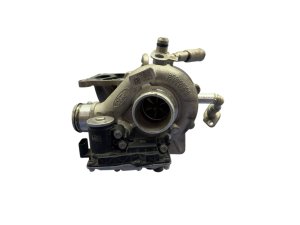
Used OEM Parts in Stock
New Aftermarket Parts Available


The information in this article is provided for general reference and educational purposes only. Vehicle specifications, procedures, and part compatibility can vary by production date, trim level, and region. Always consult your vehicle's factory service manual and verify part numbers before purchasing or performing repairs. Safety-critical components such as airbags, seat belts, and braking systems should be installed by a qualified professional.
- Ford RANGER:
- 🧭 Diagnostic Flowchart
- 🎬 Helpful Videos
- 🛍️ Shop This Part
- What's Unique About the 2019-2021 Ford RANGER
- Symptoms You May Notice
- Most Likely Causes
- Rare But Worth Checking
- Diagnosis Steps
- Parts You'll Likely Need
- Related Codes That Often Appear With This One
- Technical Service Bulletins (TSBs) & Recalls
- Platform-Specific Known Issues
- Mechanic-Grade Diagnostic Values
- Scan Tool Commands That Help
- Wiring & Ground Locations
- Real Owner Repair Stories
- OEM Part Supersession History
- Model Year Variations Within This Range
- 🎟️ Get 5% Off