

P0244 on 2019-2022 Jeep Cherokee: Turbo Wastegate Actuator Causes and Fixes
On a 2019-2022 Jeep Cherokee with the 2.0L turbo engine, code P0244 is most often caused by a faulty electronic turbocharger wastegate actuator. This part controls boost pressure, and its failure leads to significant power loss and limp mode. The actuator is available as a separate kit (Mopar P/N 68619868AA), avoiding a full turbo replacement. Expect to pay $250-$400 for the part.
- P0244 on your Jeep Cherokee almost always points to a problem with the electronic turbo wastegate actuator.
- Symptoms are serious and include a major loss of power and limp mode; you should get the vehicle serviced soon to avoid potential engine or turbo damage.
- The most likely fix is replacing the electronic wastegate actuator (Mopar P/N 68619868AA), which is a moderately difficult DIY job or a few hours of labor at a shop. A calibration is required after replacement.
- Do not let a shop replace the entire turbocharger without first confirming the separately-available actuator is not the sole cause of the problem.
What's Unique About the 2019-2022 Jeep CHEROKEE

For this generation of Jeep Cherokee (KL) with the 2.0L GME-T4 'Hurricane' turbo engine, the electronic wastegate actuator is a known failure point. This issue is common across several Stellantis vehicles using this engine, including the Jeep Wrangler (JL) and Alfa Romeo Stelvio/Giulia. Manufacturer Technical Service Bulletins (TSBs) have been issued specifically for this code, indicating it's a recognized issue. Unlike some vehicles where the actuator is permanently integrated, on these models the actuator can be replaced separately from the entire turbocharger assembly using a Mopar kit (P/N 68619868AA), making the repair more accessible and affordable.
Diagnostic Flowchart

Tap your situation to follow the diagnostic path that matches what you're seeing on this vehicle.
Symptoms You May Notice
- Check Engine Light (MIL) is on
- Significant loss of engine power or running in 'limp mode'
- Sluggish or delayed acceleration
- Reduced or erratic turbo boost pressure
- Engine may run rough or stall at idle
- Possible driveability issues [⭐ TSB S2218000017]
- Replacing the entire turbocharger assembly when only the external wastegate actuator has failed. It's critical to diagnose the actuator first, as it's a separate and much cheaper part available as a kit from Mopar. 🎬 See: Deciding between replacing the actuator or the full turbo
Most Likely Causes

- Failed Turbocharger Wastegate Actuator 🔴 High Probability → Shop Turbocharger This is a well-documented common failure part on modern FCA/Stellantis 2.0L turbo engines, as evidenced by manufacturer TSBs and extensive owner discussions on platform-mate vehicles like the Jeep Wrangler JL.
How to confirm: Using a capable bidirectional scan tool, command the wastegate actuator to move while observing its actual position data. If it doesn't move, its position is erratic, or it makes grinding noises, the actuator has failed. A visual inspection may also show a disconnected or damaged linkage. Some owners on forums have reported temporarily fixing a stuck actuator with a light tap and lubricant, confirming it was the point of failure.
Typical fix: Replace the electronic wastegate actuator with the Mopar kit (P/N 68619868AA) and perform a recalibration procedure with a scan tool to synchronize the new part with the PCM.
Est. part cost: $250-$400 - Wiring or Connector Issues 🟡 Medium Probability The wiring harness to the actuator is located in a high-heat, high-vibration engine bay environment, making it susceptible to chafing, melting, corrosion at the pins, or broken wires over time.
How to confirm: Visually inspect the wiring harness and connector going to the wastegate actuator for any signs of melting, corrosion, or broken wires. Perform a continuity and resistance test on the circuit. A voltage drop test between the PCM connector and the actuator connector should show less than 0.2 Volts; a higher reading indicates excessive resistance in the wiring.
Typical fix: Repair the damaged section of the wiring harness or replace the connector pigtail.
Est. part cost: $20-$100 - Outdated PCM Software ⚪ Low Probability
How to confirm: A Jeep dealership or a well-equipped independent shop can check the current software calibration of the Powertrain Control Module (PCM) against the latest available version. TSB S2018000012 specifically notes this possibility, especially after a turbocharger has been replaced.
Typical fix: Update or 're-flash' the PCM to the latest manufacturer software version.
Est. part cost: $0-$200
Rare But Worth Checking
- Mechanically Sticking Wastegate Valve: The actuator motor might be working correctly, but the wastegate valve arm inside the turbocharger housing could be binding due to carbon buildup or wear. This usually requires turbocharger replacement, but should be verified by manually moving the arm (with the actuator disconnected) to check for free movement.
- Faulty Powertrain Control Module (PCM): This is very rare, but the PCM itself can fail, causing it to misinterpret signals from the wastegate actuator. On platform mates, a TSB even noted that in some cases after a turbo replacement, the PCM itself required replacement to clear a persistent P0244 code. This should only be considered after all other possibilities have been exhausted.
Diagnosis Steps
- Read the fault codes from the PCM using an OBD-II scanner. Note any other codes, like P0299.
- Visually inspect the turbocharger wastegate actuator, its linkage, and its electrical connector for any obvious damage, melting, or corrosion.
- Using a bidirectional scan tool, monitor the commanded vs. actual position of the wastegate actuator. Command the actuator to open and close to verify its range of motion. A failure to respond or erratic readings strongly suggest a failed actuator.
- If the actuator does not respond correctly, test the electrical circuit. Check for proper voltage, ground, and signal at the actuator's connector. A voltage drop test should yield less than 0.2V.
- If the circuit is good but the actuator fails the functional test, the actuator is faulty and needs replacement. The actuator motor coil resistance should be between 1.44 - 1.96 Ω.
- If the actuator and circuit are good, check for any available PCM software updates with a dealer, as mentioned in TSB S2018000012.
- As a final step, disconnect the actuator linkage from the turbocharger and manually check if the wastegate valve arm on the turbo moves freely without binding or excessive play.
Parts You'll Likely Need
- Turbocharger Wastegate Actuator Kit
(OEM #68619868AA)— This is the most common failure point for code P0244 on this engine, as confirmed by TSBs and extensive owner reports on this platform and its mates.
Trusted brands: Mopar
OEM price range: $250-$400
Aftermarket price range: $200-$350
Related Codes That Often Appear With This One
- P0299 - Turbocharger Underboost: This code is very common alongside P0244, as a malfunctioning wastegate that is stuck partially open will prevent the turbo from building sufficient boost.
Technical Service Bulletins (TSBs) & Recalls
- S2218000017: Notes that customer complaints of a check engine light and driveability issues may be caused by a P0244-Turbo Wastegate Actuator "A" Range/Performance fault.
- S2018000012: Addresses P0244 setting after a turbocharger has been replaced, indicating a potential software logic issue that may require a PCM update.
Platform-Specific Known Issues
- TSB S2218000017 was issued for a MIL-on condition with fault P0244, pointing to a potential 'Range/Performance' fault in the wastegate actuator.
- TSB S2018000012 addresses P0244 setting after a turbocharger replacement, suggesting a PCM software update may be necessary to correct the logic.
- Owners on forums for the Jeep Wrangler JL, which shares the 2.0L engine, report successfully fixing code P0244 by replacing the actuator. In one case, a user reported the actuator was simply stuck and was able to free it with a tap and lubricant as a temporary fix.
Mechanic-Grade Diagnostic Values
- Wastegate Actuator Motor Coil Resistance — expected: Approximately 1.44 - 1.96 Ω at 69.8°F (21°C).. Failure: A reading of infinity (open circuit) or a value significantly outside the expected range indicates a failed motor inside the actuator.
- Voltage Drop on Actuator Circuit — expected: Less than 0.2 Volts.. Failure: A voltage difference greater than 0.2V measured between the PCM connector and the actuator harness connector indicates excessive resistance in the wiring.
Scan Tool Commands That Help
- wiTECH or equivalent professional scan tool: Wastegate Learn / Actuator Relearn / VGT Actuator Learning — This function is critical after replacing the wastegate actuator or the entire turbocharger assembly. The PCM must cycle the new actuator to learn its full range of motion (minimum and maximum travel points) to ensure accurate boost control and prevent P0244 from setting.
- wiTECH or equivalent professional scan tool: Replace Relevant Component — This service function is used after replacing the entire turbocharger assembly and may prompt for the vehicle's mileage to be entered as part of the programming process.
- wiTECH or equivalent professional scan tool: PCM Replaced — This routine must be run from the Body Control Module (BCM) after installing a new PCM to synchronize the modules.
Wiring & Ground Locations

- Actuator Electrical Connector — On the electronic wastegate actuator body, attached to the turbocharger assembly.. This 5-pin connector is the primary interface for power, ground, and communication to the actuator. It is in a high-heat area and is a common point for corrosion, melted plastic, or loose pins that can cause a P0244 code.
- Engine Ground Strap — A braided strap connecting the engine block to the vehicle's chassis/firewall. While a specific KL Cherokee location was not identified, these are universal and critical.. A poor or broken main engine ground can cause a wide range of electrical issues and incorrect sensor readings, potentially contributing to a range/performance code for a module like the wastegate actuator.
Real Owner Repair Stories
- jlwranglerforums.com user 'Inshan' (Jeep Wrangler JL with 2.0L Turbo engine (platform mate)) — P0244 error code appeared.
❌ Tried (didn't work) Removing the actuator, tapping it, and applying WD-40 provided only a temporary fix.
✅ What actually fixed it The actuator was mechanically stuck. Replacing the wastegate actuator with a new part resolved the P0244 code permanently. - Diagnostic Case Study (related to TSB S2018000012) (2017 Alfa Romeo Giulia (platform mate with shared engine architecture and TSBs)) — Persistent P0244 code immediately after a new turbocharger was installed.
❌ Tried (didn't work) Replacing the turbocharger and wastegate assembly again., Attempting to reprogram the existing Powertrain Control Module (PCM).
✅ What actually fixed it The old PCM's hardware was not capable of supporting the new turbocharger's requirements. The final fix was to replace the PCM itself and perform a 'proxy alignment' procedure to synchronize the new module with the vehicle.
When the Usual Fixes Don't Work
- While replacing the wastegate actuator (P/N 68619868AA) is the most common fix for P0244, it is not always the correct one. According to TSB S2018000012, if the P0244 code appears immediately after the entire turbocharger assembly has been replaced, the root cause is often an incompatible Powertrain Control Module (PCM). In this specific scenario, the TSB states the PCM itself must be replaced, as the older module's hardware cannot support the newer turbo components. Attempting to re-flash the old PCM or replacing the new turbo again will not resolve the issue.
OEM Part Supersession History
68619868AA→No supersession found.— This appears to be the current and only part number for the Mopar actuator kit.
Model Year Variations Within This Range
- 2018-2019: A portion of these vehicles, including the 2019 Cherokee, were subject to Safety Recall U87 (NHTSA 18V-524) for a faulty voltage regulator chip inside the PCM. While the primary symptoms were stall or no-start conditions, a failing PCM could cause a variety of unpredictable electronic faults. It is worth checking if this recall was completed on an affected vehicle experiencing unusual electronic codes like P0244.
Helpful Videos
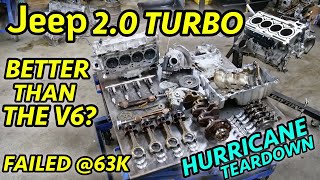
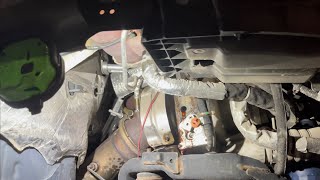
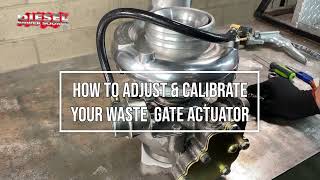
We Have This Part in Stock

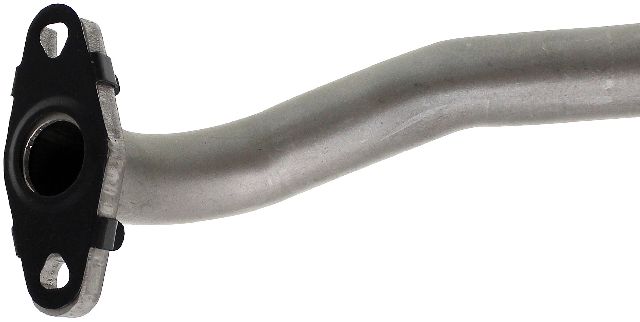

The information in this article is provided for general reference and educational purposes only. Vehicle specifications, procedures, and part compatibility can vary by production date, trim level, and region. Always consult your vehicle's factory service manual and verify part numbers before purchasing or performing repairs. Safety-critical components such as airbags, seat belts, and braking systems should be installed by a qualified professional.
- Jeep CHEROKEE:
- 🧭 Diagnostic Flowchart
- 🎬 Helpful Videos
- 🛍️ Shop This Part
- What's Unique About the 2019-2022 Jeep CHEROKEE
- Symptoms You May Notice
- Most Likely Causes
- Rare But Worth Checking
- Diagnosis Steps
- Parts You'll Likely Need
- Related Codes That Often Appear With This One
- Technical Service Bulletins (TSBs) & Recalls
- Platform-Specific Known Issues
- Mechanic-Grade Diagnostic Values
- Scan Tool Commands That Help
- Wiring & Ground Locations
- Real Owner Repair Stories
- When the Usual Fixes Don't Work
- OEM Part Supersession History
- Model Year Variations Within This Range
- 🎟️ Get 5% Off