

OBD-II Code P0245: Turbocharger/Supercharger Wastegate Solenoid 'A' Circuit Low
The Ultimate 2026 Guide: What P0245 means, why it triggers, and how to fix it for good.
- P0245 indicates a low voltage fault in the turbocharger wastegate solenoid circuit, immediately triggering limp mode and a Check Engine Light.
- A failed wastegate solenoid causes 60% of P0245 codes, with melted wiring, corroded connectors, or a blown 10A fuse accounting for the rest.
- Driving with P0245 reduces fuel economy by 10-15% and risks $1,200+ in catalytic converter damage if left unaddressed for more than a month.
- Test the solenoid's internal resistance with a multimeter (typically 10-40 Ω) and verify a 12V power supply at the connector before spending $150+ on replacement parts.
What Does P0245 Mean?

The Powertrain Control Module (PCM) detects low voltage in the turbocharger wastegate solenoid electrical circuit. This indicates a short to ground, an open circuit, or excessive resistance. Because this solenoid regulates turbo boost pressure, an electrical fault disables boost control, forces the engine into limp mode, and triggers the Check Engine Light.
Technical definition: SAE/OBD-II defines P0245 as "Turbocharger/Supercharger Wastegate Solenoid 'A' Circuit Low." The PCM triggers this code when it reads near 0V on the solenoid control circuit instead of the expected reference voltage or switching signal, confirming a hard electrical fault.
Can I Drive With P0245?
Yes, But With Caution. You can drive short distances, but the engine enters 'limp mode' with noticeably less power. Avoid heavy acceleration. Ignoring this code causes inefficient combustion, risking $1,200-$2,800 in catalytic converter damage if left unaddressed for more than a month.
Common Causes

- Faulty Turbocharger Wastegate Solenoid (Very Common) — The solenoid itself is the most frequent failure point. An internal electrical short or a failed electromagnetic coil prevents it from operating, causing a permanent low voltage reading.
- Damaged Wiring or Connectors (Common) — The wiring harness is exposed to intense engine bay heat and vibration. Wires melt, short to ground, or fray, and connectors corrode or loosen, completely interrupting the electrical signal.
- Blown Fuse or Faulty Relay (Less Common) — The wastegate solenoid often shares a fuse with other engine components. A short circuit elsewhere blows the fuse, cutting power to the solenoid and immediately triggering P0245.
- Poor Engine Ground (Rare) — A compromised or corroded main engine ground strap introduces severe voltage drops across multiple circuits, leading to erratic actuator behavior and triggering circuit low codes.
- Software or Firmware Glitches (Rare) — Certain modern vehicles (e.g., BMW, VW) have ECM calibrations that set incorrect voltage references. A firmware update from the dealer resolves the false trigger.
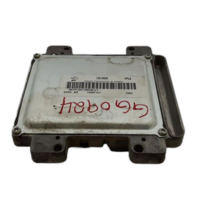
- Faulty Powertrain Control Module (PCM) (Very Rare) — An internal fault in the PCM driver circuit that sends voltage to the solenoid causes the code. This requires exhaustive elimination of all wiring and solenoid issues first.
Symptoms

- Check Engine Light is On — The PCM illuminates the light immediately upon detecting the low voltage fault. VW/Audi diesels flash the glow plug light instead of or alongside the Check Engine Light.
- Reduced Engine Power / Limp Mode — The vehicle feels sluggish and slow to accelerate. The PCM intentionally cuts engine power to prevent catastrophic engine damage from uncontrolled turbo boost.
- No Turbo Boost — The engine lacks power during highway merging or passing. The turbocharger fails to spool up because the wastegate defaults to an open, safe position.
- Poor Fuel Economy — Without proper turbo function, the engine operates inefficiently and works harder to maintain speed, increasing fuel consumption by 10-15%.
Diagnostic Flowchart

Tap your situation to follow the diagnostic path that matches what you're seeing on this code.
Common Fixes & Costs
- Replacing the Turbocharger Wastegate Solenoid — Parts: $40-$250, Labor: $100-$200, ~1.2 hr book time (DIY)
- Repairing Damaged Wiring or Connectors — Parts: $10-$50, Labor: $150-$250, ~1.5 hr book time (Intermediate)
- Replacing a Blown Fuse — Parts: $2-$10, Labor: $50-$100, ~0.5 hr book time (DIY)
- Replacing the Powertrain Control Module (PCM) — Parts: $800-$1500, Labor: $150-$300, ~2.5 hr book time (Professional)
Used vs. New Parts: Buying Guide
When a used part is worth it: Buying a used wastegate solenoid is not recommended. The savings are minimal compared to the risk of receiving a part near the end of its life with the same internal coil failure.
Donor-vehicle mileage cap: roughly under 40000 miles for the part to have meaningful remaining life.
Donor quality checklist:
- Verify the exact OEM part number matches.
- Avoid parts from high-mileage vehicles or regions with extreme heat.
- Inspect the connector pins for any signs of corrosion.
Decision logic:
- If The cost of a new OEM or reputable aftermarket solenoid is under $150 → Always buy new. The warranty and peace of mind are worth the price difference.
- If Vehicle is over 20 years old and new parts are unavailable → A used part is the only option. Test its resistance with a multimeter before installation to verify it is within spec.
Warranty tradeoff: Salvage yard parts carry a 30-90 day warranty for part credit only. New aftermarket parts carry a 1-year to lifetime warranty. OEM parts carry a 1-2 year warranty.
Worst-case if a used part fails: $150-$300 if a used solenoid fails shortly after installation, requiring repeat diagnostic time and labor costs.
What Happens If You Wait — Timeline
- 0-1 month: Check Engine Light is on with code P0245. Vehicle enters 'limp mode,' resulting in a significant loss of acceleration. Fuel economy drops by 10-15%. (MPG impact: 10-15%% · Added cost: $20-50 in wasted fuel)
- 1-4 months: Continued inefficient combustion from improper boost control causes the catalytic converter to overheat. The internal substrate begins to get coated or sintered. (MPG impact: 12-18%% · Added cost: $50-150 in wasted fuel.)
- 4-8 months: Sustained overheating causes the catalytic converter's ceramic honeycomb to crack or melt, creating an exhaust blockage. (MPG impact: 15-25%% · Added cost: $1,200-$2,800 for catalytic converter replacement.)
- 8+ months: Catastrophic failure. A clogged catalytic converter and a constantly over-speeding turbo lead to turbocharger bearing failure or engine damage from excessive backpressure. (MPG impact: >25%% · Added cost: $2,000-$5,000+ for replacing both the catalytic converter and the turbocharger assembly.)
Cost of Not Fixing It
- 0-1 month: Noticeable 10-15% drop in fuel economy and dangerous lack of power for merging or passing. Failed emissions test is guaranteed. (Added cost: $20-$50 in wasted fuel)
- 1-6 months: An uncontrolled wastegate leads to an overly rich or lean mixture, superheating the catalytic converter and causing it to melt or become clogged. (Added cost: $1200-$2800)
- 6+ months: A clogged catalytic converter and a constantly over-speeding turbo lead to catastrophic turbocharger bearing failure and engine damage from excessive backpressure. (Added cost: $2000-$5000+)
Diagnosis Steps
- Scan for Codes and Review Freeze Frame Data
Use an OBD-II scanner to confirm P0245 is the active code. Review freeze frame data to see engine conditions when the code set. Note codes like P0299 or P0234, which are secondary performance effects of this electrical fault.
Tools: OBD-II Scan Tool (Beginner) - Check Related Fuses and Relays
Consult the fuse diagram to find fuses related to engine control components. Test the relevant fuse with a multimeter for continuity. A blown fuse is a cheap, common fix that immediately cuts power to the solenoid.
Tools: Multimeter, Fuse Puller (Beginner) - Perform a Thorough Visual Inspection
Locate the turbocharger wastegate solenoid. Inspect its electrical connector for corrosion, bent pins, or a loose fit. Trace the wiring harness, looking for melted insulation, cuts, or contact with hot exhaust components.
Tools: Flashlight (Beginner) - Test for Voltage and Ground at the Connector
Disconnect the solenoid and turn the ignition on (engine off). Use a multimeter to verify 12V ± 0.5V at the power pin. A reading below 11V confirms a power supply problem (wiring or fuse). Verify the ground pin reads less than 0.1V.
Tools: Multimeter (Intermediate) - Test the Solenoid's Internal Resistance
With the solenoid disconnected, measure the resistance (Ohms) between its two pins. Compare this to the service manual spec (typically 10-40 Ω). For example, VW N75 valves are 25-35 Ω; Ford Escapes are ~12.4 Ω. Near 0 Ω (short) or infinite resistance (open) confirms a dead solenoid.
Tools: Multimeter, Vehicle Service Manual (Intermediate) - Pro Tip: Perform a 'Wiggle Test' on the Harness
Intermittent shorts are common. While monitoring voltage or continuity with the multimeter, gently manipulate the wiring harness from the solenoid toward the PCM. Dramatic reading changes pinpoint the exact location of a wiring break.
Tools: Multimeter (Intermediate) - Command the Solenoid with a Bi-Directional Scan Tool
Use an advanced scan tool to command the solenoid on and off. You must hear a distinct clicking sound. If it remains silent despite verified power and ground, the solenoid has failed internally.
Tools: Advanced Bi-Directional Scan Tool (Advanced) - Perform a Continuity Test (Pin-Out Test)
Identify the solenoid control pin at the PCM connector using a wiring diagram. With the battery disconnected, check for continuity between the PCM pin and the solenoid connector pin. Resistance above 0.5 Ω indicates a broken wire.
Tools: Multimeter, Wiring Diagram (Advanced) - Analyze the Solenoid Control Waveform
Use a lab scope to view the voltage pattern on the solenoid's control wire with the engine running. The PCM uses a duty-cycled square wave (PWM). A flat 0V line with intact wiring definitively points to a faulty PCM driver circuit.
Tools: Lab Scope (Oscilloscope) (Professional)
When This Code Triggers (Freeze-Frame Conditions)
- Engine Coolant Temp: 180-210°F (Engine is at full operating temperature.)
- RPM: 1500-3000 RPM (During steady cruise or light to moderate acceleration.)
- Engine Load: 30-70% (The engine is under moderate load, actively commanding the turbo to produce boost.)
- Vehicle Speed: 40-65 mph (Occurs during city or highway driving when boost is requested to maintain speed.)
Related Codes
- P0246 — Indicates "Wastegate Solenoid 'A' Circuit High," the exact opposite of P0245. P0245 points to a short to ground or open circuit, while P0246 points to a short to power.
- P0299 — Indicates "Turbo/Supercharger Underboost." A faulty wastegate solenoid stuck open due to the P0245 electrical fault directly causes this underboost condition. Always fix P0245 first.
- P0234 — Indicates "Turbo/Supercharger Overboost." If the P0245 electrical fault prevents the PCM from opening the wastegate, the turbo creates excessive, dangerous pressure. Fix P0245 first.
- P0243 — Indicates a general malfunction in the wastegate solenoid 'A' circuit. It frequently appears alongside P0245 and requires the exact same diagnostic steps.
Climate & Environmental Factors
- Engine Bay Heat & Vibration: Prolonged exposure to extreme temperatures and vibration makes wiring insulation brittle, loosens connectors, and accelerates the internal electrical failure of the solenoid coil.
- Road Salt & Humidity: Moisture and road salt seep into electrical connectors, causing pin corrosion that leads to high resistance or a short circuit, immediately triggering P0245.
- High Altitude: High altitude does not cause the electrical fault, but it amplifies the symptoms. The turbo works harder to produce boost in thin air, making the loss of power much more pronounced.
How to Talk to a Mechanic About This Code
Say this: "I have an active P0245 code and a loss of power. I'd like to schedule a diagnostic appointment. Please instruct the technician to perform an electrical diagnosis of the wastegate solenoid circuit—specifically checking for power, ground, and the solenoid's resistance—before recommending a part replacement."
This signals you understand P0245 is an electrical fault. It directs the shop to isolate the issue (wiring, fuse, or solenoid) and prevents them from immediately replacing the solenoid or the entire turbo without proof.
Avoid saying:
- 'Just fix whatever's wrong'
- 'My check engine light is on, can you look at it?'
- 'I think I need a new turbo'
Questions to ask before authorizing the repair:
- Did you find proper 12V battery voltage and ground at the solenoid connector?
- What was the resistance reading of the solenoid itself, and how does it compare to the spec?
- Is the repair for the solenoid part itself, or for a wiring or connector issue?
Where to Take It: Dealer vs Independent vs Chain
- Dealer:
A strong choice for in-warranty vehicles or if a known TSB/firmware update applies. Otherwise, it is an expensive option for a common electrical fault.
Best for: Vehicles still under powertrain or emissions warranty., Complex, manufacturer-specific quirks (e.g., VW ECU faults, Ford TSBs)., When a PCM replacement and programming is required.
Downsides: Higher labor rates, often 1.5-2x more than independent shops., May default to replacing an entire assembly when a smaller wiring repair suffices. (Typical cost: +50% vs. baseline) - Independent Shop:
Best fit for most P0245 repairs. A reputable independent shop with strong electrical diagnostic skills pinpoints the fault accurately without the high cost of a dealership.
Best for: Out-of-warranty vehicles where cost is a factor., Diagnosing common electrical faults like wiring shorts, bad connectors, or failed solenoids.
Downsides: Quality and diagnostic skill vary greatly; vet the shop by checking for ASE certifications., May lack access to the latest manufacturer-specific software for programming. (Typical cost: +0% vs. baseline) - Chain Shop:
Avoid for this code. P0245 requires careful electrical diagnosis, not just part swapping. The risk of misdiagnosis and unnecessary part replacement is high.
Best for: Simple, routine maintenance like oil changes or tire rotations.
Downsides: Technicians often lack the in-depth electrical diagnostic training needed for P0245., Business model encourages replacing parts without confirming the root cause. (Typical cost: -10% vs. baseline)
When to Walk Away From the Repair
If the estimated repair cost exceeds 50% of the car's private-party market value, sell or trade in the vehicle instead of repairing it.
- Car worth $4000, fix is $450: Fix it. This repair is well below the 50% threshold and restores key engine performance.
- Car worth $3000, fix is $1800: Walk away. The repair cost is over 50% of the car's value, and other age-related issues will likely appear soon.
What Scan Tool You Need for This Code
Minimum: A basic OBD-II reader that reads codes, clears codes, and displays freeze-frame data.
A simple code reader confirms P0245 but cannot diagnose it. A multimeter is required to test wiring. For advanced diagnosis, a bi-directional scanner is needed to command the solenoid on and off.
Budget: BlueDriver Pro (~$100) — Reads and clears the code, provides freeze-frame data, and displays live data streams on your phone. It does not offer bi-directional control.
Mid-range: Foxwell NT510 Elite (~$159) — Offers full system diagnostics and bi-directional control. You can command the wastegate solenoid to cycle, allowing you to hear if it works and confirm the control circuit is functional.
Professional: Autel MaxiCOM MK808S (~$450) — Provides extensive bi-directional controls for all vehicle systems. Offers faster processing and advanced data graphing, making it easier to pinpoint intermittent wiring faults.
Rent vs buy: For a one-time code read, use a free loaner tool at a parts store. To properly diagnose P0245, a multimeter is essential. If you do your own repairs regularly, buying a mid-range scanner with bi-directional control offers the best value.
How to Clear the Code After You Fix It
- Use an OBD-II scan tool to clear the P0245 code.
- Ensure the fuel tank is between 25% and 75% full.
- Perform a complete OBD-II drive cycle to allow readiness monitors to run.
Drive cycle (~30 minutes): From a cold start (sit for 8+ hours), idle for 2-3 minutes. Drive a mix of city (stop-and-go) and highway speeds. Include 10-15 minutes of steady driving at 50-60 mph. Allow the vehicle to coast down to a lower speed without braking. Let the engine idle for another minute before shutting off.
Readiness monitors affected: Catalyst (CAT) monitor, Oxygen (O2) Sensor monitor, Comprehensive Component Monitor (CCM)
Before emissions retest: drive at least 100 miles to fully set monitors.
Watch out for:
- Disconnecting the battery clears the code but resets all readiness monitors to 'Not Ready,' guaranteeing an emissions test failure.
- The code returns immediately if the root electrical cause (short, open, bad solenoid) is not properly fixed.
- Failing to drive under steady cruise and coast-down conditions prevents the Catalyst and O2 sensor monitors from completing.
Will This Fail Emissions / State Inspection?
Yes — this code typically fails an OBD-II emissions inspection.
- California: An illuminated Check Engine Light for P0245 is an automatic failure. After repair, a full drive cycle must be completed to set all readiness monitors to 'Ready' before a retest.
- New York: The NYS DMV inspection includes an OBD-II scan on all 1996 and newer vehicles. P0245 causes an immediate failure of the emissions portion.
- Texas: In counties requiring emissions testing, an active P0245 code and illuminated Check Engine Light result in an automatic inspection failure.
Most Commonly Affected Vehicles
- Ford F-150 EcoBoost (2011-2024) — EcoBoost engines frequently suffer wastegate solenoid failures due to heat and vibration. Models from 2018-2023 are particularly prone to wiring corrosion near the turbo.
- Ford Escape (2013-2019) — For 1.5L/2.0L models, check fuse F34 first. For 1.6L models (2013-2016), the solenoid itself is the primary culprit per Ford TSB 15-0162.
- Subaru WRX/STI (2002-2024) — The boost control solenoid (BCS) is a frequent failure point due to internal coil failure or brittle wiring harnesses. Resistance must measure 28-32 Ω.
- Volkswagen GTI / Golf / Jetta (TSI/TDI) (2007-2022) — Known as the N75 valve. On 1.4L TSI/TFSI engines (2007-2013), if the N75 valve and wiring test perfectly, the Bosch MED17.5.5 ECU is often the source of the fault.
- Chevrolet Cruze / Sonic (2011-2019) — Common on the 1.4L turbo engine. Ensure the mechanical wastegate actuator arm is intact, as a broken retaining clip prevents proper solenoid control and mimics electrical faults.
- Chevrolet Silverado / GMC Sierra (2017-2024) — On 2.7L Turbo or Duramax diesel models, P0245 points to a faulty electronic wastegate actuator or its control solenoid.
- BMW 3-Series / 5-Series (2007-2024) — Causes range from frayed wiring harnesses to ECU firmware glitches, especially on 2016-2024 diesel models (e.g., 328d, 530d).
- Hyundai Genesis Coupe / Veloster Turbo (2010-2017) — The ECM sets P0245 for a short to ground in the solenoid circuit. Specified coil resistance is typically between 28.3 and 31.1 Ohms.
- Dodge Ram 1500 / Dart (2013-2023) — On EcoDiesel and MultiAir Turbo engines, check for oil contamination inside the electronic boost control solenoid connector from nearby leaks.
Manufacturer-Specific Notes
- Ford: For the 1.6L GTDI engine (2013-16 Escape, 2014-16 Fiesta ST), Ford TSB 15-0162 identifies a faulty wastegate regulating solenoid (CJ5Z-9K378-B) as the primary cause. On 1.5L/2.0L EcoBoost engines, a blown 10A fuse (F34) is the most common culprit.
- Subaru: Subaru refers to this as the 'Boost Control Solenoid' (BCS). P0245 almost always points directly to a bad BCS or brittle wiring near the connector. Resistance must be 28-32 Ω.
- Volkswagen/Audi: Listed as 'Solenoid Valve (A) for Boost Pressure Control (N75): Short to Ground.' Diagnosis requires checking the N75 valve resistance (25-35 ohms). On older 1.4L models, ECU internal failure is a known cause.
Real Owner Stories
2015 Ford F-150 3.5L EcoBoost
Check Engine Light and P0245 code appeared. The owner replaced the wastegate regulating valve solenoid, but the code returned immediately.
What they tried:
- Replaced the solenoid.
- Visually inspected the wiring.
- Used a multimeter to check voltage at the solenoid connector and found only 0.71V instead of 12V.
Outcome: The low voltage reading confirmed a break in the power supply wire between the PCM and the solenoid. Repairing the wire fixed the issue.
Lesson: Never assume a part is bad just because it is named in the code. Always test for 12V power and ground at the connector before spending money on parts.
2017 Subaru WRX Stage 2
Owner installed an aftermarket 3-port Electronic Boost Control Solenoid (EBCS). Two months later, P0245 appeared intermittently.
What they tried:
- Unplugged and replugged the EBCS, which temporarily cleared the code.
Outcome: The problem was a poor connection at the EBCS connector caused during the recent installation. Securing the connector and ensuring pins were straight resolved the intermittent fault.
Lesson: If a code appears after a recent modification, the first step is to re-inspect the installation, paying close attention to connectors and wiring harness routing.
2003 VW Jetta TDI (ALH engine)
Owner experienced intermittent P0245 codes causing limp mode, specifically in warmer weather.
What they tried:
- Checked for wiring harness chafing and corrosion on the ECU plugs but found nothing.
Outcome: The root cause was a cracked solder joint on a diode inside the ECU. The owner re-soldered the joint, resolving the issue.
Lesson: For older vehicles with intermittent electrical faults that seem temperature-related, a failing component inside the ECU itself is a rare but possible cause after all external wiring is ruled out.
How to Prevent This Code From Triggering
- Clean the engine bay and inspect wiring (Annually) — Removing dirt and grime from connectors prevents moisture from being trapped, which leads to corrosion and electrical faults like P0245. It also makes it easier to spot damaged wiring early.
- Allow for a brief engine cool-down period after hard driving (After spirited driving or heavy loads) — Idling for 30-60 seconds allows oil to circulate and cool the turbo assembly, reducing the extreme radiant heat that bakes and destroys nearby solenoid wiring harnesses.
Frequently Asked Questions
What is a wastegate solenoid?
It is a small, computer-controlled valve that manages your turbocharger's boost pressure. It diverts exhaust gases away from the turbo to prevent it from creating engine-damaging pressure.
Where is the wastegate solenoid located?
It is almost always mounted directly on or adjacent to the turbocharger assembly. Look for a small cylindrical component with vacuum hoses and an electrical connector attached to the turbo's wastegate actuator.
What are the most common mistakes when diagnosing P0245?
The biggest mistake is replacing the wastegate solenoid without performing basic electrical checks. Technicians often find the actual cause is a blown fuse, a corroded connector, or a melted wire. Replacing the entire turbocharger is an expensive and unnecessary error, as P0245 points to an electrical control issue.
Is fixing a P0245 code expensive?
Costs range from $5 for a blown fuse to $450 for a shop to replace the solenoid. The part itself costs between $40 and $250. Professional wiring repairs typically cost $150 to $250.
My VW TDI has a blinking glow plug light and P0245. Are they related?
Yes. On Volkswagen and Audi diesels, a blinking glow plug light indicates powertrain faults, including boost control system issues. This light combined with P0245 points directly to an electrical fault in the N75 valve circuit.
Can I just clear the code and keep driving?
You can clear the code, but it returns immediately upon starting the engine. The vehicle remains in a reduced-power limp mode until the hard electrical fault is repaired.
Will a P0245 code cause me to fail an emissions test?
Yes. An active Check Engine Light for P0245 causes an automatic failure during a smog or emissions inspection. You must repair the fault and complete a drive cycle to pass.
What's the difference between Solenoid 'A' and 'B'?
Vehicles with twin-turbo setups use multiple wastegate solenoids. 'A' refers to the primary solenoid designated by the manufacturer. Code P0249 indicates a similar 'Circuit Low' fault in the secondary 'B' solenoid circuit.
Can a bad boost pressure sensor cause P0245?
No. P0245 is a circuit code specific to the wastegate solenoid's electrical integrity. A bad boost pressure sensor triggers performance codes like P0299 (Underboost) or P0236 (Sensor Performance).
Key Takeaways
- P0245 indicates a low voltage fault in the turbocharger wastegate solenoid circuit, immediately triggering limp mode and a Check Engine Light.
- A failed wastegate solenoid causes 60% of P0245 codes, with melted wiring, corroded connectors, or a blown 10A fuse accounting for the rest.
- Driving with P0245 reduces fuel economy by 10-15% and risks $1,200+ in catalytic converter damage if left unaddressed for more than a month.
- Test the solenoid's internal resistance with a multimeter (typically 10-40 Ω) and verify a 12V power supply at the connector before spending $150+ on replacement parts.
Shop the Parts Behind P0245
Below are the parts most often responsible for code P0245, ranked by how frequently each one is the actual culprit (per the diagnosis above). Tap any to see what we have for your vehicle.



The information in this article is provided for general reference and educational purposes only. Vehicle specifications, procedures, and part compatibility can vary by production date, trim level, and region. Always consult your vehicle's factory service manual and verify part numbers before purchasing or performing repairs. Safety-critical components such as airbags, seat belts, and braking systems should be installed by a qualified professional.
- 🧭 Diagnostic Flowchart
- 🛍️ Shop This Part
- What Does P0245 Mean?
- Can I Drive With P0245?
- Common Causes
- Symptoms
- Common Fixes & Costs
- Used vs. New Parts: Buying Guide
- What Happens If You Wait — Timeline
- Cost of Not Fixing It
- Diagnosis Steps
- When This Code Triggers (Freeze-Frame Conditions)
- Related Codes
- Climate & Environmental Factors
- How to Talk to a Mechanic About This Code
- Where to Take It: Dealer vs Independent vs Chain
- When to Walk Away From the Repair
- What Scan Tool You Need for This Code
- How to Clear the Code After You Fix It
- Will This Fail Emissions / State Inspection?
- Most Commonly Affected Vehicles
- Manufacturer-Specific Notes
- Real Owner Stories
- 2015 Ford F-150 3.5L EcoBoost
- 2017 Subaru WRX Stage 2
- 2003 VW Jetta TDI (ALH engine)
- How to Prevent This Code From Triggering
- Frequently Asked Questions
- What is a wastegate solenoid?
- Where is the wastegate solenoid located?
- What are the most common mistakes when diagnosing P0245?
- Is fixing a P0245 code expensive?
- My VW TDI has a blinking glow plug light and P0245. Are they related?
- Can I just clear the code and keep driving?
- Will a P0245 code cause me to fail an emissions test?
- What's the difference between Solenoid 'A' and 'B'?
- Can a bad boost pressure sensor cause P0245?
- Key Takeaways
- 🎟️ Get 5% Off