

P0245 on 2012-2018 Audi A6: Turbo/Supercharger Solenoid 'A' Circuit Low Fixes
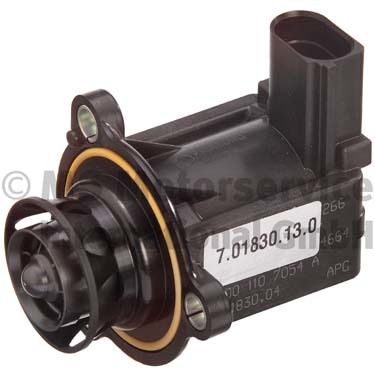
P0245 on a C7 Audi A6 almost always points to a failed boost control solenoid or its wiring. On the 2.0T, this is the N75 wastegate valve; on the 3.0T, it's the supercharger bypass solenoid. Expect to pay $50-$100 for the part, with DIY difficulty at 2/5.
- P0245 on a 2012-2018 Audi A6 indicates an electrical problem, not a mechanical failure of the turbo or supercharger itself.
- The most likely culprit is the boost control solenoid (N75 valve on 2.0T, bypass solenoid on 3.0T), which costs around $50-$100.
- Before replacing parts, always inspect the wiring harness near the solenoid for heat damage, as this is a common point of failure.
- Driving with this code will result in significantly reduced power ('limp mode') and should be addressed promptly.
What's Unique About the 2012-2018 Audi A6
On the Audi A6 (C7 generation), both the 2.0T and 3.0T engines rely on precise electronic boost control. The solenoid responsible for this is a known failure point across many Volkswagen and Audi vehicles. While the underlying cause is a straightforward electrical fault, the location of the solenoid and its wiring near high-heat components can lead to premature failure of the wiring insulation, making a thorough harness inspection critical.
Symptoms You May Notice
- Check Engine Light is illuminated
- Significant loss of engine power (vehicle enters 'limp mode')
- Poor or sluggish acceleration
- No turbo boost or supercharger engagement
- Flashing glow plug light (on some diesel models, though less relevant for these engines)
- Increased fuel consumption
- Erratic boost behavior
- Replacing the entire turbocharger or supercharger. The boost-making component itself is rarely the cause of an electrical circuit fault code.
Most Likely Causes
- Failed Wastegate Solenoid (N75 Valve) / Supercharger Bypass Solenoid 🔴 High Probability → Shop Turbocharger This solenoid is an electro-mechanical part that cycles frequently and is exposed to high temperatures in the engine bay, leading to eventual failure of its internal coil. It's a common failure item on many VAG products.
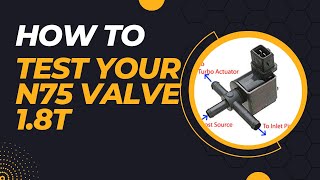
How to confirm: Disconnect the solenoid and measure the resistance across its two pins with a multimeter. 🎬 Watch: How to test your N75 solenoid with a multimeter A reading that is out of manufacturer specification (typically very low or infinite resistance) confirms failure. You can also try to actuate it with a capable scan tool. A short to ground is a common failure mode for this component.
Typical fix: Replace the faulty solenoid valve.
Est. part cost: $40-$100 - Wiring Harness Damage 🟡 Medium Probability The wiring for the solenoid is routed near the hot turbocharger or supercharger and other engine components. Over time, the protective loom can become brittle and the wire insulation can crack, leading to a short to ground.
How to confirm: Perform a detailed visual inspection of the wiring harness leading to the boost control solenoid. Check for melted, chafed, or broken wires. Perform a continuity test from the solenoid connector to the ECM connector to check for opens or shorts.
Typical fix: Repair the damaged section of the wiring harness and protect it with heat-resistant sheathing.
Est. part cost: $5-$25 for repair materials - Corroded or Loose Electrical Connector ⚪ Low Probability Engine vibrations and exposure to the elements can cause the connector to become loose or allow moisture to enter, leading to corrosion and a poor electrical connection.
How to confirm: Unplug the connector at the solenoid and inspect the pins on both the solenoid and the harness side for corrosion, moisture, or damage. Ensure it clicks securely when reconnected.
Typical fix: Clean the connector pins with an electrical contact cleaner. If the connector housing or pins are damaged, replace the connector pigtail.
Est. part cost: $10-$30 - Blown Fuse ⚪ Low Probability
How to confirm: Check the vehicle's fuse diagram and inspect the fuse that supplies power to the boost control solenoid circuit. A short in the circuit will often cause this fuse to blow.
Typical fix: Replace the blown fuse. If the fuse blows again immediately, a short circuit exists that must be diagnosed and repaired.
Est. part cost: $1-$5
Rare But Worth Checking
- Faulty Engine Control Module (ECM): → Shop Engine Control Module (ECM) This is very rare. Before condemning the ECM, all other possibilities (solenoid, wiring, fuses) must be exhaustively ruled out. An ECM failure can sometimes cause this code if the internal driver circuit for the solenoid fails. Some specialists can repair the specific driver circuit within the ECU.
Diagnosis Steps
- Read the code and any other stored codes with an OBD-II scanner.
- Inspect the fuse for the boost control circuit and replace if blown.
- Perform a thorough visual inspection of the boost control solenoid's wiring and connector for any signs of damage, melting, or corrosion.
- Disconnect the solenoid and test its internal resistance with a multimeter. Compare the reading to the manufacturer's specification.
- With the key on and engine off, check for voltage at the solenoid's electrical connector. One pin should have battery voltage.
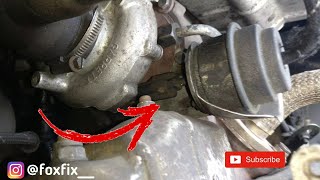
- If voltage is present and the solenoid's resistance is correct, check the signal wire for continuity back to the ECM. 🎬 Watch: A quick guide to testing your N75 valve
- If all wiring and the solenoid test good, the issue may be with the ECM, but this is highly unlikely.
Parts You'll Likely Need
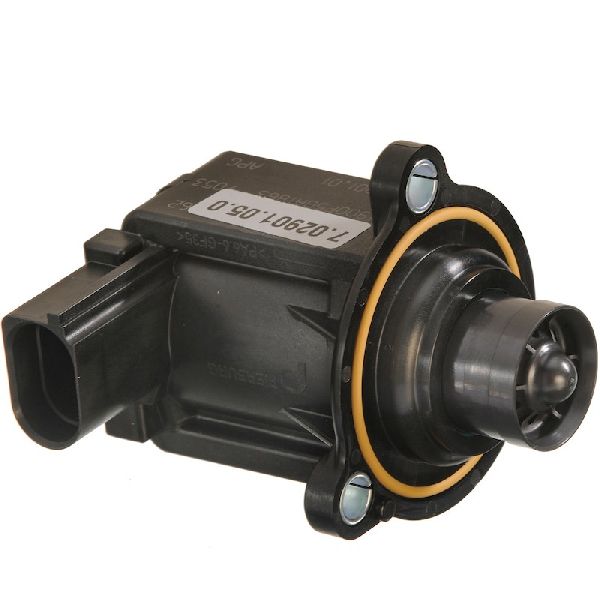
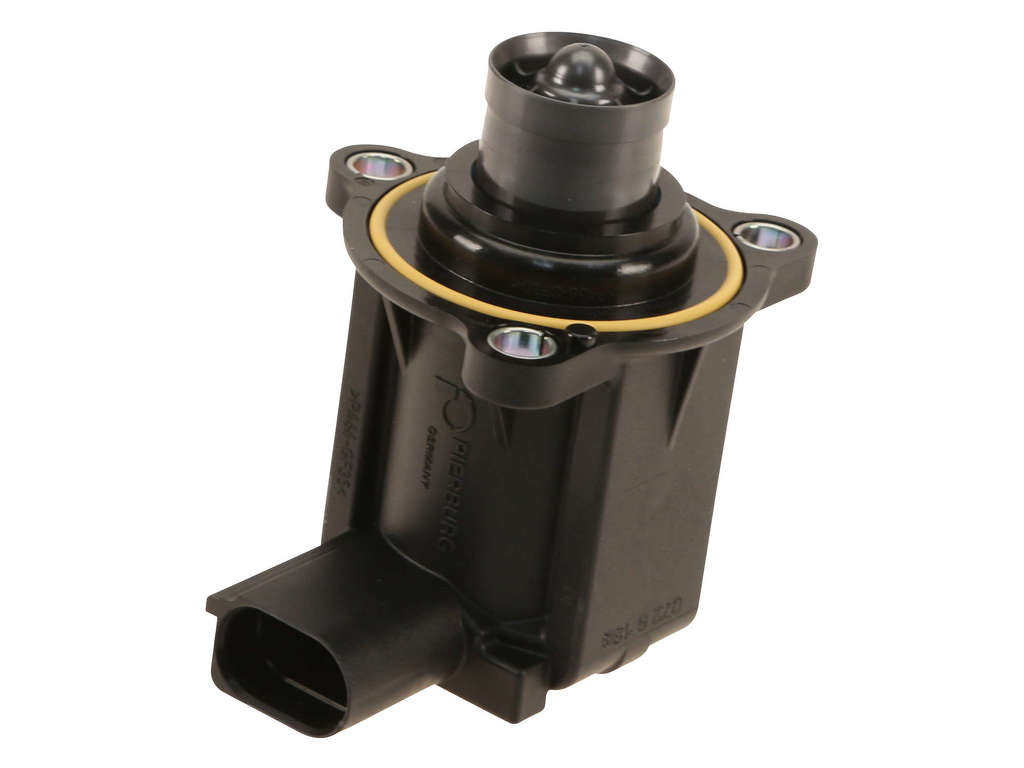
- Turbocharger Wastegate Solenoid (N75 Valve)
(OEM #06F906283F)— This is the most common failure point for the P0245 code on the 2.0T engine.
Trusted brands: Bosch, Pierburg, Genuine Audi/VW
OEM price range: $70-$120
Aftermarket price range: $40-$80 - Supercharger Bypass Valve Solenoid
(OEM #057128063G)— This is the equivalent component to the N75 valve on the 3.0T supercharged engine and is the most likely part to have failed.
Trusted brands: Genuine Audi, Continental
OEM price range: $80-$150
Aftermarket price range: $50-$100
Related Codes That Often Appear With This One
- P0299 — P0299 (Turbo/Supercharger Underboost) is a common companion code because if the P0245 fault causes the wastegate to default to an open position, the engine cannot build the specified amount of boost.
Mechanic-Grade Diagnostic Values
- 2.0T N75 Valve (06F906283F) Coil Resistance — expected: 12.5 - 13.5 Ohms. Failure: A reading significantly outside this range, especially infinite (open circuit) or near zero (short circuit), confirms a failed solenoid coil.
- 3.0T Supercharger Bypass Valve Resistance — expected: 2.4 - 4.6 Ohms (measured between pins 4 and 5). Failure: An open circuit (infinite resistance) or a short (zero resistance) indicates a failed valve.
- Voltage at Solenoid Connector (Key On, Engine Off) — expected: 12V (Battery Voltage) on one pin. Failure: A reading below 11V or no voltage indicates a problem in the power supply circuit, such as a blown fuse or broken wire, not a faulty solenoid.
Hidden / Shadow Codes Worth Checking
- 16629 / 000581: This is the VAG-specific fault code that corresponds directly to the generic OBD-II code P0245. It is often displayed as "Solenoid Valve (A) for Boost Pressure Control (N75): Short to Ground." Seeing this code on a VAG-specific tool like VCDS confirms the ECM's interpretation of the fault. (see via VCDS (VAG-COM), OBDeleven, or other professional European vehicle scan tools.)
Scan Tool Commands That Help
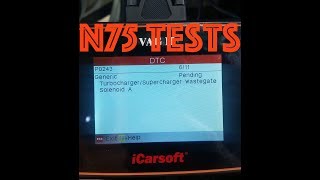
- VCDS (VAG-COM): Output Test for 'Solenoid Valve for Boost Pressure Control (N75)' — This is a bidirectional test found within the Engine (01) controller module. When activated, VCDS commands the ECM to cycle the N75 valve. The technician should hear an audible clicking from the valve. 🎬 Watch: How to run an N75 output test using VCDS No clicking suggests the valve is seized or has no power. This test directly confirms if the solenoid can be actuated by the ECM, helping to isolate the fault between the wiring, the solenoid itself, or the ECM driver.
- VCDS (VAG-COM): Measuring Blocks / Advanced Measuring Blocks — Use this function to monitor live data for 'Charge Air Control Spec. Value' or similar N75 duty cycle parameters. While driving, you can log the requested boost versus the actual boost. In a P0245 fault condition, the duty cycle for the N75 will likely be stuck at 0% or 100% and will not modulate, and the actual boost will not match the requested boost. This helps visualize the impact of the electrical fault on the system's performance.
Wiring & Ground Locations
- Engine Compartment Ground Point — On the right side of the engine compartment, near the alternator.. A P0245 'Circuit Low' code is often a short-to-ground. While the short can be anywhere in the harness, a poor or corroded main engine ground can cause floating voltages and unpredictable electrical issues in various sensor and actuator circuits, including the boost solenoid. Verifying this ground is clean and tight is a crucial step in diagnosing any persistent or intermittent electrical fault.
OEM Part Supersession History
06F906283D→06F906283F— Component revision and improvement by the manufacturer (Pierburg/VW/Audi) to enhance durability and reliability. The 'F' revision is the most current and widely used replacement part.
Heads up: The 'F' revision is a direct replacement for the 'D' revision and is fully compatible with all specified 2.0T applications.
Model Year Variations Within This Range
- 2012-2015 vs. 2016-2018: The C7 A6 received a mid-cycle facelift for the 2016 model year. The 2.0T TFSI engine was updated, boosting power from ~220 hp to 252 hp. The 3.0T Supercharged V6 was also boosted from 310 hp to 333 hp. While the fundamental operation of the boost control solenoids remained the same, wiring harness routing and surrounding components may have minor differences. The later 2.0T is part of the EA888 Gen 3 family, while earlier models used the Gen 2.
Diagnostic Flowchart
Other Known Issues on This Vehicle
Issues unrelated to this code that are worth knowing about as an owner of this generation:
- Excessive Oil Consumption (2.0T EA888 Gen 2) 🔴 High — Very common on earlier 2012-2015 models. Caused by faulty piston ring design. Can require piston replacement to resolve. (Ref: Subject of multiple class-action lawsuits and warranty extensions for diagnosed conditions.)
- Timing Chain Tensioner Failure (2.0T & 3.0T) 🔴 High — Early 2.0T Gen 2 engines had a faulty tensioner design that could lead to catastrophic failure. The 3.0T can experience a rattle on cold starts, indicating worn upper tensioners. (Ref: TSB 2039995/2 (or 15-15-26) exists for the 3.0T engine to address cold start rattle by replacing upper tensioners.)
- Water Pump & Thermostat Failure (3.0T) 🟠 Medium — The plastic housings for the water pump and thermostat are known weak points that can crack and leak coolant, sometimes at relatively low mileage (under 60k miles).
- PCV Valve Failure (3.0T) 🟠 Medium — The PCV valve (oil separator), located under the supercharger, is a common failure item, typically between 60k-80k miles. Failure can cause rough idle, vacuum leaks, and increased oil consumption.
- Carbon Buildup on Intake Valves (Both Engines) 🟠 Medium — A common issue for all direct-injected engines. Over time, carbon deposits build up on the intake valves, which can cause misfires, rough idle, and reduced performance. Typically requires cleaning every 60k-80k miles.
Used vs. New Parts: Buying Guide for This Vehicle
When a used part is the smart pick: For this specific repair, buying a used solenoid is generally not recommended. The part is a known failure item and is relatively inexpensive to buy new from a quality OEM supplier like Pierburg or Bosch. A used part carries a high risk of premature failure. A used wiring connector pigtail from a junkyard is a viable option if the original connector is physically damaged, as long as the donor wiring is inspected for brittleness or heat damage.
Donor-vehicle mileage cap: roughly under 80000 miles for the part to have meaningful remaining life.
What to inspect on the donor part:
- For a wiring pigtail, ensure the plastic isn't brittle and the locking tab is intact.
- Check the wires for any signs of cracking, melting, or previous repairs.
- Verify the donor vehicle was not in a front-end collision that could have stressed the engine harness.
OEM-only on this vehicle (don't cheap out):
- While not strictly 'OEM-only', using a reputable OEM supplier like Pierburg for the N75 valve is strongly advised over no-name aftermarket parts to ensure proper performance and longevity.
Aftermarket brands forum-validated for this vehicle:
- Pierburg (often the original supplier to Audi/VW)
- Bosch
Brands owners have reported issues with on this vehicle:
- Unbranded, low-cost solenoids from online marketplaces often have high failure rates and may not perform to OEM specifications, leading to persistent boost control issues.
Real Owner Stories
Aggregated from forums and TSBs cited above. Mileages and costs reflect what owners reported in those sources.
2012 Audi A6 2.0T
Symptoms: Underboost conditions or erratic boost behavior, sometimes preceded by electrical fault codes.
What fixed it: Replacement of the N75 wastegate solenoid valve.
Source hint: Audiworld.com - Owners of C7 A6 models discuss the N75 valve on the 2.0T
2014 Audi S4 3.0T
Symptoms: Supercharger bypass valve issues; noted as a frequent maintenance item on this engine platform.
What fixed it: Addressing the supercharger bypass valve/sensor.
Source hint: Audizine.com - threads for the S4/S5 with the same 3.0T engine
Related OBD-II Codes
Frequently Asked Questions
Is there a TSB for the cold start rattle on my 3.0T Supercharged A6?
My 2.0T A6 has a P0245 code; can I just use a used N75 valve from a junkyard?
What is the specific VAG fault code for P0245 on my Audi?
Could the P0245 code on my 2.0T be related to the common oil consumption issues?
I have a 3.0T A6; is the supercharger bypass valve a common failure point for this code?
Helpful Videos

We Have This Part in Stock

The information in this article is provided for general reference and educational purposes only. Vehicle specifications, procedures, and part compatibility can vary by production date, trim level, and region. Always consult your vehicle's factory service manual and verify part numbers before purchasing or performing repairs. Safety-critical components such as airbags, seat belts, and braking systems should be installed by a qualified professional.
- Audi A6:
- 🧭 Diagnostic Flowchart
- 🎬 Helpful Videos
- 🛍️ Shop This Part
- What's Unique About the 2012-2018 Audi A6
- Symptoms You May Notice
- Most Likely Causes
- Rare But Worth Checking
- Diagnosis Steps
- Parts You'll Likely Need
- Related Codes That Often Appear With This One
- Mechanic-Grade Diagnostic Values
- Hidden / Shadow Codes Worth Checking
- Scan Tool Commands That Help
- Wiring & Ground Locations
- OEM Part Supersession History
- Model Year Variations Within This Range
- Other Known Issues on This Vehicle
- Used vs. New Parts: Buying Guide for This Vehicle
- Real Owner Stories
- 2012 Audi A6 2.0T
- 2014 Audi S4 3.0T
- Related OBD-II Codes
- Frequently Asked Questions
- 🎟️ Get 5% Off