

P0245 on 2007-2009 Dodge Sprinter 3.0L Diesel: Turbo Actuator Failure Causes and Fixes
P0245 on a 3.0L diesel Sprinter (OM642 engine) almost always points to a failed electronic turbo actuator, causing a severe loss of power or 'limp mode'. The actuator, a known high-failure item, can be replaced without removing the turbo. Expect to pay $150-$350 for a quality aftermarket or remanufactured part. Always check that the turbo vanes move freely before replacing the actuator.
- P0245 on your Sprinter means your van is in 'limp mode' due to a fault with the electronic turbo actuator circuit.
- The most likely cause is a failed actuator, but you MUST first check if the turbo's internal vanes are stuck by disconnecting the actuator and moving the turbo lever by hand.
- The actuator can be replaced as a standalone part without removing the turbocharger, making it a manageable DIY job for someone with moderate experience.
- Only use a high-quality, pre-calibrated replacement actuator (OEM Hella is recommended) to avoid further issues with the sensitive electronic control system.
What's Unique About the 2007-2009 Dodge Sprinter
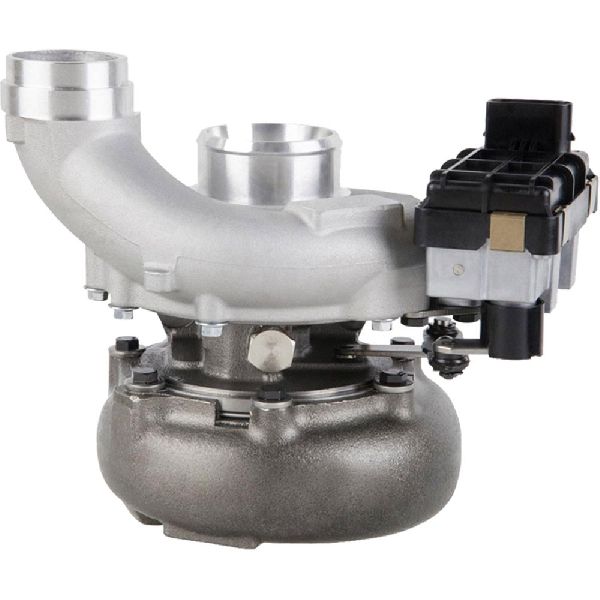
The Dodge Sprinter of this era is a rebadged Mercedes-Benz, using the OM642 V6 diesel engine. The key component for this code is the Hella electronic turbo actuator, often marked with G-numbers like G-277 or G-219. This component is a notorious failure point across all vehicles using the OM642 engine. Unlike simpler vacuum-operated systems, this is a sophisticated electronic servo motor that is prone to failure from heat, vibration, and internal wear of its plastic worm gear and motor. The ECM communicates with this actuator using a precise Pulse Width Modulation (PWM) signal, making the use of a correctly programmed, high-quality replacement part absolutely critical for a successful repair.
Symptoms You May Notice
- Check Engine Light is illuminated.
- Drastic loss of engine power, often called 'limp mode' or 'limp home mode'.
- Sluggish or delayed acceleration.
- Inability to build normal turbo boost.
- Engine RPM limited by the computer (e.g., to 3000 RPM).
- Audible whining or clicking from the actuator upon turning the key on, or no sound at all.
- Replacing the turbocharger when only the actuator has failed. Always test the turbo vanes for free movement before condemning the entire unit.
- Replacing the Boost Pressure Sensor. P0245 is an electrical circuit code for the actuator, not a performance code for a sensor. A bad boost sensor would trigger different codes, such as P0299 or P2359.
Most Likely Causes
- Failed Electronic Turbo Actuator 🔴 High Probability The actuator is mounted directly to the hot turbocharger and is subjected to intense heat and vibration. Internal components, such as the plastic worm gear and the circuit board's solder joints for the motor, are known to fail over time. The electronic motor inside can also burn out.
How to confirm: After confirming the turbo vanes are not stuck, test the actuator. With the key on, the actuator should cycle. If it doesn't move, whines, or clicks erratically, it has likely failed. A scan tool may also show Mercedes-specific code 2510-001 for 'Y77/1 (Boost pressure regulator) - Positioner signals fault', which directly points to the actuator.
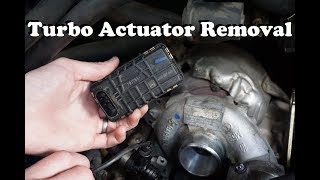
Typical fix: Replace the electronic turbo actuator. It is available as a separate component and can be replaced without removing the entire turbocharger assembly. 🎬 Watch this step-by-step guide on actuator removal and diagnostics. Using a genuine Garrett/Hella replacement is recommended as they often come pre-calibrated and are 'plug-and-play'.
Est. part cost: $150-$350 - Sticking/Seized Turbocharger Vanes (VNT) 🟡 Medium Probability → Shop Turbocharger Carbon and soot deposits from the diesel exhaust can build up inside the turbo's turbine housing, causing the delicate variable vanes to bind or seize completely. This prevents the actuator from moving the control lever, leading the ECM to believe the actuator circuit has failed.
How to confirm: Disconnect the actuator's metal linkage arm from the turbocharger's control lever by removing the small E-clip. Attempt to move the lever on the turbo by hand. It should move up and down smoothly 🎬 Watch: How to check for sticking turbocharger vanes. through its full range of motion (about 1/2 to 3/4 of an inch) with little resistance. If it is stiff, gritty, or completely stuck, the vanes are the problem.
Typical fix: The turbocharger must be removed from the engine. Sometimes it can be disassembled and thoroughly cleaned with a suitable solvent to free the vanes. More often, especially if the issue is severe or if internal components are damaged from debris, the entire turbocharger assembly is replaced.
Est. part cost: $800-$1500+ - Damaged Wiring or Connector ⚪ Low Probability The wiring harness to the actuator is in a high-heat area of the engine bay, which can make wires brittle over time. The connector pins can also corrode or break. A short to ground on the signal wire is a common electrical failure mode. The harness is also susceptible to melting from exhaust leaks at the turbo outlet flange.
How to confirm: Visually inspect the 3-wire harness and connector going to the turbo actuator for any signs of melting, chafing, or broken wires. Unplug the connector and check for corrosion or damage to the pins. Use a multimeter to check for 12V power, good ground, and the PWM signal from the ECM.
Typical fix: Repair the damaged section of the wiring harness or replace the connector pigtail.
Est. part cost: $20-$100
Rare But Worth Checking
- Faulty Engine Control Module (ECM): → Shop Engine Control Module (ECM) This is very uncommon. The ECM should only be considered a potential cause after all other possibilities, including the actuator, wiring, and the turbocharger itself, have been definitively ruled out.
- Clogged Exhaust Back Pressure Sensor: Soot can clog the port for the exhaust back pressure sensor, located near the EGR valve. This can cause the ECU to receive incorrect data about exhaust flow, leading it to erroneously flag the turbo actuator's performance and set a P0245 or related code. Cleaning the sensor and its port can resolve the issue.
Diagnosis Steps
- Scan the ECM for all stored trouble codes. Note if P0245 is present with P0299 or Mercedes codes like 2510-001.
- Turn the ignition off. Locate the electronic turbo actuator on the passenger side of the engine, mounted to the turbocharger. Some intake tubing may need to be removed for access.
- Carefully inspect the 3-wire electrical connector and harness leading to the actuator for any visible damage, melting, or corrosion. Pay close attention to the area near the turbo exhaust outlet where heat can cause damage.
- Disconnect the small metal E-clip that secures the actuator's control rod to the lever on the turbocharger. Be careful not to lose the clip.
- With the rod disconnected, manually move the lever on the turbocharger. It should pivot up and down smoothly. If it is stuck or very stiff, the turbo vanes are seized, and the turbo needs to be serviced or replaced.
- If the turbo lever moves freely, the actuator is the primary suspect. Reconnect the electrical plug but leave the linkage arm disconnected.
- Have an assistant turn the ignition on (do not start the engine). The actuator's arm should cycle through its full range of motion. If it does not move, moves erratically, or makes a loud whining/clicking noise, the actuator is faulty and needs to be replaced.
- If the actuator does not move, perform an electrical test. With the key on, check the connector for power (approx. 12V) and ground. The third wire is the PWM signal wire from the ECM.
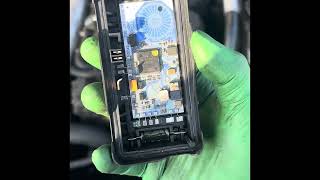
- If the actuator is suspected to be faulty due to an internal open circuit, it is possible to open the actuator housing (by removing the metal clips) and inspect the solder joints connecting the external plug to the internal circuit board. Broken solder joints are a common, repairable failure. 🎬 See how to inspect and repair internal actuator circuit boards.
- If all tests point to a faulty actuator, replace it. It is typically held on by three small bolts.
Parts You'll Likely Need
- Electronic Turbocharger Actuator
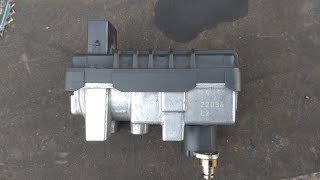
(OEM #68019589AA (This is for the full turbo assembly; the actuator itself is not sold separately by Mopar/Mercedes). Hella G-Number: G-277, G-219, or G-001. Hella Part Number: 6NW009420.)— This is the most common failure point for code P0245 on the OM642 engine. The internal electronics and gears wear out from heat and vibration.
Trusted brands: Hella (OEM), Garrett (OEM), Rotomaster, Dorman
OEM price range: $250-$400 (Remanufactured/New from OEM supplier)
Aftermarket price range: $150-$250 - Turbocharger Actuator Linkage Clip — This small E-clip is very easy to lose during diagnosis or replacement. It's wise to have a spare on hand.
Trusted brands: Generic E-clip assortment
OEM price range: $1-$5
Aftermarket price range: $1-$5
Related Codes That Often Appear With This One
- P0299 — P0299 (Turbo/Supercharger Underboost) is a performance code that results from the actuator's failure. The P0245 electrical fault prevents the actuator from properly controlling the turbo vanes, leading to a lack of boost.
- 2510 (Mercedes-specific) — This is the manufacturer-specific code for 'Boost pressure regulator - Positioner signals fault'. It directly points to a problem with the electronic turbo actuator (component Y77/1) and is often stored alongside the generic P0245.
- 2359 (Mercedes-specific) — This code for 'Charge pressure control - Charge pressure too high/low' can also be triggered alongside P0245 and 2510, indicating the control system is not functioning as expected due to the actuator fault.
Platform-Specific Known Issues
- The use of aftermarket actuators that are not properly calibrated for the OM642's PWM control system can lead to persistent codes and performance issues. It is highly recommended to use an OEM Hella/Garrett unit or a reputable remanufactured part that is pre-calibrated and plug-and-play.
- Chinese-made, unbranded actuators from eBay or Amazon have a very high failure rate and may not work at all out of the box. Owner experiences on forums frequently warn against these cheap alternatives.
- Before condemning the actuator, it is absolutely critical to confirm the turbocharger's VNT lever moves freely. Seized vanes are a common issue that will mimic a failed actuator.
Mechanic-Grade Diagnostic Values
- Actuator Connector - Power Pin Voltage — expected: Approximately 12V with Key On, Engine Off (KOEO).. Failure: A reading below 11V indicates a potential wiring or ECM driver issue.
- Actuator Wiring Harness Continuity — expected: Less than 0.5 Ω. Failure: Infinite resistance (OL) indicates an open circuit. Resistance higher than 0.5 Ω suggests corrosion or a damaged wire.
Hidden / Shadow Codes Worth Checking
- 2510-001: Check component Y77/1 (Boost pressure regulator). Positioner signals fault. This is a more specific version of the generic 2510 code and directly implicates the actuator's internal feedback mechanism. (see via Mercedes-Benz specific diagnostic scanner like DAS/Xentry or a high-end aftermarket scanner (iCarSoft, Autel, etc.) with Mercedes software.)
Scan Tool Commands That Help
- Mercedes DAS/Xentry, iCarSoft MB: Actuation test for component Y77/1 (Boost pressure regulator) — This command forces the actuator to cycle through its range of motion. It's used to verify if the actuator is physically responding to commands from the ECM. A pass/fail result helps isolate the problem to the actuator itself or the control circuit.
- Mercedes DAS/Xentry: Actuator Teach-In / Adaptation — Contrary to some beliefs, there is NO user-accessible teach-in or adaptation function for the Y77/1 actuator in the dealer scan tool for this specific engine. Genuine replacement actuators are designed to be plug-and-play. Any necessary calibration is done at the factory or by specialized rebuilders.
Wiring & Ground Locations
- Y77/1 Connector — The 3-pin electrical connector on the electronic turbo actuator, located on the passenger side of the engine, mounted to the turbocharger.. This is the direct connection point for the component in question. Inspecting for power, ground, and signal here is a primary diagnostic step. The pins can corrode, and the harness is prone to heat damage.
- Internal Actuator Solder Joints — Inside the black plastic housing of the actuator itself, where the 3-pin external connector's terminals are soldered to the main circuit board.. A very common but hidden failure point is for one or more of these solder joints to crack from engine vibration, creating an open circuit that triggers P0245. The external wiring may look perfect, but the fault is inside the unit.
- Main Engine Ground Strap — Located near the left-hand (driver's side in US) engine mount, below the oil filter area.. A corroded or loose main engine ground can cause a variety of electrical issues and voltage drops across the engine, potentially affecting sensor and actuator readings. While not a direct cause, ensuring this ground is clean and tight is good practice when chasing electrical faults.
- Under-Seat Ground Points — The NCV3 Sprinter has two main ground distribution points under the driver's seat pedestal.. These are central grounding locations for many vehicle systems. While less likely to be the root cause for this specific code, they are a key part of the vehicle's overall electrical health.
Real Owner Repair Stories
- Mercedes Tech Talk forum user (Mercedes S211 E280CDI (uses same OM642 engine and actuator)) — Sudden limp mode, fault code 2510-001.
❌ Tried (didn't work) A scan tool actuation test appeared to work perfectly, which was misleading.
✅ What actually fixed it The owner opened the actuator's plastic cover and found a broken wire leading to the internal motor. He re-soldered the wire to the circuit board, which completely resolved the fault. - MBClub UK forum user (2006 Mercedes E280CDI with 100k miles (OM642 engine)) — Check engine light, limp mode, code 2501-001 (likely typo for 2510-001).
❌ Tried (didn't work) Dealer recommended replacing the entire turbo for £1,500. Scan tool actuation test passed. Manually checked turbo vanes, which moved freely.
✅ What actually fixed it The owner found the exhaust back pressure sensor and its port in the EGR casting were heavily clogged with soot. He cleaned the sensor and the port, which fixed the limp mode and cleared the code. - YouTube video by 'OM642 Turbo Actuator' (Mercedes ML320 CDI (OM642 engine)) — Limp mode, fault code for Y77/1 Boost pressure regulator positioner signals fault.
❌ Tried (didn't work) Checking external wiring showed no issues.
✅ What actually fixed it The video demonstrates opening the actuator housing, identifying broken power wires at the circuit board, and re-soldering them. This restored function to the actuator and cleared the code.
When the Usual Fixes Don't Work
- In several documented cases, replacing the turbo actuator did not solve the P0245/2510 code. One owner replaced the actuator, ECU, cleaned the turbo, and checked wiring with no success, until a previously hidden and poorly repaired wire in the main harness was discovered. Another owner found the ultimate cause to be a soot-clogged exhaust back pressure sensor, which was providing incorrect data to the ECU and causing it to misinterpret the actuator's function. These instances highlight that while the actuator is the most common cause, it is critical to rule out underlying wiring issues and related sensor faults before committing to expensive parts.
OEM Part Supersession History
Hella G-219 / G-277→Hella G-001 (often sold as a universal replacement)— Consolidation of part numbers for a wider range of applications.
Heads up: While often sold as universal, the actuator's programming (start/end angles) can vary. A genuine Garrett/Hella replacement with 'universal calibration' is plug-and-play. Some aftermarket replacements may require programming by a turbo specialist to match the original unit's parameters to avoid performance issues or collisions with the turbo's internal stops.
Diagnostic Flowchart
Other Known Issues on This Vehicle
Issues unrelated to this code that are worth knowing about as an owner of this generation:
- Oil Cooler Seal Leak 🔴 High — Very common, especially on pre-2010 models. Often occurs after 100,000-120,000 miles. The original orange seals degrade, while updated purple Viton seals last longer.
- Injector Seal Failure ('Black Death') 🔴 High — A common issue where the copper injector seal fails, allowing combustion gases to leak past the injector, forming a hard, black, tar-like substance around the injector base.
- Swirl Flap Motor Failure 🟠 Medium — The plastic linkages for the intake manifold's swirl flaps can break, or the motor itself can fail due to oil contamination from a leaking turbo seal. This often sets codes and can cause performance issues.
- Cracked Turbo Resonator / Leaking Intercooler Hoses 🟠 Medium — The plastic turbo resonator and rubber intercooler hoses are known to crack or split, causing boost leaks, which can lead to a loss of power and oil residue in the engine bay.
- Glow Plug Module Failure 🟠 Medium — The glow plug controller module is a frequent failure item, leading to a check engine light and difficulty starting in cold weather. Individual glow plugs can also seize in the cylinder head, making replacement difficult.
- DPF and DEF System Faults 🔴 High — Common on 2010+ BlueTEC models, but the DPF can still become clogged on 2007-2009 models, leading to limp mode. Sensors related to the DPF are also common failure points.
Used vs. New Parts: Buying Guide for This Vehicle
When a used part is the smart pick: A used OEM Hella/Garrett actuator from a verified low-mileage donor vehicle is a potential budget-friendly option. However, given the high failure rate of this part due to heat and vibration, it is a significant gamble. It makes most sense if the cost is extremely low and you are comfortable with the risk of premature failure.
Donor-vehicle mileage cap: roughly under 60000 miles for the part to have meaningful remaining life.
What to inspect on the donor part:
- Ensure the G-Number (e.g., G-277) on the housing matches your original part.
- Inspect the plastic housing for any cracks, especially around the mounting points.
- Check that the electrical connector pins are straight, clean, and free of corrosion.
- Ask the seller if the donor vehicle had any turbo-related fault codes.
OEM-only on this vehicle (don't cheap out):
- Electronic Turbo Actuator
Aftermarket brands forum-validated for this vehicle:
- Hella (OEM supplier)
- Garrett (OEM supplier)
- Rotomaster (Reputable remanufacturer)
- Dorman (Reputable remanufacturer)
Brands owners have reported issues with on this vehicle:
- Unbranded, 'no-name' actuators from online marketplaces like AliExpress or eBay are strongly advised against. Forum and repair shop consensus indicates these parts have extremely high out-of-box failure rates and often lack the correct internal programming, leading to persistent codes and performance problems.
Real Owner Stories
Aggregated from forums and TSBs cited above. Mileages and costs reflect what owners reported in those sources.
2007-2009 Dodge Sprinter 3.0L V6 Diesel
Symptoms: The owner reported the actuator was whining and clicking, and the vehicle had a positioner fault code (2592).
What fixed it: The root cause was not the actuator but the turbocharger itself. After disconnecting the actuator linkage, the owner confirmed the turbo vanes were 'frozen solid', requiring turbo service or replacement.
Source hint: peachparts.com: A user in the thread 'OM642 VNT Turbo actuator issues'
2007-2009 Dodge Sprinter 3.0L V6 Diesel
Symptoms: The owner had trouble codes 2510 (actuator) and 2511 (EGR).
What fixed it: The final fix required replacing multiple components: the EGR valve, the DPF sensor, and the boost actuator.
Source hint: reddit.com/r/Sprinters: In a thread about codes 2510 (actuator) and 2511 (EGR)
Related OBD-II Codes
Frequently Asked Questions
How can I tell if the problem is my Sprinter's turbo actuator or if the turbo vanes are stuck?
My Sprinter is in limp mode and won't rev past 3000 RPM. Is this a symptom of P0245?
Can I just replace the electronic actuator, or do I need to buy a whole new turbocharger assembly?
Are the cheap, unbranded turbo actuators from Amazon or eBay a good option for my 2008 Sprinter?
My scanner shows a Mercedes-specific code 2510-001 along with P0245. What does that mean?
Is it possible to repair the original turbo actuator instead of replacing it?
Helpful Videos
We Have This Part in Stock



The information in this article is provided for general reference and educational purposes only. Vehicle specifications, procedures, and part compatibility can vary by production date, trim level, and region. Always consult your vehicle's factory service manual and verify part numbers before purchasing or performing repairs. Safety-critical components such as airbags, seat belts, and braking systems should be installed by a qualified professional.
- Dodge Sprinter:
- 🧭 Diagnostic Flowchart
- 🎬 Helpful Videos
- 🛍️ Shop This Part
- What's Unique About the 2007-2009 Dodge Sprinter
- Symptoms You May Notice
- Most Likely Causes
- Rare But Worth Checking
- Diagnosis Steps
- Parts You'll Likely Need
- Related Codes That Often Appear With This One
- Platform-Specific Known Issues
- Mechanic-Grade Diagnostic Values
- Hidden / Shadow Codes Worth Checking
- Scan Tool Commands That Help
- Wiring & Ground Locations
- Real Owner Repair Stories
- When the Usual Fixes Don't Work
- OEM Part Supersession History
- Other Known Issues on This Vehicle
- Used vs. New Parts: Buying Guide for This Vehicle
- Real Owner Stories
- 2007-2009 Dodge Sprinter 3.0L V6 Diesel
- 2007-2009 Dodge Sprinter 3.0L V6 Diesel
- Related OBD-II Codes
- Frequently Asked Questions
- 🎟️ Get 5% Off