

P0245 on 2013-2019 Ford Escape: Turbo Wastegate Solenoid 'A' Low Explained
For 1.5L and 2.0L engines, this code is often caused by a blown fuse (F34 in the under-hood fuse box) due to a chafed wiring harness near the airbox or brake vacuum pump. For 1.6L engines, the cause is more likely a faulty turbocharger wastegate solenoid itself. A replacement solenoid costs between $50 and $150.
- The cause of P0245 on a 2013-2019 Ford Escape depends heavily on the engine.
- If you have a 1.5L or 2.0L engine, the very first step is to check fuse F34 in the under-hood fuse box.
- If you have a 1.6L engine, the problem is most likely a failed turbocharger wastegate solenoid.
- Symptoms almost always include a Check Engine Light and a significant loss of power.
- This is a very DIY-friendly repair, often costing less than $150 and requiring basic hand tools.
What's Unique About the 2013-2019 Ford ESCAPE

On the 2013-2019 Ford Escape, the root cause for P0245 is highly dependent on the engine. For the 1.5L and 2.0L EcoBoost engines, Ford issued multiple Technical Service Bulletins (TSBs) indicating that a blown 15A fuse (F34) is a very common cause, often resulting from a chafed wiring harness. For the 1.6L EcoBoost engine, TSB 15-0162 points more directly to the failure of the turbocharger wastegate regulating valve solenoid itself as the primary culprit.
Diagnostic Flowchart

Tap your situation to follow the diagnostic path that matches what you're seeing on this vehicle.
Symptoms You May Notice
- Check Engine Light (MIL) illuminated
- Noticeable lack of engine power and poor acceleration
- Vehicle may enter 'limp mode' or 'reduced power' mode
- Error messages on the dash such as "AWD Fault", "Transmission Fault Service Now", or "Hill Descent Not Available" (especially on 1.5L/2.0L models with a blown fuse F34)
- Sluggish throttle response
- Abnormal whistling or rattling noises from the turbocharger area
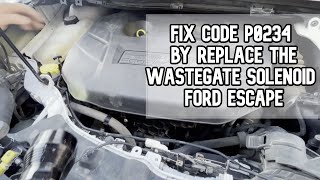
- Replacing the entire turbocharger 🎬 Watch: How to replace the wastegate solenoid on a 2.0L engine assembly when only the external solenoid, wiring, or a fuse is at fault.
- Replacing the wastegate solenoid on a 1.5L/2.0L model without first checking for the common blown fuse F34 and associated wiring chafe.
Most Likely Causes

- Blown Fuse F34 (1.5L & 2.0L Engines) 🔴 High Probability Multiple TSBs (SSM 47086, SSM 48895, SSM 47575) identify that the engine wiring harness is prone to chafing against components like the A/C compressor, brake vacuum pump, or under the air cleaner assembly. This causes a short to ground that blows the fuse F34. This fuse powers the wastegate solenoid along with several other critical components, leading to multiple DTCs.
How to confirm: Inspect fuse F34 in the under-hood fuse box (Battery Junction Box). If it is blown, this is a strong indicator. A user on a Ford Fusion forum noted that a fuse can look visually okay but still be bad, so testing with a multimeter or test light is recommended. For 2017+ models, F34 is a 10A fuse.
Typical fix: Replace the fuse. If it blows again, meticulously inspect the wiring harness for chafing, especially under the air cleaner, near the A/C compressor, and around the brake vacuum pump. Repair any damaged wires with solder and heat shrink, then protect the harness with anti-abrasion tape or loom and secure it away from the contact point.
Est. part cost: $1-$5 - Faulty Turbocharger Wastegate Solenoid 🔴 High Probability → Shop Turbocharger This is the primary cause identified in TSB 15-0162 for the 1.6L engine. The solenoid is an electro-mechanical part mounted near the hot turbocharger that can fail from heat, vibration, and internal contamination over time.
How to confirm: Use a multimeter to test the resistance of the solenoid. Disconnect the electrical connector and measure across the two pins. The expected resistance is typically between 10-30 ohms, though specifications can vary. A reading of infinite resistance (open) or near-zero resistance (short) indicates a failed solenoid. A scan tool with bidirectional control can also command the solenoid to check for operation.
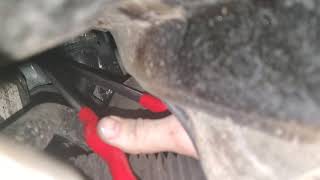
Typical fix: Replace the turbocharger wastegate solenoid (also called a boost control solenoid or regulating valve). On the 1.6L, this part is located near the turbo and is accessible from under the vehicle after removing the splash shield. 🎬 See this walkthrough for replacing the 1.6L turbo regulating solenoid
Est. part cost: $50-$150 - Damaged Wiring or Connector 🟡 Medium Probability Aside from the specific TSB-related chafing, the engine bay is a harsh environment. Wires leading to the solenoid can become brittle, corroded, or damaged from heat and vibration, causing a short to ground or an open circuit. The connector itself can also become contaminated with oil or moisture, leading to a poor connection.
How to confirm: Visually inspect the wiring harness and connector for the wastegate solenoid. Check for breaks, melting, or corrosion. Perform a continuity test on the wires between the PCM and the solenoid connector. Check for battery voltage on the power wire and for a short to ground on the control wire.
Typical fix: Repair the damaged section of the wire or replace the connector pigtail. Clean any contamination from the connector terminals with electrical contact cleaner.
Est. part cost: $10-$40
Rare But Worth Checking
- Faulty Powertrain Control Module (PCM): → Shop Engine Control Module (ECM) This is very rare. A Reddit user with a 2016 Escape documented a case where after confirming the wiring and solenoid were good, they found the PCM was outputting 3.44V on the control wire when it should have been zero, indicating an internal short in the PCM driver circuit. All other possibilities must be exhausted before condemning the PCM.
Diagnosis Steps
- Read all stored Diagnostic Trouble Codes (DTCs) with an OBD-II scanner. Note all codes present.
- For 1.5L and 2.0L engines: Immediately check fuse F34 in the under-hood fuse box. It is a 15A fuse on earlier models and a 10A fuse on 2017-2019 models. If it's blown, replace it. If it blows again, you have a short circuit. Meticulously inspect the engine wiring harness for chafing, paying close attention to areas under the airbox, near the A/C compressor, and around the brake vacuum pump.
- For 1.6L engines (or if fuse is OK on others): Locate the turbocharger wastegate solenoid. It's near the turbocharger, best accessed through the passenger side front wheel well after removing the liner.
- Visually inspect the solenoid's electrical connector and the surrounding wiring for any signs of damage, melting, oil contamination, or corrosion.
- Disconnect the solenoid and check its resistance with a multimeter. Compare the reading to the factory specification (typically 10-30 Ohms). An open circuit (infinite resistance) or a short (near-zero resistance) indicates a failed solenoid.
- If the solenoid tests good, check for power and ground at the connector. With the key on, one pin should have battery voltage. The other is the control wire from the PCM; check it for a short to ground.
- If wiring, fuse, and solenoid are all confirmed to be good, the problem may be with the PCM, but this is extremely unlikely and should be the last consideration.
Parts You'll Likely Need
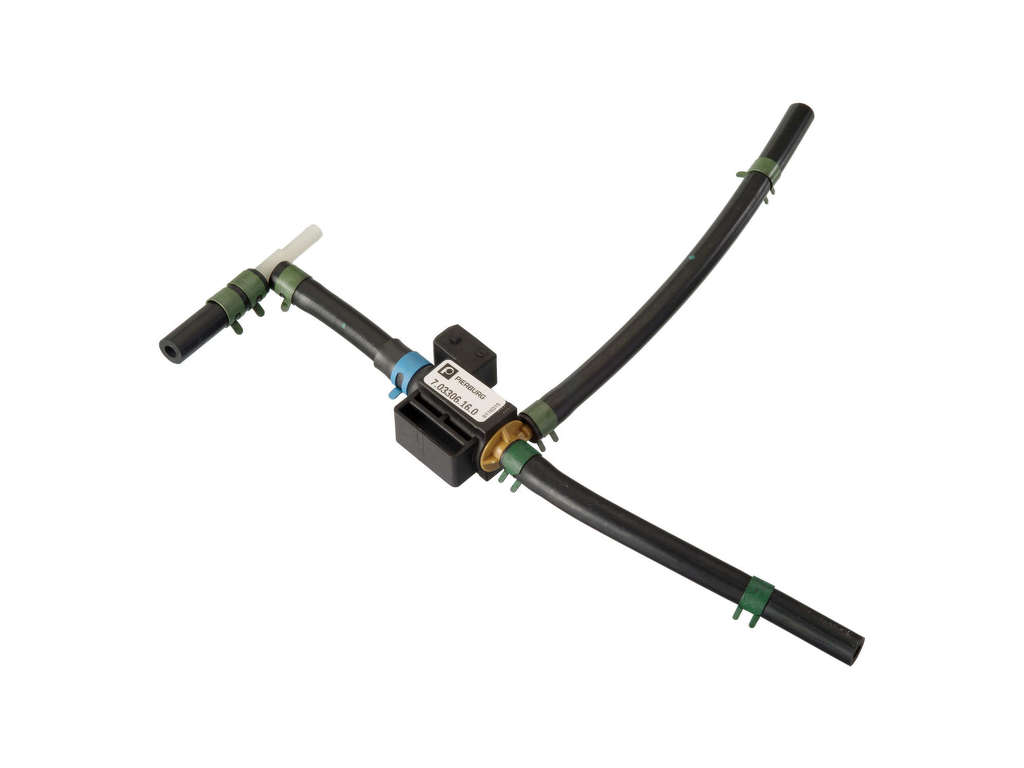
- Turbocharger Wastegate Solenoid (Boost Control Solenoid)
(OEM #CJ5Z-9K378-B (for 1.6L engine))— This is the most common component failure, especially on the 1.6L engine, as identified in TSB 15-0162.
Trusted brands: Motorcraft, Pierburg, Dorman
OEM price range: $100-$160
Aftermarket price range: $40-$90 - Fuse (F34)
(OEM #10A or 15A Mini Fuse)— A very common failure point for 1.5L and 2.0L engines, as documented in multiple TSBs. It's the first thing to check on these models.
Trusted brands: Bussmann, Littlefuse
OEM price range: $1-$5
Aftermarket price range: $1-$5
Related Codes That Often Appear With This One
- P0234, P0246, P0299 — These codes are often seen with P0245 on the 1.6L engine, as they all relate to turbocharger boost control issues. TSB 15-0162 lists them together as a group addressed by replacing the wastegate solenoid.
- P0034, P023A, P0480, P0481, P0645, P06A0, P06DB, P188D, P2602, P2681 — These codes are frequently seen with P0245 on 1.5L and 2.0L engines because they are all powered by the same circuit protected by fuse F34. A short in any one of these components' circuits can blow the fuse and cause multiple codes to appear simultaneously. [SSM 47086, SSM 48895, SSM 47575, 22]
Technical Service Bulletins (TSBs) & Recalls
- SSM 47086: Notes that 1.5L/2.0L engines may exhibit a blown fuse F34 and P0245 due to a wiring issue.
- SSM 48895: Repeats the information from SSM 47086 for 2017-2019 models, indicating a persistent issue with fuse F34 and associated codes.
- TSB 15-0162: Addresses lack of power and P0245 on 1.6L engines by instructing technicians to inspect vacuum lines and, if they are okay, replace the wastegate regulating valve solenoid.
- SSM 47575: Another TSB confirming the fuse F34 and wiring harness chafing issue on 1.5L/2.0L models.
Platform-Specific Known Issues
- 1.5L/2.0L Wiring Harness Chafing: On 1.5L and 2.0L engines, a wiring harness that is not properly retained can chafe against other components (A/C compressor, brackets under airbox), causing a short circuit that blows fuse F34 and triggers P0245 along with many other codes. [SSM 47086, SSM 48895, SSM 47575, 22] This is the most prevalent issue for these specific engines.
- 1.6L Solenoid Failure: On 1.6L engines, TSB 15-0162 specifically calls out replacing the wastegate regulating valve solenoid to fix P0245 and related boost codes, indicating a known high failure rate for the part itself, rather than a wiring issue.
Mechanic-Grade Diagnostic Values
- Wastegate Solenoid Control Wire Voltage (Key On, Engine Off) — expected: 0 Volts. Failure: Any significant voltage, such as the 3.44V reported by one owner, indicates a short to voltage, potentially within the PCM itself.
- Wastegate Solenoid Power Pin Voltage (Key On, Engine Off) — expected: 12 V ± 0.5 V. Failure: A reading below 11V indicates a low-voltage condition in the supply circuit, possibly due to a corroded wire or failing fuse connection.
- Wastegate Solenoid Resistance — expected: 10 - 30 Ohms (General Specification). Failure: Infinite resistance (open circuit) or near-zero resistance (short circuit) indicates a failed solenoid.
Scan Tool Commands That Help
- Ford IDS, FORScan, high-end scanners (Autel, etc.): Wastegate Solenoid Test / Output State Control (OSC) — This bidirectional command allows the technician to manually activate and deactivate the wastegate solenoid. It is used to confirm if the solenoid itself is functional after verifying the wiring and fuse are good. If the solenoid clicks or actuates when commanded, the part is likely working, and the fault is elsewhere.
Wiring & Ground Locations

- Under-hood Fuse Box (Battery Junction Box) — Located in the engine compartment, on the driver's side of the vehicle.. This box contains Fuse F34, which is the most common point of failure for the P0245 code on 1.5L and 2.0L engines.
- Wastegate Solenoid (1.6L Engine) — On the side of the engine, best accessed by removing the front passenger side wheel and wheel well liner.. This is the physical location of the solenoid that most commonly fails on the 1.6L engine, as per TSB 15-0162.
- Wastegate Solenoid (2.0L Engine) — Top of the engine, easily accessible after removing the plastic engine cover.. Knowing the location is critical for testing and replacement. Unlike the 1.6L, the 2.0L solenoid is in a much more accessible location.
- Engine Wiring Harness (1.5L/2.0L) — Runs from the under-hood fuse box, under the air cleaner assembly, and around the brake vacuum pump towards the PCM.. This harness is known to chafe in multiple locations, causing the short circuit that blows fuse F34. Inspection of this entire run is critical if the fuse blows repeatedly.
Real Owner Repair Stories
- Reddit user /u/worrub918 (2014 Ford Fusion Titanium (shares powertrain with Escape)) — Check Engine Light with code P0245, limited boost pressure (4-5 psi).
❌ Tried (didn't work) Replaced the wastegate solenoid.
✅ What actually fixed it A blown fuse. The user emphasizes that the fuse appeared visually perfect but failed a test with a test light. Replacing the fuse resolved the issue after spending significant time and money on other parts. - Reddit user in /r/MechanicAdvice (2016 Ford Escape) — P0245, blown fuse F34, loss of power, multiple dash warnings ('transmission fault', '4wd fault').
❌ Tried (didn't work) Replaced fuse F34 (cleared some warnings but P0245/P0246 remained)., Checked solenoid resistance (was within spec)., Visually inspected wiring harness for chafing (found nothing)., Considered running an overlay wire.
✅ What actually fixed it The user diagnosed the problem down to the PCM itself. After cutting the control wire near the PCM, they still measured 3.44V coming directly out of the PCM pin, indicating an internal short. The final fix was a PCM replacement. This is a rare but confirmed resolution.
OEM Part Supersession History
CJ5Z-9K378-A→CJ5Z-9K378-B— Standard part revision by the manufacturer, likely for improved durability or material changes.
Model Year Variations Within This Range
- 2013-2016 vs 2017-2019 (1.5L/2.0L): The amperage rating for fuse F34, which powers the wastegate solenoid circuit, changed with the 2017 model year facelift. On 2013-2016 models, it is typically a 15A fuse. On 2017-2019 models, fuse diagrams list F34 as a 10A fuse.
Helpful Videos
Used OEM Parts in Stock
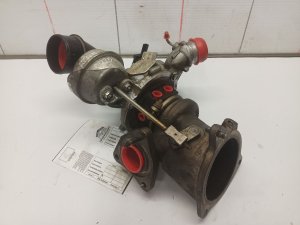
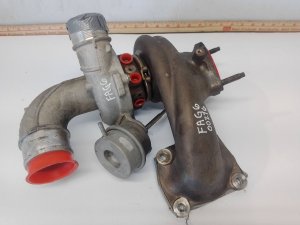
New Aftermarket Parts Available


The information in this article is provided for general reference and educational purposes only. Vehicle specifications, procedures, and part compatibility can vary by production date, trim level, and region. Always consult your vehicle's factory service manual and verify part numbers before purchasing or performing repairs. Safety-critical components such as airbags, seat belts, and braking systems should be installed by a qualified professional.
- Ford ESCAPE:
- 🧭 Diagnostic Flowchart
- 🎬 Helpful Videos
- 🛍️ Shop This Part
- What's Unique About the 2013-2019 Ford ESCAPE
- Symptoms You May Notice
- Most Likely Causes
- Rare But Worth Checking
- Diagnosis Steps
- Parts You'll Likely Need
- Related Codes That Often Appear With This One
- Technical Service Bulletins (TSBs) & Recalls
- Platform-Specific Known Issues
- Mechanic-Grade Diagnostic Values
- Scan Tool Commands That Help
- Wiring & Ground Locations
- Real Owner Repair Stories
- OEM Part Supersession History
- Model Year Variations Within This Range
- 🎟️ Get 5% Off