

OBD-II Code P0246: Turbo Wastegate Solenoid 'A' Circuit High
The Ultimate 2024 Guide to Diagnosing and Fixing P0246
- P0246 is a strict electrical fault indicating the Powertrain Control Module receives a voltage signal exceeding 5 volts from the wastegate solenoid, usually caused by a broken wire.
- Always test the wiring harness before replacing parts; heat and vibration cause open circuits at the solenoid connector in over 50% of P0246 cases.
- Expect an immediate 10-15% drop in fuel economy and a forced 'limp mode' that restricts engine RPMs and limits turbo boost to under 5 PSI to prevent damage.
- Stop driving immediately if P0246 is paired with overboost code P0234, as a stuck-closed wastegate will destroy a $2,000+ turbocharger within miles.
- Verify a failed solenoid by testing its internal resistance with a multimeter; a healthy unit reads between 10 and 40 Ohms, while an 'OL' reading confirms an internal break.
What Does P0246 Mean?
P0246 means the Powertrain Control Module (PCM) detects a voltage signal from the turbocharger's wastegate control solenoid that exceeds the expected range. This is an electrical fault, not a mechanical one. The control circuit is compromised by a broken wire (open circuit) or a short to power. This prevents the PCM from commanding the wastegate to regulate boost pressure, hurting engine performance, increasing fuel consumption by 10-15%, and risking severe engine or turbo damage.
Technical definition: The SAE/OBD-II definition is "Turbocharger/Supercharger Wastegate Solenoid 'A' High". The Powertrain Control Module (PCM) detects an abnormally high voltage condition in the control circuit for wastegate solenoid 'A'. An open circuit in the wiring harness, a short to power, or an internally failed solenoid causes this. The PCM interprets the lack of a complete circuit or unexpected voltage as a 'high' signal.
🎬 Watch: A quick guide to understanding the P0246 code.Can I Drive With P0246?
Yes, But With Caution. Yes, for short, essential trips, but avoid heavy acceleration and highway speeds. The engine enters 'limp mode' with significantly reduced power to protect itself. Driving with uncontrolled boost causes rapid, expensive damage. An overboost condition destroys the engine, while prolonged underboost damages the catalytic converter ($800-$2,500+). Ignoring this code turns a simple wiring fix into a full turbocharger replacement ($2,000-$4,000+).
Common Causes
- Wiring Harness or Connector Issues (Very Common) — Wires leading to the solenoid sit in a high-heat, high-vibration area. They become brittle, frayed, or melted, causing an open circuit (the most common cause of a 'high' code) or a short to power. Connector pins also corrode or loosen, creating high resistance. Damage is frequently found right at the solenoid connector.
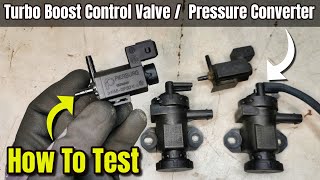
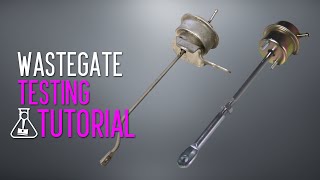
- Faulty Wastegate Solenoid (Very Common) — The solenoid (also called a boost control solenoid or N75 valve) fails internally from heat cycles and wear. This causes an open circuit or internal short that sends a high voltage signal back to the computer. 🎬 See how to test your solenoid valve step-by-step.
- Faulty Boost Pressure Sensor (Less Common) — A faulty boost pressure or MAP sensor sends incorrect pressure readings to the PCM. The computer misinterprets this data and flags the wastegate solenoid circuit as it fruitlessly attempts to compensate. Always address boost sensor codes first.
- Stuck or Binding Wastegate Actuator/Arm (Less Common) — The mechanical arm controlled by the solenoid gets stuck due to carbon buildup or mechanical failure. While this is a mechanical issue, if the PCM doesn't see the expected change in boost pressure after commanding the solenoid, some systems flag a circuit performance code.
- Vacuum Leaks (Less Common) — On systems using vacuum to control the wastegate, cracked or disconnected vacuum lines prevent the actuator from moving. This indirectly causes the PCM to detect a control circuit performance issue as it fails to achieve target boost.
- Software Calibration Mismatch (Rare) — This occurs after a performance tune or if the PCM is replaced without correct programming. The PCM's boost control map does not match the hardware, causing it to command a voltage outside the solenoid's expected range.
- Faulty Powertrain Control Module (PCM) (Very Rare) — The internal driver circuit that controls the solenoid fails, causing it to send or read incorrect voltages. Consider this only after exhaustively ruling out wiring and solenoid failures.
Symptoms
- Check Engine Light is On — The Malfunction Indicator Lamp (MIL) illuminates. It flashes during acceleration if a severe overboost or misfire condition is detected, indicating immediate danger to the engine.
- Drastic Loss of Engine Power — The vehicle feels sluggish and accelerates slowly. The computer intentionally enters "limp mode," limiting boost, RPMs, and power to protect the engine from uncontrolled pressure.
- Poor Fuel Economy — The engine runs inefficiently because the air-fuel mixture cannot be properly controlled, resulting in a sudden 10-15% drop in fuel economy.
- Abnormal Noises from Engine Bay — You hear a distinct high-pitched whistling from a boost leak, or a rattling/fluttering sound from a stuck actuator arm as the turbo struggles to regulate pressure.
- Engine Hesitation, Surging, or Stalling — The engine stumbles, hesitates, or surges unpredictably under throttle due to inconsistent boost pressure. It occasionally idles roughly or stalls completely.
Diagnostic Flowchart
Tap your situation to follow the diagnostic path that matches what you're seeing on this code.
Common Fixes & Costs
- Repair Wiring Harness or Connector — Parts: $10-$50, Labor: $125-$350, ~2 hr book time (Intermediate)
- Replace Wastegate Solenoid (Boost Control Solenoid) — Parts: $50-$150, Labor: $100-$250, ~1.5 hr book time (DIY)
- Replace Cracked or Leaking Vacuum Hoses — Parts: $10-$30, Labor: $75-$150, ~0.8 hr book time (DIY)
- Replace Boost Pressure Sensor — Parts: $50-$150, Labor: $50-$100, ~0.7 hr book time (DIY)
- Replace Turbocharger Assembly — Parts: $1,500-$2,500, Labor: $500-$1,200, ~6 hr book time (Professional)
- Replace Powertrain Control Module (PCM) — Parts: $800-$1,500, Labor: $200-$400, ~1.5 hr book time (Professional)
Used vs. New Parts: Buying Guide
When a used part is worth it: For the most common fix, the wastegate solenoid, buying used is NOT recommended. It is an electronic part with a finite lifespan, and the cost savings are minimal compared to the risk of premature failure and repeated labor costs.
Donor-vehicle mileage cap: roughly under 20000 miles for the part to have meaningful remaining life.
Donor quality checklist:
- Match the part number exactly, including any revision letters (e.g., VW/Audi N75 valves).
- Avoid parts from high-mileage vehicles or those from regions with extreme heat or road salt.
- Visually inspect the connector for any signs of corrosion or heat damage.
Decision logic:
- If The part is a wastegate solenoid, boost sensor, or wiring pigtail. → Always buy new OEM or a high-quality aftermarket equivalent. The cost difference is too small to justify the risk of a used part failing.
- If The part is a complete turbocharger assembly and the budget is extremely tight. → A used unit from a verified low-mileage, accident-damaged vehicle is an option, but a remanufactured unit with a warranty is a much safer choice.
Warranty tradeoff: Used parts typically have a 30-90 day warranty at best, which does not cover labor. New aftermarket parts carry a 1-year to limited lifetime warranty. New OEM parts carry a 1-2 year warranty.
Worst-case if a used part fails: $200-$400 if a used solenoid fails shortly after installation, requiring repeat labor and the purchase of another part.
What Happens If You Wait — Timeline
- 0-2 weeks: Code P0246 is set, Check Engine Light is on. Vehicle enters 'limp mode' with significant power loss. Boost is limited to a safe, low level (e.g., 5 PSI). (MPG impact: 10-15%% · Added cost: $0-$50 in wasted fuel)
- 2 weeks - 3 months: Continued driving in limp mode puts extra strain on other components. If the fault causes a persistent rich fuel mixture, the catalytic converter gets coated with unburnt fuel, reducing its efficiency. (MPG impact: 15-20%% · Added cost: $50-$150 in wasted fuel)
- 3-6 months: If the underlying fault is intermittent and causes spikes of overboost, it leads to premature wear on turbocharger bearings. If the fault causes a rich condition, the catalytic converter becomes permanently damaged from overheating. (MPG impact: 15-25%% · Added cost: $1,200-$2,800 (for catalytic converter replacement))
- 6+ months: Worst-case scenario: a fault causing the wastegate to stick shut leads to a severe overboost event. This causes catastrophic failure of the turbocharger (impeller blades break) or internal engine damage (pistons, valves). (MPG impact: N/A (vehicle likely inoperable)% · Added cost: $3,000-$8,000+ (for turbocharger and/or engine repair))
Cost of Not Fixing It
- 0-1 month: Significant drop in fuel economy (10-15%), poor acceleration, and potential for failed emissions test. Vehicle is stuck in 'limp mode'. (Added cost: $50-$150 in wasted fuel.)
- 1-6 months: If the fault causes a prolonged rich condition (to compensate for a perceived boost issue), it overheats and destroys the catalytic converter. (Added cost: $1,200-$2,800)
- 6+ months: If the fault causes an uncontrolled overboost condition, it leads to catastrophic engine damage, including piston and valve burnout or a completely failed turbocharger. (Added cost: $3,000-$8,000+)
Diagnosis Steps
- Read Codes and Review Freeze Frame Data
Use an OBD-II scanner to confirm P0246. Check for related codes (e.g., P0245, P0299, P0234, P2563). Analyze the freeze frame data to see exact engine conditions (RPM, load, speed, temperature) when the fault triggered.
Tools: OBD-II Scanner (Beginner) - Thorough Visual Inspection
Let the engine cool. Visually inspect the wastegate solenoid, its electrical connector, and the wiring harness. Look for burnt, brittle, or frayed wires, corrosion on connector pins, or loose connections. Check all vacuum lines for cracks or disconnections.
Tools: Flashlight, Inspection Mirror (Beginner) - Test Solenoid Internal Resistance
Disconnect the solenoid's electrical connector. Set a multimeter to Ohms (Ω). Probe the two pins on the solenoid. A healthy solenoid reads between 10 and 40 ohms (check service manual for exact specs). A reading of 'OL' (Over Limit) confirms an internal open circuit, requiring replacement.
Tools: Multimeter, Vehicle Service Manual (Intermediate) - Pro Tip: Perform a 'Wiggle Test'
Intermittent wiring faults are extremely common. While monitoring voltage or continuity with your multimeter (by back-probing the connector), carefully wiggle the wiring harness between the solenoid and the PCM. If the reading flickers or drops out, you pinpointed the break or short.
Tools: Multimeter with Back-Probes (Advanced) - Check Circuit for Voltage and Shorts
With the solenoid disconnected and Key On, Engine Off (KOEO), set a multimeter to DC Volts. Probe the power supply wire in the connector; it should read battery voltage (approx. 12.6V). Probe the control wire (ground side). It should read 0 volts. Voltage on the control wire indicates a short to power in the harness.
Tools: Multimeter, Vehicle Wiring Diagram (Advanced) - Check Control Wire for Continuity
Turn ignition off. Identify the wastegate solenoid control wire pin at the PCM connector using a wiring diagram. Disconnect the PCM connector. Set multimeter to continuity. Place one probe on the control wire pin at the solenoid connector and the other at the PCM connector. 'OL' confirms an open circuit (broken wire) in the harness.
Tools: Multimeter, Vehicle Wiring Diagram (Advanced) - Command the Solenoid with a Bi-Directional Scan Tool
Use a bi-directional scan tool to command the solenoid on and off. You should hear an audible click. Watch the voltage on the control circuit with a multimeter to confirm the PCM sends the signal. A lack of a click points to a failed solenoid.
Tools: Bi-Directional Scan Tool, Multimeter (Advanced) - Test Wastegate Actuator Mechanical Movement
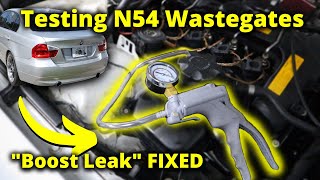
With the engine off, move the wastegate actuator arm by hand or with a hand vacuum pump. It must move smoothly through its range of motion and return to its home position without binding. If seized, the actuator or turbo requires replacement.
Tools: Hand Vacuum Pump (optional) (Intermediate) - Pro Tip: Analyze Live Data PIDs
Monitor the PCM's commanded duty cycle for the wastegate solenoid (PID: WGDC, WGS). At idle, it should be low. Under load, the percentage fluctuates. For P0246, you see a high commanded duty cycle (>95%) while actual boost pressure (PID: MAP, BOOST) does not respond, confirming the PCM cannot control the circuit.
Tools: Advanced Scan Tool (Advanced)
When This Code Triggers (Freeze-Frame Conditions)
- Engine Coolant Temp: 180-205°F (Engine at full operating temperature.)
- RPM: 1800-2800 RPM (During steady-state cruise or light acceleration when boost is actively managed.)
- Engine Load: 30-60% (The engine is under moderate load, requiring the turbo to produce boost.)
- Vehicle Speed: 45-65 mph (Typically occurs at highway speeds under constant throttle.)
Related Codes
- P0245 — This is the direct opposite code, indicating 'Wastegate Solenoid 'A' Circuit Low'. P0246 (High) points to an open circuit or a short to power. P0245 (Low) points to a short to ground. For P0246 look for broken wires; for P0245 look for wires touching a ground source.
- P0299 — This means 'Turbo/Supercharger Underboost'. P0246 causes P0299. If the 'Circuit High' fault causes the wastegate to default to an open position, the turbo can't build pressure, triggering P0299. Fix the P0246 electrical fault first.
- P0234 — This means 'Engine Overboost Condition'. P0246 causes P0234. If the solenoid circuit failure causes the wastegate to remain stuck closed, the turbo generates excessive, dangerous pressure. Fix P0246 immediately if P0234 is present to avoid engine damage.
- P2563 — This means 'Turbocharger Boost Control Position Sensor 'A' Circuit Range/Performance'. It indicates a mismatch between where the PCM tells the wastegate to be and where the position sensor reports it actually is. It sets alongside P0246 if the circuit fault prevents the actuator from moving.
Climate & Environmental Factors
- High Altitude: At higher altitudes, the air is less dense, so the turbocharger spins faster to produce the same boost. This increased workload puts more stress on the wastegate system, exposing underlying weaknesses in the solenoid or actuator.
- Extreme Temperatures (Hot and Cold): The wiring harness and vacuum lines near the turbocharger are exposed to extreme heat. High heat makes wires and plastic connectors brittle, causing open circuits (P0246). Extreme cold makes older plastic and rubber components less flexible and prone to cracking.
- High Humidity / Salty Environments: In areas with high humidity or road salt, moisture penetrates weather seals on electrical connectors, causing the copper pins for the solenoid to corrode. This corrosion creates high resistance, which the PCM interprets as a 'Circuit High' fault.
How to Talk to a Mechanic About This Code
Say this: "I have a P0246 code for the turbo wastegate solenoid circuit. Please test the solenoid's resistance and check the wiring harness for opens or shorts before recommending part replacements."
This signals you understand the most common causes are electrical, not just a bad part. It directs the technician to perform a proper diagnosis instead of immediately replacing the most likely component, preventing misdiagnosis and unnecessary costs.
Avoid saying:
- 'My car feels slow and the check engine light is on.' (Too vague, invites a wide-ranging and expensive diagnostic process).
- 'I think I need a new turbo.' (Suggesting the most expensive fix leads a dishonest shop to agree without proper diagnosis).
- 'Just fix it.' (This gives the shop a blank check to replace parts without your approval).
Questions to ask before authorizing the repair:
- What was the resistance reading on the solenoid, and what is the manufacturer's specified range?
- Did you perform a continuity test on the wiring harness between the solenoid and the PCM?
- Did you check if the mechanical wastegate arm moves freely without sticking?
- Can you show me the damaged wire or explain the test results that condemn the part?
- What is the warranty on the recommended parts and labor?
Where to Take It: Dealer vs Independent vs Chain
- Dealer:
Recommended for in-warranty vehicles or if complex software/programming issues are suspected after initial diagnosis.
Best for: Vehicles still under a powertrain or emissions warranty., Complex diagnostics on German brands (BMW, VW, Audi) with specific software needs., Cases where a PCM re-flash or replacement is required.
Downsides: Highest labor rates, typically 1.5-2x more than independent shops., Defaults to replacing a full assembly (like a turbo) when a smaller component (like an actuator) is the only issue. (Typical cost: +50% vs. baseline) - Independent Shop:
Best overall fit for most P0246 cases, especially if the cause is a common solenoid, wiring, or vacuum line issue. Choose a shop that specializes in your vehicle's brand or in turbo systems.
Best for: Out-of-warranty vehicles where cost is a factor., Shops with a good reputation for turbo or electrical diagnostics., Getting a second opinion on a dealership's expensive quote.
Downsides: Quality and expertise vary widely; vet shops based on reviews and ASE certifications., Lacks the expensive, manufacturer-specific diagnostic tools for the newest vehicles. (Typical cost: +0% vs. baseline) - Chain Shop:
AVOID for P0246 diagnosis. The risk of misdiagnosis (e.g., blaming the turbo when it's just a wire) or unnecessary part replacement is very high.
Best for: Simple, unrelated maintenance like oil changes or tires.
Downsides: Technician skill varies dramatically; they lack the in-depth electrical and turbo diagnostic experience needed for P0246., High pressure to meet sales targets leads to upselling unnecessary services or misdiagnosing the problem. (Typical cost: -10% vs. baseline)
When to Walk Away From the Repair
If the estimated repair cost for P0246 exceeds 40-50% of your car's current private-party value, sell or trade it in.
- Car worth $5000, fix is $350: Fix it. This is a simple solenoid or wiring repair and is well below the threshold.
- Car worth $8000, fix is $3500: Walk away. The diagnosis points to a full turbocharger replacement, which is nearly 44% of the car's value. The money is better put toward a replacement vehicle.
- Car worth $3000, fix is $1500: Borderline. This repair is 50% of the car's value. If the rest of the car is in excellent condition, it might be worth it, but get a second opinion before proceeding.
What Scan Tool You Need for This Code
Minimum: A scanner that reads and graphs live data, specifically for boost pressure (MAP) and wastegate solenoid command percentage (WGDC).
A basic $20 code reader only shows the P0246 code. It cannot show if the computer is trying to control the solenoid or what the boost pressure is doing in real-time, which is essential for diagnosis.
Budget: BlueDriver Pro Scan Tool (~$100) — Connects to your phone via Bluetooth. It reads the code, provides freeze-frame data, and graphs live data for boost pressure and solenoid commands, which is enough to see if the system responds as expected.
Mid-range: Foxwell NT680/NT809 or Autel MaxiCOM MK808 (~$250-450) — These handheld units offer full-system live data and bidirectional control. This allows you to command the wastegate solenoid to open and close directly from the scanner, providing a definitive test of whether the solenoid itself is functional.
Professional: Autel MaxiSys MS906Pro or Launch X431 Series (~$600-1500) — Provides full, OEM-level bidirectional controls, advanced ECU coding/programming (for module replacement), and detailed wiring diagrams. These are professional tools for complex diagnostics or for shops.
Rent vs buy: For a one-time fix, auto parts stores rent basic scanners for free. However, to properly diagnose P0246, you need live data and ideally bidirectional control, which rental tools lack. Buying a mid-range scanner is a good investment for future DIY repairs.
How to Clear the Code After You Fix It
- Use an OBD-II scan tool to clear the code
- Perform a complete OBD-II drive cycle to reset readiness monitors
- Rescan to confirm the code has not returned
Drive cycle (~30 minutes): Perform a cold start (after vehicle sits for 8+ hours). Idle for 2-3 minutes with electrical loads on (A/C, defroster). Drive for 15 minutes with mixed city/highway conditions, including steady speeds around 55 mph. Allow the vehicle to cool down completely.
Readiness monitors affected: Catalyst Monitor, Evaporative System Monitor, Oxygen Sensor Monitor
Before emissions retest: drive at least 100 miles to fully set monitors.
Watch out for:
- Simply clearing the code with a scanner does not reset the readiness monitors required for an emissions test.
- The code returns immediately if the root electrical or mechanical fault has not been properly repaired.
- Not allowing the vehicle to cool down sufficiently before starting the drive cycle prevents certain monitors from running.
Will This Fail Emissions / State Inspection?
Yes — this code typically fails an OBD-II emissions inspection.
- California: An active P0246 code causes an automatic smog check failure. All OBD readiness monitors must be set to 'Ready', which is blocked by this fault.
- New York: The NYS DMV emissions inspection includes an OBD-II scan. An illuminated Check Engine Light for code P0246 results in an automatic failure.
- Texas: In the 17 counties requiring emissions testing, an illuminated Check Engine Light is an automatic failure. The vehicle cannot be registered until the issue is repaired and the inspection is passed.
Most Commonly Affected Vehicles
- Ford F-150 EcoBoost (2.7L/3.5L) (2011-2024) — Extremely common. Early models (2011-2014) have issues with the bypass solenoid. Later models (2017-2024) are prone to stuck wastegate actuators or leaking vacuum lines. Wiring near the turbo is susceptible to heat damage across all years.
- Volkswagen / Audi Golf GTI, A4, Q5 (2.0T Engine) (2008-2024) — The N75 valve (wastegate solenoid) is a very frequent failure point, along with its wiring connector becoming brittle. Particularly common on Mk7/Mk8 GTI models (2015-2024).
- Subaru WRX, Forester XT (2002-2024) — The factory boost control solenoid (BCS) and its wiring are known weak points. On 2015-2021 WRX models, the factory 2-port solenoid fails frequently; owners upgrade to a 3-port EBCS, requiring an ECU tune.
- Chevrolet Cruze, Sonic, Trax (1.4L Turbo Engine) (2011-2020) — Common on the 1.4L Ecotec engine. Often triggered by related issues like a cracked wastegate valve seat on the turbocharger housing (setting P0299 first) or a faulty wastegate actuator. GM issued TSB PIP5495L regarding misdiagnosis.
- Hyundai / Kia Genesis Coupe, Sonata, Optima (2.0T) (2010-2020) — Often caused by damaged wires right at the electronic wastegate solenoid connector due to engine vibration and heat. The solenoid itself also fails internally, creating an open circuit.
- BMW 335i, 535i (N54/N55 Engines) (2007-2018) — On N54 engines, vacuum-operated actuators and solenoids are common failure points. On the N55 engine, the electronic wastegate actuator fails or suffers from software calibration issues, triggering this code.
- Dodge / Ram 2500/3500 (6.7L Cummins Diesel) (2013-2024) — On these diesels, the code relates to a failing electronic actuator on the variable-geometry turbo (VGT). Intermittent communication loss and position errors due to a faulty actuator or wiring harness are common.
- Nissan Juke (1.6L Turbo) (2011-2017) — Issues with the boost control solenoid and its wiring harness cause P0246 on the Nissan Juke's MR16DDT engine.
Manufacturer-Specific Notes
- Ford: On EcoBoost engines, a failed wastegate solenoid has its own fuse (e.g., a 10A fuse in the under-hood fuse box on a 2015-2017 F-150). Always check fuses before condemning a part. When replacing vacuum-controlled actuators on 2.7L/3.5L engines, the final actuator voltage must be checked with a scan tool and set between 1.1V and 1.3V.
- Volkswagen / Audi: The component is called the 'N75 Valve' in the VW/Audi community. It is a very common failure item and is often replaced preemptively. Several revisions exist; ensure you use the latest part number for your vehicle.
- Subaru: The factory 2-port Boost Control Solenoid (BCS) on the 2015-2021 WRX is a known weak point. Upgrading to an aftermarket 3-port Electronic Boost Control Solenoid (EBCS) is popular but absolutely requires a professional ECU tune to work safely.
- General Motors (Chevrolet): On the 1.4L engine (Cruze/Sonic), GM issued TSB PIP5495L to address misdiagnosis of P0299 and P0234. It notes that cracks around the wastegate port are normal and that the solenoid, actuator, or clips must be checked before condemning the entire turbocharger.
Real Owner Stories
2018 Ford F-150 EcoBoost at 75K miles
Check engine light and P0246 appeared with a noticeable loss of power and turbo lag. The truck would not boost correctly under acceleration.
What they tried:
- Initially suspected a bad solenoid and replaced it, but the code returned within a day.
- A mechanic then performed a 'wiggle test' on the wiring harness near the turbo.
Outcome: The wiggle test revealed a broken wire inside the insulation right at the solenoid connector, a common failure point due to heat and vibration. A new connector pigtail was spliced in for $150 in labor. The code was cleared and did not return.
Lesson: Always test the wiring harness for continuity and shorts before replacing the solenoid. Heat and vibration make the wiring near the turbo a primary suspect, and a simple wiggle test saves the cost of a new part.
2016 VW GTI at 110K miles
Intermittent P0246 code, sometimes accompanied by P0299 (Underboost). The car occasionally went into limp mode but ran fine after a restart.
What they tried:
- Replaced the N75 valve (wastegate solenoid), a very common failure on this platform. The problem persisted.
- Inspected vacuum lines and found no leaks.
- Took it to a specialist who tested the wastegate actuator itself.
Outcome: The specialist found the mechanical wastegate actuator arm was sticking due to carbon buildup, preventing it from moving freely. Cleaning the linkage and actuator pivot point resolved the issue. Total cost was $200 for diagnosis and labor.
Lesson: An electrical code doesn't always mean an electrical-only fault. A mechanical issue, like a sticking wastegate arm, prevents the system from responding as the PCM expects, indirectly triggering a circuit code. Manually check for smooth actuator movement.
2015 Chevy Cruze 1.4L Turbo at 95K miles
P0246 code appeared suddenly, putting the car into limp mode with no boost.
What they tried:
- The owner checked the solenoid's resistance with a multimeter and got an 'OL' (Over Limit) reading, indicating an open circuit.
- They replaced the wastegate solenoid ($60 part).
Outcome: Replacing the solenoid immediately fixed the problem. The car regained full power, and the code did not return after being cleared. The entire job took about 45 minutes.
Lesson: Testing the solenoid's internal resistance is a quick and definitive diagnostic step. If the resistance is out of spec (usually 10-40 ohms), the solenoid is bad. This simple test confirms the diagnosis before you spend money.
2017 Ford Mustang EcoBoost after modification
After installing a cold air intake and venting the blow-off valve to the atmosphere (VTA), the P0246 code appeared repeatedly.
What they tried:
- The owner reconnected the factory bypass hose and cleared the code, but it kept returning.
- They checked all connections and found the electrical connector to the wastegate solenoid was not fully seated.
Outcome: Pushing the connector until it clicked firmly into place solved the problem. The connection had been slightly dislodged during the intake installation. The code was cleared with a scanner and did not come back.
Lesson: If a code appears immediately after performing a repair or modification, re-inspect your work. It's highly likely a connector was left loose or a hose was not reattached properly.
How to Prevent This Code From Triggering
- Use High-Quality Full Synthetic Engine Oil and Change it on Schedule (Per manufacturer's interval (e.g., 5,000-7,500 miles)) — The turbocharger shares engine oil for lubrication and cooling. High-quality oil resists breaking down under extreme heat, preventing sludge and carbon deposits that cause the mechanical wastegate arm to bind.
- Allow for a Brief Cool-Down Period (After spirited driving or towing) — Idling the engine for 30-60 seconds allows oil to continue circulating through the turbo, carrying away excess heat. This prevents 'oil coking,' where stationary oil burns onto hot surfaces, damaging turbo bearings and the wastegate mechanism.
- Periodically Inspect and Clean the Wastegate Actuator Linkage (Every 30,000 miles or during other engine work) — The external actuator arm and pivot points are exposed to road grime and heat. Applying a high-temperature lubricant prevents rust and binding that leads to a stuck wastegate. This ensures the mechanical part of the system moves freely.
- Use a Top-Tier Fuel with Detergents (Every fill-up) — Quality fuels contain detergents that prevent carbon buildup throughout the engine. Less carbon in the exhaust stream means less chance of deposits forming on the wastegate valve and seat, which causes it to stick.
Frequently Asked Questions
Is P0246 a serious code?
It is moderately serious and requires prompt attention. Ignoring it leads to poor performance, bad fuel mileage, and potentially catastrophic damage to your turbocharger from uncontrolled boost levels. An associated overboost code (P0234) elevates the severity to critical.
What are the most common mistakes when diagnosing P0246?
The most common mistake is immediately replacing the wastegate solenoid without testing the wiring and connector first. An open circuit in the harness is just as likely to be the cause. Another error is replacing the turbocharger for a stuck wastegate without confirming the solenoid functions electronically.
Why did the P0246 code come back after I replaced the solenoid?
The true cause was likely missed. The most common reason is an intermittent open or short in the wiring harness that wasn't detected. It could also be a corroded pin in the connector or a mechanical issue with the wastegate linkage.
What's the difference between P0246 and P0245?
Both point to an electrical problem with the solenoid circuit. P0246 means the voltage signal is too 'High,' indicating an open circuit (broken wire) or a short to power. P0245 means the signal is too 'Low,' indicating a short to ground.
Will P0246 clear on its own?
No, P0246 indicates a hard electrical or mechanical fault that must be repaired. The Check Engine Light stays on until the underlying problem is fixed and the code is cleared with a scan tool.
Can a tune or software update fix P0246?
Generally, no. P0246 is an electrical fault code; a tune cannot fix a broken wire or a failed solenoid. The exception is if the code was caused by a software calibration mismatch after a previous repair or performance modification.
What is the difference between a 2-port and 3-port boost solenoid?
A factory 2-port solenoid 'bleeds off' pressure from the signal line to the wastegate. A 3-port solenoid interrupts and redirects the entire signal, offering faster and more precise boost control, but requires an ECU tune.
Can I fix P0246 myself?
Yes, replacing a faulty wastegate solenoid or a cracked vacuum line is a straightforward job for a DIYer with basic tools. However, diagnosing intermittent wiring faults, replacing a turbocharger, or reprogramming a PCM requires advanced skills and should be left to a professional.
Key Takeaways
- P0246 is a strict electrical fault indicating the Powertrain Control Module receives a voltage signal exceeding 5 volts from the wastegate solenoid, usually caused by a broken wire.
- Always test the wiring harness before replacing parts; heat and vibration cause open circuits at the solenoid connector in over 50% of P0246 cases.
- Expect an immediate 10-15% drop in fuel economy and a forced 'limp mode' that restricts engine RPMs and limits turbo boost to under 5 PSI to prevent damage.
- Stop driving immediately if P0246 is paired with overboost code P0234, as a stuck-closed wastegate will destroy a $2,000+ turbocharger within miles.
- Verify a failed solenoid by testing its internal resistance with a multimeter; a healthy unit reads between 10 and 40 Ohms, while an 'OL' reading confirms an internal break.
Helpful Videos
![What is P0246 Engine Code [Quick Guide]](https://img.youtube.com/vi/1kvYIs9EEKw/mqdefault.jpg)


Shop the Parts Behind P0246
Below are the parts most often responsible for code P0246, ranked by how frequently each one is the actual culprit (per the diagnosis above). Tap any to see what we have for your vehicle.




The information in this article is provided for general reference and educational purposes only. Vehicle specifications, procedures, and part compatibility can vary by production date, trim level, and region. Always consult your vehicle's factory service manual and verify part numbers before purchasing or performing repairs. Safety-critical components such as airbags, seat belts, and braking systems should be installed by a qualified professional.
- 🧭 Diagnostic Flowchart
- 🎬 Helpful Videos
- 🛍️ Shop This Part
- What Does P0246 Mean?
- Can I Drive With P0246?
- Common Causes
- Symptoms
- Common Fixes & Costs
- Used vs. New Parts: Buying Guide
- What Happens If You Wait — Timeline
- Cost of Not Fixing It
- Diagnosis Steps
- When This Code Triggers (Freeze-Frame Conditions)
- Related Codes
- Climate & Environmental Factors
- How to Talk to a Mechanic About This Code
- Where to Take It: Dealer vs Independent vs Chain
- When to Walk Away From the Repair
- What Scan Tool You Need for This Code
- How to Clear the Code After You Fix It
- Will This Fail Emissions / State Inspection?
- Most Commonly Affected Vehicles
- Manufacturer-Specific Notes
- Real Owner Stories
- 2018 Ford F-150 EcoBoost at 75K miles
- 2016 VW GTI at 110K miles
- 2015 Chevy Cruze 1.4L Turbo at 95K miles
- 2017 Ford Mustang EcoBoost after modification
- How to Prevent This Code From Triggering
- Frequently Asked Questions
- Is P0246 a serious code?
- What are the most common mistakes when diagnosing P0246?
- Why did the P0246 code come back after I replaced the solenoid?
- What's the difference between P0246 and P0245?
- Will P0246 clear on its own?
- Can a tune or software update fix P0246?
- What is the difference between a 2-port and 3-port boost solenoid?
- Can I fix P0246 myself?
- Key Takeaways
- 🎟️ Get 5% Off