

OBD-II Code P0247: Turbocharger Wastegate Solenoid 'B' Circuit Low
What P0247 means, why it triggers, and how to fix it
- P0247 indicates a low voltage fault—typically an open circuit or short to ground—in the turbocharger's wastegate control solenoid 'B' circuit.
- Inspect the solenoid's electrical connector and wiring harness first, as heat and vibration cause over 80% of these failures.
- Test the solenoid's internal resistance with a multimeter; a healthy coil typically reads between 15 and 40 ohms.
- Limit driving to essential trips under 10 miles, as ignoring this code risks a catastrophic turbocharger failure costing upwards of $2,500.
What Does P0247 Mean?
The Engine Control Module (ECM) detected a low voltage condition in the 'B' solenoid circuit controlling the turbocharger's wastegate. The wastegate manages turbo speed and boost output. A 'low' voltage condition indicates an open circuit (broken wire), a short to ground, or a failed solenoid.
Technical definition: The SAE/OBD-II definition is "Turbocharger/Supercharger Wastegate Solenoid 'B' Low". This indicates the Powertrain Control Module (PCM) detected voltage in the wastegate solenoid 'B' control circuit below the expected range. On some systems, the ECM checks for a specific voltage surge (inductive kick) after turning the solenoid off; missing this surge sets the code.
Can I Drive With P0247?
Yes, But With Caution. You can drive for short, essential trips, but fix it within a few days. Avoid heavy acceleration and highway driving. The engine operates with reduced power, and ignoring P0247—especially if paired with overboost code P0234—causes catastrophic turbocharger or internal engine damage. Repair costs for a blown turbo escalate to $2,000-$6,000.
Common Causes
- Faulty Wastegate Solenoid 'B' (Very Common) — The solenoid has an internal electrical short or open circuit. Constant exposure to extreme heat and vibration in the engine bay makes this the most frequent failure point.
- Wiring Harness or Connector Damage (Common) — Wires routing to the solenoid are frayed, melted, or shorted to ground, or the connector is loose and corroded. Turbo heat, rubbing against brackets, or moisture intrusion causes voltage drops.
- Vacuum Leaks or Clogged Lines (Common) — On vacuum-actuated systems, cracked, brittle, or disconnected hoses prevent wastegate operation. Fine dust or oil residue can also clog the solenoid, preventing it from sealing.
- Stuck or Seized Wastegate Actuator Arm (Less Common) — Carbon buildup or mechanical failure causes the wastegate valve or actuator arm to physically seize. The ECM detects boost pressure failing to change and logs a fault.
- Faulty Boost Pressure Sensor (Less Common) — A faulty MAP or boost pressure sensor sends incorrect readings to the ECM. The computer misinterprets this as a wastegate control problem.
- Faulty Engine Control Module (ECM/PCM) (Rare) — The engine computer has a burned internal driver circuit controlling the solenoid. Consider this only after exhaustively ruling out wiring and solenoid failures.
Symptoms
- Check Engine Light is On — The Malfunction Indicator Lamp (MIL) illuminates immediately upon detecting the circuit fault.
- Reduced Engine Power / Limp Mode — The ECM activates a fail-safe 'limp mode,' capping RPMs around 3,500 and severely limiting throttle response and turbo boost to protect the engine.
- Erratic Boost Gauge Readings — Factory or aftermarket boost gauges show the needle behaving erratically, reading zero, or failing to reach target pressure (e.g., 3 PSI instead of 15 PSI).
- Unusual Noises from Engine Bay — The turbocharger emits distinct whining, hissing, or rattling sounds as it struggles to regulate boost pressure.
- Poor Fuel Economy — Gas mileage drops 10-20% because the engine's air-fuel mixture and overall efficiency are compromised.
- Black Smoke from Exhaust — Improper boost control creates a rich air-fuel mixture, resulting in visible black smoke during acceleration.
Diagnostic Flowchart
Tap your situation to follow the diagnostic path that matches what you're seeing on this code.
Common Fixes & Costs
- Replace Wastegate Solenoid 'B' — Parts: $50-$200, Labor: $100-$250, ~1.0 hr book time (DIY)
- Repair Wiring Harness or Connector — Parts: $20-$50, Labor: $100-$300, ~1.5 hr book time (Intermediate)
- Replace/Repair Vacuum Lines — Parts: $10-$30, Labor: $50-$150, ~0.8 hr book time (DIY)
- Replace Engine Control Module (ECM) — Parts: $800-$1500, Labor: $150-$300, ~1.5 hr book time (Professional)
Used vs. New Parts: Buying Guide
When a used part is worth it: A used part only makes sense if it's from a very low-mileage wrecked vehicle and costs a fraction of the new price. Given the high failure rate from heat and vibration, a new part is strongly recommended.
Donor-vehicle mileage cap: roughly under 50000 miles for the part to have meaningful remaining life.
Donor quality checklist:
- Verify the part number exactly, including any suffixes.
- Inspect the plastic connector for any cracks or brittleness.
- Avoid parts from vehicles in rust-belt states, as corrosion affects internal components.
Decision logic:
- If The cost of a new OEM or quality aftermarket solenoid is under $200 → Always buy new. The labor to replace it again outweighs any savings from a used part.
- If The vehicle is very old (>15 years) and the part is no longer available new → A tested used part is the only option.
- If The failure is the entire turbo assembly on a high-mileage car → A low-mileage used turbo assembly is a cost-effective choice over a new one.
Warranty tradeoff: Used parts from a salvage yard typically have a 30-90 day warranty. New aftermarket parts carry a 1-year to limited lifetime warranty. New OEM parts usually have a 1-2 year warranty.
Worst-case if a used part fails: 300-700
What Happens If You Wait — Timeline
- 0-1 week: Check Engine Light is on. Limp mode activates intermittently, causing sluggish acceleration. The fault is logged in the ECU. (MPG impact: 0-5%% · Added cost: $0)
- 1 week - 2 months: Limp mode becomes more frequent or permanent. The driver must use significantly more throttle to keep up with traffic, and highway merging becomes difficult. Fuel economy drops noticeably. (MPG impact: 10-20%% · Added cost: $40-120 in wasted fuel)
- 2-6 months (Underboost Scenario): If the failure results in a persistent underboost (P0299), the engine runs rich. This fouls spark plugs and oxygen sensors and begins to clog the catalytic converter with unburnt fuel and carbon. (MPG impact: 15-25%% · Added cost: $500 - $2,000 (O2 sensors, spark plugs, potential catalytic converter damage))
- 2-6 months (Overboost Scenario): If the failure results in a persistent overboost (P0234), every drive puts immense stress on the turbo and engine. Catastrophic turbo failure is highly likely, which sends metal fragments into the intercooler and engine, potentially requiring a full engine replacement. (MPG impact: 10-20%% · Added cost: $2,500 - $8,000+ (New turbocharger, intercooler, and potential engine damage))
Cost of Not Fixing It
- 0-1 month: Consistent 'limp mode' activation, poor acceleration, and a 10-20% drop in fuel economy. Increased stress on other engine components. (Added cost: 50-150)
- 1-6 months: If the failure causes an overboost condition (P0234), it leads to catastrophic turbocharger failure. If it causes an underboost (P0299), it fouls spark plugs and clogs the catalytic converter. (Added cost: 1500-4000)
- 6+ months: Prolonged overboosting causes severe internal engine damage, including cracked pistons or damaged cylinder heads, requiring a complete engine replacement. (Added cost: 4000-8000)
Diagnosis Steps
- Read the Codes and Freeze Frame Data
Confirm P0247 is active and check for related codes like P0234 (Overboost) or P0299 (Underboost). Review freeze frame data to identify engine RPM and load when the fault occurred.
Tools: OBD-II Scanner (Beginner) - Visually Inspect the System
Inspect the wastegate solenoid 'B', wiring harness, and connector. Look for melted plastic, frayed wires, corrosion, or cracked vacuum hoses.
Tools: Flashlight, Inspection Mirror (Beginner) - Test the Solenoid's Electrical Circuit
Disconnect the solenoid. Check for 12V battery voltage on the power wire with the key 'ON'. Measure resistance across the solenoid pins; a healthy coil reads 15-40 ohms. 'OL' means an open circuit; near-zero means a short.
Tools: Multimeter (Intermediate) - Check for a Short to Ground
With the solenoid unplugged and key off, check for continuity between the control wire and a chassis ground. Any continuity (beep or low resistance) indicates the wire is shorted to ground in the harness.
Tools: Multimeter (Advanced) - Command the Solenoid with a Scan Tool
Navigate to the active test menu and command the wastegate solenoid on and off. An audible 'click' confirms the solenoid is mechanically functional, pointing to a wiring or PCM issue.
Tools: Bi-Directional Scan Tool (Advanced) - Check Wastegate Actuator Mechanical Movement
With a cool engine, manually push the wastegate actuator arm connected to the turbo. It must move smoothly against spring resistance without seizing.
Tools: Gloves, Pry Bar or Long Screwdriver (Intermediate) - Test Pneumatic Function
Connect a hand vacuum pump to the solenoid's output port. Apply 12V power; the solenoid must click and release the vacuum or pressure. Failure to hold or release indicates mechanical failure.
Tools: Hand Vacuum Pump, 12V Power Probe (Advanced) - Check the PCM Signal (Duty Cycle)
With the engine running, back-probe the solenoid's control wire. The duty cycle percentage should increase as you rev the engine. A constant 0% or 100% indicates a wiring break or faulty PCM.
Tools: Multimeter with Hz/Duty Cycle (Advanced)
When This Code Triggers (Freeze-Frame Conditions)
- Engine Coolant Temp: 180-210°F (The engine is fully warmed up and has reached normal operating temperature.)
- RPM: 1500-3000 (During steady-state cruising or light to moderate acceleration, when the ECU actively commands the wastegate to control boost.)
- Engine Load: 30-70% (The engine is under a moderate load, requiring turbocharger boost but not at wide-open throttle.)
- Vehicle Speed: 40-65 mph (Occurs at highway or arterial road speeds where boost pressure is actively managed.)
Related Codes
- P0245 — This is the 'Low' voltage code for the 'A' solenoid. If your vehicle has two solenoids (A and B), P0245 points to the same type of electrical fault (open circuit or short to ground) as P0247, but on the other solenoid's circuit.
- P0246 — This is the 'High' voltage code for the 'A' solenoid. A 'Low' code like P0247 suggests an open or short to ground, whereas a 'High' code suggests a short to a power source.
- P0234 — This means 'Engine Overboost Condition'. It often appears with P0247 because a failed solenoid or a circuit short causes the wastegate to remain stuck closed. P0247 is the electrical cause; P0234 is the dangerous mechanical result.
- P0299 — This means 'Engine Underboost Condition'. It appears with P0247 if the circuit has an open, causing the wastegate to default to an open position. P0247 is the electrical cause; P0299 is the performance-killing mechanical result.
Climate & Environmental Factors
- Cold Weather: Extreme cold makes plastic vacuum lines and wire insulation brittle and prone to cracking, leading to vacuum leaks or electrical shorts. Moisture in connectors can freeze and expand, compromising connections.
- High Humidity / Salt: In humid or coastal climates, moisture accelerates corrosion on the solenoid's electrical connector pins and within the wiring harness, leading to increased resistance and voltage drops.
- High Altitude: High altitude operation causes the turbocharger to work harder to produce the same level of boost due to lower air density. This unmasks underlying problems with the wastegate control system.
How to Talk to a Mechanic About This Code
Say this: "I have an OBD-II code P0247 and the car is in limp mode. Please test the wastegate solenoid 'B' resistance and inspect the wiring harness for opens or shorts before recommending a turbo replacement."
This signals you understand the common causes and directs the shop to perform a proper electrical diagnosis first, preventing an immediate upsell to an expensive turbo replacement.
Avoid saying:
- 'My check engine light is on.' (Too vague)
- 'My car feels slow.' (A symptom, not a diagnosis)
- 'Just fix whatever is wrong.' (Invites unnecessary and expensive repairs)
Questions to ask before authorizing the repair:
- Did you test the solenoid's resistance, and what was the reading?
- Did you confirm there is proper voltage and ground at the solenoid's connector?
- Can you show me the location of the damaged wire or failed component?
- If you are recommending a turbo replacement, can you prove that the solenoid and its control circuit are fully functional?
Where to Take It: Dealer vs Independent vs Chain
- Dealer:
Best for: Vehicles still under powertrain or CPO warranty., Complex, brand-specific issues, like a BMW requiring a wastegate relearn procedure., If a known Technical Service Bulletin (TSB) exists for this code on your model.
Downsides: Highest labor rates, often 1.5-2x more than independent shops., Defaults to replacing larger, more expensive assemblies rather than performing a component-level repair (e.g., replacing the whole turbo instead of just the actuator). (Typical cost: +50% vs. baseline) - Independent Shop:
Best fit for most cases. An experienced independent technician efficiently diagnoses and repairs common P0247 causes (solenoid, wiring, vacuum lines) for a reasonable price.
Best for: Out-of-warranty vehicles where cost is a factor., Diagnosing common electrical and vacuum system faults., Shops specializing in your vehicle's brand (e.g., a VW/Audi specialist) offer dealer-level expertise at a lower cost.
Downsides: Quality and diagnostic capabilities vary widely. Vet shops based on reviews and ASE certifications., Lacks access to the very latest manufacturer software updates or specialized tools for brand-new models. (Typical cost: +0% vs. baseline) - Chain Shop:
AVOID. This code requires specific diagnostic procedures beyond the scope of most chain shops, carrying a high risk of misdiagnosis and wasted money.
Best for: Simple, routine maintenance like oil changes and tire rotations.
Downsides: Technician skill varies dramatically., Lacks advanced diagnostic tools and experience for complex electrical or turbo system issues., Business model pressures technicians to upsell, leading to misdiagnosis or unnecessary repairs. (Typical cost: -10% vs. baseline)
When to Walk Away From the Repair
If the total estimated repair cost for the P0247 fault exceeds 40-50% of your car's current private-party market value, seriously consider alternatives to repair.
- Car worth $4000, fix is $700: Fix it. This repair cost is well within a reasonable range for a car of this value.
- Car worth $5000, fix is $2500: Walk away. The repair cost is 50% of the car's value, and this quote likely includes a full turbo replacement. Get a second opinion confirming the turbo is actually bad before proceeding. If it is, selling as-is is a logical choice.
- Car worth $15000, fix is $800: Fix it. This is a very small percentage of the vehicle's value and restores its performance and reliability.
What Scan Tool You Need for This Code
Minimum: A tool that reads and clears codes, and critically, displays live data streams (PIDs) for boost pressure and engine RPM.
A $20 code reader only tells you the P0247 code exists. It cannot show if the ECU is commanding the solenoid or what the boost pressure is doing in real-time, which is essential for diagnosis. You will be guessing and likely replacing parts you don't need.
Budget: BlueDriver Pro (~$100) — Connects to your phone via Bluetooth. It reads the code, provides freeze-frame data, and graphs live data like boost pressure and RPM, helping you see if the turbo responds to throttle input.
Mid-range: Foxwell NT510 Elite / Xtool D7 (~$150) — These handheld or tablet-style scanners include bi-directional controls for specific brands. This 'active test' capability allows you to command the wastegate solenoid to click on and off directly from the tool, instantly confirming if the solenoid is mechanically working.
Professional: Autel MaxiCOM MK808 / MK906BT (~$450-1200) — Provides full bi-directional control for a wide range of vehicles, allowing you to command the solenoid, view its duty cycle, and access manufacturer-specific codes and data. For complex issues or specific vehicles (like BMW), these tools perform special functions like wastegate actuator relearn procedures.
Rent vs buy: Most auto parts stores read your code for free, but their tools are basic readers. They cannot perform the live data or bi-directional tests needed for a proper DIY diagnosis. If you plan to diagnose and fix the issue yourself, buy a scanner with at least live data capability. If you work on cars frequently, a mid-range bi-directional tool is a worthwhile investment.
How to Clear the Code After You Fix It
- Use an OBD-II scan tool to clear the diagnostic trouble codes.
- Perform a complete OBD-II drive cycle to allow the readiness monitors to run.
- Reconnect the battery if it was disconnected for the repair.
Drive cycle (~20 minutes): A general drive cycle includes: 1) Cold start, let idle for 2-3 minutes. 2) Drive at a steady speed of 55 mph for 5-10 minutes. 3) Perform stop-and-go driving. 4) Coast down from a higher speed without braking.
Readiness monitors affected: Catalyst Monitor, Oxygen Sensor Monitor, Comprehensive Component Monitor
Before emissions retest: drive at least 50 miles to fully set monitors.
Watch out for:
- Disconnecting the battery clears the code but resets all readiness monitors, causing an immediate emissions test failure.
- The code returns quickly if the root cause of the electrical fault was not properly repaired.
- EVAP and Catalyst monitors have specific enabling criteria (fuel level, ambient temperature) and take longer to set.
Will This Fail Emissions / State Inspection?
Yes — this code typically fails an OBD-II emissions inspection.
- California: An active Check Engine Light results in an automatic smog check failure. After repair, a complete OBD-II drive cycle must be performed to set all readiness monitors before a retest.
- New York: A vehicle automatically fails the emissions portion of the annual state inspection if the Check Engine Light is on.
- Texas: In the 17 counties requiring emissions testing, an active P0247 code causes an automatic failure of the OBD-II test. The vehicle cannot be registered until repaired.
Most Commonly Affected Vehicles
- Ford F-150 (with EcoBoost), Escape, Fusion, Focus ST (2011-2024) — Very common on EcoBoost engines. The solenoid's location near the hot turbo increases failure rates. Wiring harnesses are also prone to chafing and melting. For 2013-2017 models, inspect the harness near the right-side cylinder head.
- Chevrolet Cruze, Trax, Silverado, Sonic (2011-2024) — Frequent on models with the 1.4L turbocharged engine. Vacuum leaks from cracked hoses or a faulty PCV valve are often the root cause, not just the solenoid itself.
- Subaru Forester XT, Outback XT, WRX (2009-2024) — These turbo models often see this code due to solenoid failure or issues with the complex network of vacuum lines controlling the solenoid. A small, hard-to-see crack in a hose is a frequent culprit.
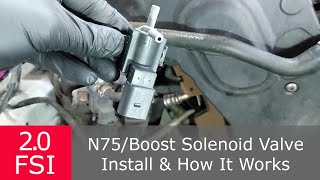
- Volkswagen/Audi GTI, Jetta, A4, Q5 (2008-2018) — The boost control solenoid is known as the 'N75 Valve'. It is a very common failure item. Use an OEM part (often made by Pierburg) as cheaper aftermarket versions fail quickly.
- Dodge Dart (2013-2016) — The 1.4L MultiAir turbocharged engine is susceptible to wastegate solenoid and actuator problems. The solenoid is located on the turbo compressor housing and can be difficult to access.
- Hyundai / Kia Genesis Coupe, Veloster Turbo, Sonata Turbo, Optima Turbo (2011-2021) — Primarily affects models with the 2.0L Theta II turbocharged engine. The electronic wastegate actuator can be a point of failure, sometimes requiring replacement of the entire turbo assembly.
- BMW X3, 3-Series, 5-Series (with N20/N26/B58 engines) (2012-2020) — These models use an electronic wastegate actuator. A fault in the actuator's position sensor or motor triggers boost codes. A technician can perform a wastegate 'relearn' procedure to resolve the fault without new parts.
- Mitsubishi Lancer Evolution, Outlander Sport (2008-2017) — Commonly reported on turbocharged models. The factory service manual contains a specific diagnostic procedure for checking the solenoid's coil surge voltage (inductive kick) with an oscilloscope.
Manufacturer-Specific Notes
- Ford: On EcoBoost engines, wastegate solenoids mount directly on the hot turbo housing, leading to a higher failure rate from heat soak. Always inspect the wiring harness for signs of melting or chafing where it routes near the engine.
- Subaru: Subaru systems heavily rely on a network of vacuum hoses. A small, hard-to-see crack in a vacuum line or a faulty plastic 'T' connector easily causes this code even if the solenoid is perfectly fine.
- Volkswagen/Audi: These brands refer to the wastegate solenoid as the 'N75 Valve'. Aftermarket versions are widely available, but use an OEM-spec part from Pierburg to avoid repeat failures. Fine dust can also enter the valve and cause it to stick.
- BMW: On engines like the N20 and B58, the electronic wastegate actuator position drifts out of tolerance, causing boost codes. A technician can perform a wastegate relearn procedure or adjust the actuator rod length to bring the position sensor voltage back into range.
Real Owner Stories
2012 VW Golf TDI with intermittent low power
Owner experienced intermittent but worsening lack of power, especially when going uphill. The car felt anemic until 2000 RPM. They had already replaced the N75 (wastegate) solenoid and the MAF sensor with no change.
What they tried:
- Replaced N75 solenoid - no change.
- Replaced MAF sensor - no change.
- Checked for vacuum at the VNT actuator and found none.
- Tested the new N75 and confirmed it was clicking but not sending vacuum.
Outcome: The owner traced the vacuum line from the N75 back towards the vacuum pump and found a black-and-white check valve that was completely clogged with rust. After cleaning the check valve, full power was restored.
Lesson: Don't assume a new part is the final fix. Always test the inputs and outputs. The problem can be upstream of the component you suspect, like a simple clogged check valve or vacuum line.
2011 Ford F-150 EcoBoost with rapid boost cycling
At 44,000 miles, the truck developed a loud popping noise during acceleration under light load (below 1500 RPM). The boost gauge would rapidly cycle between 2 and 6 PSI. The issue was worse with an aftermarket exhaust.
What they tried:
- Took to Ford dealership, who were 'clueless'.
- Owner suspected wastegate or blow-off valve (BOV).
- Swapped the wastegate control solenoid.
Outcome: The final diagnosis pointed towards a faulty electronic blow-off valve (BOV) on the driver's side turbo, which on 2011-2012 models is mounted directly to the turbo. A faulty BOV opens and closes erratically, causing the boost instability described.
Lesson: Symptoms that seem like a wastegate issue are sometimes caused by the blow-off or diverter valve. On EcoBoost engines, it's critical to check the BOV operation, especially if you hear popping or surging under light boost.
2018 Ford F-150 3.5L EcoBoost with repeated 'Wastegate Stuck Closed' errors
After a motor replacement at 200k miles, the owner installed a new driver's side turbo. On the first test drive, the new turbo threw a 'wastegate stuck closed' error. They exchanged the turbo for another new one.
What they tried:
- Replaced the entire driver's side turbocharger assembly.
- Exchanged the new turbo for a second new turbo when the code immediately returned.
Outcome: The second brand-new turbo also immediately threw the same 'wastegate stuck closed' code within 30 minutes of driving. This indicates the problem was not with the turbo itself, but likely in the control system (wiring, solenoid) or a software/PCM compatibility issue with the new engine and turbos.
Lesson: If a brand new part fails immediately with the exact same error code, the original part was likely not the root cause. Suspect the wiring, connectors, control module, or software before replacing the expensive component a second time.
How to Prevent This Code From Triggering
- Use high-quality full synthetic engine oil and change it on schedule (Per manufacturer's interval (e.g., 5,000-7,500 miles)) — Prevents oil sludging and coking. Dirty or degraded oil leads to carbon buildup that clogs the solenoid, sticks the wastegate arm, or starves the turbo of proper lubrication, increasing heat and stress on all components.
- Allow a 30-60 second cool-down idle period before shutdown (After spirited driving or towing) — Allows circulating engine oil to carry heat away from the turbocharger assembly. Shutting down a hot engine immediately causes oil to 'cook' in the turbo, leading to bearing damage and increased heat stress on nearby components like the wastegate solenoid.
- Periodically inspect vacuum hoses and wiring harnesses (Every oil change) — Heat and vibration in the engine bay cause rubber and plastic to become brittle and crack. A visual inspection catches a deteriorating vacuum line or a wiring harness that started to rub against a hot or sharp component before it fails completely.
- Clean the boost control solenoid (if applicable) (If symptoms of sticking appear (e.g., intermittent boost)) — On some vehicles (like Subarus), oil vapor or other contaminants get into the solenoid, causing it to stick. Cleaning the solenoid with brake cleaner while cycling it electrically restores function and prevents a P0247 code.
Frequently Asked Questions
What is the difference between wastegate solenoid 'A' and 'B'?
'A' and 'B' designate separate circuits or solenoids for wastegate control, often used in twin-turbo or complex single-turbo setups. P0247 specifically refers to a fault in the second designated circuit ('B'). The diagnostic process for both is identical.
I replaced the solenoid but the P0247 code came back. What now?
The problem is almost certainly in the wiring harness or connector pins. Re-inspect the entire harness for an intermittent short or open, especially in areas exposed to extreme heat or vibration.
What is a common misdiagnosis for P0247?
A frequent and expensive misdiagnosis is replacing the entire turbocharger assembly when only the inexpensive wastegate solenoid or wiring is faulty. Always diagnose the electrical and vacuum control circuits before condemning the turbo.
Can I fix P0247 myself?
Yes, replacing the solenoid or a cracked vacuum hose is a straightforward DIY repair requiring basic hand tools. Diagnosing the exact electrical fault requires a multimeter and patience, but is highly achievable.
How much does it cost to fix P0247?
Replacing the wastegate solenoid typically costs $150 to $450 including parts and labor. Repairing damaged wiring or vacuum lines ranges from $60 to $350 depending on the location and severity of the damage.
Will P0247 cause my car to fail an emissions test?
Yes. An active Check Engine Light is an automatic failure for an emissions or smog test in almost all jurisdictions. The underlying boost issue also directly negatively impacts combustion efficiency.
Will code P0247 clear itself?
No, P0247 indicates a hard electrical fault that will not clear on its own. The Check Engine Light remains illuminated until the underlying issue is repaired and the codes are cleared with a scan tool.
What's the difference between P0247 (Low) and P0248 (High)?
P0247 indicates a 'Low' voltage condition, suggesting an open wire, a short to ground, or a bad solenoid coil. P0248 indicates a 'High' voltage condition, suggesting the control wire is shorted directly to a power source.
What is the difference between a vacuum and an electronic wastegate?
A vacuum-actuated wastegate uses a diaphragm and vacuum lines controlled by a solenoid to move the actuator arm. An electronic wastegate uses a small electric motor integrated into the actuator, offering precise control but higher replacement costs.
Key Takeaways
- P0247 indicates a low voltage fault—typically an open circuit or short to ground—in the turbocharger's wastegate control solenoid 'B' circuit.
- Inspect the solenoid's electrical connector and wiring harness first, as heat and vibration cause over 80% of these failures.
- Test the solenoid's internal resistance with a multimeter; a healthy coil typically reads between 15 and 40 ohms.
- Limit driving to essential trips under 10 miles, as ignoring this code risks a catastrophic turbocharger failure costing upwards of $2,500.
Helpful Videos
Shop the Parts Behind P0247
Below are the parts most often responsible for code P0247, ranked by how frequently each one is the actual culprit (per the diagnosis above). Tap any to see what we have for your vehicle.


The information in this article is provided for general reference and educational purposes only. Vehicle specifications, procedures, and part compatibility can vary by production date, trim level, and region. Always consult your vehicle's factory service manual and verify part numbers before purchasing or performing repairs. Safety-critical components such as airbags, seat belts, and braking systems should be installed by a qualified professional.
- 🧭 Diagnostic Flowchart
- 🎬 Helpful Videos
- 🛍️ Shop This Part
- What Does P0247 Mean?
- Can I Drive With P0247?
- Common Causes
- Symptoms
- Common Fixes & Costs
- Used vs. New Parts: Buying Guide
- What Happens If You Wait — Timeline
- Cost of Not Fixing It
- Diagnosis Steps
- When This Code Triggers (Freeze-Frame Conditions)
- Related Codes
- Climate & Environmental Factors
- How to Talk to a Mechanic About This Code
- Where to Take It: Dealer vs Independent vs Chain
- When to Walk Away From the Repair
- What Scan Tool You Need for This Code
- How to Clear the Code After You Fix It
- Will This Fail Emissions / State Inspection?
- Most Commonly Affected Vehicles
- Manufacturer-Specific Notes
- Real Owner Stories
- 2012 VW Golf TDI with intermittent low power
- 2011 Ford F-150 EcoBoost with rapid boost cycling
- 2018 Ford F-150 3.5L EcoBoost with repeated 'Wastegate Stuck Closed' errors
- How to Prevent This Code From Triggering
- Frequently Asked Questions
- What is the difference between wastegate solenoid 'A' and 'B'?
- I replaced the solenoid but the P0247 code came back. What now?
- What is a common misdiagnosis for P0247?
- Can I fix P0247 myself?
- How much does it cost to fix P0247?
- Will P0247 cause my car to fail an emissions test?
- Will code P0247 clear itself?
- What's the difference between P0247 (Low) and P0248 (High)?
- What is the difference between a vacuum and an electronic wastegate?
- Key Takeaways
- 🎟️ Get 5% Off