

P0251 on 2010-2017 Jaguar XJ: Fuel Pump Control Fault Causes & Fixes
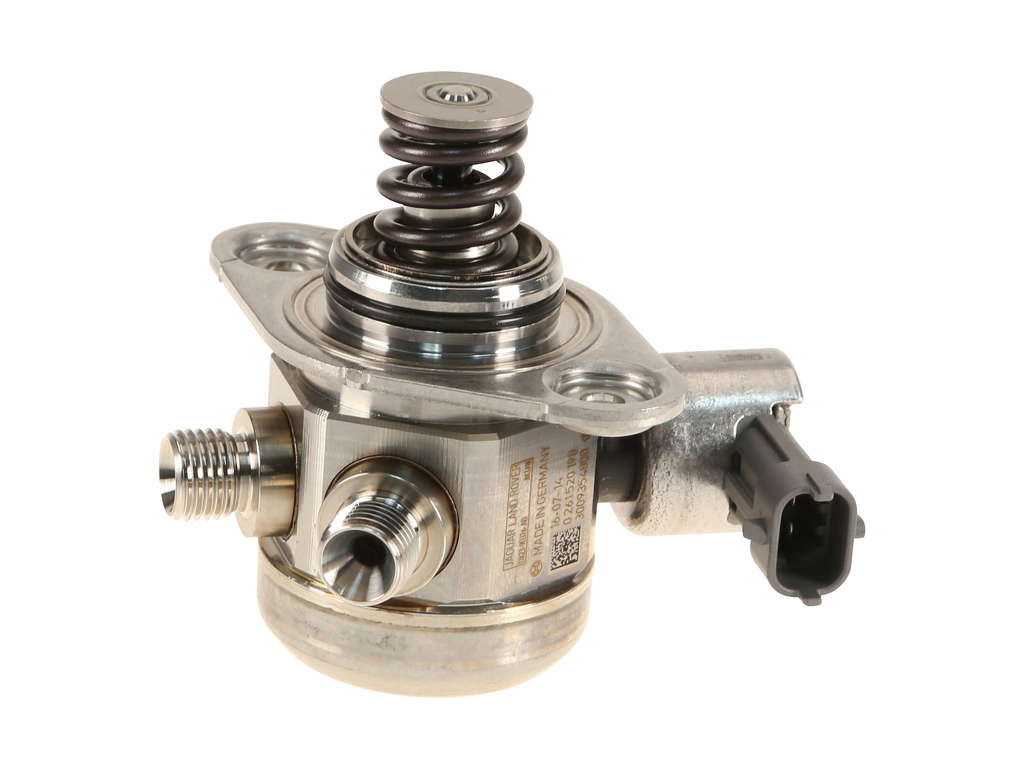
On 3.0L V6 and 5.0L V8 Jaguar XJ models, P0251 almost always indicates a failing high-pressure fuel pump (HPFP) on Bank 1. These pumps are a known weak point across many Jaguar and Land Rover models and are typically replaced in pairs. A loose electrical connector on the pump can also trigger this code. This is a complex job, and you should expect a professional repair cost between $1,500 and $3,500.
- P0251 on a 2010-2017 Jaguar XJ almost certainly means you have a problem with the Bank 1 high-pressure fuel pump.
- Your vehicle has two of these pumps; they should always be replaced as a pair with their cam followers to ensure reliability.
- Before replacing pumps, check for a simple loose electrical connector on the pump's metering valve.
- Symptoms include stalling, hesitation (especially 2k-4k RPM), and a 'Restricted Performance' warning.
- This is not a DIY-friendly repair due to the extremely high fuel pressures and the need for special tools and procedures.
What's Unique About the 2010-2017 Jaguar XJ
Unlike many vehicles, the V6 and V8 engines in this generation of Jaguar XJ use two camshaft-driven high-pressure fuel pumps—one for each cylinder bank. Code P0251 refers to the pump on Bank 1, while a corresponding code, P0256, refers to Bank 2. These pumps are a well-documented failure point, as acknowledged by Jaguar in Special Service Message (SSM) 74589, which directly links P0251 to HPFP noise and faults. Because they are a common failure item and wear at similar rates, mechanics and owners on forums strongly recommend replacing both pumps at the same time to avoid a repeat repair.
Diagnostic Flowchart
Tap your situation to follow the diagnostic path that matches what you're seeing on this vehicle.
Symptoms You May Notice
- Check Engine Light is on
- "Restricted Performance" message displayed.
- Engine hesitation or stumbling, especially during acceleration between 2,000 and 4,000 RPM.
- Significant loss of power
- Engine stalls unexpectedly, sometimes while driving.
- Rough or fluctuating idle.
- Hard starting or extended cranking time.
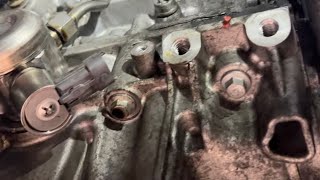
- Audible whining or chattering noise from the high-pressure fuel pumps, located at the back of the engine. 🎬 See and hear common symptoms of a failing high-pressure pump.
- Replacing only the fuel rail pressure sensor. While the sensor can fail, the symptoms and code P0251 are more frequently caused by the pumps themselves.
- Replacing only one of the two high-pressure fuel pumps. Since they wear at the same rate, the second pump is likely to fail soon after, requiring the job to be done a second time.
Most Likely Causes
- High-Pressure Fuel Pump (HPFP) Failure 🔴 High Probability → Shop Fuel Pump The HPFPs on the AJ126 and AJ133 engines are a known common failure item, as documented in manufacturer TSBs. They are under constant high stress to generate fuel pressure up to 3,000 PSI.
How to confirm: A technician will use a diagnostic scan tool to monitor requested ('desired') versus actual fuel rail pressure. At idle, pressure should stabilize around 3,000 kPa; a significant drop in actual pressure under load points to a failing pump. One owner reported actual pressure at 360 kPa when 5000 kPa was required at idle, confirming a failed pump. A Jaguar TSB indicates a faulty pump may only produce 700-900 KPa, which will not increase with engine speed.
Typical fix: Replace both high-pressure fuel pumps and the associated cam followers (tappets). 🎬 Watch: Step-by-step walkthrough for replacing both high-pressure fuel pumps.
Est. part cost: $400-$1200 for a pair - Wiring or Connector Issue 🟡 Medium Probability Engine vibrations and heat can cause wiring harnesses to become brittle or connectors to loosen over time. The connector on the fuel pump's metering control valve is a specific point of failure.
How to confirm: Visually inspect the wiring harness and electrical connectors going to both HPFPs. Pay close attention to the plug on the fuel pump metering control valve at the back of the engine. Check for loose connections, corrosion, or damaged pins.
Typical fix: Repair the damaged section of the wiring harness or clean/replace the faulty connector. In one documented case, the loose electrical plug was simply secured with a cable tie, resolving the P0251-13 code.
Est. part cost: $10-$100 - Powertrain Control Module (PCM) Fault ⚪ Low Probability While not common, an internal failure of the driver circuit within the PCM that controls the fuel pump can mimic the symptoms of a bad pump.
How to confirm: This is a diagnosis of exclusion. If both pumps and all wiring have been tested and confirmed to be good, the PCM becomes the primary suspect. This should only be considered after all other possibilities are exhausted.
Typical fix: Replace and reprogram the Powertrain Control Module.
Est. part cost: $800-$2000
Rare But Worth Checking
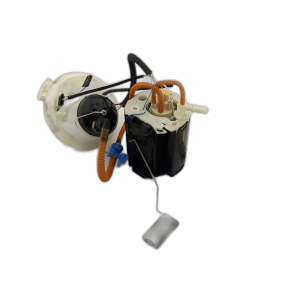
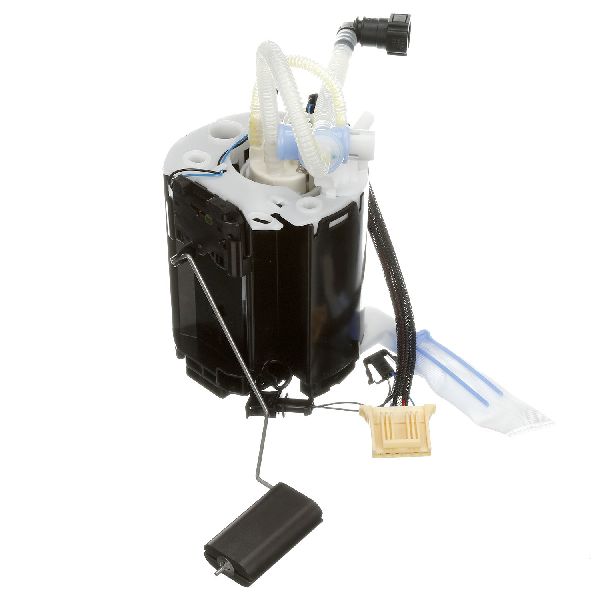
- Failing In-Tank Low-Pressure Fuel Pump: → Shop Fuel Pump While less common for this specific code, a failing low-pressure pump can starve the high-pressure pumps, causing them to perform poorly. The low-pressure system should operate between 60 and 106 PSI. This issue usually sets other codes like P0087 (Fuel Rail Pressure Too Low) more consistently, but it can be a contributing factor. Jaguar recommends diagnosing any low-pressure system faults before addressing high-pressure codes to prevent misdiagnosis.
- Contaminated Fuel or Clogged Fuel Filter: → Shop Fuel Filter Water or debris in the fuel can damage the sensitive internals of the high-pressure pumps. While the main fuel filter is part of the in-tank low-pressure pump assembly and not typically serviced separately, its failure can lead to HPFP damage.
Diagnosis Steps
- Connect an OBD-II scanner and check for all stored DTCs. Note if P0251 is present alone or with P0256, P0087, or other related codes.
- Using a capable scan tool (like JLR SDD), access live data and monitor 'Fuel Rail Pressure Desired' and 'Fuel Rail Pressure' (actual).
- With the key on and engine off, check the pressure readings. Then, start the engine. At idle, the actual pressure should quickly rise to match the desired pressure and then stabilize around 3,000 kPa.
- Safely test drive the vehicle (if possible) or raise the engine RPM to 3,000 while parked. A healthy system should show both desired and actual pressure rising to around 4,800 kPa. A large discrepancy where actual pressure lags or drops indicates a problem.
- Listen to the rear of the engine near the firewall for excessive whining or chattering from the HPFPs. A healthy pump should have an audible metallic rattle or chatter; a pump with an internal metering valve fault may be quiet.
- Perform a thorough visual inspection of the wiring harnesses and electrical connectors for both high-pressure fuel pumps. Specifically check the connector on the fuel metering control valve for a loose fit.
- If the pumps and wiring are suspect, a professional technician should perform a fuel system pressure and volume test according to the factory service manual.
- If pumps and wiring test good, the final step is to consider a fault with the Powertrain Control Module (PCM).
Parts You'll Likely Need
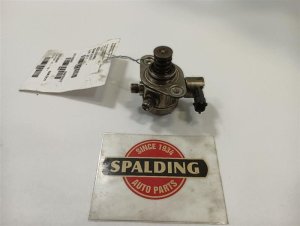
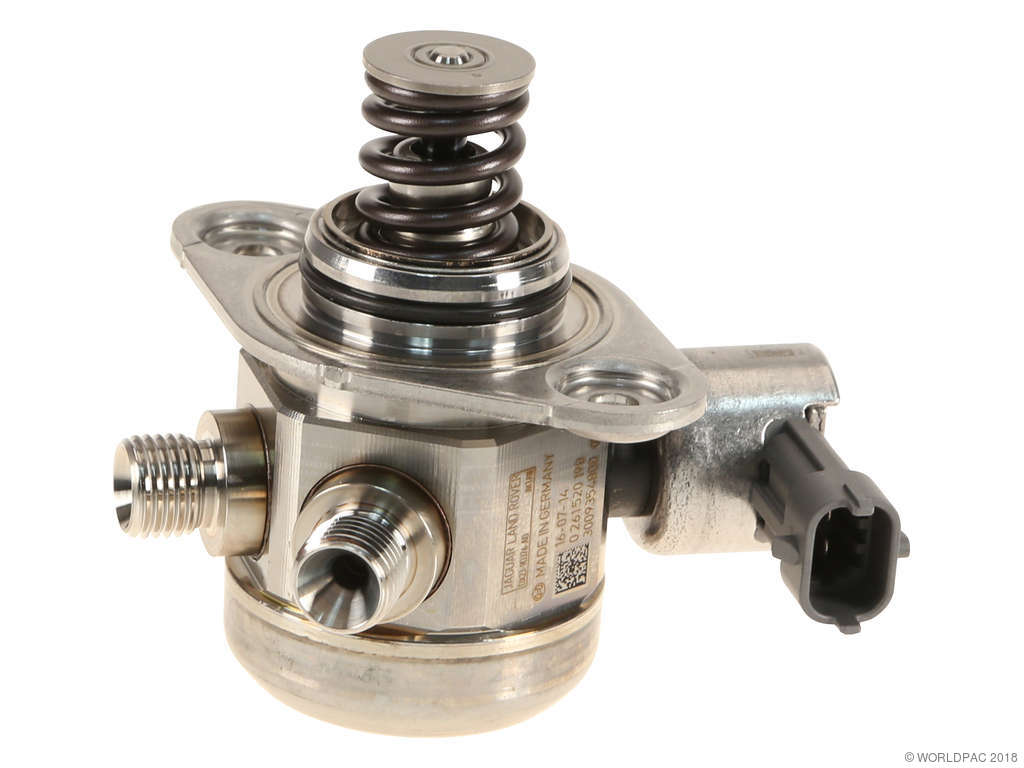
- High-Pressure Fuel Pump
(OEM #C2Z31828, LR081595, AJ812357, C2D43874 (verify by VIN))— This is the most common point of failure for code P0251 on this platform, as confirmed by TSBs and extensive owner experience. It is highly recommended to replace both pumps.
Trusted brands: Jaguar (OEM), Bosch, Pierburg
OEM price range: $500-$700 each
Aftermarket price range: $200-$400 each - High-Pressure Fuel Pump Cam Follower / Tappet
(OEM #Verify by VIN)— This small component acts as the interface between the camshaft lobe and the fuel pump plunger. It is a wear item and should always be replaced with the high-pressure fuel pumps to ensure proper operation and prevent damage to the new pumps.
Trusted brands: Jaguar (OEM), INA
OEM price range: $30-$60 each
Aftermarket price range: $20-$40 each
Related Codes That Often Appear With This One
- P0256 — This is the identical fault for the Bank 'B' (Bank 2) high-pressure fuel pump. Seeing P0251 and P0256 together is very common and confirms both pumps are struggling.
- P0087 — This code means 'Fuel Rail/System Pressure - Too Low'. It's a general code indicating the fuel system can't meet the pressure demand, which is a direct symptom of failing HPFPs.
- P228F-85 — This code for 'Fuel Pressure Regulator 1 Exceeded Learning Limits' is also listed in TSB SSM74589 alongside P0251, indicating it's part of the same fault pattern.
- P025C-11 — This code for 'Fuel Pump Module 'A' Control Circuit Low' is another related DTC mentioned in TSB SSM74589.
- P00C6 — A forum user reported this code ('Fuel Rail Pressure Too Low, Engine Cranking, Bank 1') appearing alongside symptoms of HPFP failure, pointing directly to the Bank 1 pump. A Jaguar TSB also lists this code as potentially being present with a faulty HPFP.
Technical Service Bulletins (TSBs) & Recalls
- SSM74589: A 'Special Service Message' from Jaguar noting that 2016-onward vehicles with the AJ126 supercharged V6 may experience noise from the HP fuel pumps and/or illuminate the check engine light. It directly links this to DTCs P0251-13, P0256-13, P228F-85, P025C-11, and P064A-38. The cause is listed as 'Under Investigation.'
Platform-Specific Known Issues
- The 3.0L V6 and 5.0L V8 engines use two high-pressure fuel pumps located on the lower passenger side of the engine block. It is standard practice and highly recommended to replace both at the same time, along with their respective cam followers (tappets), to prevent a repeat failure of the older pump.
Mechanic-Grade Diagnostic Values
- High-Pressure Fuel Rail Pressure at Idle — expected: 3.0-8.0 MPa (435-1160 PSI), depending on engine temperature.. Failure: A faulty pump may only read approximately 700-900 KPa (101-130 PSI) and the pressure will not increase with engine speed.
- Low-Pressure Fuel System Pressure — expected: The low-pressure system should maintain a pressure between 4.2 and 7.3 bar (60-106 PSI).. Failure: Pressure outside this range indicates a fault with the in-tank pump or its controller, which must be fixed before diagnosing the high-pressure side.
Hidden / Shadow Codes Worth Checking
- P0251-13: The '-13' suffix indicates a 'Circuit Open' condition. This points more specifically towards a wiring break, a loose connector, or an internal open circuit in the pump's control solenoid, rather than just poor performance. (see via Jaguar Land Rover (JLR) SDD or a compatible high-level diagnostic scanner.)
Scan Tool Commands That Help
- JLR SDD (Symptom Driven Diagnostics): Powertrain - High pressure fuel pump test — This function, found under 'Recommendations' after selecting 'Engine performance' symptoms, allows a technician to individually disable each of the two high-pressure fuel pumps. This is used to isolate which pump is failing or making noise.
- JLR SDD (Symptom Driven Diagnostics): Gasoline Fuel System Diagnostic Application — This is a comprehensive, non-intrusive test application within SDD for AJ126/AJ133 engines. It performs a controlled test of the entire fuel system, from the low-pressure pump's current draw to individually testing the high-pressure pumps, providing pass/fail results for each component.
Wiring & Ground Locations
- Engine Management System (EMS) Ground Studs — On the firewall/bulkhead, with specific ground studs for the EMS located on the left front inner fender area.. The Powertrain Control Module (PCM/ECM) relies on clean, solid ground connections to accurately read sensor data and control actuators like the fuel pump metering valve. A corroded or loose ground can cause erratic behavior and false codes.
- Ground Studs Behind Headlights — There are ground studs located behind both the left and right headlight assemblies. These are known to corrode on the aluminum body XJ.. While not directly for the fuel pump, these grounds serve multiple systems, and corrosion can introduce electrical noise and voltage drops that can affect PCM operation and lead to a variety of seemingly unrelated fault codes.
Real Owner Repair Stories
- YouTube user Erol Icoz (2013 Jaguar XF (with same AJ126/AJ133 engine family)) — Fault code P0251-13, 'Injection pump fuel metering control unit'.
❌ Tried (didn't work) The video does not mention other failed attempts, implying a direct diagnosis.
✅ What actually fixed it The electrical connector plug for the fuel pump metering control valve, located at the back of the engine, was found to be loose. The plug was secured tightly with a cable tie, which resolved the fault code.
OEM Part Supersession History
C2D43874, C2Z22287→C2Z31828— Standard part revision and improvement by the manufacturer.
Heads up: The newer part number C2Z31828 is the correct replacement for the older numbers. Using old stock or used parts with the original numbers is not recommended.
Model Year Variations Within This Range
- 2012-2019: The high-pressure fuel pump part number C2Z31828 is listed as applicable from VIN V39427 for the 5.0L V8 XJ, and for all years of the 3.0L V6 XJ (2012-2019). Vehicles before this VIN may use a different part number, so VIN verification is critical.
Helpful Videos
Used OEM Parts in Stock
New Aftermarket Parts Available

The information in this article is provided for general reference and educational purposes only. Vehicle specifications, procedures, and part compatibility can vary by production date, trim level, and region. Always consult your vehicle's factory service manual and verify part numbers before purchasing or performing repairs. Safety-critical components such as airbags, seat belts, and braking systems should be installed by a qualified professional.
- Jaguar XJ:
- 🧭 Diagnostic Flowchart
- 🎬 Helpful Videos
- 🛍️ Shop This Part
- What's Unique About the 2010-2017 Jaguar XJ
- Symptoms You May Notice
- Most Likely Causes
- Rare But Worth Checking
- Diagnosis Steps
- Parts You'll Likely Need
- Related Codes That Often Appear With This One
- Technical Service Bulletins (TSBs) & Recalls
- Platform-Specific Known Issues
- Mechanic-Grade Diagnostic Values
- Hidden / Shadow Codes Worth Checking
- Scan Tool Commands That Help
- Wiring & Ground Locations
- Real Owner Repair Stories
- OEM Part Supersession History
- Model Year Variations Within This Range
- 🎟️ Get 5% Off