

P0256 on 2010-2017 Jaguar XJ: High-Pressure Fuel Pump 'B' Control Circuit Fault
On a 2010-2017 Jaguar XJ, code P0256 typically points to a fault with the 'B' (driver's side, Bank 2) high-pressure fuel pump or its control circuit. This is a well-documented issue on Jaguar's AJ126 V6 and AJ133 V8 engines, often accompanied by a buzzing noise from the pump, 'Restricted Performance' warnings, and addressed in Jaguar TSB SSM74589. The most common fix is replacing the faulty high-pressure fuel pump, with many owners and shops recommending replacing both pumps simultaneously.
- P0256 on a 2010-2017 Jaguar XJ almost always points to a problem with the driver's side high-pressure fuel pump (HPFP).
- Symptoms include a 'Restricted Performance' warning, poor acceleration, and a distinct buzzing noise from the engine.
- This is a known issue acknowledged by Jaguar in a service bulletin (SSM74589).
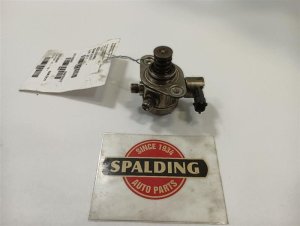
- The correct OEM replacement part is typically LR081595, and it is strongly recommended to replace both pumps at once.
- Repair is expensive, with dealer quotes often exceeding $2500 for both pumps.
What's Unique About the 2010-2017 Jaguar XJ
The Jaguar XJ of this era uses AJ126 V6 and AJ133 V8 engines, both equipped with two camshaft-driven high-pressure fuel pumps. Code P0256 specifically relates to the 'B' pump, which is located on Bank 2 (the driver's side in LHD markets). Jaguar has acknowledged issues with these pumps through Technical Service Bulletin (TSB) SSM74589, which links this code to noisy operation and eventual failure of the HPFP on the V6 engine, a problem that also affects the related V8 and other JLR models.
Diagnostic Flowchart
Tap your situation to follow the diagnostic path that matches what you're seeing on this vehicle.
Symptoms You May Notice
- Check Engine Light (MIL) illuminated
- "Restricted Performance" message on the instrument cluster.
- Reduced engine power and poor acceleration, feels like limp mode.
- Engine hesitation or stuttering, especially under load or hard acceleration.
- Engine stalling, difficulty starting, or failure to restart when warm.
- Rough idle, with RPMs sputtering or thrashing.
- Audible buzzing or whining noise from the top-rear of the engine, where the pumps are located under foam covers.
- Fuel smell from the exhaust due to poor combustion.
- Replacing fuel injectors when the issue is fuel pressure delivery.
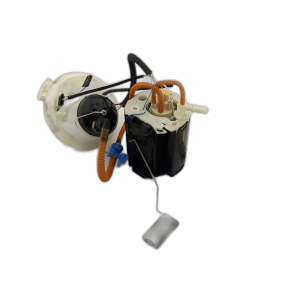
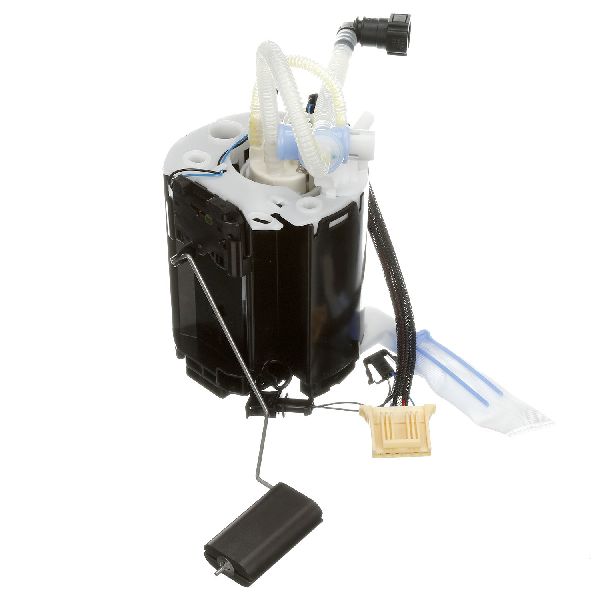
- Replacing the in-tank low-pressure fuel pump when the fault is with the high-pressure system.
- Replacing fuel pressure sensors without first verifying the pump's operation and wiring integrity.
Most Likely Causes
- High-Pressure Fuel Pump (HPFP) 'B' Failure 🔴 High Probability → Shop Fuel Pump As noted in Jaguar TSB SSM74589, these Bosch-made pumps are a known failure point across the JLR lineup, experiencing internal mechanical or electrical faults that trigger this code. Forum discussions are filled with owner experiences of HPFP failures on these engines.
How to confirm: A technician can use a diagnostic tool like JLR SDD to monitor 'Fuel Rail Pressure Desired' vs. 'Fuel Rail Pressure Actual'. A significant discrepancy, especially when commanding pump 'B', points to a faulty pump. A buzzing noise from the Bank 2 pump is also a strong indicator. The SDD software also has a specific HPFP test that can be run to verify failure.
Typical fix: Replace the faulty high-pressure fuel pump (Bank 2). It is highly recommended to replace both pumps ('A' and 'B') at the same time as a preventative measure, as they are the same age and subject to the same wear.
Est. part cost: $400-$900 per pump - Wiring or Connector Issue 🟡 Medium Probability The engine harness is exposed to significant heat and vibration, which can lead to chafed wires or corroded connector pins for the fuel pump's control actuator over time. A Jaguar diagnostic document for P0256-13 specifically lists 'Fuel rail pressure sensor circuit, open circuit' as a possible cause.
How to confirm: Visually inspect the wiring harness and connector going to the driver's side high-pressure fuel pump. Perform a continuity and resistance test on the circuit between the PCM and the pump connector to check for open circuits, shorts to ground, or high resistance.
Typical fix: Repair the damaged section of the wiring harness or clean/replace the faulty connector.
Est. part cost: $20-$150 - Powertrain Control Module (PCM) Fault ⚪ Low Probability While rare, the internal driver circuit within the PCM that controls the fuel pump can fail. This is uncommon compared to the mechanical failure of the pumps themselves.
How to confirm: This is typically diagnosed by exclusion. If the pump, wiring, and connectors are all confirmed to be good through rigorous testing, the PCM becomes the primary suspect. This requires advanced diagnostics by a qualified technician, as it's an expensive last resort.
Typical fix: Replace and reprogram the Powertrain Control Module.
Est. part cost: $1000-$2000
Diagnosis Steps
- Scan the PCM for all stored trouble codes. Note any other codes that appear alongside P0256, especially P0251, P0087, and P228F.
- Listen to the engine bay for an audible buzzing or whining from the high-pressure fuel pumps, which are located at the back of the cylinder heads under foam covers. The 'B' pump is on the driver's side (Bank 2).
- Using a professional scan tool (like JLR SDD), access the live data stream. Monitor 'Fuel Rail Pressure Desired' vs. 'Fuel Rail Pressure Actual'. At idle, pressure should stabilize around 3,000 kPa, rising with RPM. A large, persistent gap between desired and actual pressure is a key indicator.
- While monitoring live data, use the scan tool's utility to command each HPFP individually. If the pressure does not respond correctly when commanding pump 'B', the fault is likely with that pump or its circuit.
- Perform a thorough visual inspection of the wiring and connector for the driver's side (Bank 2) high-pressure fuel pump. Look for any signs of heat damage, chafing, corrosion, or loose connections.
- If the wiring appears intact, perform continuity and resistance tests on the wires between the PCM and the pump connector to rule out an open or short circuit, as suggested by JLR's own diagnostic charts.
- If the wiring and connector are confirmed to be good, the high-pressure fuel pump itself is the most likely cause of the fault, as outlined in TSB SSM74589 and numerous owner experiences.
Parts You'll Likely Need
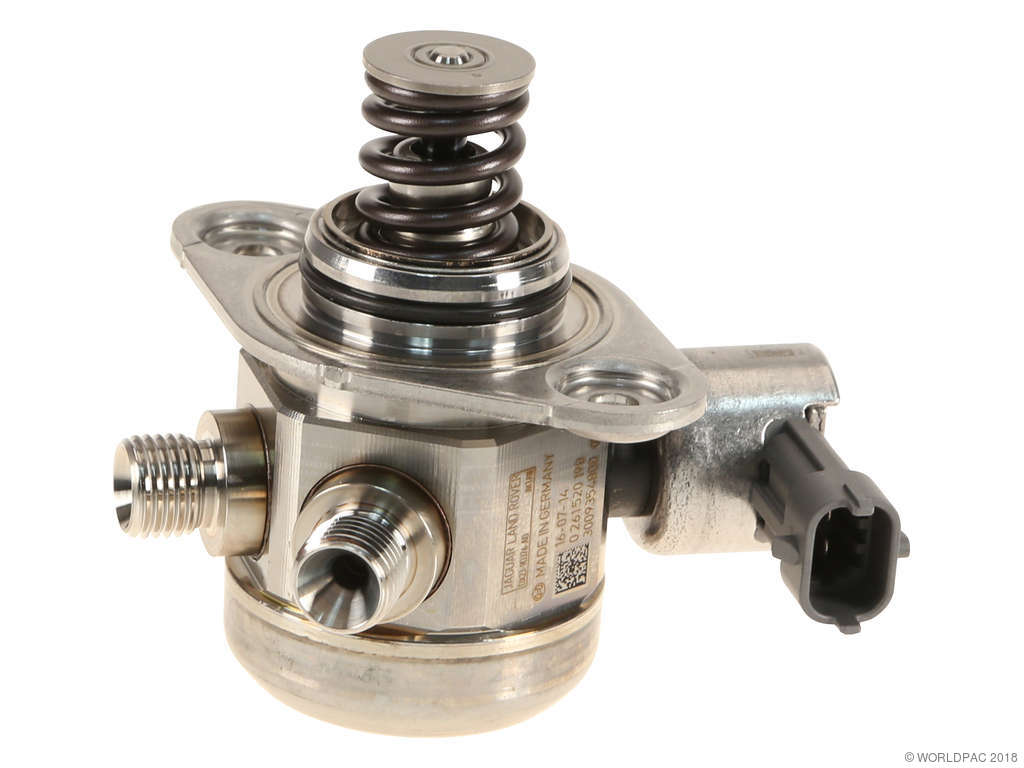
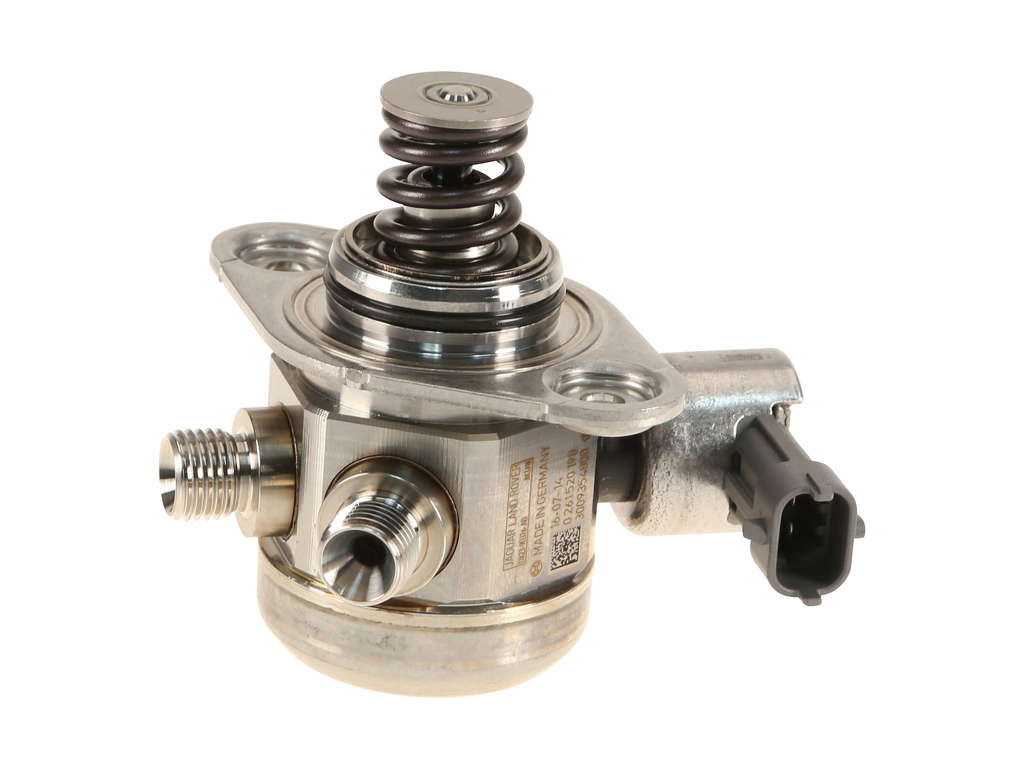
- High-Pressure Fuel Pump (Bank 2 / Driver's Side)
(OEM #LR081595 (supersedes LR035527, AJ812357, C2D24860))— This is the component directly identified by the code and is a known failure item according to Jaguar's own service bulletins and extensive owner reports.
Trusted brands: Bosch (OEM Manufacturer), Jaguar / Land Rover (OEM)
OEM price range: $600-$900
Aftermarket price range: $400-$650
Related Codes That Often Appear With This One
- P0251 — This code is for 'Injection Pump Fuel Metering Control 'A' Malfunction', pointing to a problem with the other high-pressure fuel pump (Bank 1). They often fail in pairs or close succession.
- P228F — This code means 'Fuel Pressure Regulator 1 Exceeded Learning Limits - Too High'. It often appears with HPFP codes as the system struggles to control fuel pressure. It is explicitly mentioned in TSB SSM74589 alongside P0256.
- P0087 — This code indicates 'Fuel Rail/System Pressure - Too Low'. A failing HPFP control circuit (P0256) or a mechanically failed pump will directly cause a low-pressure condition.
- P00C6 — This code for 'Fuel Rail Pressure Too Low - Engine Cranking' can be logged when a failing HPFP cannot build sufficient pressure to start the engine properly.
- P2187 / P2189 — These codes indicate 'System Too Lean at Idle' for Bank 1 and Bank 2. An improperly controlled fuel pump can fail to deliver enough fuel, causing a lean condition.
Technical Service Bulletins (TSBs) & Recalls
- SSM74589: Addresses noise from the High-Pressure (HP) fuel pumps and associated DTCs, including P0256-13, on vehicles with the AJ126 supercharged V6 engine. It applies to the XJ, F-Pace, F-Type, XE, and XF.
Platform-Specific Known Issues
- TSB SSM74589 - HPFP Noise and DTCs: Jaguar issued Special Service Message (SSM) 74589 for 2016 and newer models with the AJ126 3.0L V6 engine, but the issue is also relevant to the XJ and the AJ133 V8. It specifically mentions that noise from the HP fuel pumps can be accompanied by DTC P0256-13, among others, confirming the link between the code and pump failure.
- Dealer Repair Costs: Owners on forums report dealer quotes for replacing both high-pressure fuel pumps to be in the range of $2600. This high cost is why many opt for independent shops or DIY repair, though the latter is complex.
Mechanic-Grade Diagnostic Values
- High-Pressure Fuel System Pressure (at idle) — expected: Approx. 30 bar (435 PSI) to 50 bar (725 PSI). Failure: Significant deviation from expected pressure, or pressure that doesn't increase with engine RPM.
- High-Pressure Fuel System Pressure (at start-up/under load) — expected: Up to 150 bar (2176 PSI). Failure: Failure to reach high pressure under load, often triggering P0087.
- Low-Pressure Fuel System Pressure (Key On, Engine Off) — expected: Approx. 90-105 PSI (6.2-7.2 bar) during initial prime.. Failure: Pressure significantly below 90 PSI can indicate a failing in-tank pump, which can starve the HPFPs.
- Low-Pressure Fuel System Pressure (at idle) — expected: Approx. 70-80 PSI (4.8-5.5 bar) after initial start-up flare.. Failure: Pressure dropping below this range at idle can cause hesitation and HPFP codes.
- Engine Ground Strap Voltage Drop (during cranking) — expected: Well under 0.5V (500mV). Failure: A reading higher than 0.5V indicates high resistance in a ground connection, which can cause erratic behavior in control modules and sensors.
Hidden / Shadow Codes Worth Checking
- P0256-13: This manufacturer-specific sub-code means 'Injection Pump Fuel Metering Control B - Circuit open'. It points directly to an electrical fault (like a broken wire or bad connector) rather than a purely mechanical pump failure. (see via JLR SDD (Symptom Driven Diagnostics) or a compatible high-end professional scan tool that can read manufacturer-specific codes.)
Scan Tool Commands That Help
- JLR SDD (Symptom Driven Diagnostics): Powertrain - High pressure fuel pump test — This is the primary diagnostic function for this issue. It allows the technician to individually disable each HPFP to isolate the source of the fault. The tool commands Pump 1 off, then both on, then Pump 2 off, then both on. A failure to build pressure when only Pump 'B' (Pump 2) is active confirms the fault lies with that pump or its circuit. This test is detailed in JLR's Special Service Message SSM72114.
- JLR SDD (Symptom Driven Diagnostics): Datalogger - Fuel Rail Pressure vs. Desired Fuel Rail Pressure — Used to monitor the fuel system's performance in real-time. A large and consistent gap between the pressure the PCM is requesting and what is actually being delivered is a strong indicator of a pump or control circuit fault.
- JLR SDD (Symptom Driven Diagnostics): Powertrain - Powertrain control module unlock application — This function may be required if an error message '36' or '37' appears during the HPFP test. After running the unlock application, the HPFP test should be repeated.
Wiring & Ground Locations
- Engine Ground Strap — Typically located on the lower right side of the vehicle, connecting the engine/transmission assembly to the chassis/frame, often near the starter motor.. A poor engine ground can cause a voltage drop and introduce electrical noise, potentially disrupting the sensitive signals between the PCM and the high-pressure fuel pump control circuits, leading to intermittent or false codes.
- ECM Ground Studs — The Engine Control Module (ECM) typically has multiple ground points. On related Jaguar platforms, these are often found on the firewall/bulkhead and on the inner fender wells in the engine bay.. The PCM relies on a clean ground reference to accurately control the drivers for the fuel pumps. A corroded or loose ground stud for the PCM itself can directly cause control circuit faults like P0256.
Real Owner Repair Stories
- JaguarForums.com user 'rebuild_story_teller' (2013 Jaguar XJ L Supercharged 5.0L V8) — Car drives but has almost no power, feels like it suffocates on acceleration. Code P0256-13 was present. Using SDD, fuel trim for Bank 1 was 16% while Bank 2 had no data available.
❌ Tried (didn't work) The vehicle was a rebuild project. The initial no-start was fixed by cleaning sand/gunk from the entire fuel system and replacing injectors. However, the low power and P0256-13 code remained.
✅ What actually fixed it The forum thread is a diagnostic journey. The user identified P0256-13 as the primary cause of the low power and was investigating the 'B' pump control circuit. The resolution was not posted, but the story is valuable for confirming the direct link between P0256-13 and severe low-power symptoms, along with the specific SDD data (no Bank 2 fuel trim) that accompanies the fault.
OEM Part Supersession History
LR035527→LR081595— Standard part number evolution due to design revisions or supplier changes. LR081595 is the current replacement part.
Heads up: No known incompatibilities; LR081595 is the correct service part for the entire 2010-2017 range. Other associated part numbers include AJ812357 and C2D24860.
Model Year Variations Within This Range
- 2016-onward (specifically for V6): TSB SSM74589, which explicitly lists P0256-13, is targeted at 2016 and newer models with the AJ126 3.0L V6. While the pump design and failure mode are common across the entire 2010-2017 range and on the V8, this bulletin highlights a specific focus by Jaguar on later model years for this particular set of DTCs.
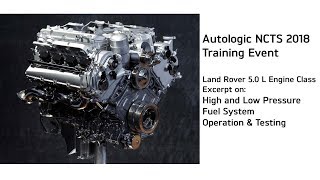
Helpful Videos
Used OEM Parts in Stock
New Aftermarket Parts Available

The information in this article is provided for general reference and educational purposes only. Vehicle specifications, procedures, and part compatibility can vary by production date, trim level, and region. Always consult your vehicle's factory service manual and verify part numbers before purchasing or performing repairs. Safety-critical components such as airbags, seat belts, and braking systems should be installed by a qualified professional.
- Jaguar XJ:
- 🧭 Diagnostic Flowchart
- 🎬 Helpful Videos
- 🛍️ Shop This Part
- What's Unique About the 2010-2017 Jaguar XJ
- Symptoms You May Notice
- Most Likely Causes
- Diagnosis Steps
- Parts You'll Likely Need
- Related Codes That Often Appear With This One
- Technical Service Bulletins (TSBs) & Recalls
- Platform-Specific Known Issues
- Mechanic-Grade Diagnostic Values
- Hidden / Shadow Codes Worth Checking
- Scan Tool Commands That Help
- Wiring & Ground Locations
- Real Owner Repair Stories
- OEM Part Supersession History
- Model Year Variations Within This Range
- 🎟️ Get 5% Off