

P0256 on 2013-2020 Land Rover Range Rover Diesel: HP Fuel Pump Causes & Fixes
P0256 on a diesel Range Rover typically indicates a fault with the secondary high-pressure fuel pump or its control circuit. A known issue, documented in Land Rover TSB SSM74588, often requires replacement of the high-pressure fuel pump assembly. This is a common failure on the 3.0L TDV6/SDV6 engine shared across several Land Rover and Jaguar models. Expect a significant repair cost due to parts and labor.
- P0256 on a 2013-2020 diesel Range Rover is a serious code pointing to the high-pressure fuel system, specifically the secondary injection pump.
- A Land Rover TSB (SSM74588) confirms that the high-pressure fuel pump itself is a common point of failure for this code, especially the P0256-13 variant.
- Symptoms include significant power loss ('Restricted Performance' or limp mode) and potential stalling, making the vehicle unreliable.
- Due to the complexity and high pressures involved, this is not a recommended DIY repair. Professional diagnosis with JLR-specific tools and service are strongly advised.
- This issue affects multiple JLR models that share the 3.0L TDV6/SDV6 diesel engine.
What's Unique About the 2013-2020 Land Rover RANGE ROVER
The diesel engines in the L405 Range Rover, like the 3.0L TDV6/SDV6 (engine code 306DT), use a sophisticated high-pressure common rail fuel system. Unlike systems with two separate HPFPs, this engine uses a single, belt-driven, two-piston high-pressure fuel pump. The 'B' in code P0256 specifically refers to the control circuit for the secondary internal pumping element. Land Rover has acknowledged issues with these pumps in a Technical Service Bulletin (SSM74588), making this a known pattern failure rather than a random event. The problem is often the pump assembly itself, not just a simple sensor, and is a frequent cause of 'Restricted Performance' or 'limp mode' alerts.
Diagnostic Flowchart
Tap your situation to follow the diagnostic path that matches what you're seeing on this vehicle.
Symptoms You May Notice
- Check Engine Light is on
- "Restricted Performance" message on the instrument cluster
- Reduced engine power and acceleration (limp mode)
- Engine may hesitate, surge, or run rough
- Engine stalling or difficulty starting, especially when cold
- Black smoke from the exhaust, particularly under acceleration
- Decreased fuel economy
- Rough or unsteady idle
- Replacing fuel injectors unnecessarily. While fuel system related, injectors are downstream of this fault and are usually not the root cause.
- Replacing only the fuel pressure sensor. While a sensor can fail, the TSB for this platform points more directly to the pump itself or its control circuit.
Most Likely Causes
- High-Pressure Fuel Pump Failure 🔴 High Probability → Shop Fuel Pump A Land Rover Technical Service Bulletin (SSM74588) directly links P0256-13 to issues with the high-pressure (HP) fuel pumps, indicating a known weakness. The 3.0L diesel engines are known for this specific failure.
How to confirm: A technician will use a diagnostic tool (like JLR Pathfinder) to monitor fuel rail pressure requested vs. actual values. A significant discrepancy or a pressure reading of approximately 700-900 KPa (101-130 psi) that does not increase with engine RPM points to a failure. A voltage check at the pump connector showing 0V can confirm an open circuit, as suggested by the -13 suffix. [SSM74588]
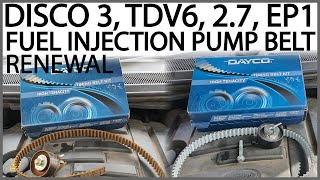
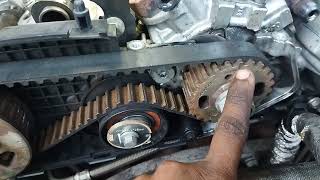
Typical fix: Replacement of the high-pressure fuel pump assembly. The pump is driven by a belt and its replacement requires a specific timing procedure. 🎬 See this guide on timing the high-pressure fuel pump.
Est. part cost: $800-$1500+ - Wiring Harness or Connector Damage 🟡 Medium Probability Engine vibrations and heat can cause wiring to chafe or connectors to become loose or corroded over time, leading to an open or shorted circuit as indicated by the P0256-13 variant.
How to confirm: Visually inspect the wiring harness leading to the high-pressure fuel pump for any signs of damage, chafing, or corrosion, particularly in the 'V' of the engine where the pump is located. Perform a continuity test on the control circuit wires from the PCM to the pump. Check for moisture in the connectors.
Typical fix: Repair the damaged section of the wiring harness or replace the faulty connector.
Est. part cost: $20-$200
Rare But Worth Checking
- Powertrain Control Module (PCM) Fault: While rare, the internal driver circuit within the PCM that controls the fuel pump can fail. This should only be considered after the pump and wiring have been thoroughly tested and ruled out. Sometimes a PCM software update is required to fix diagnostic glitches.
- Clogged Fuel Filter: → Shop Fuel Filter A severely clogged fuel filter can starve the high-pressure pump, causing erratic performance and potentially triggering pressure-related codes like P0087, which can accompany P0256. It's a relatively inexpensive item to replace as part of regular maintenance or early diagnosis.
- Low-Voltage from Failing Battery/Alternator: Land Rover electrical systems are notoriously sensitive to low voltage. A failing battery or alternator can cause a cascade of seemingly unrelated fault codes, including those related to transmission and engine management going into limp mode. This should be checked early in the diagnostic process.
Diagnosis Steps
- Connect a professional OBD-II scanner (preferably JLR-specific) to read the fault code, including the two-digit suffix (e.g., -13 for open circuit).
- Check battery voltage and alternator output to rule out low-voltage issues, which are a known cause of spurious faults on Land Rovers.
- Use the scanner's live data function to monitor 'Fuel rail pressure'. At idle, pressure should be 3.0-8.0 MPa (435-1160 psi). If it reads ~700-900 KPa (101-130 psi) and does not increase with engine speed, the HPFP is likely faulty.
- Check low-pressure fuel system delivery to the HPFP. While specifications vary, pressure should be stable and sufficient (e.g., >65 PSI) while running.
- Visually inspect the wiring harness and connectors for the high-pressure fuel pump for any signs of damage, corrosion, or loose connections. Pay close attention to areas where the harness may rub against other components in the engine valley. 🎬 Watch: A walkthrough of the fuel pump replacement process.
- If an open circuit is suspected (P0256-13), perform a continuity test on the control circuit wires between the PCM and the fuel pump.
- Check for voltage and ground signals at the fuel pump connector to verify the integrity of the electrical circuit.
- If wiring and signals are good, the fault is highly likely to be the high-pressure fuel pump itself, as indicated by TSB SSM74588.
- As a preliminary step, check the condition of the main fuel filter and for any fuel contamination (water, gasoline), as this can cause related pressure codes.
Parts You'll Likely Need
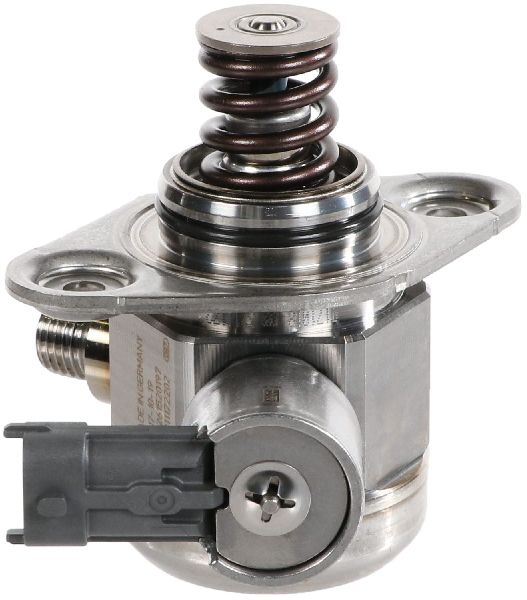
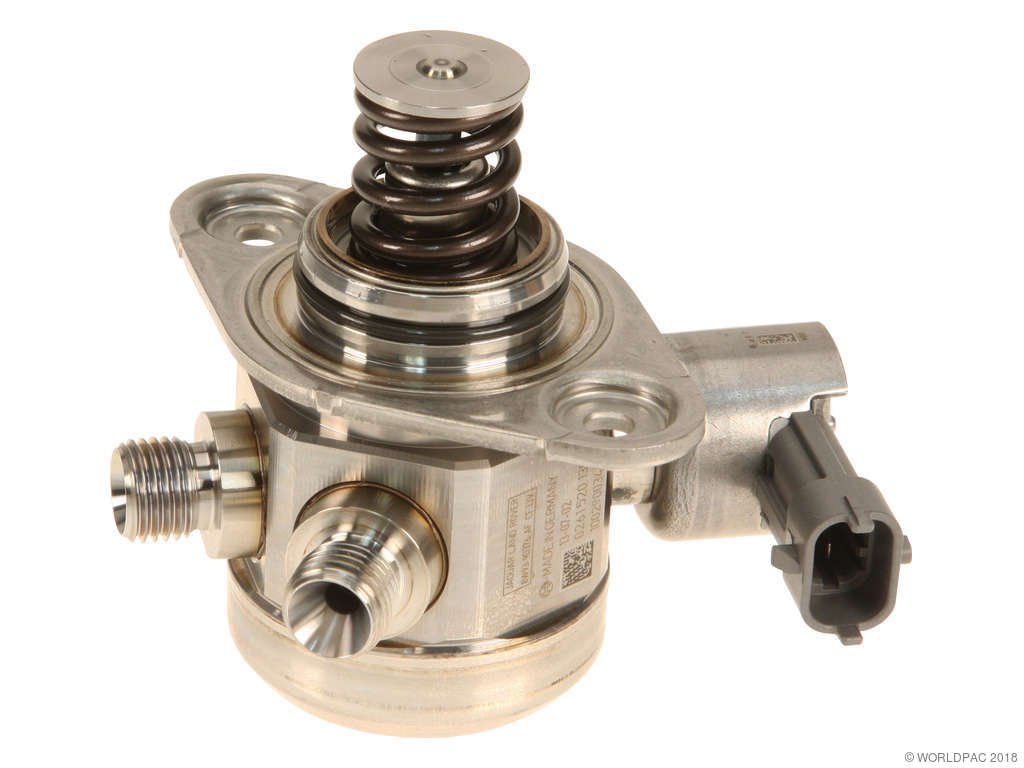
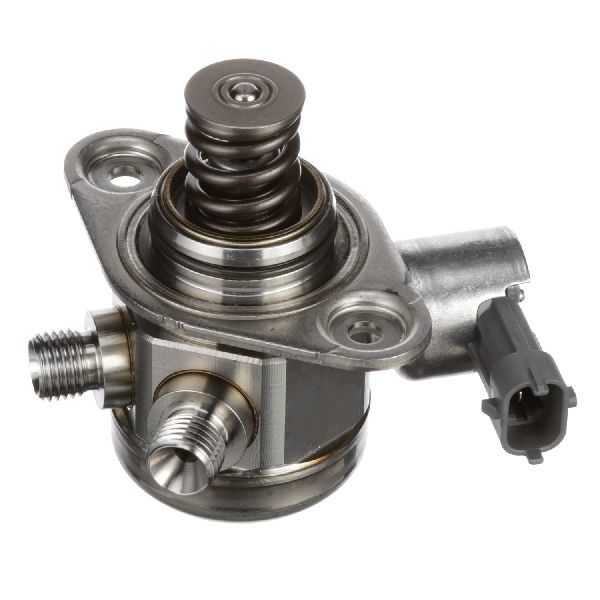
- High-Pressure Fuel Pump
(OEM #LR078840, LR058160, LR049603)— This is the most common failure point for code P0256 on this vehicle, as identified by Land Rover's own service bulletin. [SSM74588] Multiple part numbers exist due to supersessions.
Trusted brands: Bosch (OEM supplier), Genuine Land Rover
OEM price range: $1000-$1600
Aftermarket price range: $800-$1200
Related Codes That Often Appear With This One
- P228F-85 — This code for 'Fuel Pressure Regulator 1 Exceeded Learning Limits' is listed in the same TSB (SSM74588) and relates to the same HP fuel pump issue.
- P025C-11 — Also listed in TSB SSM74588, pointing to a fault in the 'Fuel Pump Module 'A' Low' circuit, indicating a comprehensive failure in the fuel delivery system.
- P0251-13 — This code for 'Injection Pump Fuel Metering Control 'A' Circuit Open' is the counterpart to P0256 and is also mentioned in TSB SSM74588, suggesting a problem with the primary HP fuel pump control circuit.
- P0087-00 — This code for 'Fuel Rail/System Pressure - Too Low' is a common companion code when the HPFP is failing to deliver the required pressure, often leading to limp mode.
Technical Service Bulletins (TSBs) & Recalls
- SSM74588: Addresses MIL illumination with DTCs P228F-85, P025C-11, P0251-13, P064A-38, or P0256-13 stored, related to HP fuel pumps. It applies to various models including Range Rover, Range Rover Sport, and Discovery with the 3.0L diesel engine.
Platform-Specific Known Issues
- TSB SSM74588 was issued by Land Rover for vehicles experiencing a Check Engine light with P0256-13 (among other codes), identifying the high-pressure fuel pumps as a likely cause. A Special Service Message (SSM) is a formal communication from Land Rover with the same importance as a TSB.
- The 3.0L TDV6/SDV6 engine uses a single, two-piston high-pressure fuel pump, not two separate pumps. The failure of the secondary control circuit ('B') within this single pump assembly is what specifically triggers P0256.
- Owners on forums frequently report entering 'Restricted Performance' mode, which then clears on restart, only to return later. This intermittent behavior is a classic symptom of the HPFP beginning to fail.
Mechanic-Grade Diagnostic Values
- High-Pressure Fuel Rail (at warm idle) — expected: 3.0 - 8.0 MPa (approx. 435 - 1160 PSI). Failure: Reads approx. 700 - 900 KPa (101 - 130 PSI) and does not increase with engine speed.
- High-Pressure Fuel Rail (during engine cranking) — expected: At least 120 bar (1740 PSI). Failure: Pressure significantly below 120 bar.
- Maximum System Pressure (under load) — expected: Up to 2000 bar (29,007 PSI). Failure: Inability to reach high pressures commanded by the PCM under load.
- Fuel Injector Electrical Resistance — expected: 150 - 250 kOhms. Failure: Reading outside of this range.
Scan Tool Commands That Help
- JLR SDD / Pathfinder: Datalogger - Fuel Rail Pressure — To monitor live actual vs. requested fuel pressure to confirm if the HPFP is meeting the PCM's demand. This is a primary step in diagnosing P0256.
- JLR SDD / Pathfinder / GAP IID: Fuel System Priming / Fuel Prime Function — After replacing a fuel filter or the fuel pump, this function runs the in-tank low-pressure pump to bleed air from the fuel lines before attempting to start the engine.
- JLR SDD / Pathfinder: Service Functions - Powertrain - Air Path Setup Routine — While not directly for the fuel pump, this resets adaptations for the throttle body, EGR, and turbo wastegate. It should be performed if related intake components were disturbed during the fuel pump repair, or to rule out air-side faults causing similar 'Restricted Performance' symptoms.
Wiring & Ground Locations
- High-Pressure Fuel Pump — In the 'V' of the engine, driven by a toothed belt off the Bank 2 (driver's side in LHD) exhaust camshaft.. This is the component, along with its integrated fuel metering valve and electrical connector, that is at the center of the P0256 fault.
- Fuel Rail Pressure (FRP) Sensor — Located in the front of the Bank 1 (passenger side in LHD) fuel rail.. The PCM uses the signal from this sensor to determine if the HPFP is delivering the correct pressure. A fault here could mislead the PCM, though P0256 points more directly to the pump's control circuit.
- Fuel Pump Relay (example) — On some models like the L322, the fuel pump relay (R103) is located in the rear fuse box (P107). Location may be similar on the L405.. This relay controls the low-pressure in-tank pump. A failure here would starve the HPFP of fuel, leading to low-pressure codes (like P0087) that often accompany P0256.
Real Owner Repair Stories
- AULRO.com (Australian Land Rover Owners) forum user (2010 Discovery 4 3.0L TDV6 (same engine family)) — Restricted Performance / Limp Mode.
❌ Tried (didn't work) The user went straight for the HPFP replacement based on diagnosis.
✅ What actually fixed it Replacement of the High-Pressure Fuel Pump. The user noted the job was extremely difficult, particularly removing the oil separator to gain access, which took nearly 3 hours of the 4.5-hour job. - Reddit user r/RangeRover (Range Rover Sport L494 3.0L SDV6) — 'Restricted Performance' error, limp mode, especially on the freeway.
❌ Tried (didn't work) Initial diagnosis might point towards fuel system, but the actual cause was elsewhere.
✅ What actually fixed it Replacement of a cracked plastic intake manifold. This is a common failure on the 3.0L V6 diesel that produces the same 'Restricted Performance' symptom as a failing HPFP.
"I Checked Everything" — The Actual Cause
- A common cause for the 'Restricted Performance' warning, which is a primary symptom of P0256, is a cracked plastic intake manifold on the 3.0L TDV6/SDV6 engine. A fuel system diagnosis would show no faults, but an intake smoke test would reveal the leak. This is often misdiagnosed as a turbo or fuel system issue.
When the Usual Fixes Don't Work
- While P0256 and the associated TSB SSM74588 point directly to the high-pressure fuel pump, it is critical to not overlook other common failures on the 3.0L diesel platform that present with identical symptoms. Multiple owner reports confirm that a cracked plastic intake manifold can trigger the 'Restricted Performance' limp mode. Before committing to the expensive and labor-intensive HPFP replacement, a diagnostic smoke test of the intake system is a wise, and much cheaper, diagnostic step. Similarly, a sticking throttle body due to carbon buildup can also cause these symptoms and should be inspected.
OEM Part Supersession History
LR049603, LR058160→LR078840— Part revision and update by the manufacturer.
Heads up: These part numbers are for the 3.0L Diesel High-Pressure Fuel Pump. Ensure you are not ordering petrol engine parts like LR081595.AH2Q9B395AF, JDE38562→LR078840E (Remanufactured)— Part revision for remanufactured units.
Helpful Videos



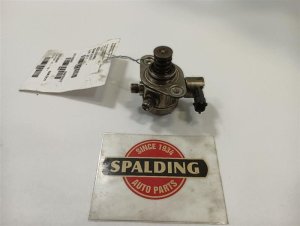
Used OEM Parts in Stock
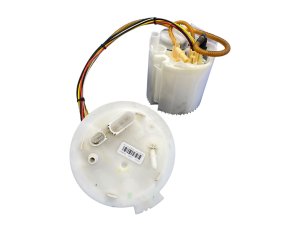
New Aftermarket Parts Available

The information in this article is provided for general reference and educational purposes only. Vehicle specifications, procedures, and part compatibility can vary by production date, trim level, and region. Always consult your vehicle's factory service manual and verify part numbers before purchasing or performing repairs. Safety-critical components such as airbags, seat belts, and braking systems should be installed by a qualified professional.
- Land Rover RANGE ROVER:
- 🧭 Diagnostic Flowchart
- 🎬 Helpful Videos
- 🛍️ Shop This Part
- What's Unique About the 2013-2020 Land Rover RANGE ROVER
- Symptoms You May Notice
- Most Likely Causes
- Rare But Worth Checking
- Diagnosis Steps
- Parts You'll Likely Need
- Related Codes That Often Appear With This One
- Technical Service Bulletins (TSBs) & Recalls
- Platform-Specific Known Issues
- Mechanic-Grade Diagnostic Values
- Scan Tool Commands That Help
- Wiring & Ground Locations
- Real Owner Repair Stories
- "I Checked Everything" — The Actual Cause
- When the Usual Fixes Don't Work
- OEM Part Supersession History
- 🎟️ Get 5% Off