

OBD-II Code P0257: Injection Pump Fuel Metering Control 'B' Range/Performance
The Ultimate Guide to What P0257 Means, Why It Triggers, and How to Fix It for Good
- P0257 triggers when actual fuel rail pressure deviates from the computer's commanded pressure by more than 2,000 PSI.
- Replace the fuel filter first; a $50 clogged filter is the most common cause of this code and restricts flow to the high-pressure pump.
- Test the Fuel Control Actuator (FCA) and lift pump before replacing the $2,000+ high-pressure injection pump.
- Stop driving immediately if you find silver metal flakes in the fuel filter housing, as this indicates a catastrophic CP4 pump failure requiring an $8,000+ system overhaul.
What Does P0257 Mean?
The Powertrain Control Module (PCM) detected a performance problem with the 'B' side of the injection pump fuel metering control. This system measures and delivers high-pressure fuel to the injectors. P0257 triggers when actual fuel pressure or flow rate deviates from the PCM's commanded target. This code appears almost exclusively on diesel vehicles.
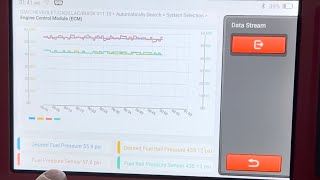
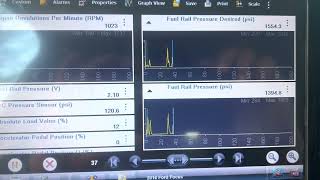
Technical definition: The formal SAE/OBD-II definition is "Injection Pump Fuel Metering Control 'B' Range/Performance (Cam/Rotor/Injector)". The PCM detected a discrepancy between the commanded state of the electronic fuel control actuator and the resulting fuel pressure reported by the fuel rail pressure (FRP) sensor. 🎬 See how to compare desired vs actual fuel pressure. The 'B' designation refers to the designated primary fuel volume control circuit.
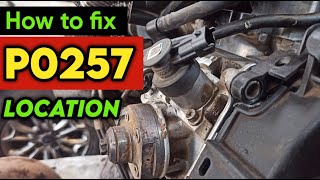
🎬 Watch: A quick overview of the P0257 trouble code.Can I Drive With P0257?
Yes, But With Caution. You can drive briefly, but we strongly advise against it. Reduced power and stalling create immediate traffic hazards. Continuing to drive risks catastrophic high-pressure fuel pump failure, turning a $150 sensor fix into a $10,000+ fuel system overhaul.
Common Causes
- Dirty or clogged fuel filter(s) (Very Common) — A restricted fuel filter starves the lift pump and high-pressure pump, causing a massive pressure drop under heavy engine load.
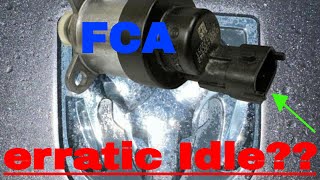
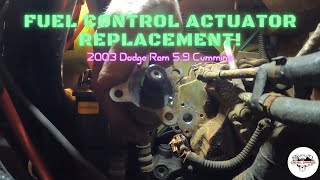
- Faulty fuel metering control actuator (FCA/MPROP) (Common) — Located on the high-pressure injection pump, this valve fails electronically or sticks mechanically, mismanaging fuel flow to the rails. 🎬 Watch: Step-by-step fuel control actuator replacement guide.
- Weak or failing lift pump (Common) — The low-pressure lift pump fails to supply adequate volume to the high-pressure pump. GM Duramax trucks (2001-2016) lack a factory lift pump, making them highly susceptible to starvation.
- Contaminated fuel (Common) — Water, gasoline, or Diesel Exhaust Fluid (DEF) destroys the high-pressure fuel system's sensitive internal components, including the metering valve and pump.
- Wiring and connector issues (Common) — Corroded, shorted, or loose wires in the fuel metering control circuit or fuel rail pressure sensor circuit distort signals sent to the PCM.
- Faulty fuel rail pressure (FRP) sensor (Less Common) — The sensor sends inaccurate readings, forcing the PCM to command incorrect fuel flow adjustments even if the pump works perfectly.
- Defective fuel injection pump (CP3/CP4) (Less Common) — The high-pressure pump fails mechanically, dropping fuel pressure entirely. This is the most expensive failure point.
- Faulty Fuel Pump Driver Module (FPDM) (Less Common) — The module fails to send correct voltage to the in-tank lift pump, resulting in low fuel volume delivery.
- PCM or Software Issues (Rare) — Outdated software or a failed PCM miscalculates fuel metering logic. A PCM re-flash resolves software-related false flags.
Symptoms
- Check Engine Light is on — The Malfunction Indicator Lamp (MIL) illuminates immediately upon detecting the pressure discrepancy.
- Reduced engine power and limp mode — The vehicle feels sluggish, hesitates, and restricts power to protect the engine, especially when towing.
- Engine stalling or hard starting — The engine stalls when stopping or requires extended cranking due to insufficient fuel pressure.
- Rough or unstable idle — The engine surges or fluctuates RPMs while idling as the PCM struggles to stabilize fuel pressure.
- Decreased fuel economy — Inefficient fuel management causes a noticeable 5-15% drop in miles per gallon (MPG).
- Misfire-like sensations (also visible on scanner) — The engine shudders or stumbles without setting a specific cylinder misfire code due to momentary fuel starvation.
Diagnostic Flowchart
Tap your situation to follow the diagnostic path that matches what you're seeing on this code.
Common Fixes & Costs
- Replace fuel filter(s) — Parts: $30-$150, Labor: $75-$200, ~0.8 hr book time (DIY)
- Replace fuel control actuator (FCA/MPROP)
— Parts: $150-$450, Labor: $250-$600, ~1.5 hr book time
(Intermediate)
Dodge/Ram 5.9L Cummins: OEM Cummins: 4932457 (Alt: Bosch: 0928400666)
Ford 6.7L Power Stroke: OEM Motorcraft: BC3Z-9J307-A (Alt: Bosch: 0928400757) - Replace lift pump
— Parts: $200-$700, Labor: $400-$1000, ~3.0 hr book time
(Intermediate)
GM 6.6L Duramax (LML, Frame-mount kit): OEM N/A (Alt: FASS: TSC11100G) - Repair wiring or connectors — Parts: $10-$50, Labor: $150-$400, ~2.0 hr book time (Intermediate)
- Replace fuel rail pressure sensor (FRP)
— Parts: $150-$350, Labor: $250-$500, ~2.5 hr book time
(Intermediate)
Ford 6.7L Power Stroke: OEM Motorcraft: BC3Z-9F838-A (Alt: Bosch: 0281006313) - Replace Fuel Pump Driver Module (FPDM) — Parts: $100-$300, Labor: $200-$450, ~1.2 hr book time (Intermediate)
- Replace fuel injection pump (CP3/CP4)
— Parts: $1,500-$4,000, Labor: $2,500-$6,000, ~10.0 hr book time
(Professional)
GM 6.6L Duramax (LML CP4): OEM ACDelco: 12661059 (Alt: Bosch (Reman): 0986437421)
DIY vs Professional
- Replace fuel filter(s) — Beginner:
- Replace fuel control actuator (FCA) — Beginner:
- Replace lift pump — Beginner:
- Replace fuel rail pressure sensor (FRP) — Beginner:
- Replace fuel injection pump — Beginner:
Used vs. New Parts: Buying Guide
When a used part is worth it: A used FCA is not recommended. Only consider a used part if you are on a strict budget and can source it from a verified running donor vehicle.
Donor-vehicle mileage cap: roughly under 50000 miles for the part to have meaningful remaining life.
Donor quality checklist:
- Verify the donor vehicle was not scrapped for fuel system issues.
- Ensure the part number matches exactly.
- Avoid parts showing external corrosion.
Decision logic:
- If The part is a Fuel Control Actuator (FCA) or Fuel Rail Pressure sensor. → Buy new. The cost savings of a used part do not outweigh the risk of premature failure.
- If The part is a high-pressure injection pump (CP3/CP4). → Buy a professionally remanufactured pump with a warranty. Avoid 'used' as-is pumps entirely.
Warranty tradeoff: Used parts offer a 30-day warranty. New aftermarket parts offer 1-year warranties. New OEM parts carry 1-2 year warranties.
Worst-case if a used part fails: 400-800
What Happens If You Wait — Timeline
- 0-1 month: Code P0257 sets. Intermittent hesitation under load occurs as the fuel pump control system struggles to maintain pressure. (MPG impact: 0-5%% · Added cost: $0-75)
- 1-4 months: Stalling when stopping, extended cranking, and noticeable power loss become frequent. The high-pressure pump is under constant strain. (MPG impact: 5-15%% · Added cost: $75-300)
- 4-8 months: Internal components of the high-pressure pump wear excessively due to heat and lack of lubrication, generating metal debris. (MPG impact: 15-25%% · Added cost: $2,500-6,000)
- 8+ months: Catastrophic failure. The pump grenades internally, sending metal shrapnel throughout the fuel rails and injectors. The engine dies. (MPG impact: N/A% · Added cost: $8,000-15,000)
Cost of Not Fixing It
- 0-1 month: Reduced fuel economy and potential stalling. Increased strain on the lift pump and high-pressure pump. (Added cost: 50-150)
- 1-6 months: Progressive wear on the high-pressure fuel pump due to fuel starvation. High risk of being stranded. (Added cost: 200-500)
- 6+ months: Catastrophic failure of the high-pressure fuel pump, sending metal debris throughout the injectors, rails, and tank. (Added cost: 8000-15000)
Diagnosis Steps
- Read Codes and Analyze Live Data
Use an advanced scanner to compare Desired vs. Actual Fuel Rail Pressure. At idle, they must be nearly identical. Under heavy acceleration, 'Actual' must follow 'Desired'. A gap exceeding 2,000 PSI confirms a hard delivery issue.
Tools: Advanced OBD-II scanner with live data (Beginner) - Check and Replace Fuel Filter(s)
Replace the fuel filter and cut the old one open. Inspect the media. Silver flakes indicate a failing high-pressure pump; black flakes indicate a failing lift pump.
Tools: Filter wrench, drain pan, filter cutter (Intermediate) - Test Low-Side Fuel Pressure (Lift Pump)
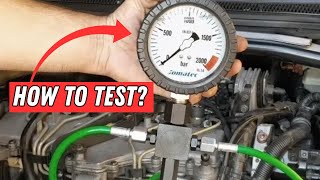
Connect a gauge to the low-side system. Cummins requires 10-15 PSI at idle; Ford 6.7L requires 53-73 PSI. Readings below spec prove the lift pump is failing to supply the high-pressure system.
Tools: Fuel pressure gauge (Intermediate) - Analyze FCA Duty Cycle
Monitor the FCA command percentage on your scanner. If the duty cycle exceeds 50% just to maintain idle pressure, the pump is overworking due to a restriction, leak, or internal failure.
Tools: Advanced bi-directional scan tool (Advanced) - Visual Inspection and Wiggle Test
With the engine idling, wiggle the FCA and FRP sensor wiring harnesses. Erratic pressure readings on your scanner pinpoint an intermittent wiring short or loose connector.
Tools: Flashlight, OBD-II scanner (Intermediate) - Test Circuits with a Multimeter
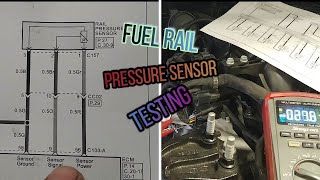
Measure FCA internal resistance (typically 2.5-3.5 ohms for Cummins). Verify the FRP sensor has a 5V reference, ground, and a signal wire reading ~1.2-1.8V at idle.
Tools: Digital multimeter, wiring diagram (Advanced) - Scope Test the Cam/Rotor Sensor
Connect an oscilloscope to the pump's internal timing sensor signal wire. Dropouts or noise in the square wave pattern indicate a failing internal pump sensor.
Tools: Automotive oscilloscope, wiring diagram (Professional)
When This Code Triggers (Freeze-Frame Conditions)
- Engine Coolant Temp: 180-205°F (Fully warmed up engine.)
- RPM: 1500-2500 RPM (During moderate acceleration or climbing a grade.)
- Engine Load: 40-70% (The engine is under significant load, demanding higher fuel pressure.)
- Vehicle Speed: 45-65 mph (Occurs at steady highway speeds when a fuel demand change is commanded.)
Related Codes
- P0087 — Indicates 'Fuel Rail/System Pressure - Too Low'. P0257 is the performance problem causing the low pressure reported by P0087. Diagnosing P0257 resolves P0087.
- P0088 — Indicates 'Fuel Rail/System Pressure - Too High'. Sets alongside P0257 if the fuel control actuator sticks closed, causing a massive pressure spike.
- P0256 — Indicates a general electrical malfunction (open/short) in the 'B' control circuit. P0257 points to a performance issue (mechanical or electrical).
- P0258 — Signifies the 'B' control circuit voltage is specifically 'Low', pointing directly to a short to ground or a failed actuator coil.
Climate & Environmental Factors
- Cold Weather: Diesel fuel gels in extreme cold, clogging filters and lines. This starves the injection pump and triggers P0257. Use anti-gel additives in sub-freezing temperatures.
- High Altitude: Lower atmospheric pressure forces the lift pump to work harder to supply fuel, exposing underlying weaknesses in the delivery system.
- High Humidity: Prolonged humidity accelerates corrosion on electrical connectors for the FCA and FRP sensor, increasing circuit resistance and causing signal loss.
How to Talk to a Mechanic About This Code
Say this: "I have a P0257 code. Please start by checking the fuel filter condition and testing the lift pump pressure before moving to complex diagnostics. I also want to see the live data for desired versus actual fuel rail pressure."
This directs the shop to follow a logical, cost-effective procedure, starting with the cheapest failures. Asking for live pressure readings prevents them from jumping to conclusions.
Avoid saying:
- 'My truck is acting funny, can you fix it?'
- 'My check engine light is on, just do whatever it takes.'
- 'I think I need a new injection pump.'
Questions to ask before authorizing the repair:
- What were the results of the lift pump pressure and volume test?
- Can you show me the live data graph of the desired vs. actual fuel rail pressure?
- Did you test the wiring and the old FCA's resistance first?
- If you found metal in the filter, what is the itemized cost for a full fuel system replacement?
- What is the warranty on the parts and labor?
Where to Take It: Dealer vs Independent vs Chain
- Dealer:
Best for: Vehicles under powertrain warranty or covered by a specific recall (e.g., VW HPFP, GM CP4)., Complex software-related issues requiring proprietary tools.
Downsides: Highest labor rates., Defaults to replacing large, expensive assemblies rather than individual components. (Typical cost: +50% vs. baseline) - Independent Shop:
Best fit, IF it's a reputable diesel specialist. Their experience with common failures on Power Stroke, Cummins, and Duramax engines is invaluable. They diagnose and replace single faulty components rather than entire systems.
Best for: Out-of-warranty diesel trucks where the shop has a proven reputation with your specific engine., Cost-conscious owners wanting a logical diagnosis without the dealer premium.
Downsides: You MUST find a shop that specializes in diesel repair; a general auto shop is not sufficient. (Typical cost: +0% vs. baseline) - Chain Shop:
AVOID. The complexity of modern diesel fuel systems requires expertise chain shops typically do not possess.
Best for: Simple jobs like changing a battery or tires.
Downsides: Technicians lack the specialized tools and training for complex high-pressure diesel fuel systems., High risk of misdiagnosis. (Typical cost: -10% vs. baseline)
When to Walk Away From the Repair
If the estimated repair cost exceeds 50% of the truck's private-party value, seriously consider selling or trading it in. For older trucks (>150,000 miles), lower this threshold to 40%.
- Car worth $30000, fix is $2500: Fix it. This is a reasonable repair cost for a high-value diesel truck.
- Car worth $15000, fix is $8500: Walk away. The repair cost is over 50% of the vehicle's value, indicating a catastrophic pump failure.
- Car worth $8000, fix is $3500: Borderline. At 44% of the vehicle's value, get a second opinion and consider the truck's overall condition.
What Scan Tool You Need for This Code
Minimum: An OBD-II scanner that displays and graphs live data, specifically Fuel Rail Pressure (Desired and Actual) and FCA Duty Cycle.
A basic $20 code reader only gives you the P0257 code. It cannot show the live performance data essential to determine why the code is setting.
Budget: BlueDriver Pro (~$100) — Connects to your smartphone and graphs critical live data PIDs like fuel pressure and actuator commands for an initial diagnosis.
Mid-range: Foxwell NT710 (~$250) — Offers full system diagnostics and bi-directional controls to command the FCA to cycle on and off, testing its function directly.
Professional: Autel MaxiCOM MK808 (~$500) — Provides professional-grade diagnostics, extensive live data, and performs advanced functions like injector coding necessary after major component replacement.
Rent vs buy: Buy. A basic parts store rental scanner lacks live data graphing capabilities. If you own a diesel truck, investing in a scanner is highly recommended for periodic monitoring.
How to Clear the Code After You Fix It
- Use an OBD-II scan tool to clear the diagnostic trouble codes.
- Perform a complete drive cycle to allow readiness monitors to run.
- Check for pending codes after the drive cycle.
Drive cycle (~30 minutes): Start cold and idle for 3 minutes. Drive in mixed city/highway conditions, including moderate accelerations and steady cruising at 55-65 mph for 10 minutes. Decelerate without braking. Cool down completely before rechecking.
Readiness monitors affected: Comprehensive Component Monitor, Fuel System Monitor, Misfire Monitor
Before emissions retest: drive at least 50 miles to fully set monitors.
Watch out for:
- Disconnecting the battery clears the code but resets all readiness monitors, causing an automatic emissions failure.
- The code returns immediately if the mechanical fault remains.
Will This Fail Emissions / State Inspection?
Yes — this code typically fails an OBD-II emissions inspection.
- California: An active P0257 code causes an automatic smog check failure. All readiness monitors must be 'Ready' before a retest.
- New York: An illuminated Check Engine Light and a P0257 code result in an automatic failure.
- Texas: An illuminated Check Engine Light is an automatic failure. You can have one monitor 'Not Ready' (for 2001+ models) and pass after repair.
Most Commonly Affected Vehicles
- Dodge/Ram Ram with 5.9L & 6.7L Cummins Diesel (2003-2018) — The Fuel Control Actuator (FCA) on the CP3 pump fails frequently. Lift pump failure is also a primary cause.
- Ford F-Series/Transit with Power Stroke Diesel (2003-2022) — 2011-2022 6.7L engines with the Bosch CP4 pump are notorious for catastrophic failure, contaminating the entire fuel system.
- Chevrolet/GMC Trucks with 6.6L Duramax Diesel (2001-2016) — LML (2011-2016) models used the failure-prone CP4 pump. Wiring harness chafing near the alternator causes shorts triggering this code.
- Volkswagen Jetta/Golf/Passat/Touareg with TDI engines (2009-2015) — Known for high-pressure fuel pump (HPFP) failures triggered by a failing lift pump or faulty fuel pressure regulator (N276).
- Mercedes-Benz Sprinter, E-Class, ML-Class with BlueTEC/CDI (2007-2018) — Issues stem from the quantity control valve, fuel pressure sensor, or leaks in the high-pressure lines.
- Nissan Titan XD with 5.0L Cummins Diesel (2016-2019) — Uses a Bosch CP4.2 high-pressure pump, making it susceptible to catastrophic pump failures.
- BMW Various diesel models (e.g., 335d, X5 xDrive35d) (2009-2018) — Failures relate to the fuel pressure control valve or wiring harness problems.
- Kia/Hyundai Various diesel models (e.g., Sorento, Santa Fe) (2010-2022) — Experience wiring issues and fuel metering control valve failures similar to other common-rail diesel systems.
Manufacturer-Specific Notes
- Dodge/Ram (Cummins): The FCA fails so often that technicians replace it immediately after checking the filter. A 'tap test' on the FCA while idling causes a change in RPM if the valve is sticking.
- Ford (Power Stroke): On 2011-2022 6.7L engines, any sign of metal in the fuel filter mandates a full fuel system replacement due to CP4 pump failure.
- GM (Duramax): Check the main engine wiring harness where it rubs against the alternator bracket. Chafed wires here frequently short out and trigger P0257.
- Volkswagen (TDI): VW issued extended warranties for the HPFP on 2009-2012 models, but coverage requires proof of no fuel contamination and a misfueling guard.
Real Owner Stories
2012 Ram 2500 6.7L Cummins at 155K miles
Truck lost power on the highway and entered limp mode with codes P0257 and P0087.
What they tried:
- Replaced fuel filters, but the code returned immediately.
Outcome: The owner replaced the Fuel Control Actuator (FCA) on the side of the CP3 pump. The 30-minute repair cleared the codes and restored full engine power permanently.
Lesson: On Cummins engines, the FCA is a frequent failure item and an inexpensive fix when P0257 and P0087 appear together.
2015 VW Passat TDI at 110K miles
Check Engine Light and flashing glow plug light illuminated with intermittent power loss.
What they tried:
- Used fuel additives and changed the fuel filter.
- A shop quoted thousands for a high-pressure fuel pump (HPFP) replacement.
Outcome: A second mechanic found the fuel pressure regulator (N276) on the fuel rail was faulty. Replacing the regulator resolved the issue for a fraction of the HPFP cost.
Lesson: Never accept a high-pressure pump diagnosis without testing the fuel rail pressure regulator first.
2011 GMC Sierra 2500HD 6.6L Duramax (LML) at 130K miles
Truck stalled intermittently at low speeds, worsening on hot days.
What they tried:
- Replaced the fuel filter and FCA.
- A shop suggested the CP4 injection pump was failing.
Outcome: The owner found the main engine wiring harness rubbing against the alternator bracket. Repairing the chafed wires for the fuel rail pressure sensor permanently resolved the stalling.
Lesson: Always perform a thorough visual inspection of the wiring harness near sharp metal brackets on Duramax trucks.
2017 Ford F-350 6.7L Power Stroke at 200 miles
Brand new truck lost power and died, displaying P0257 and P0087.
What they tried:
- Towed to the dealership.
Outcome: The dealership found the high-pressure CP4 fuel pump failed catastrophically due to accidental DEF contamination in the fuel tank. The entire fuel system required replacement.
Lesson: Fuel contamination destroys CP4 pumps instantly. Installing a 'disaster prevention kit' saves the rest of the fuel system if the pump fails.
How to Prevent This Code From Triggering
- Change fuel filters every 10,000-15,000 miles. (Every 10,000-15,000 miles.) — Clean filters ensure adequate fuel volume reaches the high-pressure pump, preventing starvation and premature wear.
- Use a high-quality diesel fuel additive with lubricity enhancers. (Every fill-up.) — Restores lubrication lost in Ultra-Low Sulfur Diesel (ULSD), reducing friction inside failure-prone CP4 pumps.
- Purchase fuel from high-volume stations. (Every fill-up.) — High-turnover stations rarely have degraded fuel or water contamination in their storage tanks.
- Drain the water separator regularly. (Monthly.) — Removes accumulated water before it enters the high-pressure pump and causes rust.
- Install an aftermarket lift pump (2001-2016 Duramax). (One-time upgrade.) — Provides positive pressure to the injection pump, ensuring it never runs dry and reducing cavitation.
- Install a CP4 Disaster Prevention Kit. (One-time upgrade.) — Reroutes contaminated fuel back to the tank if the CP4 pump fails, saving the injectors and fuel rails from destruction.
Frequently Asked Questions
What is the most common misdiagnosis for a P0257 code?
The most costly mistake is replacing the high-pressure injection pump before ruling out simpler causes. Always test fuel filters, lift pump pressure, and the Fuel Control Actuator (FCA) first. Condemning a $2,000 pump for a $50 clogged filter is a frequent error.
What is 'Injection Pump Fuel Metering Control B'?
It refers to the electronic valve in your diesel injection system that controls fuel volume. The 'B' designates the specific control circuit, which is often the primary one on inline engines. It manages exactly how much fuel enters the high-pressure pump.
How much does it cost to fix a P0257 code?
Repair costs range from $150 for a fuel filter to over $8,000 for a catastrophic high-pressure fuel system failure. A professional diagnostic session typically costs $120 to $200. Pinpointing the exact cause prevents wasting money on unnecessary parts.
Can a bad battery or ground cause a P0257 code?
Yes, a weak battery or poor ground causes low voltage to the PCM and fuel modules. This triggers erratic behavior and false performance codes. Always verify battery and alternator health before starting deep fuel system diagnostics.
Is P0257 a serious code?
Yes, P0257 is a serious code requiring immediate attention. Ignoring it forces the high-pressure pump to overwork, leading to catastrophic internal failure. This turns a minor repair into a massive fuel system overhaul.
Will a fuel additive fix a P0257 code?
No, a fuel additive will not fix a P0257 code. While additives improve lubricity, this code indicates a hard mechanical or electrical failure. You must physically repair or replace the restricted filter, failing actuator, or damaged wiring.
What's the difference between 'Control B' (P0257) and 'Control A' (P0252)?
In systems with dual solenoids, 'A' and 'B' refer to distinct circuits for each cylinder bank. On most inline engines, 'B' is simply the designated primary control circuit. The diagnostic process is identical, but you must test the specific circuit identified by the code.
How do you test a Fuel Control Actuator (FCA)?
Use a multimeter to verify the actuator's internal resistance matches manufacturer specs (usually 2.5-3.5 ohms). Next, use a bi-directional scan tool to command the FCA to cycle while monitoring fuel pressure. A physical 'tap test' on the FCA while idling also reveals a sticking valve.
Key Takeaways
- P0257 triggers when actual fuel rail pressure deviates from the computer's commanded pressure by more than 2,000 PSI.
- Replace the fuel filter first; a $50 clogged filter is the most common cause of this code and restricts flow to the high-pressure pump.
- Test the Fuel Control Actuator (FCA) and lift pump before replacing the $2,000+ high-pressure injection pump.
- Stop driving immediately if you find silver metal flakes in the fuel filter housing, as this indicates a catastrophic CP4 pump failure requiring an $8,000+ system overhaul.
Helpful Videos
Shop the Parts Behind P0257
Below are the parts most often responsible for code P0257, ranked by how frequently each one is the actual culprit (per the diagnosis above). Tap any to see what we have for your vehicle.



The information in this article is provided for general reference and educational purposes only. Vehicle specifications, procedures, and part compatibility can vary by production date, trim level, and region. Always consult your vehicle's factory service manual and verify part numbers before purchasing or performing repairs. Safety-critical components such as airbags, seat belts, and braking systems should be installed by a qualified professional.
- 🧭 Diagnostic Flowchart
- 🎬 Helpful Videos
- 🛍️ Shop This Part
- What Does P0257 Mean?
- Can I Drive With P0257?
- Common Causes
- Symptoms
- Common Fixes & Costs
- DIY vs Professional
- Used vs. New Parts: Buying Guide
- What Happens If You Wait — Timeline
- Cost of Not Fixing It
- Diagnosis Steps
- When This Code Triggers (Freeze-Frame Conditions)
- Related Codes
- Climate & Environmental Factors
- How to Talk to a Mechanic About This Code
- Where to Take It: Dealer vs Independent vs Chain
- When to Walk Away From the Repair
- What Scan Tool You Need for This Code
- How to Clear the Code After You Fix It
- Will This Fail Emissions / State Inspection?
- Most Commonly Affected Vehicles
- Manufacturer-Specific Notes
- Real Owner Stories
- 2012 Ram 2500 6.7L Cummins at 155K miles
- 2015 VW Passat TDI at 110K miles
- 2011 GMC Sierra 2500HD 6.6L Duramax (LML) at 130K miles
- 2017 Ford F-350 6.7L Power Stroke at 200 miles
- How to Prevent This Code From Triggering
- Frequently Asked Questions
- What is the most common misdiagnosis for a P0257 code?
- What is 'Injection Pump Fuel Metering Control B'?
- How much does it cost to fix a P0257 code?
- Can a bad battery or ground cause a P0257 code?
- Is P0257 a serious code?
- Will a fuel additive fix a P0257 code?
- What's the difference between 'Control B' (P0257) and 'Control A' (P0252)?
- How do you test a Fuel Control Actuator (FCA)?
- Key Takeaways
- 🎟️ Get 5% Off