

P0261 on 2009-2011 Cadillac STS: Cylinder 1 Injector Circuit Low Causes and Fixes
This code indicates a low voltage problem in the cylinder 1 fuel injector circuit. The most common causes are a faulty fuel injector, a damaged wiring harness, or a corroded connector. Expect to pay $100-$250 for a replacement injector.
- P0261 means the engine computer has detected a low voltage condition in the fuel injector circuit for cylinder 1.
- The most common symptoms are a rough idle, engine misfire, and the Check Engine Light.
- For this specific Cadillac model, the most likely cause is a damaged wiring harness, as identified in GM TSB PIP4924D.
- Before replacing the injector, always inspect its electrical connector and wiring for damage, especially where it might rub against other engine parts.
- A simple way to confirm a bad injector is to swap it with one from another cylinder and see if the trouble code follows it.
What's Unique About the 2009-2011 Cadillac STS
For the 2009-2011 Cadillac STS, which was available with a 3.6L V6 (LLT) or a 4.6L Northstar V8 (LH2), this code is frequently caused by a wiring issue rather than the injector itself. A widely-cited GM Technical Service Bulletin (TSB), PIP4924D, lists P0261 among a large group of other fuel injector codes for these and many other GM vehicles. The TSB specifically directs technicians to inspect the fuel injector wiring harness for damage where it may rub against the intake plenum, valve cover bolts, fuel lines, or the side of the cylinder head. This suggests a widespread wiring harness vulnerability is a primary suspect.
Diagnostic Flowchart
Tap your situation to follow the diagnostic path that matches what you're seeing on this vehicle.
Symptoms You May Notice
- Check Engine Light is on
- Rough or shaky engine idle
- Engine misfire, which may feel like a stumble or hesitation.
- Reduced engine power and poor acceleration.
- Decreased fuel economy.
- Engine may be hard to start.
- Replacing the spark plug or ignition coil for cylinder 1. While these can cause a misfire (P0301), they will not cause an injector circuit code like P0261.
Most Likely Causes
- Wiring Harness or Connector Issue 🔴 High Probability TSB #PIP4924D explicitly calls out harness chafing as a common cause for a wide range of injector codes, including P0261, on this platform. Common rub points are against the intake, valve cover bolts, and fuel lines. Connector issues like corrosion or loose pins are also frequent culprits.
How to confirm: Visually inspect the wiring harness leading to the cylinder 1 injector, paying close attention to the areas mentioned in TSB PIP4924D. Check the connector for corrosion (green crust) or bent/loose pins. Use a multimeter to check for continuity and proper voltage at the connector. A high resistance reading (greater than 0.05 Ω) on the power wire from the ECM to the injector points to wiring damage.
Typical fix: Repair the damaged section of the wiring harness with a new wire or heat-shrink tubing. Replace the injector connector pigtail if it is damaged or corroded.
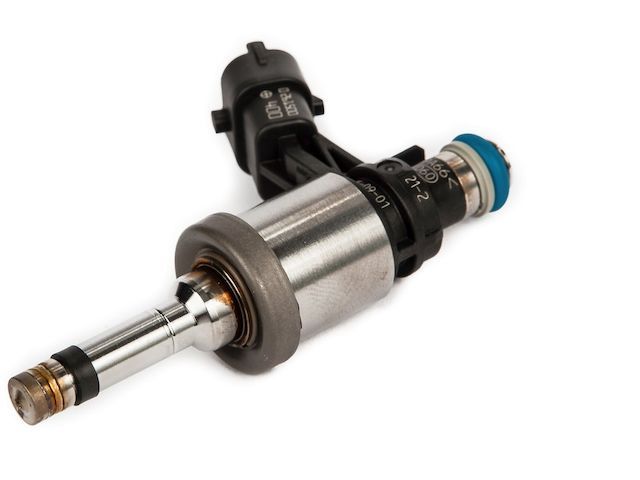
Est. part cost: $15-$50 - Faulty Cylinder 1 Fuel Injector 🟡 Medium Probability → Shop Fuel Injector The 3.6L LLT V6 uses direct injection, and its injectors can fail internally. The 4.6L Northstar V8 uses port injection. Both can fail due to internal coil winding shorts or becoming clogged.
How to confirm: The most definitive test is to swap the cylinder 1 fuel injector with one from another cylinder (e.g., cylinder 3). Clear the codes and drive the vehicle. If the code changes to P0267 (for cylinder 3), the injector is faulty. You can also test the internal resistance with a multimeter; an out-of-spec reading indicates a bad injector.
Typical fix: Replace the faulty fuel injector. It is often recommended to replace all injectors on that bank, or all injectors on a high-mileage vehicle.
Est. part cost: $80-$200 - Faulty Powertrain Control Module (PCM) ⚪ Low Probability → Shop Engine Control Module (ECM)
How to confirm: This should only be considered after the fuel injector and wiring have been thoroughly tested and confirmed to be good. Diagnosis requires advanced scan tools to test the injector driver circuit (typically a MOSFET) within the PCM. An outdated PCM calibration can also sometimes misinterpret voltage fluctuations, which can be fixed with a software reflash.
Typical fix: Replace and reprogram the Powertrain Control Module.
Est. part cost: $800-$1200
Diagnosis Steps
- Connect an OBD-II scanner and confirm P0261 is the active code. Note any other codes, like P0301 or other injector codes.
- Locate Cylinder 1. On the 3.6L V6, it is the front-most cylinder on the passenger side (right bank). On the 4.6L Northstar V8, it is the rear-most cylinder on the passenger side (right bank).
- Visually inspect the electrical connector and wiring going to the fuel injector on cylinder 1. Look for any signs of chafing, melting, or corrosion. Pay special attention to areas where the harness might rub against the engine, as noted in TSB PIP4924D.
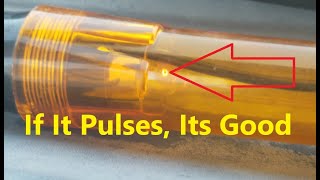
- Use a noid light to test the injector signal. Unplug the injector and plug in the noid light. Start the engine; the light should flash steadily, indicating the PCM is sending a signal. If it doesn't flash, the problem is in the wiring or PCM.
- If the noid light flashes, test the fuel injector's internal resistance with a multimeter. Compare the reading to the manufacturer's specification (typically 1.5-2.5 ohms for GDI, 12-16 ohms for port injection). An out-of-spec reading indicates a bad injector.
- A common mechanic's trick is to use a long screwdriver or mechanic's stethoscope. Place the tip on the injector body and listen for a steady, rhythmic clicking sound while the engine is running. Silence indicates the injector is not firing.
- If the wiring looks good and the injector seems to be the issue, swap the cylinder 1 injector with another one (e.g., cylinder 3). Clear the codes and see if the fault follows the injector (e.g., P0267 appears). If it does, the injector is the problem.
- If the fault stays on cylinder 1 after the swap, the issue is definitively in the wiring harness or the PCM's driver circuit for that cylinder.
- If all wiring and the injector test good, the final possibility is a fault in the PCM's injector driver circuit, which is rare.
Parts You'll Likely Need
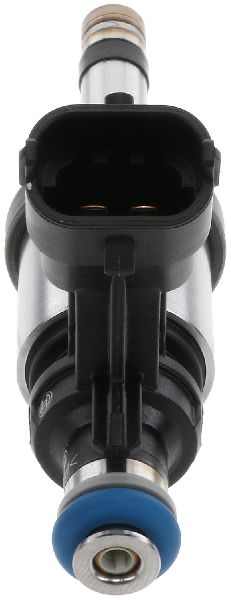
- Fuel Injector (3.6L V6 LLT)
(OEM #12638530)— This is the most frequent part to fail if the wiring is confirmed to be good. The 3.6L V6 uses a specific direct injector.
Trusted brands: ACDelco (GM Genuine), Bosch
OEM price range: $150-$250
Aftermarket price range: $80-$180 - Fuel Injector (4.6L V8 LH2)
(OEM #19421333)— The Northstar V8 uses a different style of port fuel injector which can also fail internally.
Trusted brands: ACDelco (GM Genuine), Bosch
OEM price range: $100-$180
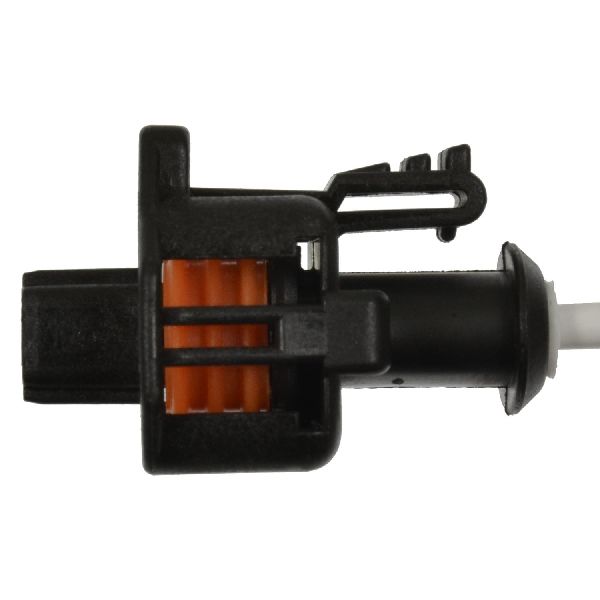
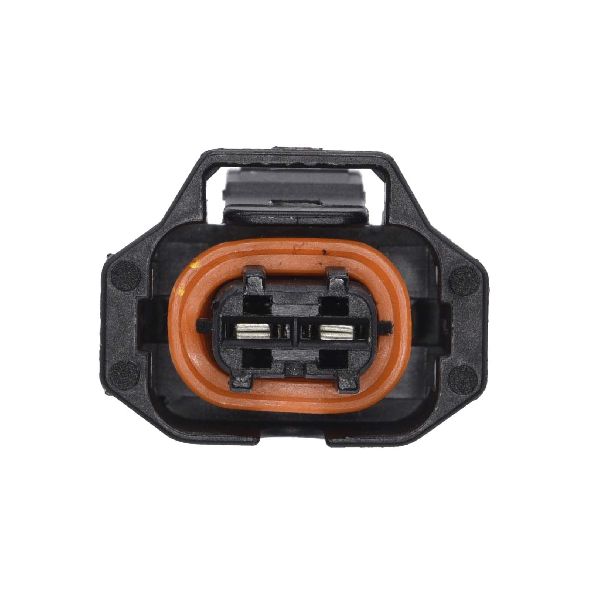
Aftermarket price range: $60-$120 - Fuel Injector Connector Pigtail — The connector's locking tab can become brittle, or the terminals can corrode or develop fretting, leading to a poor connection and a low voltage fault.
Trusted brands: ACDelco, Dorman
OEM price range: $25-$50
Aftermarket price range: $15-$30
Related Codes That Often Appear With This One
- P0301 — This code means "Cylinder 1 Misfire Detected." It often appears with P0261 because an electrical problem with the injector prevents it from delivering the correct amount of fuel, leading to a misfire in that cylinder.
- P0201 — This code for "Injector Circuit/Open - Cylinder 1" can sometimes be triggered along with P0261, pointing to a more severe electrical fault in the same circuit.
- P0262, P0264, P0265, etc. — If other injector circuit codes (low or high) for other cylinders appear at the same time, it strongly indicates a systemic problem like a damaged wiring harness (per TSB PIP4924D) or a failing PCM, rather than a single faulty injector.
Technical Service Bulletins (TSBs) & Recalls
- PIP4924D: The most relevant TSB. It addresses a wide range of injector circuit codes (including P0261) across many GM vehicles with the 3.6L V6. It specifically advises technicians to inspect the fuel injector wiring harness for rubbing/chafing against engine components like the intake plenum, valve cover bolts, and fuel lines.
Mechanic-Grade Diagnostic Values
- Injector Circuit Wiring Continuity — expected: < 0.05 Ω. Failure: Resistance greater than 0.05 Ω indicates a damaged wire or poor connection in the harness.
- Fuel Injector Voltage (at connector) — expected: 12 Volts with key on, engine off. Failure: Low or no voltage suggests a problem in the power supply wiring or the PCM/FSCM.
Scan Tool Commands That Help
- GM Tech2 / GDS2: Injector Balance Test — This bidirectional test allows a technician to command each injector to fire individually and measure the corresponding drop in fuel pressure. If the pressure drop for cylinder 1 is significantly different from the others, it confirms a flow issue with that injector, helping to distinguish a clogged injector from an electrical fault.
Wiring & Ground Locations
- G100 / G106 (4.6L V8) — On the rear side of the right cylinder head.. This is a primary engine ground. A poor connection here can cause a variety of sensor and actuator issues, including erratic voltage readings for injector circuits.
- G101 (4.6L V8) — Near the left front strut tower, at the bottom of the inside fender well.. This ground is used by the Engine Control Module (ECM). A compromised ground at this location can cause the ECM itself to malfunction or misinterpret sensor data, potentially setting false injector codes.
- Engine Block to Frame Ground — A large, heavy-gauge strap running from the engine block (often near the transmission bellhousing) to the vehicle's frame.. This is the main ground for the entire engine block. If this strap is loose, corroded, or broken, the starter and alternator current will try to find other paths to ground, which can induce voltage into sensor and actuator circuits, causing unpredictable codes like P0261.
- Fuel System Control Module (FSCM) — On many GM SUVs and trucks of this era, it's located on the driver's side frame rail, often near the spare tire or in front of the gas tank. While not an STS, the GM architecture is similar.. The FSCM, also known as the Fuel Pump Driver Module, controls the voltage to the fuel pump. While it doesn't directly control the injectors, an issue with the FSCM can cause system-wide fuel pressure problems that might be misdiagnosed or accompanied by other codes. It's a relevant component in the overall fuel delivery system.
Real Owner Repair Stories
- 2CarPros Forum (2005 Cadillac STS 3.6L V6 with 170,000 miles) — Intermittent rough running with codes P0204 (Injector Circuit/Open - Cylinder 4) and P0304 (Cylinder 4 Misfire). The car would run well one day and poorly the next, sometimes changing within the same trip.
❌ Tried (didn't work) Replaced the fuel injector for cylinder 4., Replaced the fuel injector connector pigtail for cylinder 4.
✅ What actually fixed it The final diagnosis pointed to an intermittent wiring issue between the injector and the PCM, or a faulty PCM driver. The owner noted that restarting the car could temporarily resolve the issue, which is characteristic of either a thermal-related open in the wiring or a failing electronic component in the PCM.
OEM Part Supersession History
12611545→12632255, 12638530— Improved design or change in manufacturer. These part numbers are often listed as compatible for the 3.6L LLT engine.
Heads up: While 12638530 is the most commonly cited replacement for the 2009-2011 STS 3.6L, always verify the correct part number with the vehicle's VIN before ordering, as mid-year production changes can occur.
Helpful Videos
We Have This Part in Stock


The information in this article is provided for general reference and educational purposes only. Vehicle specifications, procedures, and part compatibility can vary by production date, trim level, and region. Always consult your vehicle's factory service manual and verify part numbers before purchasing or performing repairs. Safety-critical components such as airbags, seat belts, and braking systems should be installed by a qualified professional.
- Cadillac STS:
- 🧭 Diagnostic Flowchart
- 🎬 Helpful Videos
- 🛍️ Shop This Part
- What's Unique About the 2009-2011 Cadillac STS
- Symptoms You May Notice
- Most Likely Causes
- Diagnosis Steps
- Parts You'll Likely Need
- Related Codes That Often Appear With This One
- Technical Service Bulletins (TSBs) & Recalls
- Mechanic-Grade Diagnostic Values
- Scan Tool Commands That Help
- Wiring & Ground Locations
- Real Owner Repair Stories
- OEM Part Supersession History
- 🎟️ Get 5% Off