

P0261 on 2011-2014 Chevrolet Camaro: Cylinder 1 Injector Circuit Low Causes and Fixes
This code indicates a low voltage problem in the cylinder #1 fuel injector circuit. On the 2011-2014 Camaro, this is often caused by a damaged engine wiring harness rubbing against the engine, particularly on V6 models. Inspect the harness thoroughly for chafing before replacing the fuel injector.
- P0261 on a 2011-2014 Camaro means the injector circuit for cylinder #1 has low voltage.
- The most common cause, especially on V6 models, is the engine wiring harness rubbing against the engine, causing a short. This is documented in a GM TSB.
- Always inspect the wiring harness thoroughly before replacing the fuel injector to avoid misdiagnosis.
- Other causes include a failed fuel injector, a damaged connector, or (rarely) a bad ECM.
- Driving with this code is not recommended as it can lead to catalytic converter damage.
What's Unique About the 2011-2014 Chevrolet CAMARO
For this generation of Camaro and other contemporary GM vehicles with the 3.6L V6 engine, the P0261 code is frequently linked to wiring harness problems. A specific Technical Service Bulletin (TSB PIP4924D) 🎬 See how wiring harness chafing causes these common GM injector codes. notes that a group of injector codes, including P0261, can be triggered by the engine wiring harness chafing against parts like the intake plenum, valve cover bolts, or the side of the cylinder head. This makes a visual inspection of the harness a critical first step, as the issue is often external to the injector itself and can prevent a costly and unnecessary injector replacement.
Diagnostic Flowchart
Tap your situation to follow the diagnostic path that matches what you're seeing on this vehicle.
Symptoms You May Notice
- Check Engine Light is on
- Engine misfire, often felt as a rhythmic shaking or stumbling
- Rough idle
- Hesitation or stumbling during acceleration
- Reduced engine power and poor acceleration
- Poor fuel economy
- Engine may be hard to start
- Replacing the fuel injector without first inspecting the wiring harness. Given the known TSB for V6 models, many people replace a perfectly good injector when the true fault is a simple wiring repair.
Most Likely Causes
- Engine Wiring Harness Chafing or Shorted 🔴 High Probability → Shop Engine Wiring Harness As documented in GM Technical Service Bulletin #PIP4924D, the engine harness on V6 models is prone to rubbing against engine components. Specific chafe points mentioned are against the intake plenum, at valve cover bolts, against fuel lines, and on the side of the cylinder head under the plenum. This constant friction wears through the wire's insulation, causing a short to ground.
How to confirm: Visually inspect the entire engine wiring harness, paying close attention to where it runs near or touches the intake manifold, valve cover bolts, and the back of the cylinder heads. Look for any signs of abrasion, melted plastic loom, or exposed copper wires. Use a multimeter to check for continuity to ground on the injector control wire with the injector and ECM disconnected.
Typical fix: Repair the damaged section of the wiring harness. This involves cutting out the damaged wire(s), splicing in a new section of wire using butt connectors with heat shrink, and re-wrapping the harness. Reroute the harness slightly or add protective conduit to prevent future chafing.
Est. part cost: $10-$50 - Failed Fuel Injector 🟡 Medium Probability → Shop Fuel Injector
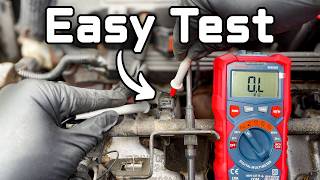
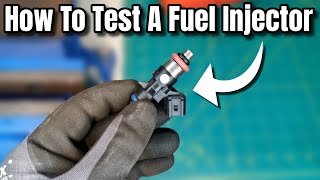
How to confirm: If the wiring is good, test the injector. Measure the resistance across the injector's two pins with a multimeter. For the V8 (LS3/L99), a healthy high-impedance injector should read around 12 Ohms. For the V6 (LFX), direct injectors have very low resistance, around 1.5-1.6 Ohms. The key is consistency; all injectors should be within 0.5 Ohms of each other. A reading of 'OL' (open) or 0.0 (shorted) indicates a failed injector. Swapping the cylinder 1 injector with another cylinder's injector (e.g., cylinder 3) and seeing if the code follows (e.g., to P0267) is a definitive diagnostic method.
Typical fix: Replace the faulty fuel injector. For direct injection V6 engines, this is more involved and may require replacing seals. It is often recommended to replace injectors as a set if they are high-mileage.
Est. part cost: $60-$170 - Injector Connector Damaged or Corroded ⚪ Low Probability
How to confirm: Unplug the connector from the cylinder 1 fuel injector and inspect the terminals for corrosion (green or white powder), moisture, or bent/broken pins. Ensure the connector clicks securely into place and the locking tab isn't broken.
Typical fix: Clean the terminals with electrical contact cleaner and apply dielectric grease. If the connector housing or pins are damaged, replace the connector pigtail, which requires cutting the old one off and splicing the new one in.
Est. part cost: $15-$40
Rare But Worth Checking
- Faulty Engine Control Module (ECM): → Shop Engine Control Module (ECM) This is the least likely cause. The internal driver circuit for the cylinder 1 injector can fail within the ECM. All other possibilities, especially wiring and the injector itself, should be exhaustively ruled out before considering ECM replacement. This would require professional diagnosis.
Diagnosis Steps
- Scan the vehicle for all stored DTCs. Note any other codes that are present alongside P0261, especially other injector or misfire codes.
- Critical Step for V6 Models: Perform a thorough visual inspection of the engine wiring harness as per TSB #PIP4924D. Focus on where it runs near the intake plenum, valve cover bolts, and the side of the cylinder head. Look for any signs of chafing, melting, or damage.
- Inspect the electrical connector at the cylinder 1 fuel injector for damage, corrosion, or a loose fit.
- If no wiring damage is visible, disconnect the injector and use a multimeter to check for a short to ground on the control wire (the wire that is not the shared power wire).
- Test the fuel injector's internal resistance with a multimeter. Compare the reading to OEM specifications (approx. 1.5-1.6 Ohms for V6, ~12 Ohms for V8). A significant deviation or an open/shorted reading indicates a bad injector.
- A definitive confirmation test is to swap the cylinder 1 injector with an injector from another cylinder (e.g., cylinder 3). Clear the codes and run the engine. If the code changes to the cylinder you moved the injector to (e.g., P0267 for Cylinder 3), the injector is faulty.
- If the wiring and injector test good, use a 'noid light' to verify the ECM is sending a pulse signal to the injector connector. No pulse points towards a wiring open or an ECM driver issue.
- If all other tests pass, the fault may lie within the ECM's injector driver circuit, which typically requires professional service to diagnose and replace.
Parts You'll Likely Need
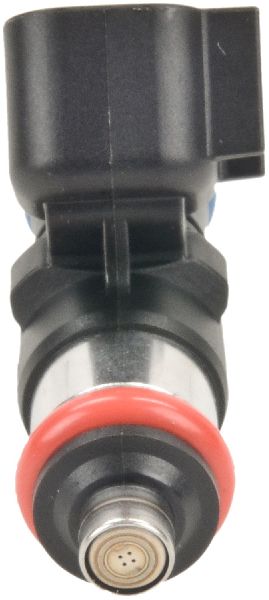
- Fuel Injector
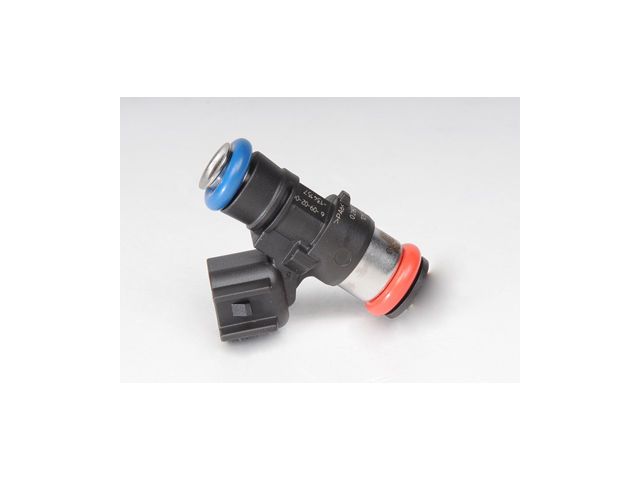
(OEM #12638530 (For 3.6L LLT V6, check specific VIN), 12634126 (For 3.6L LFX V6), 12576341 (For 6.2L LS3/L99 V8))— If the injector itself has failed internally (shorted or open coil), it will need to be replaced. This is the second most likely cause after a wiring issue.
Trusted brands: ACDelco, Bosch, Delphi
OEM price range: $90-$170
Aftermarket price range: $50-$110 - Fuel Injector Connector Pigtail
(OEM #19368140 (check application))— If the connector at the injector is damaged or corroded, replacing the pigtail is the proper repair. A poor connection here can cause the low voltage fault.
Trusted brands: ACDelco, Dorman, PICO
OEM price range: $25-$45
Aftermarket price range: $15-$30
Related Codes That Often Appear With This One
- P0301 — P0301 means 'Cylinder 1 Misfire Detected'. Since P0261 causes the cylinder 1 injector to malfunction, it directly leads to a misfire on that same cylinder.
- P0201 — P0201 is a more general 'Injector Circuit/Open - Cylinder 1' code. They often appear together as they both relate to an electrical fault in the same circuit.
- P0264, P0267, P0270, etc. — If multiple injector circuit codes are present, it strongly points to a systemic issue like a damaged wiring harness affecting several injector circuits, as mentioned in TSB #PIP4924D.
- P2149 — This code indicates an issue with 'Fuel Injector Group B Supply Voltage Circuit'. If the chafed wire in the harness is a shared power or ground for a bank of injectors, this code can appear alongside the specific cylinder code.
Technical Service Bulletins (TSBs) & Recalls
- Bulletin #PIP4924D: Mentions that codes P0201-P0206, P0261, P0262, etc., can be set due to the engine wiring harness chafing on engine components (intake, valve cover bolts, head), leading to a misfire. This TSB applies to 2010-2014 Camaros, primarily with the 3.6L V6 engine.
Platform-Specific Known Issues
- A known issue, documented in TSB #PIP4924D, involves the engine wiring harness on 3.6L V6 models rubbing through on various engine components, causing a short in the injector circuit and triggering codes like P0261.
- Real Owner Experience with Wiring Harness Failure: A user on the Camaro5 forum with a 2011 V6 experienced a series of injector codes (including P0261 after swapping parts). After extensive troubleshooting, a mechanic diagnosed a short in the wiring harness. Replacing the entire engine wiring harness ultimately fixed the problem, confirming the TSB's relevance in the real world.
Mechanic-Grade Diagnostic Values
- System Voltage (Key On, Engine Off) — expected: 12.4 - 12.6 Volts. Failure: Low voltage can cause various electronic issues, including triggering false circuit low codes.
- Charging System Voltage (Engine Running) — expected: 13.8 - 14.4 Volts. Failure: A weak alternator or charging system can mimic a low voltage condition in specific circuits.
- Injector Circuit Voltage (Live Data) — expected: Should be close to battery voltage (12V+) and pulse during operation.. Failure: A reading consistently below 9V confirms the low-circuit condition described by P0261.
- Fuel Injector Resistance (3.6L V6 Direct Injection) — expected: ~1.5 - 1.6 Ohms. Failure: A reading of 0.0 (short) or OL (open) indicates a failed injector. All injectors should have very similar resistance values.
- Fuel Injector Resistance (6.2L V8 Port Injection) — expected: ~11 - 14 Ohms. Failure: A reading outside this range, or one that deviates significantly from other injectors, points to a faulty injector coil.
Scan Tool Commands That Help
- GDS2 (GM Dealer Software): Automated Injector Balance Test — This bidirectional test commands the ECM to pulse each injector individually while monitoring the fuel rail pressure drop. It can definitively identify a mechanically restricted or leaking injector, or an injector with a flow problem that isn't purely electrical. GM specifies a maximum variance of 20% between injectors.
- Professional Bidirectional Scan Tool: Injector Kill / Cylinder Power Balance — This function allows the user to disable one cylinder at a time. When cylinder 1 is disabled, if there is no change in engine RPM or sound, it confirms that cylinder 1 was not contributing, which is the expected result with a P0261 code.
Wiring & Ground Locations
- G106 / G107 — Located on the left rear of the engine block (for 3.6L V6 models).. These are primary engine grounds. A loose or corroded connection at these points can cause erratic behavior and voltage drops across multiple sensors and actuators, including the fuel injectors.
- G108 — Located on the left side of the engine block (for 3.6L V6 models).. Similar to G106/G107, this ground is critical for the proper operation of the engine's electrical systems. A poor ground here can lead to intermittent and hard-to-diagnose voltage-related codes.
- ECM Connector X2 (V8 Models) — The large 80-way connector at the Engine Control Module, located in the right front of the engine compartment.. For the LS3/L99 V8, the control wire for the Cylinder 1 injector is on Pin 10 (Dark Blue wire) of this connector. Testing for signal or continuity should be done at this pin to verify the signal from the ECM.
- Injector Power Source (V6 Models) — Power for the odd-numbered injectors (1, 3, 5) comes from the 'INJ ODD' 20A fuse in the underhood fuse block.. While a blown fuse would affect all three injectors on the bank, a poor connection at the fuse block could cause a voltage drop affecting only one circuit intermittently.
Real Owner Repair Stories
- Camaro5 Forum User (2010 Camaro SS (V8)) — Car started kicking out random codes, then fell on its face and died while driving. No fuel pressure.
❌ Tried (didn't work) Clearing codes (would fire then die immediately).
✅ What actually fixed it The owner found the main engine wiring harness had been resting on the passenger side header tube, melting the insulation and fusing 4-7 wires together. Repairing the melted wires and re-securing the harness away from the header resolved the issue. - Camaro5 Forum User (2010 Camaro 1LT RS (V6 Auto)) — Loss of acceleration when cornering, later progressed to a no-throttle response condition at a stoplight. Car would run but not move as if in neutral. Restarting the car would temporarily fix it.
❌ Tried (didn't work) Replacing the crankshaft position sensor., Replacing the battery.
✅ What actually fixed it A mechanic discovered the engine wire harness was rubbing against the corner of the fuse block mount, fraying the wires and causing a short. The harness was repaired and rerouted, which permanently fixed the problem.
OEM Part Supersession History
12638530→12669384— This is a common part number update from GM. The new part is a direct replacement for the old one.
Heads up: Part 12638530 is specific to the 2010-2011 3.6L LLT V6 engine. It is not compatible with the 2012-2014 LFX engine, which uses a different injector.
Model Year Variations Within This Range
- 2011 vs 2012-2014 (V6 Models): The 2011 model year used the 3.6L LLT V6 engine. For 2012, GM switched to the updated LFX V6. The LFX features a different composite intake manifold, integrated exhaust manifolds (eliminating traditional headers), and different fuel injectors and ECM. Therefore, engine-specific parts like injectors and some wiring components are not interchangeable between 2011 and 2012+ V6 models.
Helpful Videos
We Have This Part in Stock



The information in this article is provided for general reference and educational purposes only. Vehicle specifications, procedures, and part compatibility can vary by production date, trim level, and region. Always consult your vehicle's factory service manual and verify part numbers before purchasing or performing repairs. Safety-critical components such as airbags, seat belts, and braking systems should be installed by a qualified professional.
- Chevrolet CAMARO:
- 🧭 Diagnostic Flowchart
- 🎬 Helpful Videos
- 🛍️ Shop This Part
- What's Unique About the 2011-2014 Chevrolet CAMARO
- Symptoms You May Notice
- Most Likely Causes
- Rare But Worth Checking
- Diagnosis Steps
- Parts You'll Likely Need
- Related Codes That Often Appear With This One
- Technical Service Bulletins (TSBs) & Recalls
- Platform-Specific Known Issues
- Mechanic-Grade Diagnostic Values
- Scan Tool Commands That Help
- Wiring & Ground Locations
- Real Owner Repair Stories
- OEM Part Supersession History
- Model Year Variations Within This Range
- 🎟️ Get 5% Off