

P0261 on 2012-2014 Chevrolet Impala: Cylinder 1 Injector Circuit Low Causes and Fixes
P0261 on a 2012-2014 Impala with the 3.6L V6 engine most often points to a wiring issue, specifically a chafed or shorted wire in the engine harness. Before replacing the fuel injector, inspect the harness where it can rub against the intake plenum, valve cover bolts, or cylinder head, as noted in GM TSB #PIP4924D. A wiring repair can be low-cost if DIY, while an injector replacement costs around $150-$300.
- P0261 on a 2012-2014 Impala indicates a low voltage problem in the cylinder 1 fuel injector circuit.
- The most likely cause is not the injector itself, but a chafed or shorted wire in the engine harness, as noted in GM TSB #PIP4924D.
- Always inspect the wiring harness for damage before spending money on a new fuel injector.
- Symptoms include a rough idle, engine misfire, and reduced power.
- Driving with this code is not recommended as it can lead to costly catalytic converter damage.
What's Unique About the 2012-2014 Chevrolet IMPALA
For this generation of Impala and other GM vehicles with the 3.6L V6 LFX engine, P0261 is frequently linked to wiring harness problems. A specific Technical Service Bulletin (TSB #PIP4924D) confirms that a group of injector codes, including P0261, can be triggered by the engine wiring harness chafing. Common rub-through spots are against the intake plenum, valve cover bolts, fuel lines, and the side of the cylinder head under the plenum. This makes a thorough visual inspection of the harness a critical first step, as the issue is often external to the injector itself.
Diagnostic Flowchart
Tap your situation to follow the diagnostic path that matches what you're seeing on this vehicle.
Generation note: The 2012-2013 models belong to the ninth generation Impala. The 2014 model year is a split year, featuring both the ninth generation (sold as the 'Impala Limited' for fleets) and the redesigned tenth generation. However, the primary V6 engine, the 3.6L LFX, was used in all of these models, making this guide relevant across the entire 2012-2014 range for vehicles with that engine.
Symptoms You May Notice
- Check Engine Light is on
- Rough or shaking idle
- Engine misfire, which may be felt as a shudder or rhythmic shaking
- Hesitation or stumbling during acceleration
- Reduced engine power
- Poor fuel economy
- Flashing Check Engine Light under load (indicates a severe misfire)
- Replacing the fuel injector without first inspecting the wiring harness. The known TSB for this issue makes wiring the primary suspect, and skipping this check can lead to unnecessary expense and repeat repairs.
Most Likely Causes
- Engine Wiring Harness Chafed or Shorted 🔴 High Probability → Shop Engine Wiring Harness As documented in GM Technical Service Bulletin #PIP4924D, the engine harness on this platform is known to rub against engine components. Specific chafe points include the intake plenum, valve cover bolts, fuel lines, and the side of the cylinder head under the plenum, causing wires to short to ground. TSB PIT5424 also notes chafing at the rear of the bank #2 valve cover.
How to confirm: Carefully inspect the entire length of the fuel injector wiring harness, especially where it routes over and behind the engine. Use a flashlight and inspection mirror. Look for worn-through plastic loom and bare or damaged copper wires at the contact points mentioned in the TSBs.
Typical fix: Repair the damaged section of wire using a weatherproof butt connector or solder and heat shrink tubing. Protect the repaired area with high-temperature tape or split-loom tubing and secure the harness away from the point of contact to prevent recurrence.
Est. part cost: $5-$25 - Failed Cylinder 1 Fuel Injector 🟡 Medium Probability → Shop Fuel Injector The direct injectors on the LFX engine operate under high pressure and can fail electrically, with the internal coil shorting out.
How to confirm: After confirming the wiring is intact, swap the cylinder 1 fuel injector with an injector from another cylinder (e.g., cylinder 3). Clear the codes and run the engine. If the code changes to P0267 (Cylinder 3 Injector Circuit Low), the injector is faulty. You can also test the injector's resistance with a multimeter; for the 3.6L LFX, it should be within 1.2-2.3 ohms.
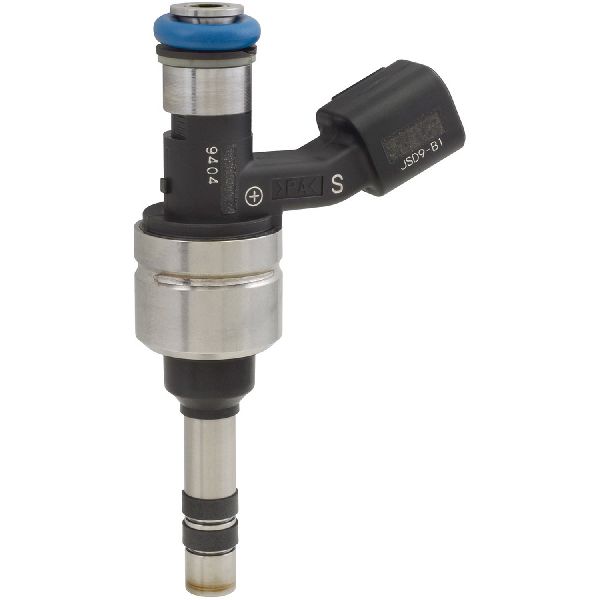
Typical fix: Replace the faulty fuel injector. It is highly recommended to replace the Teflon seal and to clean the injector bore. Many technicians advise replacing all injectors on a high-mileage engine to ensure balanced performance.
Est. part cost: $50-$120 - Damaged Fuel Injector Connector ⚪ Low Probability → Shop Fuel Injector The plastic connector and its locking tab can become brittle from heat cycles and break during service, leading to a poor connection.
How to confirm: Visually inspect the plastic connector at the fuel injector for broken locking tabs, corrosion on the pins, or backed-out wires. Wiggle the connector with the engine running to see if it affects the idle.
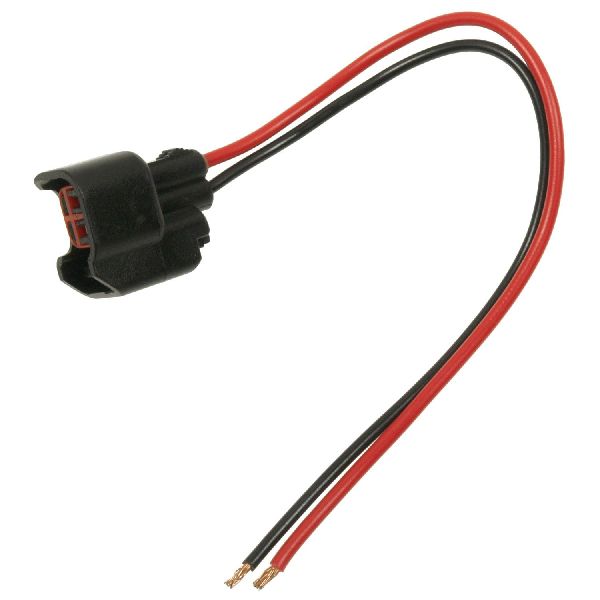
Typical fix: Replace the connector with a new pigtail, which involves cutting the old connector off and splicing the new one in using weatherproof connectors.
Est. part cost: $20-$50
Rare But Worth Checking
- Faulty Engine Control Module (ECM): → Shop Engine Control Module (ECM) This is very rare. The ECM should only be considered after all other possibilities (wiring and the injector itself) have been definitively ruled out. A faulty injector driver inside the ECM can cause this code, but it is not a common failure.
Diagnosis Steps
- Scan the ECM for any other stored trouble codes to get a full picture of the issue.
- Perform a thorough visual inspection of the engine wiring harness. As highlighted in TSB PIP4924D, focus on where it routes over the top of the engine, specifically checking for rubbing against the intake plenum, valve cover bolts, fuel lines, and the side of the cylinder head. Use an inspection mirror for hard-to-see areas.
- Inspect the electrical connector for the cylinder 1 fuel injector. Check for loose connections, corrosion, broken locking tabs, or damaged pins.
- Use a noid light to test for a signal at the injector connector. The light should flash steadily while the engine is cranking or running, indicating the ECM is commanding the injector to fire.
- If the noid light does not flash, check for 12V power on one wire of the connector with the key on. If power is present, the issue is on the control (ground) side of the circuit leading back to the ECM. Check this control wire for a short to ground.
- If the wiring appears to be in good condition, test the fuel injector's internal resistance using a multimeter. Disconnect the injector and measure across its two pins. The reading for an LFX engine should be between 1.2 and 2.3 ohms. 🎬 Watch: Professional guide to testing 3.6L direct injection circuits and resistance. A reading of OL (Open) or near zero indicates a failed injector.
- As a final confirmation, swap the cylinder 1 injector with one from an adjacent cylinder (e.g., cylinder 3). Clear the codes, run the engine, and see if the trouble code follows the injector (e.g., P0267 appears). If it does, the injector is faulty. If P0261 returns, the problem is confirmed to be in the wiring or ECM.
Parts You'll Likely Need
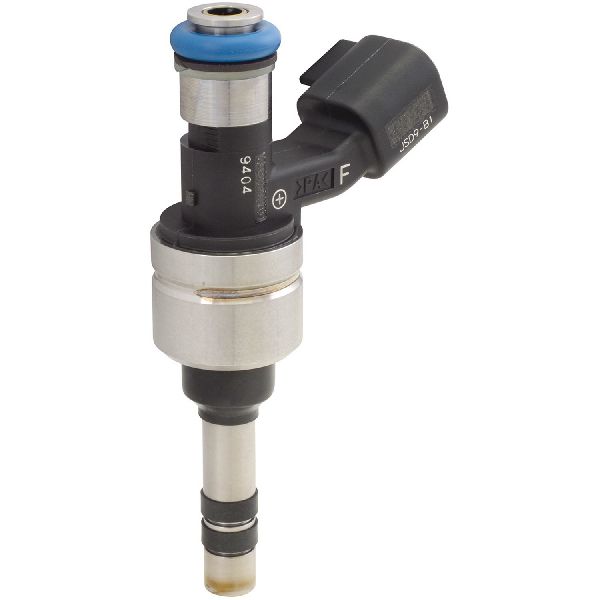
- Fuel Injector
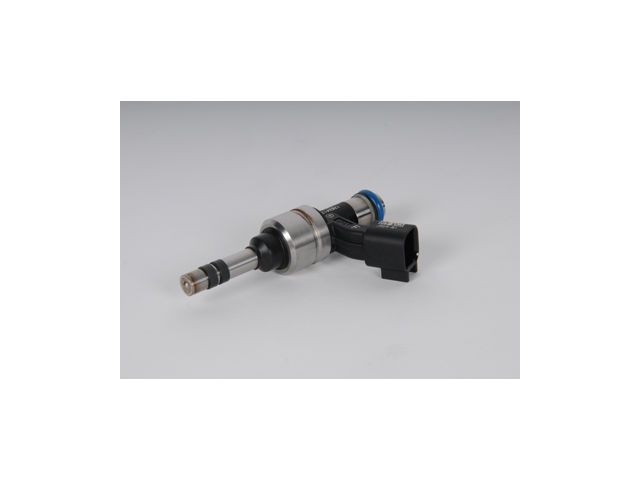
(OEM #12638530)— If the injector itself has failed with an internal short, it will need to be replaced. This is the second most likely cause after a wiring fault. This part number is widely cited for the LFX engine.
Trusted brands: ACDelco, Bosch
OEM price range: $80-$120
Aftermarket price range: $50-$90 - Fuel Injector Connector Pigtail
(OEM #ACDelco PT2180)— If the plastic connector or its terminals are damaged or corroded, it will need to be cut off and a new pigtail spliced into the harness to ensure a solid electrical connection.
Trusted brands: ACDelco, Standard Motor Products, Dorman
OEM price range: $35-$50
Aftermarket price range: $20-$35
Related Codes That Often Appear With This One
- P0301 — P0301 means 'Cylinder 1 Misfire Detected'. Since P0261 indicates a problem with the fuel injector for cylinder 1, that cylinder isn't getting the right amount of fuel, which directly causes a misfire.
- P0201 — P0201 means 'Injector Circuit/Open - Cylinder 1'. This is a more general fault for the same circuit. P0261 is a more specific version, indicating a low voltage condition. They often point to the same root cause, typically a wiring problem.
- P0264, P0267, P0270, etc. — Seeing other 'Injector Circuit Low' codes for different cylinders simultaneously is a strong indicator of a wiring harness problem where multiple wires have chafed through in the same spot.
Technical Service Bulletins (TSBs) & Recalls
- Bulletin #PIP4924D: Addresses a misfire condition accompanied by a wide range of fuel injector DTCs, including P0261. The bulletin points to the fuel injector wiring harness chafing against the intake plenum, valve cover bolts, fuel lines, and cylinder head as the likely cause.
- Bulletin #PIT5424: While focused on Equinox/Terrain, this TSB is also relevant as it covers the LFX engine. It points to the engine harness rubbing on the rear of the bank #2 valve cover and bolt heads, causing shorts that can trigger P0261 and other codes.
Platform-Specific Known Issues
- A known issue documented in Technical Service Bulletin #PIP4924D affects this platform. It states that a Service Engine Soon light with a misfire and various injector codes (including P0261) may be caused by the fuel injector wiring harness rubbing through or having internal wire opens. Technicians are directed to inspect the harness at the intake plenum, valve cover bolts, and fuel lines, and repair or replace it as needed.
Mechanic-Grade Diagnostic Values
- Fuel Injector Coil Resistance (3.6L LFX) — expected: 1.2 - 2.3 Ohms at 68°F (20°C). Failure: A reading near 0 Ohms (short), OL/infinity (open), or significantly outside the specified range.
- Injector Pulse Width (at idle) — expected: 2 - 4 milliseconds (ms). Failure: A value of 0 ms on the affected cylinder's injector while others are pulsing indicates the ECM has shut down the circuit.
- Injector Circuit Voltage (Live Data) — expected: Close to battery voltage (~12V) and should show a pulsing pattern during operation.. Failure: A reading consistently below 9V confirms the 'low circuit' condition.
- Low-Side Fuel Pressure (Key On, Engine Off) — expected: 55-60 PSI. Failure: Pressure significantly below this range points to a problem with the in-tank fuel pump, not the injector circuit itself.
Scan Tool Commands That Help
- GM GDS2 / High-End Aftermarket Scan Tool: Fuel Injector Balance Test — This bidirectional test commands the ECM to disable each injector one by one and measures the corresponding drop in fuel rail pressure. A cylinder where the pressure drop is significantly different from the others indicates a flow problem with that injector. This is useful after electrical checks are complete to test the injector's mechanical/flow performance.
- GM GDS2 / High-End Aftermarket Scan Tool: Cylinder Power Balance / Misfire Graphic — While not a direct command, observing the live misfire counters for each cylinder can confirm that the misfire is isolated to cylinder 1, corresponding with the P0261 code. If misfires are counted on multiple cylinders, it may suggest a broader issue like a vacuum leak or fuel delivery problem affecting the whole engine.
Wiring & Ground Locations
- G111 / G112 — On the 3.6L LFX engine, these key grounds are located at the left rear of the engine block.. These are primary ground points for the Engine Control Module (ECM) and various engine components. A loose or corroded connection at G111 or G112 can cause a wide range of difficult-to-trace electrical faults and voltage irregularities, including injector circuit codes like P0261.
- Cylinder 1 Location — On the transverse 3.6L V6, the rear bank (firewall side) contains cylinders 1-3-5, from passenger side to driver side. Cylinder 1 is on the rear bank, closest to the passenger side.. Correctly identifying cylinder 1 is the first step to visually inspecting the correct injector, connector, and section of the wiring harness.
- ECM Connector X1 - Pins 51 & 75 — This is one of the main connectors at the Engine Control Module (ECM).. On some 3.6L LFX applications, the cylinder 1 injector high and low control circuits can be found at pins 75 and 51 of the X1 connector. Testing for continuity and shorts from these specific pins to the injector connector provides a definitive test of the wiring harness, isolating the fault to either the harness, the injector, or the ECM itself.
Real Owner Repair Stories
- Camaro5 forum user (2011 Chevrolet Camaro 3.6L V6) — Series of injector codes, including P0261 after swapping parts.
❌ Tried (didn't work) Swapping injectors between cylinders
✅ What actually fixed it A mechanic diagnosed a short in the wiring harness. Replacing the entire engine wiring harness ultimately resolved the problem, confirming the TSB's relevance.
OEM Part Supersession History
12632255→12638530— Standard part update/revision.
Heads up: Part 12638530 was later superseded by 12669384. While 12638530 is widely cited for the 2012 LFX, it's crucial to verify the latest part number with a dealer using the vehicle's VIN.12638530→12669384— Standard part update/revision.
Heads up: This is a later revision for the LFX injector. Using the most current part number is recommended to get the latest design improvements.
Model Year Variations Within This Range
- 2012-2014: The 2012 model year marked the switch from the 3.6L LLT V6 to the 3.6L LFX V6. The LFX features a composite intake manifold and integrated exhaust manifolds. It also uses a Delphi ECM, whereas the earlier LLT used a Bosch ECM. While the chafing issue described in TSB PIP4924D applies to both, the ECM pinouts and specific harness routing may differ.
Helpful Videos
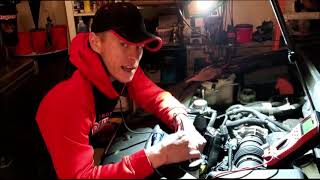
We Have This Part in Stock


The information in this article is provided for general reference and educational purposes only. Vehicle specifications, procedures, and part compatibility can vary by production date, trim level, and region. Always consult your vehicle's factory service manual and verify part numbers before purchasing or performing repairs. Safety-critical components such as airbags, seat belts, and braking systems should be installed by a qualified professional.
- Chevrolet IMPALA:
- 🧭 Diagnostic Flowchart
- 🎬 Helpful Videos
- 🛍️ Shop This Part
- What's Unique About the 2012-2014 Chevrolet IMPALA
- Symptoms You May Notice
- Most Likely Causes
- Rare But Worth Checking
- Diagnosis Steps
- Parts You'll Likely Need
- Related Codes That Often Appear With This One
- Technical Service Bulletins (TSBs) & Recalls
- Platform-Specific Known Issues
- Mechanic-Grade Diagnostic Values
- Scan Tool Commands That Help
- Wiring & Ground Locations
- Real Owner Repair Stories
- OEM Part Supersession History
- Model Year Variations Within This Range
- 🎟️ Get 5% Off