

P0262 on 2009-2014 Buick Enclave: Cylinder 1 Injector Circuit High Causes & Fixes
P0262 on a Buick Enclave typically indicates a faulty fuel injector for cylinder 1 or a wiring harness problem. A common fix is replacing the cylinder 1 fuel injector, which can cost between $70-$150 for the part. Because cylinder 1 is on the rear bank against the firewall, replacement requires removing the upper intake manifold, making the repair more involved.
- P0262 specifically points to an electrical problem in the cylinder 1 fuel injector circuit, not a fuel pressure or general engine issue.
- The most likely culprits are either the cylinder 1 fuel injector itself or a fault in the wiring harness leading to it.
- A simple and effective diagnostic step is to swap the cylinder 1 injector with another one to see if the fault code follows the injector.
- A GM Technical Service Bulletin (PIP4924D) highlights that wiring issues are a known problem on this platform, making a thorough visual inspection of the harness critical.
- Do not immediately assume a misfire is from a bad spark plug or coil when this code is present; diagnose the fuel injector circuit first.
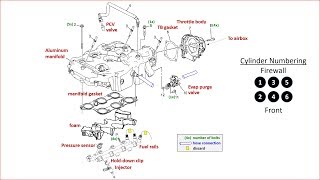
- Repair is more complex for this cylinder because Cylinder 1 is on the rear bank against the firewall, requiring removal of the upper intake manifold for access.
What's Unique About the 2009-2014 Buick ENCLAVE
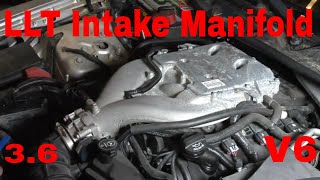
The 2009-2014 Buick Enclave uses a 3.6L V6 (LLT) engine with direct injection, which operates at very high fuel pressures. Cylinder 1 is located on the rear bank of the engine, against the firewall, making access to the injector and its wiring more difficult as it requires removal of the upper intake manifold. 🎬 See this step-by-step guide to removing the LLT intake manifold. A widespread General Motors Technical Service Bulletin (TSB), #PIP4924D, specifically calls out that the engine wiring harness on this platform is prone to chafing and rubbing against engine components, causing various injector circuit codes, including P0262. 🎬 Watch: Understanding P0262 symptoms and how to fix the code. This makes wiring inspection a top priority during diagnosis.
Diagnostic Flowchart
Tap your situation to follow the diagnostic path that matches what you're seeing on this vehicle.
Symptoms You May Notice
- Check Engine Light is on
- Rough or shaky idle
- Engine misfire, which may feel like a stumble or hesitation on acceleration
- Reduced engine power and poor acceleration
- Decreased fuel economy
- Strong fuel smell from the exhaust
- Engine may be hard to start
- Replacing the spark plug or ignition coil on cylinder 1 without diagnosing the fuel system. A misfire (P0301) is a symptom, but the P0262 code specifically points to an electrical fault in the injector circuit, not the ignition system.
Most Likely Causes
- Faulty Cylinder 1 Fuel Injector 🔴 High Probability → Shop Fuel Injector Direct injectors operate under high stress and pressure. An internal short circuit within the injector's coil is a common failure mode that causes the high voltage reading detected by the ECM.
How to confirm: Swap the cylinder 1 fuel injector with another cylinder (e.g., cylinder 3, which is also on the rear bank). Clear the codes and drive the vehicle. If the code changes to P0268 (Cylinder 3 Injector Circuit High), the injector is confirmed to be faulty. This is labor-intensive as the intake manifold must be removed for access.
Typical fix: Replace the faulty fuel injector. It is highly recommended to replace all injector seals (Teflon and O-rings) when one injector is serviced. Many technicians also recommend replacing all three injectors on the same bank (Bank 1) at the same time due to the labor involved in accessing them.
Est. part cost: $70-$150 - Wiring Harness Issue 🟡 Medium Probability As noted in TSB #PIP4924D, the engine wiring harness is known to have issues. The bulletin specifically mentions that wires can chafe or rub through against the intake plenum, valve cover bolts, fuel lines, and the side of the cylinder head. This can cause a short to voltage in the injector circuit.
How to confirm: After removing the intake manifold for access, visually inspect the entire length of the wiring harness leading to the Bank 1 injectors, paying close attention to the contact points mentioned in the TSB. Use a multimeter to check for a short to voltage on the control circuit wire between the ECM and the injector connector.
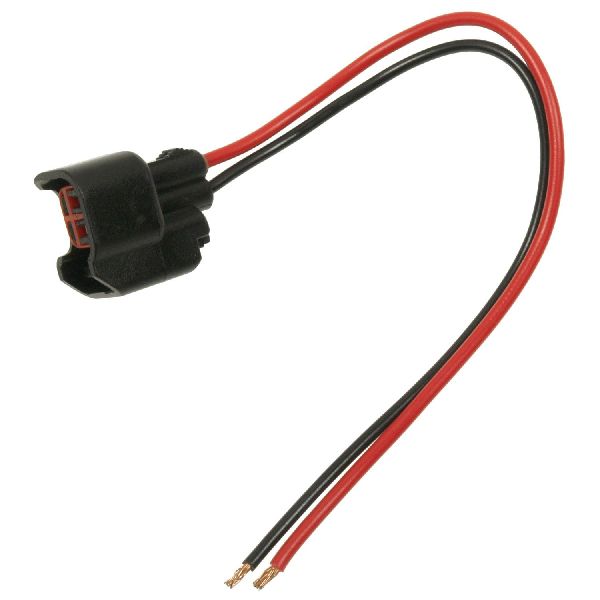
Typical fix: Repair the damaged section of the wiring harness or replace the connector pigtail. Use protective conduit or re-route the harness slightly to prevent future chafing.
Est. part cost: $15-$50 - Faulty Engine Control Module (ECM) ⚪ Low Probability → Shop Engine Control Module (ECM)
How to confirm: This should only be considered after the fuel injector and wiring have been definitively ruled out. A professional diagnosis using a lab scope to monitor the injector driver signal from the ECM is the best way to confirm. If the driver sends a constant high signal or no signal at all, the ECM is likely faulty.
Typical fix: Replace and reprogram the Engine Control Module. This requires special tools for programming it to the vehicle's VIN and security system.
Est. part cost: $300-$800
Rare But Worth Checking
- Contaminated or Loose Injector Connector:
Diagnosis Steps
- Read the trouble codes with an OBD-II scanner and confirm P0262 is present. Note any other codes, especially P0301 (Cylinder 1 Misfire).
- Identify Cylinder 1. On the transverse 3.6L V6, Cylinder 1 is on the rear bank (against the firewall), on the passenger side of the engine.
- Due to the location of Cylinder 1, physical access to the injector and wiring requires removing the upper intake manifold. This is a significant step.
- Once the intake is removed, perform a thorough visual inspection of the wiring harness for Bank 1, looking for chafing, melting, or corrosion, especially at the points mentioned in TSB PIP4924D (against the head, fuel lines, etc.).
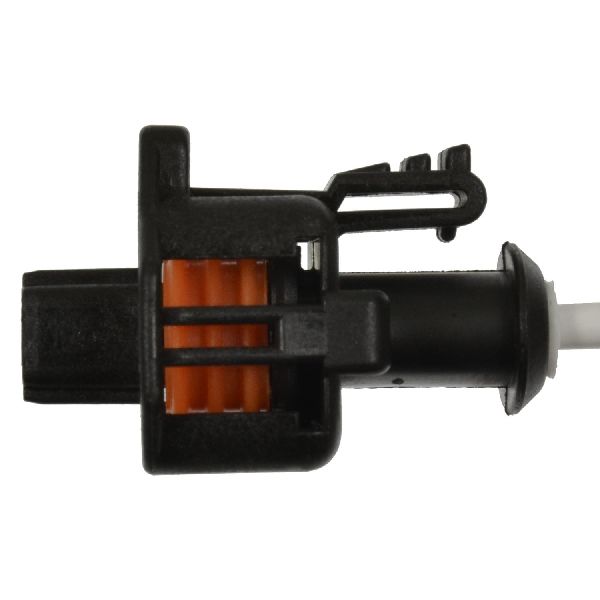
- Disconnect the connector for the cylinder 1 injector and inspect for damage or corrosion.
- Perform an injector swap test. Exchange the fuel injector from cylinder 1 with one from another cylinder (e.g., cylinder 3). Reassemble the fuel rail (without fully reinstalling the intake manifold if possible for testing).
- Clear the codes and start the engine briefly. Re-scan for codes.
- If the code has moved to the other cylinder (e.g., P0268 for cylinder 3), the fuel injector is the problem and must be replaced.
- If code P0262 returns, the problem is in the wiring or the ECM. The injector is not the cause.
- With the ignition off, disconnect the injector and the ECM. Use a multimeter to check for continuity and for shorts to power or ground in the two wires running to the cylinder 1 injector.
- If the wiring tests good, the Engine Control Module (ECM) is the most likely remaining cause. Professional confirmation is recommended.
Parts You'll Likely Need
- Fuel Injector
(OEM #12638530)— This is the most frequent cause of a P0262 code, typically due to an internal electrical short. The ACDelco part number is 217-3445.
Trusted brands: ACDelco (OEM), Bosch, Standard Motor Products
OEM price range: $120-$180
Aftermarket price range: $70-$110 - Upper Intake Manifold Gasket Set — Required for reinstallation of the intake manifold, which must be removed to access the cylinder 1 fuel injector.
Trusted brands: Fel-Pro, ACDelco, Mahle
OEM price range: $30-$50
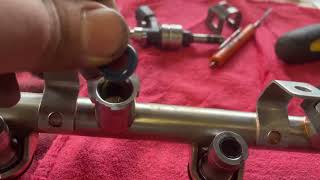
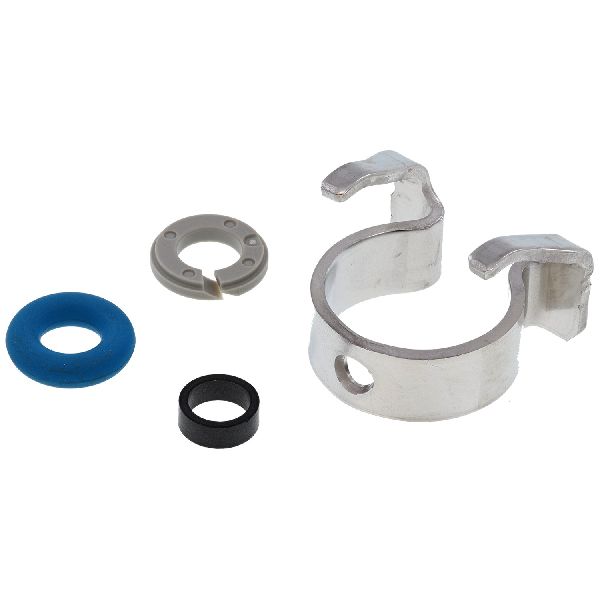
Aftermarket price range: $15-$30 - Fuel Injector Seal Kit — The Teflon seal at the tip of the direct injector must be replaced anytime the injector is removed. A special tool is often required to install and size the new seal correctly.
Trusted brands: ACDelco, Standard Motor Products
OEM price range: $10-$20 per injector
Aftermarket price range: $5-$15 per injector
Related Codes That Often Appear With This One
- P0301 — This code means 'Cylinder 1 Misfire Detected'. It is a direct and common result of the fuel injector not delivering the correct amount of fuel due to the electrical fault identified by P0262.
- P0201 — This is a general fault code for the 'Injector 1 Control Circuit'. It can appear alongside P0262 as the ECM flags a general malfunction in that circuit before specifying it as a 'Circuit High' condition.
Technical Service Bulletins (TSBs) & Recalls
- PIP4924D: Mentions that codes like P0262 can be set due to engine wiring harness issues, leading to misfires. It lists specific chafe points to inspect, such as against the intake plenum, valve cover bolts, and fuel lines.
Platform-Specific Known Issues
- A known issue documented in Technical Service Bulletin #PIP4924D involves engine misfires and various injector codes, including P0262. The bulletin advises technicians to inspect the engine wiring harness for chafing against the intake, valve covers, and fuel lines, which can cause a short.
- Accessing the cylinder 1 injector is labor-intensive due to its location on the rear bank, requiring the removal of the upper intake manifold. This significantly increases repair time and cost compared to a front-bank injector.
Mechanic-Grade Diagnostic Values
- Fuel Injector Coil Resistance — expected: 1.5 - 2.5 Ohms. Failure: A reading of infinite resistance (open circuit) or near-zero Ohms (short circuit). A 'Circuit High' code often points to an open circuit or an external short to voltage.
- High-Pressure Fuel System Pressure (at idle) — expected: 3.5 - 5.5 MPa (508 - 798 psi). Failure: While not a direct cause for an electrical code, pressure far outside this range indicates a separate issue with the high-pressure fuel pump or sensor that should be addressed.
- Injector Circuit Voltage (Key On, Engine Off) — expected: Battery voltage (approx. 12V) at the power feed wire (typically Pink/Black) and 0V at the control wire (typically Dark Blue/White).. Failure: Voltage present on the control wire with the key on indicates a short to power in the harness, which is a direct cause of P0262.
Scan Tool Commands That Help
- GM GDS2 / High-End Bidirectional Scanner: Injector Test / Fuel Injector Balance — This function allows the technician to individually disable each fuel injector while monitoring engine RPM. When diagnosing P0262, disabling the cylinder 1 injector should cause no change in RPM, confirming it is not contributing power. This verifies the fault's impact without disassembly.
Wiring & Ground Locations
- Cylinder 1 Injector Wires — At the fuel injector connector for cylinder 1, located on the rear bank (firewall side), passenger side.. The control wire, typically Dark Blue/White, runs to the ECM. The power wire is typically Pink/Black. A P0262 code is often caused by the Dark Blue/White wire chafing and shorting to a 12V power source.
- G104 — A primary engine ground located on the rear of the cylinder head (Bank 1).. While less common for a 'circuit high' code, a poor or intermittent ground connection at this point can cause unpredictable electrical behavior and floating voltages in sensor and actuator circuits for the entire bank, including the injectors. It should be inspected for cleanliness and tightness.
- ECM/PCM Connector — The main connectors at the Engine Control Module.. This is the termination point for the injector control wire. Testing for a short to voltage should be performed at this connector to isolate the fault between the harness and the ECM itself. It's also a potential point for pin corrosion or damage.
Real Owner Repair Stories
- Multiple YouTube repair videos and forum discussions (2009-2014 GM Lambda platform vehicles (Enclave, Traverse, Acadia) with 3.6L V6) — Check Engine Light with P0262 and P0301 (Cylinder 1 Misfire), rough idle, hesitation.
❌ Tried (didn't work) Replacing the spark plug and ignition coil for cylinder 1.
✅ What actually fixed it In many documented cases, the root cause was the engine wiring harness chafing against a sharp edge on the cylinder head or the high-pressure fuel line bracket on the rear bank. The fix involved removing the intake manifold, locating the section of harness with worn insulation, repairing the shorted wire(s), and wrapping the harness in protective loom to prevent recurrence. This aligns directly with TSB PIP4924D. - enclaveforum.net user reports (2011 GMC Acadia (same platform) with 3.6L V6) — Multiple injector codes for the rear bank (P0262, P0265, P0268) and multiple misfire codes.
❌ Tried (didn't work) Initial diagnosis focused on a single injector.
✅ What actually fixed it The owner replaced all three fuel injectors on the rear bank (Bank 1) along with the upper intake gaskets. This resolved all codes. This supports the common technician recommendation to replace all injectors on the bank due to the high labor cost of access, as one failure often indicates others may fail soon.
OEM Part Supersession History
12638530→12669384— Likely an internal revision to improve reliability and prevent the electrical failures that cause codes like P0262.
Heads up: The parts are interchangeable, but it is recommended to use the newest part number (12669384) for repairs.
Model Year Variations Within This Range
- 2009-2014: The 3.6L LLT V6 engine was used consistently in the Buick Enclave from 2009 through 2017. Therefore, the causes, diagnostic procedures, and parts related to code P0262 are consistent across the 2009-2014 model year range.
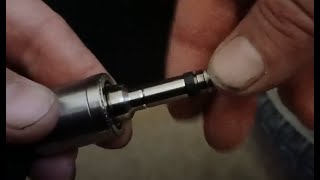
Helpful Videos
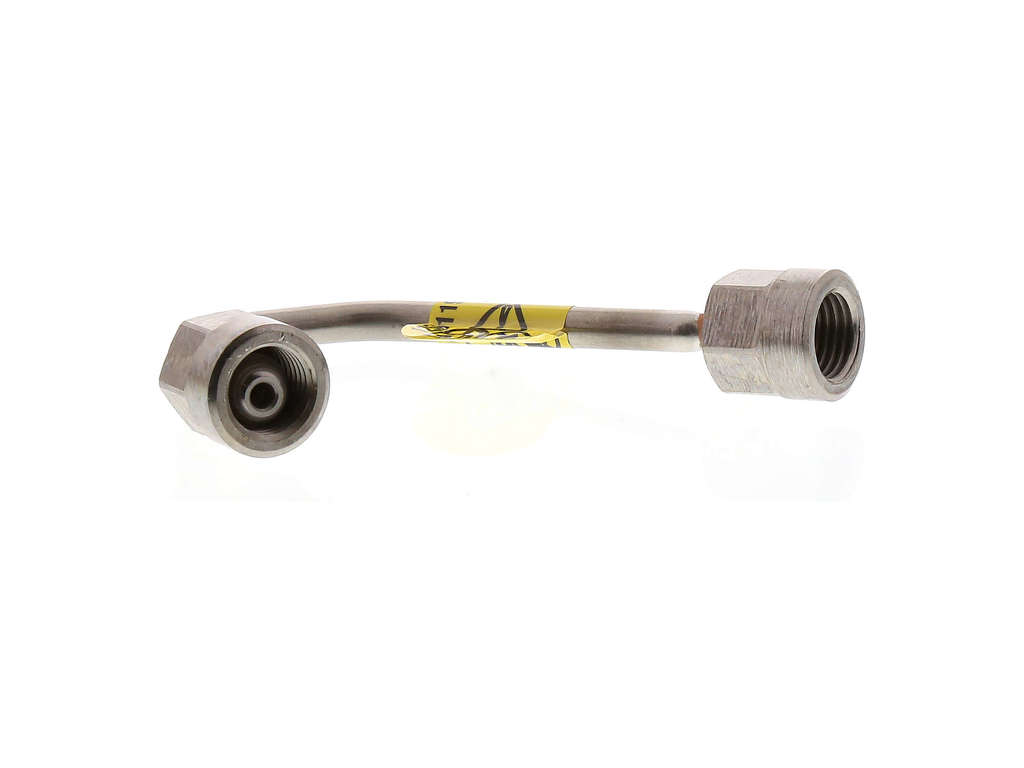
We Have This Part in Stock


The information in this article is provided for general reference and educational purposes only. Vehicle specifications, procedures, and part compatibility can vary by production date, trim level, and region. Always consult your vehicle's factory service manual and verify part numbers before purchasing or performing repairs. Safety-critical components such as airbags, seat belts, and braking systems should be installed by a qualified professional.
- Buick ENCLAVE:
- 🧭 Diagnostic Flowchart
- 🎬 Helpful Videos
- 🛍️ Shop This Part
- What's Unique About the 2009-2014 Buick ENCLAVE
- Symptoms You May Notice
- Most Likely Causes
- Rare But Worth Checking
- Diagnosis Steps
- Parts You'll Likely Need
- Related Codes That Often Appear With This One
- Technical Service Bulletins (TSBs) & Recalls
- Platform-Specific Known Issues
- Mechanic-Grade Diagnostic Values
- Scan Tool Commands That Help
- Wiring & Ground Locations
- Real Owner Repair Stories
- OEM Part Supersession History
- Model Year Variations Within This Range
- 🎟️ Get 5% Off