

P0262 on 2010-2014 Cadillac CTS: Cylinder 1 Injector Circuit High Causes and Fixes
P0262 on a 2010-2014 Cadillac CTS indicates a high voltage condition in the cylinder 1 fuel injector circuit. The most likely causes are a damaged wiring harness rubbing against the engine or a faulty fuel injector. Inspecting the wiring harness is the first step before replacing parts.
- P0262 on a 2010-2014 CTS means there's a high voltage fault in the cylinder 1 injector circuit.
- Before buying any parts, thoroughly inspect the injector wiring harness for damage, as this is a known issue documented in a GM Technical Service Bulletin (PIP4924D).
- Common symptoms include a rough idle, engine misfire, loss of power, and potentially a 'Service Stabilitrak' warning light.
- If the wiring is intact, the next most likely cause is a failed fuel injector.
- Driving with this code is not recommended as it can lead to catalytic converter damage.
What's Unique About the 2010-2014 Cadillac CTS
For this generation of Cadillac CTS and a wide range of other GM vehicles with the 3.0L or 3.6L V6 engines, a key factory document, Technical Service Bulletin (TSB) #PIP4924D, points to a known and widespread issue. The bulletin explicitly warns that the fuel injector wiring harness is prone to rubbing through its insulation. Specific chafe points to inspect are against the intake plenum, at valve cover bolts, against the fuel line, and on the side of the cylinder head under the plenum. This chafing can cause a short circuit and trigger P0262, often along with other injector codes. Therefore, a thorough wiring inspection is far more critical on this platform than just assuming the injector has failed.
Diagnostic Flowchart
Tap your situation to follow the diagnostic path that matches what you're seeing on this vehicle.
Symptoms You May Notice
- Check Engine Light is on
- Engine running rough or vibrating
- Noticeable engine misfire, which may feel like a popping or stumbling sensation.
- Loss of power and poor acceleration.
- Reduced fuel economy.
- "Service Stabilitrak" message may illuminate on the dashboard in conjunction with the misfire.
- Replacing the fuel injector without first inspecting the wiring harness. Given the known TSB, a wiring issue is a very common cause and checking it first can save the cost of an unnecessary injector.
Most Likely Causes
- Injector Wiring Harness Shorted to Power 🔴 High Probability → Shop Engine Wiring Harness As noted in TSB #PIP4924D, the harness routing can lead to chafing against the intake plenum, valve covers, or fuel lines, causing a short.
How to confirm: Visually inspect the entire length of the injector wiring harness for cylinder 1. Per TSB PIP4924D, pay close attention to contact points against the intake plenum, valve cover bolts, fuel lines, and the side of the cylinder head. Look for shiny, melted, or bare spots on the loom/wires. Use a multimeter to check for voltage at the injector connector with the key on; a constant high voltage reading indicates a short to power.
Typical fix: Repair the damaged section of wire using solder and heat-shrink tubing. Protect the repaired area from future chafing using a high-temperature convoluted loom or by re-routing the harness. If damage is near the connector, replace the connector pigtail.
Est. part cost: $10-$30 - Faulty Cylinder 1 Fuel Injector 🟡 Medium Probability → Shop Fuel Injector
How to confirm: Swap the cylinder 1 fuel injector with one from another cylinder (e.g., cylinder 3). Clear the codes and drive the vehicle. If the code changes to P0268 (Cylinder 3 Injector Circuit High), the injector is faulty. If P0262 returns, the problem is in the wiring or ECM. Alternatively, test the injector's resistance with a multimeter (see 'specific_diagnostic_values' for specs).
Typical fix: Replace the faulty fuel injector. It is often recommended to replace all injectors on that bank, or the full set, if they are high-mileage.
Est. part cost: $75-$120 - Damaged or Corroded Injector Connector ⚪ Low Probability
How to confirm: Inspect the electrical connector at the fuel injector for bent, broken, or corroded pins. Check for moisture inside the connector and ensure the locking tab is secure.
Typical fix: Clean the connector with electrical contact cleaner. If the pins or locking tab are damaged, replace the connector pigtail.
Est. part cost: $10-$30
Rare But Worth Checking
- Faulty Engine Control Module (ECM): → Shop Engine Control Module (ECM) This is the least likely cause. The ECM's internal driver for the injector can fail, but all other possibilities, especially wiring, must be exhaustively ruled out first. An ECM failure is often a result of a prolonged short circuit in the injector or wiring.
Diagnosis Steps
- Read the trouble codes with an OBD-II scanner and note all active codes and any freeze-frame data.
- Perform a quick functional check. With the engine running, use a mechanic's stethoscope or a long screwdriver placed on the body of the cylinder 1 injector, with the other end to your ear. You should hear a steady, rhythmic clicking. No sound or an erratic sound suggests a problem with the injector or its signal.
- Conduct a thorough visual inspection of the cylinder 1 fuel injector wiring harness. Following the guidance of TSB PIP4924D, carefully check for signs of chafing, melting, or damage where it might contact the engine, particularly against the intake plenum, valve cover bolts, fuel lines, and the side of the cylinder head.
- Disconnect the harness and inspect the injector's electrical connector for corrosion, moisture, or damaged pins.
- Use a noid light to test the injector connector. The light should flash steadily when the engine is cranked or running, indicating the ECM is sending a pulse signal. A light that stays on constantly points to a short to power, consistent with P0262. Note: For GM's direct injection system, some professionals state a noid light may not work and a lab scope is required for accurate signal testing.
- If no visual damage is found and the noid light test is inconclusive, perform an injector swap test. Move the cylinder 1 injector to another cylinder (e.g., cylinder 3), clear codes, and see if the fault code follows the injector (e.g., changes to P0268). If it does, the injector is bad.
- If the code does not follow the injector, the fault lies in the wiring or the ECM. Use a multimeter to test for continuity from the ECM connector to the injector connector and test for a short to voltage in the control wire. The ECM is located below the left headlamp assembly.
- If the wiring and injector are confirmed to be good, the final possibility is a fault within the Engine Control Module (ECM).
Parts You'll Likely Need
- Fuel Injector
(OEM #12629927)— This is the correct part if the injector itself has failed internally. This part number is for the 2010-2011 3.0L V6. The 3.6L and later model years use different part numbers (e.g., 12634126 for 2012-2015 models). Always verify with VIN before purchasing.
Trusted brands: ACDelco, Bosch, Hitachi
OEM price range: $80-$120
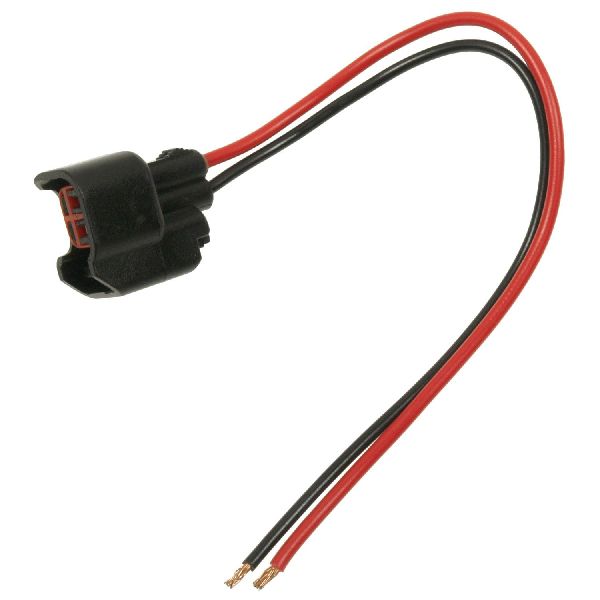
Aftermarket price range: $45-$90 - Fuel Injector Connector Pigtail
(OEM #PT2160)— Needed if the connector itself or the wiring immediately attached to it is damaged or corroded.
Trusted brands: ACDelco, Dorman, Standard Motor Products
OEM price range: $25-$40
Aftermarket price range: $10-$20
Related Codes That Often Appear With This One
- P0201 — P0201 indicates a general malfunction in the cylinder 1 injector circuit. It can appear alongside P0262 as the ECM tries to diagnose the fault.
- P0301 — This code means 'Cylinder 1 Misfire Detected'. It is a direct result of the injector circuit fault causing cylinder 1 to not receive the correct amount of fuel.
- P0261, P0264, P0267, etc. — If multiple injector circuit codes are present, it strongly points to a widespread wiring harness issue, as described in TSB PIP4924D, rather than multiple simultaneous injector failures.
Technical Service Bulletins (TSBs) & Recalls
- PIP4924D: Warns of a Check Engine Light and misfire with various injector codes (P0201-P0206, P0261, P0262, etc.) due to the wiring harness rubbing against engine components. The bulletin advises to "Carefully inspect the fuel injector wiring harness for rub through or internal wire opens."
Platform-Specific Known Issues
- TSB PIP4924D specifically calls out a massive range of 2009-2014 GM vehicles, including the Cadillac CTS, for potential fuel injector wiring harness chafing. The bulletin notes common rub-through spots are against the intake plenum, valve cover bolts, fuel lines, or cylinder head, which can cause a variety of injector circuit codes, including P0262. This makes a wiring inspection the most critical first diagnostic step on these vehicles.
Mechanic-Grade Diagnostic Values
- Fuel Injector Resistance (3.0L LF1/LFW V6) — expected: 1.9-2.3 ohms at 68°F (20°C). Some sources state a higher range of 11-14 ohms, indicating different injector types may have been used. It is critical to compare to a known-good injector on the same engine.. Failure: A reading of 0 ohms (short), infinity/OL (open), or a significant deviation from other injectors on the same engine.
- Fuel Injector Resistance (3.6L LFX V6) — expected: 1.2 - 1.8 Ohms.. Failure: A reading outside this narrow range indicates an internal injector fault. These are low-impedance injectors.
- Injector Pulse Width (at idle, warm engine) — expected: 2.0 - 4.0 milliseconds (ms).. Failure: A value significantly higher or lower than other cylinders can indicate a problem with the injector or its control circuit.
- Injector Circuit Voltage (Key On, Engine Off) — expected: Battery voltage (~12V) on the power supply wire at the injector connector.. Failure: Low or no voltage indicates a problem in the power supply circuit from the fuse block.
- Injector Inductive Kick (Lab Scope) — expected: A sharp voltage spike to over 60V immediately after the ECM commands the injector off.. Failure: A missing or weak inductive kick can indicate a shorted injector coil or a problem in the ECM driver circuit.
Scan Tool Commands That Help
- GM GDS2 / Tech 2 (or equivalent professional scanner): Fuel Injector Balance Test — This is a critical diagnostic step after verifying the electrical circuit is intact. The test commands each injector to fire for a set duration and measures the corresponding drop in fuel rail pressure. An injector that causes a significantly different pressure drop than the others is likely faulty (either clogged or leaking). This test helps confirm a bad injector before performing the labor-intensive replacement.
- GM GDS2 / Tech 2 (or equivalent professional scanner): Cylinder Power Balance — This function allows the user to disable one cylinder at a time and observe the drop in engine RPM. If disabling cylinder 1 causes little or no change in RPM compared to other cylinders, it confirms that cylinder 1 was not contributing properly, pointing towards the injector or ignition issue on that cylinder.
Wiring & Ground Locations
- K20 Engine Control Module (ECM) — Located below the left (driver's side) headlamp assembly, in front of the wheel well.. This is the source of the control signal for the fuel injector. Advanced diagnosis requires testing continuity of the injector control wire from the injector connector back to the correct pin on the ECM connector.
- G102 — Located at the left rear of the engine.. This ground is specifically for the ignition coils. While not directly for the injectors, a poor ground here can cause erratic engine behavior and misfires that could be confused with an injector problem.
- G103 — Located on the cowl in the left rear of the engine compartment, above the brake booster.. This is a major ground point for the ECM and Body Control Module (BCM). A loose or corroded connection here can cause a wide range of bizarre electrical issues, including injector circuit faults.
- Cylinder 1 Injector Control Wire — The specific pin for the cylinder 1 injector control circuit at the ECM connector. Pinouts vary by year and engine. For example, on some 3.6L engines, the injector control signals are on pins 9, 21, etc. of a specific ECM connector.. To definitively rule out a wiring problem, a technician must test for continuity and shorts between this specific ECM pin and the corresponding pin at the injector connector.
OEM Part Supersession History
12642021→12629927— Part revision by manufacturer.
Heads up: This part is for the 3.0L V6 (LF1) engine, typically found in 2010-2011 models.12642128→12634126— Part revision by manufacturer.
Heads up: This part is for the 3.6L V6 (LFX) engine, typically found in 2012-2015 models. It is a low-impedance injector and is NOT compatible with earlier LLT engines.
Model Year Variations Within This Range
- 2010-2011: These years primarily used the 3.0L LF1 and 3.6L LLT V6 engines. These engines use high-impedance fuel injectors (typically ~12 Ohms), such as part number 12629927 for the 3.0L.
- 2012-2014: The engine lineup was updated to the 3.0L LFW (a flex-fuel variant of the LF1) and the significantly revised 3.6L LFX. The LFX engine uses different, low-impedance fuel injectors (~1.2-1.8 Ohms), part number 12634126. Using the wrong impedance injector will cause running problems and can damage the ECM injector driver. The LFX also features a composite intake manifold and integrated exhaust manifolds.
- 2012 vs 2013+: The 2012 model year LFX engine carried over the timing chain design from the previous LLT engine, which was known for premature stretching. For 2013, the timing chain was redesigned for better longevity. While not directly related to P0262, it's a critical reliability distinction within this vehicle range.
We Have This Part in Stock


The information in this article is provided for general reference and educational purposes only. Vehicle specifications, procedures, and part compatibility can vary by production date, trim level, and region. Always consult your vehicle's factory service manual and verify part numbers before purchasing or performing repairs. Safety-critical components such as airbags, seat belts, and braking systems should be installed by a qualified professional.
- Cadillac CTS:
- 🧭 Diagnostic Flowchart
- 🛍️ Shop This Part
- What's Unique About the 2010-2014 Cadillac CTS
- Symptoms You May Notice
- Most Likely Causes
- Rare But Worth Checking
- Diagnosis Steps
- Parts You'll Likely Need
- Related Codes That Often Appear With This One
- Technical Service Bulletins (TSBs) & Recalls
- Platform-Specific Known Issues
- Mechanic-Grade Diagnostic Values
- Scan Tool Commands That Help
- Wiring & Ground Locations
- OEM Part Supersession History
- Model Year Variations Within This Range
- 🎟️ Get 5% Off