

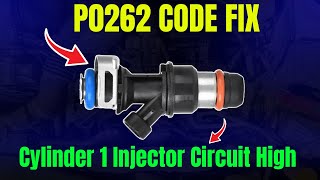
P0262 on 2010-2014 Chevrolet Equinox: Cylinder 1 Injector Circuit High Causes and Fixes
P0262 on a 2010-2014 Equinox means there's a high voltage fault in the cylinder 1 fuel injector circuit. This is often caused by a chafed or damaged engine wiring harness, as noted in GM service bulletins. Specific chafe points include contact with the intake plenum, valve cover bolts, and fuel lines. If the wiring is intact, the fuel injector itself is the next most likely culprit.
- P0262 on your Equinox points to a high voltage problem in the cylinder 1 injector circuit, most often a short to voltage.
- Before buying any parts, thoroughly inspect the engine wiring harness for damage at specific, known weak points near the intake, valve cover, and fuel lines, as this is a well-documented problem.
- Common symptoms include a rough idle, engine misfire, and poor power.
- If the wiring is good, the most likely cause is a failed fuel injector, which can be confirmed by swapping it with an injector from another cylinder.
What's Unique About the 2010-2014 Chevrolet EQUINOX
For this generation of Chevrolet Equinox and its GMC Terrain twin, injector circuit codes like P0262 are frequently linked to specific wiring harness problems. GM issued Technical Service Bulletin #PIP4924D and its subsequent revisions, which cover the 2010-2014 Equinox, advising technicians to inspect the engine wiring harness for damage. The bulletin specifically highlights common chafe points: the harness can rub against the intake plenum, valve cover bolts, the fuel line, and the side of the cylinder head under the plenum. This rubbing can wear through the wire insulation and cause a short to voltage, triggering the P0262 code. This makes a thorough visual inspection of these specific wiring locations a crucial first step before assuming an injector has failed.
Diagnostic Flowchart
Tap your situation to follow the diagnostic path that matches what you're seeing on this vehicle.
Symptoms You May Notice
- Engine runs rough, especially at idle.
- Noticeable engine misfire, which may feel like a shake or stumble.
- Poor acceleration and loss of engine power.
- Check Engine Light is on and may be flashing.
- Decreased fuel economy.
- A popping or bumping sound from the engine bay during acceleration. 🎬 Watch: Understanding P0262 symptoms and how to fix them.
- Replacing the fuel injector without first thoroughly inspecting the wiring harness. The harness issue is a well-documented problem on this platform and should always be checked first at the specific chafe points identified in TSBs to avoid unnecessary parts replacement.
Most Likely Causes
- Damaged or Chafed Engine Wiring Harness 🔴 High Probability → Shop Engine Wiring Harness As documented in GM TSB #PIP4924D, the engine harness on these vehicles is known to rub against various engine parts. Specific chafe points to inspect are against the intake plenum, at valve cover bolts, against the fuel line, and on the side of the cylinder head under the plenum.
How to confirm: Carefully inspect the entire fuel injector wiring harness, focusing on the known chafe points. Look for any signs of rubbing, exposed copper wires, or melted insulation. The damage may be on the underside of the harness and difficult to see without moving it.
Typical fix: Repair the damaged section of wire using solder and heat-shrink tubing. Protect the repair with anti-abrasion tape or loom. Secure the harness away from the sharp edge or component it was rubbing against using zip ties.
Est. part cost: $5-$25 - Faulty Cylinder 1 Fuel Injector 🟡 Medium Probability → Shop Fuel Injector
How to confirm: Swap the cylinder 1 fuel injector with another cylinder's injector (e.g., cylinder 2). Clear the codes and run the engine. If the code changes to P0265 (Cylinder 2 Injector Circuit High), the injector is faulty. You can also test the injector's resistance with a multimeter; it should be within the manufacturer's specified range (typically 11-14 ohms for these models). An out-of-spec reading indicates a failed internal coil.
Typical fix: Replace the failed fuel injector. It is often recommended to replace all injectors at the same time, as they have all been subjected to the same age and conditions.
Est. part cost: $50-$150 - Corroded or Loose Injector Connector ⚪ Low Probability
How to confirm: Disconnect the electrical connector at the cylinder 1 fuel injector. Inspect the terminals for green or white corrosion, moisture, or bent/damaged pins. Ensure it clicks securely back into place. A poor connection can cause high resistance and trigger the code.
Typical fix: Clean the connector terminals with electrical contact cleaner. If the connector, its terminals, or its locking tab is broken, it should be replaced with a new pigtail connector.
Est. part cost: $15-$45
Rare But Worth Checking
- Faulty Powertrain Control Module (PCM/ECM): → Shop Engine Control Module (ECM) This is the least likely cause. The internal driver circuit for the injector can fail, but all other possibilities (wiring, injector) must be exhaustively ruled out first before condemning the ECM. Unnecessary ECM replacement is a common misdiagnosis for this issue.
Diagnosis Steps
- Confirm the code P0262 is present using an OBD-II scanner. Note any other codes, especially P0301 (misfire) or other injector circuit codes.
- Perform a thorough visual inspection of the engine wiring harness. Focus on the specific chafe points mentioned in TSB #PIP4924D: where the harness passes the intake plenum, valve cover bolts, fuel line, and the side of the cylinder head. Manipulate the harness while looking for worn conduit or exposed wires.
- If wiring damage is found, repair it with solder and heat-shrink, protect it with anti-abrasion tape, clear the codes, and re-test.
- If the wiring appears intact, locate the cylinder 1 fuel injector. Disconnect its electrical connector and check for corrosion or damage. With the ignition ON and a scan tool connected, the 'Cylinder 1 Injector Control Circuit Status' parameter should display 'Open'.
- To confirm a bad injector, swap the cylinder 1 injector with the cylinder 2 injector. This requires removing the fuel rail. Clear the codes and start the engine. If the code returns as P0265 (Cylinder 2 Injector Circuit High), the injector is confirmed to be the problem.
- If the code remains P0262 after the swap, the issue is in the wiring between the ECM and the injector connector, or the ECM itself. Use a multimeter to check for a short to voltage on the control wire for the cylinder 1 injector.
- If all wiring and the injector test good, the final and least likely possibility is a failed driver circuit within the ECM, which would require ECM replacement and programming.
Parts You'll Likely Need
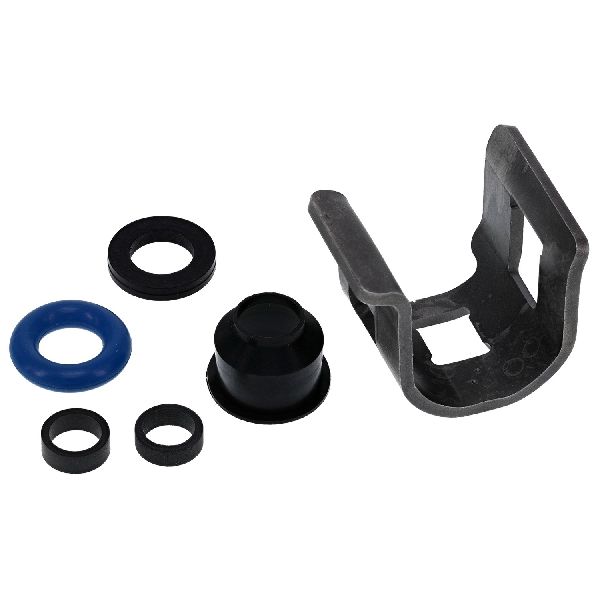
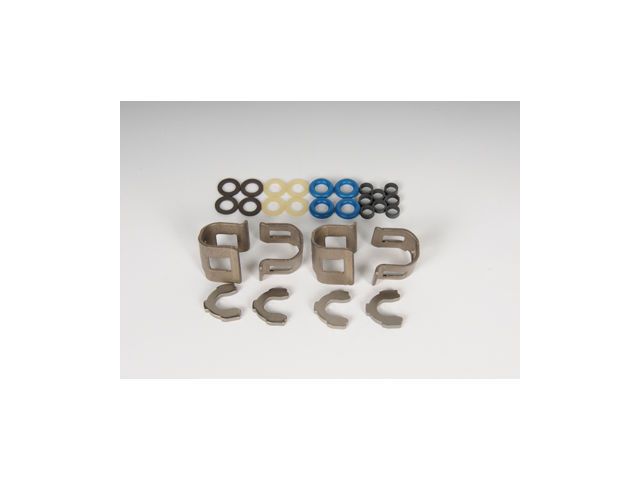
- Fuel Injector
(OEM #12669384 (Verify by VIN and Engine))— This is the most common part to fail after wiring issues have been ruled out. An internal short in the injector's coil will cause a high circuit voltage condition. Part number varies by engine (2.4L, 3.0L, 3.6L). 🎬 Watch: Step-by-step fuel injector replacement on a 2.4L Equinox.
Trusted brands: ACDelco, Bosch, Standard Motor Products
OEM price range: $90-$140
Aftermarket price range: $50-$90 - Fuel Injector Connector Pigtail
(OEM #ACDelco PT2183 (or equivalent))— If the connector at the injector is corroded, melted, or the locking tab is broken, it must be replaced by splicing in a new pigtail.
Trusted brands: ACDelco, Dorman, Carquest
OEM price range: $30-$50
Aftermarket price range: $15-$30 - Wiring Repair Supplies — Needed to fix chafed or broken wires in the engine harness, which is a very common cause of P0262 on the Equinox. Includes solder, heat-shrink tubing, and anti-abrasion electrical tape.
OEM price range: $10-$30
Aftermarket price range: $5-$20
Related Codes That Often Appear With This One
- P0301 — This code means 'Cylinder 1 Misfire Detected'. It is a direct symptom of the P0262 fault, as the injector circuit problem causes improper fueling and a subsequent misfire in that cylinder.
- P0261 — This is the code for 'Cylinder 1 Injector Circuit Low'. Seeing both P0261 and P0262 can indicate an intermittent wiring short that is making contact with both ground and power sources at different times, or a wire that is completely open.
- P0201 — This is a general 'Cylinder 1 Injector Circuit Malfunction' code. It is often logged alongside the more specific 'High' or 'Low' circuit codes.
Technical Service Bulletins (TSBs) & Recalls
- PIP4924D: Addresses a Service Engine Soon light and misfire with various injector codes (P0262 included). Recommends carefully inspecting the fuel injector wiring harness for rub-through or open circuits at specific points.
- 16-NA-004: While for a different set of symptoms, this TSB also identifies engine wiring harness chafing on the fuel pump cover as a known issue on 2012-2016 models, reinforcing the pattern of harness vulnerability on this platform.
- 21-NA-149: A more recent bulletin for newer trucks that details a wide variety of harness chafing locations and repair procedures, showing that this remains a common diagnostic area for GM vehicles.
Platform-Specific Known Issues
- Technical Service Bulletin #PIP4924D (and later versions) specifically calls out that a wide range of injector codes, including P0262, can be caused by the engine wiring harness rubbing through against engine components. Common chafe points are against the intake plenum, at valve cover bolts, against the fuel line, and on the side of the cylinder head under the plenum.
Mechanic-Grade Diagnostic Values
- Fuel Injector Coil Resistance (2.4L I4 LAF/LEA Engine) — expected: 11 - 14 Ohms. Failure: A reading near zero (short), infinity/OL (open), or significantly outside the specified range.
- Fuel Injector Coil Resistance (3.0L V6 LFW Engine) — expected: Approximately 12 Ohms. Failure: A significant deviation from 12 Ohms, or an open/shorted reading.
- Fuel Injector Coil Resistance (3.6L V6 LFX Engine) — expected: 1.2 - 1.8 Ohms. Failure: A reading outside this very low resistance range indicates an internal injector fault. Note the significant difference from the 2.4L and 3.0L engines.
- Injector Circuit Wiring Resistance — expected: < 0.5 Ohms. Failure: Resistance higher than 0.5 Ohms from the ECM connector pin to the injector connector pin indicates a problem in the wire itself (corrosion, partial break).
- Injector Connector Voltage (Key On, Engine Off) — expected: Approximately 12V (Battery Voltage). Failure: Low or no voltage on the power supply wire points to a problem upstream of the injector, such as in a fuse, relay, or the power feed wire.
Scan Tool Commands That Help
- GDS2 / Professional Scan Tool: Injector Active Test / Bi-Directional Control — This function allows the technician to command the cylinder 1 injector on and off individually while the engine is running. If commanding the injector causes no change in RPM or engine smoothness, it confirms a fault in the injector or its circuit, helping to isolate the problem after wiring has been inspected.
- GDS2 / Professional Scan Tool: Cylinder 1 Injector Control Circuit Status — With the injector connector unplugged and the ignition ON, the scan tool data parameter for the circuit status should display 'Open'. If it does not, it suggests a short to ground or voltage in the wiring harness between the ECM and the connector.
Wiring & Ground Locations
- G103 — Located at the left rear of the engine compartment on the cowl, often above the brake booster.. This is a major ground point for the BCM and can affect various control modules. While not a direct engine ground, a poor connection here can cause widespread electrical issues that may mimic sensor or circuit faults.
- G105 — Located at the lower right rear of the engine.. This serves as a primary engine ground. A loose or corroded connection here can affect the ECM's ability to properly ground the injector driver circuits, leading to erratic behavior and fault codes.
- G111 — Located at the rear of the engine, near the crankshaft position sensor.. This is another critical engine ground point. Verifying it is clean and tight is essential when diagnosing any engine control circuit fault, including injector codes.
- ECM Connector J2 / X2, Pin 16 — On the 73-way Engine Control Module connector.. This is the specific pin for the Cylinder 2 fuel injector control circuit (Light Blue wire). While not for cylinder 1, it serves as a perfect known-good reference point. You can compare voltage and resistance readings from this pin to the corresponding pin for cylinder 1 to help determine if the fault lies in the wiring or the ECM.
OEM Part Supersession History
12638530→12669384— Part has been updated by the manufacturer.
Heads up: This part number is primarily for the 3.6L V6 engine. It has been superseded by 12669384. Always verify the correct part number by VIN, as multiple engines were available.
Model Year Variations Within This Range
- 2010-2011 (LAF) vs 2012-2014 (LEA): The 2.4L I4 engine was updated during this vehicle's generation. The 2010-2011 models typically have the LAF engine. Starting in 2012, the LEA engine was introduced, which is largely the same but is FlexFuel (E85) capable. This means the LEA engine has injectors designed to withstand the corrosive effects of ethanol and may have a higher flow rate, though the electrical resistance specifications for testing remain the same.
Helpful Videos
We Have This Part in Stock



The information in this article is provided for general reference and educational purposes only. Vehicle specifications, procedures, and part compatibility can vary by production date, trim level, and region. Always consult your vehicle's factory service manual and verify part numbers before purchasing or performing repairs. Safety-critical components such as airbags, seat belts, and braking systems should be installed by a qualified professional.
- Chevrolet EQUINOX:
- 🧭 Diagnostic Flowchart
- 🎬 Helpful Videos
- 🛍️ Shop This Part
- What's Unique About the 2010-2014 Chevrolet EQUINOX
- Symptoms You May Notice
- Most Likely Causes
- Rare But Worth Checking
- Diagnosis Steps
- Parts You'll Likely Need
- Related Codes That Often Appear With This One
- Technical Service Bulletins (TSBs) & Recalls
- Platform-Specific Known Issues
- Mechanic-Grade Diagnostic Values
- Scan Tool Commands That Help
- Wiring & Ground Locations
- OEM Part Supersession History
- Model Year Variations Within This Range
- 🎟️ Get 5% Off