

P0262 on 2009-2010 Saturn Outlook: Cylinder 1 Injector Circuit High Causes & Fixes
This code means there's a high voltage fault in the cylinder 1 fuel injector circuit. On the 2009-2010 Saturn Outlook, this is frequently caused by a chafed or damaged engine wiring harness. Before replacing the injector, thoroughly inspect the harness for damage, especially where it might rub against engine components like the intake plenum or valve cover bolts.
- P0262 on a 2009-2010 Saturn Outlook is an electrical fault in the cylinder 1 injector circuit.
- The most probable cause is not the injector itself, but a damaged wire in the engine harness, a known issue for this vehicle platform documented in TSB PIP4924D.
- Always inspect the wiring harness for chafing before buying any parts. A simple 'wiggle test' can help confirm a wiring issue.
- If the injector must be replaced, confirm it is the fault using a swap test and be aware that the original part number 12638530 has been superseded by 12669384.
What's Unique About the 2009-2010 Saturn OUTLOOK
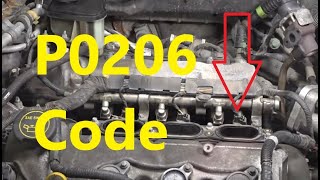
The Saturn Outlook shares its GM Lambda platform and 3.6L V6 engine with the Chevrolet Traverse, GMC Acadia, and Buick Enclave. This entire platform is known for issues with the engine wiring harness. A General Motors Technical Service Bulletin (TSB #PIP4924D) directly addresses 🎬 Watch: How to fix common GM injector circuit codes a wide range of injector codes, including P0262, pointing towards a common electrical failure point. Specific chafe points mentioned in the TSB and confirmed by owner experiences include where the harness rubs against the intake plenum, valve cover bolts, fuel lines, and the side of the cylinder head under the plenum.
Diagnostic Flowchart
Tap your situation to follow the diagnostic path that matches what you're seeing on this vehicle.
Symptoms You May Notice
- Check Engine Light is on
- Rough or uneven idle
- Engine misfire, which may feel like a shake or stumble
- Hesitation and loss of power during acceleration
- Reduced fuel economy
- A distinct 'popping' or 'bumping' sensation during acceleration.
- Replacing the fuel injector without first checking the wiring harness. Given the known issues and TSB PIP4924D on this platform, the wiring is a more likely culprit.
- Replacing the PCM before exhaustively testing the wiring harness and swapping the injector. PCM failure is the least common cause.
Most Likely Causes
- Engine Wiring Harness Damage 🔴 High Probability → Shop Engine Wiring Harness As noted in GM TSB PIP4924D, the harness on the 3.6L V6 engine is susceptible to chafing against engine brackets, the intake plenum, valve cover bolts, and fuel lines. Engine vibration and torque accelerate this wear, eventually causing a wire to short to a voltage source.
How to confirm: Visually inspect the entire engine wiring harness, paying close attention to any point where it contacts the engine or other components, especially under the intake manifold. Perform a 'wiggle test' on the harness with the engine running to see if it affects the misfire; wiggling the harness near the main fuse box and around the intake manifold can often trigger or resolve the misfire, confirming a wiring issue.
Typical fix: Repair the damaged section of wire. This may involve soldering, heat-shrinking, and re-wrapping the harness with protective loom. 🎬 Watch: Pro tips for restoring a damaged wiring harness In severe cases, or if damage is near a connector, a pigtail or the entire engine harness may need replacement.
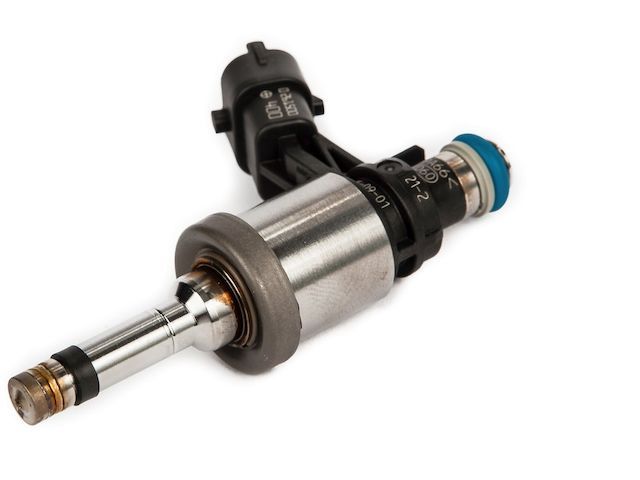
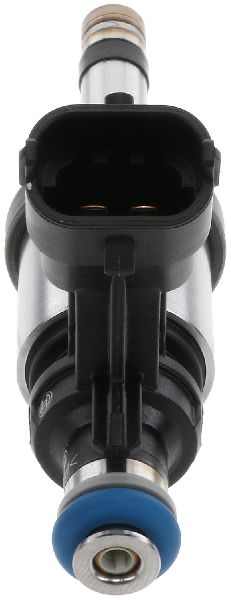
Est. part cost: $15-$500 - Faulty Cylinder 1 Fuel Injector 🟡 Medium Probability → Shop Fuel Injector The direct injection fuel injectors on the 3.6L LLT engine operate under very high pressure and can fail internally, developing an electrical short that causes a 'circuit high' condition.
How to confirm: Swap the cylinder 1 fuel injector with an injector from another cylinder (e.g., cylinder 3). Clear the codes and drive the vehicle. If the code changes to P0268 (Cylinder 3 Injector Circuit High), the injector is faulty. If P0262 returns, the issue is with the wiring or PCM. The resistance for an injector on the LLT engine should be between 11 and 14 Ohms.
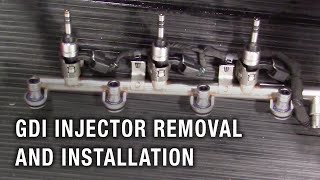
Typical fix: Replace the faulty fuel injector. It is often recommended to replace all injectors as a set 🎬 See this GDI injector removal and installation walkthrough if they are original and have high mileage. The upper intake manifold gaskets must also be replaced.
Est. part cost: $70-$150 - Failed Powertrain Control Module (PCM) ⚪ Low Probability → Shop Engine Control Module (ECM) While rare, the internal injector driver transistor within the PCM can fail due to age or voltage spikes from a shorted injector or wiring.
How to confirm: This should be the last step after definitively ruling out wiring and the injector itself. A professional shop can perform advanced diagnostics to test the injector driver circuit within the PCM. If multiple unrelated injector codes are present, it may point to a PCM failure, but a wiring harness issue is still more likely.
Typical fix: The PCM must be replaced and programmed to the vehicle's VIN.
Est. part cost: $300-$800
Rare But Worth Checking
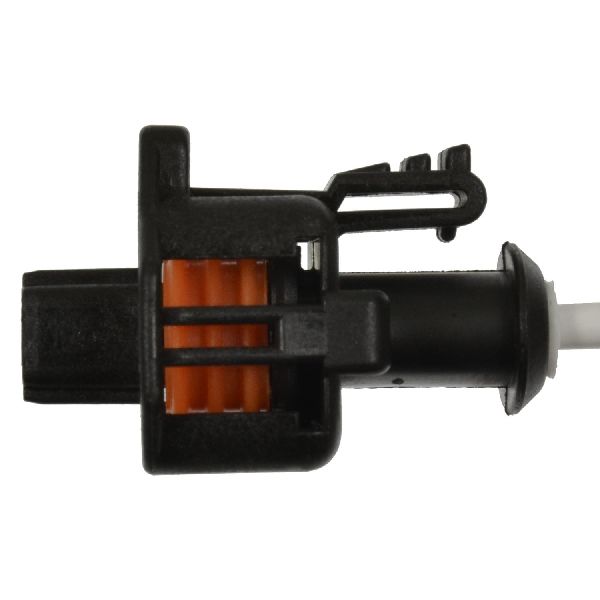
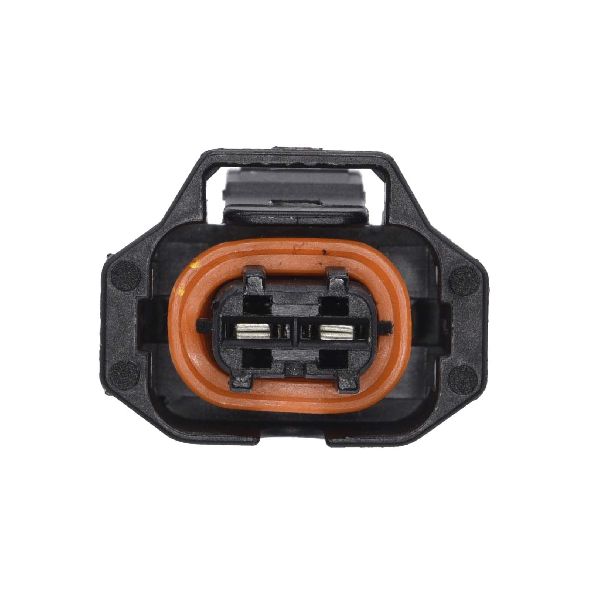
- Corroded or Loose Injector Connector: The electrical connector at the fuel injector can become loose or contaminated with oil or moisture, causing a poor connection and triggering the code. Check for bent pins or fretting corrosion (a fine black dust) which indicates a poor connection. Always check this simple point first.
- Poor Ground Connection: A loose or corroded engine or chassis ground can cause erratic voltage readings across multiple circuits, potentially triggering a P0262 code. Inspect and clean main ground points related to the engine harness.
Diagnosis Steps
- Scan for Codes: Read the trouble codes with an OBD-II scanner and confirm P0262 is present. Note any other codes, especially P0301 or other injector circuit codes.
- Visual Inspection: Carefully inspect the engine wiring harness for any signs of chafing, melting, or corrosion, especially around the cylinder 1 injector, intake manifold, valve covers, and fuel lines, as specified in TSB PIP4924D.
- Check the Connector: Disconnect the electrical connector at the cylinder 1 fuel injector. Check for corrosion, bent pins, or damage. Ensure it fits securely. Apply dielectric grease upon reassembly.
- Test the Injector: With a multimeter set to Ohms, measure the resistance across the two pins of the fuel injector. For the 3.6L LLT engine, the reading should be between 11-14 Ohms. A reading that is very low (shorted) or infinite (open) indicates a failed injector.
- The Injector Swap Test: As a definitive test, swap the cylinder 1 injector with one from another cylinder (e.g., cylinder 3). If the code follows the injector to the new cylinder (now P0268), the injector is bad. If P0262 returns, the problem is in the wiring or PCM.
- Test the Wiring: If the injector is good, test the wiring harness. Check for continuity on the control wire from the injector connector back to the PCM. Check the power wire for correct voltage. Check the control wire for a short to voltage by testing for voltage with the key on, engine off (there should be 0V).
- Test the PCM: If all wiring and the injector test good, the fault likely lies with the PCM's injector driver circuit. This diagnosis is best left to a professional.
Parts You'll Likely Need
- Fuel Injector
(OEM #12638530)— If the injector itself has failed with an internal short, it will need to be replaced. This is a common failure point.
Trusted brands: ACDelco, Bosch, Standard Motor Products, Hitachi
OEM price range: $120-$180
Aftermarket price range: $70-$120 - Engine Wiring Harness Repair Supplies — Often the fix is repairing a chafed wire, which requires wire, solder, heat shrink tubing, and protective loom. This is the most likely cause on this platform.
Aftermarket price range: $15-$50 - Upper Intake Manifold Gaskets — These are single-use gaskets that must be replaced anytime the upper intake manifold is removed to access the fuel injectors or wiring harness underneath.
Trusted brands: Fel-Pro, ACDelco, Mahle
OEM price range: $30-$50
Aftermarket price range: $15-$30
Related Codes That Often Appear With This One
- P0301 — This code for 'Cylinder 1 Misfire Detected' is a direct result of the P0262 fault, as the injector is disabled by the PCM and not delivering fuel correctly.
- P0261 — This code for 'Cylinder 1 Injector Circuit Low' can appear with P0262 if there is an intermittent wiring short that sometimes goes to ground and other times shorts to power.
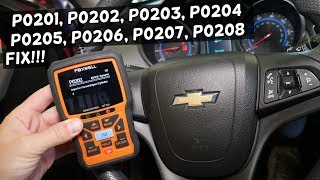
- P0201, P0202, etc. — If the wiring harness damage is severe, it can affect multiple injector circuits simultaneously, causing a variety of injector codes to appear along with P0262, as mentioned in TSB PIP4924D.
Technical Service Bulletins (TSBs) & Recalls
- PIP4924D: Mentions a potential for various injector
Platform-Specific Known Issues
- The 2009-2010 Saturn Outlook, along with its GM Lambda platform siblings, is specifically mentioned in TSB #PIP4924D for experiencing a range of fuel injector circuit codes due to wiring harness issues. Technicians are advised to inspect the harness for contact with engine components before replacing any parts.
- A real-world repair on a platform-mate (Chevy Traverse) with multiple injector circuit high codes found the cause to be a wire that had rubbed through on an A/C line bracket near the firewall.
Mechanic-Grade Diagnostic Values
- Fuel Injector Coil Resistance — expected: 11-14 Ohms when engine coolant temperature is between 10-32°C (50-90°F). Another source specifies 11.8 - 12.6 Ohms for the LLT engine.. Failure: A reading significantly outside the specified range, or infinite resistance (open), indicates a faulty injector.
- Low-Pressure Fuel System Pressure — expected: 384-425 kPa (56-62 psi) with the fuel pump commanded ON, engine off.. Failure: Pressure should not decrease more than 34 kPa (5 psi) in one minute after the pump is turned off. A rapid drop can indicate a leaking injector.
- High-Pressure Fuel System Pressure — expected: Over 2,000 PSI, mechanically driven by the camshaft.. Failure: This is typically diagnosed via specific high-pressure fuel system codes like P0087, not directly by P0262.
- Injector Control Wire Voltage (Key On, Engine Off) — expected: 0V at the injector connector control wire.. Failure: Any voltage present on the control wire indicates a short to voltage in the wiring harness.
Scan Tool Commands That Help
- Tech 2 / GDS2: Fuel Injector Balance Test — This special function pulses each injector individually and measures the corresponding drop in fuel rail pressure. It is used to identify a leaking or clogged injector that may not be setting a specific code but is causing a rich condition or misfire. All injectors should have a similar pressure drop (within 20 kPa or 3 psi of each other).
- Tech 2 / GDS2: Cylinder Power Balance — This test disables one cylinder at a time (by cutting fuel or spark) and measures the drop in RPM. If disabling cylinder 1 causes little or no change in RPM compared to other cylinders, it confirms that cylinder 1 was not contributing power, which is expected with a P0262 code where the injector is already disabled by the PCM.
Wiring & Ground Locations
- G103 / G104 — Located on the rear of the cylinder heads, near the bellhousing. G104 is on the driver's side (Bank 2) and G103 is on the passenger's side (Bank 1).. These are primary grounds for the Engine Control Module (ECM). A loose or corroded connection here can cause erratic voltage references and sensor readings, potentially leading to false diagnostic codes.
- Cylinder 1 Injector Control Wire — This is a specific wire running from a pin on the ECM connector to the cylinder 1 fuel injector connector. On some similar models, it is a Light Green wire. A wiring diagram is required for positive identification.. A P0262 code is set when the ECM detects high voltage on this specific control wire when it should be low. This is the wire that must be tested for a short to voltage.
- Engine Control Module (ECM) — Located on the left side of the engine compartment, near the firewall or airbox.. This is the source of the injector command and the location where the fault is detected. All wiring tests for the injector circuit will terminate at this module's connector.
OEM Part Supersession History
12638530→12669384— Standard part lifecycle update by the manufacturer.
Heads up: The new part number 12669384 also replaces previous numbers 12611545 and 12632255. It is the correct service replacement for the 2009-2010 Saturn Outlook.
Model Year Variations Within This Range
- 2009-2010: The 2009 model year introduced the direct-injected 3.6L LLT V6 engine, which replaced the previous LY7 port-injected engine. There were no major engine or electrical changes between the 2009 and 2010 model years for the Saturn Outlook.
Helpful Videos

We Have This Part in Stock


The information in this article is provided for general reference and educational purposes only. Vehicle specifications, procedures, and part compatibility can vary by production date, trim level, and region. Always consult your vehicle's factory service manual and verify part numbers before purchasing or performing repairs. Safety-critical components such as airbags, seat belts, and braking systems should be installed by a qualified professional.
- Saturn OUTLOOK:
- 🧭 Diagnostic Flowchart
- 🎬 Helpful Videos
- 🛍️ Shop This Part
- What's Unique About the 2009-2010 Saturn OUTLOOK
- Symptoms You May Notice
- Most Likely Causes
- Rare But Worth Checking
- Diagnosis Steps
- Parts You'll Likely Need
- Related Codes That Often Appear With This One
- Technical Service Bulletins (TSBs) & Recalls
- Platform-Specific Known Issues
- Mechanic-Grade Diagnostic Values
- Scan Tool Commands That Help
- Wiring & Ground Locations
- OEM Part Supersession History
- Model Year Variations Within This Range
- 🎟️ Get 5% Off