

P0262 on 2009-2010 Saturn VUE 3.6L: Cylinder 1 Injector Circuit High Causes and Fixes
On a 2009-2010 Saturn VUE with the 3.6L V6, code P0262 is most often caused by a chafed fuel injector wiring harness, a known issue on this platform covered by GM TSB #PIP4924D. Before replacing the injector, carefully inspect the harness for damage where it can rub against the intake plenum, valve cover bolts, or fuel lines, as a simple wire repair could fix the problem.
- P0262 is an electrical fault in the cylinder 1 injector circuit, not a fuel flow problem.
- For the 2009-2010 Saturn VUE 3.6L, the most likely cause is a chafed wiring harness, as documented in GM TSB PIP4924D.
- Always inspect the wiring harness for damage before spending money on a new fuel injector.
- A simple 'injector swap' is an effective, no-cost diagnostic step to determine if the injector itself is the problem.
What's Unique About the 2009-2010 Saturn VUE
The 2009-2010 Saturn VUE with the 3.6L V6 (LLT) engine is part of the GM Lambda platform, sharing its core architecture with the Chevrolet Traverse, GMC Acadia, Buick Enclave, and Saturn Outlook. This entire family of vehicles is known for a specific wiring harness vulnerability. General Motors Technical Service Bulletin #PIP4924D directly addresses numerous injector circuit codes, including P0262, pointing technicians to inspect the main engine harness for rubbing and chafing against specific points like the intake plenum, valve cover bolts, fuel lines, and the side of the cylinder head before condemning the injector or PCM.
Diagnostic Flowchart
Tap your situation to follow the diagnostic path that matches what you're seeing on this vehicle.
Symptoms You May Notice
- Check Engine Light (or Service Engine Soon light) is on
- Rough or uneven idle
- Noticeable engine misfire, felt as a stumble or pop
- Loss of power and hesitation during acceleration
- Increased fuel consumption
- Strong fuel smell from the exhaust
- Black smoke from the exhaust under certain conditions
- Replacing the spark plug or ignition coil for cylinder 1. While these parts can cause a misfire (P0301), they will not set an injector electrical circuit code like P0262.
- Assuming the injector is clogged and trying to clean it. P0262 is an electrical fault ('Circuit High'), not a fuel flow or pressure problem. Cleaning will not fix a short circuit.
Most Likely Causes
- Fuel Injector Wiring Harness Chafed or Shorted 🔴 High Probability → Shop Engine Wiring Harness As cited in GM TSB #PIP4924D, the wiring harness is a known weak point. It often rubs against the intake plenum, valve cover bolts, the EVAP purge solenoid bracket, or the side of the cylinder head, causing wires to chafe and short to power. This is a widely reported failure by owners on forums for this platform.
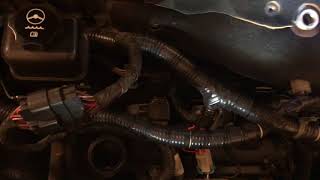
How to confirm: Visually inspect the entire length of the wiring harness leading to the cylinder 1 fuel injector. You may need to remove the plastic engine cover and open the protective loom. Look for melted plastic, exposed copper wire, or shiny rub marks at contact points with the engine. With the key on (engine off), use a multimeter to check for voltage on the injector's control wire (the non-common color wire); if you see constant battery voltage 🎬 Watch a professional diagnostic for an injector control circuit short. where there should be none, it confirms a short to power.
Typical fix: Repair the damaged section of wire using a weatherproof butt connector or by soldering and covering with heat-shrink tubing. Protect the repaired area with new plastic loom or high-quality electrical tape and re-route it to prevent future chafing. In severe cases, an injector connector pigtail may need to be spliced in.
Est. part cost: $5-$35 - Faulty Cylinder 1 Fuel Injector 🟡 Medium Probability → Shop Fuel Injector The 3.6L LLT engine uses direct injection, and the injectors can fail internally over time, developing an electrical short.
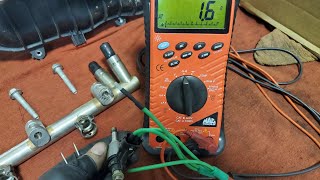
How to confirm: Swap the cylinder 1 fuel injector with an injector from another cylinder (e.g., cylinder 3). Clear the codes and drive the vehicle. If the code changes to P0268 (Cylinder 3 Injector Circuit High), the injector is faulty. Alternatively, measure the injector's resistance with a multimeter. For the 3.6L LLT engine, the specification is approximately 1.5 to 1.6 ohms. A reading of 0 ohms (short) or OL/infinity (open) indicates a bad injector.
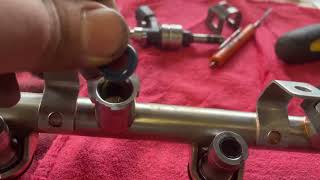
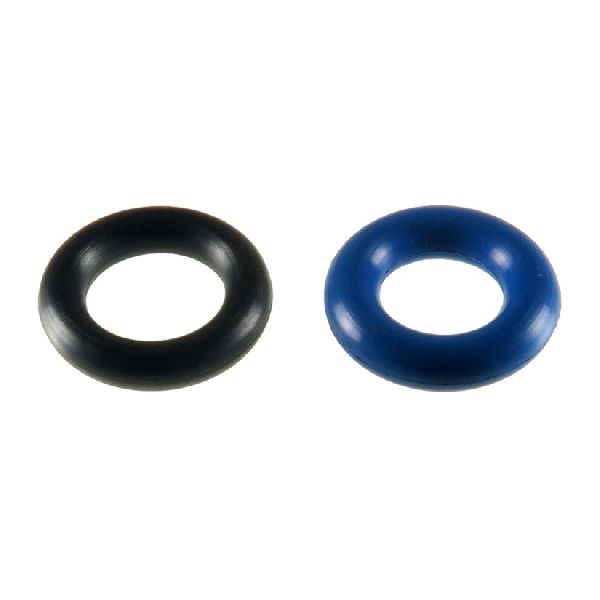
Typical fix: Replace the faulty fuel injector. It is recommended to replace the Teflon seal and O-ring at the same time. These injectors are located under the intake manifold, making replacement a more involved job. 🎬 Watch: Step-by-step 3.6L intake removal and fuel injector replacement guide.
Est. part cost: $75-$180
Rare But Worth Checking
- Faulty Powertrain Control Module (PCM): → Shop Engine Control Module (ECM) This is very rare. The internal driver circuit for the injector can fail, but this should only be considered after thoroughly ruling out wiring and the injector itself. A PCM is expensive and requires programming to the vehicle's VIN.
- Corroded or Damaged Injector Connector: The plastic connector at the fuel injector can become brittle from heat cycles or damaged, leading to a poor connection. The pins inside can also corrode. Inspect the connector for cracks, and check for clean, tight-fitting pins.
Diagnosis Steps
- Read the code with an OBD-II scanner and note any other codes present, especially P0301 or P0201.
- Perform a thorough visual inspection of the fuel injector wiring harness. Remove the engine cover for better access. Focus on the path to cylinder 1, which on the transverse 3.6L V6 is on the rear bank (firewall side), closest to the passenger side. Carefully check for signs of chafing, melting, or corrosion where the harness might contact the intake plenum, valve cover bolts, fuel lines, or cylinder head.
- If no wiring damage is visible, perform an injector swap test. Swap the cylinder 1 injector with another easily accessible injector (like cylinder 3 or 5). This requires removing the upper intake manifold. 🎬 See this walkthrough for accessing injectors on the GM Lambda platform. Clear the codes and run the engine to see if the fault code 'follows' the injector to the new cylinder (e.g., P0268 for cylinder 3).
- If the code does not move after the swap, the issue is in the wiring. Disconnect the injector and the PCM. Use a multimeter to check for continuity on the control and power wires for the cylinder 1 injector circuit.
- Check for a short-to-power. With the injector connector unplugged and the key on (engine off), probe the control wire terminal at the connector. If you read battery voltage, there is a short to power in the harness between the connector and the PCM.
- If the injector was confirmed bad by the swap test or a resistance test (spec: ~1.5-1.6 ohms), replace it.
- If all wiring and the injector test good, the final, least likely possibility is a faulty PCM driver, which may require professional diagnosis.
Parts You'll Likely Need
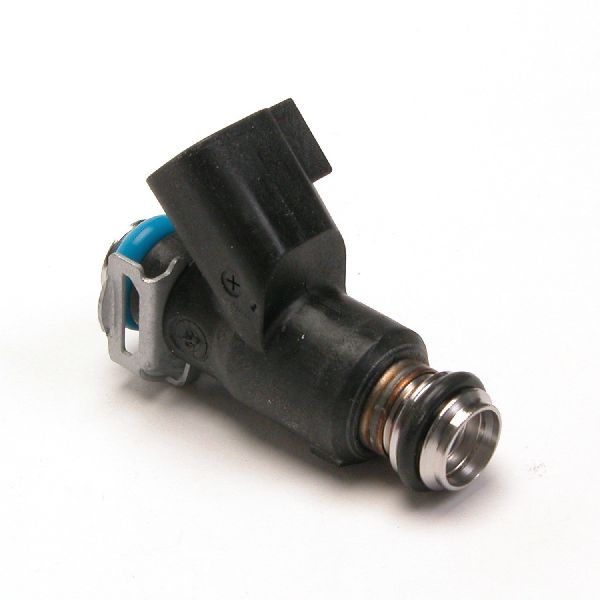
- Fuel Injector
(OEM #12669384)— The fuel injector can short internally, causing the 'Circuit High' fault. This is the second most likely cause after wiring issues. The original part number 12638530 has been superseded by 12669384.
Trusted brands: ACDelco (GM Genuine), Bosch, Standard Motor Products
OEM price range: $110-$180
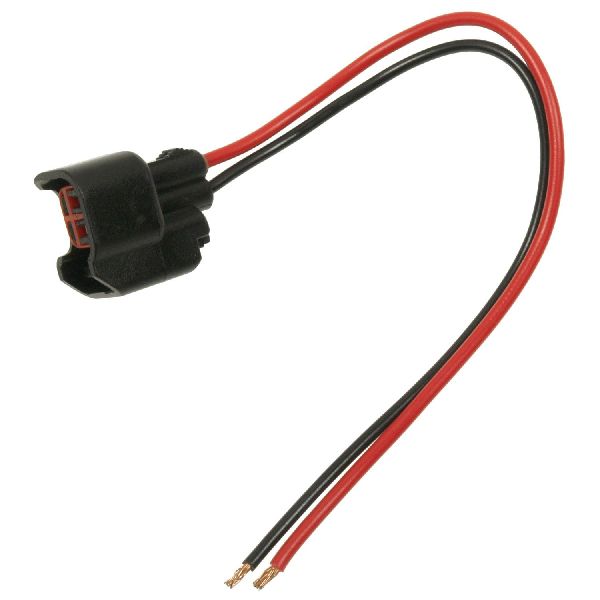
Aftermarket price range: $60-$120 - Fuel Injector Connector Pigtail
(OEM #PT2181)— If the wiring harness is damaged at the connector itself due to heat, chafing, or a broken locking tab, replacing the connector pigtail is the most reliable repair.
Trusted brands: ACDelco, Dorman
OEM price range: $20-$35
Aftermarket price range: $10-$20
Related Codes That Often Appear With This One
- P0301 — P0301 means 'Cylinder 1 Misfire Detected'. Since the P0262 code results in the PCM disabling the cylinder 1 injector to prevent damage, a misfire on that cylinder is a direct and immediate consequence.
- P0201 — P0201 is a general 'Injector Circuit/Open - Cylinder 1' code. It can appear alongside P0262 as both point to an electrical fault in the same circuit and are listed together in TSB #PIP4924D.
- P2146, P2149, P2152, P2155 — These codes relate to the fuel injector group supply voltage circuits. A significant wiring short causing P0262 could potentially affect the entire injector bank, triggering these related codes as well.
Technical Service Bulletins (TSBs) & Recalls
- PIP4924D: Addresses engine misfires and a wide range of injector circuit DTCs, pointing to inspection and repair of the fuel injector wiring harness for chafing or open circuits. This is the primary document for this issue.
Platform-Specific Known Issues
- TSB PIP4924D: The Smoking Gun: This bulletin is the most critical piece of information for this code on this vehicle. It explicitly warns of misfires and various injector circuit DTCs (including P0262) caused by the fuel injector wiring harness rubbing through. It instructs technicians to carefully inspect the harness against the intake plenum, valve cover bolts, fuel lines, and the side of the head under the plenum before replacing any parts.
Mechanic-Grade Diagnostic Values
- Direct Injection Fuel Injector Resistance — expected: 1.5 - 1.6 ohms. Failure: A reading near 0 ohms (short), infinity (open), or significantly outside the expected range indicates a faulty injector coil.
- Injector Circuit Voltage (Initial Pulse) — expected: ~65 Volts. Failure: Absence of this high-voltage opening pulse, viewed on an oscilloscope, indicates a problem with the ECM's internal step-up converter or driver circuit.
- Injector Circuit Voltage (Hold Pulse) — expected: Pulse-Width Modulated (PWM) 12V. Failure: An incorrect or missing 12V PWM signal after the initial opening pulse points to a fault in the ECM driver circuit.
- Injector Control Wire Voltage (KOEO) — expected: 0 Volts. Failure: Reading battery voltage on the control wire with the injector unplugged and Key On, Engine Off (KOEO) confirms a short to power in the wiring harness.
- High-Pressure Fuel System Pressure — expected: ~300 PSI at idle, up to 2,000+ PSI under load. Failure: While not a direct cause of P0262, pressure outside the expected range indicates other fuel system issues.
Scan Tool Commands That Help
- GDS2 / Tech2: Fuel Injector Balance Test — This is a crucial bidirectional test that commands each injector to fire and measures the corresponding drop in fuel rail pressure. It can identify a mechanically sticking or electrically faulty injector that may pass a simple resistance test.
- GDS2 / Tech2: Cylinder Power Balance — This function allows a technician to disable individual cylinders one by one to confirm which cylinder is misfiring, verifying that the fault is on cylinder 1 as the code suggests.
- GDS2 / Tech2: Injector Control Circuit Test Status — Monitor this live data parameter while performing a 'wiggle test' on the wiring harness. The status should read 'OK'. If it changes to 'Fault' while manipulating the harness, it confirms an intermittent wiring issue.
Wiring & Ground Locations
- Cylinder 1 Injector — On the rear cylinder bank (firewall side), closest to the passenger side of the vehicle.. This is the physical location of the component and wiring you need to inspect and test for the P0262 code.
- ECM (Engine Control Module) — Located in the left front of the engine compartment.. This is the source of the injector control signal. The wiring must be tested for continuity and shorts between the ECM connector and the injector connector.
- Connectors X160 / X161 — These are multi-way harness connectors located at the rear of the intake manifold.. These connectors are intermediate test points. Testing here can help isolate whether a wiring fault is in the main engine harness (towards the ECM) or the injector-specific harness under the intake manifold, saving diagnostic time.
- Ground G107 / G108 — G107 is at the rear of the engine; G108 is behind the left headlight assembly.. A poor engine ground can cause a variety of unpredictable electrical issues, including faulty sensor readings and incorrect module behavior. Verifying these grounds are clean and tight is a fundamental step in any electrical diagnosis.
- Cylinder 1 Injector Wires (at ECM) — At the X1 connector of the ECM. The high-side driver wire is Brown/White (Pin 75) and the low-side control wire is a solid color (Brown).. Knowing the specific pins and wire colors allows for precise testing of the entire circuit for opens or shorts directly from the control module.
Real Owner Repair Stories
- Acadia/Traverse/Enclave Owner Forums (Synthesized) (2009-2012 GM Lambda Platform Vehicles (Acadia, Traverse, Enclave, Outlook) with 3.6L V6) — Check engine light with codes P0262 and P0301, rough idle, and engine hesitation.
❌ Tried (didn't work) Replacing the spark plug and ignition coil on cylinder 1., Replacing the cylinder 1 fuel injector without first inspecting the wiring.
✅ What actually fixed it In a high number of documented cases, the final fix was locating a chafed wire in the fuel injector harness, often where it was rubbing against the intake plenum or a valve cover bolt. The repair involved cutting the damaged section, splicing in a new piece of wire with weatherproof connectors or solder/heat shrink, and securing the harness away from the contact point.
OEM Part Supersession History
12611545, 12632255, 12638530→12669384— Part consolidation and potential design improvements.
Heads up: The 3.6L LLT engine (used in the 2009-2010 VUE) has specific injector requirements. While later LFX engines also use a 3.6L displacement, their injectors and some electronics are different. Ensure the part number is correct for the LLT engine.
Model Year Variations Within This Range
- 2009-2010: For the Saturn VUE with the 3.6L V6, no significant part or wiring variations are noted between the 2009 and 2010 model years. Both use the LLT engine and are subject to the wiring harness issues described in TSB PIP4924D.
Helpful Videos
We Have This Part in Stock


The information in this article is provided for general reference and educational purposes only. Vehicle specifications, procedures, and part compatibility can vary by production date, trim level, and region. Always consult your vehicle's factory service manual and verify part numbers before purchasing or performing repairs. Safety-critical components such as airbags, seat belts, and braking systems should be installed by a qualified professional.
- Saturn VUE:
- 🧭 Diagnostic Flowchart
- 🎬 Helpful Videos
- 🛍️ Shop This Part
- What's Unique About the 2009-2010 Saturn VUE
- Symptoms You May Notice
- Most Likely Causes
- Rare But Worth Checking
- Diagnosis Steps
- Parts You'll Likely Need
- Related Codes That Often Appear With This One
- Technical Service Bulletins (TSBs) & Recalls
- Platform-Specific Known Issues
- Mechanic-Grade Diagnostic Values
- Scan Tool Commands That Help
- Wiring & Ground Locations
- Real Owner Repair Stories
- OEM Part Supersession History
- Model Year Variations Within This Range
- 🎟️ Get 5% Off