

P0263 on 2016-2019 Chevrolet Silverado 1500: Cylinder 1 Contribution/Balance Fault Fixes
On 2016-2019 Silverados, P0263 most often means the fuel injector for cylinder #1 is failing or clogged. However, mechanical issues like a collapsed Active Fuel Management (AFM) lifter or rocker arm problem are also common and documented in GM service bulletins. Diagnosis must include checking the fuel system and performing a compression test to rule out a deeper, more expensive mechanical issue before replacing parts.
- P0263 means cylinder 1 isn't pulling its weight, most likely due to a faulty fuel injector.
- On this specific truck, do not ignore the possibility of a mechanical engine problem, such as a failed lifter or rocker arm issue, as noted in GM TSBs.
- Diagnosis should start with the easy things (spark, coil) but a compression test is crucial to rule out serious mechanical failure before replacing expensive fuel system parts.
- If replacing a fuel injector, it's wise to also replace its seals. Many mechanics recommend replacing the entire bank of injectors to prevent future failures.
What's Unique About the 2016-2019 Chevrolet SILVERADO 1500
For the 2016-2019 Silverado with the EcoTec3 V8 engines (5.3L L83, 6.2L L86), this code requires careful diagnosis. While a direct-injection fuel injector is a common culprit, these engines are notorious for valvetrain issues related to the Active Fuel Management (AFM) system. A collapsed or stuck AFM lifter can cause a loss of compression, mimicking a fuel or ignition problem and setting a P0263 code. TSB #PIP-5400 specifically mentions that a lack of lubrication to rocker arms can also cause this code. Therefore, a technician must rule out these known mechanical failures before assuming the fault lies with the injector.
Diagnostic Flowchart
Tap your situation to follow the diagnostic path that matches what you're seeing on this vehicle.
Symptoms You May Notice
- Check Engine Light is on (may be flashing if misfire is severe)
- Rough or vibrating idle.
- Reduced engine power and hesitation during acceleration.
- Noticeable engine misfire, shudder, or jerking.
- Increased fuel consumption.
- Ticking, chirping, or squealing noise from the engine, indicative of a lifter issue.
- Backfire sound from the air filter area (as noted in TSB #PIP-5400).
- Replacing only the spark plug and coil without checking the fuel injector or for mechanical issues.
- Assuming it is always a fuel injector without performing a compression test to rule out a more serious mechanical problem like a collapsed AFM lifter, which is a known issue on these engines.
Most Likely Causes
- Faulty or Clogged Cylinder 1 Fuel Injector 🔴 High Probability → Shop Fuel Injector The EcoTec3 engines use a high-pressure direct injection system. These injectors operate under extreme pressure (up to 15 MPa or ~2175 PSI) and can be susceptible to clogging from carbon buildup or electronic failure over time.
How to confirm: A technician can perform a cylinder balance test with a scan tool (like GM's GDS2) to measure the pressure drop of each injector. Swapping the suspect injector with one from another cylinder is a definitive test; if the code follows the injector (e.g., becomes P0266 for cylinder 2), the injector is bad. An ohmmeter can also be used to check the injector's resistance against spec.
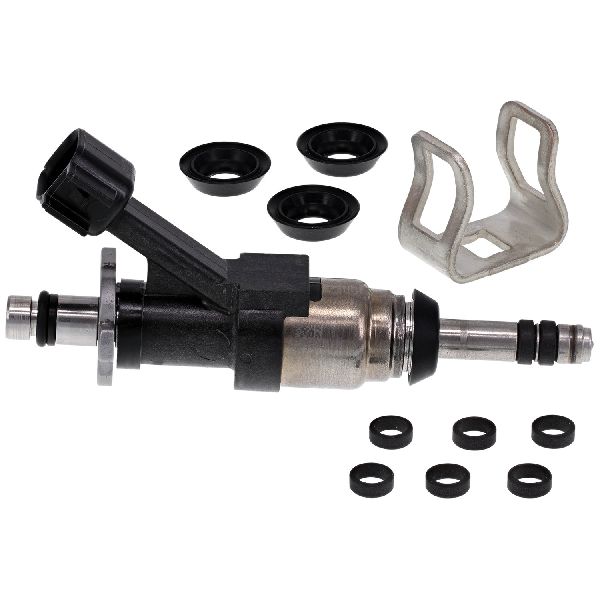
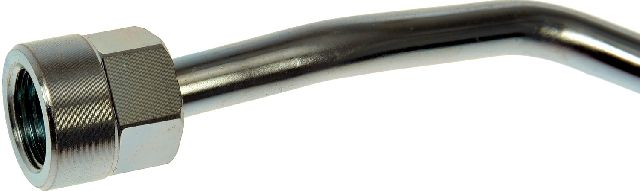
Typical fix: Replace the cylinder 1 fuel injector and its seals. It is often recommended to replace all injectors on the same bank or as a full set at the same time, as labor is intensive. The high-pressure 🎬 Watch: Step-by-step fuel injector replacement for the 5.3L engine. fuel crossover tube is a one-time use part and must be replaced anytime the fuel rail is removed.
Est. part cost: $80-$160 for a single OEM injector. - Mechanical Engine Failure (AFM Lifter/Valvetrain) 🟡 Medium Probability The Active Fuel Management (AFM) lifters on these engines are a well-documented failure point. A lifter can become mechanically collapsed or stuck, often due to oiling issues, resulting in the valves for that cylinder not opening correctly. This leads to a loss of compression and a contribution fault code. TSB #PIP-5400 also links P0263 to a lack of lubrication for the rocker arms.
How to confirm: Listen for a distinct ticking or chirping noise. A simple diagnostic is to remove the valve cover and start the engine briefly to observe rocker arm movement; a collapsed lifter will result in a rocker arm that does not move or moves very little. A compression test and cylinder leak-down test on cylinder 1 will definitively confirm a mechanical sealing issue.
Typical fix: This is a major repair. At a minimum, it involves replacing the faulty bank of AFM lifters, lifter guides, and head gasket. Often, the camshaft lobe is also damaged, requiring replacement of the camshaft as well. Many owners opt to perform an "AFM delete," replacing all AFM components with standard lifters and a non-AFM camshaft, which requires ECU reprogramming. The Valve Lifter 🎬 See this walkthrough on diagnosing and replacing collapsed AFM lifters. Oil Manifold (VLOM) is also often replaced as a precaution.
Est. part cost: $400-$2500+, depending on whether the camshaft is replaced and if an AFM delete kit is used. - Ignition System Problem ⚪ Low Probability While possible, an ignition issue (spark plug, coil pack) will more commonly set a P0301 misfire code first. However, a weak or inconsistent spark could lead to poor combustion and be interpreted as a contribution fault by the PCM.
How to confirm: Inspect the spark plug for cylinder 1 for fouling, wear, or damage. Swap the ignition coil from cylinder 1 with another cylinder (e.g., cylinder 3). Clear the codes and drive the vehicle. If the code changes to P0269 (Cylinder 3 Contribution Fault), the ignition coil is faulty.
Typical fix: Replace the spark plug and/or ignition coil for cylinder 1.
Est. part cost: $10-$75
Rare But Worth Checking
- Wiring Harness or Connector Issue: The wiring to the fuel injector can become damaged from heat or vibration, or chafe against engine components, causing an intermittent connection. Check the connector at the injector for corrosion or loose pins and test for continuity from the PCM to the injector.
- Low Compression (Piston/Rings/Head Gasket): Beyond valvetrain issues, worn piston rings or a failing head gasket could cause low compression in cylinder 1, but this is less common than injector or lifter failure on this platform. A cylinder leak-down test would help pinpoint the source of the compression loss.
- PCM/ECM Software Anomaly: TSB 17-NA-171 suggests that in some cases, a variety of driveability issues and codes, including the P026x series, can be caused by a software anomaly in the Engine Control Module (ECM) or Transmission Control Module (TCM). The fix is to reprogram the modules to the latest software version.
Diagnosis Steps
- Use an OBD-II scanner to confirm P0263 and check for any other stored codes. Review freeze-frame data.
- Check for Technical Service Bulletins (TSBs) like PIP-5400 (rocker arm lubrication), 17-NA-171 (ECM/TCM software), and others related to AFM lifter failure.
- Listen for a ticking/clicking sound from the engine. A simple 'screwdriver stethoscope' test on the fuel injector should yield a consistent clicking sound; silence or an irregular pattern suggests a problem.
- Swap the ignition coil from cylinder 1 with another cylinder (e.g., cylinder 3). If the code moves to P0269, the coil is bad.
- Inspect the cylinder 1 spark plug for signs of wear, oil fouling, or fuel soaking.
- Perform an engine compression test on cylinder 1. A significant drop in pressure compared to other cylinders points to a mechanical problem (lifter, rings, head gasket).
- If compression is good, test the fuel injector. Use a scan tool's 'Injector Balance Test' to check its performance. Alternatively, check the injector's electrical resistance with a multimeter.
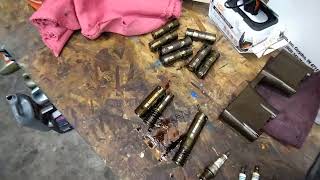
- If compression is low, remove the valve cover to visually inspect the valvetrain. Start the engine briefly and watch the rocker arms for cylinder 1. If one is not moving, a lifter 🎬 Watch: How to diagnose a misfire caused by lifter failure. has collapsed.
- If a lifter has failed, inspect the camshaft lobe for damage through the lifter bore before beginning repairs, as the cam will likely need replacement too.
- Inspect the wiring harness for the cylinder 1 injector for any signs of chafing, melting, or corrosion at the connector.
Parts You'll Likely Need
- Fuel Injector
(OEM #12668390 (superseded by 12681212, 12710481))— This is a frequent cause of P0263. The injector may be clogged or have failed electronically. Note: The high-pressure fuel crossover tube (e.g., GM 12679693) must also be replaced.
Trusted brands: ACDelco, Bosch
OEM price range: $80-$160
Aftermarket price range: $50-$110 - AFM/DFM Lifter Set
(OEM #12648846 (part of kit))— A collapsed AFM lifter is a very common mechanical failure on these engines that directly causes contribution codes. The entire set for one bank is typically replaced.
Trusted brands: ACDelco, Chevrolet Performance
OEM price range: $200-$400 for a set of 8
Aftermarket price range: $150-$300
Related Codes That Often Appear With This One
- P0301 — P0301 is a generic misfire code for cylinder 1. A contribution/balance fault is a specific type of misfire, so it's very common to see both codes together.
- P0300 — This indicates random/multiple cylinder misfires. If the underlying cause of P0263 (like a failing VLOM or widespread camshaft damage) starts to affect other cylinders, P0300 may also appear.
- P050D — This code means "Cold Start Rough Idle." It often appears alongside lifter-related misfire codes, as a collapsed lifter can cause a very unstable idle, especially when the engine is cold.
- P0266, P0269, etc. — These are the contribution/balance fault codes for other cylinders. Seeing them alongside P0263 could point to a systemic issue like low fuel pressure or widespread mechanical problems, as mentioned in TSB #PIP-5400 and TSB #17-NA-171.
Technical Service Bulletins (TSBs) & Recalls
- PIP-5400: Mentions that codes including P0263 can be caused by a lack of lubrication to rocker arms and valves, resulting in noise and misfires.
- 17-NA-171: Addresses a wide range of driveability complaints and DTCs, including P0263, that may be resolved by reprogramming the ECM and TCM with the latest software calibration.
- 15-06-01-002K: A key bulletin (revised multiple times) addressing engine misfires (P0300) caused by mechanically collapsed or stuck AFM lifters, often requiring lifter and camshaft replacement. While not directly for P0263, it describes the root mechanical failure that often causes it.
Platform-Specific Known Issues
- TSB #PIP-5400 directly connects codes P0263, P0266, etc., to potential mechanical engine noise and notes the cause may be a lack of lubrication to the rocker arms and valves.
- Failures of the Active Fuel Management (AFM) system, specifically the valve lifters, are a well-documented problem on these V8 engines and can directly lead to single-cylinder contribution faults. This is often caused by a faulty lifter, but can also be triggered by issues with the Valve Lifter Oil Manifold (VLOM) which controls oil flow to the lifters.
- TSB #17-NA-171 notes that various engine codes, including P0263, can be set due to a software anomaly, recommending a re-program of the ECM and TCM as a potential fix.
Mechanic-Grade Diagnostic Values
- Low-Pressure Fuel System (Key On, Pump Running) — expected: 320-580 kPa (46-84 PSI). Failure: Pressure below this range indicates a weak in-tank pump or clogged filter. Pressure should not drop more than 34 kPa (5 PSI) in one minute.
- High-Pressure Fuel System (Engine Idling) — expected: 1.9-5.0 MPa (276-725 PSI). Failure: Readings outside this range suggest an issue with the high-pressure fuel pump (HPFP) or the fuel rail pressure sensor.
- High-Pressure Fuel System (Maximum) — expected: Up to 15 MPa (approx. 2,175 PSI). Failure: The system's inability to reach high pressure under load points to a failing HPFP.
- Fuel Injector Resistance (Direct Injection) — expected: Approximately 1.5 to 2.0 ohms is a common reading, though GM does not publish a specific value. The key is consistency across all injectors.. Failure: An injector with a significantly different resistance reading (e.g., open circuit or shorted) from the others is faulty. A reading of 1.6 ohms was seen on a known good engine.
Scan Tool Commands That Help
- GDS2 (or equivalent professional scan tool): Fuel Injector Balance Test — This is a critical bidirectional test for P0263. The tool commands the fuel pump on, then individually pulses each injector while monitoring the drop in fuel rail pressure. An injector causing a significantly different pressure drop than the others is faulty. The acceptable variance is typically that no injector's pressure drop differs from the average by more than 20%.
- GDS2 (or equivalent professional scan tool): Cylinder Power Balance — This function deactivates one cylinder at a time while the engine is running. The technician feels for the change in engine vibration or notes the RPM drop. If deactivating cylinder 1 causes no change in engine roughness, it confirms that cylinder was not contributing power in the first place.
Wiring & Ground Locations
- G104 — On the rear of the driver's side (left) cylinder head.. This is a primary engine ground point for the engine wiring harness. A loose or corroded connection here can cause erratic behavior in sensors and actuators, including the fuel injectors.
- ECM Connectors (X1, X2, X3) — On the Engine Control Module (ECM) itself.. The fuel injector circuits run from the ECM to the injectors. When diagnosing a wiring fault, a technician needs to identify the correct connector and pin for cylinder 1 to test for continuity and voltage. Pinouts are available in service manuals and online resources. For example, on a 2015 L83, the injector control wires are located in the X1 and X3 connectors.
- Engine Harness Grounds — There are multiple grounds integrated into the harness, typically one for each cylinder bank, that bolt to the back of the cylinder heads.. The harness for bank 1 (which includes cylinder 1) has a dedicated ground. Ensuring this is clean and tight is a fundamental step in diagnosing any electrical fault on that bank.
Real Owner Repair Stories
- LS1TECH Forum User (2017 Silverado 1500, 5.3L L83) — Cylinder 2 misfire (P0302), rough running.
❌ Tried (didn't work) Replaced spark plugs and ignition coil #2., Replaced fuel injector #2 with a new AC Delco part.
✅ What actually fixed it The user was still diagnosing at the end of the thread, but had confirmed good compression (210 PSI) and that the new injector was still showing a higher pressure drop on a balance test, indicating the problem was likely in the wiring or the ECM driver for that injector, not the components themselves. This highlights that part replacement is not always the fix.
OEM Part Supersession History
12668390→12681212, 12710481, 12698484— Standard part evolution and supplier changes.
Heads up: GM service information notes that injectors are flow-rated as 'low,' 'nominal,' or 'high.' While functionally the same, it is critical that all eight injectors in the engine match to ensure balanced performance.12576400 (AFM Lifter)→12648846 (also known as ACDelco HL128)— Likely minor design revisions to improve durability.
Heads up: Part number 12648846 is a standard hydraulic roller lifter and is explicitly listed as NOT for use in models with Active Fuel Management (AFM). This is a critical distinction for repair, as using a non-AFM lifter in an AFM engine will cause system failure. The correct AFM lifter is part of a specific kit.
Model Year Variations Within This Range
- 2019: The 2019 model year was a transition. Some trucks were the outgoing 3rd generation with the 5.3L L83 (AFM) and 6.2L L86 (AFM) engines. The all-new 4th generation Silverado, also sold as a 2019 model, introduced the 5.3L L84 and 6.2L L87 engines, which use the more advanced Dynamic Fuel Management (DFM). DFM uses deactivating lifters on all 8 cylinders, whereas AFM only has them on 4. This is a critical difference when diagnosing valvetrain issues, as the parts are not interchangeable.
Helpful Videos

We Have This Part in Stock



The information in this article is provided for general reference and educational purposes only. Vehicle specifications, procedures, and part compatibility can vary by production date, trim level, and region. Always consult your vehicle's factory service manual and verify part numbers before purchasing or performing repairs. Safety-critical components such as airbags, seat belts, and braking systems should be installed by a qualified professional.
- Chevrolet SILVERADO 1500:
- 🧭 Diagnostic Flowchart
- 🎬 Helpful Videos
- 🛍️ Shop This Part
- What's Unique About the 2016-2019 Chevrolet SILVERADO 1500
- Symptoms You May Notice
- Most Likely Causes
- Rare But Worth Checking
- Diagnosis Steps
- Parts You'll Likely Need
- Related Codes That Often Appear With This One
- Technical Service Bulletins (TSBs) & Recalls
- Platform-Specific Known Issues
- Mechanic-Grade Diagnostic Values
- Scan Tool Commands That Help
- Wiring & Ground Locations
- Real Owner Repair Stories
- OEM Part Supersession History
- Model Year Variations Within This Range
- 🎟️ Get 5% Off