

P0263 on 2016-2019 GMC Sierra 1500: Cylinder 1 Contribution Fault Causes & Fixes
P0263 on a GMC Sierra most often points to a faulty fuel injector on cylinder 1. However, on the 5.3L and 6.2L V8s, it is also a very common symptom of a collapsed AFM/DFM lifter, which is a major mechanical failure. Diagnosis should rule out the injector and ignition system before assuming the more severe lifter issue, which is a well-documented problem for this platform.
- P0263 means cylinder 1 isn't pulling its weight.
- The most likely causes are a bad fuel injector or a failed AFM/DFM lifter (on V8s).
- Always diagnose the simpler, cheaper problems first: swap the cylinder 1 spark plug, ignition coil, and fuel injector with another cylinder to see if the problem moves.
- A ticking engine noise combined with P0263 is a strong sign of the common and serious lifter failure issue.
- If a lifter has failed, a complete repair includes replacing the lifters, guides, and inspecting/replacing the camshaft.
What's Unique About the 2016-2019 Gmc SIERRA 1500
While P0263 can mean a bad fuel injector on any vehicle, on the 2016-2019 Sierra with the 5.3L or 6.2L V8, this code is frequently a precursor to diagnosing a failed lifter. These engines use an Active or Dynamic Fuel Management (AFM/DFM) system with special lifters that are a known failure point. A collapsed lifter will cause a complete loss of power in the cylinder, logging a contribution/balance fault. This turns a common fuel system code into a potential indicator of a significant and expensive mechanical engine repair. TSB #PIP-5400 directly links this code to valvetrain lubrication issues leading to rocker arm and valve problems.
Diagnostic Flowchart
Tap your situation to follow the diagnostic path that matches what you're seeing on this vehicle.
Generation note: This range covers the end of the third generation (K2XX, 2014-2018) and the beginning of the fourth generation (T1XX, 2019-present). The 2019 model year includes both the new T1XX body style and the previous generation sold as the 'Sierra 1500 Limited'. The primary V8 engines (5.3L L83, 6.2L L86) and their associated lifter issues are present across these models. The new-for-2019 L84 engine introduced Dynamic Fuel Management (DFM), an evolution of the previous Active Fuel Management (AFM) system.
Symptoms You May Notice
- Engine running rough, especially at idle
- Noticeable vibration or shaking (misfire).
- Reduced engine power and poor acceleration.
- Check Engine Light is illuminated
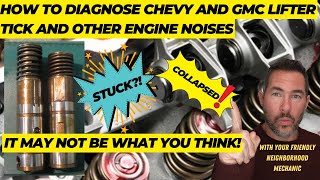
- A distinct ticking or tapping sound from the engine, indicating a possible lifter issue. 🎬 Watch: How to tell if that ticking is a failed lifter.
- A backfire sound from the air filter, as noted in TSB #PIP-5400.
- Service stabilitrak and traction control warnings may appear on the dash, as reported by owners.
- Replacing only the spark plug when the issue is a fuel injector or a mechanical failure.
- Replacing the fuel injector when the underlying cause is a collapsed lifter, leading to wasted time and money. This is a very common mistake on this platform.
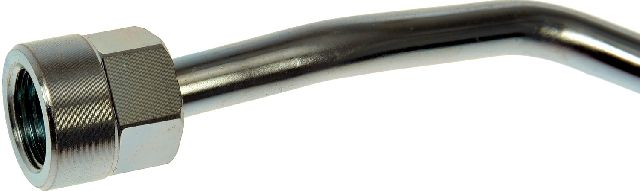
- Not replacing the one-time-use fuel rail crossover pipe after an injector job, which can lead to dangerous fuel leaks.
Most Likely Causes
- Faulty or Clogged Fuel Injector 🔴 High Probability → Shop Fuel Injector GM issued a special coverage program (#N182198000) for injector issues on some 2016-2017 models in specific states, indicating a higher-than-normal failure rate. TSB 20-NA-098 also highlights the complexity of replacing these injectors, as they are flow-matched to the engine, and installing an incorrect one can cause further issues.
How to confirm: Swap the cylinder 1 fuel injector with another cylinder (e.g., cylinder 3). Clear the codes and drive. If the code changes to P0269 (Cylinder 3 Contribution/Balance), the injector is the faulty component. A professional can also perform a fuel injector balance test using a GM-specific tool (AFIT CH-47976) as outlined in service literature, or a Cylinder Power Balance test using a GDS2 scan tool. 🎬 See how to perform a cylinder power balance test.
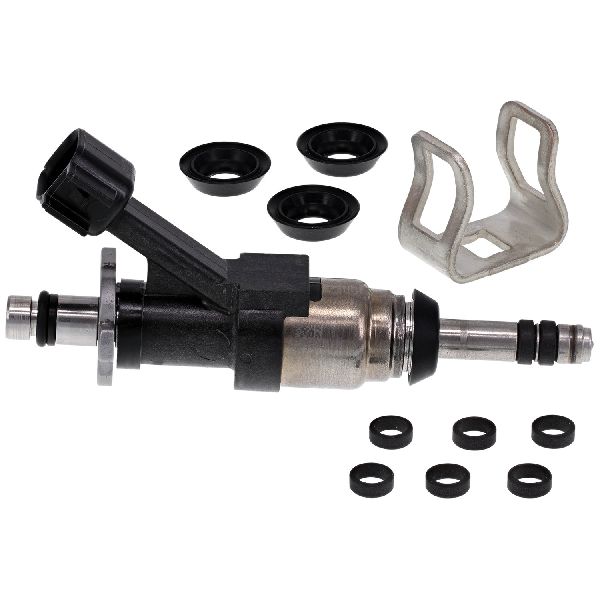
Typical fix: Replace the fuel injector for cylinder 1 and its seals. It is often recommended to replace all injectors on that bank or all eight at the same time. 🎬 Watch this step-by-step guide to replacing the fuel injectors. The high-pressure fuel line crossover tube is a one-time use part and must be replaced anytime the fuel rail is removed.
Est. part cost: $40-$150 per injector - Collapsed AFM/DFM Lifter 🔴 High Probability → Shop Engine Valve Lifter The Active Fuel Management (AFM) and Dynamic Fuel Management (DFM) systems in the 5.3L and 6.2L V8s use complex lifters that are a well-documented, common failure point, often leading to camshaft damage. TSB #PIP-5400 specifically links P0263 to valvetrain lubrication issues, and TSB 15-06-01-002F details the diagnosis of a mechanically collapsed or stuck AFM lifter.
How to confirm: After ruling out fuel and ignition, perform a compression test on cylinder 1. A very low or zero reading points to a mechanical issue. Visually confirm by removing the valve cover and observing if the rocker arms for cylinder 1 are moving while the engine is cranked. A stationary rocker arm indicates a collapsed lifter.
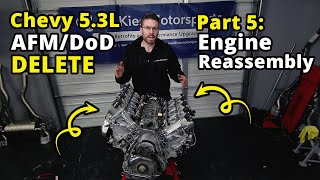
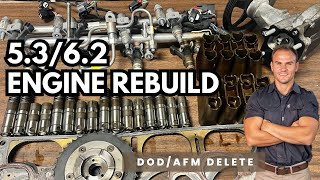
Typical fix: This is an extensive repair. It requires replacing all AFM/DFM lifters, the lifter guides, and often the camshaft, which is typically damaged by the failed lifter. Many owners and shops opt for a full AFM/DFM delete kit, which replaces the failure-prone components with standard, more robust parts and requires an ECU tune to disable the system.
Est. part cost: $400-$1500 for parts (lifters, camshaft, gaskets, delete kit) - Faulty Ignition Coil or Spark Plug 🟡 Medium Probability → Shop Ignition Coil
How to confirm: Swap the ignition coil and spark plug from cylinder 1 with another cylinder. If the fault code moves to the new cylinder (e.g., P0269), the coil or plug is bad.
Typical fix: Replace the faulty ignition coil and/or spark plug. It's good practice to replace all spark plugs if they are near the end of their service life.
Est. part cost: $30-$80 for a coil, $5-$20 for a spark plug - Injector Circuit Fault ⚪ Low Probability
How to confirm: Use a 'noid light' to test the electrical connector for the cylinder 1 injector. The light should flash steadily as the engine runs, indicating the PCM is sending a signal. If there is no flash or a weak flash, inspect the wiring harness for damage between the injector and the PCM.
Typical fix: Repair the damaged section of the wiring harness or clean/replace the connector.
Est. part cost: $10-$50 for wiring repair supplies
Rare But Worth Checking
- Low Fuel Pressure: A failing high-pressure fuel pump or clogged fuel filter can cause a lean condition that might be isolated to one cylinder initially. Check fuel rail pressure to confirm it is within spec. TSB 20-NA-197 discusses issues with the fuel pressure sensor connector that can lead to pressure-related DTCs.
- PCM Failure or Software Anomaly: In very rare cases, the injector driver circuit within the Powertrain Control Module (PCM) can fail. More commonly, a software issue could be the cause. TSB 17-NA-171 lists P0263 among many codes that may be resolved by reprogramming the ECM and TCM to the latest software calibration.
Diagnosis Steps
- Read all stored DTCs with an OBD-II scanner. Note any other codes present, especially P0301, P0300, or P050D.
- Check freeze frame data to see the engine conditions when the code was set.
- Check for relevant TSBs, such as 17-NA-171, which may suggest an ECM reflash as a first step.
- Swap the ignition coil and spark plug from cylinder 1 to another cylinder (e.g., cylinder 3). Clear codes and test drive. If the code changes to P0269, the coil/plug is the issue.
- If the code remains P0263, swap the fuel injector from cylinder 1 to cylinder 3. Clear codes and test drive. If the code changes to P0269, the injector is faulty.
- If the code remains P0263, test the injector wiring harness connector with a noid light to ensure it's receiving a pulse from the PCM.
- If fuel and ignition systems are confirmed to be working, perform a cylinder compression test on cylinder 1. A reading significantly lower than other cylinders indicates a mechanical problem.
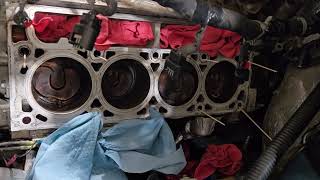
- If compression is low, remove the driver's side valve cover and crank the engine. Visually inspect the two rocker arms for cylinder 1 (front-most cylinder). If one or both are not moving, a lifter has collapsed.
- If a lifter has failed, inspect the camshaft lobe for damage using a borescope or by removing the lifters. Camshaft damage is very common with lifter failure and necessitates camshaft replacement.
Parts You'll Likely Need
- Fuel Injector
(OEM #12668390 (may be superseded by 12681212 or kit number 12698484))— This is the most common non-mechanical failure for this code. Failures were common enough for GM to issue a special coverage program. It's critical to use the correct flow-matched part number when replacing.
Trusted brands: ACDelco, Bosch
OEM price range: $80-$150
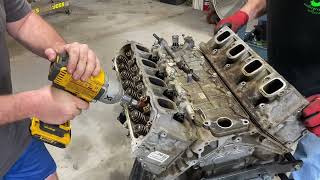
Aftermarket price range: $40-$90 - AFM/DFM Lifter Kit — A collapsed lifter is a very common mechanical failure on these V8 engines that directly causes code P0263. Replacement requires removing the cylinder head.
Trusted brands: ACDelco, Sealed Power, Melling
OEM price range: $300-$500
Aftermarket price range: $200-$400 - AFM/DFM Delete Kit — A permanent solution to prevent future lifter failure. This kit replaces all AFM/DFM components with standard, more reliable parts. Requires an ECU tune to disable the system.
Trusted brands: Texas Speed & Performance, BTR (Brian Tooley Racing), Summit Racing
OEM price range: N/A
Aftermarket price range: $400-$800
Related Codes That Often Appear With This One
- P0301 — P0301 is a specific misfire code for cylinder 1. A contribution/balance fault is a type of misfire, so these codes often appear together.
- P050D — This code indicates a rough idle on a cold start, which can be a symptom of a failing lifter or a carbon-fouled injector before it gets bad enough to set a constant contribution fault.
- P0300 — A random/multiple cylinder misfire code that can accompany P0263 if the underlying issue (like a failing lifter) begins to affect engine stability more broadly.
Technical Service Bulletins (TSBs) & Recalls
- PIP-5400: Links P0263 and other contribution codes to a lack of lubrication in the valvetrain, causing noise and backfires.
- 17-NA-171: Suggests that an anomaly in the ECM/TCM can cause a long list of DTCs, including P0263, and the recommended fix is to reprogram the modules with the latest software.
- N182198000: A Special Coverage program (not a TSB) extending warranty on fuel injectors to 10 years/150,000 miles for certain 2016-17 models in specific states due to a high failure rate.
- 15-06-01-002F: Provides diagnostic guidance for engine misfires (P0300) caused by mechanically collapsed or stuck AFM lifters.
- 20-NA-098: Informs technicians that replacement fuel injectors must be the correct flow-rate part number to avoid fuel trim and misfire issues after a repair.
Platform-Specific Known Issues
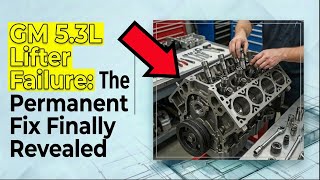
- Active Fuel Management (AFM/DFM) Lifter Failure: The most significant issue for the 5.3L and 6.2L V8 engines is the high failure rate of the specialized lifters used for cylinder deactivation. A lifter can become stuck or collapse, ceasing valve operation for that cylinder. This results in a dead cylinder, triggering codes like P0263 and P0301, and often requires replacement of the lifters, lifter guides, and camshaft.
Mechanic-Grade Diagnostic Values
- Fuel Injector Resistance — expected: 10 - 18 ohms. Failure: A reading outside this range, or a reading that differs significantly from the other injectors, indicates a faulty injector coil.
- Cylinder Power Balance RPM Drop — expected: A noticeable drop in engine RPM when the cylinder is deactivated.. Failure: Little or no drop in RPM when cylinder 1 is deactivated via a scan tool, indicating it was not contributing power.
Scan Tool Commands That Help
- GDS2 (or equivalent professional scanner): Cylinder Power Balance Test — This is a primary diagnostic step to confirm which cylinder is not contributing. The tool deactivates each cylinder one by one and measures the RPM drop. If deactivating cylinder 1 causes no change in RPM, it confirms the fault is isolated to that cylinder.
- GDS2 (or equivalent professional scanner): Injector Balance Test — Used to test the flow rate of an injector with the engine off (KOEO). This can help identify a clogged or restricted injector that might pass an electrical resistance test.
- GDS2 (or equivalent professional scanner): Injector Quantity Adjustment (IMA) / Coding — After replacing a fuel injector, the new injector's flow characteristics may need to be programmed into the ECM to ensure accurate fuel delivery and prevent setting balance faults.
Wiring & Ground Locations
- G103 — Located at the left rear of the engine compartment on the cowl, above the brake booster.. This is a major ground point that serves the Engine Control Module (ECM). A poor connection here can cause erratic ECM behavior, potentially leading to false codes or incorrect injector driver operation.
- G102 — Located at the left rear of the engine.. This ground serves all 8 ignition coils. While a fault here would likely cause multiple misfires (P0300), a borderline connection could potentially affect one cylinder more than others intermittently.
- Injector Harness Connector — At the fuel injector for cylinder 1 (front-most cylinder on the driver's side).. The pins within the plastic connector can become unseated or pushed back, especially after being disconnected for testing. This creates a poor or intermittent connection that will cause a P0263 fault even with a good injector and harness.
Real Owner Repair Stories
- YouTube user Kyle's Project Cars (2004 Ford Powerstroke (Note: Not a GM vehicle, but illustrates a highly relevant diagnostic trap)) — P0263 Cylinder 1 Contribution/Balance fault after replacing injectors.
❌ Tried (didn't work) Swapping the fuel injector from cylinder 1 to cylinder 3; the fault stayed on cylinder 1.
✅ What actually fixed it The issue was a pin inside the injector's electrical harness connector that was not fully seated. After being pushed back into place, the connection was restored and the contribution/balance fault was resolved.
OEM Part Supersession History
12668390→12681212, 12698484 (as a kit), 12710481— Standard part evolution and updates by the manufacturer.
Heads up: According to a supplier, you may receive PN 12681212 when ordering 12668390, and there is no functional difference. It is critical to use injectors with the same flow rate across all cylinders.
Model Year Variations Within This Range
- 2016-2018 (and 2019 'Limited' models): These models primarily use the L83 V8 engine with Active Fuel Management (AFM). In this system, only four specific cylinders (1, 7, 4, 6) have the deactivating lifters that are prone to failure. Since cylinder 1 is an AFM cylinder, a lifter failure is a high-probability cause for P0263.
- 2019 (new T1XX body style): The new 2019 models introduced the L84 V8 engine with Dynamic Fuel Management (DFM) on most trims. DFM is more advanced and can deactivate *any* of the 8 cylinders. This means all 8 lifters are the complex, failure-prone type, increasing the overall likelihood of a lifter failure on any given cylinder compared to AFM.
Helpful Videos


We Have This Part in Stock



The information in this article is provided for general reference and educational purposes only. Vehicle specifications, procedures, and part compatibility can vary by production date, trim level, and region. Always consult your vehicle's factory service manual and verify part numbers before purchasing or performing repairs. Safety-critical components such as airbags, seat belts, and braking systems should be installed by a qualified professional.
- Gmc SIERRA 1500:
- 🧭 Diagnostic Flowchart
- 🎬 Helpful Videos
- 🛍️ Shop This Part
- What's Unique About the 2016-2019 Gmc SIERRA 1500
- Symptoms You May Notice
- Most Likely Causes
- Rare But Worth Checking
- Diagnosis Steps
- Parts You'll Likely Need
- Related Codes That Often Appear With This One
- Technical Service Bulletins (TSBs) & Recalls
- Platform-Specific Known Issues
- Mechanic-Grade Diagnostic Values
- Scan Tool Commands That Help
- Wiring & Ground Locations
- Real Owner Repair Stories
- OEM Part Supersession History
- Model Year Variations Within This Range
- 🎟️ Get 5% Off