

P0263 on 2017-2018 GMC Sierra 3500: Cylinder 1 Imbalance Causes & Fixes
On a 2017-2018 Sierra 3500 with the 6.6L L5P Duramax engine, code P0263 almost always points to a problem with the cylinder #1 fuel injector or its electrical connector. The most common fix is replacing the faulty injector connector pigtail, which suffers from poor pin tension and fretting corrosion. If the connector is not the issue, the next step is replacing the injector itself.
- P0263 on your L5P Duramax means cylinder #1 is underperforming.
- Before spending hundreds on a new injector, always inspect and test the injector's electrical connector first; it's the most common point of failure.
- Ignoring this code can lead to a rough running engine, poor fuel mileage, and costly damage to the DPF.
- This repair is complex due to the high-pressure fuel system and the potential need for electronic programming, making it best suited for a professional.
- If replacing the injector, you must also replace the one-time-use high-pressure fuel line connected to it.
What's Unique About the 2017-2018 Gmc SIERRA 3500
The 2017-2018 Sierra 3500 uses the L5P Duramax engine, which features a sophisticated high-pressure common-rail fuel system with Denso solenoid-style injectors. While the injectors themselves are robust, a widely recognized weak point on this platform is the injector's electrical connector. These connectors are prone to poor pin tension and fretting corrosion, which is a fine black or brown dust caused by micro-vibrations between the terminals. This dust increases electrical resistance, leading to intermittent connection and causing contribution/balance faults. As a result, a P0263 code on an L5P is very often an electrical issue at the injector, not necessarily a failed injector. Some aftermarket suppliers even offer pigtails with gold-plated pins for superior connectivity.
Diagnostic Flowchart
Tap your situation to follow the diagnostic path that matches what you're seeing on this vehicle.
Symptoms You May Notice
- Check Engine Light is on
- Rough or shaking idle, the truck may vibrate noticeably
- Reduced engine power and sluggish acceleration, may enter 'limp mode'
- Engine hesitation or stumbling
- Noticeably worse fuel economy
- Black or white smoke from the exhaust
- Audible engine miss
- Replacing the fuel injector when only the inexpensive electrical connector is faulty. This is a very common mistake, as confirmed by technicians and TSB 23-NA-027.
- Replacing fuel filters, which, while good maintenance, will not fix a failed injector or connector.
- Assuming a balance rate issue is always the injector, when it could be a sign of a mechanical problem like low compression.
Most Likely Causes
- Faulty Cylinder 1 Injector Electrical Connector 🔴 High Probability The injector connectors on the L5P Duramax are a known failure point due to engine vibration causing poor terminal tension and fretting corrosion. This creates a black, powdery residue that increases resistance and causes an intermittent connection.
How to confirm: With the engine running, carefully wiggle the injector connector for cylinder #1. If the engine's idle changes or stumbles, the connector is faulty. A visual inspection may reveal black or brown dust on the connector face, which is a clear sign of fretting. A technician can also test the pin tension with a special tool (J-35616-35) as a loose fit is a definitive failure.
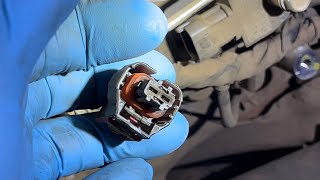
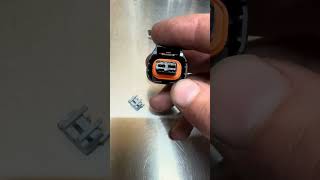
Typical fix: Replace the injector connector pigtail. 🎬 Watch: How to replace your L5P injector pigtail correctly. This involves cutting the old connector off and splicing a new one onto the factory harness using heat-shrink butt connectors. Apply dielectric grease to the new connector before installation to prevent moisture intrusion and corrosion.
Est. part cost: $25-$60 - Failed Cylinder 1 Fuel Injector 🟡 Medium Probability → Shop Fuel Injector High-pressure injectors can fail internally due to wear, contamination from poor fuel quality, or an electrical fault within the injector's solenoid body. While the Denso injectors on the L5P are generally reliable, they are not immune to failure, though often not until higher mileage (over 300,000 miles).
How to confirm: Use a professional scan tool to perform a cylinder balance test; cylinder #1 will show a rate significantly different from the others (e.g., beyond +/- 4.0 mm³ in Park). To definitively confirm, swap the cylinder #1 injector with another cylinder (e.g., cylinder #3, which is more accessible). If the code changes to P0269 (Cylinder 3 Contribution/Balance), the injector is bad.
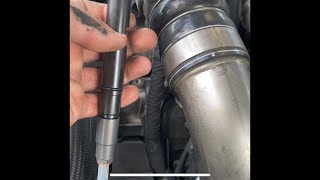
Typical fix: Replace the cylinder #1 fuel injector and its associated one-time-use high-pressure fuel line. 🎬 See this walkthrough for replacing a Duramax fuel injector. The new injector's IQA code must be programmed to the ECM using a scan tool.
Est. part cost: $280-$370 - Low Cylinder Compression ⚪ Low Probability
How to confirm: Perform a relative compression test using a capable scan tool or a manual compression test with a gauge. This checks for mechanical engine issues like worn piston rings, leaking valves, or a bad head gasket, which can also cause a cylinder to underperform.
Typical fix: Requires significant engine repair, such as rebuilding the top end or the entire engine, depending on the cause.
Est. part cost: $1000+
Rare But Worth Checking
- Powertrain Control Module (PCM) Fault: → Shop Engine Control Module (ECM) This is extremely rare. The PCM's internal driver for the injector could fail. This should only be considered after all other possibilities, including wiring between the PCM and injector, have been exhaustively tested.
- Soot-Clogged MAP Sensor: A Manifold Absolute Pressure (MAP) sensor heavily clogged with soot can cause incorrect readings, leading the ECM to set various performance and fuel quantity codes, sometimes in conjunction with injector codes. While it may not directly cause P0263, it's a common L5P issue that can create a complex diagnostic picture. Cleaning or replacing the MAP sensor is a known fix for related codes like P026D.
Diagnosis Steps
- Connect a professional OBD-II scanner and check for any other codes stored alongside P0263. Note any circuit codes (P0201) or misfire codes (P0301).
- Use the scanner's live data function to view the cylinder balance rates at operating temperature (coolant over 180°F) in Park. Confirm that cylinder #1 is the outlier, typically showing a value greater than +4.0 mm³ or less than -4.0 mm³.
- Visually inspect the cylinder #1 injector connector and its wiring. Look for obvious damage, but more specifically for a fine black or brown dust around the seal, which indicates fretting corrosion. 🎬 Watch: Identifying terminal fretting and injector harness misfires.
- Wiggle Test: With the engine idling, carefully wiggle the connector for the #1 injector. If the idle stumbles, changes, or the engine stalls, the connector has poor pin tension and is the culprit. The circuit may disable until the next key cycle.
- If the wiggle test is inconclusive, disconnect the connector and test terminal tension using a proper test probe like J-35616-35. The female terminals in the connector should have a firm grip. A loose fit confirms a bad connector.
- If the connector seems good, proceed to swap components. Swap the cylinder #1 injector with the cylinder #3 injector (both on the passenger side, #3 is easier to access than #1). This requires disconnecting fuel lines and removing the injectors.
- Clear the codes and drive the vehicle. If the code returns as P0269 (Cylinder 3 Contribution/Balance), the fuel injector you moved is faulty and must be replaced.
- If the code remains P0263 after the swap, the problem lies in the wiring harness between the ECM and the injector. Test the wiring for continuity and shorts between the ECM connector (X2) and the injector connector.
- As a final step if all else fails, perform a mechanical compression test on cylinder #1 to rule out internal engine problems.
Parts You'll Likely Need
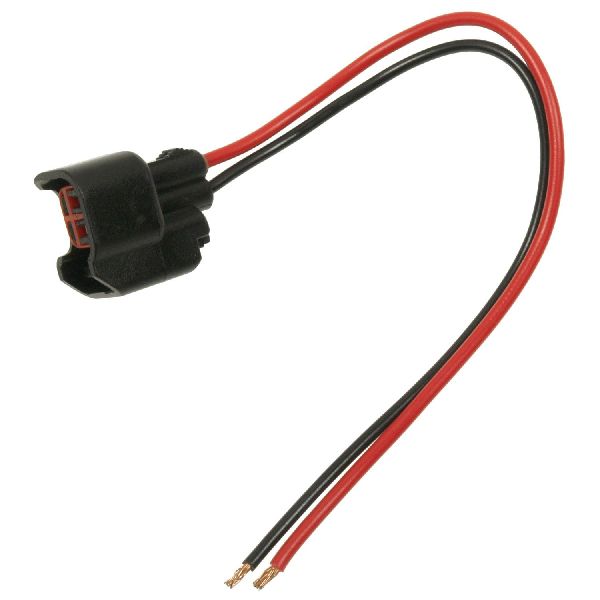
- Fuel Injector Connector Pigtail
(OEM #19368140)— This is the most common failure point on the L5P Duramax for injector-related codes due to poor terminal tension and fretting corrosion.
Trusted brands: ACDelco (PT3739), BD Diesel, Fleece Performance
OEM price range: $40-$60
Aftermarket price range: $25-$50 - Fuel Injector
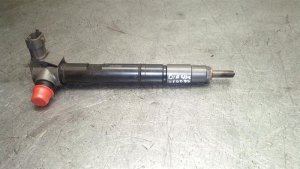
(OEM #12678992 (supersedes 12698552, 12696966))— If the connector is good, the injector itself is the next most likely cause due to internal failure.
Trusted brands: Denso (OEM), ACDelco, Alliant Power
OEM price range: $280-$370
Aftermarket price range: $275-$350 - High-Pressure Fuel Injector Line (Cylinder 1)
(OEM #12677995)— These lines are considered one-time use by the manufacturer and should be replaced any time an injector is removed to ensure a proper seal under extreme pressure.
Trusted brands: ACDelco, GM Genuine
OEM price range: $30-$50
Related Codes That Often Appear With This One
- P0301 — P0301 is a specific misfire code for cylinder 1. P0263 indicates a lack of power, which is often caused by or results in a misfire.
- P0201 — This code indicates an electrical circuit fault for the cylinder 1 injector. It often appears alongside P0263 when the injector connector or wiring is the root cause.
- P0266, P0269, P0272, etc. — These are contribution/balance codes for other cylinders. If multiple codes are present, it points towards a larger issue like fuel contamination, a failing high-pressure fuel pump, a widespread wiring harness problem, or a leak in the charge air cooler system as noted in TSB PIP5468F.
- P026D — This code for 'Cylinder 1 Injection Timing' is often seen with P0263 and P0201, pointing strongly to an electrical connection issue at the injector pigtail.
Technical Service Bulletins (TSBs) & Recalls
- PIP5468F: Lists P0263 with numerous other DTCs. Advises technicians to follow standard diagnostics, but if no cause is found, to check for loose or leaking charge air cooler ductwork.
- 17-NA-171: Lists P0263 as a possible code set due to an anomaly in the engine control software, suggesting a potential software update may be part of the diagnostic path.
- PIP5468D: A previous version of PIP5468F, also listing P0263 among many other codes related to potential charge air cooler leaks.
- 23-NA-034: A newer bulletin that directly addresses fretting corrosion on L5P injector connectors, providing diagnostic procedures, visual inspection guides (looking for black dust), and repair instructions including the application of dielectric grease.
Platform-Specific Known Issues
- Multiple Technical Service Bulletins (TSBs), including #PIP5468F, list P0263 among a large group of other potential engine codes. The TSB suggests that if diagnostics don't point to a specific component, technicians should investigate leaks in the charge air cooler (CAC) system, as boost leaks can cause a wide array of performance codes.
- A forum user on duramaxdiesels.com noted that a technician's experience showed 98% of injector-related issues were the connector, not the injector itself, highlighting how common this misdiagnosis is.
- Another user on duramaxdiesels.com shared a dealer invoice where replacing a single injector connector (#7) cost around $1080, with 6.5 hours of labor, illustrating the high cost if not done as a DIY repair.
- GM issued a service bulletin specifically addressing injector connector fretting, advising technicians to inspect for black powder on the connector seal and to apply dielectric grease during replacement. It also provides specific labor time estimates for replacing connectors on different cylinders.
Mechanic-Grade Diagnostic Values
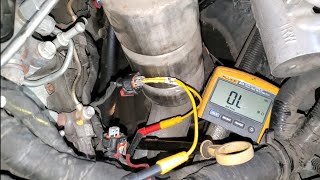
- Fuel Injector Coil Resistance — expected: ~0.8 Ohms. Failure: A reading of 3.8 Ohms or higher, or an open circuit, especially when wiggling the connector, indicates a faulty connection or injector.
- Low-Pressure Fuel System (Lift Pump) Pressure — expected: ~62 PSI at key-on/prime and during cranking.. Failure: Pressure that is significantly lower, erratic, or drops off quickly can indicate a failing lift pump, which can starve the high-pressure pump.
- High-Pressure Fuel Rail Pressure (Cranking) — expected: 3,000 - 4,000+ PSI. Failure: Significantly lower pressure during cranking (e.g., a few hundred PSI) prevents the engine from starting and can be caused by a bad high-pressure pump or excessive fuel return from a failed injector.
- Injector Pulse Width (at Idle) — expected: 1500-1750 microseconds (μs) for a fuel volume of 8-12 mm³.. Failure: Values significantly outside this range can indicate a fueling problem that the ECM is trying to compensate for.
- Fuel Pressure Regulator #2 Return Flow Test — expected: 15 ml or less during a 15-second crank cycle.. Failure: Excessive return fluid (e.g., 30ml or more) indicates a leaking regulator, which requires replacement of the entire fuel rail.
Scan Tool Commands That Help
- GM GDS2: Injector Flow Rate Programming — This is a mandatory step after replacing any fuel injector. The new injector's IQA (Injector Quantity Adjustment) code must be programmed into the ECM to ensure accurate fuel delivery and engine balance.
- GM GDS2 / Professional Scan Tool: Cylinder Power Balance / Cylinder Contribution Test — This is the primary function to confirm which cylinder is underperforming. It displays the fueling adjustments (balance rates) for each cylinder, making it easy to spot the outlier causing the P0263 code.
- GM GDS2 / Professional Scan Tool: Misfire Data / Misfire Counters — Used to monitor for misfires on a specific cylinder in real-time. This is useful for verifying a fix after a repair; the misfire count for cylinder #1 should be zero or near-zero on a healthy engine.
Wiring & Ground Locations
- ECM Connector X2 — The rearmost connector on the Engine Control Module (ECM).. The wiring for the fuel injectors runs in a direct shot from this connector to each injector with no intermediate connections. For cylinder #1, the two wires connect to pins 5 and 28 on the X2 connector. This is the starting point for any harness continuity or short-to-ground tests.
- Injector Harness Routing — The wiring harness runs along the valve covers and across the engine.. While cylinder #4 is most notorious for chafing against the steering shaft, the entire harness is subject to vibration and heat. TSB 23-NA-027 advises checking for contact between the harness and the underside of the injector sound deadener cover, as this can be a point of abrasion.
Real Owner Repair Stories
- YouTube channel 'Heidi's Garage' (2019 GMC Sierra Duramax, <60,000 miles) — Severe engine shaking, audible misfire, codes for cylinder 4 injection timing and misfire.
❌ Tried (didn't work) A temporary fix of applying dielectric grease worked for a short time but the problem returned.
✅ What actually fixed it The problem was confirmed to be the injector connector. The final, permanent fix was cutting out the old connector and splicing in a new injector pigtail. - Forum user on 'thedieselstop.com' (2018 Duramax L5P) — Check Engine Light, recurring injector connector failures.
❌ Tried (didn't work) Dealer replaced one connector under warranty., Owner replaced several more connectors using GM pigtails and standard crimp connectors, but failures continued to occur on different cylinders.
✅ What actually fixed it The owner experienced 7 total connector failures. For the later repairs, he began soldering the pigtail wires to the harness instead of using crimp connectors for a more robust and vibration-resistant connection, which resolved the issue for those specific cylinders. - YouTube channel 'Calibrated Power' (2017+ L5P Duramax with 180,000 miles) — Codes P0204, P026D, P0300; intermittent or dead misfire.
❌ Tried (didn't work) Replacing the entire fuel injector did not fix the problem.
✅ What actually fixed it The issue was a faulty pigtail connector for injector #4. The internal pins had spread, causing a loss of continuity. The fix was to either replace the pigtail or carefully remove the connector housing and crimp the female pin tighter to restore a solid connection.
OEM Part Supersession History
12696966, 12698552→12678992— Standard part revision and improvement by the manufacturer.
Heads up: No known incompatibilities. The newest part number is a direct replacement for the older versions.
Model Year Variations Within This Range
- 2017-2018: There are no significant mechanical or electrical differences in the L5P engine or fuel system between the 2017 and 2018 model years that would alter the diagnosis for code P0263. Both years use the 6-speed Allison transmission.
Helpful Videos
Used OEM Parts in Stock
New Aftermarket Parts Available


The information in this article is provided for general reference and educational purposes only. Vehicle specifications, procedures, and part compatibility can vary by production date, trim level, and region. Always consult your vehicle's factory service manual and verify part numbers before purchasing or performing repairs. Safety-critical components such as airbags, seat belts, and braking systems should be installed by a qualified professional.
- Gmc SIERRA 3500:
- 🧭 Diagnostic Flowchart
- 🎬 Helpful Videos
- 🛍️ Shop This Part
- What's Unique About the 2017-2018 Gmc SIERRA 3500
- Symptoms You May Notice
- Most Likely Causes
- Rare But Worth Checking
- Diagnosis Steps
- Parts You'll Likely Need
- Related Codes That Often Appear With This One
- Technical Service Bulletins (TSBs) & Recalls
- Platform-Specific Known Issues
- Mechanic-Grade Diagnostic Values
- Scan Tool Commands That Help
- Wiring & Ground Locations
- Real Owner Repair Stories
- OEM Part Supersession History
- Model Year Variations Within This Range
- 🎟️ Get 5% Off