

P0264 on 2009-2014 Buick Enclave: Cylinder 2 Injector Circuit Low Causes & Fixes
This code indicates a low voltage problem in the cylinder 2 fuel injector circuit. The most common causes are a faulty fuel injector or a damaged wiring harness. A wiring issue is particularly noted in a GM Technical Service Bulletin for these vehicles, often found chafing against engine components on the back side of the engine.
- P0264 on a 2009-2014 Enclave means there's a low voltage issue with the cylinder 2 fuel injector circuit.
- Before replacing the fuel injector, thoroughly inspect the wiring harness for damage, as this is a known issue documented in a GM TSB (PIP4924D). The damage is often on the firewall side of the engine.
- Common symptoms include a rough idle, engine misfire (P0302), and reduced power.
- The OEM fuel injector part number 12638530 was superseded by 12669384.
What's Unique About the 2009-2014 Buick ENCLAVE
The 2009-2014 Buick Enclave and its platform-mates (like the Chevy Traverse and GMC Acadia) use a 3.6L V6 engine with direct injection 🎬 Watch: Diagnosing common misfire patterns on the 3.6L V6 engine (GDI). A key issue for this platform is highlighted in GM Technical Service Bulletin #PIP4924D, which points to the fuel injector wiring harness being susceptible to chafing and damage. The bulletin explicitly lists P0264 and warns that the harness can rub against the intake plenum, valve cover bolts, fuel lines, or the side of the cylinder head, making a wiring inspection a primary diagnostic step.
🎬 See how to identify and fix bank-specific misfire issuesDiagnostic Flowchart
Tap your situation to follow the diagnostic path that matches what you're seeing on this vehicle.
Symptoms You May Notice
- Check Engine Light is on
- Rough or shaking idle
- Engine misfire (may be felt as a stumble or hesitation)
- Reduced engine power and poor acceleration
- Decreased fuel economy
- Engine may be harder to start.
- Possible black smoke from the exhaust
- Replacing the fuel injector without first testing it or inspecting the wiring harness. Given the known TSB for wiring issues on this platform, a wiring fault is a very strong possibility and should be checked thoroughly to avoid unnecessary parts replacement.
Most Likely Causes
- Damaged Fuel Injector Wiring Harness 🔴 High Probability → Shop Engine Wiring Harness GM TSB #PIP4924D specifically calls out that the injector wiring harness can rub through or develop internal opens. Common chafe points are against the intake plenum, valve cover bolts, fuel lines, and the side of the cylinder head under the plenum. This issue is widely reported across all vehicles using this engine.
How to confirm: Visually inspect the entire length of the injector harness for signs of rubbing, melting, or corrosion. A flashlight and inspection mirror are essential. Pay close attention to the areas mentioned in the TSB, especially on the back side of the engine where the harness is routed tightly. Perform a wiggle test on the harness with the engine running to see if it affects the misfire.
Typical fix: Repair the damaged section of the wire using solder and heat shrink tubing. Protect the repaired area with high-temperature tape or a new protective wire loom to prevent future damage. If damage is extensive, the entire harness may need replacement.
Est. part cost: $10-$250 - Faulty Cylinder 2 Fuel Injector 🟡 Medium Probability → Shop Fuel Injector Direct injectors operate under high pressure and can fail electrically or become clogged over time. An internal short in the injector's solenoid coil will cause a 'Circuit Low' code.
How to confirm: After ruling out wiring, swap the cylinder 2 fuel injector with one from another cylinder (e.g., cylinder 4). Clear the codes and drive the vehicle. If the code changes to P0270 (Cylinder 4 Injector Circuit Low), the injector is faulty. You can also test the injector's coil resistance with a multimeter; it should be within manufacturer specifications, which differ by engine type (LLT vs. LFX). A reading outside this range indicates an electrical failure.
Typical fix: Replace the faulty fuel injector. It is often recommended to replace all injectors on the same bank, or all six, to ensure balanced fuel delivery and prevent future failures, especially on high-mileage vehicles.
Est. part cost: $50-$180 for a single injector, $250-$700 for a set of six. - Poor Connection at Injector or ECM ⚪ Low Probability
How to confirm: Inspect the electrical connector at the fuel injector and the corresponding pins at the ECM for corrosion, damage, or pushed-out pins. Ensure the connector clicks securely into place. Apply dielectric grease to the connector to ensure a good seal and prevent moisture intrusion.
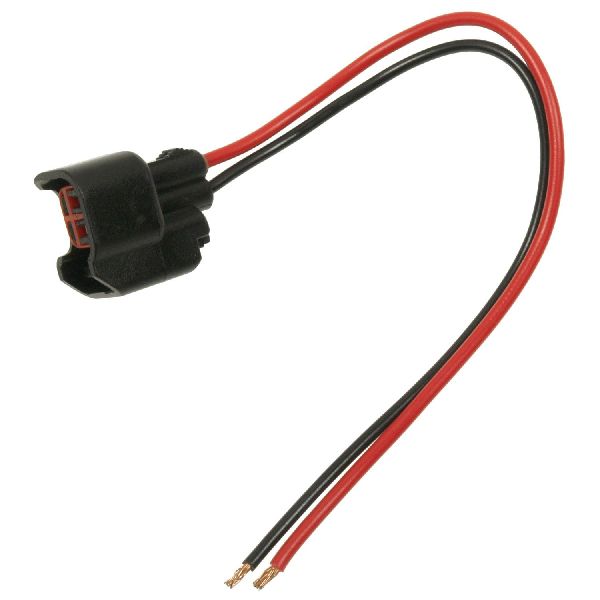
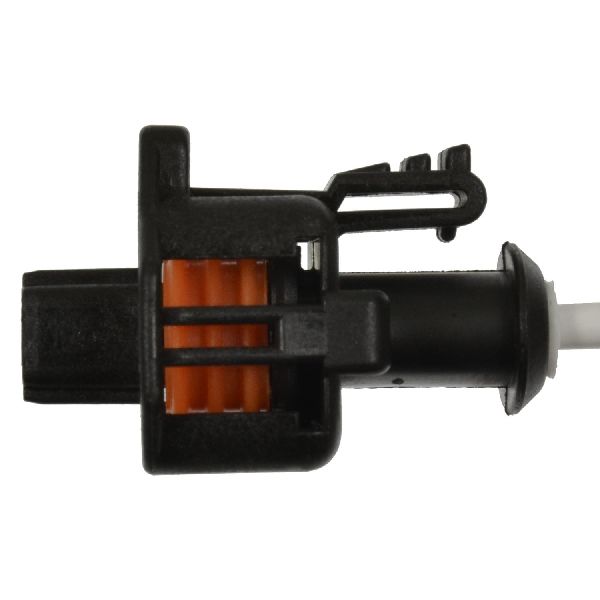
Typical fix: Clean or repair the connector pins. If the connector housing or lock is damaged, it will need to be replaced with a pigtail connector (e.g., ACDelco PT2183).
Est. part cost: $10-$40
Rare But Worth Checking
- Failing Powertrain Control Module (PCM): → Shop Engine Control Module (ECM) This is the least likely cause. The internal driver circuit for the injector can fail, but all other possibilities, especially wiring and the injector itself, should be exhaustively ruled out first. A scan tool capable of performing a PCM injector driver self-diagnostic can help confirm this.
Diagnosis Steps
- Scan the vehicle for all stored DTCs. Note any other codes that appear alongside P0264, especially other injector or misfire codes.
- Perform a thorough visual inspection of the engine wiring harness, focusing on the chafe points identified in TSB PIP4924D (near the intake, valve covers, fuel lines, and side of the cylinder head). Use a mirror and bright light. This is the most critical step for this specific vehicle.
- If no visible damage is found, disconnect the cylinder 2 injector connector. Use a 'noid light' to verify that the ECM is sending a pulse signal to the connector while cranking the engine. The light should flash steadily.
- With the key on, engine off, check for voltage at the injector connector. One wire should have battery voltage (power feed), and the other is the control wire from the ECM.
- If the pulse and power are correct, suspect the injector. Turn off the engine and identify your engine type (LLT or LFX) to use the correct resistance spec. Measure the resistance of the cylinder 2 fuel injector and compare it to the correct specification.
- To be certain, swap the cylinder 2 injector with another one (e.g., cylinder 4). Clear the codes and run the engine. If the code moves to P0270, the injector is confirmed to be faulty.
- If the code P0264 returns after the swap, the problem lies in the wiring. Perform a continuity test on the control wire from the ECM connector to the injector connector to find any open circuits. Also, check for a short to ground on that same wire.
- If all wiring and the injector test good, the final and least likely possibility is a failed injector driver in the ECM.
Parts You'll Likely Need
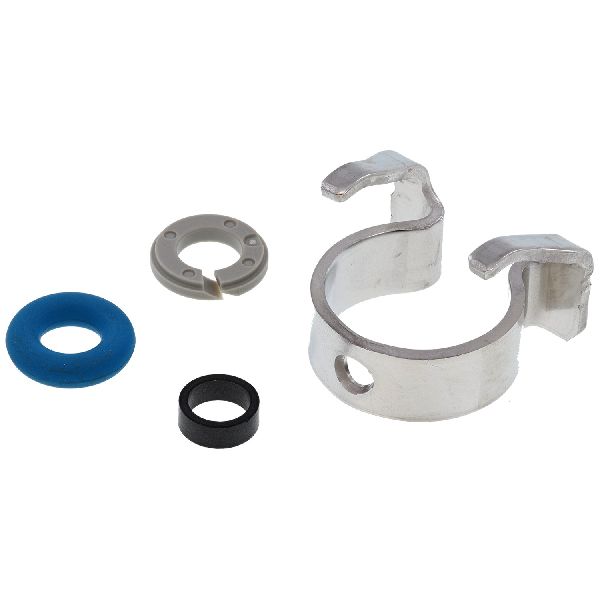
- Fuel Injector
(OEM #12669384)— This is a common failure part that directly causes the P0264 code when it fails electrically. The original part number 12638530 has been superseded by 12669384.
Trusted brands: ACDelco (GM Genuine), Bosch, Standard Motor Products
OEM price range: $100-$180
Aftermarket price range: $50-$120 - Fuel Injector Wiring Harness
(OEM #12621095)— A known issue documented in a TSB for this vehicle, where chafing can cause an open or short in the injector circuit. This part number is for the complete engine wiring harness assembly. Often, only a repair is needed.
Trusted brands: ACDelco (GM Genuine), Dorman
OEM price range: $150-$250
Aftermarket price range: $75-$150 - Fuel Injector Connector Pigtail
(OEM #88988963 (ACDelco PT2183))— Needed if the plastic connector at the injector is broken or the terminals are corroded beyond cleaning. Allows for splicing in a new connector without replacing the whole harness.
Trusted brands: ACDelco, Dorman
OEM price range: $25-$40
Aftermarket price range: $10-$20
Related Codes That Often Appear With This One
- P0302 — P0302 means "Cylinder 2 Misfire Detected." Since P0264 indicates a problem with the fuel injector circuit for cylinder 2, a misfire in that same cylinder is a direct consequence.
- P0202, P0261, P2146, P2149 — These are other injector-related codes. Seeing multiple injector codes together, as listed in TSB PIP4924D, strongly points to a systemic issue like a damaged wiring harness affecting multiple circuits, or a problem with the main power/ground for an injector bank.
- P0267, P0270, etc. — Seeing low circuit codes for other cylinders (e.g., P0267 for Cyl 3, P0270 for Cyl 4) simultaneously is a very strong indicator of a wiring harness problem where multiple wires have chafed through in the same location.
Technical Service Bulletins (TSBs) & Recalls
- PIP4924D: Addresses a check engine light and misfire with a wide range of fuel injector circuit codes. Recommends inspecting the fuel injector wiring harness for damage against the intake, valve covers, fuel lines, or the side of the cylinder head.
- PIT5424: While not directly for the Enclave, this TSB for other GM vehicles with the same engine family also points to harness routing issues near the ECM and the rear of the engine causing various injector circuit codes.
Platform-Specific Known Issues
- A General Motors Technical Service Bulletin (TSB #PIP4924D) exists for 2009-2014 Enclaves experiencing misfires with various injector codes, including P0264. The bulletin specifically advises technicians to carefully inspect the fuel injector wiring harness for rubbing or open wires at several common locations in the engine bay.
- Forum discussions for the Enclave and its platform-mates frequently confirm that this TSB is the key to solving injector circuit codes. Owners often find the harness chafed on a bracket or the edge of the cylinder head on the rear bank (firewall side), which can be difficult to see and access.
Mechanic-Grade Diagnostic Values
- Fuel Injector Resistance (2009-2011 3.6L LLT Engine) — expected: ~10-16 Ohms. Failure: A reading of infinity (Open Loop), near zero ohms (short), or significantly outside the expected range.
- Fuel Injector Resistance (2012-2014 3.6L LFX Engine) — expected: 1.2 - 1.8 Ohms. Failure: A reading outside this very narrow range indicates an internal injector fault.
- Low-Pressure Fuel System (Key On, Engine Off Prime) — expected: 55-60 psi (379-414 kPa). Failure: Pressure significantly below this range indicates a weak in-tank fuel pump or related issue.
- High-Pressure Fuel System (Engine Idling) — expected: 508 - 798 psi (3.5 - 5.5 MPa). Failure: Pressure significantly lower than specification can indicate a failing high-pressure fuel pump.
- Injector Pulse Width (Scan Tool, at Idle) — expected: 2 - 4 milliseconds (ms). Failure: A value of 0 ms on cylinder 2 while other cylinders show a normal pulse.
- Wiring Harness Continuity Test — expected: Less than 0.2 Ω. Failure: Resistance greater than 0.2 Ω indicates a compromised wire or poor connection.
Scan Tool Commands That Help
- GDS2 / Tech2 (or equivalent professional scanner): Fuel Injector Balance Test / Active Fuel Injector Test (AFIT) — To functionally test a suspected clogged or poorly flowing injector after confirming the electrical circuit is intact. The tool measures the fuel pressure drop for each injector activation; an inconsistent drop for cylinder 2 indicates a faulty injector.
- GDS2 / Tech2 (or equivalent professional scanner): Cylinder Power Balance / Injector Kill — To confirm if cylinder 2 is contributing to engine power. Disabling the cylinder 2 injector should cause a noticeable change in idle quality. If there is no change, it confirms the cylinder was already misfiring.
- GDS2 / Tech2 (or equivalent professional scanner): Depressurize Fuel System — As a safety procedure before physically replacing the high-pressure fuel pump or fuel injectors to relieve high pressure from the fuel rail.
Wiring & Ground Locations
- ECM (Engine Control Module) — In the engine compartment, located on the front of the motor.. The ECM is the source of the control signal for the fuel injector. The wiring harness between the ECM and the injector is a known failure point, and testing for continuity and shorts should be done between the injector connector and the appropriate pins on the ECM connector (often labeled X1 or X2).
- G110 / G113 — Primary engine block grounds. G110 is typically on the right front of the engine, mounted to the cylinder head. G113 is often at an engine-to-transmission stud.. A loose or corroded engine ground can introduce electrical noise and voltage irregularities. This can affect the ECM's ability to properly control and monitor the injector circuits, potentially leading to false codes or erratic behavior.
Real Owner Repair Stories
- Chevrolet Forum User Report (Equinox with similar engine architecture) (2011 Chevrolet Equinox) — Check Engine Light with codes P0264, P0267, and P0270 appearing simultaneously.
❌ Tried (didn't work) Initial diagnosis was confusing due to multiple cylinder faults.
✅ What actually fixed it The engine wiring harness was found to be rubbing through on a metal bracket at the back of the cylinder head. The fix involved splicing, soldering, and insulating the damaged wires, then re-routing the harness away from the sharp edge. - Camaro5 Forum User Report (Chevrolet Camaro (3.6L V6)) — Rough running, strong fuel smell, CEL with multiple codes including P0089 (Fuel Pressure Regulator) and P0300 (Random Misfire).
❌ Tried (didn't work) Replacing fuel injectors with reconditioned units., Replacing the high-pressure fuel pump.
✅ What actually fixed it The suggested root cause, after parts replacement failed, was rodent damage to the fuel injection wiring harness, which is a known issue for cars that sit for periods.
OEM Part Supersession History
12638530→12669384— Standard part revision for improved reliability or manufacturing process.
Heads up: The new part number 12669384 is the direct replacement for 12638530 and is fully compatible with both LLT and LFX V6 engines in this vehicle range.
Model Year Variations Within This Range
- 2009-2011: These models use the 3.6L LLT V6 engine, which has high-impedance fuel injectors with a resistance of approximately 10-16 Ohms. They also feature an aluminum intake manifold and a Bosch ECM.
- 2012-2014: These models use the updated 3.6L LFX V6 engine. This engine uses different, low-impedance fuel injectors with a resistance of only 1.2-1.8 Ohms. It also has a composite intake manifold and a Delphi ECM. Using the wrong resistance specification during diagnosis will lead to incorrect conclusions.
Helpful Videos
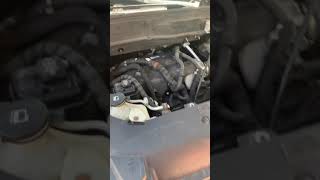
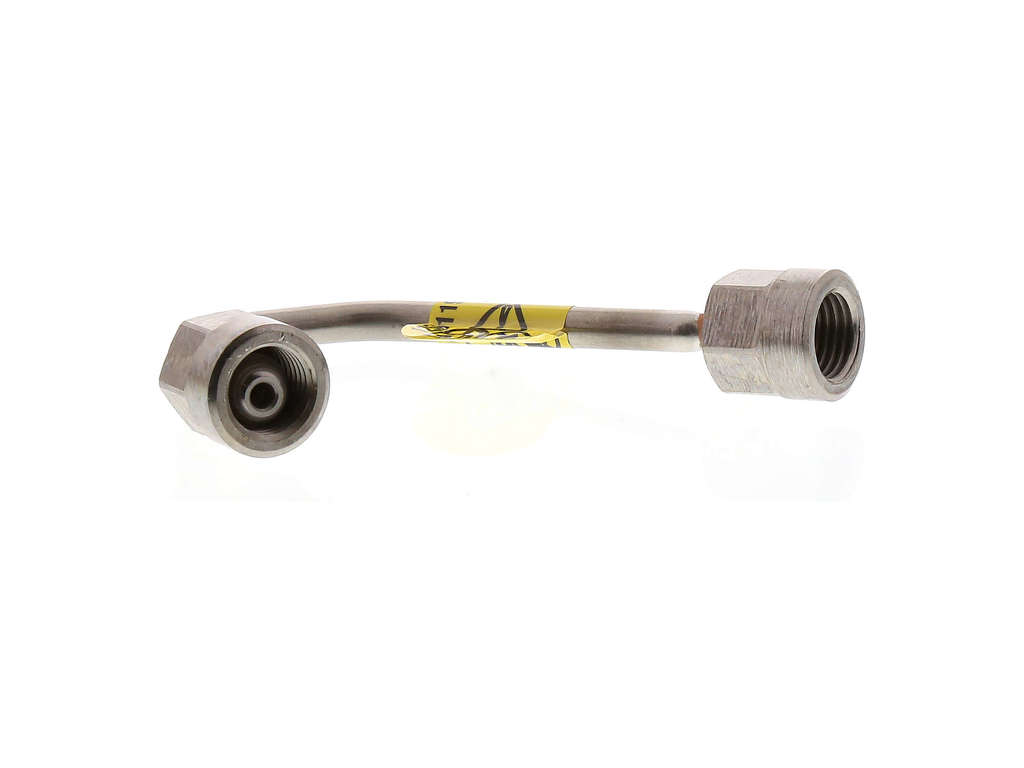
We Have This Part in Stock


The information in this article is provided for general reference and educational purposes only. Vehicle specifications, procedures, and part compatibility can vary by production date, trim level, and region. Always consult your vehicle's factory service manual and verify part numbers before purchasing or performing repairs. Safety-critical components such as airbags, seat belts, and braking systems should be installed by a qualified professional.
- Buick ENCLAVE:
- 🧭 Diagnostic Flowchart
- 🎬 Helpful Videos
- 🛍️ Shop This Part
- What's Unique About the 2009-2014 Buick ENCLAVE
- Symptoms You May Notice
- Most Likely Causes
- Rare But Worth Checking
- Diagnosis Steps
- Parts You'll Likely Need
- Related Codes That Often Appear With This One
- Technical Service Bulletins (TSBs) & Recalls
- Platform-Specific Known Issues
- Mechanic-Grade Diagnostic Values
- Scan Tool Commands That Help
- Wiring & Ground Locations
- Real Owner Repair Stories
- OEM Part Supersession History
- Model Year Variations Within This Range
- 🎟️ Get 5% Off