

P0264 on 2009-2011 Cadillac STS: Cylinder 2 Injector Circuit Low Causes and Fixes
On a 2009-2011 Cadillac STS with the 3.6L V6, P0264 is most often caused by a chafed wiring harness or a faulty #2 fuel injector. A GM technical bulletin points specifically to harness issues, a known problem on this engine platform. A DIY repair is possible by repairing the wire or replacing the injector, with parts costing $50-$250.
- For code P0264 on a 2009-2011 Cadillac STS 3.6L, start your diagnosis by thoroughly inspecting the fuel injector wiring harness for chafing, as this is a known issue documented by GM.
- Symptoms will include a steady Check Engine Light, a rough idle, and hesitation when accelerating.
- Do not immediately replace the fuel injector. Use a multimeter and a noid light to confirm if the injector has failed or if the wiring is at fault before purchasing parts.
- This issue is shared across many GM vehicles with the 3.6L LLT engine, including the Chevy Traverse, GMC Acadia, and Buick Enclave.
What's Unique About the 2009-2011 Cadillac STS
For this specific Cadillac STS with the 3.6L V6 (LLT) engine, a known issue documented in General Motors Technical Service Bulletin (TSB) PIP4924D makes it unique. The TSB highlights that the fuel injector wiring harness is prone to rubbing against engine components, causing shorts or open circuits that trigger this code. This issue is common across many GM vehicles using the 3.6L LLT engine. This means that unlike many other vehicles where a bad injector is the primary suspect, a wiring fault is a very high-probability cause on this platform and should be investigated first.
Diagnostic Flowchart
Tap your situation to follow the diagnostic path that matches what you're seeing on this vehicle.
Symptoms You May Notice
- Check Engine Light is on
- Rough or shaking idle
- Engine misfire (may feel like a stumble or hesitation)
- Reduced engine power and poor acceleration
- Decreased fuel economy
- Engine may run lean, causing a shudder on acceleration
- Replacing the cylinder #2 spark plug or ignition coil without diagnosing the fuel system. A misfire can be caused by spark, fuel, or compression issues, and P0264 points directly to the fuel injector circuit. TSB PIP5038 addresses misfires from heat-stressed ignition coils on this engine, but that would typically set codes like P0302 or P0352, not P0264.
Most Likely Causes
- Fuel Injector Wiring Harness Chafed or Damaged 🔴 High Probability → Shop Engine Wiring Harness As documented in GM TSB PIP4924D, the harness on the 3.6L V6 has several known rubbing points: against the intake plenum, at valve cover bolts, against the fuel line, and on the side of the cylinder head. The constant engine vibration and heat cycles cause the protective loom to wear through, exposing the individual wires (like the one for injector #2) to short against the engine block or other metal components.
How to confirm: Perform a thorough visual inspection of the entire fuel injector harness, paying close attention to the areas mentioned in the TSB. Look for any signs of rubbing, exposed copper wire, or melted insulation. A 'wiggle test' (wiggling the harness with the engine running) may cause the misfire to change or disappear, confirming a wiring issue. The harness is often routed tightly, so inspection may require removing the engine cover or other components for better access.
Typical fix: Repair the damaged section of wire with a new piece of wire, using solder and heat-shrink tubing for a durable, sealed repair. Ensure the repaired section is re-routed or protected with additional loom material to prevent future chafing. If the damage is extensive or near the main connector, replacing the entire injector harness or a pigtail connector may be necessary.
Est. part cost: $5-$20 for wiring repair supplies - Faulty Cylinder #2 Fuel Injector 🟡 Medium Probability → Shop Fuel Injector The 3.6L LLT uses direct injection, and its injectors operate under high pressure and can fail internally. An internal short in the injector's solenoid coil will cause a low circuit voltage reading.
How to confirm: Disconnect the injector and measure its internal resistance with a multimeter. Compare the reading to the manufacturer's specification (typically 1.5-2.5 ohms). An out-of-spec reading indicates a failed injector. A more definitive test is to swap the #2 injector with another cylinder's injector (e.g., #4). Clear the codes and run the engine. If the code changes to P0270 (Cylinder 4 Injector Circuit Low), the injector is confirmed to be faulty.
Typical fix: Replace the faulty fuel injector. For direct injection engines, it is critical to also replace the single-use Teflon seal and high-pressure fuel line associated with the injector to prevent leaks. It is often recommended to replace all injectors as a set if they are high mileage to ensure balanced engine performance.
Est. part cost: $50-$250 - Poor Connection at Injector or PCM ⚪ Low Probability
How to confirm: Visually inspect the connector at the #2 fuel injector and the corresponding pins at the PCM for corrosion, moisture, or bent/pushed-out pins. The locking tab on the connector can become brittle and break, leading to a loose connection. Disconnect and reconnect it to ensure it's seated properly with an audible click.
Typical fix: Clean the connector terminals with electrical contact cleaner. If the connector housing or terminals are damaged, replace the connector pigtail.
Est. part cost: $10-$30
Rare But Worth Checking
- Faulty Powertrain Control Module (PCM): → Shop Engine Control Module (ECM) This is the least likely cause. The internal driver circuit for the #2 injector can fail, but all other possibilities, especially wiring and the injector itself, should be exhaustively ruled out before condemning the PCM. If multiple injector circuit codes appear simultaneously, the likelihood of a PCM fault increases.
Diagnosis Steps
- Verify code P0264 with an OBD-II scanner and check for any other codes, especially P0302.
- Perform a thorough visual inspection of the fuel injector wiring harness. Focus on the known chafe points listed in TSB PIP4924D: against the intake plenum, at valve cover bolts, against the fuel lines, and on the side of the cylinder head. A borescope may be helpful for hard-to-see areas.
- If no visible damage is found, perform a 'wiggle test' on the harness with the engine idling to see if the misfire changes or if the engine stalls.
- Disconnect the electrical connector at the #2 fuel injector. Check for a pulsed signal using a noid light while cranking the engine. A flashing light indicates the PCM and wiring are sending a signal.
- With the connector off, inspect it for corrosion or damage. Test the injector's resistance with a multimeter; it should be within the OEM specification (typically 1.5-2.5 ohms).
- If the noid light doesn't flash, check for battery voltage on one pin of the connector with the key on. Then, check for continuity on the control wire between the injector connector and the PCM connector to rule out an open wire.
- Check the control wire for a short to ground. With the injector and PCM disconnected, use a multimeter to check for continuity between the control wire and a known good ground. There should be no continuity (infinite resistance).
- If wiring, connections, and the injector all test good, the issue may be the PCM's internal driver circuit, but this is rare.
Parts You'll Likely Need
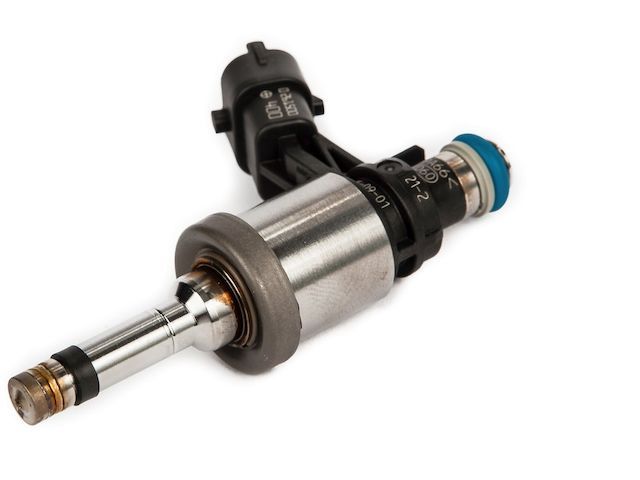
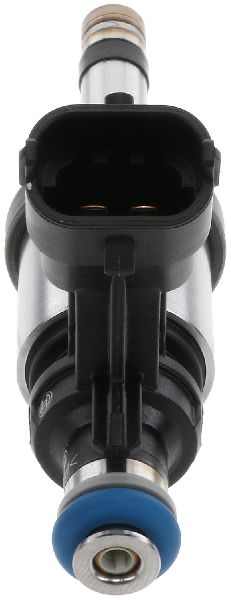
- Fuel Injector
(OEM #12669384)— If the injector coil fails its resistance test or is internally shorted, it must be replaced. This is a common failure point after wiring issues are ruled out. This part number supersedes 12638530, 12632255, and 12611545.
Trusted brands: ACDelco (OEM), Bosch, Standard Motor Products
OEM price range: $110-$200
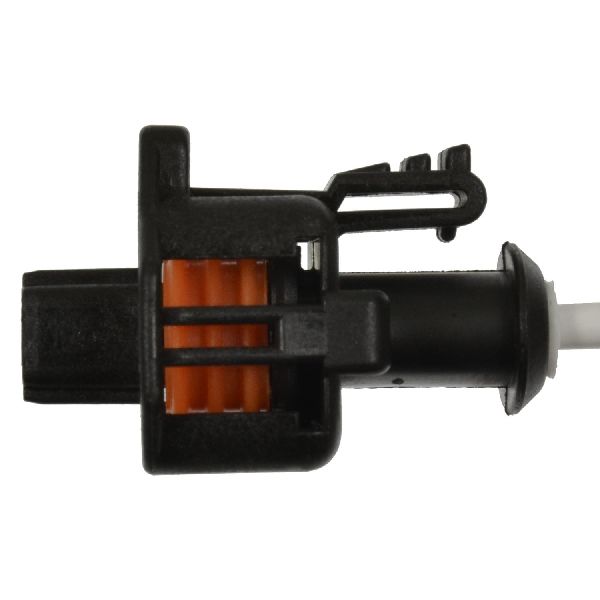
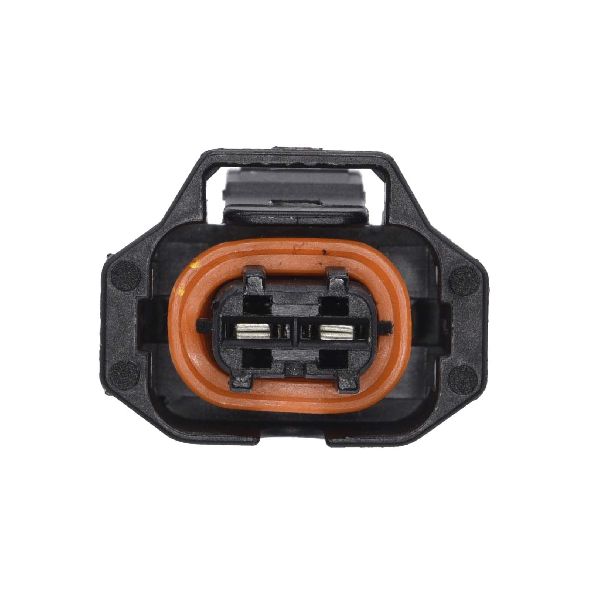
Aftermarket price range: $50-$150 - Fuel Injector Connector Pigtail
(OEM #PT2183 (ACDelco))— If the locking tab is broken or the terminals are corroded/damaged from chafing, replacing the connector is necessary to ensure a solid electrical connection. Splicing in a new pigtail is a standard repair.
Trusted brands: ACDelco, Dorman, Standard Motor Products (HP3945)
OEM price range: $30-$55
Aftermarket price range: $10-$25
Related Codes That Often Appear With This One
- P0302 — P0302 means 'Cylinder 2 Misfire Detected'. Since P0264 indicates a problem with the fuel supply to cylinder 2, it's very common for the computer to also detect the resulting misfire.
- P0202 — P0202 is 'Injector Circuit/Open - Cylinder 2'. It's a related code that can be triggered by similar wiring faults, such as a completely broken wire instead of a short. The TSB PIP4924D lists both codes as being caused by the same harness issue.
- P0261, P0267, P0270, etc. — If you see other 'Injector Circuit Low' codes for other cylinders, it strongly points to a systemic issue. This could be a section of the wiring harness where multiple injector wires are damaged together, or a failing ground connection for the injector bank.
Technical Service Bulletins (TSBs) & Recalls
- PIP4924D: SES Light And Misfire With Injector Codes - This bulletin is the primary source for the high probability of a wiring harness issue on the 2009-2011 STS with the 3.6L engine. It lists P0264 among many other injector codes caused by harness chafing.
- PIT5424: This TSB also addresses multiple injector circuit codes and advises inspection of the engine harness routing, corroborating the commonality of this failure mode across GM platforms.
Platform-Specific Known Issues
- TSB PIP4924D explicitly warns technicians to carefully inspect the fuel injector wiring harness for rubbing through (chafing) or internal wire opens. Common chafe locations are against the intake plenum, at valve cover bolts, against the fuel line, and on the side of the head under the plenum.
- The 3.6L LLT is a direct-injection engine. This means the fuel injectors operate at very high pressure. When replacing an injector, it is critical to also replace the single-use high-pressure fuel line and Teflon seal to prevent dangerous fuel leaks.
Mechanic-Grade Diagnostic Values
- Fuel Injector Coil Resistance — expected: 1.5 to 2.5 ohms. Failure: A reading near zero ohms indicates a shorted coil. An infinite reading (OL) indicates an open coil. Any reading significantly different from the other injectors is suspect.
- Injector Circuit Voltage (Signal) — expected: A 65-volt capacitive charge pulse, not measurable with a standard multimeter.. Failure: The absence of a proper waveform on a lab scope indicates a fault in the PCM driver or wiring. A standard noid light or test light will not work correctly on this GDI circuit.
- Injector Circuit Amperage (Signal) — expected: A peak of ~13 amps, holding at ~7 amps during the pulse.. Failure: No amperage waveform, or a significantly different waveform compared to other cylinders, indicates a circuit or injector fault.
- Low-Side Fuel Pressure (Key On, Engine Off) — expected: 55-60 psi. Failure: Pressure below this range indicates a problem with the in-tank fuel pump or filter, which would typically cause issues on more than just one cylinder but is a foundational check.
Scan Tool Commands That Help
- GDS2 / Tech2: Fuel Injector Balance Test / Active Fuel Injector Test (AFIT) — After confirming the electrical circuit integrity (wiring, connections), this test is used to identify a mechanically faulty injector. The tool commands each injector to fire and measures the corresponding drop in high-pressure fuel rail pressure. An inconsistent pressure drop for cylinder #2 points to a bad injector.
- GDS2 / Tech2: Cylinder Power Balance — Used to confirm which cylinder is misfiring when P0302 is also present. The tool deactivates injectors one by one. If disabling cylinder #2 causes little or no drop in engine RPM compared to other cylinders, it confirms cylinder #2 is not contributing power.
Wiring & Ground Locations
- ECM Pins 52 & 53 (X1 Connector) — At the Engine Control Module (ECM), typically located in the engine bay.. These are the specific pins for the cylinder #2 injector. Pin 52 is the low-side control (Dark Blue wire) and Pin 53 is the high-side control (Dark Blue with White tracer wire). Testing for continuity and shorts at these pins can isolate a wiring fault from a PCM fault.
- G105 / G106 — Primary engine-to-chassis ground straps, typically found on the engine block or cylinder head, connecting to the firewall or frame rail.. A loose or corroded main engine ground can cause unstable voltage references for the entire engine management system, potentially leading to intermittent 'Circuit Low' codes on sensitive circuits like the GDI injectors.
- G113 — Located on the left side of the engine, at an engine-to-transmission stud.. This is another critical engine ground point. A poor connection here can cause a range of electrical issues, including problems with the ECM and its sensor/actuator circuits.
OEM Part Supersession History
12611545, 12632255, 12638530→12669384— Updates to improve reliability, address internal coil issues, or optimize performance.
Model Year Variations Within This Range
- 2009-2011: No significant variations related to the P0264 fault are documented within this specific model year range for the STS 3.6L LLT. The wiring harness design, injector type, and ECM that lead to this fault are consistent across these years. The primary variation is against the pre-2008 LY7 engine, which used port injection and did not have these specific issues.
We Have This Part in Stock


The information in this article is provided for general reference and educational purposes only. Vehicle specifications, procedures, and part compatibility can vary by production date, trim level, and region. Always consult your vehicle's factory service manual and verify part numbers before purchasing or performing repairs. Safety-critical components such as airbags, seat belts, and braking systems should be installed by a qualified professional.
- Cadillac STS:
- 🧭 Diagnostic Flowchart
- 🛍️ Shop This Part
- What's Unique About the 2009-2011 Cadillac STS
- Symptoms You May Notice
- Most Likely Causes
- Rare But Worth Checking
- Diagnosis Steps
- Parts You'll Likely Need
- Related Codes That Often Appear With This One
- Technical Service Bulletins (TSBs) & Recalls
- Platform-Specific Known Issues
- Mechanic-Grade Diagnostic Values
- Scan Tool Commands That Help
- Wiring & Ground Locations
- OEM Part Supersession History
- Model Year Variations Within This Range
- 🎟️ Get 5% Off