

P0264 on 2012-2014 Chevrolet Impala: Cylinder 2 Injector Circuit Low Causes and Fixes
P0264 on a 2012-2014 Impala with the 3.6L V6 engine indicates a low voltage problem in the cylinder 2 fuel injector circuit. The most common cause is a chafed or shorted wire in the engine wiring harness, a known issue covered by GM Technical Service Bulletin #PIP4924D. Inspect the harness for rubbing against the intake plenum or cylinder head before replacing the fuel injector.
- P0264 on your Impala means the injector circuit for cylinder #2 has low voltage.
- Before buying any parts, carefully inspect the engine wiring harness for signs of rubbing or damage, as this is a very common problem covered by a TSB.
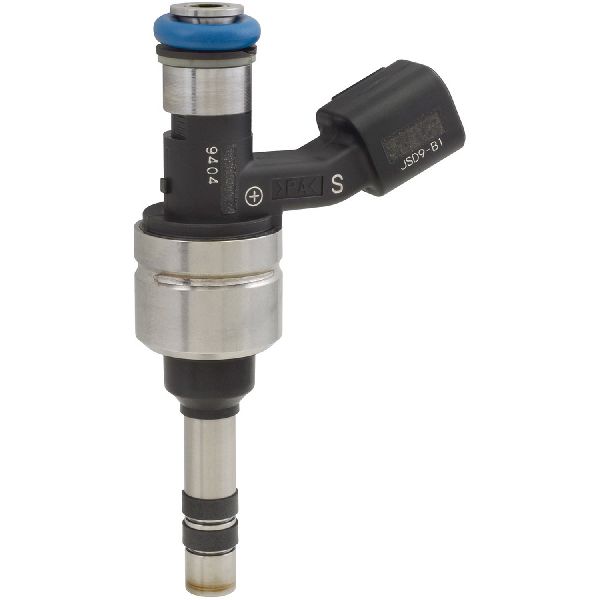
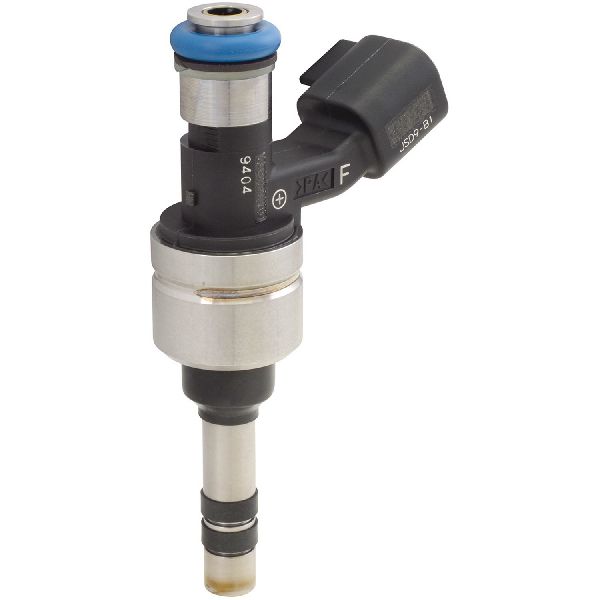
- If the wiring is good, the fuel injector is the next most likely cause.
- Repair requires removing the upper intake manifold, so you must also replace the intake gaskets.
What's Unique About the 2012-2014 Chevrolet IMPALA
The 2012-2014 Impala uses the 3.6L LFX V6 engine. Like many other GM vehicles from this era using this engine, this platform is highly prone to wiring harness issues. A specific Technical Service Bulletin (TSB #PIP4924D) was issued that includes the P0264 code, directing technicians to inspect the fuel injector wiring harness for damage where it may rub against engine components like the intake plenum, valve cover bolts, or the side of the cylinder head. This makes a wiring fault a much higher probability than a failed fuel injector itself.
Diagnostic Flowchart
Tap your situation to follow the diagnostic path that matches what you're seeing on this vehicle.
Generation note: The 2012-2013 models are part of the ninth generation Impala. The 2014 model year is split: the new tenth generation was introduced, but the ninth generation continued to be sold as the 'Impala Limited'. Both versions in 2014 could have the 3.6L LFX V6, to which this guide applies. It is crucial to identify if a 2014 model is a 'Limited' when ordering parts, as body and some chassis components differ.
Symptoms You May Notice
- Check Engine Light is on
- Rough or shaking idle
- Engine misfires, which may feel like a stumble or hesitation
- Loss of power during acceleration
- Poor fuel economy
- Engine may stall or be hard to start.
- Noticeable fuel smell from the exhaust
- Replacing the fuel injector without first inspecting the wiring harness. The wiring is a very common point of failure and is much cheaper to fix.
- Replacing spark plugs or ignition coils. While these can cause a misfire (P0302), they will not cause an injector circuit code like P0264.
Most Likely Causes
- Chafed or Shorted Fuel Injector Wiring Harness 🔴 High Probability → Shop Engine Wiring Harness As noted in GM TSB #PIP4924D, the wiring harness on these engines is known to rub against engine components like the intake plenum, valve cover bolts, fuel lines, or the side of the cylinder head, causing wires to short out. This is a very common failure point for this specific code across all platforms using the 3.6L V6.
How to confirm: Visually inspect the entire length of the wiring harness that runs to the fuel injectors. Pay close attention to any areas where the harness is secured by brackets or makes contact with the engine, especially under the intake manifold. A 'wiggle test' on the harness while the engine is running may induce the misfire and help pinpoint the location.
Typical fix: Repair the damaged section of wire using a weatherproof butt connector or by soldering and sealing with heat shrink tubing. Protect the repaired area with high-temp abrasion tape or split-loom conduit to prevent future damage. If the damage is at the connector, a new pigtail connector (like ACDelco PT2160) may need to be spliced in.
Est. part cost: $10-$40 - Faulty Cylinder 2 Fuel Injector 🟡 Medium Probability → Shop Fuel Injector The 3.6L LFX engine uses direct injection, and injectors can fail electrically due to an internal short in the solenoid coil. While less common than the wiring issue, it is a frequent point of failure.
How to confirm: After confirming the wiring is intact, swap the cylinder 2 fuel injector with an injector from another cylinder (e.g., cylinder 4). Clear the codes and run the engine. If the code changes to P0270 (Cylinder 4 Injector Circuit Low), the injector is faulty. You can also test the injector's internal resistance with a multimeter; for the LFX GDI injector, it should be very low, typically between 1.2-1.8 ohms. A reading of 0 or infinity (OL) indicates a bad injector.
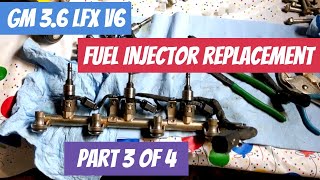
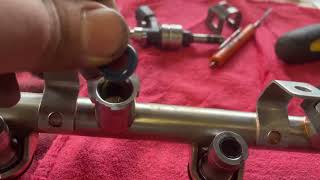
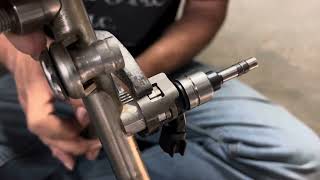
Typical fix: Replace the faulty fuel injector. Since the intake manifold must be removed to access the injectors on the 3.6L LFX engine, many owners choose to replace all injectors on that bank (or all six) at the same time as a preventative measure. 🎬 Watch: Step-by-step fuel injector replacement for the 9th Gen Impala.
Est. part cost: $50-$150
Rare But Worth Checking
- Faulty Powertrain Control Module (PCM): → Shop Engine Control Module (ECM) This is the least likely cause. The internal driver circuit within the PCM that controls the injector can fail. This should only be considered after the wiring and the injector itself have been definitively ruled out as the problem. PCM replacement is expensive and requires programming to the vehicle's VIN.
- Corroded or Damaged Ground Connection: A corroded main ground connection for the engine harness can cause high resistance and a variety of electrical issues, including injector circuit codes. One owner of a related platform found that a corroded ground eyelet was the root cause of melted wires and multiple codes.
Diagnosis Steps
- Scan the vehicle for all stored DTCs. Note any other codes that are present, especially other injector or misfire codes.
- Identify Cylinder #2. On the transverse 3.6L V6, the bank of cylinders closest to the radiator is the front bank. From passenger side to driver side, the cylinders are 2, 4, and 6. Cylinder #2 is the first one on the passenger side, front bank.
- Visually inspect the engine wiring harness, especially the section that routes over the top of the engine to the fuel injectors. Look for any signs of rubbing, chafing, or melting against the engine, particularly against the intake plenum, valve cover bolts, and fuel lines as specified in TSB PIP4924D.
- If no wiring damage is found, disconnect the cylinder 2 fuel injector connector and check for corrosion or damaged pins.
- Use a multimeter to check the resistance of the fuel injector. For the LFX engine, the specification is approximately 1.2-1.8 Ohms. A reading far outside this range indicates a faulty injector.
- If the injector resistance is good, perform an injector swap test. Move the cylinder 2 injector to another cylinder (e.g., cylinder 4), clear the codes, and see if the fault code follows the injector (e.g., changes to P0270). If it does, the injector is bad.
- If the code P0264 returns after the swap, the problem lies in the wiring or the PCM. Use a noid light to test for a signal at the injector connector. A flashing light indicates the ECM is sending a pulse. A dim or absent light points to a wiring or PCM issue.
- If the wiring, connector, and injector all test good, the final possibility is a fault in the PCM's injector driver circuit, though this is rare.
Parts You'll Likely Need
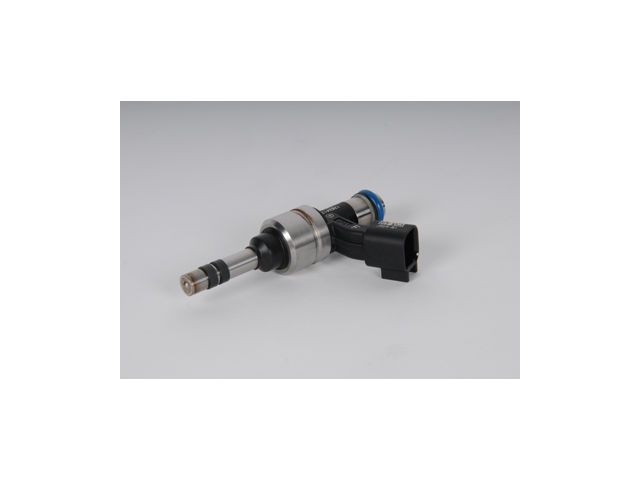
- Fuel Injector
(OEM #12638530 (superseded by 12669384))— If the injector's internal coil has failed or shorted, it will need to be replaced. This is the second most likely cause after a wiring issue.
Trusted brands: ACDelco, Bosch, Standard Motor Products
OEM price range: $90-$140
Aftermarket price range: $50-$90 - Upper and Lower Intake Manifold Gaskets
(OEM #ACDelco 12679339 (Upper), Fel-Pro MS96985 (Full Set))— To access the fuel injectors on the 3.6L LFX engine, the upper intake manifold must be removed. The gaskets are single-use and must be replaced during reassembly 🎬 See this walkthrough for removing the intake and fuel injectors. to prevent vacuum leaks.
Trusted brands: ACDelco, Fel-Pro, Mahle
OEM price range: $40-$70
Aftermarket price range: $20-$40 - Fuel Injector Connector Pigtail
(OEM #ACDelco PT2160)— If the wiring is damaged right at the connector, or the plastic locking tab is broken, splicing in a new pigtail is the standard repair method.
Trusted brands: ACDelco, Dorman
OEM price range: $25-$40
Aftermarket price range: $10-$25
Related Codes That Often Appear With This One
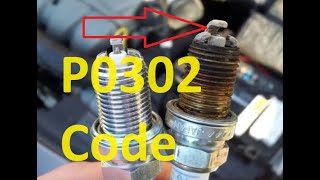
- P0302 — P0302 means 'Cylinder 2 Misfire Detected'. Since P0264 indicates a fuel delivery problem for cylinder 2, a misfire in that same cylinder is a direct and expected consequence. 🎬 Learn more about diagnosing the causes of a P0302 misfire code.
- P0261, P0267, P0270, etc. — If the wiring harness is chafing, it's possible for multiple injector wires to be damaged at the same time, leading to injector circuit codes for other cylinders. This strongly points to a wiring harness issue.
- P0300 — P0300 is 'Random/Multiple Cylinder Misfire Detected'. This can appear alongside P0264 if the misfire is severe enough to affect overall engine balance or if the wiring issue is intermittent.
Technical Service Bulletins (TSBs) & Recalls
- PIP4924D: Addresses multiple injector circuit codes (including P0264) and directs technicians to inspect the fuel injector wiring harness for rub-through or internal wire opens. It lists common chafe spots as being against the intake plenum, valve cover bolts, the fuel line, and the side of the head under the plenum.
Platform-Specific Known Issues
- The fuel injector wiring harness is known to chafe on engine components, causing a short circuit that triggers P0264 and other related codes. This is documented in GM Technical Service Bulletin #PIP4924D.
- Specific chafe points to inspect are where the harness routes against the intake plenum, near valve cover bolts, and against the side of the cylinder head.
Mechanic-Grade Diagnostic Values
- Fuel Injector Coil Resistance — expected: 1.2 - 2.0 Ohms. Failure: A reading of 0 Ohms (short circuit) or OL/infinity (open circuit). Note: This test is less definitive for GDI injectors than a scan tool balance test.
- High-Pressure Fuel System (Operating Pressure) — expected: Up to or exceeding 2,000 PSI. Failure: While not a direct test for P0264, low high-side pressure (e.g., code P0087) can indicate a failing High-Pressure Fuel Pump (HPFP), a known issue on this engine.
- Injector Voltage (Key-On, Engine-Off) — expected: Approximately 5V reference at the PCM connector.. Failure: A reading below 4.5V suggests a low-circuit condition in the wiring or PCM driver.
Scan Tool Commands That Help
- GDS2 (GM Global Diagnostic System 2): Injector Test / Active Fuel Injector Test (AFIT) — This is the most definitive test for a suspected faulty GDI injector. It pressurizes the fuel rail and measures the pressure drop for each injector individually, accurately identifying a leaking, clogged, or mechanically failed injector that might still pass a resistance test.
- GDS2 (GM Global Diagnostic System 2): Cylinder Power Balance — This test disables one cylinder at a time and measures the drop in engine RPM. If disabling cylinder 2 results in little or no change in RPM, it confirms that the cylinder is not contributing, which is expected with a P0264 code.
- GDS2 (GM Global Diagnostic System 2): Fuel Trim Reset — After replacing a faulty fuel injector, this function must be used to clear the PCM's long-term learned fuel trim values, allowing the system to re-learn with the new, correctly functioning component.
Wiring & Ground Locations
- G103 / G104 — On the 3.6L V6, these primary engine grounds are typically located on the cylinder heads. G103 may be on the front of the passenger side (Bank 1) head, and G104 on the rear of the driver's side (Bank 2) head.. A loose or corroded engine ground can cause a wide range of bizarre electrical issues and erratic sensor readings. While not a direct cause for a single injector circuit code, verifying the main engine grounds are clean and tight is a crucial step in any electrical diagnosis to ensure the PCM and its sensors have a stable reference.
- ECM Connector X1 — The Engine Control Module (ECM) is in the engine bay. The injector circuits originate from the X1 connector at the ECM.. This is the ideal location to perform electrical tests (continuity, short to ground, voltage) for the cylinder 2 injector circuit without disturbing the harness near the engine. It allows a technician to test the entire circuit from the controller to the injector.
- X161 Connector — A large harness connector, potentially located at the right rear top of the engine on the LFX V6.. This is a key junction where the fuel injector sub-harness connects to the main engine harness. A loose or corroded pin within this connector could cause an intermittent or persistent P0264 fault and is a good place to check before testing all the way back at the ECM.
OEM Part Supersession History
12638530→12669384— Standard part lifecycle update by GM. The new part number is the current service replacement.
Heads up: The LFX engine (2012+) uses a different injector than the earlier LLT engine (2009-2011). While PNs have been superseded, it is critical to order the injector specified for the LFX engine. Mixing aftermarket and OEM injectors is not recommended due to potential differences in flow and atomization.
Model Year Variations Within This Range
- 2014: For the 2014 model year, Chevrolet sold two different Impalas. The all-new 10th generation Impala was introduced, while the previous 9th generation model continued to be sold as the 'Impala Limited', primarily for fleet sales. This guide applies to the 3.6L LFX V6 which was the only engine available in the 2012-2013 models and continued in the 2014 'Impala Limited'. When ordering parts, it is critical to specify 'Impala Limited' for a 2014 model to get correct components.
- 2012-2014: The 3.6L LFX V6 engine replaced the previous 3.5L and 3.9L engines from 2012 onward. The LFX is a direct-injection (GDI) engine, which uses a high-pressure, mechanically driven fuel pump in addition to the in-tank low-pressure pump. This is a significant difference from prior years and means diagnostic procedures for fuel codes are different.
Helpful Videos
We Have This Part in Stock



The information in this article is provided for general reference and educational purposes only. Vehicle specifications, procedures, and part compatibility can vary by production date, trim level, and region. Always consult your vehicle's factory service manual and verify part numbers before purchasing or performing repairs. Safety-critical components such as airbags, seat belts, and braking systems should be installed by a qualified professional.
- Chevrolet IMPALA:
- 🧭 Diagnostic Flowchart
- 🎬 Helpful Videos
- 🛍️ Shop This Part
- What's Unique About the 2012-2014 Chevrolet IMPALA
- Symptoms You May Notice
- Most Likely Causes
- Rare But Worth Checking
- Diagnosis Steps
- Parts You'll Likely Need
- Related Codes That Often Appear With This One
- Technical Service Bulletins (TSBs) & Recalls
- Platform-Specific Known Issues
- Mechanic-Grade Diagnostic Values
- Scan Tool Commands That Help
- Wiring & Ground Locations
- OEM Part Supersession History
- Model Year Variations Within This Range
- 🎟️ Get 5% Off