

P0264 on 2009-2014 Chevrolet Traverse: Cylinder 2 Injector Circuit Low Causes and Fixes
On a 2009-2014 Traverse, P0264 is most often caused by a chafed or shorted fuel injector wiring harness, not a bad injector. A GM Technical Service Bulletin (TSB #PIP4924D) points to specific areas where the harness rubs through against the engine or other components. Inspecting and repairing the wiring harness is the most likely and cost-effective first step.
- P0264 on a Traverse almost always points to a problem in the cylinder 2 injector circuit, not necessarily the injector itself.
- Before buying any parts, perform a thorough visual inspection of the engine wiring harness for chafing, as specified in GM TSB #PIP4924D.
- This is the most likely cause and the repair may only cost you time and some electrical tape.
- If the injector does need replacement, the intake manifold must be removed, and you should replace the gaskets at the same time.
- The code will be accompanied by a noticeable misfire and rough running; continued driving could harm the catalytic converter.
What's Unique About the 2009-2014 Chevrolet TRAVERSE
For the 2009-2014 Traverse and its platform-mates (GMC Acadia, Buick Enclave) with the 3.6L V6 engine, this code has a very specific and well-documented primary cause. General Motors issued Technical Service Bulletin #PIP4924D, which directly links P0264 and other injector codes (P0201, P0202, etc.) to a wiring harness that is prone to rubbing through and shorting out. While a failed injector is possible, the factory documentation and extensive owner experiences strongly suggest starting your diagnosis with a thorough inspection of the engine wiring harness at several known chafe points before replacing any parts.
Diagnostic Flowchart
Tap your situation to follow the diagnostic path that matches what you're seeing on this vehicle.
Generation note: The 2009-2014 model years cover the first generation of the Chevrolet Traverse. This generation used the 3.6L LLT V6 engine (2009-2012) and the updated 3.6L LFX V6 (2013-2014). The common wiring harness issue identified in TSB #PIP4924D applies to both engine versions and across the entire GM Lambda platform.
Symptoms You May Notice
- Check Engine Light is on
- Engine misfire, often felt as a shake or stumble.
- Rough or unstable idle
- Hesitation or lack of power during acceleration.
- Reduced fuel economy
- Flashing Check Engine Light under load
- Replacing the fuel injector without first inspecting the wiring harness. The TSB for this platform makes it clear that a wiring fault is the most probable cause, and performing the more labor-intensive injector replacement first is a common and costly mistake.
Most Likely Causes
- Chafed or Shorted Fuel Injector Wiring Harness 🔴 High Probability → Shop Engine Wiring Harness GM TSB #PIP4924D specifically calls out this failure mode for the 3.6L engine family. The harness routing brings it into close contact with sharp metal edges and areas of high vibration, causing the protective loom and wire insulation to wear through over time.
How to confirm: Carefully inspect the fuel injector wiring harness, especially in the areas mentioned in TSB #PIP4924D: against the intake plenum, at valve cover bolts, against the fuel line, and on the side of the cylinder head under the plenum. Owners on forums often find the chafe point on the harness section that runs over the driver's side valve cover. Un-tape and remove the plastic conduit to expose the individual wires for a thorough inspection.
Typical fix: Repair the damaged section of wire using solder and heat-shrink tubing or a dedicated wiring repair kit. Protect the repaired area with new loom or high-temperature fabric tape and attempt to re-route it slightly to create more clearance and prevent future chafing. Zip ties can be used to secure the harness away from contact points.
Est. part cost: $5-$25 - Faulty Cylinder 2 Fuel Injector 🟡 Medium Probability → Shop Fuel Injector While less common than the wiring issue, fuel injectors can fail electrically (internal short) or become clogged over time, especially on higher mileage vehicles.
How to confirm: After confirming the wiring is intact, test the injector. Disconnect it and measure its resistance with a multimeter; a reading outside the typical 10-15 ohm range suggests failure. A more definitive test is to swap the cylinder 2 injector with an adjacent one (e.g., cylinder 4). Clear the codes, run the engine, and see if the trouble code follows the injector (e.g., changes to P0270 for cylinder 4). Cylinder 2 is the front-most cylinder on the driver's side of the engine bay.
Typical fix: Replace the faulty fuel injector. This requires removing the upper intake manifold. It is highly recommended to replace the upper and lower intake manifold gaskets (e.g., Fel-Pro MS 97204) at the same time to prevent vacuum leaks.
Est. part cost: $50-$150 - Poor Connection at Injector Connector ⚪ Low Probability
How to confirm: Disconnect the electrical connector at the cylinder 2 fuel injector and inspect the terminals for corrosion, moisture, or bent/damaged pins. Ensure the locking tab is not broken and that it clicks securely back into place.
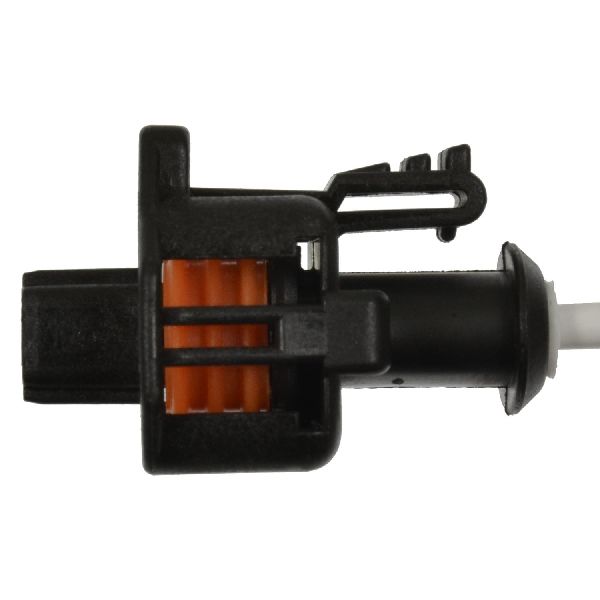
Typical fix: Clean the connector terminals with electrical contact cleaner. If the connector or its locking tab is broken, it should be replaced with a new pigtail connector (e.g., ACDelco PT3702).
Est. part cost: $10-$40
Rare But Worth Checking
- Faulty Engine Control Module (ECM): → Shop Engine Control Module (ECM) This is the least likely cause. The internal driver circuit for the injector can fail, but all other possibilities (wiring, injector) must be definitively ruled out before condemning the expensive ECM. A professional diagnosis is recommended before replacing the module.
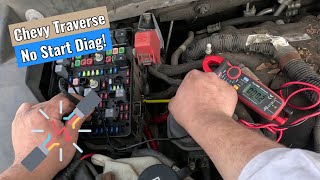
- Corroded Underhood Fuse Block Connection: In some cases, misfires on an entire bank of cylinders (e.g., 2, 4, 6) have been traced to corrosion on the terminals on the underside of the main underhood fuse block, leading to intermittent power loss for the ignition coils or injectors on that bank.
Diagnosis Steps
- Read all stored fault codes with an OBD-II scanner. Note if P0302 (Cylinder 2 Misfire) or other injector codes are present.
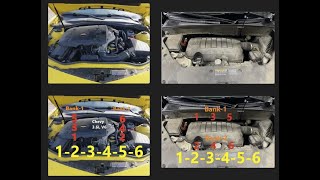
- Locate Cylinder 2: On the Traverse's transverse 3.6L engine, Bank 2 is at the front (near the radiator) and Bank 1 is at the rear (near the firewall). The cylinders are numbered 2-4-6 from driver's side to passenger's side on Bank 2. Cylinder 2 is the first one on the driver's side at the front.
- Perform a detailed visual inspection of the engine wiring harness, focusing on the chafe points identified in TSB #PIP4924D: where the harness crosses the driver's side (Bank 2) valve cover, against the intake plenum, near valve cover bolts, and against fuel lines. Peel back the plastic conduit for a better view.
- If a chafed wire is found, repair it with solder and heat-shrink tubing, protect it with new loom, clear the codes, and test drive to see if the fault returns.
- If the wiring appears intact, test the injector circuit. Use a 'noid' light on the cylinder 2 injector connector to verify the ECM is sending a pulse signal. The light should flash with the engine running.
- If the signal is present, test the injector itself. Disconnect the injector and measure its resistance with a multimeter. It should be within 10-15 ohms. Compare the reading to an adjacent injector.
- As a final confirmation, swap the cylinder 2 injector with the cylinder 4 injector. Clear the codes and run the engine. If the code changes to P0270 (Cylinder 4 Injector Circuit Low), the injector is faulty.
- If the wiring and injector test good but the code persists, inspect the connector terminals for damage or corrosion. If all else fails, the issue may be with the ECM, which requires professional diagnosis.
Parts You'll Likely Need
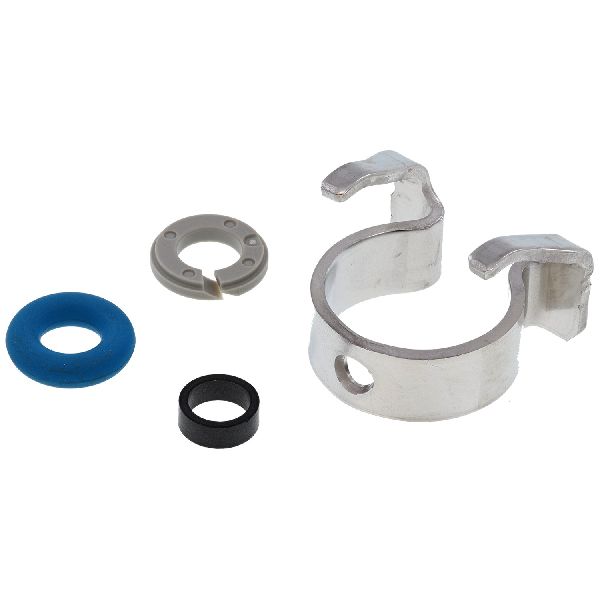
- Fuel Injector
(OEM #ACDelco 217-3445 (or GM 12638530) - Verify for LLT/LFX)— This is the component to replace if it fails its resistance test or the swap test after the wiring has been confirmed to be good. Note: GM uses flow-matched injectors; the correct replacement part number must be identified from the number printed on the body of the old injector, per TSB 20-NA-098.
Trusted brands: ACDelco, Bosch, Delphi
OEM price range: $90-$150
Aftermarket price range: $40-$90 - Upper and Lower Intake Manifold Gaskets
(OEM #Fel-Pro MS 97204)— These must be replaced whenever the intake manifold is removed to access the fuel injectors on the 3.6L V6 engine. Reusing old gaskets will likely cause a vacuum leak.
Trusted brands: ACDelco, Fel-Pro, Mahle
OEM price range: $40-$70
Aftermarket price range: $20-$40 - Fuel Injector Connector Pigtail
(OEM #ACDelco PT3702 (verify connector style))— Needed if the original connector is damaged, corroded, or the locking tab is broken, preventing a secure connection.
Trusted brands: ACDelco, Dorman
OEM price range: $25-$40
Aftermarket price range: $10-$20
Related Codes That Often Appear With This One
- P0302 — This code means 'Cylinder 2 Misfire Detected.' It commonly appears with P0264 because the injector circuit fault prevents proper fueling, causing the cylinder to misfire.
- P0201, P0203, P0204, etc. — If multiple injector circuit codes are present, it strongly suggests a widespread wiring harness issue affecting several wires in the same bundle, as described in TSB #PIP4924D.
- P0300, P0304, P0306 — If misfire codes for other cylinders on the same bank (Bank 2 is cylinders 2, 4, 6 at the front of the vehicle) appear, it could point to a shared power or ground issue in the harness or a problem with the underhood fuse block.
Technical Service Bulletins (TSBs) & Recalls
- PIP4924D: 'SES Light And Misfire With Injector Codes' - This is the primary document identifying the wiring harness chafe issue as the main cause
Platform-Specific Known Issues
- A known issue documented in GM Technical Service Bulletin #PIP4924D points to the fuel injector wiring harness chafing and shorting to ground. Common rub points include contact with the intake plenum, valve cover bolts, and fuel lines. This affects the entire Lambda platform.
- Forum discussions frequently show owners discovering the chafed wire is for cylinder #2, located in the harness section that runs over the front (Bank 2) valve cover.
Mechanic-Grade Diagnostic Values
- Fuel Injector Coil Resistance (2009-2012 3.6L LLT Engine) — expected: 11.8 - 12.6 Ohms. Failure: A reading significantly outside this range, or showing an open circuit (OL), indicates a failed injector.
- Fuel Injector Coil Resistance (2013-2014 3.6L LFX Engine) — expected: 1.2 - 1.8 Ohms. Failure: A reading outside this very narrow range indicates a failed injector. Note: This value is drastically different from the earlier LLT engine.
- Injector Pulse Width (at normal idle) — expected: 2 - 4 milliseconds (ms). Failure: A value of 0 ms on cylinder 2 while other cylinders show a normal pulse width indicates the ECM is not commanding the injector or the signal is lost.
Scan Tool Commands That Help
- GDS2 (GM Dealer Scanner): Automated Injector Balance Test — This bidirectional test commands the ECM to pulse each injector individually and measures the corresponding drop in fuel rail pressure. It is used to identify a mechanically clogged or weak injector after electrical circuit integrity has been confirmed. A cylinder that shows a significantly different pressure drop compared to others indicates a faulty injector.
Wiring & Ground Locations
- Cylinder 2 Injector ECM Pins (LLT Engine w/ Bosch ECM) — At the Engine Control Module (ECM), located on the left side of the engine. Cylinder 2 injector control is on ECM connector X1, pin 72 (Light Blue wire). The high side driver is on pin 75 (Brown/White wire).. These specific pins allow for continuity and short-to-ground testing of the injector circuit directly from the ECM connector, bypassing the entire harness to isolate the fault to the wiring or the ECM itself.
- Cylinder 2 Injector ECM Pins (LFX Engine w/ Delphi ECM) — At the Engine Control Module (ECM). The pinout for the Delphi ECM differs. For the LFX, the Cylinder 2 injector control wire (low side) is a Light Blue wire, and the high side driver is a Light Blue/White wire.. Knowing the correct pins for the LFX engine is critical for accurate electrical testing, as they are different from the earlier LLT engine. Testing the wrong pins can lead to misdiagnosis.
- G110 (Ground) — Located on the right front of the engine, mounted to the cylinder head.. This is a primary engine ground. While not directly for the injector circuit itself, a poor connection at this ground can cause electrical noise and voltage issues that may affect various engine sensors and modules, potentially leading to intermittent or unusual faults.
- G103 (Ground) — Located on the left side of the engine compartment, on the inner fender panel.. This is a major chassis ground point. A corroded or loose G103 can cause a wide range of bizarre electrical issues. Verifying its integrity is a good practice when diagnosing any electrical fault, including injector circuit codes.
Real Owner Repair Stories
- AcadiaForum.net user (2010 GMC Acadia (Lambda Platform sibling)) — Check engine light with codes P0264 (Cyl 2 Injector Circuit Low) and P0302 (Cyl 2 Misfire).
❌ Tried (didn't work) Initial diagnosis suggested a bad injector.
✅ What actually fixed it The owner found a chafed wire in the harness that runs over the top of the engine. Specifically, the light blue wire for the #2 injector had its insulation rubbed through where it was making contact with a metal bracket. The user repaired the wire, covered it with protective loom, and cleared the codes, which resolved the issue.
OEM Part Supersession History
Varies (e.g., 12638530)→Varies (e.g., 12698484)— GM uses flow-matched injectors to ensure balanced fuel delivery across the cylinders for emission requirements. Replacement part numbers are often kits that may contain a different specific injector part number than the original.
Heads up: Per TSB 20-NA-098, the correct replacement injector MUST be determined by looking up the 8-digit part number printed on the body of the old injector in the GM parts catalog. Simply ordering a part for the year/model can result in installing a wrong-flow injector, leading to fuel trim imbalance codes (like P219A/P219B) after the repair.
Model Year Variations Within This Range
- 2009-2012: These models use the 3.6L LLT V6 engine, which has high-impedance fuel injectors with a resistance of ~11.8-12.6 Ohms, an aluminum intake manifold, and a Bosch ECM.
- 2013-2014: These models use the updated 3.6L LFX V6 engine. This engine features low-impedance fuel injectors (~1.2-1.8 Ohms), a composite intake manifold, integrated exhaust manifolds, and a Delphi ECM. The injector resistance is completely different, and using the LLT spec for diagnosis will lead to incorrect conclusions.
Helpful Videos

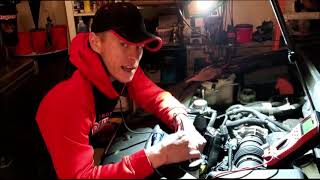
We Have This Part in Stock


The information in this article is provided for general reference and educational purposes only. Vehicle specifications, procedures, and part compatibility can vary by production date, trim level, and region. Always consult your vehicle's factory service manual and verify part numbers before purchasing or performing repairs. Safety-critical components such as airbags, seat belts, and braking systems should be installed by a qualified professional.
- Chevrolet TRAVERSE:
- 🧭 Diagnostic Flowchart
- 🎬 Helpful Videos
- 🛍️ Shop This Part
- What's Unique About the 2009-2014 Chevrolet TRAVERSE
- Symptoms You May Notice
- Most Likely Causes
- Rare But Worth Checking
- Diagnosis Steps
- Parts You'll Likely Need
- Related Codes That Often Appear With This One
- Technical Service Bulletins (TSBs) & Recalls
- Platform-Specific Known Issues
- Mechanic-Grade Diagnostic Values
- Scan Tool Commands That Help
- Wiring & Ground Locations
- Real Owner Repair Stories
- OEM Part Supersession History
- Model Year Variations Within This Range
- 🎟️ Get 5% Off