

P0265 on 2009-2016 Buick LaCrosse: Cylinder 2 Injector Circuit High Causes and Fixes
P0265 on a Buick LaCrosse indicates a 'high voltage' condition in the cylinder 2 fuel injector circuit. This is most often caused by a damaged wiring harness chafing against the engine, a bad fuel injector, or a faulty electrical connector. Inspecting the injector wiring harness for damage, as outlined in GM TSB PIP4924D, is the first and most critical step before replacing parts.
- P0265 means a high voltage problem in the cylinder 2 fuel injector circuit.
- On a 2009-2016 Buick LaCrosse, the most likely cause is a damaged wiring harness rubbing against the engine, as noted in official GM service bulletins.
- Before buying any parts, meticulously inspect the injector wiring harness for signs of chafing or breaks.
- If the wiring is intact, the next most likely culprit is a failed fuel injector for cylinder 2.
- Ignoring this code can lead to a constant misfire, poor performance, and potential damage to other exhaust components.
What's Unique About the 2009-2016 Buick LACROSSE
For this generation of Buick LaCrosse and many other GM vehicles with the 3.0L and 3.6L V6 engines, a primary suspect for injector circuit codes like P0265 🎬 Watch: A quick overview of the P0265 injector circuit code. is the wiring harness itself. GM issued multiple Technical Service Bulletins (TSBs), culminating in PIP4924D, highlighting that the fuel injector wiring harness is prone to chafing against engine components. Specific rub points mentioned are the intake plenum, valve cover bolts, the fuel line, and the side of the cylinder head under the plenum. This makes a thorough visual inspection of the harness a more critical first step than on many other vehicles, where the injector itself might be the immediate primary suspect.
Diagnostic Flowchart
Tap your situation to follow the diagnostic path that matches what you're seeing on this vehicle.
Generation note: The 2009-2016 range covers the end of the first generation (2009) and the entire second generation (2010-2016) of the Buick LaCrosse. The relevant Technical Service Bulletins regarding wiring issues apply to V6 engines (3.0L LF1/LFW, 3.6L LLT/LFX) across these years, making the primary causes and diagnostic steps very similar for both generations.
Symptoms You May Notice
- Check Engine Light is on.
- Engine misfire, which may feel like a shake, stumble, or hesitation.
- Rough or unstable idle.
- Reduced engine power and poor acceleration, sometimes triggering a 'Reduced Engine Power' message.
- Increased fuel consumption.
- Smell of unburned fuel from the exhaust.
- Black smoke from the tailpipe if the injector is stuck open.
- Replacing the fuel injector without first thoroughly inspecting the wiring harness. Given the explicit guidance in GM TSB PIP4924D, a wiring issue is a very high probability and should be the first check.
Most Likely Causes
- Fuel Injector Wiring Harness Damage 🔴 High Probability → Shop Engine Wiring Harness As documented in GM TSB PIP4924D, the harness on these V6 engines is known to rub against the intake plenum, valve cover bolts, fuel lines, and the side of the cylinder head, causing wires to short to voltage or break. Engine movement during normal operation exacerbates this chafing.
How to confirm: Carefully perform a close visual inspection of the entire fuel injector harness, especially where it makes contact with other engine parts. Wiggle the harness while the engine is running (if safe to do so) to see if it triggers the misfire. Look for chafed insulation, exposed copper wires, or breaks. It may be necessary to remove the engine cover or other components for a clear view.
Typical fix: Repair the damaged section of the wire using proper splicing and heat-shrinking techniques. Protect the harness from future damage using convoluted tubing (loom), anti-abrasion tape, and by re-routing or zip-tying it away from contact points. In severe cases, the entire injector harness may need to be replaced.
Est. part cost: $10-$30 for repair materials, $150-$350 for a new harness. - Faulty Cylinder 2 Fuel Injector 🟡 Medium Probability → Shop Fuel Injector Injectors are wear-and-tear components. An internal short in the injector's solenoid winding can cause the resistance to drop, leading the PCM to interpret it as a 'high circuit' condition.
How to confirm: After confirming the wiring is good, test the injector. Measure the injector's resistance with a multimeter (it should be within the manufacturer's spec, typically 1.9-2.3 ohms for these Direct Injection engines). The most definitive test is to swap the cylinder 2 injector with another one (e.g., cylinder 4). Clear the codes and run the engine. If the fault code moves with the injector and becomes P0271 (Cylinder 4 Injector Circuit High), the injector is confirmed faulty.
Typical fix: Replace the faulty fuel injector. It is often recommended to replace all injectors on the same bank, or all six, if they are high-mileage.
Est. part cost: $60-$180 for a single OEM injector. - Damaged or Corroded Injector Connector ⚪ Low Probability The connector is exposed to engine heat and vibration, which can cause the plastic to become brittle and the terminal pins to lose tension or corrode over time.
How to confirm: Unplug the connector at the cylinder 2 fuel injector and inspect the terminals for corrosion (green or white powder), moisture, or pushed-out/loose pins. Ensure it makes a secure, clicking connection.
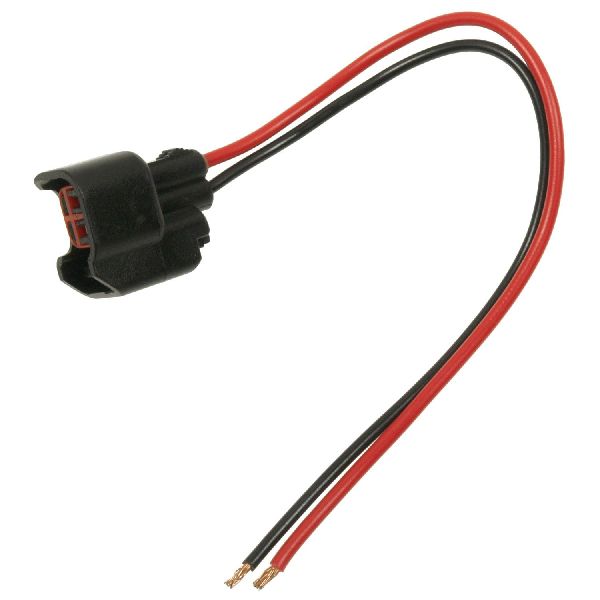
Typical fix: Clean the connector terminals with a specialized contact cleaner. If the connector housing is broken or the terminals are damaged, replace the connector pigtail. This involves cutting the old one off and splicing the new one in, using weatherproof butt connectors or solder and heat shrink. An example part is ACDelco PT2798.
Est. part cost: $20-$50 for a new pigtail connector.
Rare But Worth Checking
- Faulty Powertrain Control Module (PCM): → Shop Engine Control Module (ECM) This is the least likely cause. The PCM's internal driver for the injector can fail and short to voltage internally. However, all other possibilities (wiring, injector, connector) must be exhaustively ruled out before condemning the PCM, as it is expensive and requires programming.
Diagnosis Steps
- Verify the code with an OBD-II scanner. Note any other codes present, especially misfire codes like P0302.
- Perform a detailed visual inspection of the fuel injector wiring harness for cylinder 2. Per GM TSB PIP4924D, pay close attention to chafe points against the intake plenum, valve cover bolts, fuel lines, and the side of the cylinder head. Manipulate the harness to see if the fault condition changes.
- Inspect the electrical connector at the cylinder 2 fuel injector for corrosion, damage, or loose pins.
- If wiring looks good, disconnect the injector and measure its internal resistance using a multimeter. Compare the reading to the manufacturer's specification (typically 1.9-2.3 ohms for DI V6 engines).
- To definitively confirm a bad injector, swap the cylinder 2 injector with an injector from another cylinder (e.g., cylinder 4). Clear the codes and run the engine. If the code changes to P0271 (Cylinder 4 Injector Circuit High), the injector is faulty.
- If the code P0265 returns after the swap, the problem lies in the wiring or the PCM. Use a noid light to test for a proper pulse signal at the injector connector. For a 'Circuit High' code, you might see a light that is always on, which would point to a short to voltage in the wiring.
- If the noid light test is abnormal, check for continuity and shorts in the injector circuit wiring. Check for a short to voltage by probing the signal wire with a multimeter set to DC volts; there should be no voltage present with the key on, engine off.
- If the wiring and injector are confirmed to be good, the final and least likely possibility is a failed injector driver in the PCM.
Parts You'll Likely Need
- Fuel Injector Wiring Harness Repair Kit or Pigtail
(OEM #e.g., ACDelco PT2798, 13580230)— Due to the high likelihood of a chafed or damaged harness as per GM TSBs, repairing the wiring is a very common fix.
Trusted brands: ACDelco, Dorman, Carquest
OEM price range: $30-$60
Aftermarket price range: $15-$40 - Fuel Injector
(OEM #12634126 (for 3.6L LFX), 12638530 (for 3.6L LLT))— If the injector itself has failed (shorted internally), it will need to be replaced. This is the second most common cause after wiring issues. Part number varies by engine.
Trusted brands: ACDelco, Bosch, Standard Motor Products
OEM price range: $100-$180
Aftermarket price range: $50-$120
Related Codes That Often Appear With This One
- P0302 — P0302 is a 'Cylinder 2 Misfire' code. Since P0265 indicates a problem with the cylinder 2 injector circuit, the cylinder will not get the correct amount of fuel, leading directly to a misfire. This is the most common companion code.
- P0202 — P0202 is a general 'Injector Circuit/Open - Cylinder 2' code. It can appear alongside P0265 if the PCM detects multiple types of faults within the same circuit, often related to an intermittent wiring problem.
- P0264 — P0264 is 'Cylinder 2 Injector Circuit Low'. Seeing both high and low circuit codes can point towards an intermittent wiring short that is making contact with both a ground and a voltage source, or a failing PCM driver.
- P2146, P2149, P2152, P2155 — These codes relate to Fuel Injector Group 'A' or 'B' Supply Voltage Circuit issues. TSB PIP4924D lists these alongside the individual injector codes, indicating a widespread wiring harness issue could affect an entire bank of injectors, not just one.
Technical Service Bulletins (TSBs) & Recalls
- PIP4924D: SES Light And Misfire With Injector Codes. This is the most current and relevant bulletin. It supersedes previous versions and lists a huge range of GM vehicles, including the LaCrosse, that suffer from injector codes due to a chafing wiring harness.
Platform-Specific Known Issues
- GM Technical Service Bulletin PIP4924D specifically calls out that a wide range of injector codes, including P0265, on 2009-2014 LaCrosse models with V6 engines can be caused by the fuel injector wiring harness rubbing through. The bulletin advises technicians to carefully inspect the harness for damage at contact points with the engine—specifically against the intake plenum, valve cover bolts, fuel line, and side of the head—before replacing any components.
Mechanic-Grade Diagnostic Values
- Fuel Injector Coil Resistance (3.6L V6 DI Engines) — expected: 1.9-2.3 Ω at 68°F (20°C). Some sources show values as low as 1.5-1.6 Ω.. Failure: A reading of infinity (OL) indicates an open circuit, while a reading significantly below specification suggests an internal short.
- Injector Control Circuit Voltage (Oscilloscope) — expected: A complex waveform showing a 65V boost pulse to open the injector, which then drops to a 12V 'hold' pulse.. Failure: The absence of this signal, or a signal that is stuck high (at battery voltage), indicates a fault in the wiring or the ECM driver. A 'Circuit High' code is set when the ECM grounds the driver but does not see the voltage pull down to near 0V.
- Injector Power Supply Voltage (Key On, Engine Off) — expected: ~12V (Battery Voltage) on the power supply wire at the injector connector.. Failure: Low or no voltage indicates a problem in the power supply circuit, potentially a blown fuse or a break in the harness.
Hidden / Shadow Codes Worth Checking
- Injector Control Circuit Test Status: This is not a code, but a live data parameter in the GM GDS2 scan tool. It displays 'OK', 'Not Run', or 'Fault' for each injector circuit. (see via Monitor this parameter on a GM GDS2 or equivalent professional scan tool while wiggling the injector wiring harness. An intermittent change from 'OK' to 'Fault' can pinpoint the location of a wiring issue without any DTCs being immediately set.)
Scan Tool Commands That Help
- GDS2 / Tech2 (or equivalent pro-level scanner): Injector Balance Test / Cylinder Power Balance — This bidirectional test allows a technician to individually disable each fuel injector and observe the corresponding drop in fuel rail pressure or engine RPM. If disabling cylinder 2 causes little or no change compared to other cylinders, it confirms cylinder 2 is not contributing, likely due to the injector issue. This helps verify the symptom before disassembly.
- GDS2 / Tech2: Actuator Test: Injectors — This function commands the injector to cycle on and off with the engine running at idle. The technician listens for an audible click from the injector and feels for a change in engine idle. If the idle becomes rougher when the injector is commanded, it indicates the circuit and injector are at least partially functional.
Wiring & Ground Locations
- G103 / G104 — Commonly located on the rear of the cylinder heads, bolted to the engine block. Locations can vary, with G103 sometimes found near the thermostat housing.. These are primary engine ground points that provide the ground reference for the ECM and its sensors. A corroded or loose connection here can cause erratic voltage readings and lead to false injector circuit codes.
- X160 Injector Harness Connector — A multi-way connector for the injector harness, often located at the rear of the intake manifold.. TSB information points to checking for poor terminal tension at this connector. It's a critical junction between the main engine harness and the injector bank; a fault here can affect multiple injectors.
- ECM Connectors (LFX Engine) — The ECM is in the engine bay. On the 3.6L LFX, the connectors are typically color-coded: X1 (Blue), X2 (Black), and X3 (Gray).. Knowing the connector identifiers is essential for performing end-to-end wiring tests. The control wire for the cylinder 2 injector runs from one of these connectors to the injector itself. For example, on some similar GM V6 engines, the injector 2 control wire is a Light Green/Black wire.
Real Owner Repair Stories
- Traverse Forum / Similar GM 3.6L V6 owner reports (GMC Acadia with 3.6L V6 (shares engine and wiring design with LaCrosse)) — Rough running engine, particularly at idle, with an injector circuit code (P0270).
❌ Tried (didn't work) Replacing the spark plug for the affected cylinder., Replacing the ignition coil., Replacing the fuel injector itself.
✅ What actually fixed it After the new injector failed to solve the problem, a much closer inspection of the injector wiring harness revealed a wire had chafed through its insulation where it was secured by a factory zip tie to a metal bracket near the intake manifold. The wire was intermittently shorting to ground with engine vibration. Repairing the damaged wire and protecting the harness with anti-abrasion tape permanently resolved the code.
When the Usual Fixes Don't Work
- While a faulty injector can cause P0265, many owners and technicians have replaced the injector only to have the code return. The actual cause, as highlighted in TSB PIP4924D and confirmed in numerous forum discussions, was a chafed wire in the engine harness making intermittent contact with the engine block or another voltage source. One owner of a similar GM 3.6L V6 found the fault only after replacing the injector; a closer inspection revealed a wire had rubbed through its insulation where it was zip-tied to a metal bracket. This underscores the critical importance of exhaustively inspecting the harness before condemning the injector.
OEM Part Supersession History
12638530→12669384— Standard part evolution and updates.
Heads up: This injector is for the LLT engine and is NOT compatible with the 2012+ LFX engine due to differences in the fuel system and ECM.12634126→N/A (current as of searches)
Heads up: This injector is for the LFX engine and is NOT compatible with the earlier LLT engine.
Model Year Variations Within This Range
- 2009-2011: These models primarily use the 3.6L LLT V6 engine, which features an aluminum intake manifold, separate exhaust manifolds, and a Bosch ECM. The fuel injector part number is typically 12638530.
- 2012-2016: These models use the updated 3.6L LFX V6 engine. This engine has integrated exhaust manifolds (part of the cylinder head), a lighter composite intake manifold, and uses a Delphi ECM. These architectural changes mean the wiring harness, ECM, and fuel injectors (PN 12634126) are not interchangeable with the earlier LLT models.
Helpful Videos
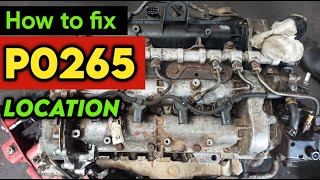
We Have This Part in Stock


The information in this article is provided for general reference and educational purposes only. Vehicle specifications, procedures, and part compatibility can vary by production date, trim level, and region. Always consult your vehicle's factory service manual and verify part numbers before purchasing or performing repairs. Safety-critical components such as airbags, seat belts, and braking systems should be installed by a qualified professional.
- Buick LACROSSE:
- 🧭 Diagnostic Flowchart
- 🎬 Helpful Videos
- 🛍️ Shop This Part
- What's Unique About the 2009-2016 Buick LACROSSE
- Symptoms You May Notice
- Most Likely Causes
- Rare But Worth Checking
- Diagnosis Steps
- Parts You'll Likely Need
- Related Codes That Often Appear With This One
- Technical Service Bulletins (TSBs) & Recalls
- Platform-Specific Known Issues
- Mechanic-Grade Diagnostic Values
- Hidden / Shadow Codes Worth Checking
- Scan Tool Commands That Help
- Wiring & Ground Locations
- Real Owner Repair Stories
- When the Usual Fixes Don't Work
- OEM Part Supersession History
- Model Year Variations Within This Range
- 🎟️ Get 5% Off