

P0265 on 2010-2016 Cadillac CTS: Cylinder 2 Injector Circuit High Causes and Fixes
This code indicates an electrical problem with the fuel injector in cylinder #2. On these Cadillac models, the most common cause is a damaged or chafed wiring harness near the injector, as noted in GM Technical Service Bulletins. A failed fuel injector is the next most likely cause. Inspecting the harness where it can rub against the intake manifold or fuel lines is the critical first step.
- P0265 on a 2010-2016 Cadillac CTS means there's a high voltage or open circuit fault related to the cylinder 2 fuel injector.
- Before replacing any parts, thoroughly inspect the wiring harness for cylinder 2. Manufacturer bulletins specifically point to chafing and damage as a very common cause.
- If the wiring is good, the fuel injector itself is the next most likely part to have failed.
- This code will be accompanied by noticeable driving issues like a rough idle and misfires, so it should be addressed promptly to avoid potential damage to other components like the catalytic converter.
What's Unique About the 2010-2016 Cadillac CTS

For the second and third-generation Cadillac CTS with V6 engines, General Motors has specifically identified wiring problems as a key issue. Technical Service Bulletin PIP5386A directly links P0265 to a wiring concern at the #2 fuel injector. Another bulletin, PIP4924D, points to the fuel injector wiring harness rubbing through against engine components like the intake plenum or valve covers on a wide range of GM vehicles, including the CTS. The harness is routed tightly in the engine bay, and engine vibration can cause it to chafe on sharp edges of the fuel rail, generator, or various mounting brackets, leading to a short to voltage or an open circuit.
Diagnostic Flowchart

Tap your situation to follow the diagnostic path that matches what you're seeing on this vehicle.
Generation note: The 2010-2016 range covers the end of the second generation (2008-2014) and the start of the third generation (2014-2019) CTS. The V6 engines (3.0L LF1 and 3.6L LLT/LFX) were common across this period. The cited TSBs cover model years from both generations, indicating the wiring and injector issues are relevant to both.
Symptoms You May Notice
- Check Engine Light is on
- Rough or unstable idle
- Engine misfire, which may feel like a stumble or hesitation
- Loss of power and poor acceleration
- Increased fuel consumption
- Noticeable fuel smell from the exhaust
- Replacing the fuel injector without first thoroughly inspecting the wiring harness. The TSBs strongly suggest wiring is a primary culprit, and replacing the injector will not fix a chafed wire. This leads to the code returning and wasted money on parts.
Most Likely Causes

- Damaged Fuel Injector Wiring Harness 🔴 High Probability → Shop Engine Wiring Harness GM TSBs PIP5386A and PIP4924D specifically call out wiring issues for this code on these vehicles. The harness can chafe against the intake manifold, valve covers, or fuel lines, causing a short or open circuit. In some cases, the issue may appear after other maintenance (like replacing spark plugs or ignition coils) has disturbed the already-fragile harness.
How to confirm: Visually inspect the wiring harness leading to the #2 fuel injector. Cylinder #2 is on the front (radiator side) bank of the engine, closest to the accessory drive belt. Look for any signs of rubbing, chafing, melted plastic, or broken wires, especially where the harness touches the intake manifold, fuel rail, or the back of the alternator. Wiggle the harness with the engine running to see if the misfire changes.
Typical fix: Repair the damaged section of wire using solder and heat-shrink tubing or replace the injector connector pigtail. Ensure the repaired harness is re-routed or protected with loom to prevent future contact.
Est. part cost: $15-$60 for a connector pigtail - Failed Fuel Injector 🟡 Medium Probability → Shop Fuel Injector
How to confirm: If wiring is intact, swap the #2 fuel injector with one from another cylinder (e.g., cylinder #4). Clear the codes and run the engine. If the code changes to P0271 (Cylinder 4 Injector Circuit High), the injector is faulty. You can also test the injector's internal resistance with a multimeter. Disconnect the injector and measure across its two pins. The resistance should be within the manufacturer's specification. For the 3.6L LLT engine, the spec is 1.25-1.75 ohms when tested between 50-90°F (10-32°C). For the 3.0L LF1 engine, the spec is 2-3 ohms. A reading significantly outside these ranges indicates a failed injector.
Typical fix: Replace the failed fuel injector. It is often recommended to replace the injector seals at the same time. Given the labor to access one injector, some owners opt to replace all three on that bank, or all six, if they are high-mileage.
Est. part cost: $40-$90 - Contaminated Fuel ⚪ Low Probability TSB PIP4924D mentions inspecting the fuel as part of the diagnostic process for a wide range of injector codes.
How to confirm: Check fuel quality and pressure. If water or other contaminants are present, it can cause injector issues. This is less likely to cause a 'circuit high' code but is noted by the manufacturer as a possibility.
Typical fix: Drain and clean the fuel tank and lines, and replace the fuel filter.
Est. part cost: $20-$50 for a fuel filter
Rare But Worth Checking
- Faulty Powertrain Control Module (PCM): → Shop Engine Control Module (ECM) This is the least likely cause. The PCM's internal driver for the injector circuit can fail, but all other possibilities, especially wiring and the injector itself, should be exhaustively ruled out first.
Diagnosis Steps
- Read all fault codes using an OBD-II scanner. Note if P0302 or P0300 are also present.
- Identify Cylinder #2. On the V6 engines in the CTS, this is the cylinder on the front bank (radiator side) closest to the serpentine belt.
- Perform a thorough visual inspection of the wiring harness and connector for fuel injector #2, as recommended by TSBs PIP5386A and PIP4924D. Look for chafing against the intake, valve covers, fuel lines, or alternator.
- Disconnect the injector and check the connector terminals for corrosion, backed-out pins, or damage.
- Use a multimeter to check the resistance of the fuel injector. It should be within spec (1.25-1.75 ohms for 3.6L LLT, 2-3 ohms for 3.0L LF1). A reading of 0 or infinity indicates a failed injector.
- Use a noid light to test for a signal from the ECM. Plug it into the injector connector; it should flash while the engine is cranking or running. If it doesn't flash, the problem is in the wiring or the ECM.
- If the wiring appears good and the injector resistance is within spec, swap the #2 injector with another one (e.g., from cylinder #4).
- Clear the codes and drive the vehicle. If the code returns as P0271 (for cylinder 4), the injector is confirmed to be the faulty part.
- If the code remains P0265 after the swap, the issue is definitively in the wiring harness or the PCM driver circuit.
Parts You'll Likely Need
- Fuel Injector
(OEM #12634126)— This is the part that fails if the internal coil shorts or opens, causing the 'Circuit High' condition when wiring is confirmed to be good. This part number is specified for the 3.0L and 3.6L V6 engines and supersedes part number 12642128.
Trusted brands: ACDelco, Bosch
OEM price range: $70-$110
Aftermarket price range: $40-$60 - Fuel Injector Connector Pigtail
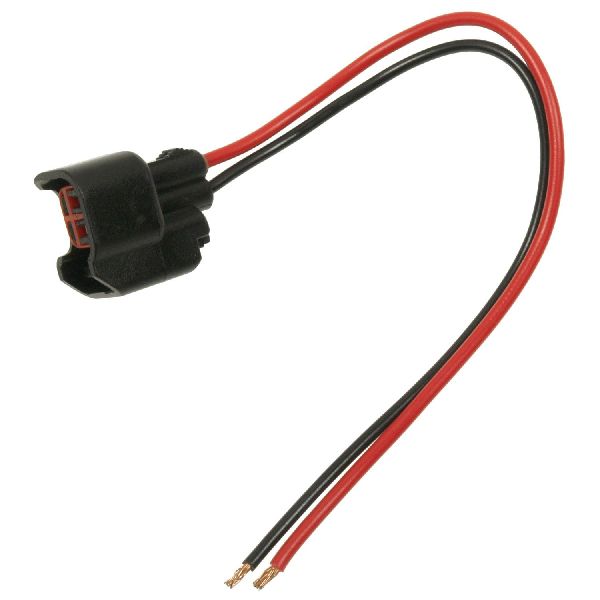
(OEM #ACDelco PT2618)— If the wiring harness is damaged right at the connector, replacing the pigtail is the standard repair. The direct injectors on these engines use a modern USCAR/EV6 style connector; PT2618 is an example of this type. The older PT2183 is a different style and may not be correct for this application.
Trusted brands: ACDelco, Dorman, Standard Motor Products
OEM price range: $40-$55
Aftermarket price range: $15-$30
Related Codes That Often Appear With This One
- P0302 — P0302 means 'Cylinder 2 Misfire'. Since P0265 indicates a problem with the fuel injector for cylinder 2, a misfire on that same cylinder is a direct consequence.
- P0300 — P0300 means 'Random/Multiple Cylinder Misfire'. TSB PIP5386A explicitly mentions that P0265 can appear with P0300. The engine's balance can be thrown off enough by the single failed cylinder to trigger a general misfire code.
Technical Service Bulletins (TSBs) & Recalls
- PIP5386A: Communicates diagnostic and repair steps for P0264 or P0265 with P0300.
- PIP5386: Notes that P0264/P0265 with P0300 may be due to a wiring concern at the #2 fuel injector.
- PIP4924D: Warns of fuel injector wiring harnesses rubbing through on engine components, causing various injector codes including P0265.
- Related TSB 21-NA-149: While for different GM engines, this bulletin provides excellent visual examples of common harness chafe points on GM engine bays, such as on the corner of the cylinder head, ECM brackets, and fuel rails, which are highly relevant to diagnosing the CTS.
Platform-Specific Known Issues
- TSB PIP5386A and PIP5386 specifically identify a wiring concern at the #2 fuel injector as a cause for P0265 on these vehicles.
- TSB PIP4924D notes that the fuel injector wiring harness is prone to rubbing through (chafing) against various engine components, leading to shorts or open circuits.
- Real-World Owner Experience: Post-Maintenance Failures: A common story on owner forums involves the P0265 code appearing shortly after other maintenance, such as replacing spark plugs or ignition coils. A Reddit user described getting an injector code (P0206) immediately after replacing ignition coils, suggesting that moving the harness during the job may have been enough to break a weak wire or fully expose a chafed spot. This highlights the fragility of the harness.
Mechanic-Grade Diagnostic Values
- Fuel Injector Coil Resistance (3.6L LLT Engine) — expected: 1.25 - 1.75 Ohms. Failure: A reading of 0 ohms (short), OL/infinity (open), or a value significantly outside the specified range.
- Fuel Injector Coil Resistance (3.0L LF1 Engine) — expected: 2.0 - 3.0 Ohms. Failure: A reading significantly outside this range.
- Fuel Injector Coil Resistance (3.6L LFX Engine) — expected: 1.2 - 1.8 Ohms. Failure: A reading significantly outside this range.
- Injector Connector Voltage (Key On, Engine Off) — expected: Battery Voltage (approx. 12V). Failure: Significantly low or no voltage indicates a problem in the power supply wiring to the injector.
Scan Tool Commands That Help
- GDS2 / Tech2: Fuel Injector Balance Test — To identify a clogged or mechanically failing injector after electrical circuit faults are ruled out. The tool pulses each injector and measures the fuel pressure drop. This test should be done on a cool engine (below 140°F/60°C) for accurate results.
- GDS2 / Tech2: Injector Control Circuit Test Status — This is a live data parameter to monitor while diagnosing. It should read 'OK' or 'Not Run'. If it indicates a fault, it confirms the ECM is detecting an electrical problem in the circuit.
Wiring & Ground Locations

- Injector #2 Control Wire — On some models, this is a Light Green/Black wire leading to pin 62 of the ECM connector. On others, it may be pin 32. Always verify with a model-year specific diagram.. This is the specific wire the ECM uses to ground and fire the #2 injector. Testing for continuity and shorts on this wire is essential for diagnosing a circuit fault.
- Harness Connectors X116 / X117 — Located at the rear of the intake manifold, these are multi-way connectors for the injector harness.. These connectors are a key access point for testing the injector circuits from the ECM side versus the injector side of the harness, helping to isolate the location of a wiring fault.
- G104 (LFX Engine) — Engine ground located at the front of the engine.. A poor engine ground can introduce electrical noise or voltage drops, potentially causing the ECM to misinterpret sensor and actuator signals, including the injector circuit status.
- G101 — Primary ECM and TCM ground, often located at the lower front of the engine block.. This is a critical ground for the entire engine management system. A loose or corroded connection here can cause a wide range of erratic electrical issues, including injector fault codes.
OEM Part Supersession History
12642128→12634126— Standard part update or revision by the manufacturer.
Model Year Variations Within This Range
- 2010-2011 (LLT) vs 2012-2016 (LFX): The 2012+ LFX engine has integrated exhaust manifolds (no separate headers), a composite intake manifold, and uses a different ECM (Delphi) than the earlier LLT (Bosch). Some parts, like intake manifold spacers or exhaust headers, are not interchangeable.
- 3.0L LF1 vs 3.6L LLT/LFX: The fuel injectors have different internal resistance specifications. The 3.0L LF1 injectors are around 2-3 ohms, while the 3.6L LLT/LFX injectors are lower, around 1.2-1.8 ohms. Using the wrong resistance value during diagnosis will lead to an incorrect conclusion.
Helpful Videos
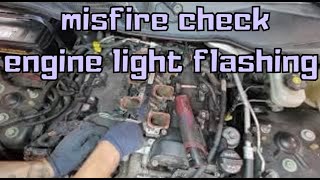
We Have This Part in Stock


The information in this article is provided for general reference and educational purposes only. Vehicle specifications, procedures, and part compatibility can vary by production date, trim level, and region. Always consult your vehicle's factory service manual and verify part numbers before purchasing or performing repairs. Safety-critical components such as airbags, seat belts, and braking systems should be installed by a qualified professional.
- Cadillac CTS:
- 🧭 Diagnostic Flowchart
- 🎬 Helpful Videos
- 🛍️ Shop This Part
- What's Unique About the 2010-2016 Cadillac CTS
- Symptoms You May Notice
- Most Likely Causes
- Rare But Worth Checking
- Diagnosis Steps
- Parts You'll Likely Need
- Related Codes That Often Appear With This One
- Technical Service Bulletins (TSBs) & Recalls
- Platform-Specific Known Issues
- Mechanic-Grade Diagnostic Values
- Scan Tool Commands That Help
- Wiring & Ground Locations
- OEM Part Supersession History
- Model Year Variations Within This Range
- 🎟️ Get 5% Off