

P0265 on 2009-2011 Cadillac STS: Cylinder 2 Injector Circuit High Causes and Fixes
This code means the engine computer (PCM) has detected excessively high voltage in the cylinder 2 fuel injector circuit. This is most often caused by a faulty fuel injector or a wiring short. Expect to replace the cylinder 2 fuel injector, but always test the wiring first, as harness chafing is a known issue on these GM vehicles.
- P0265 on your Cadillac STS means there's an electrical fault in the cylinder 2 fuel injector circuit, specifically a high voltage condition.
- The most likely culprit is the cylinder 2 fuel injector itself having failed internally.
- Before replacing the injector, always inspect the wiring harness for damage, as this is a known issue on these vehicles per TSB PIP4924D.
- A simple way to confirm a bad injector is to swap it with another cylinder and see if the trouble code follows it.
- Do not ignore this code, as it can lead to a damaged catalytic converter from unburnt fuel.
What's Unique About the 2009-2011 Cadillac STS
For this generation of Cadillac STS and other GM vehicles from the era, a notable Technical Service Bulletin (TSB PIP4924D) exists that links a wide array of fuel injector codes, including P0265, to potential issues with fuel quality or wiring harness problems. While a bad injector is common on any car, on this platform, it's particularly important to consider fuel contamination or a chafed injector wiring harness as a possible underlying cause. The TSB specifically calls out chafe points against the intake plenum, valve cover bolts, and fuel lines.
Diagnostic Flowchart
Tap your situation to follow the diagnostic path that matches what you're seeing on this vehicle.
Symptoms You May Notice
- Check Engine Light is on or flashing
- Rough or vibrating idle
- Engine hesitation or stumbling during acceleration
- Noticeable loss of power
- Increased fuel consumption
- Possible smell of unburnt fuel from the exhaust
- Replacing the spark plug or ignition coil for cylinder 2 without diagnosing the fuel system. A misfire can be caused by spark, fuel, or compression, but P0265 specifically points to the fuel injector circuit.
Most Likely Causes
- Faulty Cylinder 2 Fuel Injector 🔴 High Probability → Shop Fuel Injector
How to confirm: Swap the cylinder 2 injector with an injector from another cylinder (e.g., cylinder 4). If the code changes to P0271 (for cylinder 4), the injector is confirmed bad. You can also test the injector's internal resistance with a multimeter; it should be within the manufacturer's specification (typically 12-16 ohms for many gasoline engines).
Typical fix: Replace the faulty fuel injector.
Est. part cost: $50-$150 - Wiring or Connector Issue 🟡 Medium Probability TSB PIP4924D specifically calls out inspecting the fuel injector wiring harness for rubbing through or internal wire opens on GM vehicles of this era. Common chafe points are against the intake plenum, at valve cover bolts, against the fuel line, and on the side of the head under the plenum.
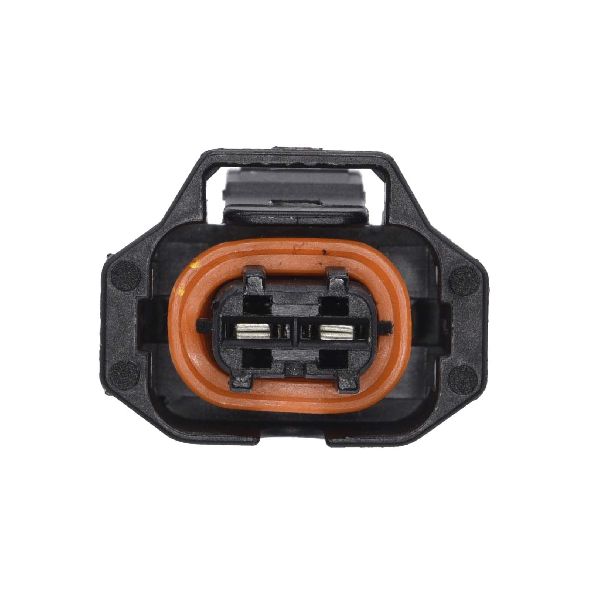
How to confirm: Visually inspect the wiring harness leading to the cylinder 2 injector for any signs of melting, chafing, or corrosion, paying close attention to the areas mentioned in TSB PIP4924D. Check the connector for bent or corroded pins. Use a multimeter to check for a short to voltage on the control wire between the PCM and the injector connector.
Typical fix: Repair the damaged section of the wiring harness or replace the injector pigtail connector.
Est. part cost: $15-$50 - Fuel Contamination ⚪ Low Probability TSB PIP4924D suggests that various injector codes can be set due to fuel quality issues, which may damage the injector's internals and cause an electrical fault.
How to confirm: If the injector is replaced and the problem returns, or if multiple injector codes are present, consider taking a fuel sample to check for water, diesel, or excessive ethanol content. Some owners on forums have tried using injector cleaner as a first step for intermittent issues.
Typical fix: Drain the fuel tank, clean the fuel system, and replace the damaged fuel injector(s).
Est. part cost: $100-$500+
Rare But Worth Checking
- Faulty Powertrain Control Module (PCM): → Shop Engine Control Module (ECM) This is the least likely cause. The internal driver circuit for the cylinder 2 injector can fail, but all other possibilities should be exhausted before condemning the PCM.
Diagnosis Steps
- Scan for Codes: Read the trouble codes with an OBD-II scanner to confirm P0265 and note any other codes present.
- Locate Cylinder 2: For the 3.6L V6, cylinder 2 is on the driver's side (Bank 2), the front-most cylinder. For the 4.6L V8 Northstar, cylinder 2 is also on the driver's side (Bank 2), the front-most cylinder.
- Inspect Wiring: Perform a thorough visual inspection of the wiring harness and connector for the cylinder 2 fuel injector. Per TSB PIP4924D, check for chafing against the intake plenum, valve cover bolts, and fuel lines.
- Check for Signal: Use a 'noid' light to test the injector connector. The light should flash when the engine is cranking or running. If the light is on constantly, it indicates a short to power. If it doesn't light up at all, it suggests an open circuit or a PCM driver issue.
- Swap Injectors: If the signal appears correct, swap the cylinder 2 fuel injector with one from an adjacent cylinder on the same bank (e.g., cylinder 4). Clear the codes and run the engine. If the fault code moves to the new cylinder (e.g., P0267 for cylinder 4), the fuel injector is faulty.
- Test the Injector: If you have a multimeter, you can test the resistance of the injector. Disconnect it and measure the resistance across its two pins. Compare the reading to the manufacturer's specifications (typically 12-16 ohms).
- Test the Circuit: If the fault remains on cylinder 2 after the swap, the problem is in the wiring or the PCM. Use a multimeter to check for continuity and for a short to voltage on the control wire running from the PCM to the injector.
- Suspect PCM: If the injector and wiring are confirmed to be good, the final possibility is a failed injector driver within the PCM, which would require PCM repair or replacement.
Parts You'll Likely Need
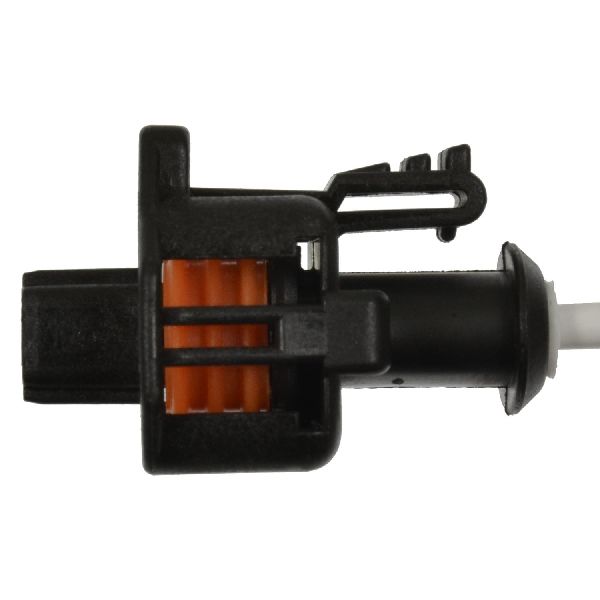
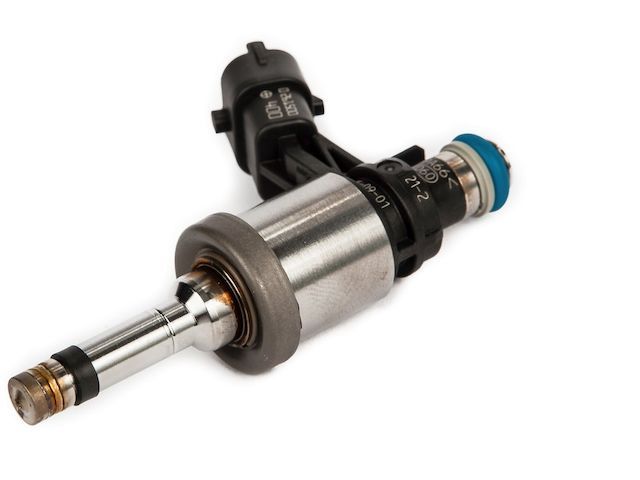
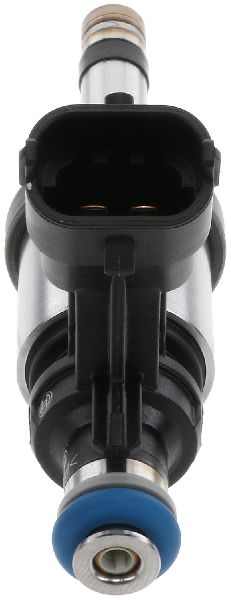
- Fuel Injector (3.6L V6)
(OEM #12669384)— This is the most common failure point for a P0265 code. The internal coil of the injector can short out or fail. Part number 12638530 was superseded by 12669384.
Trusted brands: ACDelco, Bosch, Standard Motor Products
OEM price range: $90-$140
Aftermarket price range: $40-$80 - Fuel Injector (4.6L V8)
(OEM #12577869)— The Northstar V8 uses a different injector. Failure of the injector coil is the primary reason for replacement when this code appears. This part is also sold under ACDelco P/N 217-3431 and Bosch P/N 0280158083.
Trusted brands: ACDelco, Delphi, Bosch
OEM price range: $100-$160
Aftermarket price range: $50-$90
Related Codes That Often Appear With This One
- P0302 — P0302 means 'Cylinder 2 Misfire Detected'. Since a faulty injector circuit prevents proper fueling for that cylinder, a misfire is a direct and common consequence.
- P0202 — P0202 means 'Injector Circuit/Open - Cylinder 2'. This code and P0265 are closely related and can sometimes be set together, both pointing to an electrical problem with the cylinder 2 injector.
Technical Service Bulletins (TSBs) & Recalls
- PIP4924D: Advises technicians to inspect the fuel injector wiring harness for damage and to check fuel quality when encountering a misfire with various injector codes, including P0265. Specific chafe points are identified against the intake plenum, valve cover bolts, and fuel lines.
Platform-Specific Known Issues
- TSB PIP4924D - Wiring Harness Chafing: A GM Technical Service Bulletin (PIP4924D) applies to a range of vehicles, including the STS platform, and warns that a collection of fuel injector codes (P0261, P0262, P0264, P0265, etc.) can be caused by a chafed or damaged fuel injector wiring harness. It advises technicians to inspect the harness for rub-through or internal wire opens before replacing components. Specific areas to check are where the harness might contact the intake plenum, valve cover bolts, or fuel lines.
- GM Cylinder Numbering Convention: For both the 3.6L V6 and 4.6L V8, GM designates the driver's side of the engine as Bank 2. Cylinder #2 is the forward-most cylinder on the driver's side. The passenger side is Bank 1. This can be confusing for technicians accustomed to other manufacturer's numbering schemes.
Mechanic-Grade Diagnostic Values
- Fuel Injector Coil Resistance — expected: 12 - 16 Ohms. Failure: A reading significantly outside this range, or an open circuit (infinite resistance), indicates a failed injector coil.
- Low-Pressure Fuel Pressure (3.6L V6 LLT) — expected: 380-410 kPa (55-60 psi) at idle.. Failure: Pressure significantly outside this range points to a problem with the in-tank fuel pump or its control module, not the injector itself.
- High-Pressure Fuel Pressure (3.6L V6 LLT) — expected: Varies with load, can exceed 1740 psi (120 bar).. Failure: This is a direct-injection engine. While not a direct cause of P0265, low high-side pressure would set other codes and indicates a problem with the high-pressure fuel pump.
- Injector Balance Test Pressure Drop — expected: The pressure drop for each injector should be within 1.5 PSI of the others.. Failure: An injector with a significantly smaller or larger pressure drop than the others is faulty (clogged, leaking, or has a weak spring).
- Injector Control Circuit Voltage (via back-probe) — expected: A pulsing voltage (oscillating around 5V) when the engine is cranking or running.. Failure: A steady, constant high voltage (above 5V) indicates a short-to-power in the wiring or a failed PCM driver.
Scan Tool Commands That Help
- GDS2 / Tech 2: Fuel Injector Balance Test — This special function is used to identify a mechanically failing or clogged injector that may not have an obvious electrical fault. The tool commands the fuel pump to prime the system, then pulses a single injector and measures the fuel pressure drop. Comparing the drop across all cylinders helps isolate an underperforming or leaking injector. A TSB for a related code (P2097) on these engines specifically recommends this test to find leaking injectors.
Wiring & Ground Locations
- G100 / G106 — On the rear side of the right cylinder head (Bank 1 / Passenger side).. These are primary engine grounds. A poor or corroded ground connection at the cylinder head can create voltage offsets and unstable sensor readings, potentially causing the PCM to misinterpret the injector circuit voltage.
- G101 — Near the left front strut tower, at the bottom of the inside fender well.. This is a major chassis ground point in the engine bay. The ECM and other modules rely on clean ground paths. A fault here can cause widespread, difficult-to-diagnose electrical issues, including injector circuit codes.
- ECM (3.6L V6) — Front of the engine, mounted on the right (Bank 1) valve cover.. Knowing the ECM's location is critical for testing the injector control circuit for continuity and shorts between the module and the fuel injector connector.
- ECM (4.6L V8) — On the left front frame rail, located below the left headlamp assembly.. The ECM location for the V8 is different from the V6, which is important for circuit testing on V8-equipped models.
OEM Part Supersession History
12611545, 12632255, 12638530→12669384— Standard part revision and consolidation by the manufacturer.
Heads up: These part numbers are for the 3.6L V6 (LLT) engine and are generally interchangeable for the specified model years.12577869→N/A (Still active, but has equivalents)— N/A
Heads up: This is the OEM part for the 4.6L V8 Northstar. It is equivalent to ACDelco 217-3431 (or 217-2443) and Bosch 0280158083. Ensure you are purchasing the correct part for the V8, as it is not compatible with the V6.
Model Year Variations Within This Range
- 2011: The 4.6L Northstar V8 engine was discontinued after the 2010 model year. All 2011 Cadillac STS models are equipped with the 3.6L V6 engine. This is critical when ordering parts like fuel injectors.
- 2009-2011: The 3.6L V6 (LLT) used in this period was an early generation direct-injection engine known for premature timing chain wear. While not a direct cause of P0265, a rattling noise on startup or codes related to cam/crank correlation could indicate a stretched timing chain, which is a separate, significant repair to be aware of on these engines.
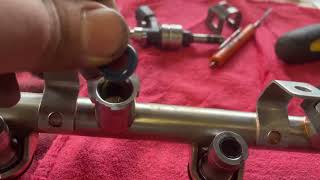
Helpful Videos
We Have This Part in Stock


The information in this article is provided for general reference and educational purposes only. Vehicle specifications, procedures, and part compatibility can vary by production date, trim level, and region. Always consult your vehicle's factory service manual and verify part numbers before purchasing or performing repairs. Safety-critical components such as airbags, seat belts, and braking systems should be installed by a qualified professional.
- Cadillac STS:
- 🧭 Diagnostic Flowchart
- 🎬 Helpful Videos
- 🛍️ Shop This Part
- What's Unique About the 2009-2011 Cadillac STS
- Symptoms You May Notice
- Most Likely Causes
- Rare But Worth Checking
- Diagnosis Steps
- Parts You'll Likely Need
- Related Codes That Often Appear With This One
- Technical Service Bulletins (TSBs) & Recalls
- Platform-Specific Known Issues
- Mechanic-Grade Diagnostic Values
- Scan Tool Commands That Help
- Wiring & Ground Locations
- OEM Part Supersession History
- Model Year Variations Within This Range
- 🎟️ Get 5% Off